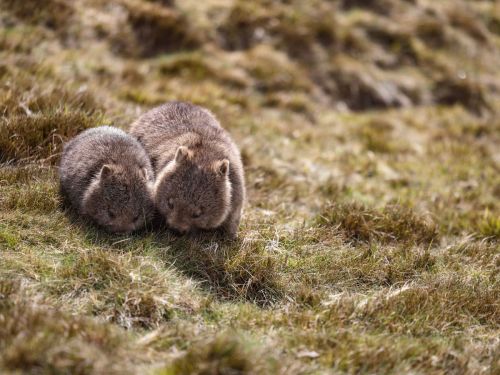
‘Just caught a baby wombat’ is another case of cruelty for content

hero media
Thinking about snatching a joey from its mother for a video? Dilvin Yasa is going to stop you right there…

Many years ago, I was on a safari in Kenya where I witnessed a man throw apples – one by one – at a pride of sleeping lions. “I didn’t pay all that money to look at sleeping lions," he fumed as our guide took his backpack filled with Granny Smiths and led him away to read him the riot act.

It was the first time I saw such bad behaviour towards wildlife first-hand, but sadly, it wasn’t to be the last. During my travels in the last few years, I’ve witnessed people run over sun-baking snakes ‘for fun’, chase terrified animals for photos and attempt to pick up a sleeping koala for a selfie (she only stopped after I screamed that 80 per cent* of koalas are dripping with chlamydia). A few weeks ago, I stumbled upon a bunch of kids throwing rocks at sheep who were locked in a pen and had no way of escaping the carnage.

I don’t sit back in silence when I witness such horror; I just can’t. I’m not proud of the way I react, but any time I see a situation where someone is scaring or hurting an animal, I “educate" the perpetrator – and if the perpetrator is a child, I turn my response to the parent who is often on their phone and not noticing what their mini Ted Bundy in the making is up to. My words are strong and often, they’re foul-mouthed, but you know what’s further fuelling my rage? The number of people who’ve also witnessed the crime, yet haven’t said or done a thing to help.
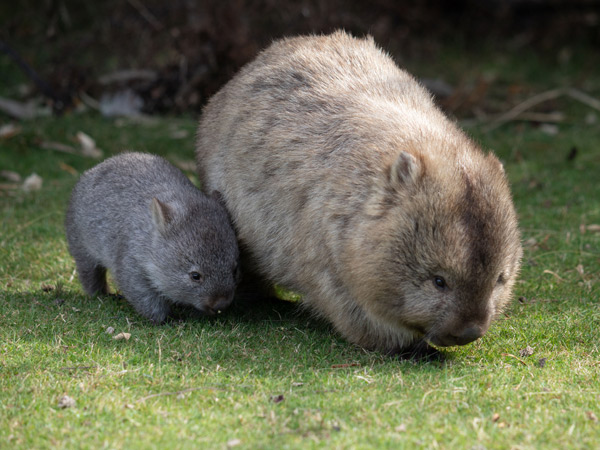
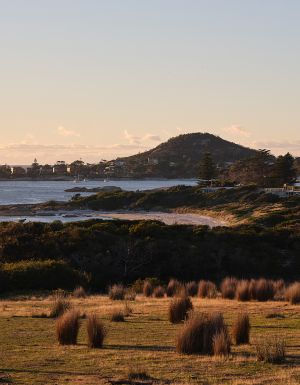
Baby Wombat exploring Maria Island in Tasmania with its Mother
There have since been calls to deport an American influencer who took a baby wombat from its mother. (Image: Getty Images/Tom Wayman – TD Events)

In yet another case of ‘cruelty for content’, this kind of behaviour has come to the forefront again this week, when American influencer Sam Strable (known as Sam Jones on her social media channels) shared a video in a since-deleted Instagram reel of her catching a baby wombat and carrying the joey–screeching and hissing with terror–away from its distressed mother, who is seen chasing after her baby. Strable then returned the joey to the grassy side of the road, but whether the mother and baby were reunited is not yet known. There have since been calls to deport Strable and rightly so, but what do we make of her accomplice with the Australian accent laughing while filming the encounter? He should obviously know better, but clearly more education about not only approaching and interacting with wildlife is needed, but also what to do if you see someone harming an animal.


View this post on Instagram


A post shared by 9News (@9news)

Communications manager for PETA (People for the Ethical Treatment of Animals), Emily Rice, has long maintained that the key to enjoying our animal kingdom is to put yourself in the place of the animal. “Like you, each is an individual with a unique personality," she says. “They’re not toys that sit and wait for you to activate them. If you love animals, observe them from a safe, respectful distance in nature."
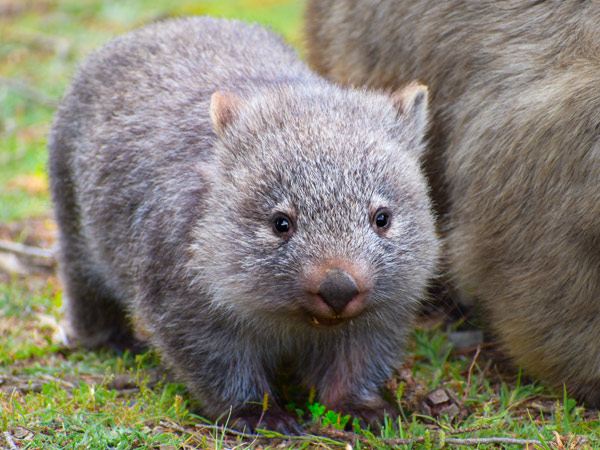
Baby wombat next to his mother at Maria Island Tasmania.
Animals are not toys that sit and wait for you to activate them. (Image: Getty Images/Tiffany-Jane Pe Than)

For wild animals, this means watching them behave normally in their own natural environment, not interacting with them in unnatural ways, Rice adds. The best bet?

  • Watch them from a safe distance. Moving in too close will unsettle them and in some cases, force them to relocate. A good indicator of whether you’re too close or not is whether they’ve modified their behaviour since you arrived. If they’ve stopped eating or moving around, it’s time for you to back away.
  • Resist the urge to touch them – even if they come up to you. Cute and cuddly they may be, but they’re still wild animals who can lash out unexpectedly, particularly if they have their baby or babies nearby.
  • Avoid feeding them. As tempting as it may be to throw a few pieces of bread, it’s helpful to remember that not only can food outside of an animal’s natural diet make them sick, but we also don’t want them to associate humans with food so that they’re always attacking us (like the mighty seagull) for our snacks.

If you see someone willfully putting an animal in harm’s way? Intervene immediately (if deemed safe to do so) but also make sure you call the police, who will refer you to the appropriate service related to your location. Take care, too, to give the responder information on the time and place the incident occurred, the type of offence and a clear description of the perpetrator or perpetrators. You can also contact your state RSPCA. In NSW, for example, RSPCA NSW, along with Animal Welfare League NSW and NSW Police, have the power to investigate and commence prosecutions under the Prevention of Cruelty to Animals Act.

Emily also says that PETA has added their voice to the others calling for the American’s deportation. “PETA is calling on authorities to deport Sam Strable and to fine her but is also calling on her to pay up at least AUD$100,000 dollars to bona fide wildlife rescue organisations as partial compensation for taking a terrified wombat baby from their mother for her personal, selfish interests. If Strable is contrite and has learned any lesson, she needs to show it. While she cannot ever compensate for the distress caused a wombat mother and her joey, she can help other wildlife in trouble by forking over cold hard cash to bona fide certified rescue groups that are currently inundated with wildlife displaced by Cyclone Alfred."

So what now becomes of Strable? Australian immigration officials are currently reviewing the conditions of the influencer’s visa to determine whether immigration law had been breached, but Home Affairs Minister Tony Burke has released a statement indicating that Strable may have a difficult time returning to our shores. “Either way, given the level of scrutiny that will happen if she ever applies for a visa again, I’ll be surprised if she even bothers," he said.

Let’s just hope the penalty for such behaviour sends a strong message to anyone tempted to stoop to cruelty for content.
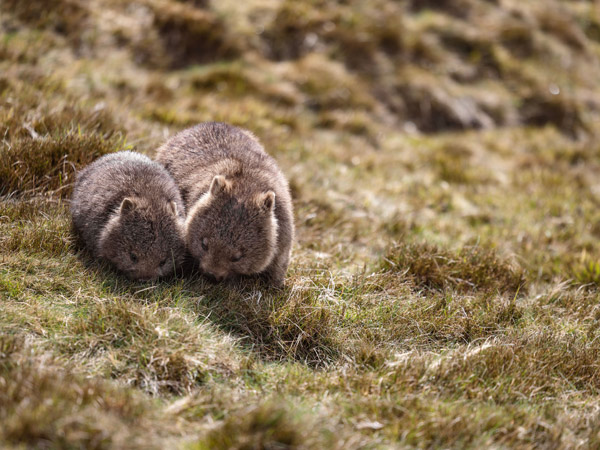
Mum and bub wombats
Report animal cruelty if you see it online. (Image: Dearna Bond)

*Note: The percentage of chlamydia infection in koalas was exaggerated for effect, actual percentages range from population to population and can be as low as zero and as high as 90 per cent.

Need tips, more detail or itinerary ideas tailored to you? Ask AT.

AI Prompt

Want to see more stories from Australian Traveller in your Google search results?

  1. Click here to set Australian Traveller as a preferred source.
  2. Tick the box next to "Australian Traveller". That's it.
Dilvin Yasa
Dilvin Yasa is a freelance journalist, author and TV presenter whose travels have taken her from the iceberg graveyards of Antarctica to the roaring rapids of Uganda. Always on the lookout for that next unforgettable meal, wildlife moment or 80s-themed nightclub, she is inexplicably drawn to polar destinations despite detesting the cold.
View profile and articles
hero media

8 experiences to get the most out of Victoria’s Great Ocean Road

    Louis Costello Louis Costello
    Beyond the winding bitumen and coastal views lies another side to Victoria’s most famous route.

    There’s something hypnotic about this stretch of Victoria’s coast. Maybe it’s the way the road hugs the ocean so tightly, or how the cliffs catch the sun in colours you can’t name. Or, for local Victorians who drove this route as kids, maybe it’s the memories of winding through the impossibly tall trees as they seemingly guide you on your journey like wooden guardian angels. Most travellers know it for the 12 Apostles, but there are plenty of alternate experiences on the Great Ocean Road equally as worthy of your time.

    So, next time you’re in that neck of the woods, park that car, stretch those legs and try these experiences.

    1. Discover living culture at Budj Bim

    Budj Bim Cultural Landscape Tourism
    Walk across the world’s oldest known aquaculture system. (Image: Visit Victoria)

    Breakaway Creek’s Budj Bim Cultural Landscape is a masterclass in educational storytelling. Join a guided tour with Budj Bim Cultural Landscape Tourism to walk across the world’s oldest known aquaculture system, where the Gunditjmara people built sophisticated eel traps and stone channels more than 6,000 years ago.

    Budj Bim’s aquaculture system predates Egypt’s pyramids by roughly 2,000 years, making it one of the oldest examples of human engineering on Earth. If that’s not enough to get your history-loving family members involved in this road trip, we’re out of ideas.

    2. Unwind in the hot springs at Warnambool

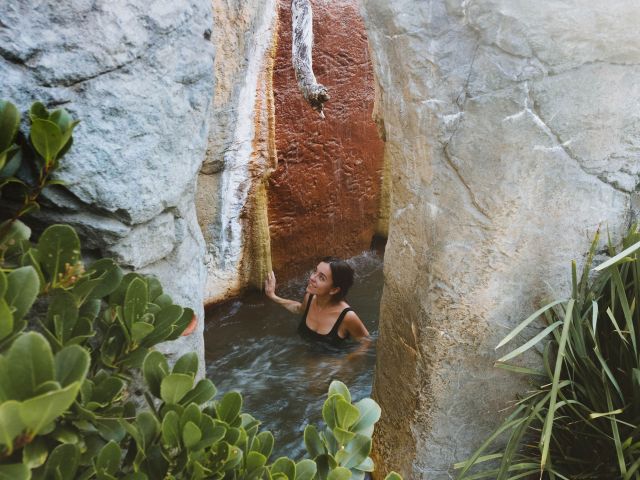
    woman relaxing at Deep Blue Hot Springs
    Let mineral-rich water heal you.

    If your legs need a break after a long drive, Deep Blue Hot Springs is your remedy. The geothermal pools sit just metres from the coastline, filled with mineral-rich water that bubbles up from deep underground. Move between open-air baths, waterfall pools and quiet zones made for meditation.

    The water in Deep Blue’s geothermal pools comes from an ancient aquifer nearly 850 metres below the Earth’s surface, which, in non-scientific terms, means it’s far more likely to have healing properties than the mineral water you’d find at the supermarket.

    3. Take to the air at Princetown

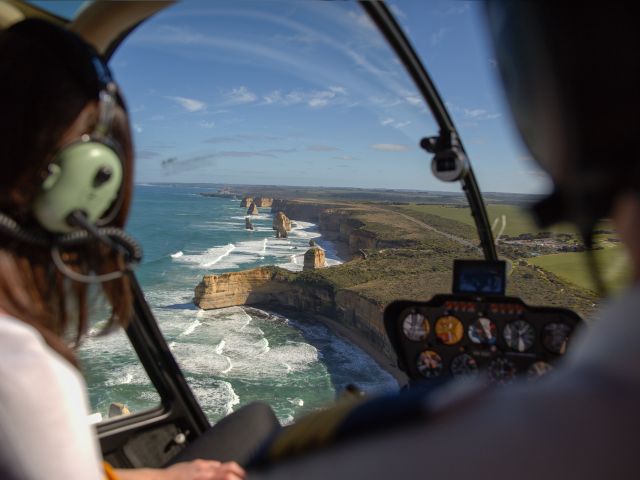
    12 Apostles Helicopters flight alternate experiences on the Great Ocean Road
    See an icon from a different view.

    You may have seen the Twelve Apostles from the trusty viewing platform, but a helicopter flight with 12 Apostles Helicopters shows you just how sprawling and rugged this coastline really is.

    The trip covers everything from Port Campbell to London Bridge (not to be confused with the UK’s own), giving you a rare chance to watch waves carving the limestone cliffs from above. It’s worth noting that the limestone stacks of the Twelve Apostles are said to erode by roughly two centimetres each year, so the longer you leave it, the less of the Apostles you’ll see.

    4. Step into the past at Flagstaff Hill

    Flagstaff Hill Maritime Village and Museum
    Visit a time of yore.

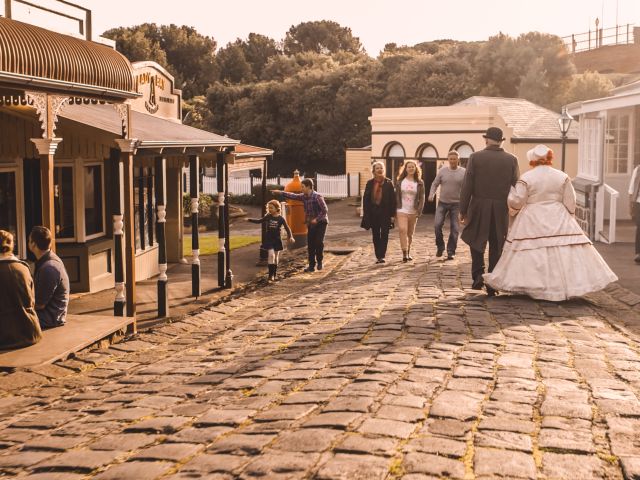
    Continue the tour through Warnambool at Flagstaff Hill Maritime Village and Museum, a recreated 19th-century port town. Hear stories from the days when shipwrecks were as common as seagulls, with an astounding 180 ships believed to have sunk along the Shipwreck Coast in less than five years.

    The night show, complete with lights, sound, and sea spray, brings the coastline’s most dramatic stories to life.

    If you’re staying the night, Simon’s Waterfront offers relaxed dining with fresh local seafood and oceanfront views. Order the catch of the day and toast to the sailors who never made it ashore.

    5. Learn to surf in Torquay, Lorne, or Anglesea

    kid having a lesson with Go Ride A Wave
    Learn how to hang 10. (Image: Visit Victoria)

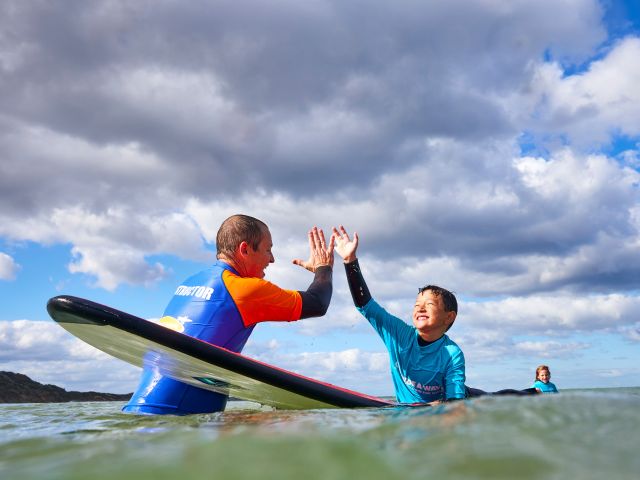
    Whether you’ve surfed before or can barely stand on a board, Go Ride A Wave will have you upright in no time. Torquay’s calm beaches are ideal for first-timers, while Lorne and Anglesea bring a bit more energy for those unafraid to get dunked.

    Bells Beach, just down the road from Torquay, has even hosted the world’s longest-running professional surfing competition since 1962. So, for those eager to have a gander at pros using surfboards like they’re an additional appendage, the competition usually runs sometime in autumn.

    6. Tackle the trails in Forrest

    Barwon Flow Trails Otways Flow MTB
    Hire a bike and explore MTB trails through the Otways.

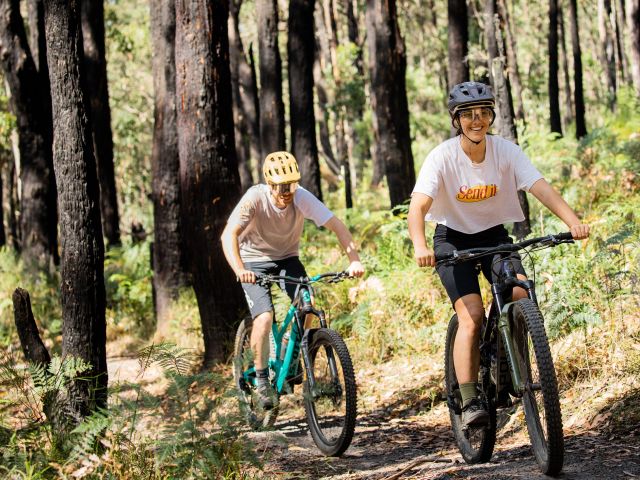
    Forrest is a haven for mountain bikers thanks to an expansive network of trails through stunning natural scenery. The Forrest trail network has almost 100 kilometres of singletrack across 36 trails, so there’s something for every level of rider. That’s including more than 60 kilometres of purpose-built mountain bike trails winding through the Otways’ dense forest. Cycle through ancient myrtle beech trees and towering tree ferns, with smaller ferns and soft mosses forming a carpet at your feet.

    Hire a bike from Forrest MTB Hire and take your pick from easy, scenic rides to more challenging singletracks, such as Red Carpet or Rollercoaster.

    7. See wildlife up close in Apollo Bay

    bush rat on Wildlife Wonders tour
    Get help spotting the locals. (Image: Doug Gimsey)

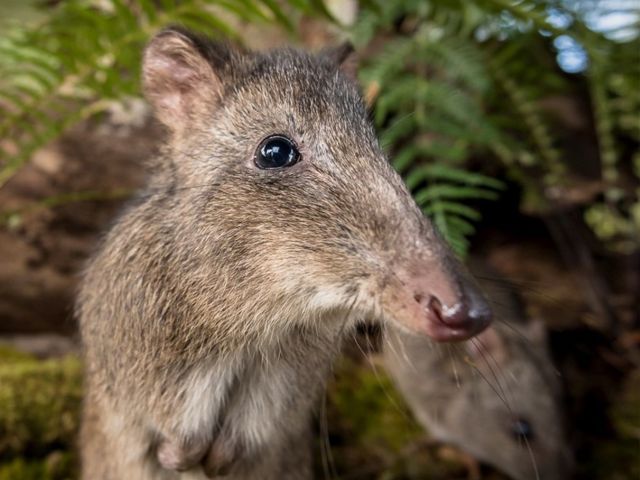
    If spotting koalas and kangaroos in the wild feels like winning the lottery, Wildlife Wonders gives you guaranteed sightings without cages or crowds. Every visit to the sanctuary helps fund the Conservation Ecology Centre which supports endangered species across the Otways, so your business is appreciated by humans and animals alike.

    The guided walk takes you through protected Otways habitat where you might spot potoroos (or joey lookalikes for those unfamiliar with a potoroo), wallabies, and sleepy koalas lounging in the trees.

    8. Visit the Cape Otway Lightstation

    Cape Otway Lightstation
    Delve into the tales of Cape Otway Lightstation.

    Towering over the sea on a cliff above the Southern Ocean, Cape Otway Lightstation has been guiding ships since 1848. Before the lighthouse was built, Cape Otway was one of the most treacherous points on the Victorian coast, with dozens of shipwrecks occurring in its surrounding waters. Pick the right day, and you may bump into a local willing to tell you about the wreck of Eric the Red.

    While at the Cape Otway Lightstation, explore the keeper’s quarters, walk the coastal trails, and take in views that only stop short at the horizon.

    And no, contrary to popular belief, the Round the Twist lighthouse is actually located in Split Point, just shy of two hours in the direction of Melbourne. Nothing’s stopping you from embarking on a lighthouse crawl, though.

    Plan your next no-stone-unturned journey along this iconic Aussie road at visitgreatoceanroad.org.au.