hero media

Where to see the best bioluminescence in Australia

A dazzling underwater world reveals itself after dark – and we know where to find it.

There are chemical reactions that bake your bread, rust your bike, and turn your water from still to sparkling. But perhaps one of the most magical chemical reactions on Planet Earth is that which lights up living things from the inside out: bioluminescence.

What is bioluminescence caused by?
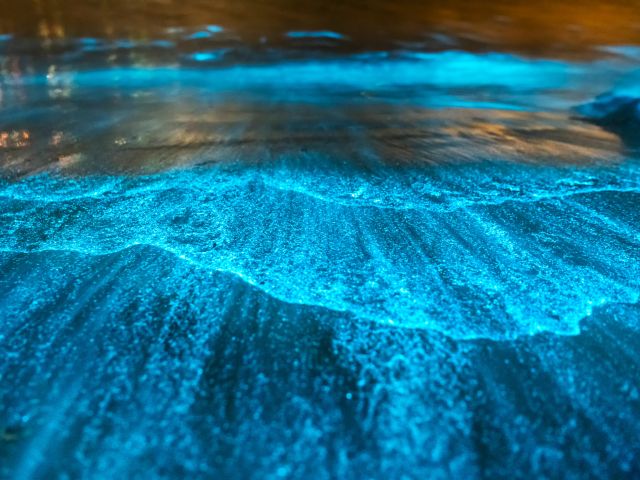
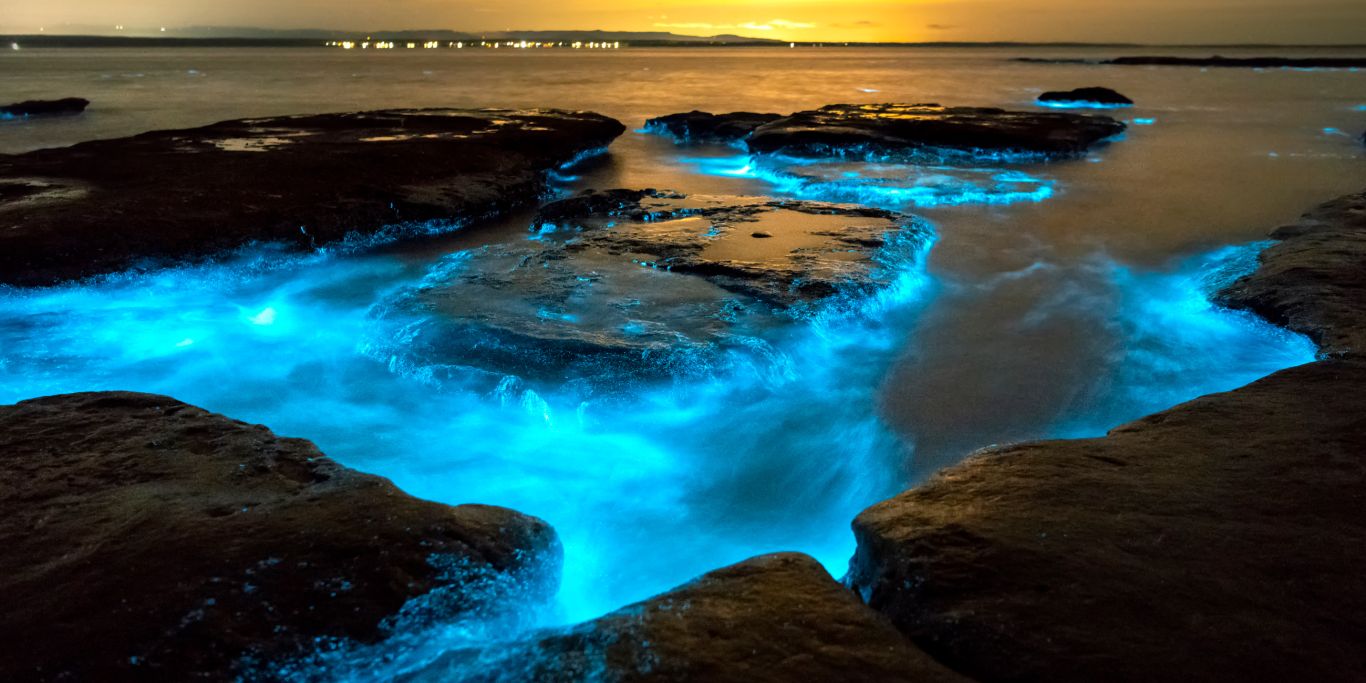
a bright and brilliant blue ocean at night
A chemical reaction in the water causes an ethereal glow. (Image: Getty/RugliG)

Bioluminescence is a primarily marine phenomenon, occurring in certain types of fish, plankton, jellyfish and other deep-sea invertebrates. It can take place on land, but this is much rarer, with fireflies, foxfire mushrooms and glow worms being amongst the most famous examples. In order to be bioluminescent, all these species share an important chemical duo: the molecule luciferin and the enzyme luciferase. When luciferin reacts with oxygen, catalysed by the luciferase as a spark might ignite a match, the reaction releases energy in the form of cold light from inside the organism. The colour of this light depends on the arrangement of luciferin molecules, although the colour you can most expect to see is a bright, brilliant blue.

Where in Australia can you see bioluminescence?
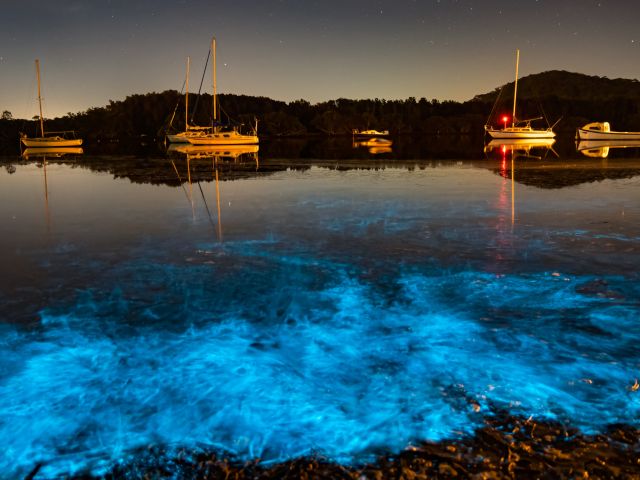
ocean water glows at night
Find dazzling waters in Tasmania, Victoria and New South Wales. (Image: Getty/Merrillie)

Thanks to nutrient-rich currents and greedy plankton, this sparkly show tends to hug the country’s south-eastern states, making Tasmania, Victoria and New South Wales the leading hotspots for seeing bioluminescence in Australia. Sightings in South Australia and Western Australia aren’t impossible (Port Lincoln on the Eyre Peninsula and Marina Mindarie near Perth have had documented flares), but it’s far, far rarer. Meanwhile, instead of glowing waves, the Northern Territory and Queensland are two of your best bets for spotting fireflies. Taking previous displays and recent sightings of bioluminescence into account, here’s a run-down of where to try first…

Tasmania

Noctiluca scintillans – an algae species that shows up red in daylight but transforms into a glittering blue after dark – seem especially fond of Australia’s island state. Best of all, you really don’t have to go far from Hobart to catch a glimpse. Seven Mile Beach, Montagu Bay, Howrah Beach and Ralphs Bay have all lit up on calm summer nights. Meanwhile, just off the eastern coast of Bruny Island, Storm Bay has even had recent sightings of the dazzling moon jellyfish. On the state’s eastern edge, brilliant pictures of both the red and blue blooms have been taken around Eaglehawk Neck, Pirates Bay and Port Arthur. If you’d rather be taken to the action, Tassie local and bioluminescent expert Dr Lisa Gershwin – who holds a literal PHD in ‘Jellyfish’ – runs a guided Glow Tour from Hobart, with dates throughout the year.

Need tips, more detail or itinerary ideas tailored to you? Ask AT.

AI Prompt

Victoria

A four-hour drive from Melbourne, the Gippsland Lakes region is a reliable spot for our electric-blue Noctiluca scintillans, particularly around the Lakes National Park. That said, inner-city spots like St Kilda and Port Melbourne have been seeing increasing flares of bioluminescence in Port Phillip Bay, making the glow surprisingly accessible without leaving the city. See also: the Mornington Peninsula, spots along the Surf Coast (particularly around Lorne and Wye River) and the Otways, whose dark, damp forests make them prime catch for glow worms, too.

New South Wales

New South Wales is home to perhaps Australia’s most famous bioluminescence hotspot: Jervis Bay, an almost three-hour drive south from Sydney. A perfect cocktail of shallow waters, sheltered beaches, minimal light pollution and an abundance of microscopic algae makes it a bio-spotter’s best chance at seeing the phenomenon up close. From Jervis Bay, the Noctiluca scintillans can appear all along the coast as far north as Lake Macquarie, propelling spots around Palm Beach and Wollongong into the spotlight. Closer to Sydney, Manly Beach and Shelley Beach are becoming increasingly blue come nightfall.

And if you want to get really serious, there’s a Bioluminescence Australia Facebook group you can join for live updates of activity around the country.

What time of year can I see bioluminescence in Australia?
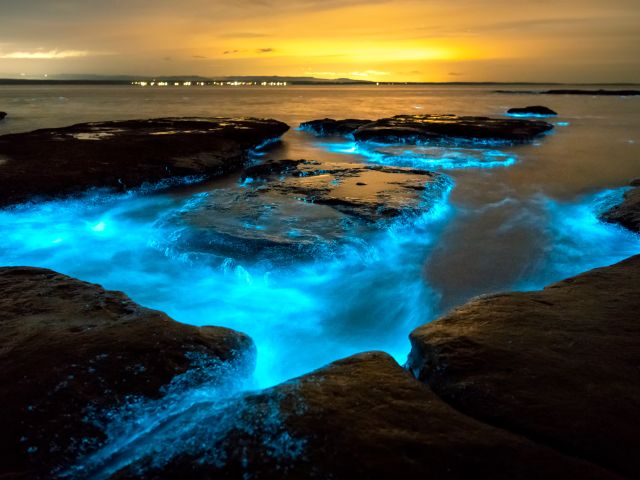
bright blue waters caused by bioluminescence
Bioluminescence is more active after the rain. (Image: Getty/RugliG)

While the phenomena can strike at any time of year, warm water makes for the best bioluminescent bedfellow, since heat stimulates the growth, reproduction and activity of our glow-in-the-dark microorganisms. In Australia, this means the late summer months heading into autumn (February to April) generally produce more frequent sightings. For ultimate sparkle-spotting conditions, bioluminescence is more active after a period of rainfall (rain washes nutrients from the land into the water, helping to trigger algae blooms), and is best viewed on a moonless light, with minimal light pollution.

Is it safe to touch bioluminescent water?
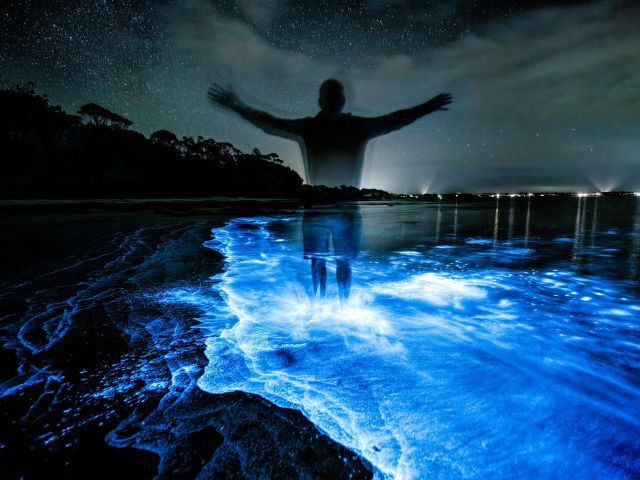
ocean water glows bright blue with a human silhouette in the background
Touching or disturbing the water too much can stress the light-emitting organisms. (Image: Trevor Mckinnon/Unsplash)

On the whole, it’s not recommended – bioluminescent organisms and the ecosystems they inhabit tend to be extremely delicate and vulnerable. Plus, by touching bioluminescent organisms in order to encourage the light, you are by default having to stress and disturb them – akin to poking a lion to make it roar. Some species are even toxic, and can cause skin irritation. Having said this, many glow-in-the-dark tours around the world do permit gentle touching, so long as no sunscreen, lotions or perfume is worn. Many will see you glide through bioluminescent waters on kayaks. The best advice? Exercise your own judgement and practice responsible tourism.

Want to see more stories from Australian Traveller in your Google search results?

  1. Click here to set Australian Traveller as a preferred source.
  2. Tick the box next to "Australian Traveller". That's it.
Hannah Ralph
Hannah Ralph is an award-winning travel editor turned freelance writer. She’s currently chasing stories across Australia, until reality (and her inexplicable fondness for chilly British weather) demands a return to the UK, where her globe-trotting career began more than a decade ago. Following a formative start as Features Assistant at The Sunday Times Travel Magazine, Hannah went on to hone her aviation chops for several years on the British Airways editorial team, serving as Editor and Deputy Editor on numerous titles, including the flagship in-flight mag, High Life. She later returned to The Times and Sunday Times as an in-house Travel Writer. Now freelance, Hannah finds herself a roaming reporter with bylines for Mr & Mrs Smith, The Telegraph, Business Traveller UK, National Geographic Traveller, Eurostar’s Metropolitan magazine, and more. Her mission? To track down all of Australia’s greatest, most unforgettable stays – and live what might just be the most glamorous gap year yet.
View profile and articles
hero media

This stretch of Sydney beaches topped the annual Best Australian Beaches list

    Carla Grossetti Carla Grossetti
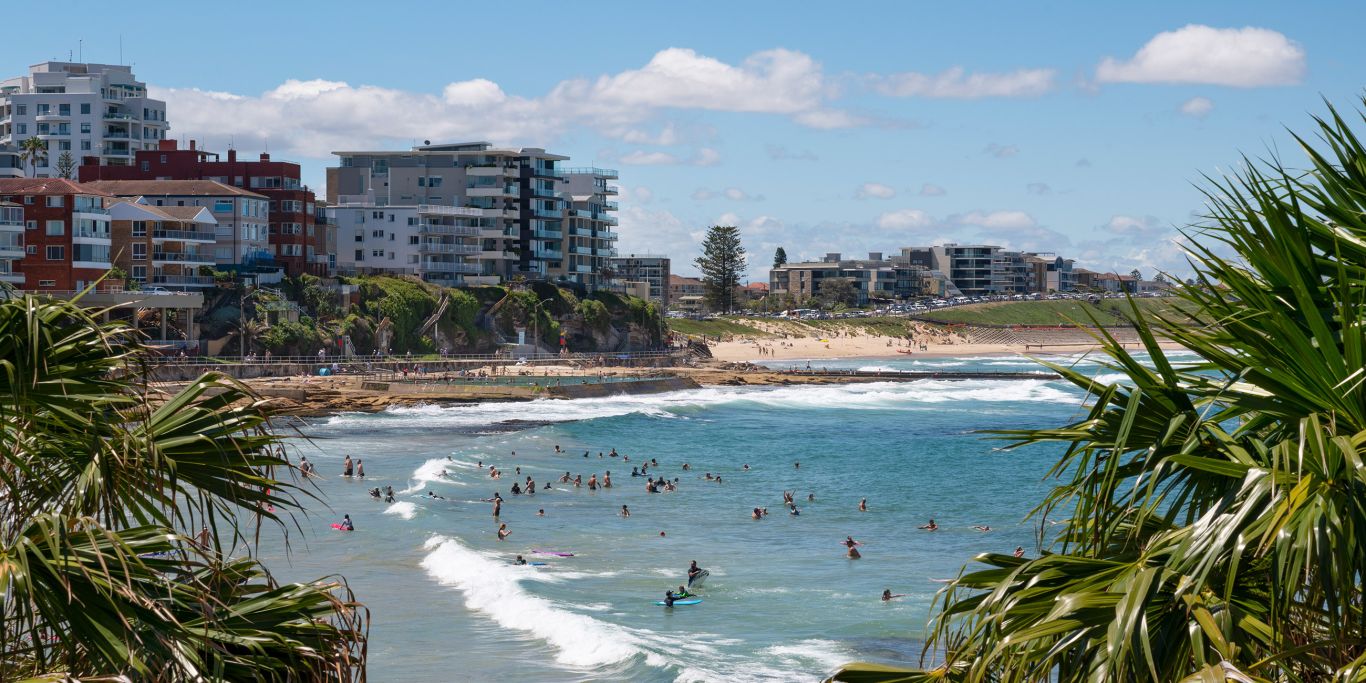
    Bate Bay’s sweep of beaches has been crowned Australia’s best for 2026, placing Sutherland Shire in the spotlight as a top coastal destination just south of Sydney’s CBD.

    The beaches fringing Bate Bay – Cronulla, North Cronulla, Wanda, Elouera and Greenhills – have topped Tourism Australia’s 2026 list of best Australian beaches (as curated by Beach Ambassador Brad Farmer). For locals, it’s less revelation, more recognition.

    The mood shifts from the moment you step off the T4 train service from Central to Cronulla and catch a glimpse of the ocean. At dawn, the Esplanade is already buzzing with regulars, and by mid-morning, parents have staked out a toasty spot on Cronulla Beach where excited toddlers clamber over rocks, and the Jellybean swim squad at Oak Park have donned their bright pink caps while singing Oh, What a Beautiful Mornin’.

    By the afternoon, towels are being collected from across the sand as visitors wander back to Cronulla in loose formation.

    North Cronulla beach
    Dive into the world’s best beaches.

    That’s the thing about Bate Bay beaches. This isn’t a story about a single beach. This long, uninterrupted sweep of sand and sea, where you can walk for kilometres without breaking stride, is not just enjoyed over summer; it’s a year-round destination. Here, Cronulla’s buzz gives way to Wanda’s wild edges, before stretching out to the quieter reaches of Greenhills.

    But while Bate Bay’s beaches may have taken top honours in the 2026 Best Australian Beaches list, they’re only part of the drawcard. Sutherland Shire stacks up as a full-spectrum coastal escape, where good food, national park adventures and on-the-water experiences sit within easy reach of the shoreline. Whether you’re planning a long weekend or stretching out a stay, here’s how to make the most of Cronulla beyond the sand, sea and surf.

    Beyond the beaches

    Dining

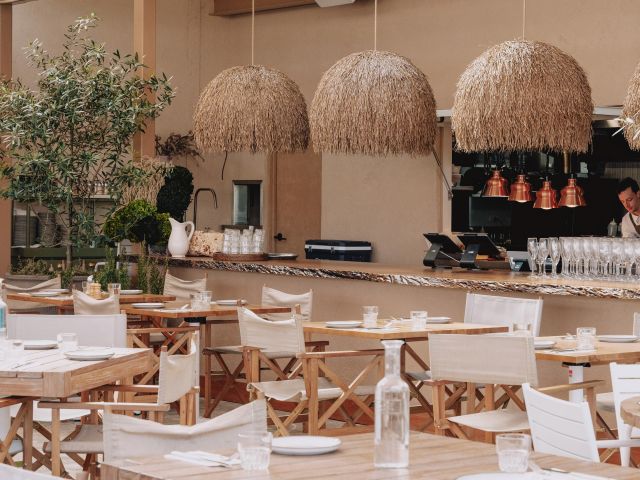
    the dining room at Pippis Cronulla
    Enjoy a sundowner by the sea at Pippis Cronulla.

    The Sutherland Shire dining scene delivers from early morning to late at night with a mix of vibrant cafes, bars and pubs. Start your day at Grind Espresso, where the coffee comes strong and fast. From there, drift towards HAM for pastries, best eaten buttery warm.   

    By midday, locals linger across sun-lit tables. Loaf and Next Door appeal to the surfers who come in for snacks after chasing waves. Blackwood’s Pantry and The Press are also popular for breakfast and lunch, while Pilgrim’s continues to hold a special place in the hearts of vegans.

    Newer arrivals signal where Cronulla is heading: Homer Rogue Taverna is being hailed as one of the best restaurants in Cronulla, with the confidence that comes from understanding what locals want. Ask a local to reveal their favourite restaurant for a special occasion, and it’ll likely be Pino’s Vino e Cucina al Mare, Yalla Sawa or Alphabet Street. Summer Salt, Sealevel, Benny’s, Bobbys and Pippis are a few of the best waterfront restaurants in the Shire.

    Finally, when most places are winding down, Duke’s Providore shifts gears to become Duke’s After Hours – a low-lit romantic spot perfect for a date night. Parc Pavilion, Northies Cronulla and bars The Blind Bear, Las Chicas and Low & Lofty’s are also part of Cronulla’s identity.

    Visit Bundeena

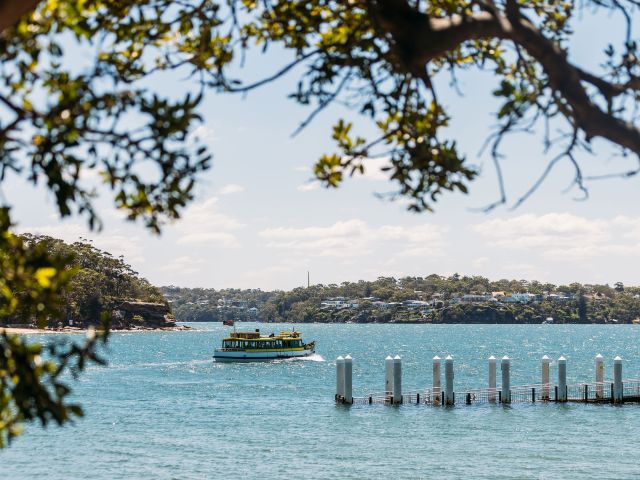
    Bundeena Ferry Wharf
    Catch a ferry to Bundeena.

    A short ferry ride from Cronulla, Bundeena offers a counterpoint to Cronulla’s mighty surf beaches. If Cronulla is the Shire’s social heart, Bundeena – or Bundenesia, as it’s affectionately known – is the place to go to exhale and unwind.

    Hop on the ferry from Cronulla, and within 30 minutes, you’ll be inhaling the eucalyptus-scented air. Check the creative pulse of the local community by timing your visit with the Bundeena Maianbar Art Trail on the first Sunday of every month.

    One of the best things to do in Bundeena is paddle into Cabbage Tree Basin with Bundeena Kayaks. Follow the five-kilometre Jibbon Beach Loop Track that leads past quiet coves to ancient Indigenous rock art, or simply find a stretch of pearl-white sand to relax on.

    Pristine walking trails

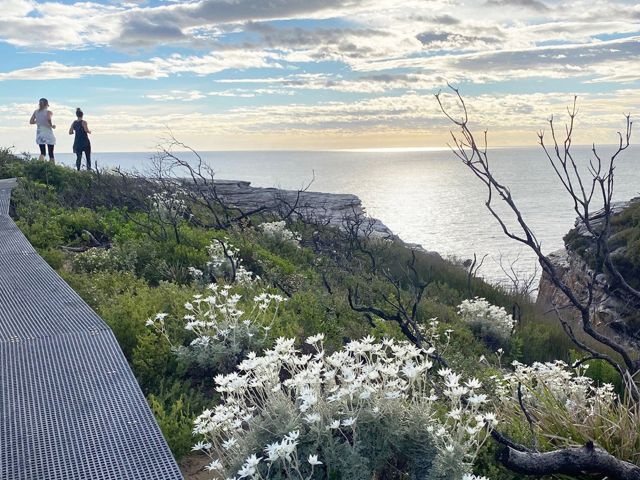
    Royal National Park Cape Baily Walking Track
    Cool off with a coastal stroll.

    Beyond the coastline, Sutherland Shire offers myriad ways to shift gears. Royal National Park – the oldest national park in Australia – sits just minutes from the surf. Clifftop walks trace the edge of the continent, the rugged bushland is threaded with creeks and hidden waterfalls, and a network of tracks rewards those willing to go a little further.

    Take the Coast Track, where the land drops cleanly into the ocean over sheer cliffs that have been stacked together like giant Jenga. Or veer inland, where pockets of forest cool the air and filter the light. It’s a reminder of how close nature sits to the bustle of suburbs in the Sutherland Shire.

    Enjoy whale watching

    humpback whale sighting noosa experiences
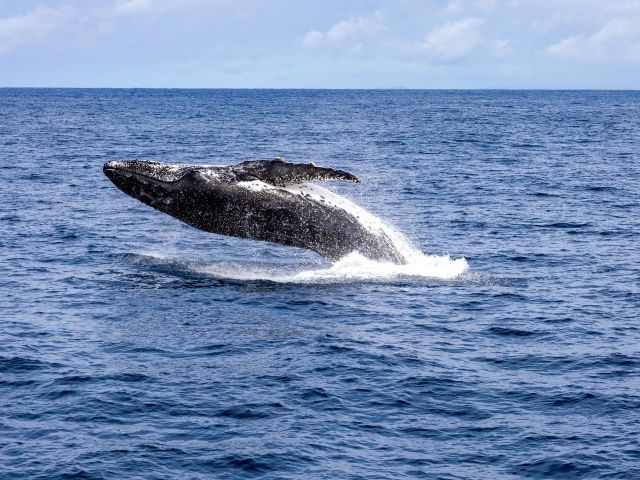
    Spot whales from May to October. (Credit: The Edit Suite)

    Twist your binoculars until the ocean is in focus, stretched like a creased blue sheet all around.  Come May, the East Coast becomes the humpback highway. Thousands of whales migrate along this stretch of coastline each year, their movements tracked by keen eyes from vantage points like the Cape Solander platform in Kamay Botany Bay National Park, one of the best places for whale watching in Australia. There’s something quietly thrilling about seeing that first telltale spout or the arc of a breaching body against the vastness of the sea. From June to October, whale-watching cruises depart from Cronulla, offering a closer look at the migration.

    Awards come and go. But places like Cronulla endure because they belong as much to the visitors as they do the early-morning swimmers, walkers and surfers.

    Plan your escape at visitsutherlandshire.com.au.