Bushrangers today, eh?

hero media
Over a friendly meal with a wandering yarn-spinner, Peter Russell-Clarke learns that the days of the outback outlaw are far from over. They’ve just lowered their sights a little.

I often think about Mad Mac. Sean Macintosh of the Outback was one of those unforgettable rogues. Loveable, but . . . well, different. But then again so were (and still are) quite a few of the outback characters.

Bobby One Leg for instance. He couldn’t read, yet could recite the poem The Highwayman flawlessly. “The road was a ribbon of moonlight across the purple moor," he’d intone like an Aussie Laurence Olivier. “The highwayman came riding, riding up to the old inn door."

Then there was Charlie Chop Chop, the Chinese cook who could disguise anything under a wok full of cabbage and water chestnuts. There was Ron the Roo Shooter, who compiled an Aussie Outback Dictionary that he tried to have translated into Japanese in case the lads from Nippon decided to have another crack at taking over the joint. And there was Shirley Temple, the horse breaker. And Jumping Jill, the highway prostitute. They all have fascinating yarns to tell but, in truth, their stories pale into insignificance compared to the stories of their own lives.

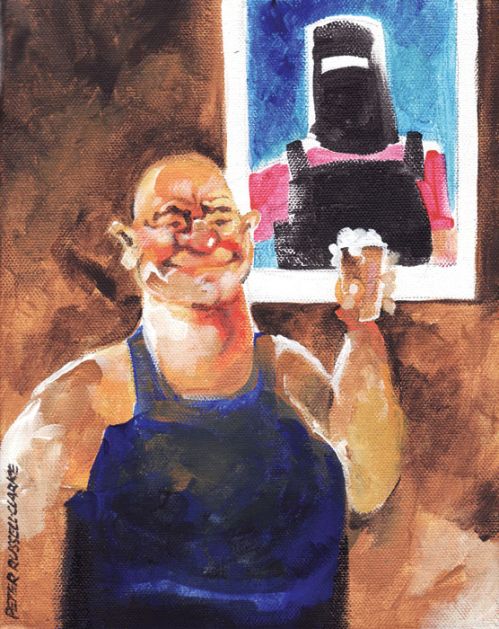
But one of the most interesting characters I’ve ever come across was Perc. I didn’t believe the old bushy for a moment, but I had to admit he was entertaining. “My Dad’s great uncle was Ned Kelly’s cook," he once told me, nodding solemnly. “He was never given credit for keeping the Kelly boys healthy, but without old Claude keeping them regular, goodness knows what sort of mess they would’ve been in.

“Ya see, Ned and his gang couldn’t be stopping any old time for nature’s call, could they?" I nodded that I indeed agreed that they couldn’t. But I confess I wasn’t sure what he meant. “Imagine trying to squat with the weight of that armour draped over ya," Perc continued. I hoped he wasn’t going to detail what I now perceived were the regular functions he was alluding to.

“Of course, Claude the cook had designed his armour to be more functional than Ned’s," said Perc. “Instead of plough shields, his armour was his woodfired stove – one of them ones with doors for the ovens and firebox and such. He’d put his stove on whenever armour was needed, an’ when he wanted a pee he’d simply open the appropriate door and he was away. At mealtimes he discarded the stove, reassembled it, lit the fire and cooked their grub. As long as they didn’t have to move quickly, everything was hunky-dory."


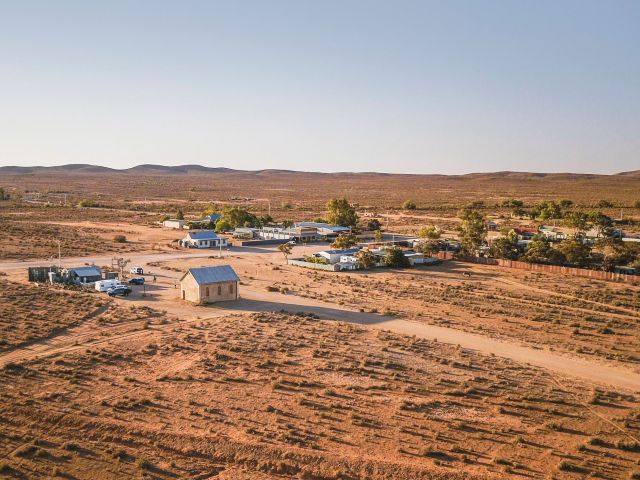
I met Perc at a stopover on the Hume Highway just up the road from Holbrook in south central NSW. I was travelling through to Wagga, then planned to drive across to the Alice and up to Tennant Creek in my trusty motorhome. Perc was towing one of those collapsible tent-trailers with the bed that pops out the back. I’d stopped for a cup of green tea. Perc had stopped because he wanted to stop.

“I often drive around Ned’s old territory," Perc confided. “Even cook some of old Claude’s recipes. Ya know, Ned Kelly was a beekeeper at one stage. That’s why he moved around a lot. And, of course, why Claude used honey so much."

I confessed that I hadn’t known, but was intrigued – why did it mean Ned had to move from place to place?

“Well, he had to follow the honey flow, mate. Wherever the blossom was flowering, the bees needed to be right there and right on time, otherwise the bees starved and Ned got no honey."

“Okay," I said, pouring Perc a beer. “But if Claude wore his stove, surely all the doors were in the front. Which might be all right for No.1s, but what about No.2s? And what about his helmet? Don’t tell me he wore a saucepan; how would he see? If he’d had eyeholes, the saucepan would leak when being used for more conventional purposes."

“Claude’s cooking wasn’t conventional, mate," laughed Perc. “Far bloody from it. An’ ya see, Claude was always running away from danger, so the front of the stove was on his back region. He peed through the flu, which is at the back of the stove. An’ he didn’t need eyeholes in his helmet because, if any threat presented itself, he shut his eyes tight and took off."

I thought all that through as I poured us both another beer. “Have ya got a red?" asked Perc shyly. “Shiraz f’preference. I’m not big on Pinot Noir. More a sheilas’ drink, eh?"

By now the sun had danced down behind red river gums, which stood sentinel at the end of a billabong in a paddock between us and the river. I’d made some tabouli, which I was thinking of having with a few falafel and hummus. “Would you like to join me?" I asked Perc.

“Bloody oath, mate, whatever it is. An’ I’ve got a coupla chops and some spuds. Ned loved lamb – it was plentiful from over any fence – and spuds were a must for a growing Irish lad."

And so it happened. The next day we parted after muesli for me and bacon and eggs for Perc. I took my time tidying and stowing away, all the while grinning over Perc and his Kelly yarns. But as I pulled out of the stopover, a police car drew alongside and indicated that I stop. I did.

“G’day, mate," growled a broad-shouldered copper. “Have you seen a little bloke driving an old Holden Ute towing a campervan?"

“What’s he done?" I asked.

“He’s like a bloody gypsy, the little bugger. Nicks hubcaps and spare wheels and anything else not tied down. I see you’ve got no hubcaps, so I thought you might’ve met up with him."


It was years later that I read about Perc’s death. I was camping by a billabong at Talmalmo, just down from Jingellic. I was reading the local paper. Perc had been arrested for robbery – convicted – but died of a heart attack on his way to the lock-up. Unlike Ned, he beat the gallows.

Want to see more stories from Australian Traveller in your Google search results?

  1. Click here to set Australian Traveller as a preferred source.
  2. Tick the box next to "Australian Traveller". That's it.
Australian Traveller

Australian Traveller

View profile and articles
hero media

The Macedon Ranges is Victoria’s best-kept food and wine secret

    Emily McAuliffe Emily McAuliffe
    Located just an hour north-west of Melbourne, the largely undiscovered Macedon Ranges quietly pours some of Australia’s finest cool-climate wines and serves up some of Victoria’s best food.

    Mention the Macedon Ranges and most people will think of day spas and mineral springs around Daylesford, cosy weekends away in the countryside or the famous Hanging Rock (of enigmatic picnic fame). Or they won’t have heard of the Macedon Ranges at all.

    But this cool-climate destination has been inconspicuously building a profile as a high-quality food and wine region and is beginning to draw serious attention from oenophiles and epicureans alike.

    The rise of Macedon Ranges wine

    liquid gold barrels at Kyneton Ridge Estate Winery
    Barrels of liquid gold at Kyneton Ridge Estate Winery. (Image: Chloe Smith Photography)

    With elevations ranging from 300 to 800 metres, Macedon Ranges vineyards are among the highest in the country. This altitude, combined with significant day/night temperature swings, makes for a slow ripening season, in turn nurturing wines that embody elegance and structure. Think crisp chardonnays, subtle yet complex pinot noirs and delicate sparkling wines, along with niche varietals, such as gamay and nebbiolo.

    Despite the region’s natural advantages – which vary from estate to estate, as each site embodies unique terroir depending on its position in relation to the Great Dividing Range, soil make-up and altitude – the Macedon Ranges has remained something of an insider’s secret. Unlike Victoria’s Yarra Valley or Mornington Peninsula, you won’t find large tour buses here and there’s no mass marketing drawing crowds.

    Many of the 40-odd wineries are family-run operations with modest yields, meaning the wineries maintain a personal touch (if you visit a cellar door, you’ll likely chat to the owner or winemaker themselves) and a tight sales circle that often doesn’t go far beyond said cellar door. And that’s part of the charm.

    Though wines from the Macedon Ranges are just starting to gain more widespread recognition in Australia, the first vines were planted in the 1860s, with a handful of operators then setting up business in the 1970s and ’80s. The industry surged again in the 1990s and early 2000s with the entry of wineries, such as Mount Towrong, which has an Italian slant in both its wine and food offering, and Curly Flat, now one of the largest estates.

    Meet the new generation of local winemakers

    the Clydesdale barn at Paramoor.
    The Clydesdale barn at Paramoor. (Image: Chloe Smith Photography)

    Then, within the last 15 years, a new crop of vignerons like Andrew Wood at Kyneton Ridge Estate, whose vineyard in 2024 was the first in the Macedon Ranges to be certified by Sustainable Winegrowing Australia; Geoff Plahn and Samantha Reid at Paramoor, who have an impressive cellar door with a roaring fire and studded leather couches in an old Clydesdale barn; and Ollie Rapson and Renata Morello at Lyons Will, who rapidly expanded a small vineyard to focus on top-shelf riesling, gamay, pinot noir and chardonnay, have taken ownership of local estates.

    Going back to the early days, Llew Knight’s family was one of the pioneers of the 1970s, replacing sheep with vines at Granite Hills when the wool industry dwindled. Knight is proud of the fact that all their wines are made with grapes from their estate, including a light, peppery shiraz (some Macedon wineries purchase fruit from nearby warmer areas, such as Heathcote, particularly to make shiraz) and a European-style grüner veltliner. And, as many other wineries in the region do, he relies on natural acid for balance, rather than an additive, which is often required in warmer regions. “It’s all about understanding and respecting your climate to get the best out of your wines,” he says.

    farm animals atKyneton Ridge Estate
    Curious residents at Kyneton Ridge Estate. (Image: Chloe Smith Photography)

    Throughout the Macedon Ranges, there’s a growing focus on sustainability and natural and low-intervention wines, with producers, such as Brian Martin at Hunter Gatherer making waves in regenerative viticulture. Martin previously worked in senior roles at Australia’s largest sparkling winemaking facility, and now applies that expertise and his own nous to natural, hands‑off, wild-fermented wines, including pét‑nat, riesling and pinot noir. “Wild fermentation brings more complexity,” he says. “Instead of introducing one species of yeast, you can have thousands and they add different characteristics to the wine.”

    the vineyard at Kyneton Ridge Estate Winery
    The estate’s vineyard, where cool-climate grapes are grown. (Image: Chloe Smith Photography)

    Most producers also focus on nurturing their grapes in-field and prune and pick by hand, thus avoiding the introduction of impurities and the need to meddle too much in the winery. “The better the quality of the fruit, the less you have to interfere with the natural winemaking process,” says Wood.

    Given the small yields, there’s also little room for error, meaning producers place immense focus on quality. “You’re never going to compete in the middle [in a small region] – you’ve got to aim for the top,” says Curly Flat owner Jeni Kolkka. “Big wineries try to do things as fast as possible, but we’re in no rush,” adds Troy Walsh, owner and winemaker at Attwoods. “We don’t use commercial yeasts; everything is hand-harvested and everything is bottled here, so we bottle only when we’re ready, not when a big truck arrives.” That’s why, when you do see a Macedon Ranges product on a restaurant wine list, it’s usually towards the pointy end.

    Come for the wine, stay for the food

    pouring sauce onto a dish at Lake HouseDaylesford
    Dining at Lake House Daylesford is a treat. (Image: Chloe Smith Photography)

    If wine is the quiet achiever of the Macedon Ranges, then food is its not-so-secret weapon. In fact, the area has more hatted restaurants than any other region in Victoria. A pioneer of the area’s gourmet food movement is region cheerleader Alla Wolf-Tasker, culinary icon and founder of Daylesford’s Lake House.

    For more than three decades, Wolf-Tasker has championed local producers and helped define what regional fine dining can look like in Australia. Her influence is palpable, not just in the two-hatted Lake House kitchen, but in the broader ethos of the region’s dining scene, as a wave of high-quality restaurants have followed her lead to become true destination diners.

    the Midnight Starling restaurant in Kyneton Ridge Estate Winery
    The hatted Midnight Starling restaurant is located in Kyneton. (Image: Chloe Smith Photography)

    It’s easy to eat well, whether at other hatted restaurants, such as Midnight Starling in the quaint town of Kyneton, or at the wineries themselves, like Le Bouchon at Attwoods, where Walsh is inspired by his time working in France in both his food offering and winemaking.

    The beauty of dining and wine touring in the Macedon Ranges is that it feels intimate and unhurried. You’re likely to meet the winemaker, hear about the trials of the latest vintage firsthand, and taste wines that never make it to city shelves. And that’s worth getting out of the city for – even if it is just an hour down the road.

    dishes on the menu at Midnight Starling
    Delicate dishes on the menu at Midnight Starling. (Image: Chloe Smith Photography)

    A traveller’s checklist

    Staying there

    the accommodation at Cleveland Estate, Macedon Ranges
    Stay at the Cleveland Estate. (Image: Chloe Smith Photography)

    Soak up vineyard views from Cleveland Estate near Lancefield, embrace retro charm at Kyneton Springs Motel or indulge in lakeside luxury at the Lake House.

    Eating there

    Enjoy a four-course menu at the one-hatted Surly Goat in Hepburn Springs, Japanese-inspired fare at Kuzu in Woodend or unpretentious fine dining at Mount Monument, which also has a sculpture park.

    Drinking there

    wine tasting at PassingClouds Winery, Macedon Ranges
    A tasting at Passing Clouds Winery. (Image: Chloe Smith Photography)

    Settle in for a tasting at Boomtown in Castlemaine, sample local drops at the cosy Woodend Cellar & Bar or wine-hop around the many cellar doors, such as Passing Clouds.

    the Boomtown Winery and Cellar Bar signage
    Boomtown Winery and Cellar Bar. (Image: Chloe Smith Photography)

    Playing there

    a scenic river in Castlemaine
    Idyllic scenes at Castlemaine. (Image: Chloe Smith Photography)

    Wander through the seasonal splendour of Forest Glade Gardens, hike to the summit of Hanging Rock, or stroll around the tranquil Sanatorium Lake.

    purple flowers hanging from a tree
    Purple flowers hanging from a tree. (Image: Chloe Smith Photography)
    Bushrangers today, eh? - Australian Traveller