Here’s how to check, redeem and make the most of your Virgin travel credits before they’re gone for good.
Aussies with unused Virgin Australia travel credits issued during the pandemic are being urged to check their accounts, with an expiry date now officially set. In a recent announcement shared via its app, the airline revealed that all eligible credits must be used before the deadline – giving customers less than a month to act.
Do you have an eligible Virgin travel credit?
If your travel plans with Virgin Australia were disrupted or cancelled during the pandemic, there’s a chance you still have unused points sitting in your account. And now, you’ve got until the end of the financial year to use them or lose them.
Virgin Australia has officially set an expiry date for all COVID-related flight credits. (Credit: Getty/Ryan Fletcher)
According to the national carrier, all flight credits issued between 21 April 2020 and 31 July 2022 must be redeemed before 30 June 2026.
Previously, the airline was only allowing these credits to be used for flights also taken before the deadline. But after intense backlash over the short redemption window, especially given its refusal to provide refunds, Virgin has backtracked.
Credits were originally issued for passengers impacted during the pandemic. (Credit: Getty/Prathaan)
In a statement, Virgin has explained, “Customers with COVID credits will continue to have until 30 June 2026 to redeem their credits. Any flights booked using those credits can now be taken up to 27 May 2027".
There is also some leeway when it comes to who can use them. Virgin is allowing eligible credits to be used by passengers not included on the original booking, such as family and friends.
How to check and redeem your travel credit
Currently, there’s an estimated $93 million worth of travel credits that have yet to be claimed by customers. Here’s how to find out if any belong to you – and how to use them before they expire.
Travellers can check their eligibility via Virgin’s website or app. (Credit: Getty/Tippapatt)
The first step is logging in to your Virgin Australia Travel Bank account, either online or via the airline’s app, where you can view your credit balance. From there, search for the flights you’d like to book via Virgin’s website.
Any fare displayed on the flight selection page can be purchased using a travel credit. After deciding on your flights (remembering travel dates must occur prior to 30 June), enter the passenger’s details, whether that’s you or someone travelling on your behalf.
Most domestic flights operated by Virgin Australia can be booked using travel credits. (Credit: Getty/Ai_Yoshi)
Next, select Travel Bank as your payment method and you’ll be prompted to log in to your account. Once confirmed, your credit will be applied and you’ll receive a flight confirmation email as normal. If you encounter any issues along the way, simply contact Virgin on 136789 for assistance.
Need tips, more detail or itinerary ideas tailored to you? Ask AT.
AI Prompt
What about Jetstar and Qantas?
When it comes to Australia’s other major airlines, Qantas and Jetstar, COVID flight credits are treated a little differently. Unlike Virgin, eligible credits issued during the pandemic do not expire.
Jetstar and Qantas also provided travel credits to customers impacted by COVID. (Credit: Getty/SCM Jeans)
The policy was introduced following public backlash in 2023, when Qantas introduced its own expiry date for flight credits issued during COVID. At the time, the airline owed approximately $570 million worth of travel credits to both domestic and international passengers.
Now, Qantas customers with eligible travel credits can apply for a refund, an especially handy option amid the carrier’s ongoing flight cuts. Meanwhile, Jetstar customers can continue using their credits as travel vouchers indefinitely.
Those wanting to check their eligibility can do so via each airline’s website. Who knows, your next holiday could be closer (and cheaper) than you think!
Want to see more stories from Australian Traveller in your Google search results?
Tick the box next to "Australian Traveller". That's it.
Taylah Darnell is Australian Traveller's Writer & Producer. She has been passionate about writing since she learnt to read, spending many hours either lost in the pages of books or attempting to write her own. This life-long love of words inspired her to study a Bachelor of Communication majoring in Creative Writing at the University of Technology Sydney, where she completed two editorial internships. She began her full-time career in publishing at Ocean Media before scoring her dream job with Australian Traveller. Now as Writer & Producer, Taylah passionately works across both digital platforms and print titles. When she's not wielding a red pen over magazine proofs, you can find Taylah among the aisles of a second-hand bookshop, following a good nature trail or cheering on her EPL team at 3am. While she's keen to check out places like Scotland and North America, her favourite place to explore will always be her homeland.
Located just an hour north-west of Melbourne, the largely undiscovered Macedon Ranges quietly pours some of Australia’s finest cool-climate wines and serves up some of Victoria’s best food.
Mention the Macedon Ranges and most people will think of day spas and mineral springs around Daylesford, cosy weekends away in the countryside or the famous Hanging Rock (of enigmatic picnic fame). Or they won’t have heard of the Macedon Ranges at all.
But this cool-climate destination has been inconspicuously building a profile as a high-quality food and wine region and is beginning to draw serious attention from oenophiles and epicureans alike.
The rise of Macedon Ranges wine
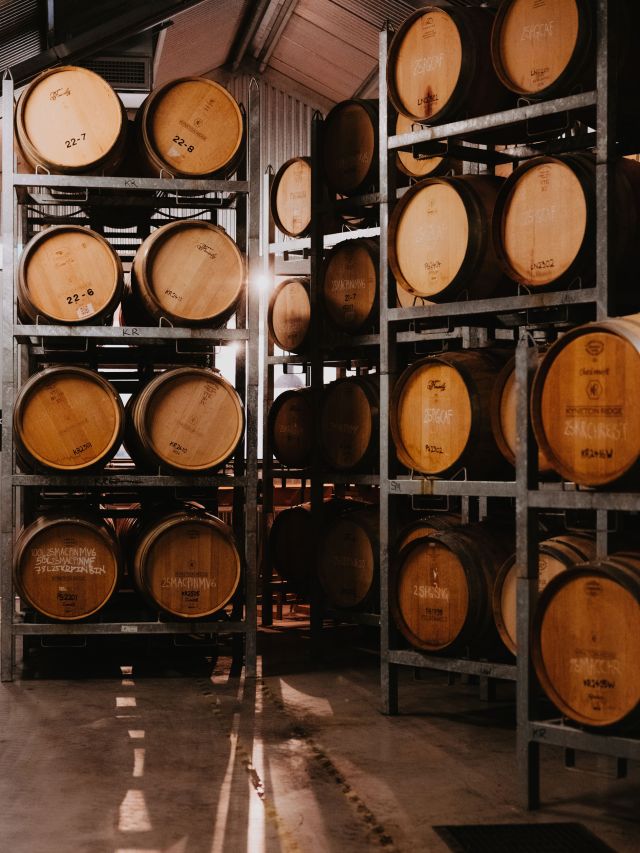
Barrels of liquid gold at Kyneton Ridge Estate Winery. (Image: Chloe Smith Photography)
With elevations ranging from 300 to 800 metres, Macedon Ranges vineyards are among the highest in the country. This altitude, combined with significant day/night temperature swings, makes for a slow ripening season, in turn nurturing wines that embody elegance and structure. Think crisp chardonnays, subtle yet complex pinot noirs and delicate sparkling wines, along with niche varietals, such as gamay and nebbiolo.
Despite the region’s natural advantages – which vary from estate to estate, as each site embodies unique terroir depending on its position in relation to the Great Dividing Range, soil make-up and altitude – the Macedon Ranges has remained something of an insider’s secret. Unlike Victoria’s Yarra Valley or Mornington Peninsula, you won’t find large tour buses here and there’s no mass marketing drawing crowds.
Many of the 40-odd wineries are family-run operations with modest yields, meaning the wineries maintain a personal touch (if you visit a cellar door, you’ll likely chat to the owner or winemaker themselves) and a tight sales circle that often doesn’t go far beyond said cellar door. And that’s part of the charm.
Though wines from the Macedon Ranges are just starting to gain more widespread recognition in Australia, the first vines were planted in the 1860s, with a handful of operators then setting up business in the 1970s and ’80s. The industry surged again in the 1990s and early 2000s with the entry of wineries, such as Mount Towrong, which has an Italian slant in both its wine and food offering, and Curly Flat, now one of the largest estates.
Meet the new generation of local winemakers
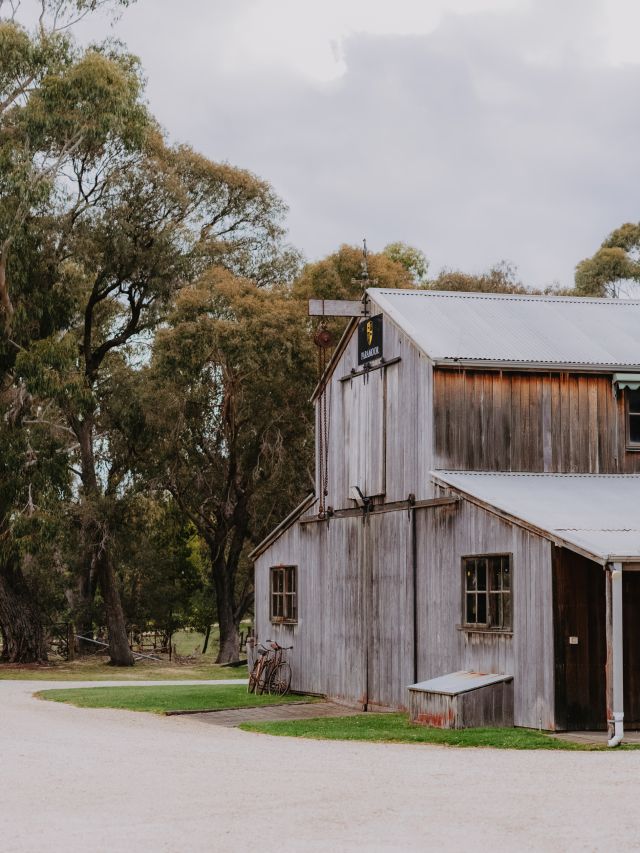
The Clydesdale barn at Paramoor. (Image: Chloe Smith Photography)
Then, within the last 15 years, a new crop of vignerons like Andrew Wood at Kyneton Ridge Estate, whose vineyard in 2024 was the first in the Macedon Ranges to be certified by Sustainable Winegrowing Australia; Geoff Plahn and Samantha Reid at Paramoor, who have an impressive cellar door with a roaring fire and studded leather couches in an old Clydesdale barn; and Ollie Rapson and Renata Morello at Lyons Will, who rapidly expanded a small vineyard to focus on top-shelf riesling, gamay, pinot noir and chardonnay, have taken ownership of local estates.
Going back to the early days, Llew Knight’s family was one of the pioneers of the 1970s, replacing sheep with vines at Granite Hills when the wool industry dwindled. Knight is proud of the fact that all their wines are made with grapes from their estate, including a light, peppery shiraz (some Macedon wineries purchase fruit from nearby warmer areas, such as Heathcote, particularly to make shiraz) and a European-style grüner veltliner. And, as many other wineries in the region do, he relies on natural acid for balance, rather than an additive, which is often required in warmer regions. “It’s all about understanding and respecting your climate to get the best out of your wines,” he says.
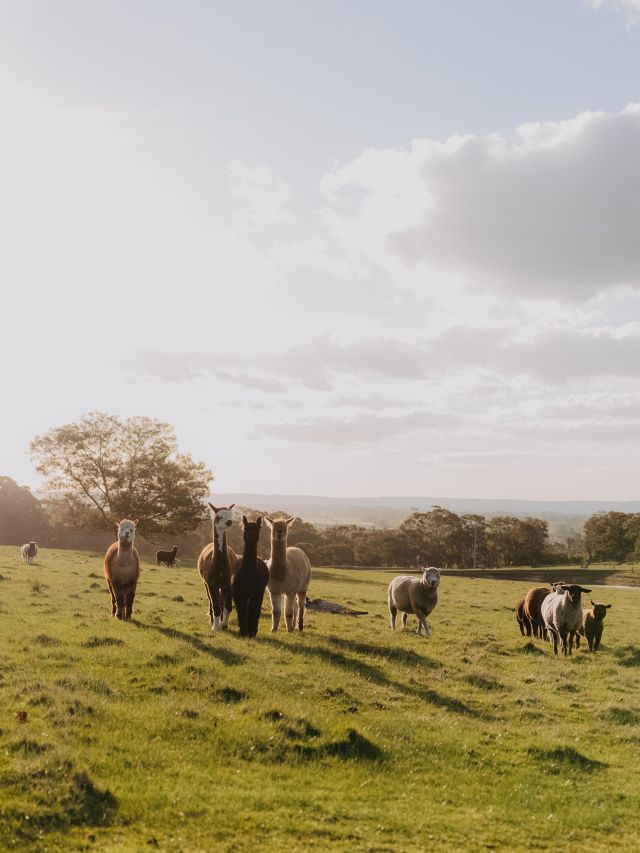
Curious residents at Kyneton Ridge Estate. (Image: Chloe Smith Photography)
Throughout the Macedon Ranges, there’s a growing focus on sustainability and natural and low-intervention wines, with producers, such as Brian Martin at Hunter Gatherer making waves in regenerative viticulture. Martin previously worked in senior roles at Australia’s largest sparkling winemaking facility, and now applies that expertise and his own nous to natural, hands‑off, wild-fermented wines, including pét‑nat, riesling and pinot noir. “Wild fermentation brings more complexity,” he says. “Instead of introducing one species of yeast, you can have thousands and they add different characteristics to the wine.”
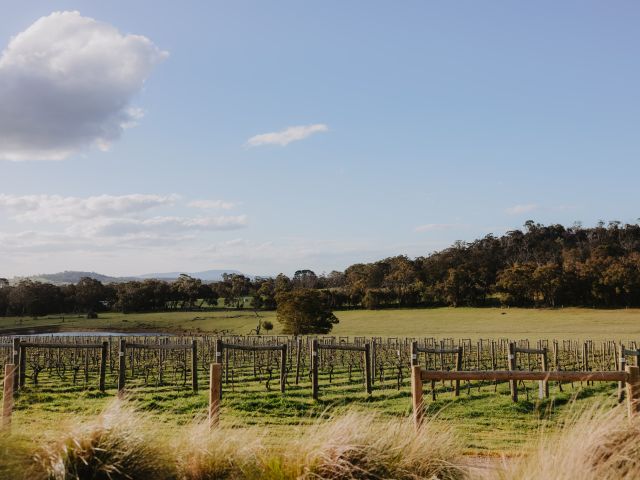
The estate’s vineyard, where cool-climate grapes are grown. (Image: Chloe Smith Photography)
Most producers also focus on nurturing their grapes in-field and prune and pick by hand, thus avoiding the introduction of impurities and the need to meddle too much in the winery. “The better the quality of the fruit, the less you have to interfere with the natural winemaking process,” says Wood.
Given the small yields, there’s also little room for error, meaning producers place immense focus on quality. “You’re never going to compete in the middle [in a small region] – you’ve got to aim for the top,” says Curly Flat owner Jeni Kolkka. “Big wineries try to do things as fast as possible, but we’re in no rush,” adds Troy Walsh, owner and winemaker at Attwoods. “We don’t use commercial yeasts; everything is hand-harvested and everything is bottled here, so we bottle only when we’re ready, not when a big truck arrives.” That’s why, when you do see a Macedon Ranges product on a restaurant wine list, it’s usually towards the pointy end.
Come for the wine, stay for the food
Dining at Lake House Daylesford is a treat. (Image: Chloe Smith Photography)
If wine is the quiet achiever of the Macedon Ranges, then food is its not-so-secret weapon. In fact, the area has more hatted restaurants than any other region in Victoria. A pioneer of the area’s gourmet food movement is region cheerleader Alla Wolf-Tasker, culinary icon and founder of Daylesford’s Lake House.
For more than three decades, Wolf-Tasker has championed local producers and helped define what regional fine dining can look like in Australia. Her influence is palpable, not just in the two-hatted Lake House kitchen, but in the broader ethos of the region’s dining scene, as a wave of high-quality restaurants have followed her lead to become true destination diners.
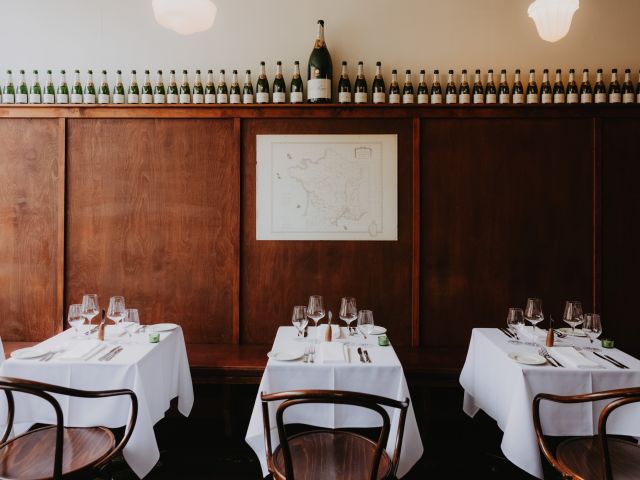
The hatted Midnight Starling restaurant is located in Kyneton. (Image: Chloe Smith Photography)
It’s easy to eat well, whether at other hatted restaurants, such as Midnight Starling in the quaint town of Kyneton, or at the wineries themselves, like Le Bouchon at Attwoods, where Walsh is inspired by his time working in France in both his food offering and winemaking.
The beauty of dining and wine touring in the Macedon Ranges is that it feels intimate and unhurried. You’re likely to meet the winemaker, hear about the trials of the latest vintage firsthand, and taste wines that never make it to city shelves. And that’s worth getting out of the city for – even if it is just an hour down the road.
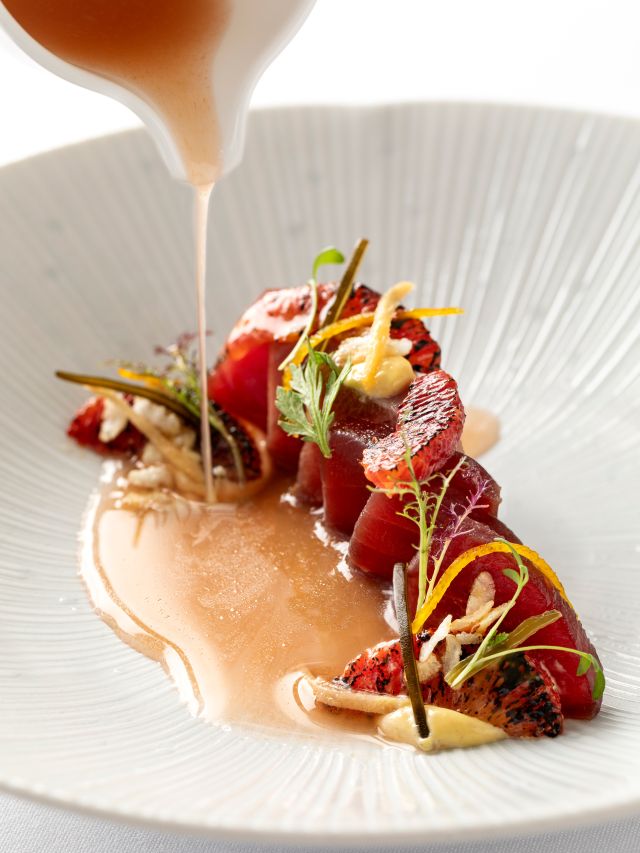
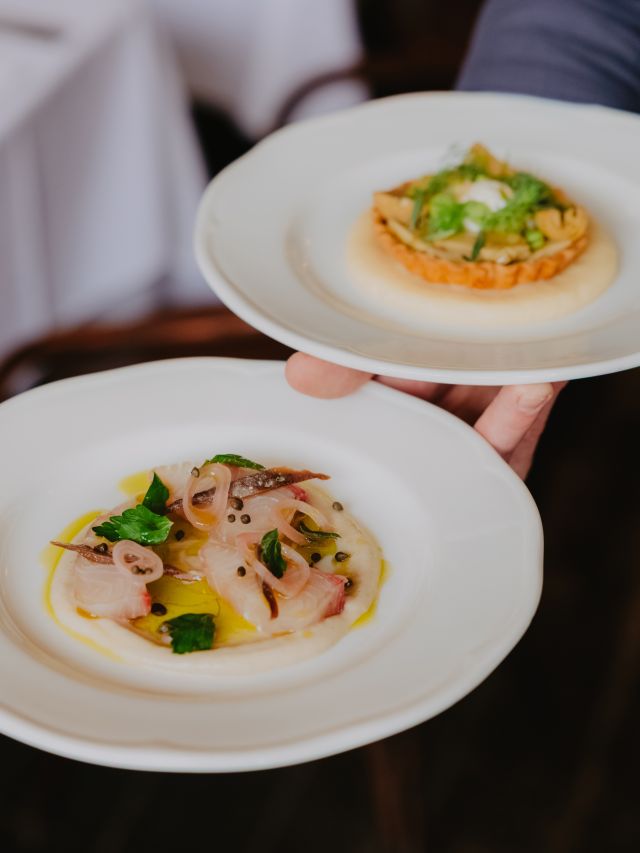
Delicate dishes on the menu at Midnight Starling. (Image: Chloe Smith Photography)
A traveller’s checklist
Staying there
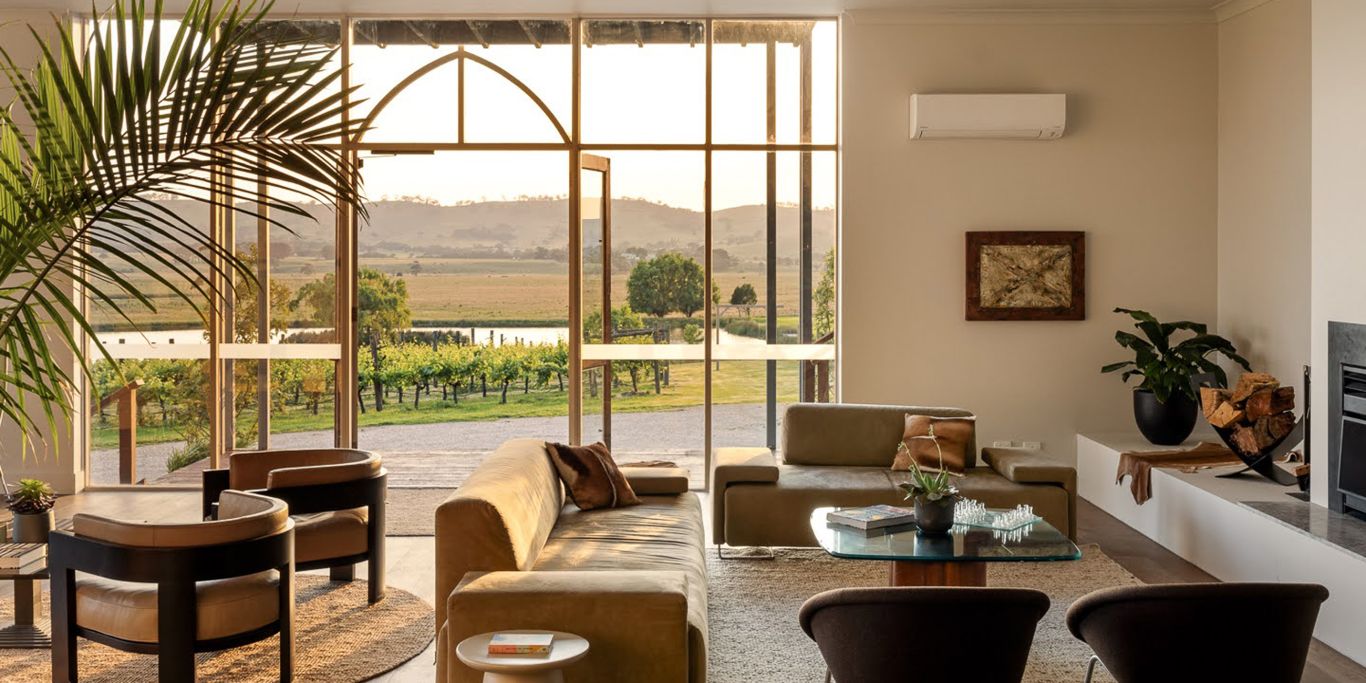
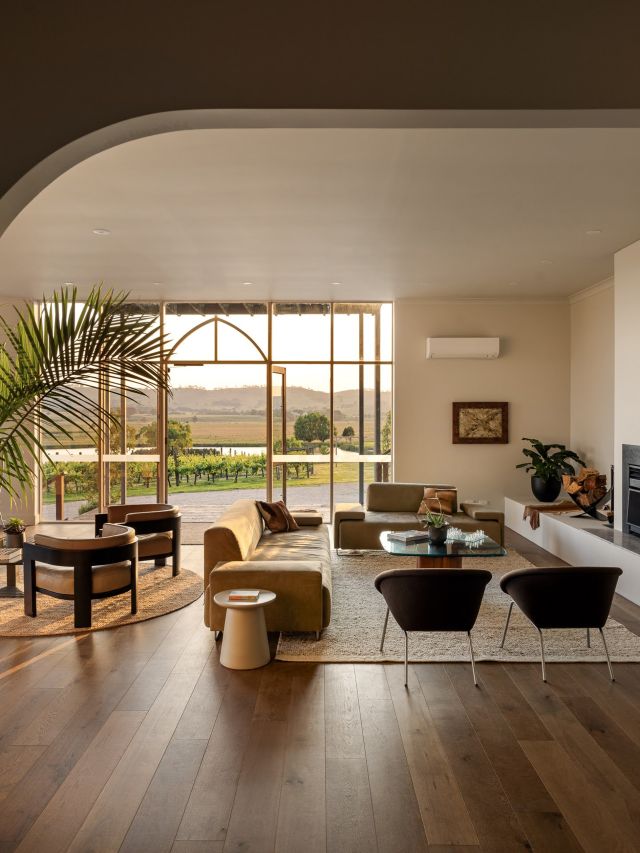
Stay at the Cleveland Estate. (Image: Chloe Smith Photography)
Enjoy a four-course menu at the one-hatted Surly Goat in Hepburn Springs, Japanese-inspired fare at Kuzu in Woodend or unpretentious fine dining at Mount Monument, which also has a sculpture park.
Drinking there
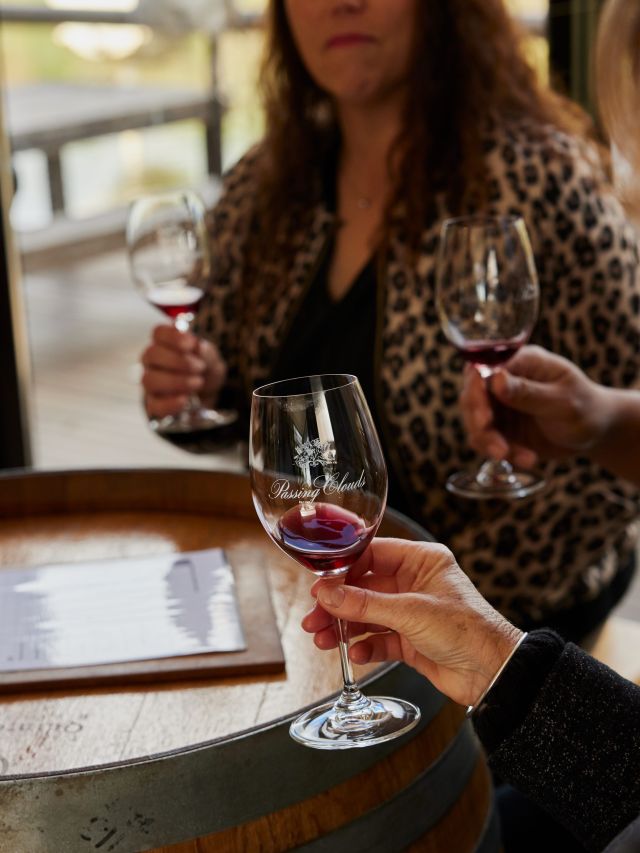
A tasting at Passing Clouds Winery. (Image: Chloe Smith Photography)
Settle in for a tasting at Boomtown in Castlemaine, sample local drops at the cosy Woodend Cellar & Bar or wine-hop around the many cellar doors, such as Passing Clouds.
Boomtown Winery and Cellar Bar. (Image: Chloe Smith Photography)
Playing there
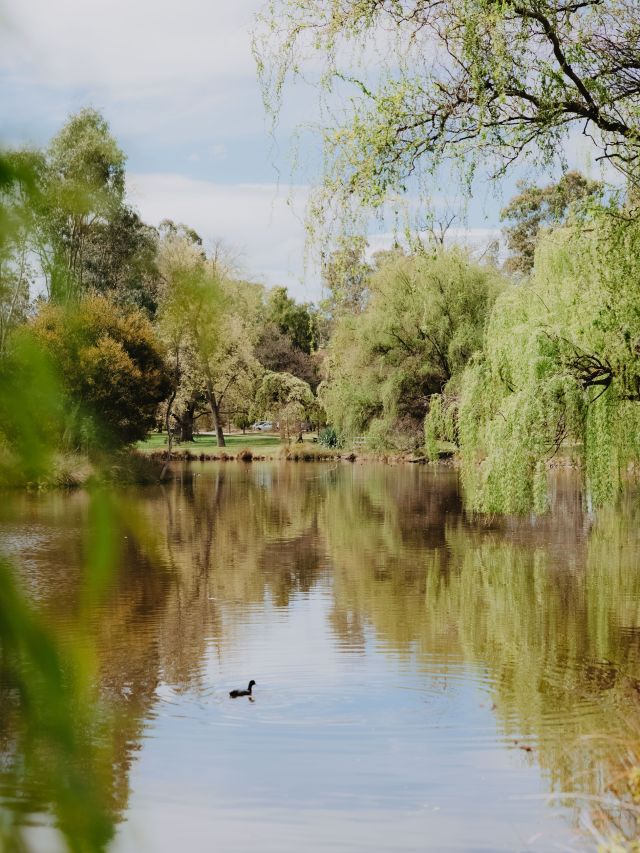
Idyllic scenes at Castlemaine. (Image: Chloe Smith Photography)
Wander through the seasonal splendour of Forest Glade Gardens, hike to the summit of Hanging Rock, or stroll around the tranquil Sanatorium Lake.
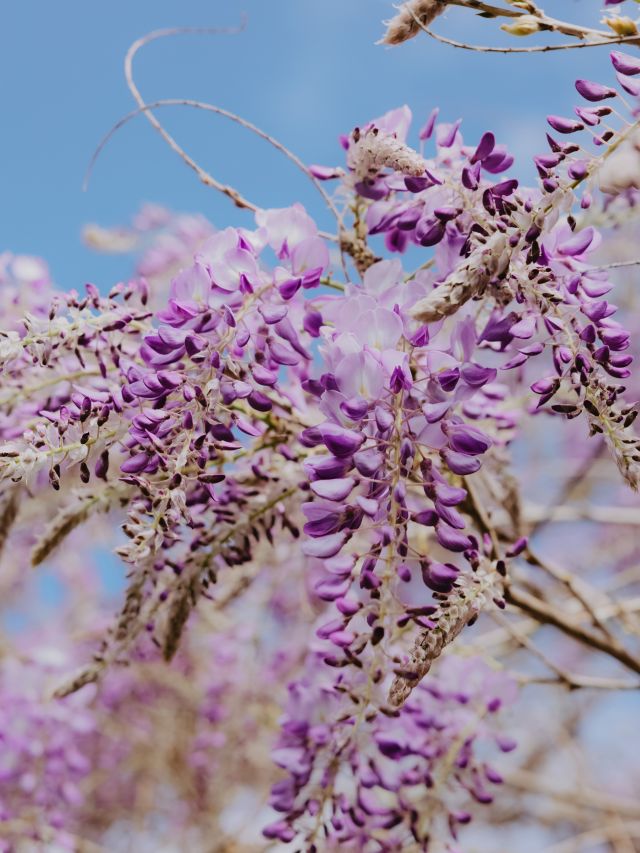
Purple flowers hanging from a tree. (Image: Chloe Smith Photography)