5 of the best Scuba Diving experiences in Australia

hero media
There’s a whole other side to the Australian coast that few see – but here’s how to get a scuba view with a difference worth diving for.

1. Underwater Photography Workshop, Port Stephens, NSW

Mastered the art of taking photos on land (or not)? Either way, you can now get snap happy underwater with this Dive 2000’s unique photography workshop.
 
Over a weekend at beautiful Port Stephens, you’ll improve your underwater photo skills as trained instructors teach you practical knowledge and techniques on capture styles, equipment, composition and lighting plus more. The quality ‘selfies with the fish’ you’ll bring back will impress the kids to no end… Suitable for intermediate divers; from $395 per adult.

2. Project Manta, Lady Elliot Island, Queensland

In the waters of Lady Elliot Island of the GBR, you can combine your love of scuba diving with doing good, contributing to the world’s first manta identification database (while frolicking with them in the water).
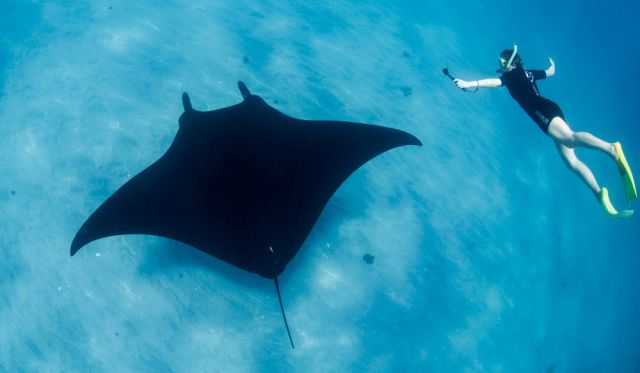
Manta Rays Lady Elliot Island
Glide along with the elegant manta rays.

Over eight days, you’ll photograph the mantas, study their habitat and help out leading scientists, in between unwinding at the very lovely Lady Elliot Island Eco Resort. See Earthwatch. Suitable for intermediate divers; from $3595 per adult.

3. Freshwater cave Diving, Mt Gambier, SA

Never heard of this experience? Good – the locals want to keep it that way! Diving Mt Gambier’s outrageously clear sinkholes is a truly unique experience: spot the rare pygmy perch and aquatic eels in Ewens Ponds, or head to the popular Piccaninnie Pond, where you can swim through the 30-metre-high, underwater limestone chamber aptly nicknamed The Cathedral.
 
Hopefully you’ll spot some tortoises on your way, too. Suitable for beginners, diving permits from $11 per adult; See Mount Gambier Point attractions

Need tips, more detail or itinerary ideas tailored to you? Ask AT.

AI Prompt

4. East Coast Dive Trail, Tasmania

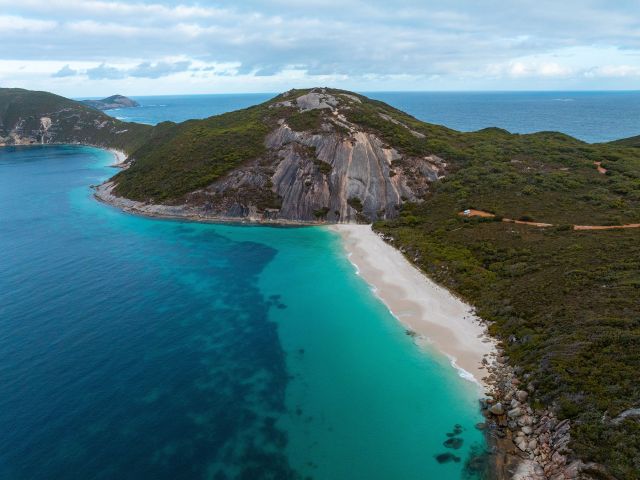
It’s not the first thing that comes to mind when you think of Tasmania, but the east coast of this southern state offers 11 surprisingly great dive sites. From the northern town of Binalong Bay to Tasman Island, you’ll find shipwrecks, seahorses and everything in between in these turquoise waters; hire a car for a few days, make it a DIY scuba crawl and hop from location to location experiencing the sites (and sights) along the way.
 
Most are suitable for beginners. See Discover Tasmania for more information.

5. Dive with the wild sea lions, Baird Bay, SA

We just had to include this dive, which was voted one of our 100 Greatest Holidays of Australia. The wild Australian sea lions at Baird Bay are playful, cheeky and said to be more intrigued by us than we are of them.
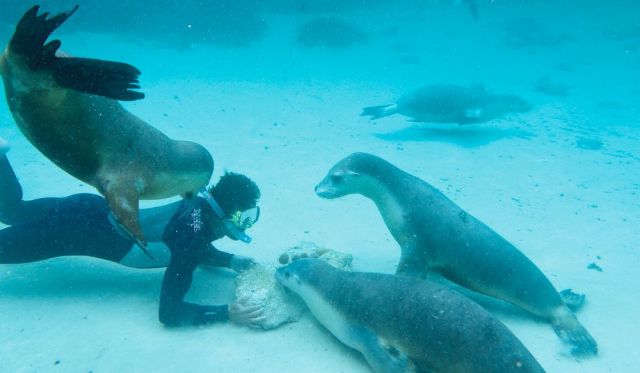
Scuba diving with sea lions Baird Bay, South Australia.
Just sea lion around: Baird Bay, South Australia.

Play with them in the clear lagoons just off the Eyre Peninsula, experiencing their distinctive antics – and the local aquatic flora – at the same time. There are also bottlenose dolphins in the area, so you may get lucky and see both! Suitable for beginners; from $150 per adult, $75 per child; bairdbay.com


hero media

This geological wonder is hiding in the heart of Victoria

    Michael Turtle Michael Turtle
    Mythical, historical and most of all, spectacularly beautiful, Buchan Caves demands you take your time – and a tour. 

    In the pools of water, so still they could be mirrors, the reflections of the stalactites make these limestone towers seem even taller. Almost 400 million years ago, an underground river carved through the rock to create the Buchan Caves. Now, artworks created by dripping water adorn these subterranean galleries: stalactites hanging from the ceiling, pillars connecting some to the ground, even curtain-like wave formations clinging to the stone.

    Caves House
    Visit the caves for the day or stay onsite in the campground or at the self-contained Caves House. (Image: Ben Savage)

    “This is called the Fairy Cave because it’s full of fairy dust,” a guide tells visitors as they enter a cavern glittering with “calcite that’s solidified into thousands of tiny little diamond shapes”.  Buchan Caves is Victoria’s largest cave system, but Fairy Cave is a highlight and, along with nearby Royal Cave, is accessible only by tour. Naturally cold, naturally dark, these caverns deep below the surface light up as the local experts tell their stories. 

    couple walking in cave
    You’ll need to book a guided tour to see the caves. (Image: Tourism Australia)

    Among the hundreds of caves, some can be easily accessed from the surface. For instance, a casual stroll along the FJ Wilson Interpreted Walk, as kangaroos watch on from beneath acacia trees, leads into the 400-metre-long Federal Cave and its natural steps of white limestone. A slightly longer track, the Granite Pools Walk heads through soaring forest down into moss-covered gullies where the calls of lyrebirds trill through the leaves. 

    A quick history lesson on Buchan Caves 

    Buchan Caves
    Buchan Caves are a must-visit attraction in Gippsland. (Image: Tourism Australia)

    Among the geology and the nature are millennia of history. This part of East Gippsland connects the high country to the coast and was long a place of refuge for the local Gunaikurnai people on seasonal migrations to the mountains. Archaeological studies show humans lived here up to 18,000 years ago, with artefacts such as small stone tools found around the site. But not too far into the caverns – oh no! The Gunaikurnai didn’t dare venture deep into the dark at Buchan Caves, telling stories they were inhabited by gnome-like nyols (small grey-skinned creatures that could steal memories). 

    Buchan Caves Hotel
    The Buchan Caves Hotel was rebuilt after burning down in 2014. (Image: Jess Shapiro)

    By the early 1900s, more people had started to hear about these incredible caves and so the Moon family set up home at the site and started to run tours below ground for intrepid visitors. More than a century later, their historic residence is available as accommodation, with the three-bedroom house sleeping up to eight people and now equipped with modern amenities the Moons could only have dreamt of. 

    But whether you stay overnight or just spend the day here, it’s worth taking your time to explore more than just the main caves, to get a deeper understanding of one of Victoria’s fascinating geological attractions.