10 hidden wonders to find around Australia

hero media
From spots to seek serenity in nature to mind-blowing landscapes and a new kind of tourist trail, these unique destinations and experiences are icons in the making that are hiding in plain sight.

This article is part of our 100 Australian Wonders series. Throughout the series, we explore our nation’s wonders across culture, nature, food, islands and many more. We hope it inspires your own exploration of Australia’s many wonders.

1. Rowley Shoals, WA

Travelling with: Carla Grossetti

Look down on Rowley Shoals from above and you might find sunlight catching on the somewhat-secret ecological treasure, scattering sequins over the sea.

Some 300 kilometres north-west of Broome, Rowley Shoals Marine Park is characterised by spectacular intertidal and subtidal coral reefs, exceptionally rich and diverse marine fauna and pristine waters.

The intertidal reefs, which comprise Clere, Imperieuse and Mermaid, are set about 30 to 40 kilometres apart. Pack your bathers: the shallow sparkling lagoons are popular with snorkellers thanks to the clarity of the water, colourful coral and abundant marine life.
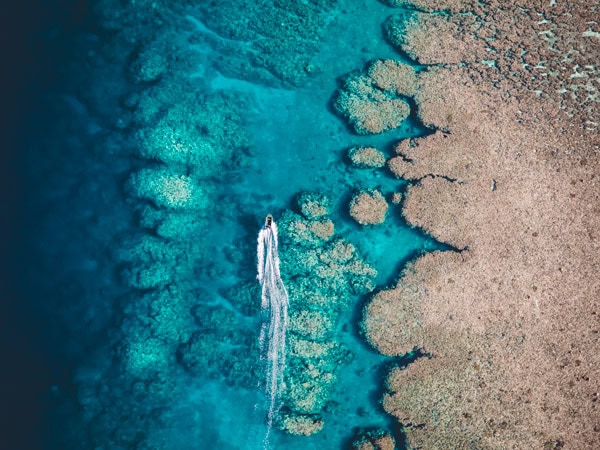
an aerial view of the Rowley Shoals Marine Park
Rowley Shoals Marine Park is characterised by spectacular intertidal and subtidal coral reefs. (Image: Tourism Australia)

2. Hawkesbury River, NSW

Travelling with: Imogen Eveson

Sitting on the balcony with the Hawkesbury River unspooled in front of you like molten silk, watching the colours change as the light fades over the ridges, it’s hard to imagine the centre of Sydney is little over an hour away.
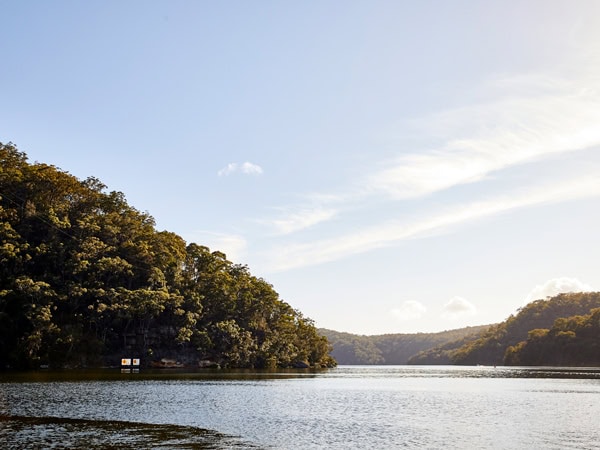
view from Calabash Bay Lodge on Hawkesbury River
Calabash Bay Lodge sits on the Hawkesbury River. (Image: Pablo Veiga)

The luxurious water-access-only Calabash Bay Lodge at a magnificent crook of the river provides total immersion into this other world. This is a place that slows your heart rate and enlivens your soul. You’ll find a boat and kayaks to untether and take out on the water at a most leisurely pace. And dinner cooked by a private chef to retreat back to in the evening.
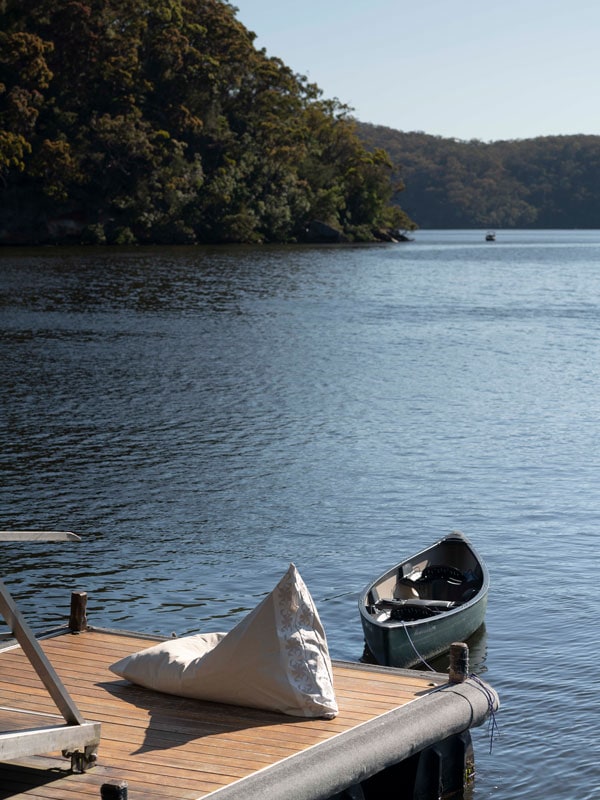
a boat on the jetty at Calabash Bay Lodge
Brave the river and captain your own boat. (Image: Nicholas Watt)

Book the Ultimate Hawkesbury Pearler’s Package to experience all of this plus a private tour of Broken Bay Pearl Farm’s local oyster leases and ‘shellar door’ to learn the secrets of pearl and oyster harvesting on the river.

Famed two-hatted restaurant Berowra Waters Inn is just a few oar strokes away, too.
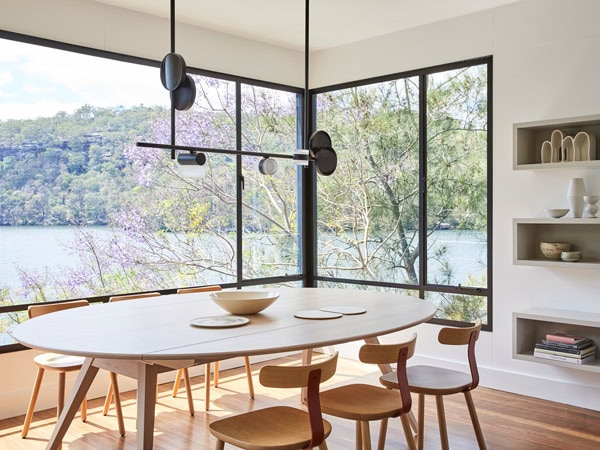
the interior of Calabash Bay Lodge on Hawkesbury River
Check into this luxe river lodge on Hawkesbury River. (Image: Pablo Veiga)

3. Swan River Trails, WA

Travelling with: Fleur Bainger

Sometimes, wonders are right under our noses. Take Western Australia’s Swan River Walk Trail, an 11-kilometre loop that circles both sides of the river in Perth’s CBD and its bookending bridges.

It’s packed with surprises, like how many waterbirds call from various nature ponds. Or the way you can spot jellyfish while cycling over the Causeway Bridge (a new, dedicated pedestrian and cycle bridge is set to open later this year) and how much public art dots the landscape.

Look out for the building-sized frillneck lizard and towering silver bird depicting first European contact by Noongar artist, Laurel Nannup.

Other eye-opening tracks include the two-kilometre-long Jenna Biddi Yorga loop in riverside Bicton, which follows an Aboriginal Dreaming trail. Or the Wadjemup Bidi, which traverses all of Wadjemup (Rottnest Island), itself known to Whadjuk Noongar people as a resting place of the spirits.
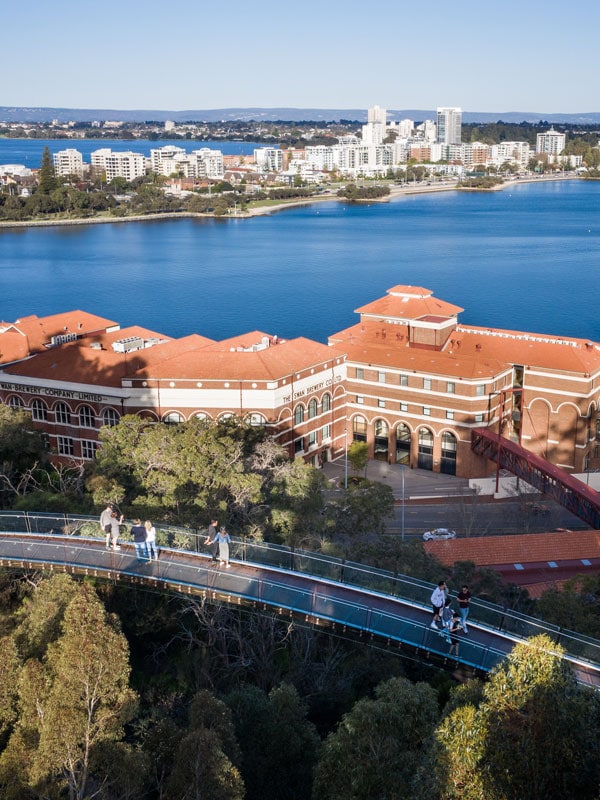
the Swan River Walk Trail in Western Australia
Take Western Australia’s Swan River Walk Trail. (Image: Tourism Western Australia)

Need tips, more detail or itinerary ideas tailored to you? Ask AT.

AI Prompt

4. Litchfield’s swimming holes, NT

Travelling with: Megan Arkinstall

Litchfield National Park, just 90 minutes from Darwin, is an ancient landscape of thundering waterfalls that cascade into emerald pools, perfect for waterhole-hopping and doable in a day.
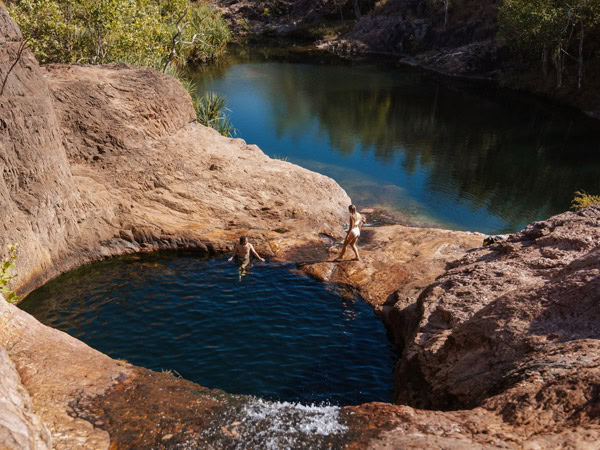
a waterhole at Surprise Creek Falls, Litchfield, NT
Surprise Creek Falls flows into two huge rock pools. (Image: Tourism NT/@75vibes_)

Travelling south from Darwin via Cox Peninsula Road, you’ll pass the swimmable Walker Creek, which carves through ancient rock, and Wangi Falls, which has a large plunge pool and grassy area. From here, loop up Litchfield Park Road to Florence Falls, a waterhole fed by twin falls, and Buley Rockhole, a series of shallow rock pools and deep plunge pools.

Return to Darwin via Batchelor, refreshed from your day of wild swimming (in designated areas only). Or linger longer in the park’s southern reaches, where the 4WD-only Reynolds Track leads to Sandy Creek and Surprise Creek Falls, two lesser-visited waterholes with camping facilities.
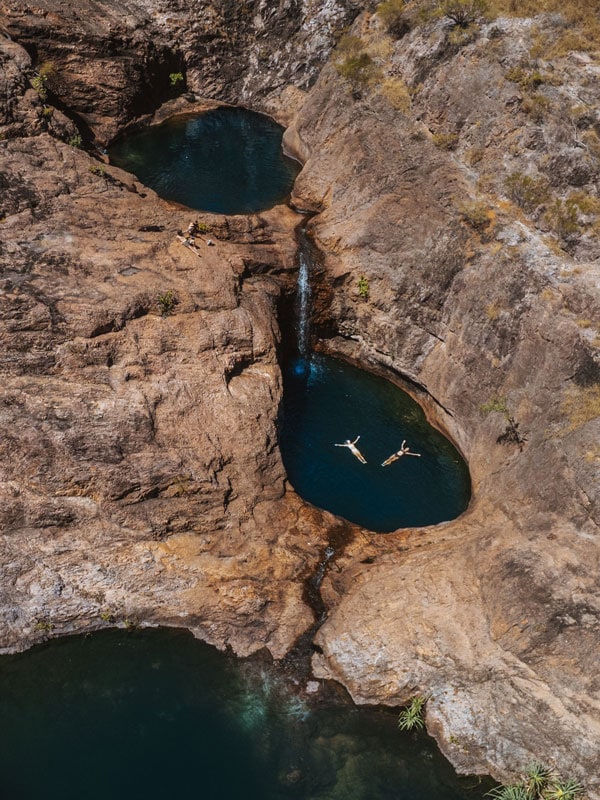
swimming in a waterhole at Surprise Creek Falls
Dip into a waterhole fed by the twin falls. (Image: Tourism NT/@75vibes_)

5. Australia’s hot springs

Travelling with: Carla Grossetti

The healing benefits of bathing in hot springs – balneotherapy – have long been documented. In addition to the fact these thermal pools are likely to be at the edge of nature, with breathtaking backdrops, the actual act of soaking in mineral-rich waters serves to soothe aching muscles and calm busy minds.

Test the theory everywhere from Peninsula Hotsprings and the Mornington Peninsula’s newest sanctuary, Alba Thermal Springs & Spa, as part of a road trip along the new Great Victorian Bathing Trail.

And elsewhere in the country: from the warming waters of Talaroo Hot Springs in outback Queensland to Witjira-Dalhousie Springs in South Australia.
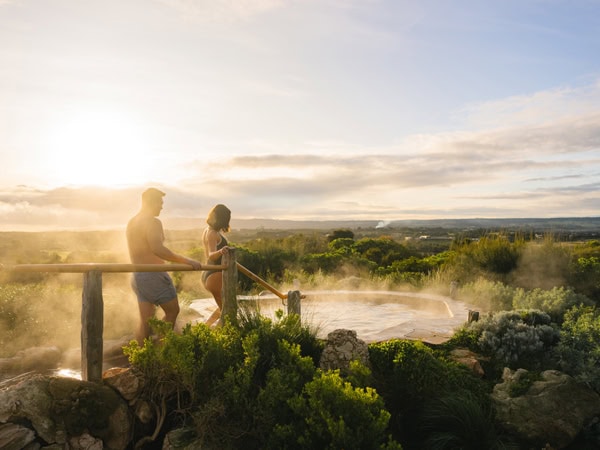
a couple about to head in for a dip at Peninsula Hot Springs
Soak in the mineral-rich waters of Peninsula Hot Springs. (Image: Ben Savage)

6. Bundanon, NSW

Travelling with: Imogen Eveson

Cradled by the soft folds of the Shoalhaven landscape, Bundanon is artist Arthur Boyd’s legacy: a wildlife sanctuary set on 1000 hectares that inspired much of his work and that he and wife Yvonne gifted to the nation in 1993. When the long-held dream of embedding an art museum in the landscape was realised in 2022, it marked the start of a new chapter.
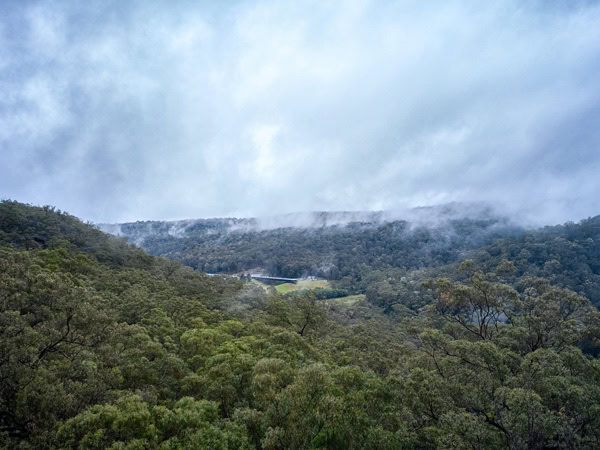
the Shoalhaven landscape in Bundanon
Bundanon is an art museum embedded in a wild sanctuary. (Image: Adrian Lander)

Bundanon is many things, and best visited to be understood. Head here to see thought-provoking exhibitions, visit Arthur Boyd’s old paint-daubed studio and stately homestead, and the locavore cafe led by chef Douglas Innes-Will.
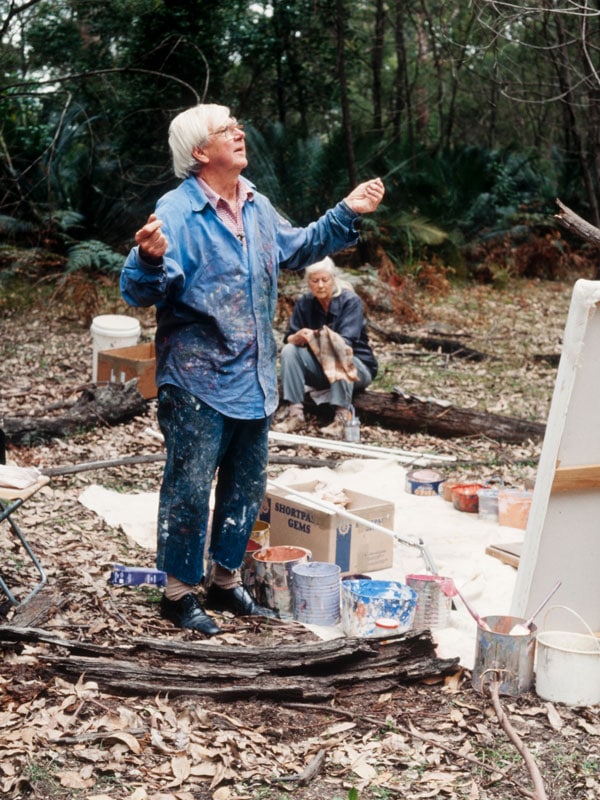
Arthur Boyd at Bundanon
Visit Arthur Boyd’s old paint-daubed studio. (Image: Bundanon Archive)

The word Bundanon means ‘deep valley’ in Dharawal and Traditional Owners are consulted on everything from land management to cultural connection.

Absorb it all thoroughly with an overnight stay at the architecturally designed Bridge, which acts as a window to this ancient and absorbing landscape.

the Fantastic Forms installation in Bundanon
See the Fantastic Forms installation in Bundanon. (Image: Zan Wimberley)

7. Noosa Everglades, Qld

Travelling with: Katie Carlin

Cast off at sunrise to witness the ‘river of mirrors’ at its most spectacular. That’s when you’re likely to see osprey take flight as you glide through a blanket of waterlilies past ancient tea tree forests on the banks of the Noosa Everglades – one of only two everglades systems on Earth.
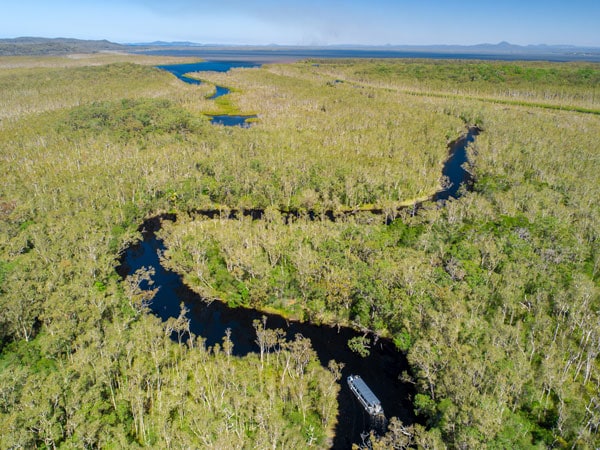
an aerial view of the lush landscape at Noosa Everglades
Be surrounded by lush hinterland at Noosa Everglades. (Image: Tourism and Events Queensland)

The pristine network of waterways is home to 40 per cent of Australia’s bird species and overlaps the Noosa and Great Sandy UNESCO Biosphere reserves, making it one of the world’s most pristine environments.

Explore it onboard a river cruise with Everglades Eco Safaris or kayak with Kanu Kapers, both award-winning ecotourism operators on the Sunshine Coast.
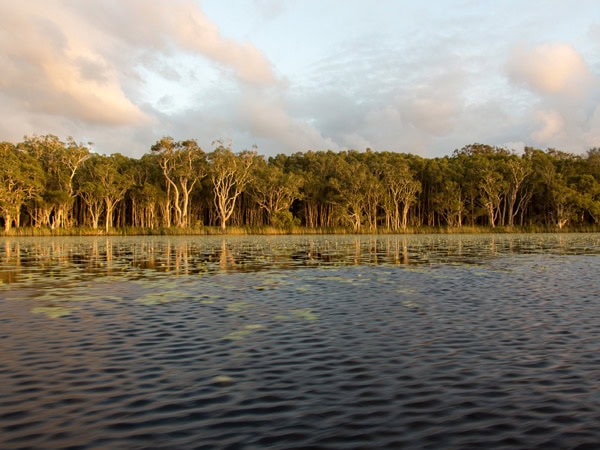
the trees along the banks of Noosa Everglades, Qld
Cruise along the Noosa Everglades. (Image: Tourism and Events Queensland)

Weekly travel news, experiences
insider tips, offers, and more.

8. Bungle Bungle Range, WA

Travelling with: Imogen Eveson

Purnululu National Park’s World Heritage-listed Bungle Bungle Range erupts 300 metres out of grassy plains and is unlike anything you’ve ever seen: a cohort of bizarre beehive-shaped karst sandstone domes striped in black and orange, thanks to age-old stains, iron oxidisation and black algae.
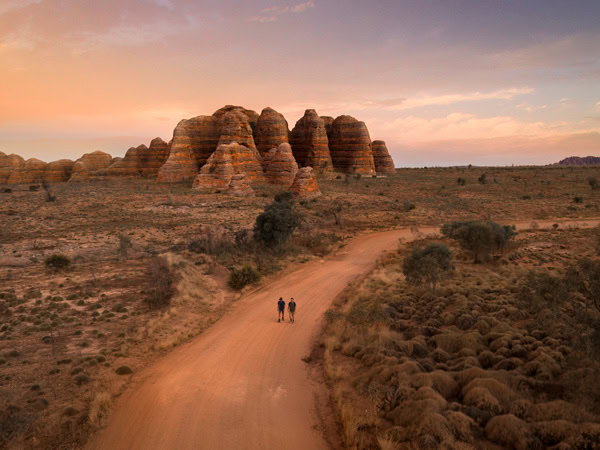
exploring Bungle Bungle Range in Purnululu National Park
Purnululu National Park’s World Heritage-listed Bungle Bungle Range. (Image: Tourism Western Australia)

The ancient range was carved into shape more than 20 million years ago (from deposits that date back some 360 million years).
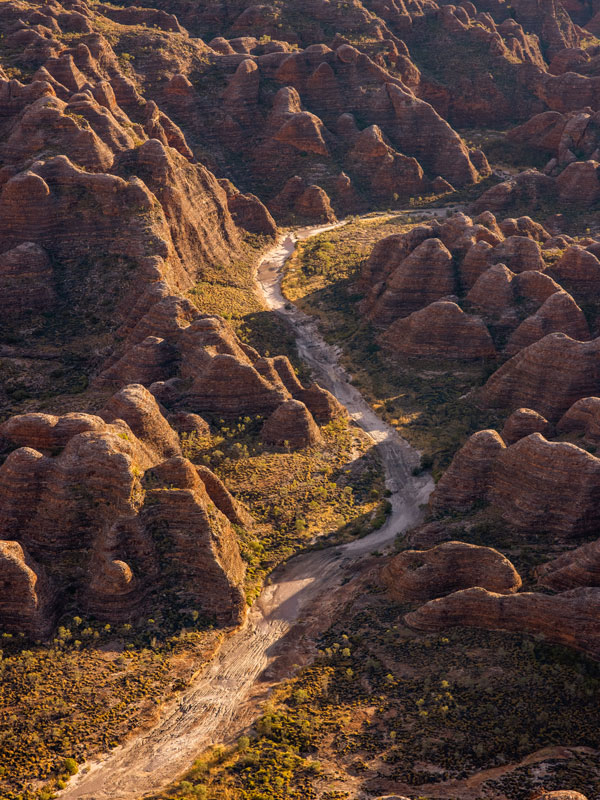
an aerial view of the karst sandstone domes in the Bungle Bungle Range, Purnululu National Park
The Bungle Bungle Range is dotted with bizarre beehive-shaped karst sandstone domes. (Image: Tourism Western Australia)

And while seeing it from above on a scenic flight is a must-do, getting up close at ground level with a Gija guide from Kingfisher Tours is to truly feel and understand this remarkable living landscape.
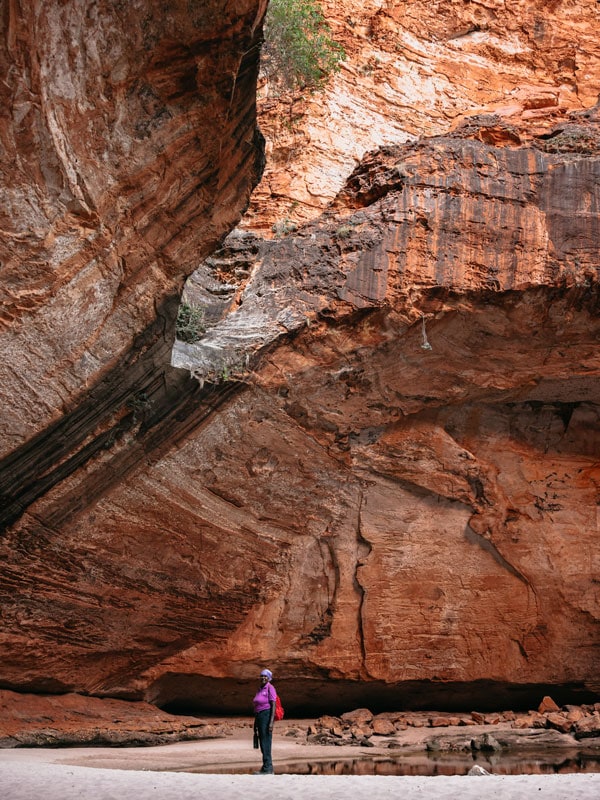
exploring the Cathedral Gorge in Purnululu National Park
Get up close to Cathedral Gorge, a natural amphitheatre of red rock within the Bungle Bungle Ranges. (Image: Tourism Western Australia)

9. Royal Exhibition Building Dome Promenade, Vic

Travelling with: Jo Stewart

Melbourne’s UNESCO Heritage-listed Royal Exhibition Building is often admired from afar. But visitors were finally welcomed to experience the incredible Dome Promenade and vistas of Melbourne’s skyline in 2022, a view unseen by most for 100 years.

Apart from being an architectural triumph, this grand landmark, completed in 1880, holds a wealth of significant stories crucial to Melbourne’s cultural and social history.

Book a tour to get a rare perspective of this enduring wonder that’s dominated inner Melbourne’s streetscape since its early days.
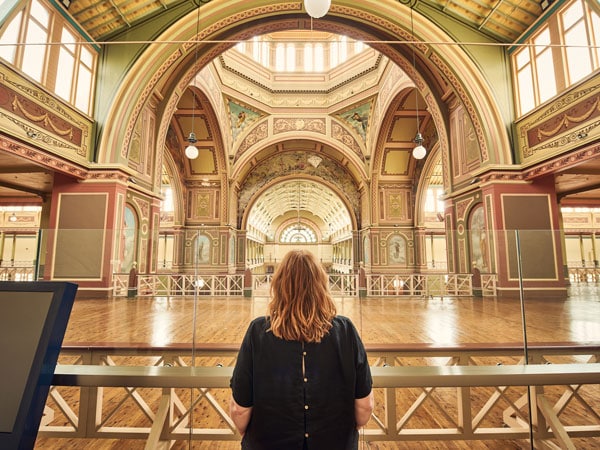
a woman standing inside Royal Exhibition Building Dome Promenade, Vic
Take in the grandeur and allure of the Royal Exhibition Building. (Image: Eugene Hyland/ Museums Victoria)

10. Arnhem Land, NT

Travelling with: Imogen Eveson

Covering vast tracts of Australia’s northern fringes, Arnhem Land is a destination rich in First Nations cultures, rare wildlife and breathtaking scenery that needs to be experienced to be understood. A stay at one of three unique wilderness lodges is a good place to start.

Seven Spirit Bay is hidden on the Cobourg Peninsula, a scallop-edged finger of West Arnhem Land that uncurls into the Arafura Sea north of Kakadu and forms part of Garig Gunak Barlu National Park. With spectacular views of the glittering bay it rests above and adventures on tap into the surrounding environments of eucalypt forests, billabongs, mangroves and turquoise seas, a stay here is a highlight of any Outback Spirit tour through Arnhem Land.

At Davidson’s Arnhemland Safari Lodge, the headline attraction is the abundance of rock art galleries at the at Awunbarna (Mt Borradaile), which you’ll explore with the legendary camp as your base.

And in Northeast Arnhem Land, on an island off the coast of Nhulunbuy on Yolngu Homelands, Banubanu Beach Retreat offers a tropical-paradise getaway layered with a rich cultural experience.

Keep reading our 100 Australian Wonders series; from road trips, outback and cultural wonders to foodie wonders and many more.

Want to see more stories from Australian Traveller in your Google search results?

  1. Click here to set Australian Traveller as a preferred source.
  2. Tick the box next to "Australian Traveller". That's it.

This scenic Victorian region is the perfect antidote to city life

    Craig Tansley Craig Tansley

    Video credit: Visit Victoria/Tourism Australia

    The Grampians just might be the ultimate antidote for the metropolis, writes one returning Aussie ready to disconnect from the modern world and reconnect to the Great outdoors.

    There are no kangaroos back in Chicago: they’re all here in the Grampians/Gariwerd. In the heart of the Grampians National Park’s main gateway town, Halls Gap, pods of eastern greys are eating grass beside my parked rental car beneath the stars. Next morning, when I see the backyard of my rented villa on the edge of town for the first time, there are kangaroos feeding beside a slow-moving creek, lined with river red gums.

    Five hundred metres up the road, 50 or so of them are eating by the side of the road in a paddock. I pull over to watch and spot three emus. Yellow-tailed black cockatoos fly overhead towards the tall green mountains just beyond town.

    ‘Kee-ow, keee-oww’… their calls fuse with the maniacal cackle of a kookaburra (or 10). Gawd, how I’ve missed the sound of them. Far above, a wedge-tailed eagle watches, and there you go: the ‘great birds of Australia’ trifecta, all half a kay from the town limits.

    Exchanging city chaos for country calm

    kangaroos near Halls Gap, Grampians National Park
    The park is renowned for its significant diversity of native fauna species. (Image: Visit Victoria/Robert Blackburn)

    I’ve come to the Grampians to disconnect, but the bush offers a connection of its own. This isn’t just any bush, mind you. The Grampians National Park is iconic for many reasons, mostly for its striking sandstone mountains – five ridges run north to south, with abrupt, orange slopes which tumble right into Halls Gap – and for the fact there’s 20,000 years of traditional rock art. Across these mountains there are more than 200 recorded sites to see, created by the Djab Wurrung, Jardwadjali and Gunditjmara peoples. It’s just like our outback… but three hours from Melbourne.

    I’ve come here for a chance at renewal after the chaos of my life in America’s third-largest city, Chicago, where I live for now, at the whim of a relative’s cancer journey. Flying into Melbourne’s airport, it only takes an hour’s drive to feel far away from any concept of suburbia. When I arrive in Halls Gap two hours later, the restaurant I’m eating at clears out entirely by 7:45pm; Chicago already feels a lifetime ago.

    The trails and treasures of the Grampians

    sunrise at Grampians National Park /Gariwerd
    Grampians National Park /Gariwerd covers almost 2000 square kilometres. (Image: Ben Savage)

    Though the national park covers almost 2000 square kilometres, its best-known landmarks are remarkably easy to access. From my carpark here, among the cockatoos and kangaroos on the fringe of Halls Gap, it only takes 60 seconds’ driving time before I’m winding my way up a steep road through rainforest, deep into the mountains.

    Then it’s five minutes more to a carpark that serves as a trailhead for a hike to one of the park’s best vantage points, The Pinnacles. I walk for an hour or so, reacquainting myself with the smells and the sounds of the Aussie bush, before I reach it: a sheer cliff’s edge lookout 500 metres up above Halls Gap.

    walking through a cave, Hollow Mountain
    Overlooking the vast Grampians landscape from Hollow Mountain. (Image: Robert Blackburn)

    There are hikes and there are lookouts and waterfalls all across this part of the park near town. Some are a short stroll from a carpark; others involve long, arduous hikes through forest. The longest is the Grampians Peaks Trail, Victoria’s newest and longest iconic walk, which runs 160 kilometres – the entire length of Grampians National Park.

    Local activities operator Absolute Outdoors shows me glimpses of the trail. The company’s owner, Adrian Manikas, says it’s the best walk he’s done in Australia. He says he’s worked in national parks across the world, but this was the one he wanted to bring his children up in.

    “There’s something about the Grampians,” he says, as he leads me up a path to where there’s wooden platforms for tents, beside a hut looking straight out across western Victoria from a kilometre up in the sky (these are part of the guided hiking options for the trail). “There are things out here that you won’t see anywhere else in Australia.” Last summer, 80 per cent of the park was damaged by bushfire, but Manikas shows me its regrowth, and tells me of the manic effort put in by volunteers from town – with firefighters from all over Australia – to help save Halls Gap.

    wildflowers in Grampians National Park
    Spot wildflowers. (Image: Visit Victoria)

    We drive back down to Halls Gap at dusk to abseil down a mountain under the stars, a few minutes’ walk off the main road into town. We have headlamps, but a full moon is enough to light my way down. It takes blind faith to walk backwards down a mountain into a black void, though the upside is I can’t see the extent of my descent.

    Grampians National Park at sunset
    Grampians National Park at sunset. (Image: Wine Australian)

    The stargazing is ruined by the moon, of course, but you should see how its glow lights up the orange of the sandstone, like in a theme park. When I’m done, I stand on a rocky plateau drinking hot chocolate and listening to the Aussie animals who prefer nighttime. I can see the streets of Halls Gap off in the distance on this Friday night. The restaurants may stay open until 8pm tonight.

    What else is on offer in The Grampians?

    a boat travelling along the Wimmera River inDimboola
    Travelling along the Wimmera River in Dimboola. (Image: Chris McConville)

    You’ll find all sorts of adventures out here – from rock climbing to canoeing to hiking – but there’s more to the Grampians than a couple of thousand square kilometres of trees and mountains. Halls Gap may be known to most people, but what of Pomonal, and Dimboola, and Horsham? Here in the shadow of those big sandstone mountains there are towns and communities most of us don’t know to visit.

    And who knew that the Grampians is home to Victoria’s most underrated wine region? My disconnection this morning comes not in a forest, but in the tasting rooms and winery restaurants of the district. Like Pomonal Estate, barely 10 minutes’ drive east of Halls Gap, where UK-born chef Dean Sibthorp prepares a locally caught barramundi with lentil, pumpkin and finger lime in a restaurant beside the vines at the base of the Grampians. Husband-and-wife team Pep and Adam Atchison tell me stories as they pour their prize wines (shiraz is the hero in these parts).

    dining at Pomonal Estate
    Dine in a restaurant beside vines at Pomonal Estate. (Image: Tourism Australia)

    Three minutes’ drive back down the road, long-time mates Hadyn Black and Darcy Naunton run an eclectic cellar door out of a corrugated iron shed, near downtown Pomonal. The Christmas before last, half the houses in Pomonal burnt down in a bushfire, but these locals are a resilient lot.

    The fires also didn’t stop the construction of the first art centre in Australia dedicated to environmental art in a nature-based precinct a little further down the road (that’s Wama – the National Centre for Environmental Arts), which opened in July. And some of the world’s oldest and rarest grape vines have survived 160 years at Best’s Wines, outside the heritage town of Great Western. There’s plantings here from the year 1868, and there’s wines stored in century-old barrels within 150-year-old tunnels beneath the tasting room. On the other side of town, Seppelt Wines’ roots go back to 1865. They’re both only a 30-minute drive from Halls Gap.

    Salingers of Great Western
    Great Western is a charming heritage town. (Image: Griffin Simm)

    There’s more to explore yet; I drive through tiny historic towns that barely make the map. Still part of the Grampians, they’re as pretty as the mountains behind them: full of late 19th-century/early 20th-century post offices, government offices and bank buildings, converted now to all manner of bric-a-brac stores and cafes.

    The Imaginarium is one, in quirky Dimboola, where I sleep in the manager’s residence of an old National Australia Bank after a gourmet dinner at the local golf club, run by noted chef and teacher, Cat Clarke – a pioneer of modern Indigenous Australian cooking. Just south, I spend an entire afternoon at a winery, Norton Estate Wines, set on rolling calico-coloured hills that make me think of Tuscany, chit-chatting with owners Chris and Sam Spence.

    Being here takes me back two decades, when I lived here for a time. It had all seemed as foreign as if I’d driven to another planet back then (from Sydney/Warrane), but there seemed something inherently and immediately good about this place, like I’d lived here before.

    And it’s the Australian small-town familiarity of the Grampians that offers me connection back to my own country. Even in the better-known Halls Gap, Liz from Kerrie’s Creations knows I like my lattes with soy milk and one sugar. And while I never do get the name of the lady at the local Ampol station, I sure know a lot about her life.

    Kookaburras on a tree
    Kookaburras are one of some 230 bird species. (Image: Darren Donlen)

    You can be a local here in a day; how good is that? In Chicago, I don’t even know who my neighbour is. Though each day at dusk – when the kangaroos gather outside my villa, and the kookaburras and the black cockatoos shout out loud before settling in to sleep – I prefer the quieter connection I get out there in the bush, beneath these orange mountains.

    A traveller’s checklist

    Staying there

    Sleep beside the wildlife on the edge of Halls Gap at Serenity.

    Playing there

    abseiling down Hollow Mountain
    Hollow Mountain is a popular abseiling site.

    Go abseiling under the stars or join a guided hike with Absolute Outdoors. Visit Wama, Australia’s first environmental art centre. Check out Dimboola’s eccentric Imaginarium.

    Eating there

    steak, naan bread and beer at Paper Scissors Rock in Halls Gap
    Paper Scissors Rock in Halls Gap serves a great steak on naan bread.

    Eat world-class cuisine at Pomonal Estate. Dine and stay at much-revered icon Royal Mail Hotel in Dunkeld. The ‘steak on naan’ at Halls Gap brewhouse Paper Scissors Rock, can’t be beat.

    Dunkeld Arboretum in Grampians National Park
    The serene Dunkeld Arboretum.

    For Halls Gap’s best breakfasts head to Livefast Cafe. Sip local wines at Great Western’s historic wineries, Best’s Wines, Seppelt Wines and Norton Estate Wines.

    two glasses of beer at Paper Scissors Rock in Halls Gap
    Sink a cold one at Paper Scissors Rock.