hero media

How to pack carry-on like a pro

Here’s how I finally mastered the art of travelling light. 

I’ve made every rookie packing mistake there is. I’ve lugged an overstuffed suitcase up the subway steps in New York, I’ve sat on my bag in a Seoul airport bathroom to get the zip shut, and I’ve even had my luggage stolen in Lyon (you can read about that sad ordeal here). 

But over the years, and many, many packing regrets later, I’ve learned that travelling light is one of the greatest travel luxuries. Not the business-class lounge, not even a glass of fizz at take-off. The true luxury is walking straight past baggage claim like you own the place. 

Here’s how I’ve learned to pack carry-on only and actually enjoy it. 

Step 1: The mindset shift 

Packing light isn’t just about space; it’s about mindset. When I finally committed to carry-on travel, I realised most of what I used to pack was “just in case" stuff. Just in case it rained. Just in case there was a fancy dinner. Just in case I peed my pants every single day for two weeks. Just in case I suddenly became the kind of person who wears heels on cobblestones. Spoiler: I’m not. 

The golden rule? You don’t need to prepare for every possible version of the trip, just the one that’s most likely to happen. Once I let go of that “what if" anxiety, everything became lighter – literally. 

Step 2: Choose your bag wisely 
luggage
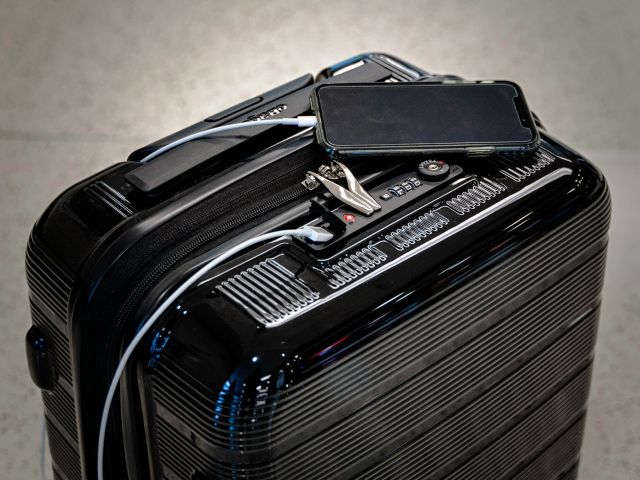
Choose a bag that works for your travel destination. (Image: Unsplash/Benjamin R.)

Your bag is your foundation, so pick one that works with you, not against you. I’m loyal to a hard case on four wheels – the kind that glides across airport floors like it’s on ice skates. But if you’re heading somewhere with cobblestones or stairs, a soft backpack might save your shoulders – and your sanity. 

Step 3: Make your packing list ruthless 
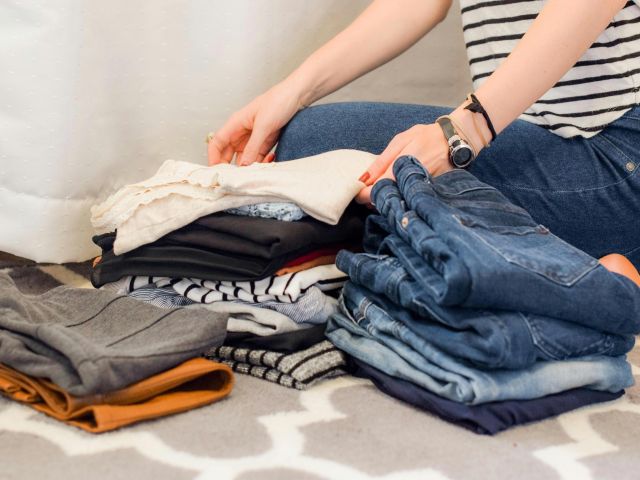
carryon packing list
Have a streamlined list of trusty wardrobe items. (Image: Unsplash/Sarah Brown)

I used to start with everything I wanted to bring and try to narrow it down. Now I start with nothing and justify every item. If it doesn’t work at least twice, it stays home. 

For example, for a winter trip, here is what I’d bring: 

  • One pair of jeans (they go with everything and can be dressed up or down). 
  • A long sleeve merino tee (I am perpetually freezing on planes, and merino wool is temperature regulating – a literal lifesaver. This is my fave). 
  • Thermals that are lightweight to go under everything (and are breathable/quick drying so you can wash them in your hotel if you need, like these). 
  • Three shirts, two jumpers. 
  • One dress that can do both day and night duty. 
  • Two pairs of shoes: sneakers and boots. 
  • A scarf (the Swiss Army knife of travel accessories). 
  • Wool socks (I know I’m rambling on about wool, but it’s truly the GOAT – see what I did there – fabric for travelling light). 
  • A coat that I will wear at all times to avoid overweight luggage. 

If I’m heading somewhere warm, I swap these for one breathable set of linen, one dress, two tops, a light jacket and some sandals. 

Toiletries get the same treatment. I decant everything into travel-size containers and skip the “what if I run out" panic. Unless you’re hiking in the outback, there will always be shops. 

Need tips, more detail or itinerary ideas tailored to you? Ask AT.

AI Prompt

Step 4: Master the art of the roll 

Ask 10 travellers how to pack and you’ll get 10 different methods – but rolling clothes genuinely works. It saves space, minimises creasing, and gives you that smug sense of order when you look at your perfectly lined-up rolls. 

For bulkier items like coats, I wear them on the plane (you can always stuff them under the seat). And for small things – socks, underwear, swimwear – I tuck them inside shoes or the corners of the case. Every millimetre counts. 

If you’re packing for longer than a week, packing cubes are a game-changer. They keep things contained and make mid-trip rummaging way less chaotic. Bonus: when you open your bag for airport security, it looks neat enough to impress even the most stoic customs officer. 

Step 5: Build a travel uniform 
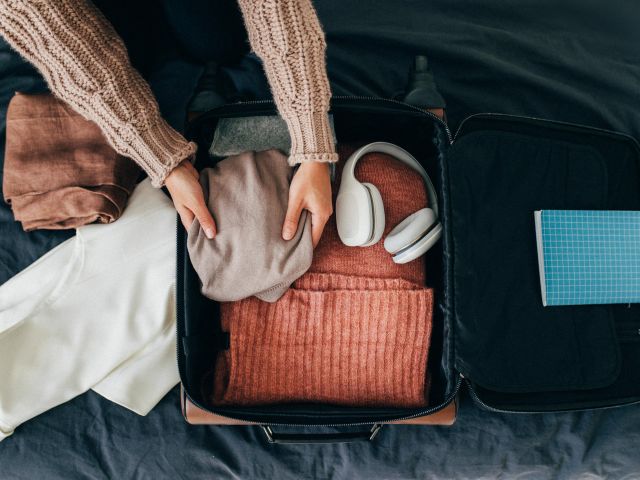
packing light
Learning how to pack light is a useful travel hack. (Image: Getty Images/FreshSplash)

Now, I think of packing like creating a capsule wardrobe – neutral colours, pieces that mix and match, and materials that don’t wrinkle if you so much as look at them. My dream travel outfit formula: linen in summer, merino in winter. You can go from sightseeing to cocktails without missing a beat. 

Step 6: Don’t fear laundry 

The reason so many people overpack is that they don’t want to do laundry on the road. But honestly? Doing a quick wash mid-trip is far less annoying than lugging extra kilos of “just in case" clothing. 

Most hotels have a guest laundry or same-day service, and a travel-size detergent sheet can turn any bathroom sink into a washing station. I’ve even been known to use the hotel hairdryer to speed-dry my socks (pro move, if a little noisy). 

Step 7: The tech tangle 

tech in carryon
Always try to stick to the essentials, even when it comes to gadgets. (Image: Unsplash/Anete Lusina)

Electronics can eat up space fast, so streamline your gadgets. I stick to my phone, laptop and portable light for photos. I won’t lie, a powerboard with USB-C and USB-A ports is a necessity for me and saves me from carrying a spaghetti tangle of cords, plus noise-cancelling headphones are my sanity saviour. 

Oh, and a power bank. I never, ever forget a power bank – it’s the difference between arriving refreshed and arriving at five per cent battery with no idea how to get to your hotel. 

Weekly travel news, experiences
insider tips, offers, and more.

Step 8: The “airport survival" zone 

The best trick I’ve learned is to pack a small pouch that lives in the seat-back pocket: lip balm, hand sanitiser, pen, earplugs, face mist, a snack and a sleep mask. This way, you don’t need to rummage through your bag mid-flight like a raccoon looking for food. 

Step 9: Leave a little space 

There’s a special kind of heartbreak that comes from finding the perfect souvenir – then realising you have nowhere to put it. I always leave a small corner of my bag empty for a bottle of local wine, a handmade trinket, or, let’s be honest, a new piece of clothing I didn’t technically need but absolutely had to have. 

Worst case, you wear your bulkiest outfit home. It’s practically a travel tradition. 

Step 10: The carry-on mindset 

packing light
Knowing how to pack light boosts confidence. (Image: Getty Images/ozgurcankaya)

Packing carry-on only isn’t just about convenience. It’s freedom. It’s the joy of breezing through airports, skipping luggage carousels, and knowing exactly where everything you own is – because it’s right there with you. 

It’s also a quiet confidence boost. There’s something incredibly satisfying about realising you can live for two weeks with the same seven kilograms you used to take for a weekend. 

So next time you’re tempted to bring that extra pair of “maybe" shoes or the second jacket “just in case", remember this: the less you carry, the more you can enjoy where you’re going. 

Liked this? Pack with us for a wild Kimberley adventure. 

Emily Murphy
Emily Murphy is Australian Traveller's Email & Social Editor, and in her time at the company she has been instrumental in shaping its social media and email presence, and crafting compelling narratives that inspire others to explore Australia's vast landscapes. Her previous role was a journalist at Prime Creative Media and before that she was freelancing in publishing, content creation and digital marketing. When she's not creating scroll-stopping travel content, Em is a devoted 'bun mum' and enjoys spending her spare time by the sea, reading, binge-watching a good TV show and exploring Sydney's vibrant dining scene. Next on her Aussie travel wish list? Tasmania and The Kimberley.
View profile and articles
hero media

This stretch of Sydney beaches topped the annual Best Australian Beaches list

    Carla Grossetti Carla Grossetti
    Bate Bay’s sweep of beaches has been crowned Australia’s best for 2026, placing Sutherland Shire in the spotlight as a top coastal destination just south of Sydney’s CBD.

    The beaches fringing Bate Bay – Cronulla, North Cronulla, Wanda, Elouera and Greenhills – have topped Tourism Australia’s 2026 list of best Australian beaches (as curated by Beach Ambassador Brad Farmer). For locals, it’s less revelation, more recognition.

    The mood shifts from the moment you step off the T4 train service from Central to Cronulla and catch a glimpse of the ocean. At dawn, the Esplanade is already buzzing with regulars, and by mid-morning, parents have staked out a toasty spot on Cronulla Beach where excited toddlers clamber over rocks, and the Jellybean swim squad at Oak Park have donned their bright pink caps while singing Oh, What a Beautiful Mornin’.

    By the afternoon, towels are being collected from across the sand as visitors wander back to Cronulla in loose formation.

    North Cronulla beach
    Dive into the world’s best beaches.

    That’s the thing about Bate Bay beaches. This isn’t a story about a single beach. This long, uninterrupted sweep of sand and sea, where you can walk for kilometres without breaking stride, is not just enjoyed over summer; it’s a year-round destination. Here, Cronulla’s buzz gives way to Wanda’s wild edges, before stretching out to the quieter reaches of Greenhills.

    But while Bate Bay’s beaches may have taken top honours in the 2026 Best Australian Beaches list, they’re only part of the drawcard. Sutherland Shire stacks up as a full-spectrum coastal escape, where good food, national park adventures and on-the-water experiences sit within easy reach of the shoreline. Whether you’re planning a long weekend or stretching out a stay, here’s how to make the most of Cronulla beyond the sand, sea and surf.

    Beyond the beaches

    Dining

    the dining room at Pippis Cronulla
    Enjoy a sundowner by the sea at Pippis Cronulla.

    The Sutherland Shire dining scene delivers from early morning to late at night with a mix of vibrant cafes, bars and pubs. Start your day at Grind Espresso, where the coffee comes strong and fast. From there, drift towards HAM for pastries, best eaten buttery warm.   

    By midday, locals linger across sun-lit tables. Loaf and Next Door appeal to the surfers who come in for snacks after chasing waves. Blackwood’s Pantry and The Press are also popular for breakfast and lunch, while Pilgrim’s continues to hold a special place in the hearts of vegans.

    Newer arrivals signal where Cronulla is heading: Homer Rogue Taverna is being hailed as one of the best restaurants in Cronulla, with the confidence that comes from understanding what locals want. Ask a local to reveal their favourite restaurant for a special occasion, and it’ll likely be Pino’s Vino e Cucina al Mare, Yalla Sawa or Alphabet Street. Summer Salt, Sealevel, Benny’s, Bobbys and Pippis are a few of the best waterfront restaurants in the Shire.

    Finally, when most places are winding down, Duke’s Providore shifts gears to become Duke’s After Hours – a low-lit romantic spot perfect for a date night. Parc Pavilion, Northies Cronulla and bars The Blind Bear, Las Chicas and Low & Lofty’s are also part of Cronulla’s identity.

    Visit Bundeena

    Bundeena Ferry Wharf
    Catch a ferry to Bundeena.

    A short ferry ride from Cronulla, Bundeena offers a counterpoint to Cronulla’s mighty surf beaches. If Cronulla is the Shire’s social heart, Bundeena – or Bundenesia, as it’s affectionately known – is the place to go to exhale and unwind.

    Hop on the ferry from Cronulla, and within 30 minutes, you’ll be inhaling the eucalyptus-scented air. Check the creative pulse of the local community by timing your visit with the Bundeena Maianbar Art Trail on the first Sunday of every month.

    One of the best things to do in Bundeena is paddle into Cabbage Tree Basin with Bundeena Kayaks. Follow the five-kilometre Jibbon Beach Loop Track that leads past quiet coves to ancient Indigenous rock art, or simply find a stretch of pearl-white sand to relax on.

    Pristine walking trails

    Royal National Park Cape Baily Walking Track
    Cool off with a coastal stroll.

    Beyond the coastline, Sutherland Shire offers myriad ways to shift gears. Royal National Park – the oldest national park in Australia – sits just minutes from the surf. Clifftop walks trace the edge of the continent, the rugged bushland is threaded with creeks and hidden waterfalls, and a network of tracks rewards those willing to go a little further.

    Take the Coast Track, where the land drops cleanly into the ocean over sheer cliffs that have been stacked together like giant Jenga. Or veer inland, where pockets of forest cool the air and filter the light. It’s a reminder of how close nature sits to the bustle of suburbs in the Sutherland Shire.

    Enjoy whale watching

    humpback whale sighting noosa experiences
    Spot whales from May to October. (Credit: The Edit Suite)

    Twist your binoculars until the ocean is in focus, stretched like a creased blue sheet all around.  Come May, the East Coast becomes the humpback highway. Thousands of whales migrate along this stretch of coastline each year, their movements tracked by keen eyes from vantage points like the Cape Solander platform in Kamay Botany Bay National Park, one of the best places for whale watching in Australia. There’s something quietly thrilling about seeing that first telltale spout or the arc of a breaching body against the vastness of the sea. From June to October, whale-watching cruises depart from Cronulla, offering a closer look at the migration.

    Awards come and go. But places like Cronulla endure because they belong as much to the visitors as they do the early-morning swimmers, walkers and surfers.

    Plan your escape at visitsutherlandshire.com.au.