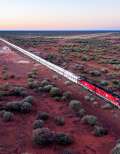
An epic journey across three states onboard the Indian Pacific train

hero media
Travel on a train that does triple duty as a classroom, a fine-dining restaurant and a window into Australia’s soul on an epic journey between the east and west coasts.

The fierce sun beats down mercilessly as a dry wind blows across a near-featureless plain, the heat building until I feel like I’m trapped inside a giant hair dryer. A sheet of loose metal bangs against the verandah of an abandoned school where a thick layer of dust is broken only by the scrawled names of previous visitors.

There’s also a metre-wide cube nearby, which is painted with slogans that are drier than the surrounding outback. “Our hospital needs your help – get sick," reads one side. Suddenly, a siren rings out. I look up to see several hundred figures shuffling in the same direction… but this is no zombie apocalypse. Instead, my fellow passengers are being called back to the Indian Pacific and, in a few minutes, I’ll have swapped the oppressive heat for an ice-cold gin and tonic.

Venturing across the country by train

The abandoned railway town of Cook is one of several stops on a journey that will take us 4352 kilometres across the entire continent of Australia. I’m not sure there’s a single spot along the way that’s flatter or drier, so it seems a fitting memorial for Joseph Cook, our sixth (and ‘most humourless’) prime minister.
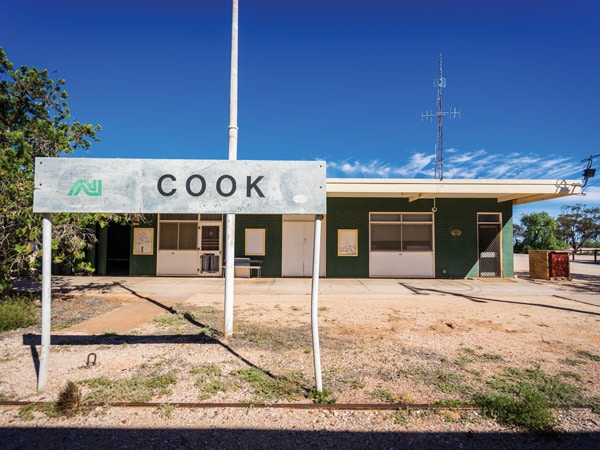
an abandoned railway town in Cook
Alight the Indian Pacific in Cook for a glimpse of an abandoned railway town. (Image: Journey Beyond)

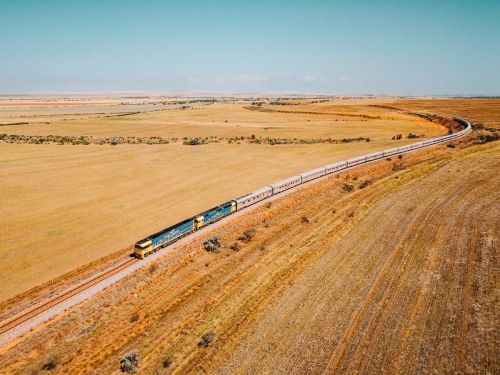
The 808-metre-long train extends past the desiccated buildings in either direction, but the endless plain beyond stretches out to the horizon like a vast ocean of sun-baked orange dirt. Astronaut Andy Thomas could see the gun-barrel-straight train tracks cutting across the Nullarbor like a fine pencil line when he gazed down from Mir space station, and that tenuous link connecting the coasts was one of the key factors that encouraged Western Australia to join the Commonwealth of Australia.
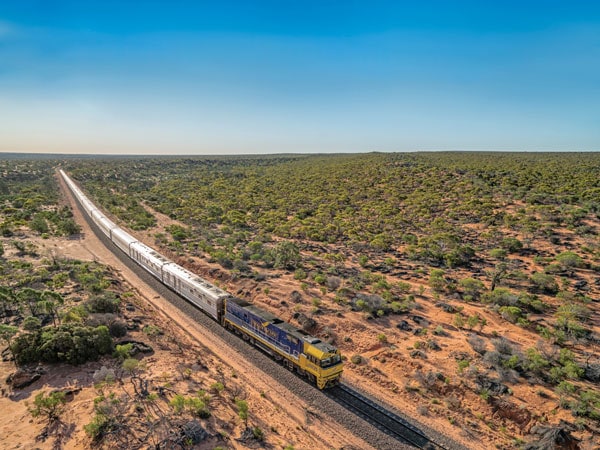
the vast rugged landscape across Nullarbor Plain
The Indian Pacific makes tracks through the Nullarbor Plain. (Image: Journey Beyond)

Now, in a world where travel times have contracted and overseas travel feels routine, venturing across the country by train feels like a trip back in time. “My goodness," Frank exclaims, “will you look at that! What a classic Aussie landscape." The garrulous Englishman with a heavy tan and blindingly white teeth is staring out the window, and when I follow his gaze, I have to agree.

The hard-packed red dirt studded with ankle-high saltbush is as iconically Australian as it is forbidding. But what makes this trip remarkable is that he could have made that comment at just about any moment of our four-day journey.
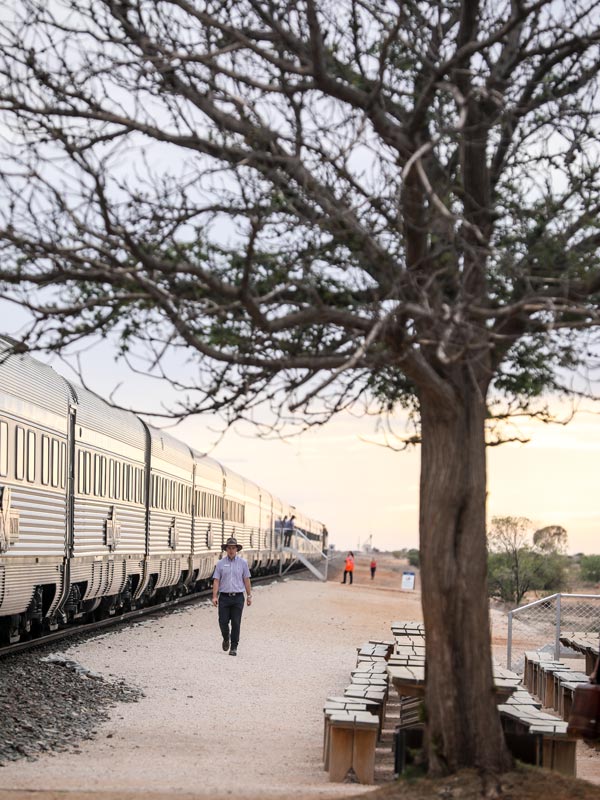
a man standing outside Indian Pacific train in Rawlinna outpost
Rawlinna, like Cook, is an outpost on the Nullarbor Plain. (Image: Journey Beyond)

Day one

With so many things that unite us, it’s easy to forget the sheer variety that exists across this country. But aboard the Indian Pacific, I’m constantly reminded of that rich diversity as we travel from Eora to Whadjuk Country, across the lands of the Wiradjuri, Kaurna, Barngarla, Wirangu and Nyanganyatjara peoples, among many others.

What could be more Australian than pincushions of spinifex stretching out as far as the eye can see and transforming the landscape into a canvas for a giant dot painting flecked with crimson Sturt’s desert peas? Or a vast salt pan holding a pool of water that mirrors the pale blue sky above and makes the horizon disappear entirely?
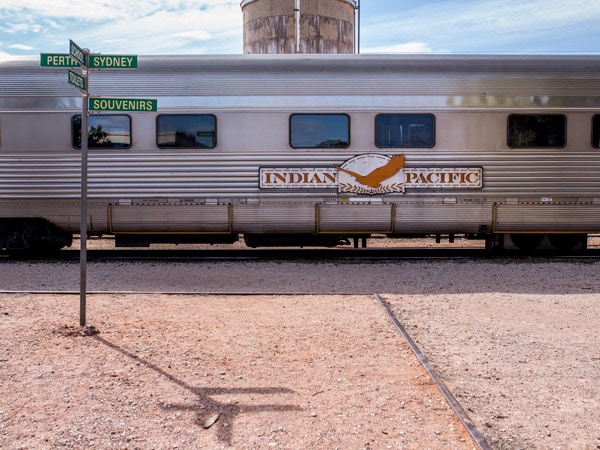
the Indian Pacific train stopping over the Cook Station
Travel to Sydney and Perth aboard the Indian Pacific train. (Image: Journey Beyond)

Endless oceans of golden stubble stretch out in every direction across Western Australia’s Wheatbelt, broken only by tired-looking gums that create tiny islands of shade. Further west, a glittering creek cascades over boulders as it winds between the rocky banks of a gum-lined gorge.

Each scene is unmistakably Australian, and these glimpses of the vast country are enhanced by the fact that I can dip in and out at will. When the surrounding scenery is too quiet for tumbleweed, the Outback Explorer Lounge is a prime spot to crack open a book or get to know my fellow guests.
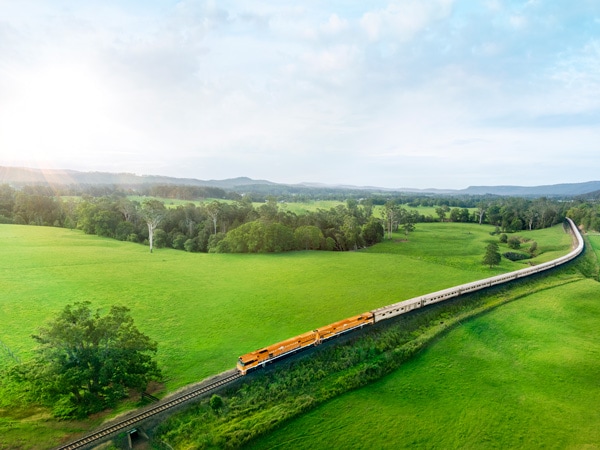
the Great Southern train passing through lush greenery over Victoria and NSW
The Great Southern is Australia’s long-distance rail passing through Victoria and NSW. (Image: Journey Beyond)

Need tips, more detail or itinerary ideas tailored to you? Ask AT.

AI Prompt

Day two

By day two, multiple games of Scrabble and cards have broken out and Frank is joined by Paul, a widower whose son has joined him for the ride, and Leon, who is celebrating his Masters degree with a cross-country trip before returning to China.

In the adjoining Queen Adelaide Restaurant car, it’s easy to let a hundred kilometres zip past while lingering over a three-course meal and several glasses of wine. It’s a far cry from the stultifying boredom I felt behind the wheel on a road trip across the Nullarbor.
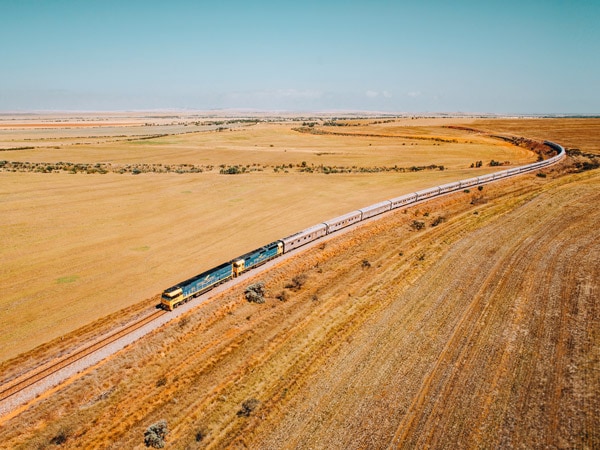
the Indian Pacific train traversing the vast dry landscape
A journey aboard the iconic Indian Pacific will whisk you between Perth, Adelaide and Sydney in comfort and style. (Image: Journey Beyond)

Instead of optimistically checking the radio and deciding how long to keep driving before setting up camp, here my toughest choice is which cabernet sauvignon to go for – Vasse Felix or Black Duck? And when even that decision is too much, I retire to a compact cabin with a bed that disappears each morning during breakfast to reveal a comfortable seat and fold-out desk by the window.

As we head west, the menu slowly evolves to reflect the environments we’re passing through. Grilled Pacific Ocean swordfish steak doused in lemon myrtle sauce gives way to slow-cooked camel curry and Caesar salad with Freo sardines and truffle-spiked aioli. And when the train stops, the bar is raised even further.
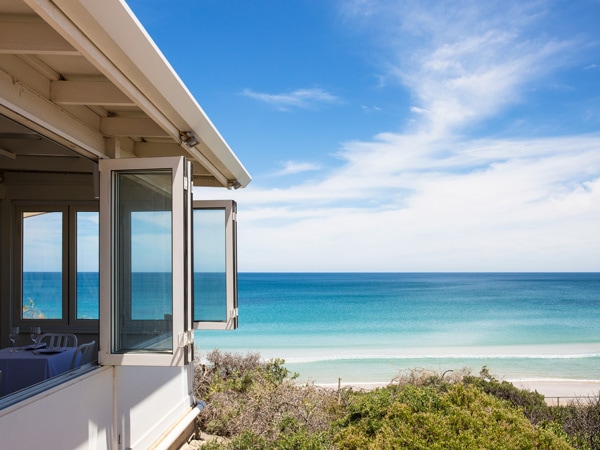
a restaurant facing stunning sea views views over Gulf St Vincent
The restaurant in Port Willunga, SA, offers expansive views over Gulf St Vincent. (Image: South Australian Tourism Commission/Josie Withers)

We feast on roast lamb beneath a star-filled sky on the Nullarbor, while the Adelaide stop includes a McLaren Vale excursion where the wine list expands to include juicy negroamaro and montepulciano. Lush vines and olive trees flutter in a gentle sea breeze beside us, and after seeing the landscape flash past at 80 kilometres an hour, it feels as if I’ve stepped into a romantic painting. Even better is to follow, as we take a coach down to Port Willunga for dinner.
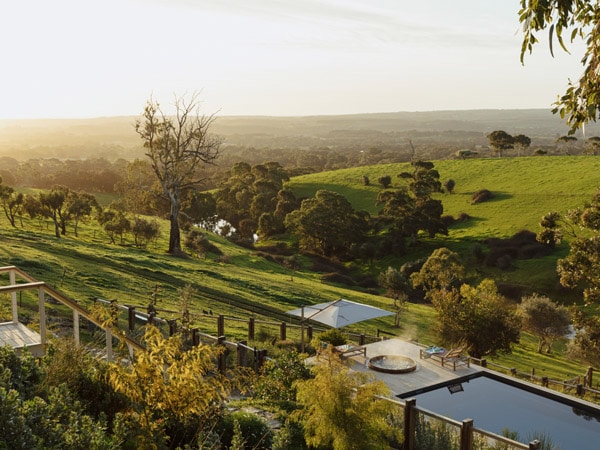
the verdant landscape surrounding McLaren Vale wineries
Stop off at McLaren Vale wineries such as Coriole Vineyards. (Image: Journey Beyond)

Day three

Rocky fingers of limestone glow in the evening sun and turquoise waters lap at the skeleton of a ruined jetty below the clifftop Star of Greece restaurant. A zephyr of breeze wafts in through the open windows while the sun slowly dips towards the horizon, leaving a blazing apricot trail as we tuck into crispy salt and Szechuan pepper squid and sweet sugar and gin-cured ocean trout with shiso leaf.
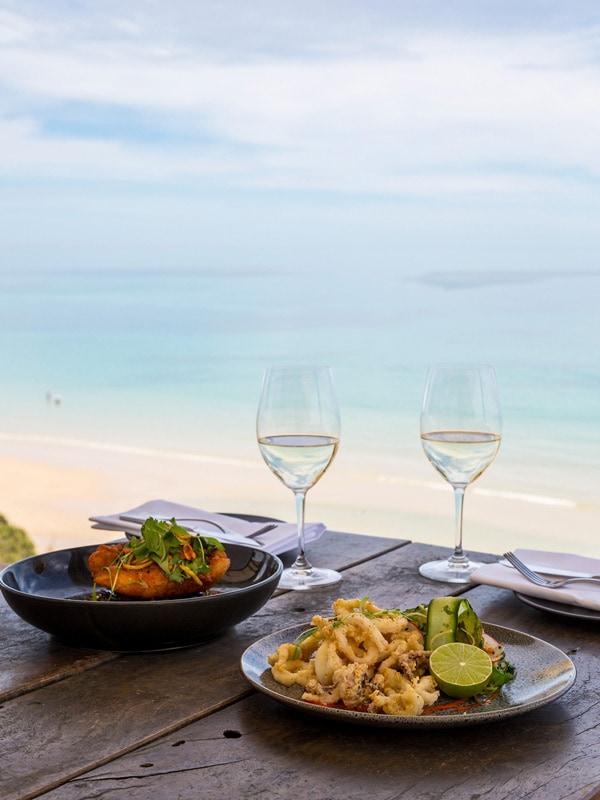
lunch is served on the beach at Star of Greece
Enjoy a sumptuous meal and McLaren Vale wines at the Star of Greece. (Image: South Australian Tourism Commission/ Josie Withers)

And every time we hop back onboard, there’s a buzzing school camp atmosphere – with the added excitement of an open bar. Some passengers stick dutifully to their shiraz while others work their way methodically through the wine list as a small party breaks out in the bar carriage each evening. During a particularly rowdy session, our bartender Daniel introduces one octogenarian to espresso martinis.
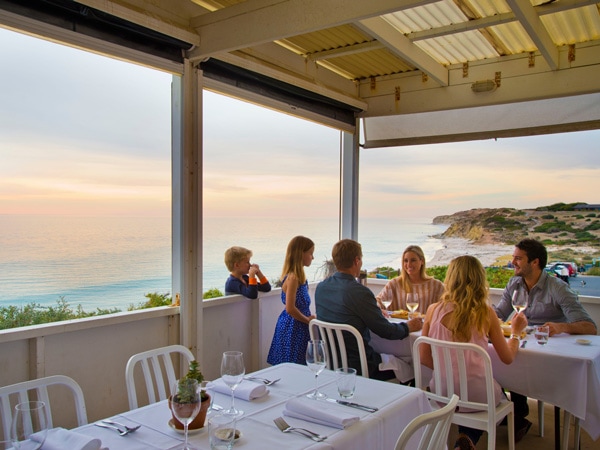
a family dining at a seaside restaurant
Dine while overlooking breathtaking sea views at the Star of Greece. (Image: South Australian Tourism Commission/Adam Bruzzone)

While we eat, sleep and play, the gleaming silver snake carries us inexorably west over days that are as spread out as the landscapes it’s passing through. And in fact, they are longer than usual; chasing the sun for four days means that by the time we reach Perth, we’ve gained three hours on our east coast counterparts.
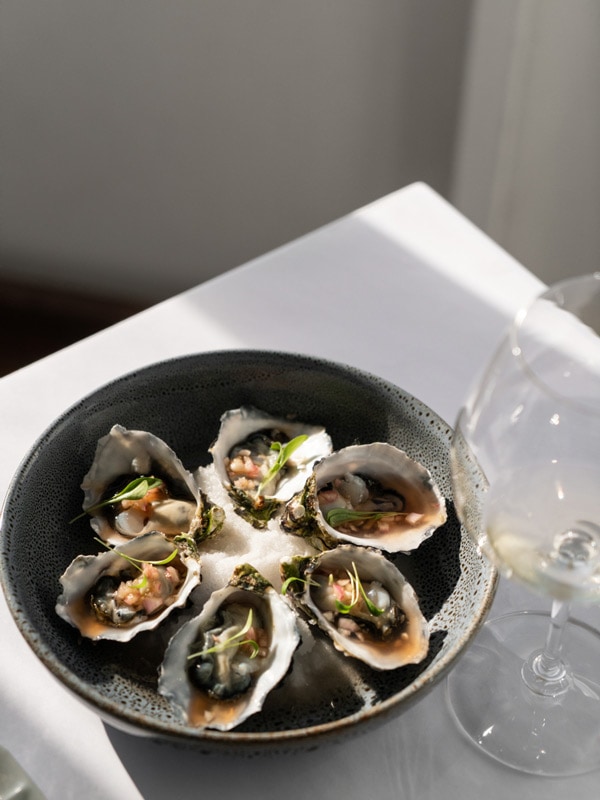
fresh oysters on a bowl
Chow down on fresh oysters. (Image: HEY GENTS)

Weekly travel news, experiences
insider tips, offers, and more.

Day four

After such a leisurely trip, it’s a mild shock to return to an environment shaped by the straight lines of fences on day four. First hills, then paved roads and finally houses begin appearing with regularity, and the knowledge that the trip is ending soon begins to sink in.

Reflecting on the past four days, it quickly becomes apparent that everyone onboard has had their expectation of Australia confounded in some way. “I was expecting more sand," says Gab, a young nanny from western Queensland, while Peter from Bournemouth didn’t realise it was so flat. “And I had no idea that Adelaide faced west until our sunset dinner," adds Suzie.
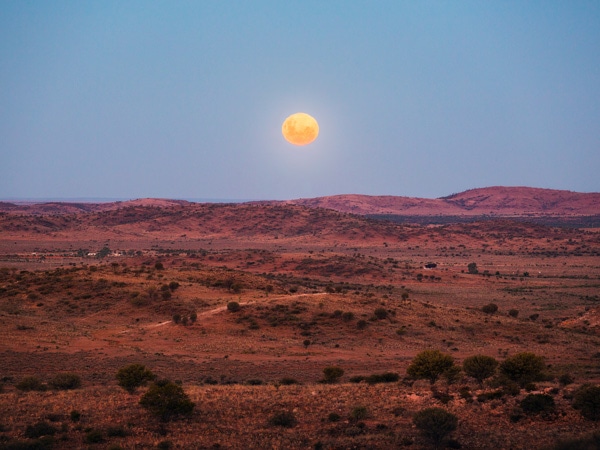
moon rising over Broken Hill
Watch the moon rise over Broken Hill. (Image: Destination NSW)

For me, it’s been a timely reminder of just how varied this wide, brown land is. But as we disembark and say our goodbyes within spitting distance of the Swan River, I can’t help feeling like my cross-country journey won’t be complete until I see the Indian Ocean.

The suburban train I board next has a markedly different feel – the espresso martinis have disappeared and the passengers have swapped Scrabble boards for smartphones. It means I’m the only one looking out at a line of Norfolk pines silhouetted against the slowly setting sun, and I can’t help but wonder how many views like this I’ve missed on my own commute home.
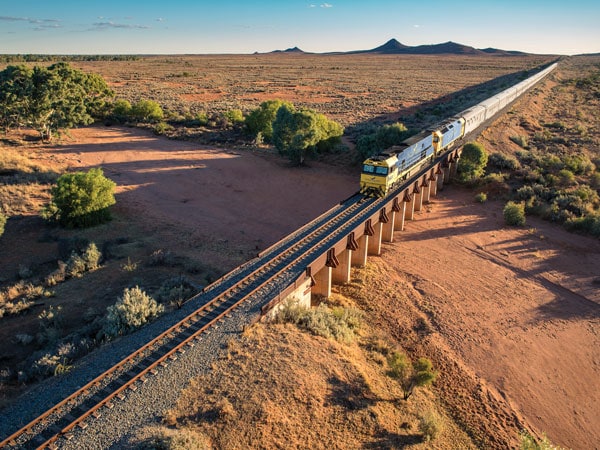
the Indian Pacific train passing through the elevated tracks above Broken Hill
The transcontinental crossing in the Indian Pacific is one of the world’s great train journeys. (Image: Journey Beyond)

Minutes later, I’m breathing in salt-laden air and watching the sun dip below the horizon at Bathers Beach in Fremantle. Saffron and crimson threads streak across the sky as several young women jump about in the water and seagulls eye a nearby family’s feast of fish and chips. What a classic Aussie scene, I think to myself. And it’s just one of dozens I’ve glimpsed on my journey across a truly lucky country.

More Journey Beyond train trips

The Indian Pacific has been travelling between Sydney and Perth since 1970, while The Ghan was extended to Darwin in 2004 and crosses Australia from north to south during the dry season.

In 2019, Australia’s newest iconic train journey launched and the Great Southern now travels 2885 kilometres between Adelaide and Brisbane via The Grampians, Canberra and Coffs Harbour.
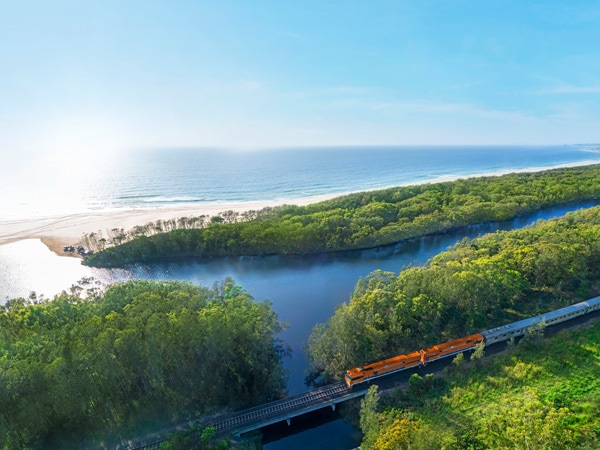
the Indian Pacific train traversing through the coastal town of Coffs Harbour
Travel in style through the coastal town of Coffs Harbour. (Image: Journey Beyond)

Upping the ante on its rail roster, Journey Beyond offers holiday packages, too. Bookings for its 2024 season are open now for sojourns such as Scenic Sip & Sail, which sees passengers alight the Indian Pacific to spend a day on Rottnest Island and take a seaplane to the Margaret River region for wine tastings and exploration.
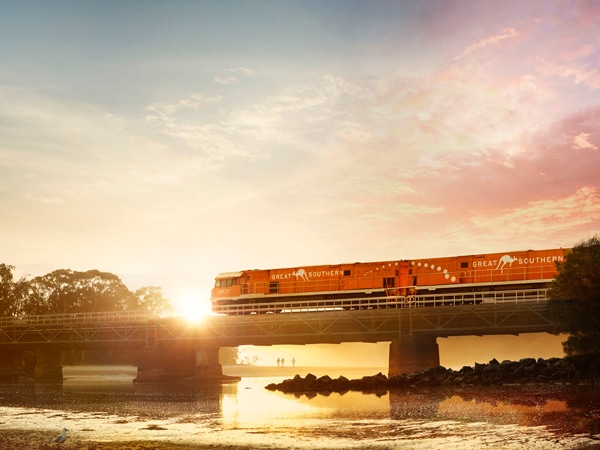
The Great Southern train crossing over the Boambee Creek Bridge, NSW
The Great Southern rumbles over Boambee Creek Bridge, NSW. (Image: Journey Beyond)

Its 15-day Ultimate Territory Tour includes a trip aboard The Ghan with extended touring to Uluru-Kata Tjuta, Kakadu and Litchfield national parks. The Adelaide Delight tour is another highlight, pairing the Great Southern with extra gastronomy excursions.
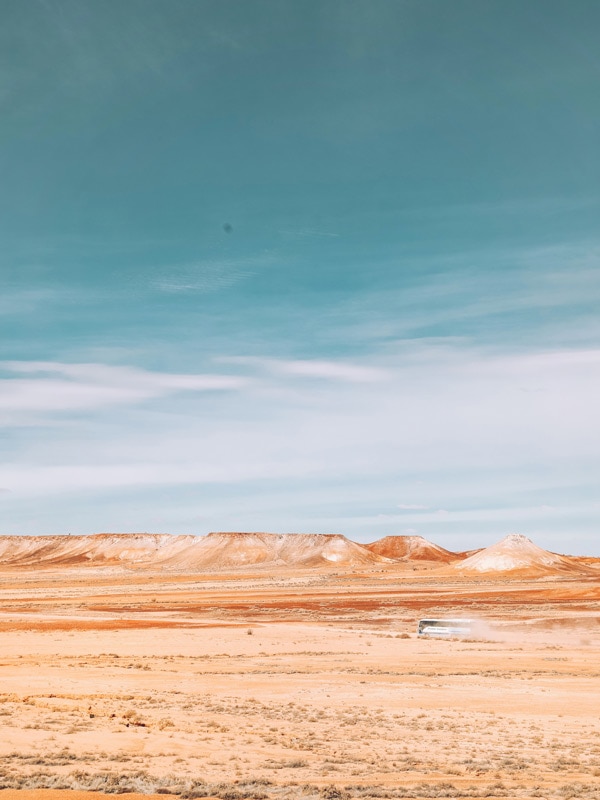
he ‘underground’ town of Coober Pedy during The Ghan Expedition
Tour the ‘underground’ town of Coober Pedy during a trip on sister train The Ghan. (Image: Elise Cook/ Journey Beyond)

Want to see more stories from Australian Traveller in your Google search results?

  1. Click here to set Australian Traveller as a preferred source.
  2. Tick the box next to "Australian Traveller". That's it.
Alexis Buxton-Collins
Alexis Buxton-Collins spent his twenties working as a music journalist and beer taster before somehow landing an even dreamier job as a freelance travel writer. Now he travels the world from his base in Adelaide and contributes to publications including Qantas, Escape, The Guardian and Lonely Planet. Alexis has never seen a hill he didn't want to climb and specialises in outdoor adventures (he won the 2022 ASTW award for best nature/wildlife story for a feature on Kangaroo Island). When he's not scouring South Australia for the newest wineries and hikes, he's looking for excuses to get back to spots like Karijini and Ningaloo.
View profile and articles
hero media

3 wild corners of Australia that let you reconnect with nature (in comfort)

    Kassia Byrnes Kassia Byrnes
    The country’s rawest places offer some of its most transformative, restorative experiences.

    Australia offers sublime opportunities to disappear into the ancient, untouched wilderness, worlds away from modern stress. Wild Bush Luxury offers a collection of experiences that are a portal into the continent’s wildest, most undiscovered landscapes, from wide floodplains to vast savannas, where the only distractions are birdsong, frog calls, curious wallabies and the daily drama of sunset. With a focus on conservation and Indigenous knowledge, these all-inclusive experiences allow guests to slow down and quiet their minds for intimate encounters with the natural world.

    1. Bamurru Plains

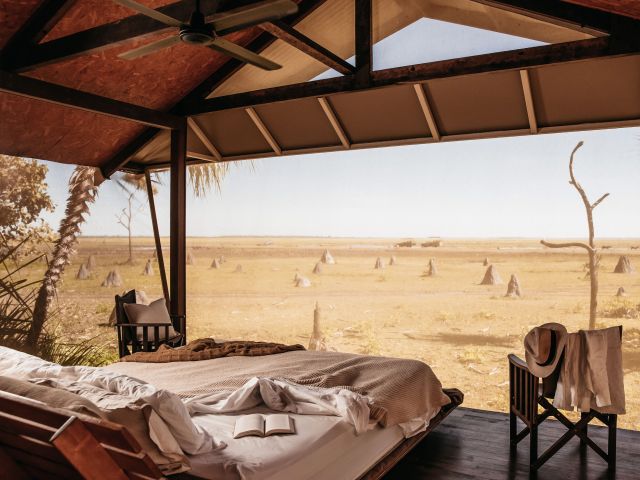
    safari tent at Bamurru Plains wild bush luxury
    Let nature take front row.

    In the remote Top End, just outside Kakadu National Park on the fringes of the spectacular Mary River floodplains, you’ll find Bamurru Plains, a peerless Australian safari camp. After a quick air transfer from Darwin to the camp’s private airstrip, you’ll be whisked away via 4WD to a vivid natural wonderland of shimmering floodplains, red earth, herds of peacefully grazing water buffalo and 236 bird species (Bamurru means magpie goose to the Gagadju people).

    Accommodations consist of 10 mesh-walled bungalows and two luxe stilted retreats where guests enjoy panoramic, up-close views that invite them into their rightful place in the landscape (and binoculars to see it even better). Being an off-grid experience designed to help guests disconnect, the only distractions are birdsongs, frog calls, curious wallabies, the occasional crocodile sighting and the daily drama of the spectacular golden sunset.

    It’s a place where nature’s vastness rises to the level of the spiritual, and Bamurru’s understated, stylish,  largely solar-powered lodgings are designed to minimise human impact and let nature take front row.  Guests relax in comfort with plush linens, an open bar, communal tables that allow for spontaneous connections and curated dining experiences from the in-house chef using local ingredients and bush-inspired cooking methods.

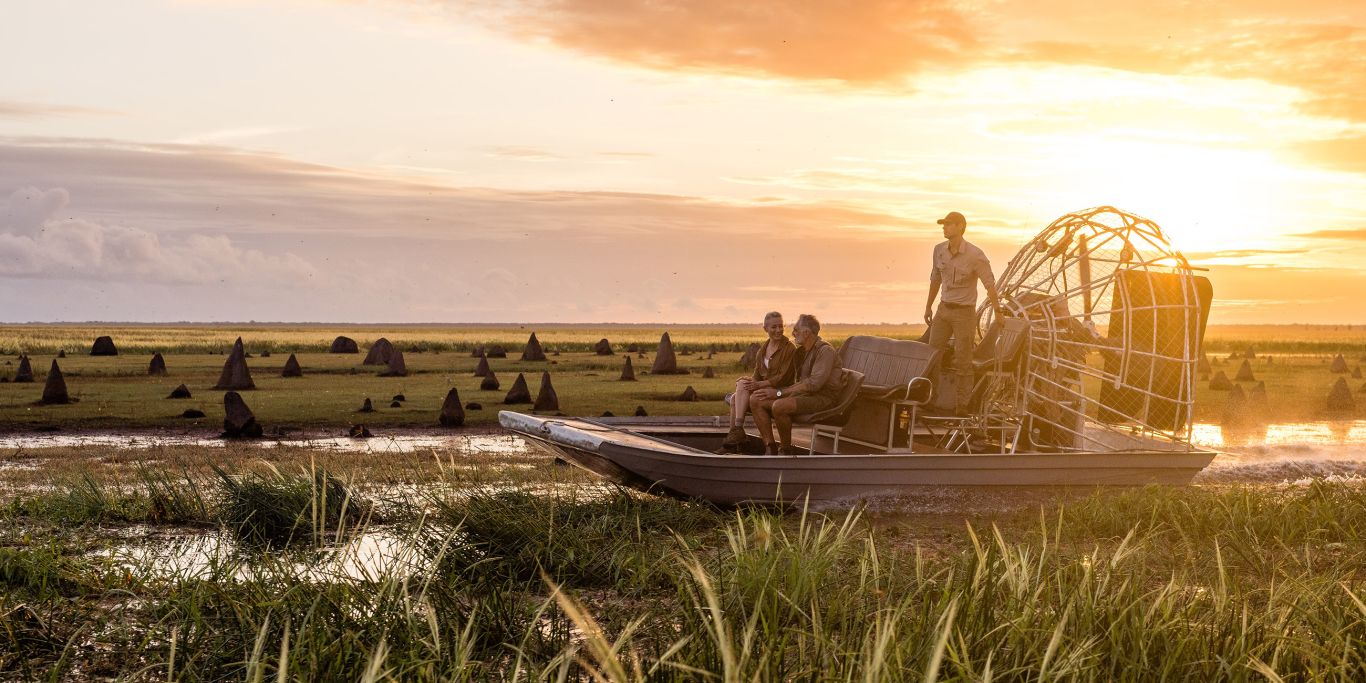
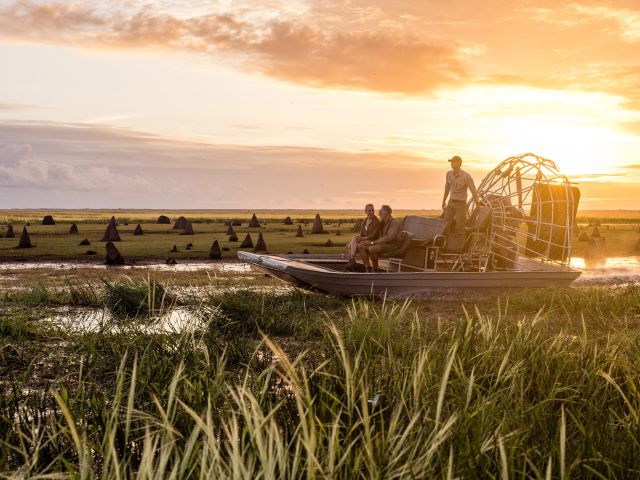
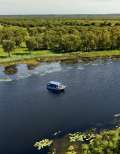
    Bamurru Plains airboat tour
    Zoom across the floodplains. (Image: Adam Gibson)

    It’s a restorative backdrop for days spent zooming across the mist-covered floodplains in an airboat, birding with expert guides, taking an open-sided safari drive or river cruise through croc country. Spend time at the Hide, a treehouse-like platform that’s perfect for wildlife spotting.

    In fact, nature is so powerful here that Bamurru Plains closes entirely during the peak monsoon season (October to April), when the floodplains reclaim the land and life teems unseen beneath the water. Yet Wild Bush Luxury’s ethos continues year-round through its other experiences around Australia – each designed to immerse travellers in a distinct Australian wilderness at its most alive and untouched.

    2. Maria Island Walk

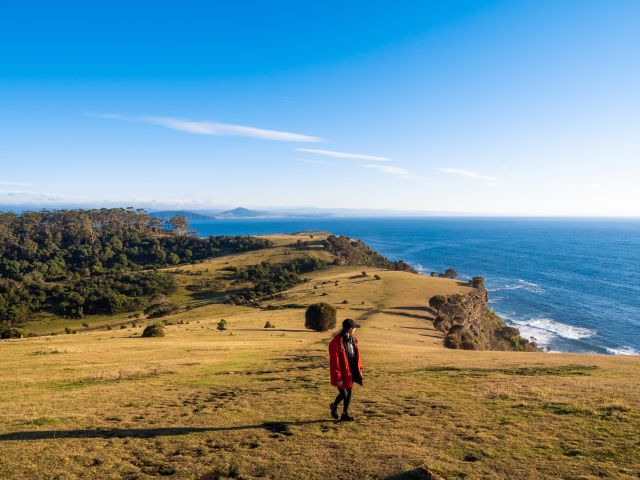
    woman on a headland of Maria Island Walk
    Maria Island Walk offers sweeping coastal scenes.

    Off Tasmania’s rugged east coast, the iconic Maria Island Walk is an intimate four-day journey through one of the country’s most hauntingly beautiful and unpopulated national parks, encompassing pristine beaches, convict-era ruins, and wildlife sightings galore. Accessible only by a small ferry, Maria Island feels like a place reclaimed by nature, which is exactly what it is: a penal settlement later used for farms and industry that finally became a national park in 1972.

    These days, the island is known as ‘Tasmania’s Noah’s Ark’ and its only human inhabitants are park rangers. It’s a place where wombats amble through grassy meadows, wallabies graze beside empty beaches, dolphins splash in clear water just offshore and Tasmanian devils – successfully reintroduced in 2012 after near-extinction on the mainland – roam free and healthy.

    Each day unfolds in an unhurried rhythm: trails through coastal eucalyptus forests or along white-sand bays, plateaus with sweeping ocean views, quiet coves perfect for swimming. Midway through the journey, you’ll explore Darlington, a remarkably preserved 19th-century convict settlement whose ruins tell stories of human ambition at the edge of the known world.

    At night, sleep beneath a canopy of stars in eco-wilderness camps – after relaxing with Tasmanian wine and locally-sourced meals, and swapping stories with your fellow trekkers by candlelight.

    3. Arkaba

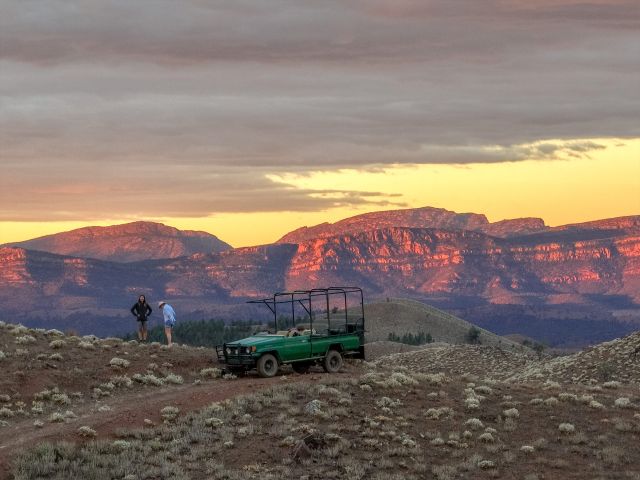
    two people standing next to a 4wd in Arkaba
    Explore Arkaba on foot or on four wheels.

    For a bush immersion with more of an outback flavour, Arkaba offers a completely different type of experience. A former sheep station and historic homestead in South Australia’s striking Flinders Ranges that has been reimagined as a 63,000-acre private wildlife conservancy. It’s now patrolled mainly by kangaroos and emus.

    Small-scale tourism (the homestead has just five ensuite guestrooms) helps support rewilding projects, and guests become an essential part of the conservation journey. Days begin with sunrise hikes through ancient sandstone ridges or guided drives into the ranges to spot yellow-footed rock-wallabies. And end with sundowners on a private ridgetop watching the Elder Range glow vibrant shades of gold, crimson and violet as the air cools and time stands still.

    Here, you can join conservation activities like tracking native species or learning about Arkaba’s pioneering feral-animal eradication projects, then unwind with chef-prepared dinners served alfresco on the veranda of the homestead, which is both rustic and refined. The highlight? Following Arkaba Walk, a thriving outback wilderness where emus wander and fields of wildflowers grow.

    It’s an unforgettable immersion in Australia’s vast inland beauty, a place where the land’s deep and complicated history – and astounding resilience – leave their quiet imprint long after you return home. In a world where genuine awe is rare, Wild Bush Luxury offers a return to what matters most in the untamed beauty of Australia’s wilderness.

    Disconnect from the grind and reconnect with nature when you book with at wildbushluxury.com

    the ghan

    Part of From the outback to the reef