Food, towns and luxe stays: Here’s how travel has changed since 2005

hero media
Let’s take a look back – and forward – to see how travelling Australia has evolved over nearly two decades of exploring our nation.

To mark 100 editions of Australian Traveller, co-founder Quentin Long sat down with Tourism Australia managing director Phillipa Harrison to discuss what has (and has not) changed in travel in Australia from the year the magazine launched in 2005 to today and beyond.
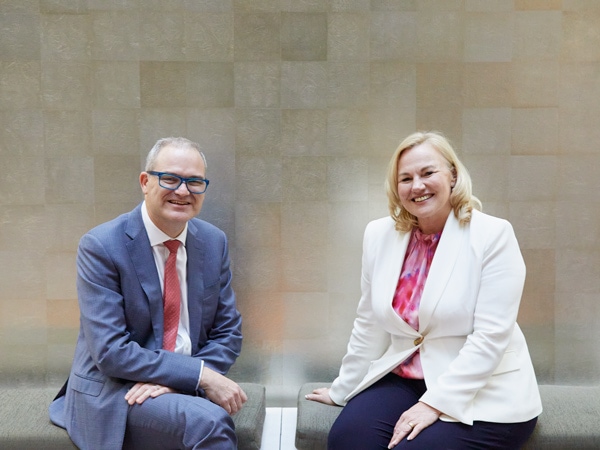
Australian Travellerco-founder Quentin Long and Tourism Australia managing director Phillipa Harrison
Australian Traveller co-founder Quentin Long and Tourism Australia managing director Phillipa Harrison. (Image: Nicky Ryan)

Quentin Long: So, in 2005 I was panicking about launching a new domestic travel media brand. What were you doing?

Phillipa Harrison: I was working for an Accor start-up in the youth hostel space called Base Backpackers. It was capitalising and corporatising the concept of ‘flashpackers’. That was so fun. I was the third employee onboard and we set up 11 hostels in 18 months. And backpacker bars, and a travel agency…

QL: So Jägerbombs at the bar with Pip?

PH: Maybe [laughs].

QL: Do you think Covid has given domestic travellers a greater appreciation for this country? I always hoped it would create a new habit for Aussies. So, for example, instead of going overseas every year, you go every two years.

PH: I do think Australians worked out over Covid that our own backyard is pretty damn special, so I would agree with you. Interestingly though, what appealed to people about Australia 50 years ago and what’s going to appeal to people about Australia in 50 years are similar things… our great natural landscapes… our great food and wine. Actually, 50 years ago, maybe not [laughs]. There’s another big change – food. I remember meeting a German woman who came to Australia in the 1970s and said she could not believe how limited this country was from a food point of view.
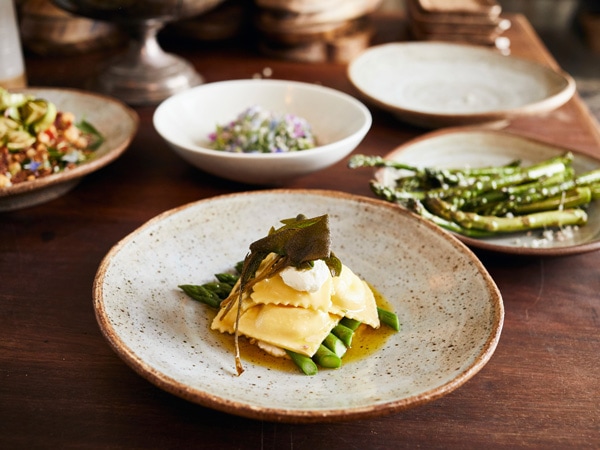
the food at Zin House in Mudgee
The Zin House in Mudgee is emblematic of regional Australia’s dynamic dining scene. (Image: Destination NSW)

QL: [Laughs] I believe you got a hardship allowance if you were a French diplomat posted to Canberra in the 1950s and ’60s. How French. “You have to endure meat and potatoes every meal. Sacre bleu."

PH: Fast-forward to today and we have multicultural cuisine, but we also have this incredible produce and the people who produce it telling stories about the provenance. Our research tells us that travellers are blown away by our food.

Need tips, more detail or itinerary ideas tailored to you? Ask AT.

AI Prompt

QL: Totally. By the way, I reckon it’s hard to have a bad meal in Canberra today. Part of the food story is where it comes from and, for me, regional Australia is the biggest improver since 2005.

PH: You think about going to somewhere like Orange in 2005 versus going there now and you have gourmet meals, great experiences, beautiful boutique accommodation. It really is chalk and cheese and it’s so good to see the regions prospering like that.

QL: Orange is an easy one. And Mudgee’s another easy one.

PH: The whole of regional Victoria is an eater’s paradise. Beechworth, Metung, Daylesford. The Scenic Rim’s done particularly well. Perth is outstanding. The Peak Trail in the Grampians. That is a beautiful collaboration between councils where they linked up a whole trail of 160 kilometres.

The wine regions have always been our successful regions: think Barossa, Margaret River, the Yarra Valley and Hunter. They’re evolving as well with more experiences around the cellar door that were never there before through things like the Ultimate Winery Experiences Australia and, in particular, its ‘Icons’ series.

wine tasting at sunset in Hope Estate
Hope Estate is one of many world-class wineries in the Hunter Valley. (Image: Destination NSW)

QL: The growth in number and quality in luxury product in Australia is remarkable.

PH: Australia only had a few luxury properties in 2005; Lizard Island Resort, Longitude 131° and El Questro. That was about it. Eleven of the 18 luxury lodges have opened since 2005. So, qualia opened, Southern Ocean Lodge, Saffire Freycinet, Wolgan Valley… So, we now have an incredible range of luxury accommodation and experiences.

QL: We did a project with Tourism Australia in 2007 called the 20 Best Indigenous Tours of Australia in a 32-page magazine. We printed it and supplied the content translated in German. But it was never released in Australia. When I tried to have it distributed with Australian Traveller, there was no budget because: “The research shows that the Australian market is not interested in experiencing Indigenous culture." Today that would definitely not be the case.

PH: Totally. That’s a huge change from 2005. I think the Indigenous tourism offering that we have is much more extensive and immersive. It is run by Indigenous people themselves. It gives them an opportunity to live on Country and keep their culture going.
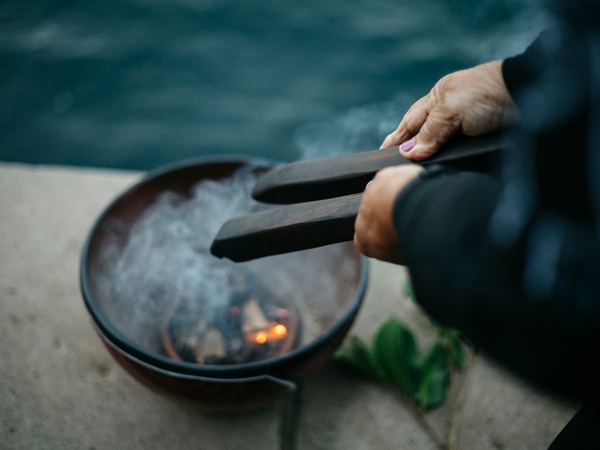
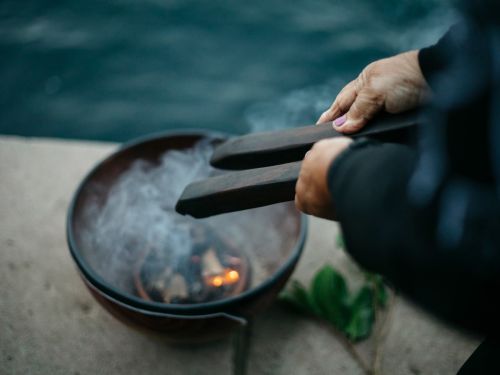
burning incense during an indigenous tour in Australia, Dreamtime Southern X, Sydney
There are now many wonderful Indigenous tour operators, such as Dreamtime Southern X, Sydney, which explore the way First Nations people experience Country. (Image: Destination NSW)

QL: What do you think Indigenous tourism looks like in 20 years?

PH: I hope that as soon as you travel or arrive in Australia, you know that you are on Aboriginal Country. That experience starts at our airports and infiltrates every tourism experience in some way, shape or form for your whole trip.
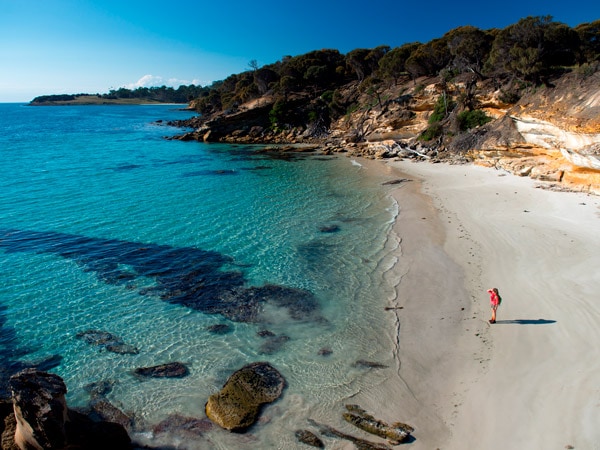
an aerial view of the Maria Island, Tasmania
Feel the call of the wild on Maria Island, Tasmania, one of the Great Walks of Australia.

Weekly travel news, experiences
insider tips, offers, and more.

QL: What would you love every Australian to do?

PH: One of the multi-day walks.

QL: Really?

PH: Yeah. I love, love, love them. They slow you down, you’re not zooming past this landscape, you’re immersed in it and you’re just walking really slowly through it. I actually think they’re largely undiscovered, the Great Walks.
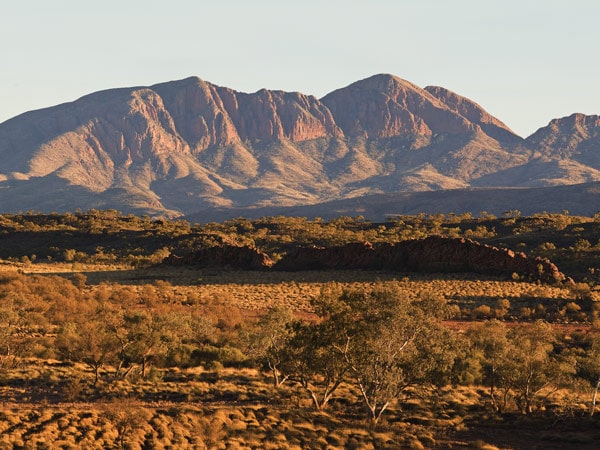
the Larapinta Trail, a great walk in Australia
Trek the Larapinta Trail, another Great Walk, in comfort with Australian Walking Holidays. (Image: Peter Walton)

QL: This leads me to something else. One of the great regrets of my life is I didn’t do the Larapinta Trail before my MS got to the stage where I can’t. So, accessible tourism, I think we’ve come a long way. I heard Paralympic Games champion Dylan Alcott speak at the annual Tourism Australia Destination Australia conference this year and it really highlighted the issue for me. He described how he went to Noosa and saw they had beach mats for his wheelchair, and that was the second time he went to the beach in his life. As an Australian, you go, “Um, whaaaat??? An Australian who has only been to the beach twice…" Final question. If you could click your fingers and change one thing in Australia’s travel landscape, what would it be?

PH: That’s a really good question [laughs]. What would you change?

QL: Uh, honestly… I would change our service culture.

PH: See, I don’t think this is too bad.

QL: It’s not terrible, just inconsistent.

PH: Yeah, OK. Something related to that. I want more people to see tourism as a career, like it is in other countries. I have spent my entire career in tourism and I would love for more Australians to do the same, because it is a great industry to be a part of.

Want to see more stories from Australian Traveller in your Google search results?

  1. Click here to set Australian Traveller as a preferred source.
  2. Tick the box next to "Australian Traveller". That's it.
hero media

This surprising regional town is making its mark on the culinary world

(Image: Visit Griffith)

    Carla Grossetti Carla Grossetti
    With more than 60 nationalities calling it home and a century of Italian influence shaping its paddocks and plates, Griffith is a regional Australian town with serious culinary cred.

    It might feel surprising to learn that Griffith is one of Australia’s leading food destinations. In-the-know Italians have understood this for generations, drawn to the Riverina region’s fertile soils that reminded them of the terrain they’d left behind more than a century ago. These days, Griffith supplies much of the nation’s pantry: 95 per cent of Australia’s prunes come from the region, it’s the country’s largest citrus-growing area, and it’s a leading producer of almonds and walnuts. Even the pickles in every McDonald’s burger nationwide are produced in Griffith. This is not just a farming town; the Griffith food scene is leading the way.

    Here, culinary confidence is rooted in migration. Italian families began arriving from 1913, with a second wave settling after the Second World War. Today, Griffith has the highest proportion of Italian ancestry of any Local Government Area in Australia. Add to that more than 60 nationalities represented across the community and you have a town where food is driven not by trends, but by tradition. Griffith’s motto, ‘Taste our culture’, isn’t marketing spin; it’s the reality.

    Where the vines tell a story

    A hand pouring wine into a glass, with a table filled with food.
    Uncover the stories behind every glass. (Image: Destination NSW)

    The Riverina has long been dubbed the food bowl of Australia, but it’s also a wine region that remains largely under the radar. What sets Griffith apart is that every one of its wineries is family-owned, many spanning generations.

    Calabria Family Wines is one of the region’s standard-bearers. The Calabria story began in 1945 when Francesco Calabria planted his first vines; today, the family continues to shape the region’s identity while also stewarding the historic McWilliam’s Wines brand. McWilliam’s was the first winery to plant vines in the area, and its barrel-shaped cellar door – complete with a soaring stained-glass window – remains one of the most distinctive in regional NSW.

    Yarran Wines, run by the Brewer family, showcases estate-grown fruit across Mediterranean varietals that thrive in the warm climate. Expect bold reds and textured whites that reflect both heritage and innovation.

    Set inside the old ambulance station, Harvest HQ is owned and operated by the Riverina Winemakers Association and pours a rotating selection of local wines under one roof. It also features spirits from The Aisling Distillery, reinforcing the region’s collaborative approach to craft.

    At the table

    A flat lay of a steak.
    Dine where tradition meets a bold new generation. (Image: Visit Griffith)

    If the vineyards tell one story, the dining rooms tell another. Griffith’s restaurants are where tradition and next-gen confidence meet.

    Zecca Handmade Italian occupies the former Rural Bank building, an imposing Art Deco landmark from the late 1930s. ‘Zecca’ means money print, and the name is a nod to the Zecca di Venezia in Venice. Here, find the Riverina’s only producer of dried artisan pasta and traditional Italian recipes. Importantly, the growers and producers supplying the kitchen are listed on the menu as a transparent expression of the region’s farm-to-table ethos.

    Established in 1977 and still run by the Vico family, La Scala puts authentic Italian cuisine on centre stage. Expect handmade pasta, traditional wood-fired pizzas, slow-cooked sauces and dishes that follow recipes guarded like family heirlooms. For something more contemporary, Bull & Bell in Gem Hotel is a shrine to the Euro-style steakhouse that works closely with local farmers and artisans to showcase Riverina produce.

    And then there are the institutions. Bertoldo’s Pasticceria, now in its third generation, draws locals daily for cannoli, biscotti, crostoli and house-made gelato, alongside classic sausage rolls and potato pies. La Piccola Grosseria feels like stepping into an Italian alimentari, its shelves lined with continental goods that wouldn’t feel out of place in Puglia.

    Meanwhile, Limone celebrates local and seasonal produce across breakfast and lunch menus, enriched by the produce and stories of Piccolo Family Farm. Find pastries and sourdough baked daily, and pop into the onsite retail pantry for products from regional producers – including the Piccolo family’s own wine range, Caro Piccolo.

    From the source

    A plated Aquna Sustainable Murray Cod dish.
    Taste world-renowned Aquna Sustainable Murray Cod, straight from its source. (Image: Visit Griffith)

    Behind every menu is a producer. Aquna Sustainable Murray Cod is perhaps Griffith’s most high-profile export; the brand’s Murray cod and Aquna Gold Murray Cod Caviar have achieved global recognition. In October 2024, Aquna presented its products to King Charles III and Queen Camilla at the NSW Premier’s Community BBQ in Parramatta. Impressed by the producer’s sustainable farming practices, the King requested the cod be sent to Buckingham Palace – not bad for a fish farm in regional NSW.

    Mandolé Orchard champions almonds grown on a family-run farm, transforming them into almond milk and value-added products. At Morella Grove, olives are pressed into premium olive oil and pantry staples that speak to Griffith’s Mediterranean heart. These producers are not peripheral; they are central to the town’s culinary ecosystem. Learn about local sustainable farming practices during a farm tour.

    Mark your calendar

    A woman walking past a food mural, something you can spot during A Taste of Italy Griffith.
    Plan your visit around A Taste of Italy Griffith. (Image: Visit Griffith)

    For a town that helps stock Australia’s supermarkets, Griffith has remained curiously absent from the national dining conversation. That’s beginning to change. If you’ve been searching for a regional food destination with substance, heritage and a clear sense of identity, you’ll find it here in the Riverina, right under your nose.

    Time your visit to the Riverina region to coincide with A Taste of Italy Griffith, held every August. This week-long celebration of Italian heritage and culture offers a wide range of Italian-inspired events and experiences to enjoy. Expect long-table lunches, wine tasting experiences, cooking classes and a Makers in the Piazza market. The headline event is a ticketed long lunch – Festa delle Salsicce (Salami Festival) – where winners of the best salami are announced.

    Start planning your foodie getaway at visitgriffith.com.au.