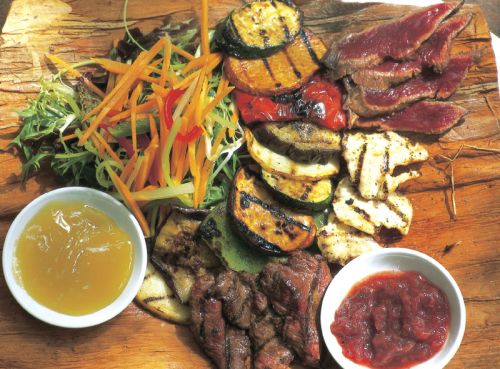
It has a unique flavour [bush tucker]

hero media
Sarah Tierney takes a fresh look at Australia’s clever culinary wilderness, including devouring the coat of arms, some ingenious Indigenous bush remedies, and even a recipe for good old fashioned Beer Damper.

If you thought traditional Aussie cuisine meant Vegemite on toast followed by a lamington for dessert, it’s time you expanded your horizons. Have you tried kangaroo yet? How about crocodile and emu? Or fruits like Kakadu plums, rosellas, riberries and the humble quandong, to name but a few? Bush tucker of this kind is becoming more famous and widespread, thanks to a spate of health studies that have revealed that native Australian meat, especially emu and roo, are lower in fat and higher in iron than other conventional meats. The fruits are also known to be healthier, with the Kakadu plum thought to be the world’s highest source of Vitamin C.


Most of what European settlers believed to be inedible is now considered very much the norm on the menus of top restaurants around the country. But of course the best place to experience real bush tucker is in the outback, where kangaroo is as common as beef and our original hunter-gatherers – the Australian Aboriginals – knew all the secret water spots and foods of the land.

Going walkabout for tucker

One of the most authentic spots in Australia for kick-starting your knowledge of bush tucker is in South Australia’s Northern Flinders Ranges, along the road to the Arkaroola Wilderness Sanctuary, at Iga Warta. This Indigenous-run Coulthard family business features a whole swag of cultural tours, one of which is Yata Nukuntha – a bush tucker and medicine tour detailing Dreamtime stories of the local tribes along the way. The three-hour trek brings visitors in touch with just some of the more than 600 types of edible plants, seeds and nuts in what Adnyamathanha tour guide Sharpy Coulthard refers to as his outback “supermarket". Interestingly, it’s from this region, and from the local Adnyamathanha language, that the word “witchetty grub" derives (wityu = hooked stick, vartu = grub) . . . so if you’re brave enough, ask Sharpy to dig one up for you. They taste like egg when cooked, like almonds when raw, and are a massive source of protein.


Next it’s out from the bushes and into the barrooms, with this iconic bush tucker location tucked away on the northwestern fringe of Flinders Ranges National Park, in the tiny town of Parachilna. It’d be a blink-and-you-miss-it kind of town if it weren’t for the famous Prairie Hotel and its Feral Mixed Grill of roo, wallaby, camel and goat for the hungry. Of course there’s other modern-Aussie food served here, but none is as popular as the Grill. Then there’s the Copley Bush Bakery and Quandong Café, about an hour north of Parachilna, which caters to the sweet tooth with its popular quandong pies and desserts, along with native-style cafe food. And let’s not forget Darwin’s Roadkill Café, a LOT further north, which serves up freshly cooked meat daily. Don’t worry; it’s not actual tire-marked, flattened road kill, but safely prepared possum, roo, croc and other game meat.

National pride, national diet

Interestingly, the native animals on Australia’s Coat of Arms – the emu and the red kangaroo – are peculiar in that they can’t walk backwards (presumably representing the thrusting, forward-looking progress of our young nation) and are the only living national emblems in the world that are regularly consumed by their subjects (ie, us). Of course most restaurants and hotels in the outback will have roo and emu and other native foods on the menu – but when you live in the outback, why wouldn’t you? Just make sure you don’t go traipsing around picking any old berry or leaf to eat, or else you’ll find yourself in dire need of some native medicine. Which brings us to . .

Need tips, more detail or itinerary ideas tailored to you? Ask AT.

AI Prompt

Bush cures

Native plants aren’t just for eating; they have some pretty potent medicinal uses too. Some that treat the more common health issues include the leaves of the rock fuchsia bush, which can be made into a drink for headaches, or you can mash the stems of a snakevine and wind it around your head. Looks ridiculous, but apparently works. Colds can be combated with native lemon grass or by crushing tea tree leaves to help clear the nose. Tree orchid bulb sap can be dabbed onto cuts for quick healing, or you can apply crushed billygoat weed to the wound. And if you’re ever in the outback and get whacked with a bout of toothache, plug the tooth with the shredded wood of the green plum tree, or pop some quinine berry fruits into your mouth.


But perhaps the ultimate repository for Australian bush medicines can be found at Dilthan Yolngunha – The Healing Place – a kind of Indigenous bush hospital set up by the Yothu Yindi Foundation at Gulkula, 30mins outside Nhulunbuy on Arnhem Land’s Gove Peninsula (www.healingplace.com.au). All manner of traditional treatments, ointments, liniments and methods are used here, some you’ll not believe until you’ve seen them – like the antiseptic use, for example, of liquid drained from the digestive canal of a bush cockroach.

A classic recipe

Finally, we thought we’d end our wander through Australia’s culinary wilderness with an absolute staple for your next walkabout adventure: it’s a Damper (with a beery twist), and it should be an integral part of everyone’s outback camping skills. Drovers used it, Aboriginals used it, and these days it’s an institution at school camps. And with beer, the damper is lighter and fluffier than normal. Take four cups of self-raising flour, one stubby of beer, a pinch of salt and mix everything together until it forms a dough. Shape the dough into a ball and place it on a rack over the fire (or in the oven) and cook until golden brown and hollow when tapped.


You can’t really call yourself a modern Australian until you’ve cooked your first damper. And if you think you’ve got a better version of this recipe, or even another idea or inspiration for your own bush remedies or outback tucker, send them in to editor@australiantraveller.com . . . and happy outback eating!

Want to see more stories from Australian Traveller in your Google search results?

  1. Click here to set Australian Traveller as a preferred source.
  2. Tick the box next to "Australian Traveller". That's it.
Australian Traveller

Australian Traveller

View profile and articles

hero media

Unforgettable First Peoples tours and experiences in Victoria

    Angela Saurine Angela Saurine
    From ancient aquaculture systems to sacred rock art shelters, Victoria’s First Peoples cultural experiences offer a powerful connection to one of the world’s oldest living cultures – where every site, story and smoking ceremony invites a deeper understanding of the land beneath your feet. 

    Victoria’s sweeping landscapes hold stories far older than any road map can trace – stories etched into stone, sung through generations and woven into every bend of river and rise of hill. From the lava flows of Budj Bim to the ancient middens of Moyjil/Point Ritchie and the volcanic crater of Tower Hill, the state is home to some of the most significant First Peoples cultural sites in Australia. These places, along with other immersive experiences, offer not only a window into a 60,000-year legacy, but a profound way of understanding Country itself. As more travellers seek connection over checklists, guided tours by Traditional Owners offer respectful, unforgettable insights into a living culture that continues to shape the land and the people who walk it. 

    Budj Bim cultural landscape  

    Budj Bim Cultural Landscape
    Budj Bim Cultural Landscape is on Gunditjmara Country. (Image: Visit Victoria)

    Venture beyond the surf and sand of the Great Ocean Road to discover a deeper story etched into the volcanic landscape. At Budj Bim, ancient aquaculture channels built by the Gunditjmara people to trap, store and harvest kooyang (short-finned eel) reveal one of the world’s oldest living cultures. While you’re in the area, head over to the state-of-the-art Tae Rak Aquaculture Centre, where you can observe the eels in a special tank, wander the shores of Tae Rak (Lake Condah), and enjoy a bite at the Bush Tucker Cafe. Also nearby is Tower Hill, a dormant volcano reborn as a wildlife reserve, offering trails through bushland teeming with emus and koalas. 

    eel tank
    The kooyang (eel) tank at Tae Rak. (Image: Visit Victoria)

    Dumawul Kooyoora Walking Tour 

    Dumawul walkingtour
    Guests are guided through Kooyoora State Park on the Dumawul walking tour. (Image: Visit Victoria)

    Step into a timeless landscape with Dumawul’s guided tour through Kooyoora State Park, around an hour’s drive west of Bendigo in north-central Victoria. Led by Djaara guides, this immersive half-day journey breathes life into Country, weaving together stories, bush tucker and ancient rock art. Known to the Dja Dja Wurrung people as Guyura – the ‘mountain of light’ – this dramatic granite range is rich with cultural and spiritual significance.  The adventure begins with a meet-up at the Bridgewater Hotel on the banks of the Loddon River, before guests are welcomed onto Country with a traditional Smoking Ceremony – a powerful ritual that honours ancestors and cleanses those who walk the land. From there, it’s a gentle wander through rugged outcrops and open bushland, with sweeping vistas unfolding at every turn. Along the way, guides share their knowledge of how the Dja Dja Wurrung peoples have cared for and adapted with this land for generations, offering a rare and moving window into an ancient way of life that continues to thrive today.  

    Kooyoora walking tour
    Knowledge of the Dja Dja Wurrung is shared on the trail. (Image: Visit Victoria)

    Kingfisher Cruises  

    Kingfisher Cruises
    Cruising the Murray with Kingfisher Cruises. (Image: Visit Victoria)

    Glide quietly through the Barmah-Millewa forest – the nation’s largest river red gum ecosystem – on a scenic journey along the Murray River and into the Barmah Lakes with Kingfisher Cruises. Led by passionate guides who share stories of the cultural significance of this ancient landscape, these cruises reveal the stories, totems and traditional knowledge of the Yorta Yorta people. As you navigate narrow waterways and spot native birds, you’ll gain a richer understanding of how First Peoples have lived in harmony with this floodplain for tens of thousands of years. It’s a gentle, immersive experience that leaves a lasting impression – one where every bend in the river carries echoes of culture, connection and Country.  

    wawa biik 

     Taungurung leaders
    Exploring Nagambie with Taungurung leaders. (Image: Visit Victoria)

    Translating to ‘hello, Country’ in the language of the First Nations People and Custodians of the rivers and mountains of Taungurung Country in Central Victoria, wawa biik guides a range of authentic and deeply immersive experiences. Leaving from either Nagambie or Euroa, the tours are woven with ancient stories of the Taungurung, telling how a sustained connection and responsibility ensures the continued health of biik – benefitting the people, animals and plants that live in and around the Goulburn River. During the wawa Nagambie experience, guests participate in a Welcome Smoking Ceremony, and enjoy lunch and conversation with two Taungurung leaders as they cruise through the wetlands of tabilk-tabilk (place of many waterholes). The 4.5-hour tour begins at Tahbilk Winery, which is set in the wetlands of Nagambie on Taungurung Country and collaborates with Taungurung Elders to share knowledge of biik. 

    Bataluk Cultural Trail  

    Bataluk Trail
    Cape Conran on the Bataluk Trail. (Image: Visit Victoria)

    The Bataluk Cultural Trail winds through East Gippsland like a thread stitching past to present, tracing the deep connection between the Gunaikurnai people and their land. Starting at the Knob Reserve in Stratford, visitors walk among scarred trees and ancient stone tools once used for survival and ceremony. At the Den of Nargun near Mitchell River, the earth holds stories of women’s sacred spaces, cloaked in myth and legend. Further along, Legend Rock at Metung tells of greed and consequence, its surface etched with ancient lore. At Cape Conran, shell middens lie scattered like breadcrumbs of history – 10,000 years of gatherings, stories and saltwater songs still echoing in the wind.  

    Healesville Sanctuary  

    echidna at Healesville Sanctuary
    Get up close with a resident echidna at Healesville Sanctuary. (Image: Visit Victoria)

    Set on the historic grounds of Coranderrk Aboriginal Station, Healesville Sanctuary honours the Wurundjeri people of the Kulin Nation through immersive storytelling and connection to Country. Along Wurundjeri Walk, visitors are invited to reflect on the land’s rich First Peoples history, with native plants revealing their traditional uses. Wurundjeri Elder and educator Murrundindi shares culture in-person with the Wominjeka Aboriginal Cultural Experience every Sunday, and most days during Victorian school holidays. Murrundindi’s smoking ceremonies, storytelling and bush tucker knowledge reveal the sacred relationship between people, animals and the environment. Bird-lovers can’t miss the incredible Spirits of the Sky show featuring native birds daily at 12pm and 3pm. 

    The Grampians 

    Rock art at Bunjil Shelter in The Grampians
    Rock art at Bunjil Shelter in The Grampians. (Image: Visit Victoria)

    Known as Gariwerd to Traditional Owners, the Grampians is a place of immense cultural and spiritual significance. This rugged landscape holds more than 80 per cent of Victoria’s known First Peoples rock art, offering a powerful window into the region’s deep heritage. Visitors can respectfully explore five remarkable rock art sites: Billimina and Ngamadjidj in the Wartook Valley, Manja Shelter near Hamilton, Gulgurn Manja shelter near Laharum, and the Bunjil Shelter near Stawell, where the creator spirit is depicted. Each site tells a unique story of connection to Country, shared through ancient handprints, dancing figures and Dreaming narratives etched into stone.