
Your guide to catching the 2026 Lyrids.
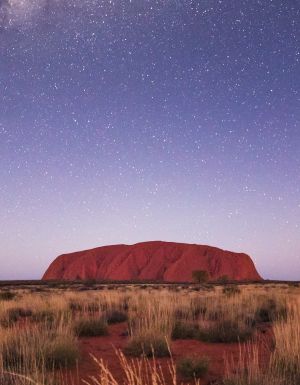
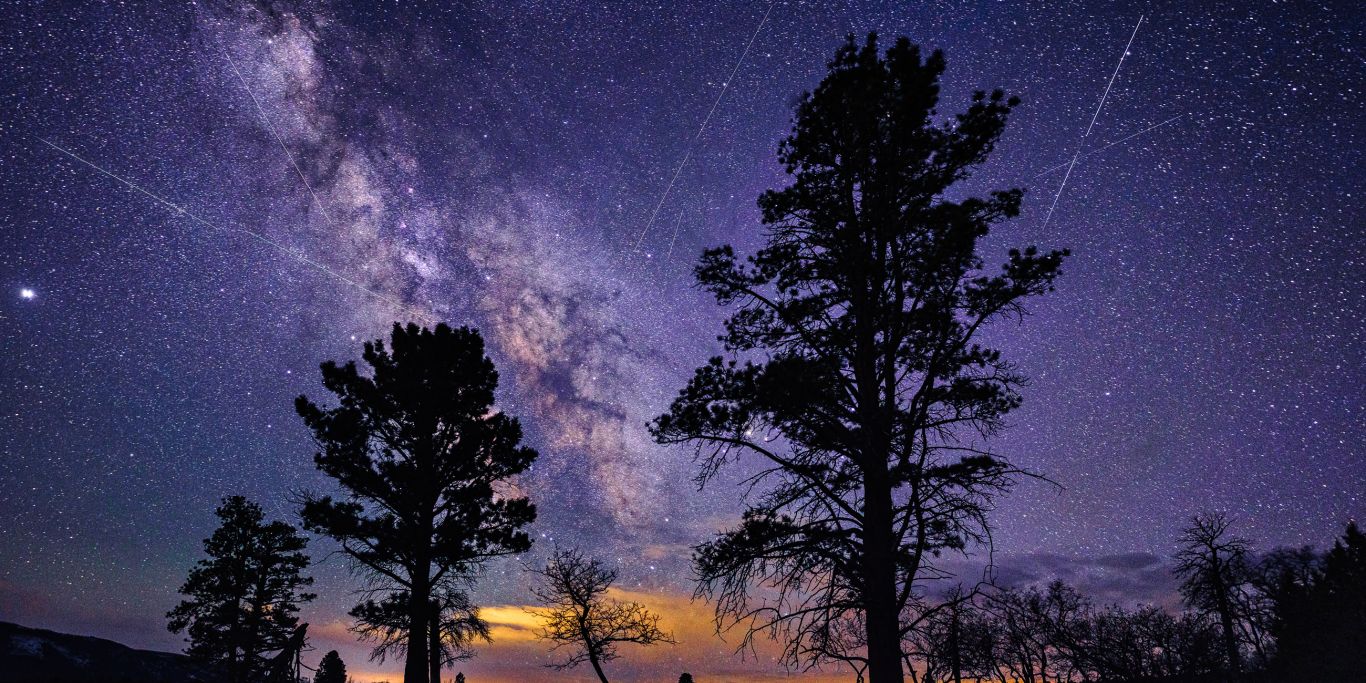
Autumn is easily one of the best times of the year to be an amateur stargazer in Australia. The colder air is crisper, the skies are clearer, and the southern hemisphere transforms into a front-row seat for some of the universe’s most spectacular shows. And while seeing the Milky Way stretch overhead will never get old, catching a meteor shower is another thing entirely – especially when it’s the Lyrids.
One of the oldest and most beloved meteor showers on Earth, the Lyrids are back for 2026. Here’s everything you need to know.
What exactly is the Lyrid meteor shower?
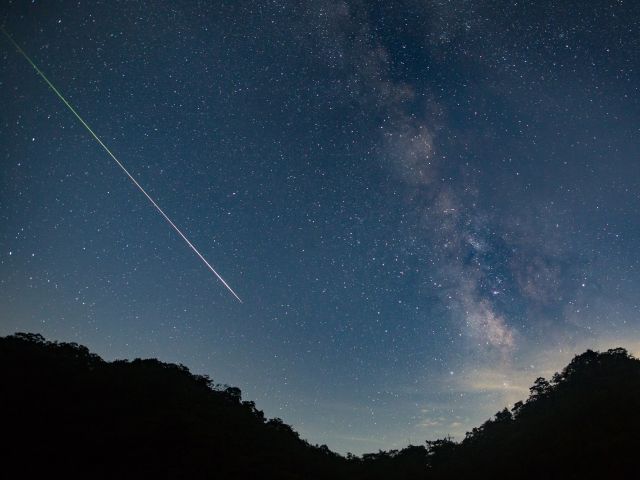
The Lyrids hold a pretty remarkable title: it’s among the oldest recorded meteor showers in human history, with observations stretching back 2700 years. Its earliest documented sighting dates to 687 BCE, when ancient Chinese astronomers described meteors falling from the sky like rain.
It all comes down to Comet Thatcher – officially known as C/1861 G1 – first spotted by New York amateur astronomer Alfred E. Thatcher in 1861. This comet takes around 415 years to complete a single orbit around the sun, and as it travels, it sheds a long trail of debris behind it. Every April, Earth passes through that trail, and the dust and rocks collide with our atmosphere at roughly 47 kilometres per second, burning up in a blaze of colour and light.
The result? Bright, fast meteors – and occasionally, dazzling fireballs. While a truly spectacular outburst (up to 100 meteors per hour) only happens around every 60 years, in a typical year, stargazers can expect to spot up to 20 meteors an hour during peak activity.
When is the Lyrid meteor shower in 2026?
This year, the Lyrids are predicted to peak on the morning of Wednesday, 22 April 2026. Crucially for Australian sky-watchers, the moon will be in its first quarter phase and setting early, meaning conditions after midnight should be beautifully dark – ideal for meteor spotting. Set your alarm, pack a blanket, and get outside in the hours before dawn for your best chance.
The shower itself runs broadly from 16 to 25 April, so even if the peak night doesn’t work for you, you’ll have a window of opportunity.
Need tips, more detail or itinerary ideas tailored to you? Ask AT.
AI Prompt
Where can Australians see the Lyrids?
The Lyrids technically favour the northern hemisphere – the shower’s radiant point (the part of the sky the meteors appear to come from) sits near the constellation Lyra, which stays relatively low in Australia’s northern sky. But don’t let that put you off. Aussies can and do see the Lyrids, especially from dark-sky locations well clear of city lights.
Your best bet is to seek out one of Australia’s great stargazing destinations. Some top picks:
Warrumbungle National Park, NSW – Australia’s first and only Dark Sky Park, with virtually no light pollution and jaw-dropping views of the Milky Way.
Earth Sanctuary, Northern Territory – Just outside Alice Springs, it offers guided night sky experiences and wide-open skies in every direction.
Flinders Ranges, SA – Remote, flat, and about as far from a city glow as you can get.
Dark Sky Tasmania – The island state’s southerly position and low population density make it one of the finest stargazing spots in the country.
How to actually spot the meteors
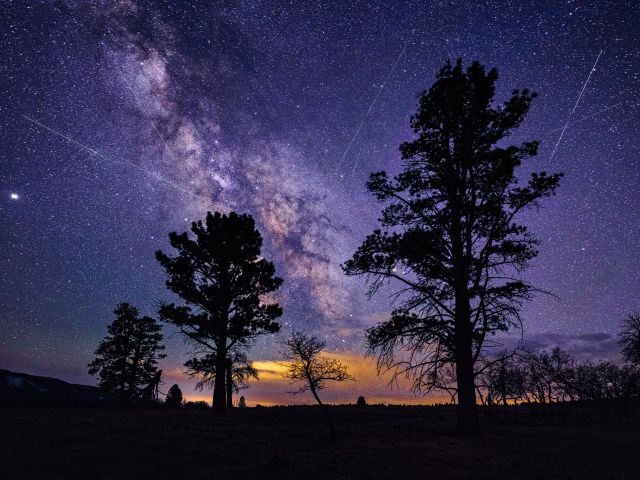
Look north. Lyra’s brightest star, Vega, is your anchor – find it sitting low on the northern horizon, roughly a hand-span to the left of the Milky Way. The meteors will radiate outward from near that point. That said, you don’t need to stare at Vega all night; just get comfortable, face generally north, and take in as wide a sweep of sky as you can.
A few tips to maximise your chances:
Get out at least 30 minutes before you plan to start watching – your eyes need time to properly adjust to the dark. Lie flat on your back on a blanket or a reclining camp chair. Avoid looking at your phone screen. Dress warmly; April nights can be bitter. And if you have binoculars, bring them – though many meteors will be visible to the naked eye.
Most importantly: be patient. That’s half the fun.
Weekly travel news, experiences
insider tips, offers, and more.
Will the Lyrids be visible from cities?
You’ll have a much better experience away from urban areas, but if you can’t escape the city, you may still catch the brightest fireballs. Head to the darkest park or open space nearby, get low away from streetlights, and let your eyes adjust. It’s not ideal, but the Lyrids do produce some genuinely spectacular bursts – don’t write it off entirely.
The Lyrids run from 16–25 April, with peak activity expected in the early morning hours of 22 April 2026.
Want to see more stories from Australian Traveller in your Google search results?
- Click here to set Australian Traveller as a preferred source.
- Tick the box next to "Australian Traveller". That's it.