hero media

2 Aussie places make New York Times’ 52 Places to Go in 2026 list

Australia has landed two spots on the New York Times’ influential travel list for 2026.

At the start of every new year, prestigious American newspaper the New York Times shares its list of 52 Places to Go that are worth travelling to that year.

When you think about the Earth’s vastness and all the magnificent places that call it home, making it into the top 52 is no small feat. And in 2026, Australia has managed to secure not one, but two spots.

Ranked at number 14, the Top End, Australia, appears well ahead of perennial favourite Melbourne, which came in at number 49. This reflects a growing global appetite for destinations where culture, landscape and local ownership intersect, rather than familiar urban icons alone.

14. The Top End
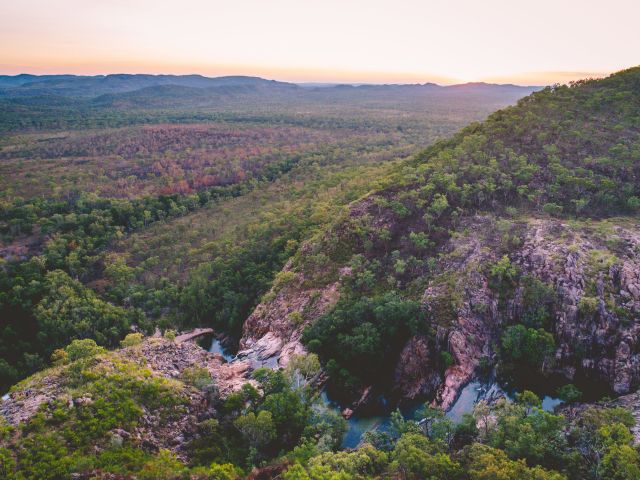
Gunlom Falls in the Northern Territory
The reopening of Gunlom Falls was the catalyst for the Top End’s inclusion. (Image: Lords Safaris)

The New York Times highlights the reopening of Gunlom Falls in Kakadu National Park as the catalyst for the Top End’s inclusion, describing it as a stunning waterfall set within an area of profound Aboriginal cultural significance.

Gunlom Falls, known for its dramatic cascade and elevated infinity pool, had been closed for six years following a legal dispute. In a landmark win last year, the Jawoyn people, the Traditional Owners of the land, successfully challenged an Australian parks agency, restoring public access to the site.

Crucially, the new agreement goes beyond reopening gates. Under the revised lease, the Jawoyn people now receive 50 per cent of the falls’ commercial revenue, a significant increase from the 14 per cent previously allocated. The New York Times frames this outcome as part of a broader shift toward more equitable tourism models in Australia’s Top End.
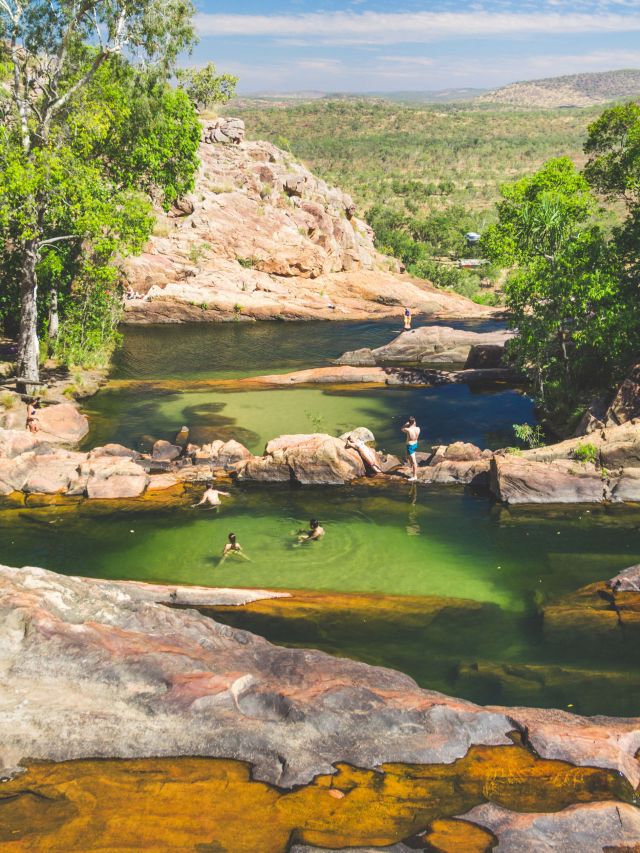
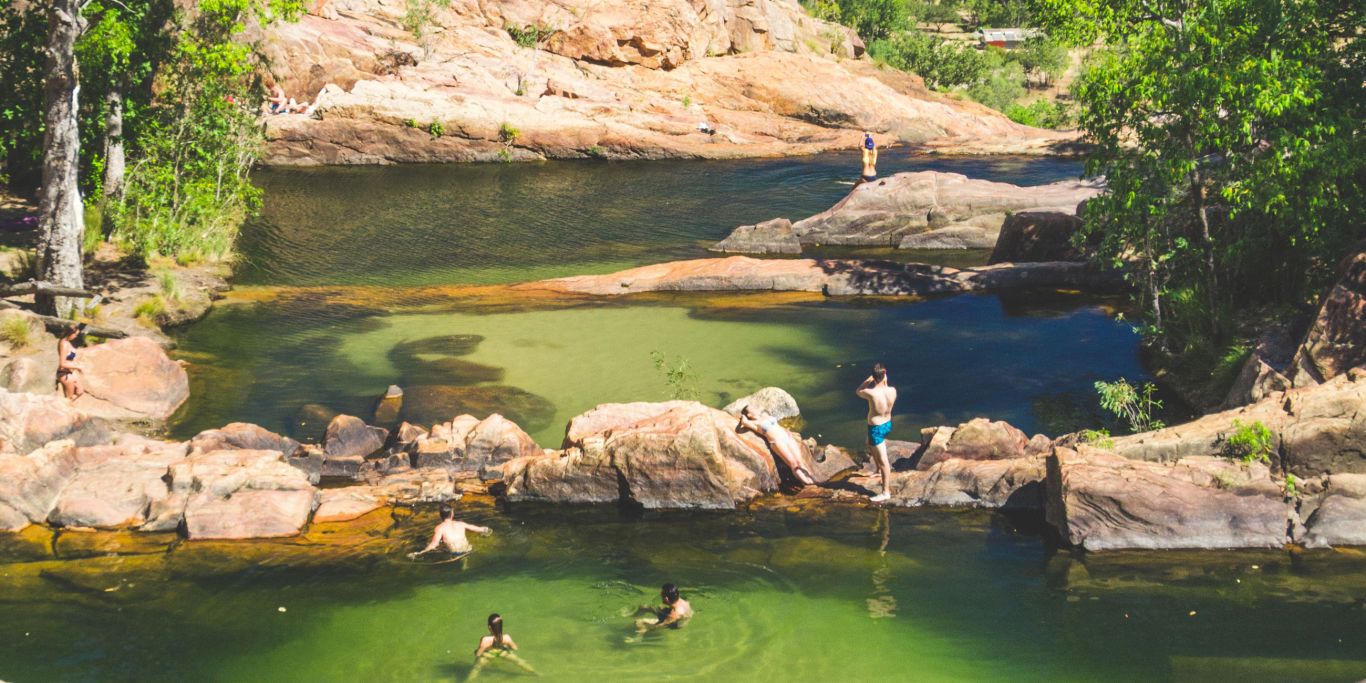
People swimming at Gunlom Falls in the Northern Territory
Gunlom Falls has profound Aboriginal cultural significance. (Image: Lords Safaris)

Kakadu National Park, which anchors the region, is also recognised for its extraordinary ecological and cultural richness. The park spans multiple ecosystems, from wetlands to escarpments, and protects around 5000 Aboriginal rock art sites, making it one of the most significant cultural landscapes in the world.

Darwin, traditionally the gateway to the Top End, also features prominently in the listing. The New York Times notes the upcoming opening of the Larrakia Cultural Centre overlooking Darwin Harbour, which is expected to welcome visitors from September. The centre will showcase the history and culture of the Larrakia people through art and archaeological exhibitions, music performances and hands-on craft workshops.

The inclusion positions the Top End as a destination defined not just by natural beauty, but by living culture, Indigenous leadership and meaningful visitor experiences.

Need tips, more detail or itinerary ideas tailored to you? Ask AT.

AI Prompt

49. Melbourne
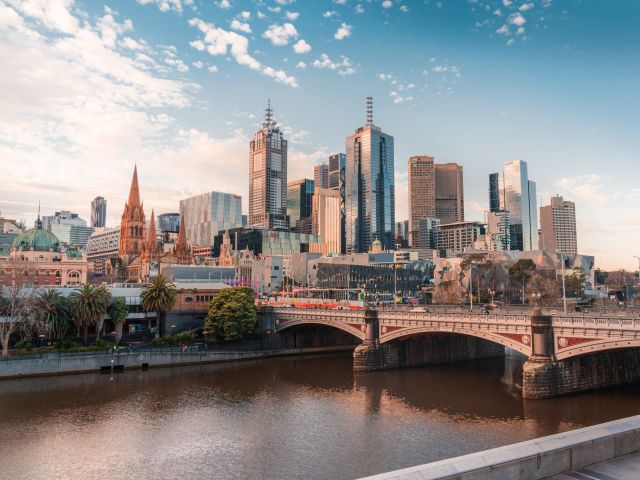
Melbourne skyline
Melbourne is a perennial favourite. (Image: Visit Victoria)

Melbourne’s appearance on the list comes as little surprise, with the city a regular fixture in global travel rankings. It also took out Best City to Visit in Australian Traveller’s Readers’ Choice Awards, last year. This year, however, The New York Times anchors its pick to a specific moment: a major Formula 1 milestone.

In 2026, Melbourne will host the debut of a Cadillac Formula 1 team at the Australian Grand Prix, marking the first new F1 squad in a decade. The event, scheduled for 5-8 March, is tipped to draw motorsport fans from around the world and elevate the race’s global profile.

Beyond the circuit, The New York Times leans into Melbourne’s established appeal as a culinary and cultural capital (it won our Readers’ Choice Award for Best Foodie Destination and Best Cultural or Arts Experience, too). It calls out the city’s cafe-lined laneways, the ever-busy Queen Victoria Market and the riverside Royal Botanic Gardens as essential experiences for visitors.

For car enthusiasts keen to stay off the track, auto-focused attractions such as the Fox Classic Car Collection at the historic Queen’s Warehouse and the Porsche & Coffee street gathering in South Melbourne on 1 March get a mention.

The Blowhole Lookout – Poombeeyt Koontapool on the Great Ocean Road
Poombeeyt Koontapool on the Great Ocean Road is worth a stop. (Image: Parks Victoria)

The listing also encourages travellers to venture beyond the city, suggesting a drive along the Great Ocean Road to The Blowhole Lookout – Poombeeyt Koontapool, a newly opened coastal lookout above a dramatic blowhole a few hours southwest of Melbourne.

While Melbourne may be a familiar name on international lists, its inclusion alongside the Top End underscores the breadth of Australian travel experiences capturing global attention in 2026, from ancient landscapes and Indigenous-led tourism to high-speed racing and world-class food culture.

Emily Murphy
Emily Murphy is Australian Traveller's Email & Social Editor, and in her time at the company she has been instrumental in shaping its social media and email presence, and crafting compelling narratives that inspire others to explore Australia's vast landscapes. Her previous role was a journalist at Prime Creative Media and before that she was freelancing in publishing, content creation and digital marketing. When she's not creating scroll-stopping travel content, Em is a devoted 'bun mum' and enjoys spending her spare time by the sea, reading, binge-watching a good TV show and exploring Sydney's vibrant dining scene. Next on her Aussie travel wish list? Tasmania and The Kimberley.
View profile and articles
hero media

Heathcote has evolved into the ultimate eco-escape for foodies

    Margaret Barca Margaret Barca
    From cabins to canvas, craft distillers to destination dining, Heathcote locals reveal their eco-savvy passions in ways that resonate with those seeking to travel lightly. 

    Heathcote, on traditional Taungurung Country in Central Victoria, is synonymous with its garnet-hued shiraz, but wine isn’t the only string to its bow. The town itself is sprinkled with heritage buildings from the gold rush era, and beyond that a growing collection of sustainable gastronomy and eco-friendly escapes. Nearby Bendigo, one of only 65 cities in the world recognised as a UNESCO Creative City and Region of Gastronomy, plates up an astonishing calibre of produce, wine and food for its size. Increasingly the entire region is taking up the challenge, though Heathcote in particular shines with its focus on sustainability. 

    Pink Cliffs GeologicalReserve
    The dramatic landscape of Heathcote’s Pink Cliffs Geological Reserve. (Image: Visit Victoria/Emily Goodfrey)

    The eco-stays bringing sustainability to Heathcote 

    Yellow BoxWood’s safari-style tents
    Yellow Box Wood’s safari-style tents are nestled on 40 hectares of bushland. (Image: Emily Goodfrey)

    Andee and Lisa Davidson spent years working in southern Africa before settling in Heathcote. “We had a vision of how this could be,” explains Andee. “We wanted a retreat, but one that was off-grid and environmentally sustainable.” Now, at Yellow Box Wood, two luxury safari-style tents are at the heart of 40 hectares of rolling hills and native bush, with kangaroos, wallabies, echidnas, goanna and birdlife aplenty. It’s all solar-powered, wood for the fire is mainly fallen timber, and water is collected on the carport roof.  No lack of creature comforts though – en suite with rain shower, espresso coffee maker, comfy seating, wood-burning fire all set to go. There’s also a solar-heated, mineral salt pool in a bush setting, walking tracks, and even a mini bush golf course.  On my visit, I put the vision to the test. Cocooned in the plush four-poster bed I can glimpse the stars, while the heater casts a golden glow on the canvas. In the morning, I wake to a blush-pink sunrise, kangaroos feeding and a soundtrack of magpies.

    Mt Ida Eco Cabin
    Mt Ida Eco Cabin is rustic and simple but oozes comfort. (Image: Graham Hosking)

    If a tent is not your style, Stephen and Cally Trompp’s carbon-neutral Mt Ida Eco Cabin might entice with its generous deck and farmland views.   Inside the cabin, corrugated iron walls as rusty as a shearing shed, gleaming (recycled) floorboards, timber truss ceiling (crafted by Stephen), wood-fired heater and an old-school turntable with a pile of vinyls to spin. It’s fun, and a little boho. “Everything is recycled. The cabin takes maximum advantage of the sun in winter. It’s all solar-powered. Don’t panic, though,” says Stephen, “you can still charge your phone and get 4G reception!” Settle into an Adirondack chair on the deck or pedal off on a mountain bike to suss out the wineries.  

    A taste of Spain in Central Victoria 

    Three Dams Estate
    Three Dams Estate make Spanish-style wine.

    Another person with a vision is Evan Pritchard at his Three Dams Estate where the wines reflect his deep love of Spain and of Spanish-style grapes, such as tempranillo. Afternoons in the ‘wine shed’ or cantina are matched with music (flamenco is a favourite), Spanish bites from tapas to paella (with Evan on the pans!) and views to Mount Alexander. Sustainability is also a passion. “You don’t need to buy anything. We decided to be off-grid from the start, but it is a lifestyle change,” he says. “You need to think about it and be careful.” Everything here is recycled, reassembled, refurbished. Evan has an electric car (with solar-powered charger), solar-power for the winery, and even a jaunty little electric tractor/forklift. “I love the idea of all the things you can do using the sun.” Sipping a crisp rosado (a Spanish rosé) with Evan in the sunshine, I couldn’t agree more. 

    The vineyard redefining sustainable winemaking 

    Silver Spoon winery
    The Silverspoon Estate winery is completely off-grid. (Image: Graham Hosking)

    On the other side of Heathcote, Silver Spoon Estate demonstrates sustainability on a more extensive scale. Tracie and Peter Young’s winery, cellar door, award-winning restaurant and their own house are all solar-powered and off the grid. Sustainability is intrinsic to everything they do.  The property sprawls across 100 hectares, with 20 hectares under vine – shiraz, viognier, grenache, tempranillo. As the climate has changed, so too has the approach. These are dry-grown vineyards. “We prune for drought. That means lower yields but more intense flavours,” says Peter.  The fine-dining restaurant offers sweeping views, a wood-burning fire and a deck for languid lunches. Head chef Ben Hong sources regional, sustainable ingredients and weaves estate wines into the menu – think crispy wild mushroom arancini, viognier-infused chicken breast.   

    Silver Spoon’s award-winning restaurant
    Silver Spoon’s award-winning restaurant.

    Heathcote’s other hidden gems 

    Heathcote Wine Hub
    Heathcote Wine Hub is housed in a 1855-built timber church.

    Not all local wineries have a cellar door, but I find local treasures at the Heathcote Wine Hub, a petite 1855 timber church in the main street, lovingly returned to life by Karen Robertson and Carey Moncrieff.  “Carey is a scrounger,” says Karen. “He doesn’t throw a single thing away.” He does, however, craft things into something quite special. Heritage floors, light-filtering lancet windows and shelves of regional wines create the perfect ambience for wine tasting. Or order a glass and linger over a cheese platter.  

    Heathcote is not all wine, of course. Nathan Wheat and partner Vanessa Curtis run Envy Distilling with a committed sustainable ethic – and a serious love of gin. Their small-batch distillery produces grape-based gin, and soon brandy. Distilled water is reused in an ingenious cooling system. All waste is treated on site. They buy excess wine from winemakers to distil and buy recycled barrels. “Distilling with the sun,” as Nathan says. Each Envy gin has its own story. Spicy, award-winning The Dry, is designed to capture the region’s dry, rugged nature. Pull up a stool at the bar (reclaimed timbers and tiles, of course), order a Gin Flight, or kick back with a cocktail and let Nathan share his eco journey.   

    Envy gins
    Sample gins at small-batch distillery Envy.

    A traveller’s checklist 

    Getting there

    It’s less than two hours’ drive from Melbourne. The scenic route we take goes past Sunbury, then along a splendid country road through Romsey and the magic, boulder-strewn landscape of Lancefield. Watch for kangaroos on the road! 

    Staying there

    Go off-grid in style at Yellow Box Wood for glamping or try Mt Ida Eco Cabin for a couple’s weekend hideaway. 

    Eating there

    French dishes at Chauncy
    Award-winning French restaurant Chauncy.

    At award-winning Chauncy, French chef Louis Naepels and sommelier wife Tess Murray have created a tiny, elegant pocket of rural France. Meticulously restored 1850s sandstone building, sun-drenched dining room, impeccable service, a menu suffused with local flavours and thoughtful wine pairings.  

    Fodder is both cafe and social hub. Chef Mo Pun and sister Lalita serve classic Aussie breakfast-to-lunch fare, though their Nepalese heritage sneaks through. 

    Playing there

    Sanguine Estate
    Sip on wines among the vines at Sanguine Estate. (Image: Visit Victoria/Emily Godfrey)

    Sanguine Estate’s cellar door and terrace overlook bucolic vineyards. Its award-winning, dry-grown wines include the distinctive D’Orsa Blanc dessert wine, reflecting the family’s Swiss-Italian heritage. Order a charcuterie board and stay a while. Keep it carbon neutral by cycling some (or all) of the 50-kilometre O’Keefe Rail Trail to Bendigo.  

    At Bridgeward Grove, learn about the property’s Old Mission Grove heritage olive trees, do a sommelier olive oil tasting, and stock up on sustainably grown olives and oil. Explore the unique landscape, wildflowers and wildlife of pink cliffs geological reserve.