Steve Irwin to RM Williams: the most memorable outback characters

hero media
In the red dusty expanse, single-minded, eccentric and sometimes utterly insane personalities thrive. And without question it’s the people who have formed a special bond with the outback that make it so wonderful and unique. Sol Walkling looks at just a few of the amazing people out there who have made the outback what it is today.

Ian Conway

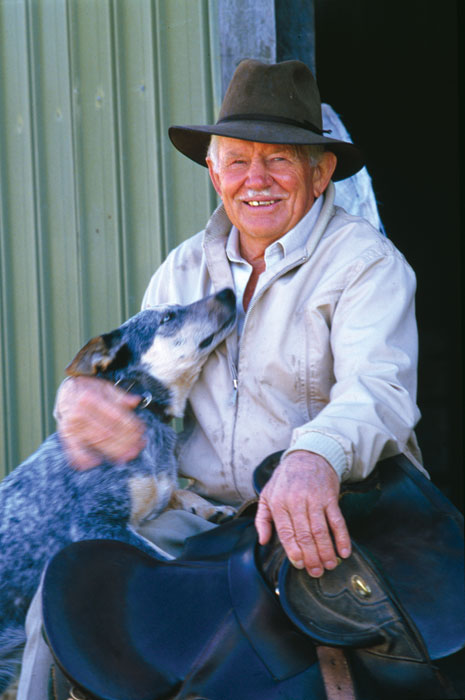
Those born into the seemingly inhospitable wilderness hundreds of kilometres from what most people would consider civilisation consider themselves lucky and rarely leave the place. Some, like Ian Conway, have become modern-day pioneers. The son of an Arunta woman and a Kidman boss drover, Ian grew up on Angas Downs station, three hours southwest of Alice Springs. As a boy, he learned everything there was to know about camels from his Aboriginal grandmother – and transformed that traditional knowledge into his daily bread when he decided to invite tourists in for a cuppa and some bush tucker at his Kings Creek homestead to share his love for the land.


Today, the outback camel station and eco lodge owner is the leading exporter of camels in Australia (he also co-founded the Camel Industry Association), plays host to regular documentary film crews as well as tourists and has even retraced Ernest Giles’ steps on his favourite camel, Atwa. It mightn’t seem like a traditional life, but Ian considers himself a keeper of the land – here to look after it until he’s gone – like those before him.
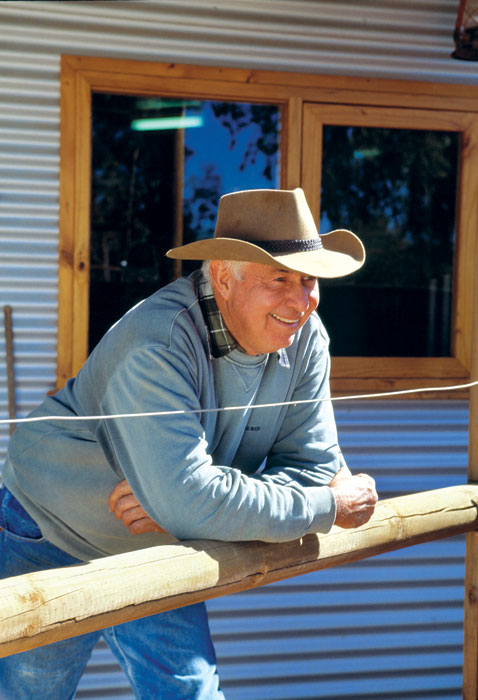
Ian Conway at Kings Canyon
Ian Conway at Kings Canyon. (Image: Tourism NT)

Robyn Davidson

Tracks, A Woman’s Solo Trek Across 1700 Miles of Australian Outback, is the title of a travelogue by this adventuress extraordinaire, whose story also involves camels. Her preparations and taming of the temperamental animals took two years, not counting the countless hours spent looking for them every morning before each day’s ride. Robyn set out on her dangerous and crazy-sounding journey in 1977 practically by herself – dog and four camels aside – to learn about the desert and its traditional owners. She came back an infamous hero who’d walked at times clothed in nothing but her own skin.
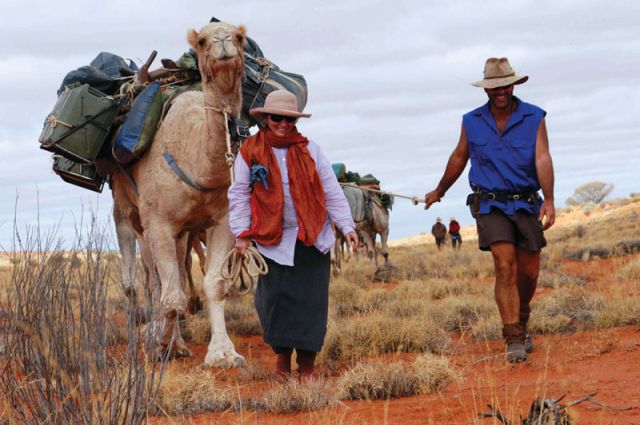
Solo trekker Robyn Davidson
Solo trekker Robyn Davidson and Andrew Harper on the Western Simpson Desert Trek. (Image: Camel Tracks)

Burke and Wills

In 1860, Robert O’Hara Burke and William John Wills famously attempted to cross Australia from Melbourne to the Gulf of Carpentaria in order to become the first Europeans to open up the uncharted territory at the heart of Australia. Despite being pretty inexperienced bushmen, they actually completed the north-south part of the journey with their 18-strong team, before perishing on the return journey in June 1861 at Coopers Creek.


Although seven people died and only John King, who was in charge of the camels, made it all the way back to Melbourne, the expedition did serve to increase our knowledge of central Australia – and at least disproved once and for all the fanciful notion of an inland sea.
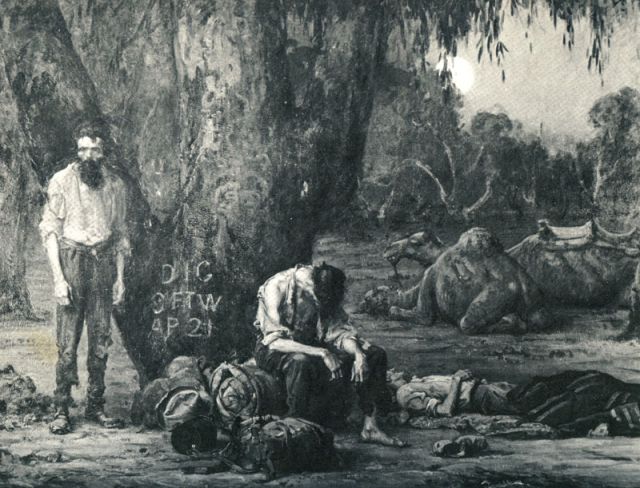
Burke and Wills at the Dig Tree
Burke and Wills at the Dig Tree, painted by Sir John Campbell Longstaff in the late 1800s.

Need tips, more detail or itinerary ideas tailored to you? Ask AT.

AI Prompt

Steve Irwin

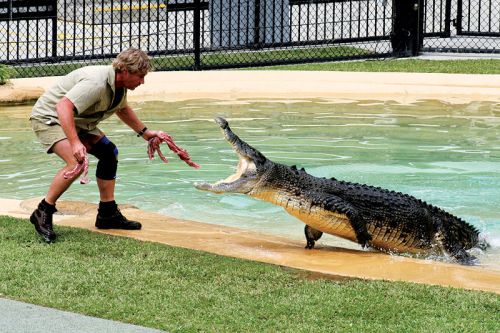
A more recent tragic hero’s death in Queensland moved the world, not just Australia. Our beloved Crocodile Hunter, conservationist and self-proclaimed Wildlife Warrior’s rare gift with animals and his larger than life personality earned him worldwide recognition. With his “Crikey" catchcry, broad smile and sparkling eyes, he captured TV audiences and sparked an interest in his conservationist message.


He died in 2006 after a stingray’s spine pierced his chest. (Interestingly, a series of suspected revenge attacks on stingrays along the Qld coast soon followed, with several found with their spine-tails severed.)


Steve’s daughter, Bindi, who seems to have inherited Dad’s sunny personality, wowed audiences at his memorial service at Australia Zoo, the family’s home, when she gave a speech in front of more than 5000 people, beginning with the words: “My Daddy was my hero." Bindi has since become a celebrity in her own right – just as her father had predicted – with her own TV show, DVD, appearances on US chat shows, and as the youngest ever front-page model for New Idea in 2006. She is also a zookeeper at Australia Zoo and continues her father’s conservation work.
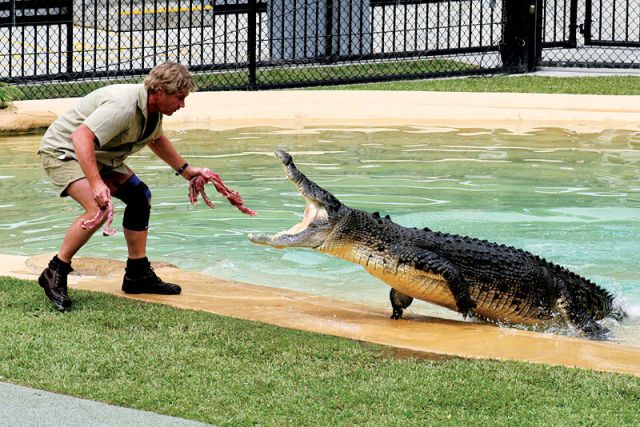
The one and only Steve Irwin, RIP. Image by Paul Williams, www.sardrabbit.com

RM Williams

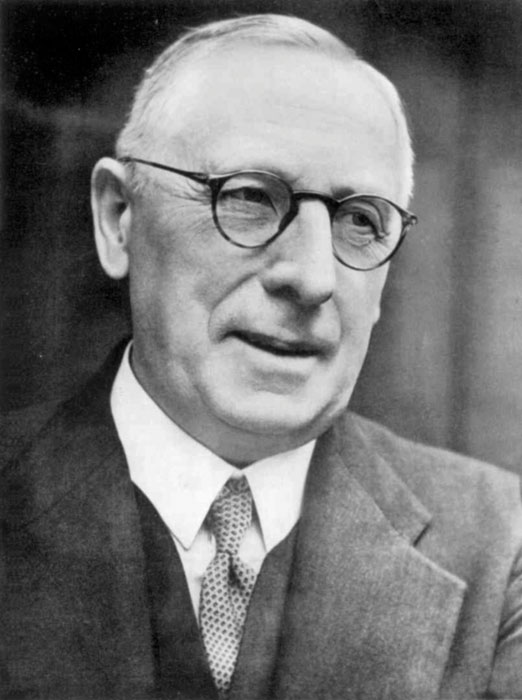
To survive in the outback it helps to be a jack-of-all-trades. Reginald Murray Williams was born over a century ago, in May 1908, and it was during one of his first jobs in WA – helping to establish a mission for Aboriginals – that he found the inspiration for his life: the Indigenous Australians’ mastery over their environment.


His job descriptions were as varied as the outback is vast, ranging from horse breeder to miner to stonemason, author and entrepreneur. If it hadn’t been for a chance encounter with a man known as Dollar Mick, who knew how to make pack saddles, RM would’ve likely stayed a very successful (but far lesser-known) well-sinker.


Together with Dollar, he perfected the art of boot making using only a single piece of leather, before opening a workshop in Adelaide. His skills must have been rather extraordinary as his first overseas order came from no less than the King of Nepal. In combination with a successful gold mining venture at Tennant Creek, his business quickly turned RM into a multi-millionaire. He must have been quite a sight when he staggered down the street to the bank with bags of gold, shotgun on each side. He passed away in 2003, aged 95, as the nation mourned the end of an era.
The quintessential outback hero, Reginald Murray Williams
The quintessential outback hero, Reginald Murray Williams. (Image: National Archives of Australia)

Weekly travel news, experiences
insider tips, offers, and more.

John Flynn

Born two weeks after Ned Kelly was hung, the life of John Flynn couldn’t have been more different from the famed outlaw’s. Trained as a minister, Reverend Flynn’s defining moment was his arrival in outback Beltana, SA, in 1911. Moved by the hardship of life in the bush, in particular the lack of medical help, his moving report to the Presbyterian Church the following year led to his appointment as head of its “bush department", the Australian Inland Mission.


When Flynn started his work, only two doctors served a total area of 1,8000,000km2, using bush hospitals, hostels and ministers-cum-boundary riders on camel or horseback. Faced with the problematic vast distances in the outback, Flynn’s solution came in the form of a letter from Lieutenant Clifford Peel, a young Victorian medical student with an interest in aviation.


Even though radios and planes were very much in their infancy in 1917, Peel’s letter impressed the reverend and was the first step towards the establishment of the Royal Flying Doctors Service, and today more than 20 bases span the length and breadth of Australia.
The Reverend John Flynn
The Reverend John Flynn. (Image: Royal Flying Doctors Service)
Australian Traveller

Australian Traveller

View profile and articles
hero media

Good food, beautiful nature & history: your guide to a long weekend in West Gippsland

(Credit: Rob Blackburn)

    Carla Grossetti Carla Grossetti
    From rainforest walks and scenic drives to historic gold-rush towns and standout regional dining experiences, you can find it all in West Gippsland.

    Hover over West Gippsland on Google Earth and you’ll see vast tracts of land spread out like green velveteen around the Toorongo Falls Reserve. It’s a landscape that feels almost impossibly lush for a region sitting little more than an hour from Melbourne.

    Track southeast in late autumn and early winter and you’ll see pockets of the Mt Baw Baw Plateau dusted in snow. In addition to the forests of mountain ash veined with creeks and rivers, there are pastures and farmland cross-stitched together to form pretty patchworks.

    But West Gippsland isn’t defined by scenery alone: in addition to its awe-inspiring nature, a Venn diagram of the region includes gold-rush history and great culinary experiences.  Spend a long weekend here and it quickly becomes clear how often these three overlap.

    Getting there

    Messmates Dining west gippsland
    Spend the weekend eating and exploring in West Gippsland. (Credit: Messmates Dining)

    Getting to West Gippsland involves as easy drive – it’s just over an hour out of Melbourne along the Monash Freeway.

    Not driving? Catch the train from Melbourne on the Gippsland line, terminating at either Traralgon or Bairnsdale, and hop off at Warragul or Drouin.

    Visit historic villages

    Walhalla historic township
    Wander into Australia’s Gold Rush history at Walhalla. (Credit: Rob Blackburn)

    The West Gippsland region is on the Traditional Lands of the Kulin and Kurnai nations, specifically linked to the Bunurong, Gunaikurnai and Wurundjeri Peoples, whose connection to Country stretches back thousands of years.

    European settlement occurred in the 19th century as timber cutters, farmers and gold seekers pushed into the region’s dense forests. Small towns grew around sawmills and railway lines, and many of those gold rush settlements, timber towns and railway villages still shape the character of the region today.

    The most evocative of these is Walhalla Historic Township, a remarkably preserved gold-rush township tucked deep in the mountains. In the late 1800s, it was one of Victoria’s richest goldfields. Today visitors can step inside that history at the Long Tunnel Extended Gold Mine, where underground tours reveal the scale of the mining operation that once powered the town’s prosperity. Nearby, the Walhalla Goldfields Railway retraces part of the original narrow-gauge line through the valley, offering a slow journey past forest and river scenery.

    Further west, Noojee is a classic mountain village. It’s surrounded by dense forest and waterfalls and has become a natural base for exploring the Baw Baw region. Just outside town, Noojee Trestle Bridge stands as one of West Gippsland’s most striking relics of the rail era. The towering wooden structure is the tallest surviving trestle bridge in Victoria and today forms the centrepiece of an easy scenic walk with wide views across the valley.

    Alpine Trout Farm west gippsland
    Catch your own lunch at Alpine Trout Farm. (Credit: Nicky Cawood)

    At Alpine Trout Farm near Noojee, visitors can fish for trout in mountain-fed ponds before enjoying the catch prepared fresh onsite. It’s a simple experience that reflects the area’s long connection to the surrounding waterways.

    Back in Warragul, the region’s main service town, the story shifts from heritage to modern regional life. With galleries, restaurants and sweeping views across the rolling farmland of Gippsland, the town has become a lively hub linking the district’s past with its evolving food and cultural scene. Drive through the town and you’ll find heritage buildings, old pubs and weatherboard cottages that hint at the area’s early days as a frontier landscape.

    In other towns the past survives in quieter ways – a historic hall here, a century-old bakery there.

    Walks, waterfalls and wild places

    Toorongo Falls in west gippsland
    Stroll Toorongo Falls Reserve. (Credit: Nicky Cawood)

    Even simple roadside stops can feel cinematic in West Gippsland. The region also delivers plenty of opportunities to lace up your walking shoes.

    One of the region’s most rewarding nature escapes lies just outside Noojee at Toorongo Falls Reserve. A network of walking tracks winds through the cool-temperate rainforest where towering mountain ash trees filter the light and the air smells of rich, damp earth. The 2.2-kilometre trail to the viewing platform overlooking Toorongo Falls is short, but spectacular, as the water cascades down over moss-covered rock faces into a cool, green gully in Little Toorongo River.

    Further north, the Mount Baw Baw Alpine Resort offers year-round adventures. In winter, the mountain attracts skiers and snowboarders. The warmer months are just as compelling, with scenic drives to see alpine wildflowers, mountain bike trails and panoramic hiking routes that open across the plateau.

    Cyclists and walkers looking for a more relaxed pace can follow the Rokeby Neerim Rail Trail, which traces a former railway line through farmland and small Gippsland villages. The mostly flat trail passes rolling paddocks, creeks and historic bridges, making it an easy way to drop it down a gear when exploring the countryside.

    Taste the best eats of West Gippsland

    Hogget Kitchen west gippsland
    Taste the best of the region at Hogget Kitchen.

    For many travellers, the real drawcards of West Gippsland are the food and wine. The region sits in the heart of Victoria’s fertile dairy country, and that agricultural backdrop has helped shape a dining scene where seasonal produce and local provenance take centre stage.

    Hogget Kitchen has helped put Warragul firmly on the radar for serious regional dining in West Gippsland. Here, head chef and owner Trevor Perkins runs the kitchen alongside well-known winemakers William (Bill) Downie and Pat Sullivan. Hogget Kitchen lives up to its promise of exceptional destination dining; what lands on the table depends largely on what nearby farms have harvested that week as well as a wine list from Wild Dog Winery and other Gippsland producers.

    Warragul is also where you’ll find Messmates Dining where the kitchen team is led by Michelin-trained chefs. The Euro-leaning bistro and wine bar brings a polished edge to the local dining scene using produce sourced from across West Gippsland.

    For something more casual, the century-old Noojee Hotel is the kind of hub that every traveller dreams of finding after a long drive. Expect generous pub classics served on the sunny deck in summer or beside the crackle of a log fire in winter.  Nearby, rustic Toolshed Bar, Bistro & Cabins is the place to go for a wood-fired pizza topped with smoked local trout paired with Gippsland wine, making it a rewarding stop for lunch or an overnight stay.

    Time your visit with the Truffle Festival

    Food lovers visiting in winter should consider timing their trip to coincide with Noojee Truffle Festival, running from 10 July to 2 August 2026. The inaugural event celebrates the region’s emerging truffle industry with tastings, special menus and events built around one of winter’s most prized ingredients.

    Start planning your long weekend in West Gippsland at visitgippsland.com.au.