A comprehensive guide to Australia’s two largest frequent flyer reward programs. Which one is the best for Australian travellers?
Australia’s two largest airlines each offer frequent flyer loyalty programs. Qantas has the aptly named Qantas Frequent Flyer, while Virgin Australia’s scheme is called Velocity Frequent Flyer. While both present a compelling sell for Australian travellers ready to earn and burn airline points, plus the ability to unlock the perks of elite status, choosing just one can feel like being allowed a single dessert at an all-you-can-eat buffet.
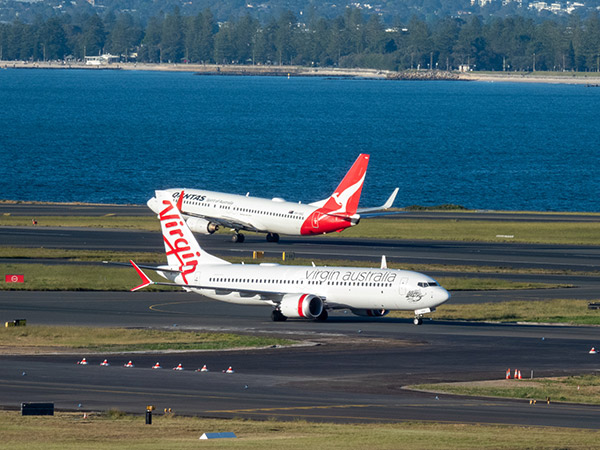
As Australia’s largest airline, Qantas has the advantage of a global network and a long-standing position in the Oneworld airline alliance, making it the preferred choice for international travellers. On the other hand, Virgin Australia has a fanbase of their own, with the Velocity program quite competitive in selected areas. Virgin flights are also regularly cheaper than Qantas, which could come into play, especially for regular domestic travellers.
Both programs are reasonably similar, so it can be hard to tell which offers the best value. Ultimately, the decision will come down to where you live, your spending habits, and any preferred airlines. While it is a good idea to sign up for both programs, the vast majority of travellers find it easier to focus their efforts on earning points in a single currency, rather than spreading them too thin. After all, maximising every deal and promotion takes time, and for many, convenience and ease of use outweigh the potential for squeezing out every last point.
1. Membership fees
Qantas Frequent Flyer charges a $99.50 joining fee, but it is incredibly easy to join Qantas for free with numerous promotions and partner offers that run year-round. Some joining aren’t aware of how easy it is to skip the fee, which is why Qantas keeps charging it. Velocity membership is completely free.
Verdict: Draw
Velocity is slightly ahead, but as you can easily join both for free, we’ll call it a draw.
2. Points expiry

Your loyalty points won’t expire as long as you earn or redeem one point within 18 months for Qantas and 24 months for Velocity. That’s an easy task, especially if you are regularly earning on a credit card.
Verdict: Velocity
Although it’s easy to ensure your points remain valid, Virgin Australia is a clear winner here.
3. Earning points in the air
Virgin Australia recently cut the number of points earned on flights, with eligible Virgin Australia flights earning four Velocity points per $1 spent for bookings made from 2 April 2025. If you have a direct-earn Velocity credit card, you will earn an extra one Velocity point per $1 spent. For travel on Virgin’s airline panthers, members earn a set rate of Velocity points per $1 or per mile, depending on the airline and fare class purchased. Premium Velocity members will also receive bonus points – 50 per cent more for silver, 75 per cent more for gold and 100 per cent more for platinum.
With Qantas, points are awarded in line with the Qantas Airline Earning Tables for flights with Qantas, Jetstar and partner airlines. When flying on an eligible Qantas fare, you will earn at least 800 points in economy or 1400 points in business and first class. Elite Qantas Frequent Flyers receive bonus points for flights with Qantas, Jetstar and American Airlines – 50 per cent more for silver (25 per cent on American Airlines), 75 per cent more for gold and 100 per cent more for platinum.
Verdict: Qantas
Qantas has the edge here thanks to its minimum points guarantee and earning based on what you fly, not what you spend. That’s an advantage when you’re booking sale fares, where Velocity would offer fewer points on the lower spend.
4. Earning points on the ground

For most Australians, the bulk of their points won’t come from flying, but from everyday spending on the ground. Both Qantas Frequent Flyer and Velocity Frequent Flyer offer a range of partners and promotions to boost your balance on the daily.
Credit cards are one of the fastest ways to earn points, with little difference between Qantas and Velocity in terms of banking partners. However, Qantas has focused on direct-earn credit cards since 2009, limiting flexible bank reward transfers on personal cards to just the Amex Platinum. Velocity offers fewer direct-earn options but provides greater flexibility with a number of flexible bank rewards partnerships.
When it comes to the weekly shop, Qantas partners with Woolworths Everyday Rewards, while Velocity is linked to Coles Flybuys. Both offer 1000 frequent flyer points per 2000 supermarket points. For fuel, Qantas members earn points at BP and Velocity partners with 7-Eleven. Both offer one frequent flyer point per litre on standard fuel and two points per litre on premium fuel. Additionally, both programs have a number of insurance, financial, utility and retail partnerships to help boost your balance on the ground.
Verdict: Qantas
While both programs provide strong earning opportunities, Qantas ends up having more partners and better bonus point promotions. Although, Velocity isn’t lagging too far behind here.
Need tips, more detail or itinerary ideas tailored to you? Ask AT.
AI Prompt
5. Transferring points to friends and family

As well as transfers, Virgin Australia offers a unique family points pooling feature where up to six family members living at the same address can automatically collect in a single account. Two adults (including the beneficiary) and four children under 18 years old can pool Velocity points and/or status credits into a single Velocity account. As well as building a consolidated points balance for simple redemptions, this feature can be a game changer in quickly unlocking Velocity status.
Qantas does not offer automatic family pooling or the transfer of status credits. They do allow transfers between family members, with a minimum of 5000 points per transfer up to 600,000 points over 12 months.
Verdict: Velocity
Virgin Australia trumps Qantas with the ability to set up automatic family pooling, and also consolidate status credits. This is an easy way to obtain elite Velocity status.
6. Ease of unlocking elite status

Reaching elite frequent flyer status brings about perks including airport lounge access, priority boarding, bonus points and extra baggage allowance. Velocity and Qantas frequent flyer programs both have four levels of status, plus lifetime options.
Elite frequent flyer status is unlocked by earning the required status credits within 12 months. Status credits are earned through flying, with the earn rate determined by the fare class and flight distance for Qantas, or the amount spent for Velocity. You can also earn status credits on partner airline flights.
Once you have reached a status level, the required status credits to keep it for the next year will be less. Both programs also offer a lifetime status, calculated based on the number of status credits earned over your lifetime.
Qantas Frequent Flyer:
In addition to taking four Qantas or Jetstar flights that earn status credits, you’ll need;
- Silver: 300 to earn / 250 to renew / lifetime 7000
- Gold: 700 to earn / 600 to renew / lifetime 14,000
- Platinum: 1400 to earn / 1200 to renew / lifetime 75,000
- Platinum One: 3,600 to earn and renew with 2700 from Qantas flights
Velocity Frequent Flyer:
- Silver: 250 to earn / 200 to renew
- Gold: 500 to earn / 400 to renew / lifetime 12,000
- Platinum: 1000 to earn / 800 to renew
- Platinum Plus: 2000 to earn and renew
Velocity also requires a number of status credits to be earned by your own personal flights on Virgin Australia. This differs for each tier.
Verdict: Qantas
While the number of status credits to unlock perks with Velocity is less, the spend-based calculation for Virgin Australia flights is a huge downside. This makes it challenging to maximise status credit earnings through crafty routes and maximising promotions. Qantas takes the win here for a reasonable earning rate that is based on each flight, not the amount you spend.
Weekly travel news, experiences
insider tips, offers, and more.
7. International reach and airline partnerships
Qantas is a member of the Oneworld alliance, a group of 15 global airlines including American Airlines, British Airways, Cathay Pacific and Japan Airlines that work together to offer more destinations and smoother connections between their flights. Those with elite frequent flyer status can also access reciprocal perks when flying with Oneworld airlines, plus you can earn and redeem Qantas points across the network. Qantas is also partnered with a number of non-Oneworld airlines including Emirates, China Airlines, Air France and KLM.
Virgin Australia is not part of an alliance but does boast partnerships with several highly-ranked airlines, such as Air Canada, Qatar, Singapore Airlines, United and Virgin Atlantic. These partnerships allow Velocity members to earn and use points, as well as access selected loyalty benefits when taking partner airline flights.
Verdict: Qantas
Although both have partnerships with some world-class airlines, Qantas comes out on top here with the consistency and reach of the Oneworld alliance. That’s especially the case for reciprocal frequent flyer benefits, where Oneworld follows a consistent set of perks for all member airlines, while Velocity offers a different set of benefits for each airline they partner with.
8. Airport lounge access and network

Lounge access is one of the most sought-after perks of frequent flyer status, offering a quieter space to relax, complimentary food and drinks, and business facilities before a flight. Both Qantas and Virgin Australia operate their own airport lounges and provide access to partner airline lounges worldwide.
Qantas has the largest lounge network in Australia, with business lounges at popular airports and Qantas clubs at smaller and regional airports. While many of the domestic Qantas clubs aren’t all that impressive, Virgin Australia only operates a total of seven lounges in Australia.
Qantas also provides consistent access to all Oneworld lounges depending on your status tier, whereas Velocity only provides access to selected airlines on selected flights. Furthermore, Qantas platinum members can access first-class lounges, but as Etihad cuts ties with Velocity, that won’t be the case for Virgin Australia flyers.
Verdict: Qantas
Qantas offers a more extensive lounge network, both domestically and internationally, giving its frequent flyers greater access to premium spaces when travelling. And if you’re based at a regional airport, it is likely Qantas would be your only lounge access option.
So, which frequent flyer program do I choose?
Both Qantas Frequent Flyer and Velocity Frequent Flyer have unique advantages and the right choice depends on your travel habits. Instead of picking a single winner, use this guide to decide which program suits you best.
My advice is to at least sign up for both, and if you’re not a points nerd, focus on one as your primary program. The other can be used as a backup when it makes sense to earn points elsewhere.
Qantas Frequent Flyer is best suited to:
- International travellers
- Those in regional towns with only Qantas lounges
- Frequent Oneworld alliance flyers
Velocity Frequent Flyer is best suited to:
- Families who can benefit from points pooling
- Mostly domestic travellers looking for affordable flights
Want to see more stories from Australian Traveller in your Google search results?
- Click here to set Australian Traveller as a preferred source.
- Tick the box next to "Australian Traveller". That's it.