A summer spent carefree at the beach or within cooee of the coast is at the heart of our national identity – and was sorely missed in the heartbreak of the last season. We reflect on a tough 12 months for Australia to reset and look forward to sunnier times ahead.
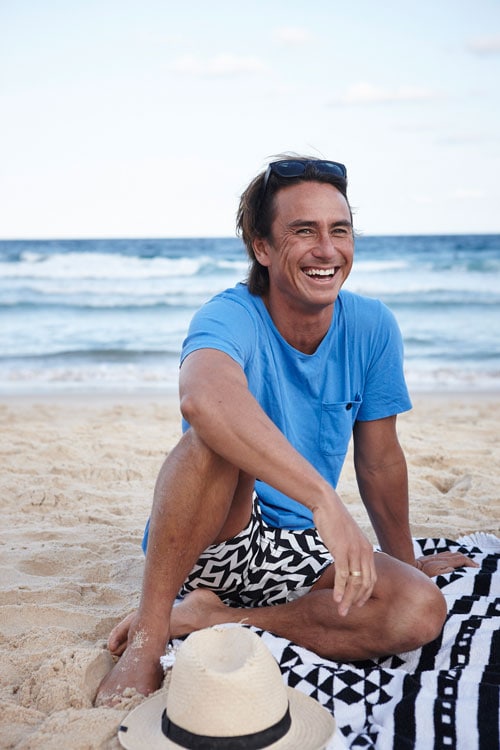
Brad Farmer is the sort of nomadic beach explorer who casually pops into a seaside hamlet on Western Australia’s Coral Coast to stay at a mate’s beach shack for a week and ends up dropping anchor for two years. Who grew up and once again lives on the Tweed Coast where, as he tells it, his forefathers were the first bootmakers in Byron Bay and pioneering beachside builders on a tiny coastal settlement called the Gold Coast. There’s a reason Farmer is Tourism Australia’s official coastal and aquatic ambassador. The country’s certified beach expert.
He’s seen it all. Fairly much all 59,700 kilometres of Australia’s coastline and its 11,761 coastal beaches. As a twentysomething in the 1980s he travelled and wrote the first complete surfing guide to Australia, which took in about 3000 beaches alone, and in 2012 he co-authored the benchmark book 101 Best Australian Beaches. Every year since he has researched and released a fresh list in time for summer – when the nation’s mind wanders to thoughts of morning surfs and afternoon dips, cold beers and soft serve, beach cricket and barbecues.

Farmer knows better than anyone that beaches are a defining Australian experience. How so? “Well, Australians are the foremost beach-loving nation in the world and the beach holds a mirror up to who we are," he says. “While the Romans may have invented the beach holiday, we Australians now own it. We hug the coast; we live, work and play so near to or on these incomparable shorelines. If Aussies don’t know yet, we do have the largest number of beaches in the world and the natural and social diversity of each one is truly astonishing in any language. That phenomenon travels far back to Indigenous Dreamtime stories. No other culture on Earth has such a unique continuous connection to the coast."
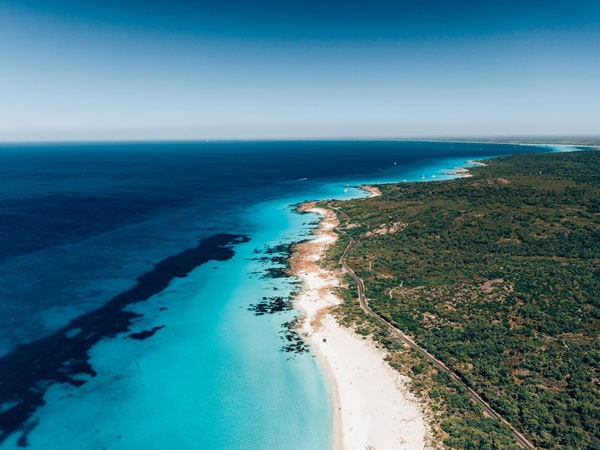
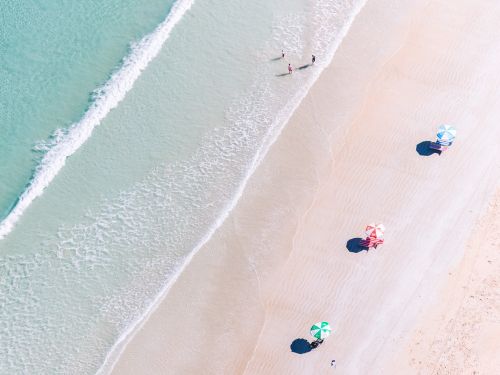
You can’t think of the coast without thinking about summer. And you can’t think about summer without thinking of the coast. In a swirl of sunscreen and sand they are intertwined with each other and at the core of the Aussie identity. “Our Australian way of life is deeply embedded in that thin strip of sand where land meets sea," says Farmer. “Especially on any sun-kissed summer day."
But last summer was different.
A lost summer
Bondi is arguably the most famous of Australia’s 11,761 beaches. A perfect sweep of golden sand in Sydney’s east, framed by the city’s distinctive sandstone cliffs, it is shorthand around the world for our beach-going lifestyle – a national image forged post-First World War by the new moral freedoms of the ’20s.
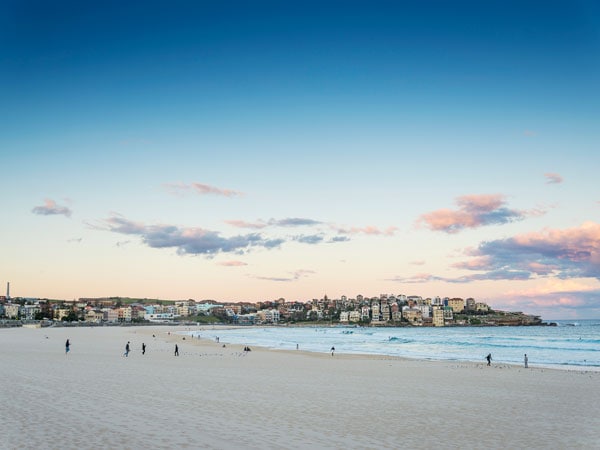
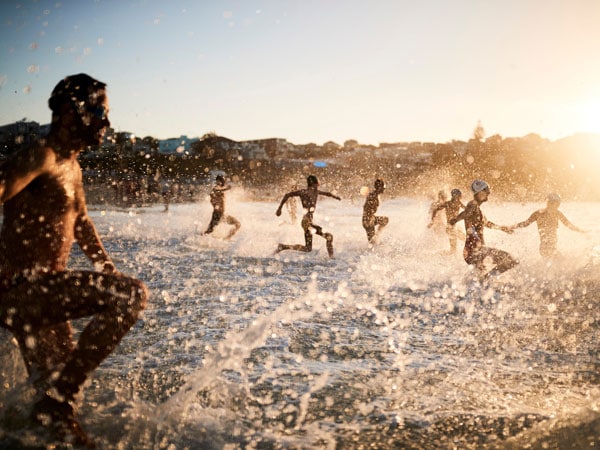
On a typical summer’s day, Bondi pulses, says Aquabumps’ Eugene Tan, who has become its unofficial chronicler since launching his daily photo email in 1999 documenting early morning beach life there. It pulses, “with people and energy and life," he
says. “People sprinkle the sand, the promenade and most of Campbell Parade into the village of Bondi. Swimmers dominate the north end of Bondi with surfers scattered across the bay. Icebergs is covered with sun lovers and swimmers, and the North Bondi grassy knoll is a popular place to watch the sun go down."
But, as an ominous red orb of a sun hung above Sydney as a signal of Australia’s worst bushfire season on record, last summer was heartbreaking. “Most mornings we woke to the smell of smoke at Bondi and a haze across the bay that you couldn’t help but feel saddened by," Tan says. As the city held its breath, up and down the east coast of Australia from NSW’s Mid North Coast to the Shoalhaven to the Sapphire Coast and over the border into Victoria’s East Gippsland, and on South Australia’s Kangaroo Island, communities usually busy welcoming holidaymakers in their peak season were instead grappling with the unthinkable.
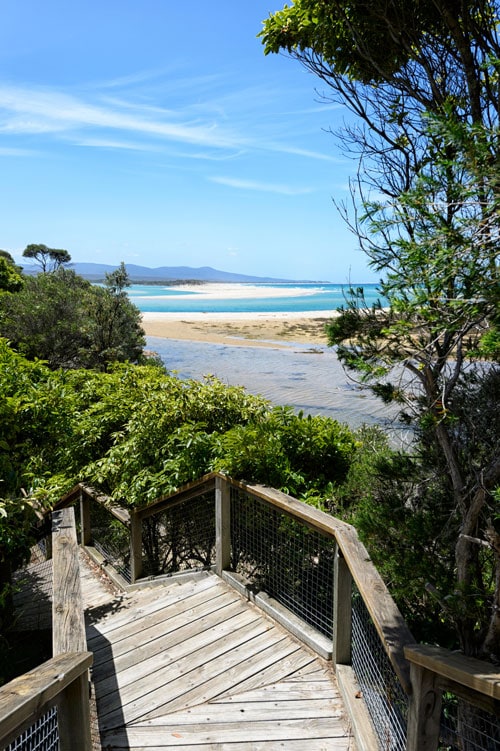
Jodie York spent an idyllic Christmas with her young family on Gabo Island, where her father works as a lighthouse keeper of its historic pink-granite sentinel. This small rugged island is home to a colony of little penguins to rival Phillip Island’s and guests staying at the assistant lighthouse keepers’ quarters have the rare opportunity to witness their sunset beach parade all to themselves. With no road access, Gabo Island is a 20-minute boat ride from the seaside town of Mallacoota.
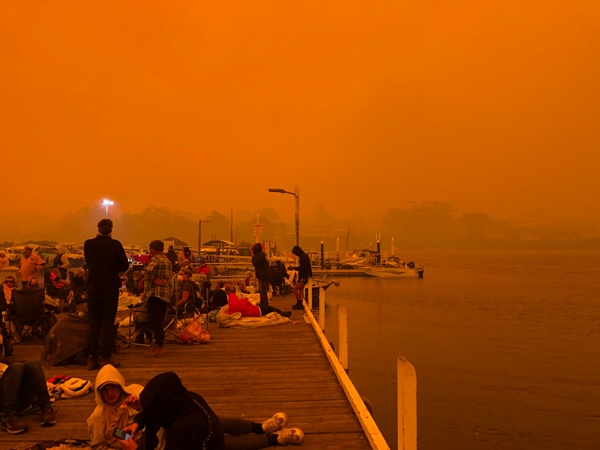
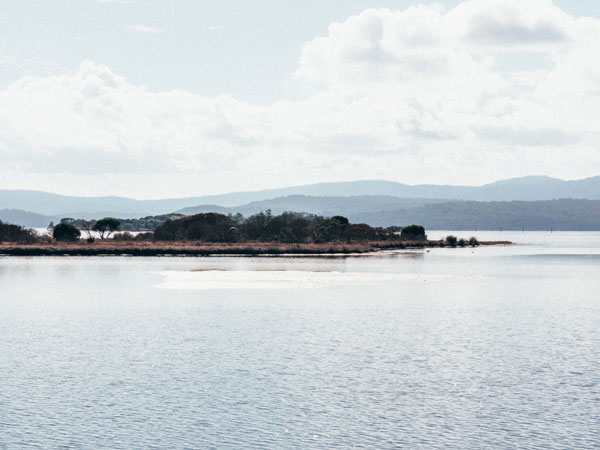
Less than a week later on New Year’s Eve, images of York’s sleepy hometown – with a population that swells from 1000 to 10,000 in the summer months – were broadcast around the world as searing emblems of the unfolding crisis. Ordinarily, Mallacoota is a hidden East Gippsland gem. A pretty coastal town at the mouth of the Mallacoota Inlet brimming with lakes and rivers where local life revolves around the water. A spot surrounded by the wilderness of the Croajingolong National Park, listed by UNESCO as a World Biosphere Reserve. But here it was: apocalyptic and bathed in blood-red light as thousands of people huddled on the foreshore while an out-of-control blaze cut off road access and bore down on the town.
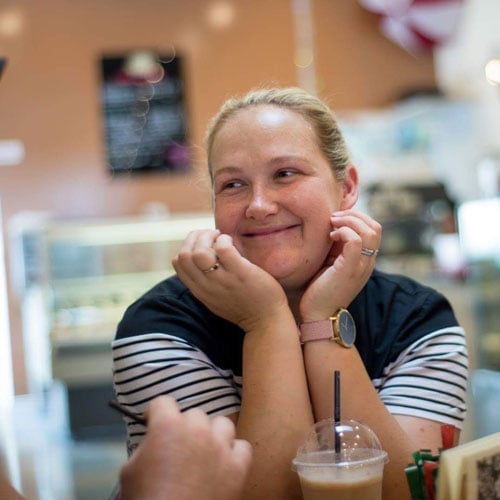
In a short space of time, life in Mallacoota changed more than its residents could ever have imagined, says York, with 100 homes lost and the town staring down the barrel of a long road back. York counts herself extremely lucky that her property was safe and with a background in tourism – she is an organiser of Mallacoota’s Wild Harvest Seafood Festival and runs Mallacoota Fishing Charters and Tours with her husband Jason – she channelled her energy into helping in the best way she knew how.
Need tips, more detail or itinerary ideas tailored to you? Ask AT.
AI Prompt
Road to recovery
Mallacoota
York became actively involved in the Mallacoota & District Business & Tourism Association, of which she is vice president today, and in early February started working towards securing funds to mount a Visit Mallacoota campaign. “Tourism is our largest industry in town, so as far as our local economy is concerned it’s imperative that we get people coming back," she explains. “For me, a way I could help was to help support the local economy in the industry that I understood. I couldn’t get out there and fight fires and I couldn’t get out there and clear roads but I could get out there and help support tourism."
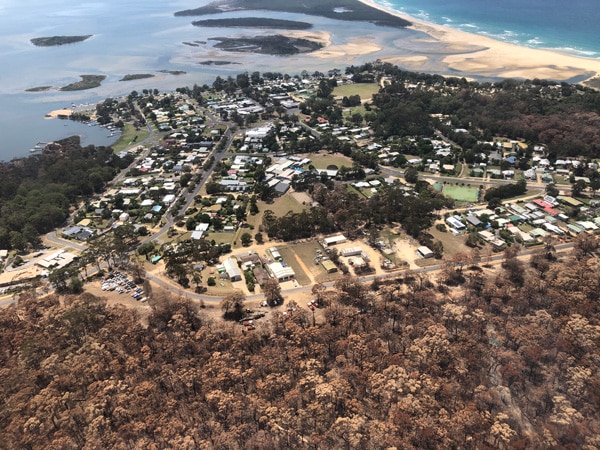
One saving grace that has aided Mallacoota’s recovery – its challenges only amplified by COVID-19 – is the fact that its crucial town infrastructure was largely spared. “[But] it became evident to me that there was a misconception out there in the wider world that there was nothing [left] here and there was no point coming back to visit," says York. “And so I try to do what I can to explain to people that no, we are still here, our beaches are still amazing, the bush has been hit very hard but it’s still beautiful in its own right," – regenerating with vivid greens against charcoal trunks and with wildlife out in force – “so come back and visit regardless of what happened last summer, because there are still reasons to."
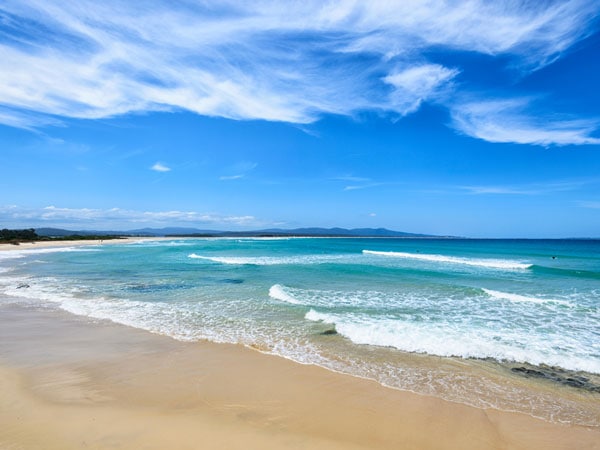
With devastation still evident, however, we must do so considerately: from being aware that what looks like an empty block of land to outsiders means a lot more to the people whose home once stood there to being mindful of the impact the events have had on the locals themselves: “Everyone who’s living [here], whether they’re working behind the cash register in the supermarket or running the bed and breakfast or waitressing at the pub," York says, “everyone’s had a tough time – so just be considerate of people’s emotional capacity as well." But the overriding message is clear: “Come back and love Mallacoota in the same way that we do because we are absolutely ready to see people and we are absolutely ready to share it again."
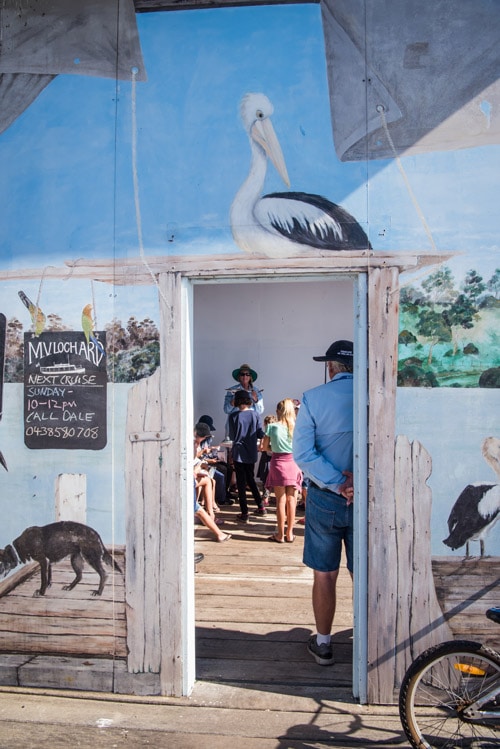
One of the ways York will be sharing her pocket of coastal wilderness with the world is through the Wild Harvest Seafood Festival, which supports and recognises the diversity of seafood within Mallacoota and the immediate region. The town itself has a rich seafood heritage, with an abalone industry that’s been operational for almost 60 years, an emerging sea urchin industry and evidence, by way of Aboriginal coastal shell middens, of the area’s waters providing plentiful sustenance for thousands of years. And while the festival, which first launched in 2019 and features food events, live music, art, Indigenous speakers and on-water experiences, was cancelled this year due to the pandemic, plans are underway for April 2021 – held in autumn to up visitation outside of the summer months.
NSW’s South Coast
NSW’s South Coast is another quintessential Aussie summer destination. It is seaside villages and holiday homes and hot chips on warm nights. It’s where, while on holiday at Culburra Beach in 1937, Max Dupain shot the iconic Sunbaker image that would go on to defi ne Australia’s
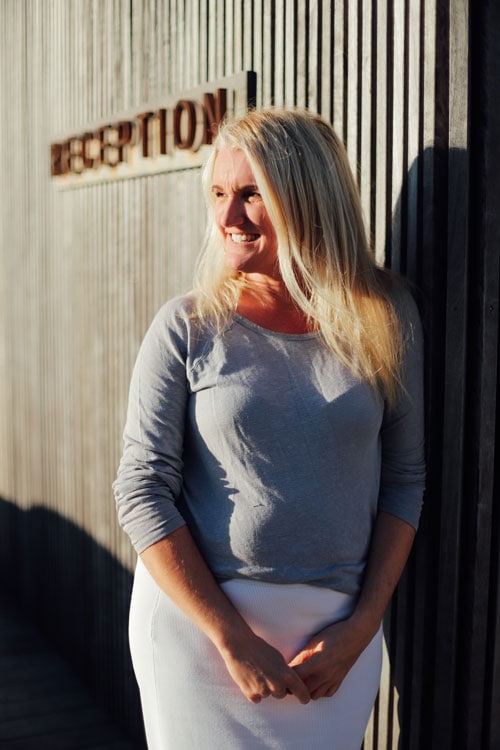
collective summer identity. But as towns including Mallacoota and others up and down the coast experienced, when you rely so heavily on the peak summer season it means a lot is at stake when the worst happens. “Losing that peak season because of the fires wouldn’t have hurt us so much if we weren’t so seasonally dependent," says Michelle Bishop of Bangalay Luxury Villas in Shoalhaven Heads, two hours south of Sydney. “And how seasonal you are is more prevalent the further south you go." Bishop is a committee member of the South Coast Tourism Industry Association who, like York in East Gippsland, rallied to help spearhead the recovery of the region’s vital tourism economy after the fires.
Where local restrictions allowed, and spurred by campaigns like Holiday Here This Year and Empty Esky as well as the desire to reclaim our own lost summers, we’ve spent this past winter discovering the delights of these holiday towns off season in all their culinary, wine-tasting, bushwalking and whale-watching glory. It’s a mindset shift that might just contribute to a more sustainable and safeguarded future for beach destinations.
A conscious shift
Bishop noticed a second shift occurring in the wake of the bushfires and the resultant drive to buy local in affected towns and regions. “[It has created] a conscious consumer approach to travel, where I feel like people want to find something to enjoy that’s from a small producer and has a beautiful story to go with it," she says. “The South Coast offering, and everywhere that was bushfire affected, was made up of so many small businesses and they were the ones that were generally most impacted by the fires. And you just saw through the Empty Esky campaign the groundswell of support that came through the sales of honey in Victoria and different wineries. And that whole mindset only became more prevalent through COVID – it’s the small businesses that people want to support." And the local spend that goes with it does make a difference, she assures travellers: “Really going with an empty esky and knowing that all the dollars you spend when you are away really do go a long way with assisting regional economies."
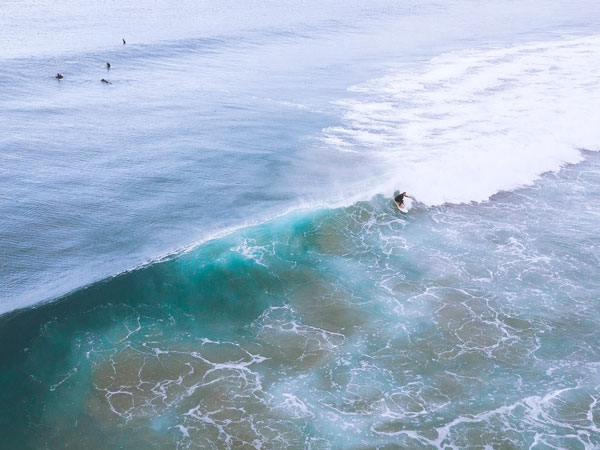
And maybe, just maybe, we’re acting more mindfully in other ways too. Has the heartache we felt, wherever we live, seeing the country suffer last summer combined with our subsequent grounding served to make us more grateful for the natural assets we have on our doorstep? In March, to prevent large crowds from gathering at the onset of the coronavirus outbreak in Australia, Waverley Council made the bold move to close Bondi Beach and others nearby – a decision that prevented locals from even swimming or surfing for five weeks.
“Following the devastation of the bushfires, to then watch the beach be closed at Bondi – the one place so many people find solace and peace – was another blow to so many people, including me and my morning shooting ritual," says Tan about this time. “Surfing and swimming or exercising at Bondi is the one place people can feel connected to nature – so to have this taken away divided the community on what was fair. I personally chose not to photograph in the mornings over the lockdown period out of respect." But its reopening in April brought with it a silver lining. “It’s certainly created a new appreciation for the beach and access to our oceans – I’ve never seen the beaches busier, especially early mornings," Tan continues. “Mental health is taking a big hit this year – so it’s good to see people try to do more things that bring them happiness."
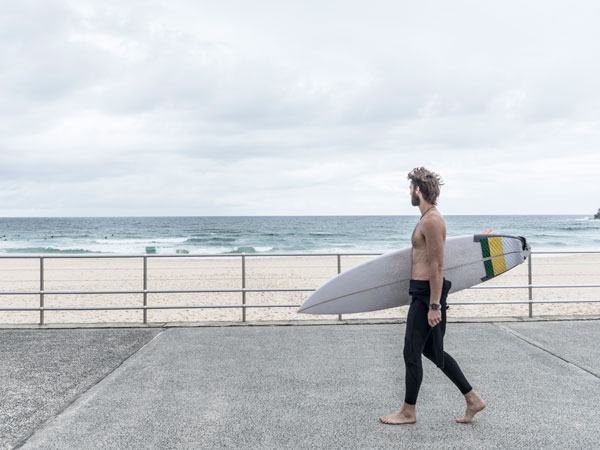
“Beaches are our happy places and now during this pandemic, a place to escape to for the body and mind," Farmer agrees. “Beaches offer a free yoga studio for mental therapy, and yes, its works. I’ve never met an unhappy person (or dog) at the beach."
In turn we are increasingly aware of our responsibility to give back to our happy places. “With constant travel over 45 years and thousands of rich coastal convos under my boardies now, it’s truer than ever that all Australians recognise their place as custodians of our coasts," says Farmer. Of all the changes he has seen over the decades – including an increasingly crowded surfing lineup and metered parking – “the most satisfying thing is that so many beach communities have taken on a real sense of ownership and pride in their local beaches," he says. “Old weathered salties and a bright sun-kissed young brigade of defenders are voicing their demands to protect the environmental integrity and local character of their patches of paradise."
If you hadn’t guessed, Farmer is a passionate advocate for coastal preservation. With his activism first sparked aged 12 when developers threatened the coastal mangrove forests he grew up fishing in with schoolmates, he has created numerous coastal conservancy movements including Surfrider Foundation Australia and Ocean Care Day, and in 2019 was appointed to the Order of Australia for a lifetime of volunteer service to coasts, conservation and communities. He is currently drafting a National Coastal and Marine Bill for consideration by Federal Parliament. “As a kid I watched local beaches being shut off for sand mining, pipes laid to pump sewage into the ocean, estuaries reengineered into canals, irreplaceable habitats bulldozed and so on, seemingly with no checks and balances," he says on the differences between then and today. “Now we see, and I welcome it wholeheartedly, Australians saying enough is enough, these are our beaches. We truly care for them and will do everything in our power to ensure Australia enjoys the enviable reputation for the best beaches in the world."
It’s reassuring, too, to learn that 18 per cent of the Australian coast is held in Indigenous hands and a further 27 per cent is within national or state parks. On top of that only 16 per cent of the country’s beaches are accessible by conventional road, a further 12 per cent via unsealed roads, 29 per cent by 4WD and 43 per cent are inaccessible altogether. “So that puts things into greater context – looking at this vast, ancient coast with so much kept safe, particularly for First Nations peoples," says Farmer.
Weekly travel news, experiences
insider tips, offers, and more.
A common thread and good times ahead
And within this vast, ancient coast is a mind-boggling diversity of landscapes and cultures the kind that’s hard to believe exists within one country. “The contrast of attitudes between beach environs from the raw, remote and rugged beaches of, say, nor-west Tasmania or nor-west WA set alongside bronzed and buffed bodies of Bondi or Byron Bay, are indeed worlds apart," says Farmer. “I think the beachgoer, local or traveller, is a true reflection of their surrounds. Some prefer bubbly flutes to stubbies of amber, a buzzing jet ski to a sunrise meditation or fresh friends over strangers dressed in designer wear. That’s why each beach, each region and each state is so very different to experience. But on any beach over the years," Farmer observes, “I’ve never had trouble striking up a conversation and therein lies our Aussie egalitarian universality at play."
A church-like experience for a secular nation, the beach has always been Australia’s great social equaliser and long may it continue. Certainly, it will continue to be where our minds and bodies wander at the end of each year. Summer spent at the beach has become a rite of passage for almost every Australian – a multicultural, all-inclusive celebration, it defines our Australianness, says Farmer: “Summer at the beach, any beach, means ‘I belong’ more than a citizenship certificate can say."
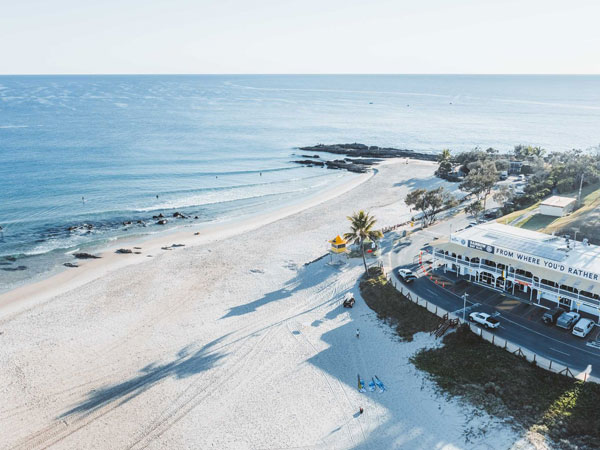
And after the sadness of last summer left us with the unsettling feeling of having lost something that feels like an inalienable Australian right, it’s time to look forward again. To head back to those places that need our support and in return can offer the nostalgic comfort of a proper beach holiday. It’s time for us to reconnect with that part of ourselves that comes alive under the sun and seawater. To seize our one hot minute of hedonism and healing that grounds and resets us for the new year ahead. It’s time to reclaim summer.
Visit our Reclaim Summer hub for more ways to experience the best of summer.
It’s time to #ReclaimSummer, time to be better travellers, and time to find our joy again; share your summer with us by using the hashtag and tagging @AustTraveller on Instagram or Facebook.
Want to see more stories from Australian Traveller in your Google search results?
- Click here to set Australian Traveller as a preferred source.
- Tick the box next to "Australian Traveller". That's it.