9 scenic road trip getaways to plan this year

hero media
From scenic-rich coastal routes to the remote red-dirt tracks of the outback and gentle country drives past silo art or waterfalls, it’s time to pack the car and mark the map to see all the beauty and quirks of Australia by road.

1. Pacific Coast Way, Qld

You’ll need at least a week – if not more – to make the most of this epic 1800-kilometre journey from the Gold Coast to Cairns. Drive from the buzzy beachside hub of Surfers Paradise to the arts and culture capital of Brisbane and onto Sunshine Coast gems such as Noosa, where golden beaches and coveted surf breaks await. Stop at whale-watching hotspot Hervey Bay, historic cities like Bundaberg, then drive along the stunning Whitsunday Coast to Cairns. It’s a journey across Queensland’s cities, country and coast, topping it off where the Great Barrier Reef meets the Wet Tropics.
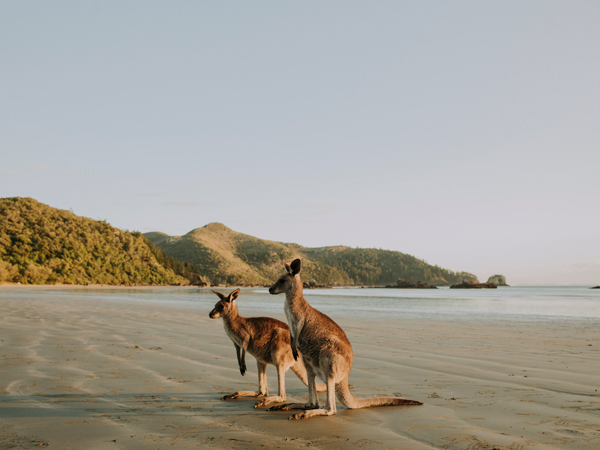
wallabies at Cape Hillsborough
Wallabies at Cape Hillsborough. (Image: Tourism and Events Queensland/Jack Harlem)

2. Victoria’s silo art trail

The Silo Art Movement, which began in 2015, captures the unwavering spirit of regional Australia. The cultural and artistic phenomenon now includes more than 50 artworks across the country, 23 of which are located within Victoria – across the Grampians, Murray, High Country and Goldfields regions. Renowned street artists have transformed wheat silos into captivating murals, from a Second World War tribute in Walpeup to portraits of Indigenous Elders in Sheep Hills and a homage to Clydesdale horses in Goorambat. Add them to your itinerary on your next regional road trip.
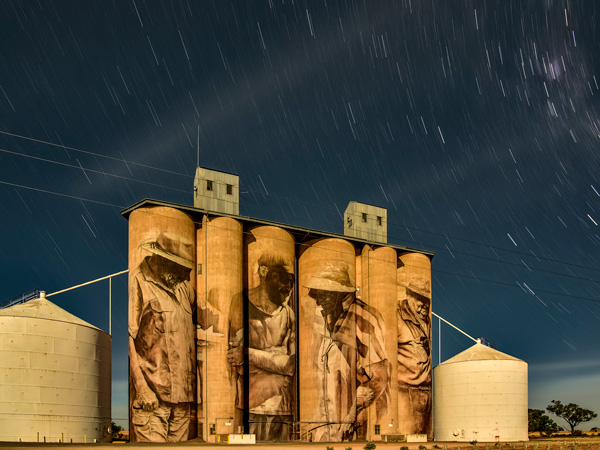
silo art in rural Victoria
Admire silo art in rural Victoria, such as Brim by Guido van Helten. (Image: Anne Morely)

3. Great Ocean Road, Victoria

This coastal drive is an Australian rite of passage, winding 243 kilometres along Victoria’s coast. Take in rainforest, clifftops and natural wonders that have been carved out by the wild Southern Ocean – including the Twelve Apostles, Lord Ard Gorge, the Island Archway and the Gibson Steps. If you’re only driving in one direction, start your journey in Torquay, so you’re on the ocean side of the road, making it easier to steer towards scenic lookouts. Make sure you carve out time to explore vibrant Warrnambool at the Great Ocean Road’s western end, too.
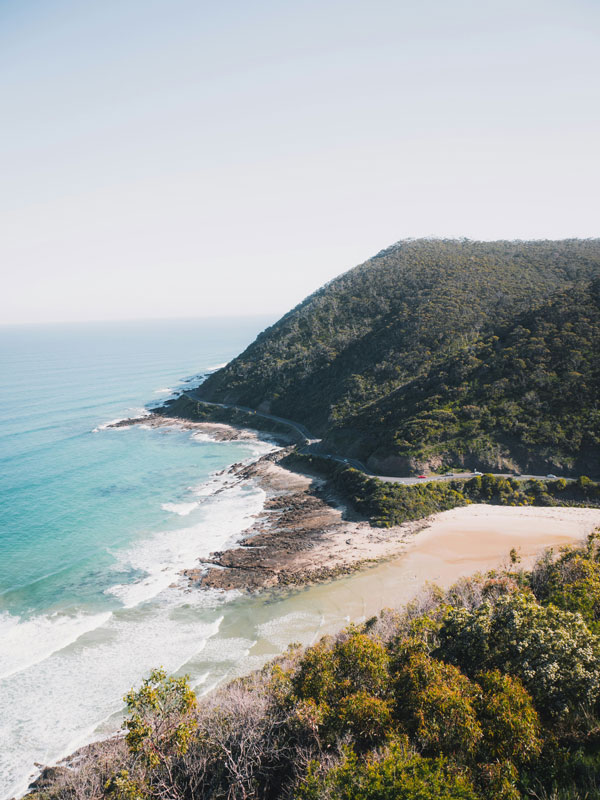
an aerial view of the Great Ocean Road
Tick off the iconic Great Ocean Road. (Image: Unsplash/Pat Whelen)

Need tips, more detail or itinerary ideas tailored to you? Ask AT.

AI Prompt

4. The Red Centre, NT

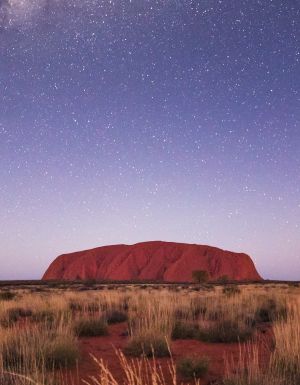
Uluṟu captures the attention of most travellers to the Red Centre, and rightly so. But you can see this iconic monolith and more on a five-day 4WD loop along the Red Centre Way from Alice Springs. Drive to West MacDonnell National Park to see its landscape of chasms, gorges and waterholes; walk the rim of the 100-metre-high red sandstone Kings Canyon; and, of course, spend time at inimitable Uluṟu and neighbouring Kata Tjuta before returning to where you began. Discovery Resorts – Kings Canyon, Discovery Parks – Alice Springs and Ayers Rock Resort all make for comfortable crash pads along the way.
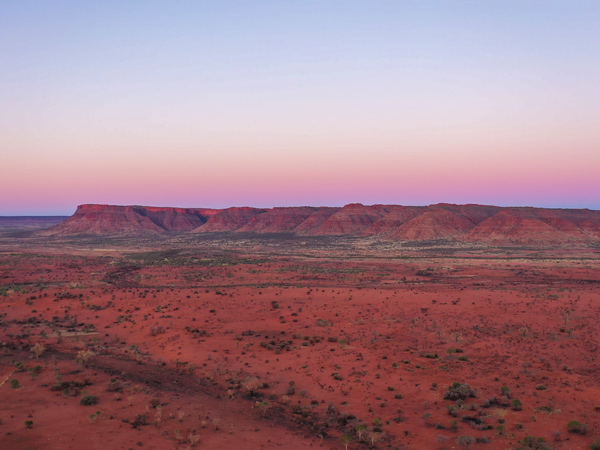
the view of Kings Canyon
Hit the road in the Red Centre. (Image: Tourism NT/Tourism Australia)

5. Grand Pacific Drive, NSW

Travelling with: Rachael Thompson

Stretching along the dramatic cliffs of the NSW South Coast from Sydney’s Royal National Park in the Sutherland Shire to the Shoalhaven region, the Grand Pacific Drive is one of Australia’s most scenic routes, offering breathtaking vistas of the Pacific Ocean and rugged landscapes. Cruise the coast in an all-electric car, such as the sleek Porsche Macan, enjoying zero-emission travel as you pass through charming towns like Shellharbour and Milton. Stop to explore iconic landmarks, including the Sea Cliff Bridge and Kiama Blowhole, discovering idyllic beaches and hidden waterfalls along the way.
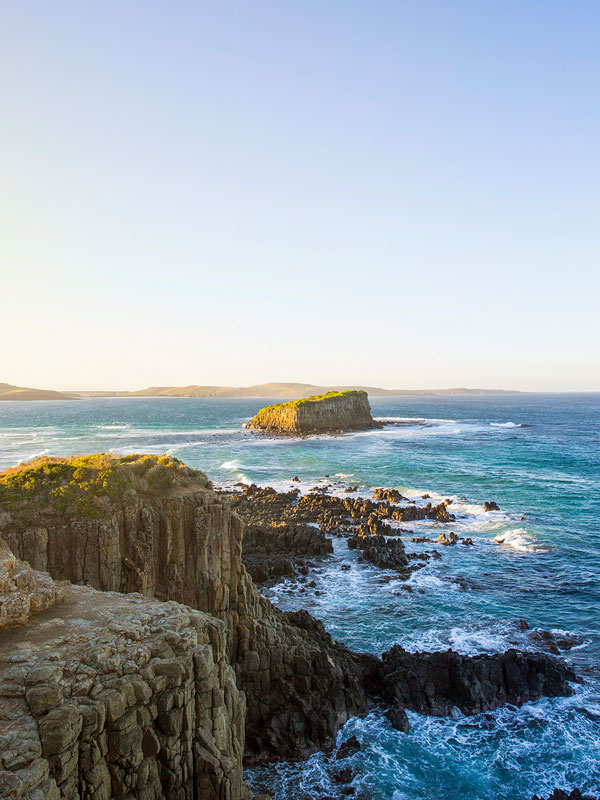
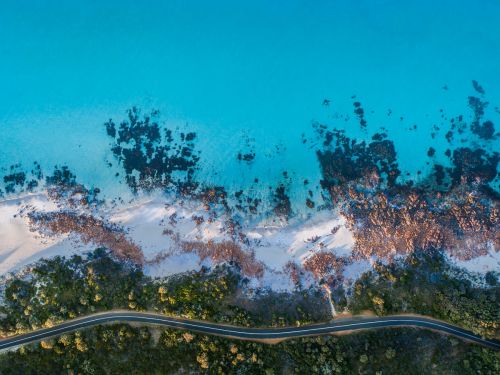
the Grand Pacific Drive as seen from above
Skirt the coast on the Grand Pacific Drive. (Image: Destination NSW/Tim Clark)

6. The EV Network, WA

Western Australia is now home to one of the world’s longest connected electric vehicle charging highways. EV drivers have access to 110 charging points in 49 locations on the WA EV Network, from Mundrabilla near the SA border, throughout the outback and along the coast, to Kununurra in the Kimberley. Conscious car owners can now explore Western Australia’s dreamy landscape more sustainably with the assurance you can charge up when needed.
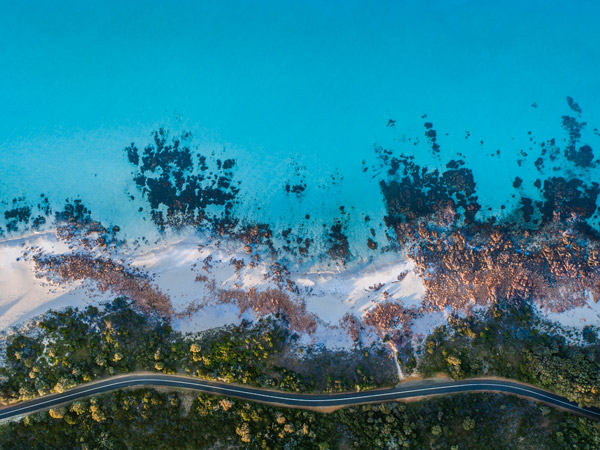
scenic coastal views at the EV Network, WA
Explore WA’s new EV network.

Weekly travel news, experiences
insider tips, offers, and more.

7. Tasmania by coach

Travelling with: Katie Carlin

AAT Kings has packed the very best of Tasmania into one five-day coach trip along the state’s east coast from Launceston to Hobart. And the best part? You don’t have to share the driving. Highlights include Cataract Gorge, the purple fields of Bridestowe Lavender Estate, a face-to-face encounter with a Tassie devil, plus a rolling hit list of the state’s best towns and a walk to Wineglass Bay Lookout. The journey ends on a high with an optional lap around Australia’s oldest lighthouse with Pennicott Wilderness Journeys.
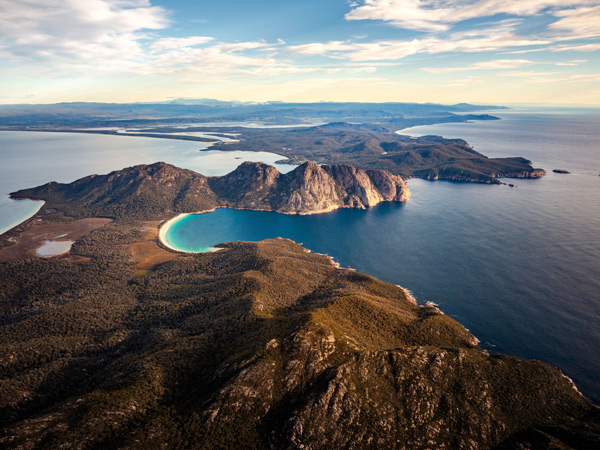
a scenic view of Wineglass Bay, Freycinet Peninsula
Wineglass Bay features a perfect crescent of white sand. (Image: Tourism Tasmania)

8. Waterfall Way, NSW

The scenic Waterfall Way winds for some 185 kilometres between Coffs Harbour and Armidale in NSW. Drop a few pins on your map app so you can stop and listen to the perpetual roar of the water tumbling down through trees, over rocks and into valleys. Wind through woodlands, rolling farmland and national parks to find wondrous waterfalls such as the not-to-be-missed Wollomombi Gorge. While you can cover the entire distance in about 2.5 hours, watching the churning waters send spumes skyward makes for a dramatic detour to your road trip.
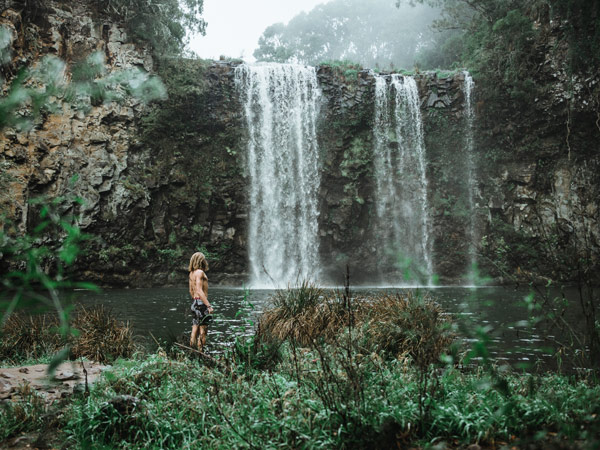
the Crystal Shower Falls, Waterfall Way, NSW
The stunning Dangar Falls in Dorrigo National Park. (Image: Destination NSW/Pat Suraseang)

9. Gibb River Road, WA

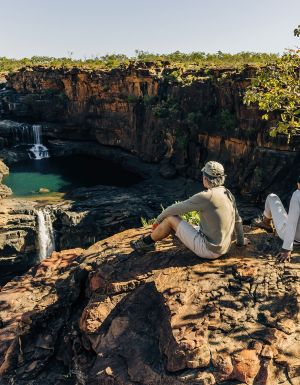
The 660-kilometre Gibb River Road cuts through the belly of WA’s Kimberley from Derby to Wyndham via epic spots such as El Questro. The remote 4WD trail was constructed in the 1960s to transport cattle stock and includes dirt tracks and river crossings. Drivers need to be prepared, as there are very few petrol stations. But they also need to be armed with a sense of adventure to discover attractions such as ancient gorges, thundering waterfalls, sacred Aboriginal sites and rock art, sprawling outback cattle stations and a unique pioneering history. Expect to meet some fascinating local characters along the way.
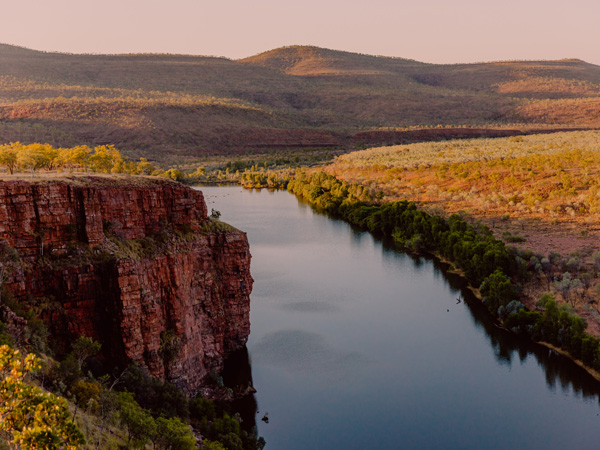
an aerial view of the El Questro Station
The legendary El Questro Station is surrounded by dramatic gorges. (Image: Getty Images/Istock Photo/Mackenzie Sweetnam)

This scenic Victorian region is the perfect antidote to city life

    Craig Tansley Craig Tansley

    Video credit: Visit Victoria/Tourism Australia

    The Grampians just might be the ultimate antidote for the metropolis, writes one returning Aussie ready to disconnect from the modern world and reconnect to the Great outdoors.

    There are no kangaroos back in Chicago: they’re all here in the Grampians/Gariwerd. In the heart of the Grampians National Park’s main gateway town, Halls Gap, pods of eastern greys are eating grass beside my parked rental car beneath the stars. Next morning, when I see the backyard of my rented villa on the edge of town for the first time, there are kangaroos feeding beside a slow-moving creek, lined with river red gums.

    Five hundred metres up the road, 50 or so of them are eating by the side of the road in a paddock. I pull over to watch and spot three emus. Yellow-tailed black cockatoos fly overhead towards the tall green mountains just beyond town.

    ‘Kee-ow, keee-oww’… their calls fuse with the maniacal cackle of a kookaburra (or 10). Gawd, how I’ve missed the sound of them. Far above, a wedge-tailed eagle watches, and there you go: the ‘great birds of Australia’ trifecta, all half a kay from the town limits.

    Exchanging city chaos for country calm

    kangaroos near Halls Gap, Grampians National Park
    The park is renowned for its significant diversity of native fauna species. (Image: Visit Victoria/Robert Blackburn)

    I’ve come to the Grampians to disconnect, but the bush offers a connection of its own. This isn’t just any bush, mind you. The Grampians National Park is iconic for many reasons, mostly for its striking sandstone mountains – five ridges run north to south, with abrupt, orange slopes which tumble right into Halls Gap – and for the fact there’s 20,000 years of traditional rock art. Across these mountains there are more than 200 recorded sites to see, created by the Djab Wurrung, Jardwadjali and Gunditjmara peoples. It’s just like our outback… but three hours from Melbourne.

    I’ve come here for a chance at renewal after the chaos of my life in America’s third-largest city, Chicago, where I live for now, at the whim of a relative’s cancer journey. Flying into Melbourne’s airport, it only takes an hour’s drive to feel far away from any concept of suburbia. When I arrive in Halls Gap two hours later, the restaurant I’m eating at clears out entirely by 7:45pm; Chicago already feels a lifetime ago.

    The trails and treasures of the Grampians

    sunrise at Grampians National Park /Gariwerd
    Grampians National Park /Gariwerd covers almost 2000 square kilometres. (Image: Ben Savage)

    Though the national park covers almost 2000 square kilometres, its best-known landmarks are remarkably easy to access. From my carpark here, among the cockatoos and kangaroos on the fringe of Halls Gap, it only takes 60 seconds’ driving time before I’m winding my way up a steep road through rainforest, deep into the mountains.

    Then it’s five minutes more to a carpark that serves as a trailhead for a hike to one of the park’s best vantage points, The Pinnacles. I walk for an hour or so, reacquainting myself with the smells and the sounds of the Aussie bush, before I reach it: a sheer cliff’s edge lookout 500 metres up above Halls Gap.

    walking through a cave, Hollow Mountain
    Overlooking the vast Grampians landscape from Hollow Mountain. (Image: Robert Blackburn)

    There are hikes and there are lookouts and waterfalls all across this part of the park near town. Some are a short stroll from a carpark; others involve long, arduous hikes through forest. The longest is the Grampians Peaks Trail, Victoria’s newest and longest iconic walk, which runs 160 kilometres – the entire length of Grampians National Park.

    Local activities operator Absolute Outdoors shows me glimpses of the trail. The company’s owner, Adrian Manikas, says it’s the best walk he’s done in Australia. He says he’s worked in national parks across the world, but this was the one he wanted to bring his children up in.

    “There’s something about the Grampians,” he says, as he leads me up a path to where there’s wooden platforms for tents, beside a hut looking straight out across western Victoria from a kilometre up in the sky (these are part of the guided hiking options for the trail). “There are things out here that you won’t see anywhere else in Australia.” Last summer, 80 per cent of the park was damaged by bushfire, but Manikas shows me its regrowth, and tells me of the manic effort put in by volunteers from town – with firefighters from all over Australia – to help save Halls Gap.

    wildflowers in Grampians National Park
    Spot wildflowers. (Image: Visit Victoria)

    We drive back down to Halls Gap at dusk to abseil down a mountain under the stars, a few minutes’ walk off the main road into town. We have headlamps, but a full moon is enough to light my way down. It takes blind faith to walk backwards down a mountain into a black void, though the upside is I can’t see the extent of my descent.

    Grampians National Park at sunset
    Grampians National Park at sunset. (Image: Wine Australian)

    The stargazing is ruined by the moon, of course, but you should see how its glow lights up the orange of the sandstone, like in a theme park. When I’m done, I stand on a rocky plateau drinking hot chocolate and listening to the Aussie animals who prefer nighttime. I can see the streets of Halls Gap off in the distance on this Friday night. The restaurants may stay open until 8pm tonight.

    What else is on offer in The Grampians?

    a boat travelling along the Wimmera River inDimboola
    Travelling along the Wimmera River in Dimboola. (Image: Chris McConville)

    You’ll find all sorts of adventures out here – from rock climbing to canoeing to hiking – but there’s more to the Grampians than a couple of thousand square kilometres of trees and mountains. Halls Gap may be known to most people, but what of Pomonal, and Dimboola, and Horsham? Here in the shadow of those big sandstone mountains there are towns and communities most of us don’t know to visit.

    And who knew that the Grampians is home to Victoria’s most underrated wine region? My disconnection this morning comes not in a forest, but in the tasting rooms and winery restaurants of the district. Like Pomonal Estate, barely 10 minutes’ drive east of Halls Gap, where UK-born chef Dean Sibthorp prepares a locally caught barramundi with lentil, pumpkin and finger lime in a restaurant beside the vines at the base of the Grampians. Husband-and-wife team Pep and Adam Atchison tell me stories as they pour their prize wines (shiraz is the hero in these parts).

    dining at Pomonal Estate
    Dine in a restaurant beside vines at Pomonal Estate. (Image: Tourism Australia)

    Three minutes’ drive back down the road, long-time mates Hadyn Black and Darcy Naunton run an eclectic cellar door out of a corrugated iron shed, near downtown Pomonal. The Christmas before last, half the houses in Pomonal burnt down in a bushfire, but these locals are a resilient lot.

    The fires also didn’t stop the construction of the first art centre in Australia dedicated to environmental art in a nature-based precinct a little further down the road (that’s Wama – the National Centre for Environmental Arts), which opened in July. And some of the world’s oldest and rarest grape vines have survived 160 years at Best’s Wines, outside the heritage town of Great Western. There’s plantings here from the year 1868, and there’s wines stored in century-old barrels within 150-year-old tunnels beneath the tasting room. On the other side of town, Seppelt Wines’ roots go back to 1865. They’re both only a 30-minute drive from Halls Gap.

    Salingers of Great Western
    Great Western is a charming heritage town. (Image: Griffin Simm)

    There’s more to explore yet; I drive through tiny historic towns that barely make the map. Still part of the Grampians, they’re as pretty as the mountains behind them: full of late 19th-century/early 20th-century post offices, government offices and bank buildings, converted now to all manner of bric-a-brac stores and cafes.

    The Imaginarium is one, in quirky Dimboola, where I sleep in the manager’s residence of an old National Australia Bank after a gourmet dinner at the local golf club, run by noted chef and teacher, Cat Clarke – a pioneer of modern Indigenous Australian cooking. Just south, I spend an entire afternoon at a winery, Norton Estate Wines, set on rolling calico-coloured hills that make me think of Tuscany, chit-chatting with owners Chris and Sam Spence.

    Being here takes me back two decades, when I lived here for a time. It had all seemed as foreign as if I’d driven to another planet back then (from Sydney/Warrane), but there seemed something inherently and immediately good about this place, like I’d lived here before.

    And it’s the Australian small-town familiarity of the Grampians that offers me connection back to my own country. Even in the better-known Halls Gap, Liz from Kerrie’s Creations knows I like my lattes with soy milk and one sugar. And while I never do get the name of the lady at the local Ampol station, I sure know a lot about her life.

    Kookaburras on a tree
    Kookaburras are one of some 230 bird species. (Image: Darren Donlen)

    You can be a local here in a day; how good is that? In Chicago, I don’t even know who my neighbour is. Though each day at dusk – when the kangaroos gather outside my villa, and the kookaburras and the black cockatoos shout out loud before settling in to sleep – I prefer the quieter connection I get out there in the bush, beneath these orange mountains.

    A traveller’s checklist

    Staying there

    Sleep beside the wildlife on the edge of Halls Gap at Serenity.

    Playing there

    abseiling down Hollow Mountain
    Hollow Mountain is a popular abseiling site.

    Go abseiling under the stars or join a guided hike with Absolute Outdoors. Visit Wama, Australia’s first environmental art centre. Check out Dimboola’s eccentric Imaginarium.

    Eating there

    steak, naan bread and beer at Paper Scissors Rock in Halls Gap
    Paper Scissors Rock in Halls Gap serves a great steak on naan bread.

    Eat world-class cuisine at Pomonal Estate. Dine and stay at much-revered icon Royal Mail Hotel in Dunkeld. The ‘steak on naan’ at Halls Gap brewhouse Paper Scissors Rock, can’t be beat.

    Dunkeld Arboretum in Grampians National Park
    The serene Dunkeld Arboretum.

    For Halls Gap’s best breakfasts head to Livefast Cafe. Sip local wines at Great Western’s historic wineries, Best’s Wines, Seppelt Wines and Norton Estate Wines.

    two glasses of beer at Paper Scissors Rock in Halls Gap
    Sink a cold one at Paper Scissors Rock.