The many styles of accommodation in the Australian Outback

hero media
The Australian Outback caters to all travel habits, Peter Robinson explores the six star to the no star Outback accommodation options.

Driving your own 4WD to the outback (and back) is one of the great satisfactions in life.


Coming home with a filthy, dirty, mud-encrusted or animal-dented car also sticks it up those aforementioned do-gooders who want to run you out of town for owning a 4WD in the city. And, since water restrictions practically make it illegal to wash your car these days, you should feel free to let that outback style linger.


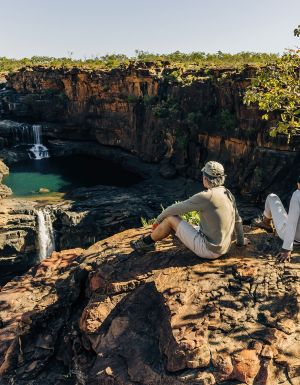
Surprisingly, much of the outback can be toured in total luxury. Try El Questro in the Kimberley for starters. Stay at the homestead and enjoy fine food, helicopter flights, barramundi fishing and a host of other treats. This is one of the most expensive and exclusive places in Australia.


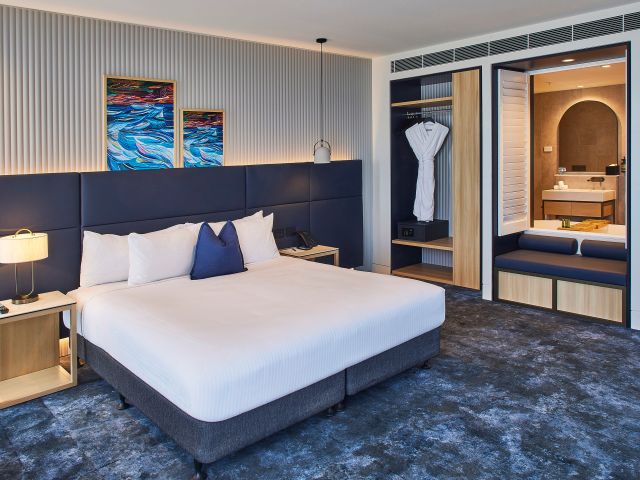
Luxury tented camps with full amenities and ensuites are springing up. Shabby motels are giving way to luxury cottages or farmstays.


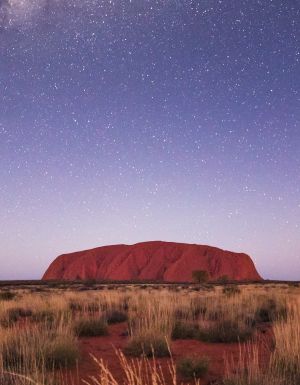
In the Flinders Ranges, try Wilpena Pound Resort and Rawnsley Park Station. At the Prairie Hotel in Parachilna there’s legendary bush food and great rooms. Bamurru Plains on the Mary River floodplains in the NT is luxury on a working buffalo station, and at Uluru, Longitude 131 has won international acclaim. At the other end of the spectrum, you can take a swag and sleep under the stars.


Adventure is out there for the taking, but first you should have a vehicle that’s suited to the job. A soft-roader or SUV isn’t up to the task if you want the freedom to travel to most great outback destinations.


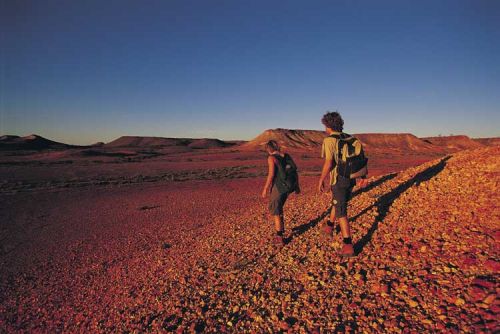
You and your 4WD need to ford rivers, mount rich red dunes, climb giant sandhills and handle the tyre-shredding punishment that the worst tracks can present. On this score, a comprehensive 4WD training course (see previous page) is highly recommended – and don’t forget the co-driver. Emergency, safety and survival information is essential.


A turbo-diesel vehicle is best for the range and durability afforded; just make sure you don’t own a lemon. It’s a long way to the nearest dealer for warranty service. Plan your journey – it’ll take longer than you think.


Grey Nomads take a year or more for their retirement lap of Australia, then come home to prepare another trip to fill in any gaps. At the other end of the scale, parents of young children should think carefully about long weeks on outback roads (you might have to wean them off TV first).


It’s a huge country out there, and almost all of it is outback. You don’t need to embark on the expedition of a lifetime to unleash the pioneering spirit – this is a pilgrimage we all need.


Just grab your Akubra, camera, Red Centre map and be prepared to get your 4WD dirty . . .


Need tips, more detail or itinerary ideas tailored to you? Ask AT.

AI Prompt

Want to see more stories from Australian Traveller in your Google search results?

  1. Click here to set Australian Traveller as a preferred source.
  2. Tick the box next to "Australian Traveller". That's it.
Australian Traveller

Australian Traveller

View profile and articles
hero media

Film lovers need to add these Victorian theatres to their bucket list

    Ricky French Ricky French
    Theatres have always been a cornerstone of regional Victoria, reflecting the character and history of their local communities.

    From grand, gold rush-era masterpieces to Art Deco wonders to repurposed prisons, we’ve rounded up four of Victoria’s best regional theatres to catch a show at next time you’re travelling through.

    Her Majesty’s Theatre, Ballarat

    Her Majesty’s Theatre, Ballarat 
    Her Majesty’s Theatre in Ballarat has been standing for 150 years. (Image: Michael Pham)

    A monument to the immense gold rush wealth flooding through Ballarat in the second half of the 19th century, Her Majesty’s Theatre (‘Her Maj’ to locals) celebrates its 150th anniversary as the city’s premier performing arts venue this year.

    Built in a classical style and immaculately preserved (thanks largely to a recent $16-million restoration), this Lydiard Street landmark is the oldest continuously operating theatre in mainland Australia, notable for its double balcony and a stage that slopes towards the front, making it one of the most audience-friendly venues in the country to see a show.

    The Capital, Bendigo

    The Capital Theatre, Bendigo
    The Capital in Bendigo was built in 1873 as a Masonic Hall. (Image: Michael Pham)

    Denoted by its distinctive Corinthian columns, more reminiscent of ancient Greece than regional Victoria, The Capital theatre in Bendigo has been through several iterations since the first stone was laid in 1873.

    Originally a Masonic hall, the renaissance revival-style building became a theatre in the 1890s, falling into disrepair for a time during the 1970s, before being restored and reopened (as the Bendigo Regional Arts Centre) in 1991. Today, the 480-seat venue hosts everything from comedy to cabaret to traditional theatre, dance, opera and live music.

     Ulumbarra Theatre, Bendigo

    a look insideBendigo’s Ulumbarra Theatre
    Inside Bendigo’s Ulumbarra Theatre, a former prison. (Image: Michael Pham)

    Bendigo has busted out as a regional performing arts hotspot, so it’s fitting that one of its newest venues is housed within a former prison. Meaning ‘meeting place’ or ‘gather together’ in the language of the local Dja Dja Wurrung people, the $26-million, 950-seat auditorium rose from within the red brick walls of the historic Sandhurst Gaol in 2015.

    It’s an eerie feeling as you approach the imposing granite facade, pass beneath the old gallows and pick up your ticket from the box office occupying a repurposed cell block. With the building playing a main character in the show, this is performative architecture at its finest.

    Rex Theatre, Charlton

    the Rex Theatre in Charlton
    The 1938-built Rex Theatre in Charlton is an Art Deco gem. (Image: Jenny Pollard)

    Regional theatres don’t come more romantic than this Art Deco gem in the river town of Charlton, in north-central Victoria. Built in 1938, the 350-seat community-owned theatre provides an essential entertainment outlet for residents in the Wimmera Mallee region, as well as visitors making the trip up the Calder Highway from Melbourne.

    The volunteer-run venue is the last remaining purpose-built cinema in regional Victoria, and hosts the Charlton Film Festival every February, plus three weekly film screenings (Tuesday, Saturday and Sunday).