The outback floods with hipster coffee

hero media
It’s official: hell hath frozen over and the outback ‘mud’ is beginning to dry up. Yes, that’s right, you can get a good big-city-quality coffee in Australia’s regions now. You just really, really have to know where to look, and it’s often in places you might not expect, finds Steve Madgwick.

“Do you mean a mack-ee-ah-toe?" he asks, each syllable its own operetta.


I’d expect a coffee elocution lesson like this in Melbourne’s Little Collins Street or Sydney’s Surry Hills, but inside a highway roadhouse, halfway up to The Tip of Cape York? Well… I never!


Laura Roadhouse is your typical low-slung Besser Block Lego-ed together roadhouse, a reliable all-rounder selling most things you need to parade into Australia’s outer space; the fuel prices are high, the fishing ‘fashion’ horrendous and, naturally, the generic coffee is muddy and tasteless.


Well, about that last one…


Okay, so it wasn’t quite waxy-moustachioed-barrister style, but my macchiato’s beans weren’t burnt, its flavour not bitter, and it was served at the perfect temperature, with just the right amount and consistency of milk that the finicky style requires.


Honestly, it was as good as at least two hipster coffee spots close to my inner-city office, which claim (quite loudly) to be artisans. Most importantly, though, the coffee came into this world from a ‘proper’ machine, not an urn, nor kettle, and was not poisoned with long-life milk.


I wonder if this moment marks ‘The Great Leap Forward’ because if I, as a human male, ordered a turmeric latte from an outback roadhouse 30 years ago, I would have been punched in the eye socket. Fancy coffee was, as Johnny Warren said of Australian soccer in the 70s, deemed to be for “sheilas, wogs and poofters".


But the story does not end here. Oh, no. Given that historical context, my next coffee, a couple of hours later, was very good. Yes, I just said it. I had a very good coffee in the outback.


The scene? One of Australia’s best outback festivals and most important Indigenous events, the biennial Laura Aboriginal Dance Festival. It’s a spirit-refreshing event, held in the scrub around the Queensland town, where you don’t mind getting dusty and slumming it in a tent for a couple of nights.


Because of its isolation, facilities are rudimentary; the shower blocks are the only freestanding structures, so you mechanically adjust your food and beverage expectations accordingly. Saying that, the community stalls put on a good spread, punching above their weight, especially if you’re after a serving of pig’s blood and rice (a bargain at $15).


So I decide to put the petite Laura River Coffee stall to my macchiato test. “Long or short?" comes the rubber-band-quick reply. Nice start.


On the counter, a shade more than a minute later, comes a handsome cuppa served in the correct, embarrassingly small espresso cup. Its artful milk ‘stain’ (the meaning of macchiato in Italian) shows that I am dealing with a much-practised hand.


But the first cup gets snatched back before I get the chance to snatch it. They’re not happy with it for some reason. The replacement arrives two minutes later.


And then it happens… I down my first hipster coffee in the outback. Woah – good morning Laura!


“I learned how to make coffee in my coffee shop," says David Barwick, who now farms turmeric and ginger. “I’ve been a chef for a long time and, if you can cook, you can make good coffee. It’s all about the flavour."


“I used to have a cafe in Cape Trib’ so this is almost a community stall, especially for this event. I’ve been doing it for the past 12 years; once you start doing something you just keep doing it. When Laura is finished I put the machines in a shipping container for two years until I take them out and clean them for the next one."


David sources his beans reasonably locally too, from NQ Gold in Mareeba on the Atherton Tablelands, and knows their story because he visits the farm to pick them up. Unsurprisingly, he appreciates my surprise at tasting a good coffee in the outback.


“It’s not just the outback," he says. “I once drove from Sydney to Cairns along the highway and you can’t get a decent cup of coffee or a sandwich the whole way; probably thanks to all the little towns being bypassed these days."


It’s a common theme. Order a latte in a country town and pretty much get a coffee milkshake. The further out you go, the more likely you will hear the terms Nescafé and coffee used interchangeably. If you are lucky, on special occasions, the Moccona jar might get a dust-off.


But there are other young vanguards ready to settle on the outback’s hot dusty ground and let their grounds do the talking.


The likes of Pip Stafford, who with partner Charlie bought the Andamooka Yacht Club from friends Kurt and Matilda, who established the ironically-named café-cum gallery at this obscure South Australian opal mining town, three-and-a-half hours’ drive from Port Augusta.


“We travelled around Australia for 10 months, popped in for a visit, saw it was for sale, and thought we’d give it a crack," says Pip.


“We are trying to get people in to see the town and have a good coffee too; to experience this place, which is like nothing else. It’s like a mini Coober Pedy here, but the opal trade is drying up."


Andamooka “where everyone lives next to their mullock heaps" is off the usual tourist trail, but happens to be a favourite of the grey nomads because it links up with the Oodnadatta Track. The Yacht Club stands by its coffee, and by its big city prices ($5 large, $4 small) too.


“You can always tell someone from a big city like Melbourne because their coffee order is not just your general capp’," she says.


“They’ve heard about the coffee [sourced from Dawn Patrol in the Adelaide Hills], and they really try to test us, often by ordering just a shot of coffee. And then they can’t believe it; they’re quite happily shocked because we’re tucked way away out here. People say that we’re the best coffee for 280 kilometres around [about the distance to the coast]."


Dave McMahon, who shows people around Kakadu, Arnhem Land and the Kimberley as a tour guide for Venture North, argues that there has been a great caffeine source in the outback for eons.


“In northern Australia Aboriginal people roast and eat the seeds from the Kurrajong Tree, which contains more caffeine than coffee," says the former chef.


But for taste, Dave has a couple of go-to spots for a sublime brew: the Purple Mango Cafe at Marrakai, on the way to Kakadu from Darwin (which also makes mango wine), and the Nitmiluk National Park cultural centre at Katherine Gorge, which “makes an unbelievably good coffee".


“I think that the shock of finding the epitome of city slicker civilisation, a really good coffee, in the bush is a luxury that tourists never under-appreciate."


It’s been said, that in some outback towns you still drink coffee only out of necessity. And just because there’s a popular café in a town doesn’t that mean they make a good cup of Joe.


But, the slow-roasted, caffeine-drenched evolution is underway. And while hipster coffee is not flooding the plains yet, the rains of change are now falling on the plains.

Need tips, more detail or itinerary ideas tailored to you? Ask AT.

AI Prompt

hero media

Good food, beautiful nature & history: your guide to a long weekend in West Gippsland

(Credit: Rob Blackburn)

    Carla Grossetti Carla Grossetti
    From rainforest walks and scenic drives to historic gold-rush towns and standout regional dining experiences, you can find it all in West Gippsland.

    Hover over West Gippsland on Google Earth and you’ll see vast tracts of land spread out like green velveteen around the Toorongo Falls Reserve. It’s a landscape that feels almost impossibly lush for a region sitting little more than an hour from Melbourne.

    Track southeast in late autumn and early winter and you’ll see pockets of the Mt Baw Baw Plateau dusted in snow. In addition to the forests of mountain ash veined with creeks and rivers, there are pastures and farmland cross-stitched together to form pretty patchworks.

    But West Gippsland isn’t defined by scenery alone: in addition to its awe-inspiring nature, a Venn diagram of the region includes gold-rush history and great culinary experiences.  Spend a long weekend here and it quickly becomes clear how often these three overlap.

    Getting there

    Messmates Dining west gippsland
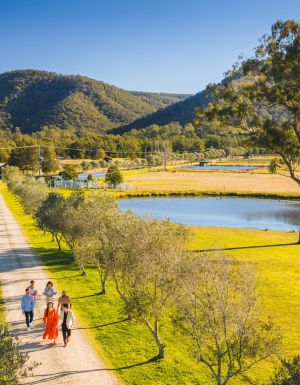
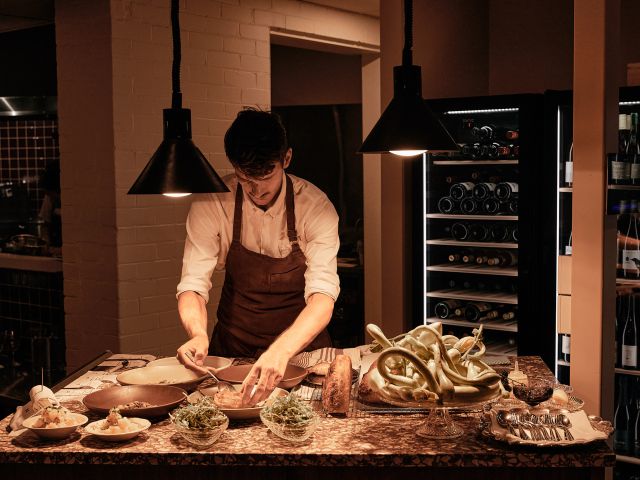
    Spend the weekend eating and exploring in West Gippsland. (Credit: Messmates Dining)

    Getting to West Gippsland involves as easy drive – it’s just over an hour out of Melbourne along the Monash Freeway.

    Not driving? Catch the train from Melbourne on the Gippsland line, terminating at either Traralgon or Bairnsdale, and hop off at Warragul or Drouin.

    Visit historic villages

    Walhalla historic township
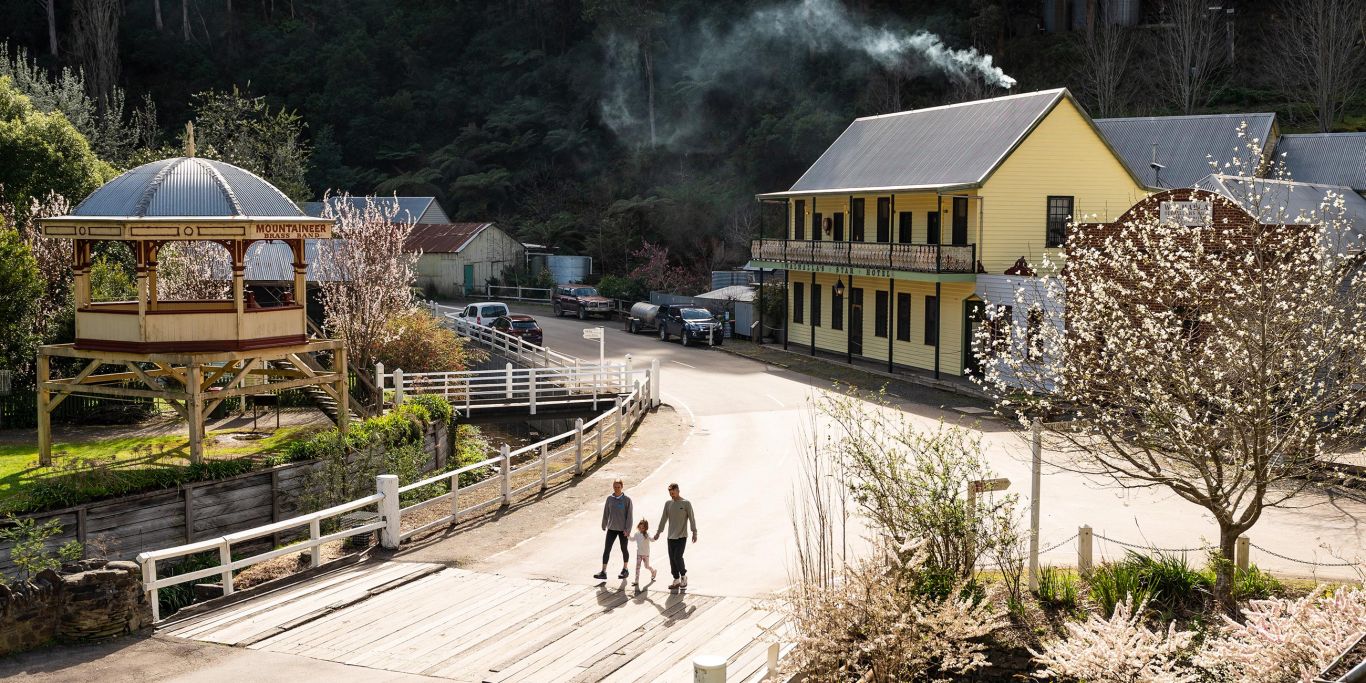
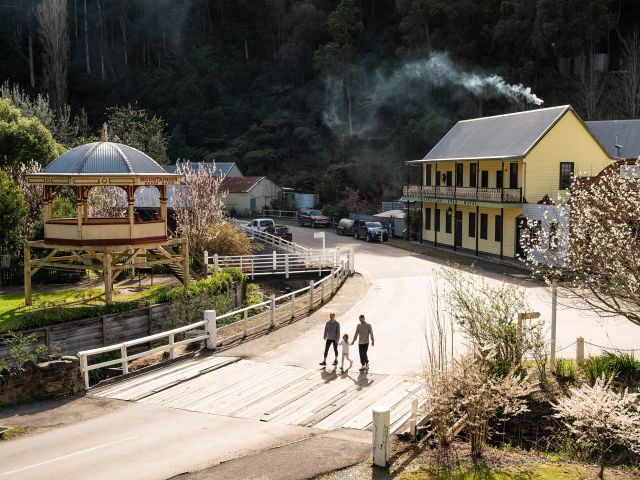
    Wander into Australia’s Gold Rush history at Walhalla. (Credit: Rob Blackburn)

    The West Gippsland region is on the Traditional Lands of the Kulin and Kurnai nations, specifically linked to the Bunurong, Gunaikurnai and Wurundjeri Peoples, whose connection to Country stretches back thousands of years.

    European settlement occurred in the 19th century as timber cutters, farmers and gold seekers pushed into the region’s dense forests. Small towns grew around sawmills and railway lines, and many of those gold rush settlements, timber towns and railway villages still shape the character of the region today.

    The most evocative of these is Walhalla Historic Township , a remarkably preserved gold-rush township tucked deep in the mountains. In the late 1800s, it was one of Victoria’s richest goldfields. Today visitors can step inside that history at the Long Tunnel Extended Gold Mine, where underground tours reveal the scale of the mining operation that once powered the town’s prosperity. Nearby, the Walhalla Goldfields Railway retraces part of the original narrow-gauge line through the valley, offering a slow journey past forest and river scenery.

    Further west, Noojee is a classic mountain village. It’s surrounded by dense forest and waterfalls and has become a natural base for exploring the Baw Baw region. Just outside town, Noojee Trestle Bridge stands as one of West Gippsland’s most striking relics of the rail era. The towering wooden structure is the tallest surviving trestle bridge in Victoria and today forms the centrepiece of an easy scenic walk with wide views across the valley.

    Alpine Trout Farm west gippsland
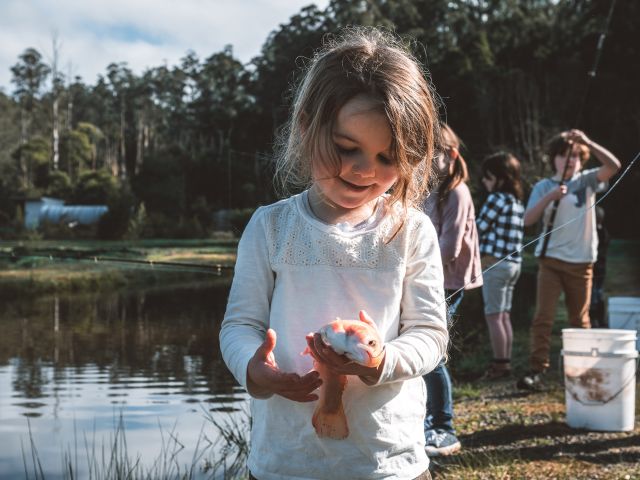
    Catch your own lunch at Alpine Trout Farm. (Credit: Nicky Cawood)

    At Alpine Trout Farm near Noojee, visitors can fish for trout in mountain-fed ponds before enjoying the catch prepared fresh onsite. It’s a simple experience that reflects the area’s long connection to the surrounding waterways.

    Back in Warragul , the region’s main service town, the story shifts from heritage to modern regional life. With galleries, restaurants and sweeping views across the rolling farmland of Gippsland, the town has become a lively hub linking the district’s past with its evolving food and cultural scene. Drive through the town and you’ll find heritage buildings, old pubs and weatherboard cottages that hint at the area’s early days as a frontier landscape.

    In other towns the past survives in quieter ways – a historic hall here, a century-old bakery there.

    Walks, waterfalls and wild places

    Toorongo Falls in west gippsland
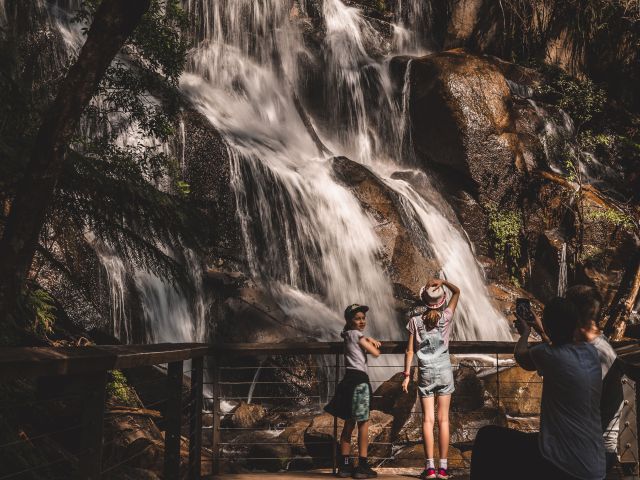
    Stroll Toorongo Falls Reserve. (Credit: Nicky Cawood)

    Even simple roadside stops can feel cinematic in West Gippsland. The region also delivers plenty of opportunities to lace up your walking shoes.

    One of the region’s most rewarding nature escapes lies just outside Noojee at Toorongo Falls Reserve . A network of walking tracks winds through the cool-temperate rainforest where towering mountain ash trees filter the light and the air smells of rich, damp earth. The 2.2-kilometre trail to the viewing platform overlooking Toorongo Falls is short, but spectacular, as the water cascades down over moss-covered rock faces into a cool, green gully in Little Toorongo River.

    Further north, the Mount Baw Baw Alpine Resort offers year-round adventures. In winter, the mountain attracts skiers and snowboarders. The warmer months are just as compelling, with scenic drives to see alpine wildflowers, mountain bike trails and panoramic hiking routes that open across the plateau.

    Cyclists and walkers looking for a more relaxed pace can follow the Rokeby Neerim Rail Trail , which traces a former railway line through farmland and small Gippsland villages. The mostly flat trail passes rolling paddocks, creeks and historic bridges, making it an easy way to drop it down a gear when exploring the countryside.

    Taste the best eats of West Gippsland

    Hogget Kitchen west gippsland
    Taste the best of the region at Hogget Kitchen.

    For many travellers, the real drawcards of West Gippsland are the food and wine. The region sits in the heart of Victoria’s fertile dairy country, and that agricultural backdrop has helped shape a dining scene where seasonal produce and local provenance take centre stage.

    Hogget Kitchen has helped put Warragul firmly on the radar for serious regional dining in West Gippsland. Here, head chef and owner Trevor Perkins runs the kitchen alongside well-known winemakers William (Bill) Downie and Pat Sullivan. Hogget Kitchen lives up to its promise of exceptional destination dining; what lands on the table depends largely on what nearby farms have harvested that week as well as a wine list from Wild Dog Winery and other Gippsland producers.

    Warragul is also where you’ll find Messmates Dining where the kitchen team is led by Michelin-trained chefs. The Euro-leaning bistro and wine bar brings a polished edge to the local dining scene using produce sourced from across West Gippsland.

    For something more casual, the century-old Noojee Hotel is the kind of hub that every traveller dreams of finding after a long drive. Expect generous pub classics served on the sunny deck in summer or beside the crackle of a log fire in winter.  Nearby, rustic Toolshed Bar, Bistro & Cabins is the place to go for a wood-fired pizza topped with smoked local trout paired with Gippsland wine, making it a rewarding stop for lunch or an overnight stay.

    Time your visit with the Truffle Festival

    Food lovers visiting in winter should consider timing their trip to coincide with Noojee Truffle Festival , running from 10 July to 2 August 2026. The inaugural event celebrates the region’s emerging truffle industry with tastings, special menus and events built around one of winter’s most prized ingredients.

    Start planning your long weekend in West Gippsland at visitgippsland.com.au .