Australia is home to more than 1800 wineries, just ten of which represent over 80 percent of domestic sales. A few dozen others garner the lion’s share of media attention. Where does that leave the rest? Virtually ignored, says AT Gourmet Guy Tom Neal Tacker.
“First we grew potatoes," says Norman Latta of Eastern Peake Winery, some 25km from Ballarat. “Then we replanted in 1983. Why here, in an area that hadn’t any grapes before? Trevor Mast from Mt Langi Ghiran told me it had potential and we went from there. We planted Pinot Noir and Chardonnay. It was all a risk."
Planting grapes on a high and windswept property? Risk indeed. With a total production of less than 1200 cases a year,Eastern Peakeis truly boutique. And at five hectares, surprisingly, it’s the largest in the region. Few wine enthusiasts have heard of it, much less Ballarat as a wine region, which is a pity, as the wines are fabulously good.
The Australian wine industry is full of such small operators with postage stamp-sized vineyards making marginal profits, all of them competing in a shallow domestic sales pool. Most minimise yields to ensure quality, but spend big on expensive cooperage, among other financial risk factors. There’s a desire to make wine of which they can be proud, rather than simply wine that sells. Of the whole of the Australian wine industry, these are the unsung heroes.
HOW TO SPOT ONE
Industry big boys dominate wine retail shops more than ever as the supermarket chains continue to swallow up smaller outlets one after another, leaving small producers like Latta less and less shelf space. It’s survival of the fittest in a very tough market. Without cellar door sales and mailing lists of loyal customers, they’re sunk.
Many smaller operators have done well on the Australian show circuit, but most don’t. Some are also very accomplished at courting the wine press, but most aren’t. And many wouldn’t enter a show system that tends to be biased against the wines they make (ie, ones that are shy and unassuming, rather than the attention-seeking, over-oaked and sweet wines that attract a tired judge’s palate after the 195th sample of the day).
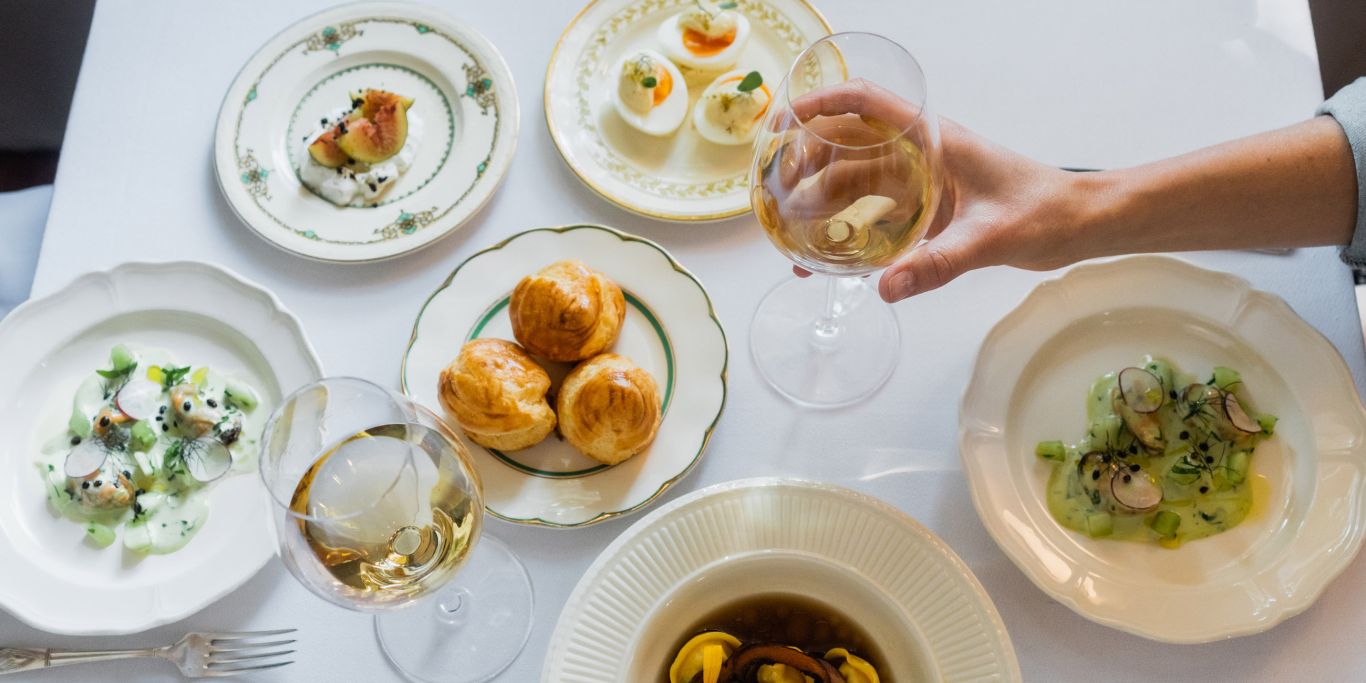
Eastern Peake wines are food-friendly wines. They don’t show their optimum character just out of the bottle or drunk without a meal. This is typical of an unsung hero wine. They blush with timidity upon first introduction, but blossom into rare treats with familiarity and good food.
It’s a pity so many winemakers toil so long in the vineyard, at such minimal profit, so that little time is left for promotion, marketing and publicity. Many naively believe their wines should sell themselves. A fine sentiment, but the reality of the marketplace often leaves them on the outer fringe of public recognition.
Winemakers are passionate about what they do and generous with their time when visitors arrive but rarely do they pursue publicity. I find this appealing but am also fearful for their future. Without them, our expanding wine industry will suffer. They’re pioneers, planting in new locations and experimenting with styles and little known varieties that larger wineries avoid, mindful of the bottom line. It would be a terrible loss to us all if market pressures force the many interesting, often quixotic wineries like Eastern Peakeout of business.
In going out of your way to visit wineries you don’t know, the rewards gained are vastly disproportionate to the occasional bad vintage or amateurishly made drop. I find myself concurring with the Michelin mantra: il vaut le detour. No detour is too far out of your way if the result is another undiscovered gem. So, rather than trot out the same old “usual suspects" account of well-publicised wineries, I offer up a shortlist of some of the unsung heroes I’ve been lucky enough to encounter.
EXPLORING THE RANGE
Norm Latta of Eastern Peake aside, let’s begin with some more Victorians: Ken and Juliet Eckersley of Nicholson River Winery in East Gippsland. Not only does Ken make some of the country’s most intriguing Pinot Noir and Chardonnay, he also makes what I consider to be Australia’s best vinegar. No, that’s not a joke, even if you’re not supposed to mention wine and vinegar in the same sentence. Seriously, Ken’s wine vinegar, derived from a carefully cultured “mother", puts most others to shame. Like his delicious wines, it’s unique and memorable.
Chris Pfeiffer of Carlyle Wines, Rutherglen, offers his family label ex-cellar door only. His better-known Carlyle range has had export success and is on the Rutherglen map of renown but for me the Pfeiffer range is always worth the detour to the cellar door. His Gamay, one of the few produced in Australia, is reasonably priced and makes a wonderful hot weather red when lightly chilled. Pfeiffer’s vintage ports are outstanding as is the rest of the fortified range.
Just outside Beechworth, near other more revered and media darling wineries, Keppell Smith of Savaterre Winery makes standout Pinot Noir and Chardonnay. At a recent Victorian Wine Exhibition, Keppell offered tastes of his Pinot Noir from a sleek decanter where the wine had been properly aired long enough to bring out its latent beauty. I may be jumping the gun, but Savaterre is one to watch out for. Keppell hides his light under the proverbial bushel. He shouldn’t.
In the Kiewa Valley, up the road (there is only one) from Mt Beauty is Ceccanti Wines owned by the Ceccanti family. Father Angelo, his wife Moya and their winemaking son Danny run the enterprise. It’s the largest vineyard in the Kiewa Valley, surrounded by stunning mountain scenery. They run a very pleasantly informal cafe there and a bakery cafe in Mount Beauty that has revitalised the town centre by offering local kids a place to hang out that isn’t the pub. Ceccanti Wines are uniformly distinguished and have a remarkable local flavour, a prime example of terroir in action.
CROSSING INTO NSW
I’m routinely surprised at how little acclaim David Lowe and Jane Wilson receive for their dual success at everything they turn their minds and hands to. Apart from their invariably superb Lowe Family Wines range, they’ve become the unsung heroes of the Mudgee region, making wine contractually for seemingly everyone there (and a few in Orange), so often are they credited on the reverse of wine labels. There are many other winemakers doing marvellous things in the area, but however David and Jane are prolific but prosaically humble.
When in Orange I make a point of visiting Bloodwood Wines. Made by Stephen and Rhonda Doyle, this dedicated couple are the forerunners in helping to create Orange’s budding reputation as a foodies’ pilgrimage. They began inauspiciously in a tin shed, where they lived before building their house, keeping their focus on their vineyards at the expense of physical comfort. Stephen makes stunning wines, when vintage conditions allow, successfully eschewing the limelight. He isn’t shy – indeed he’s a bit of a local character – but he lets his wines speak for themselves. His rose, Men in Tights, must be one of the best in Australia. It certainly has the most memorable name.
Need tips, more detail or itinerary ideas tailored to you? Ask AT.
AI Prompt
QUEENSLAND BOUND
Queensland, our wine industry’s country cousin in extremis, is almost always left out of the picture. Yes, some of the wines aren’t yet up to par but anyone who persists and proves that great wine can indeed be made there deserves respect and a larger following. Warren and Sue Smith of Pyramid’s Road Wines in Stanthorpe’s wine country near Ballandean are doing just that. They’re making fewer than 500 dozens of wine per year; it’s a hands-on business. Again, smaller is better for the consumer. Their Bernie’s Blend of Cabernet,Shirazand Merlot is a wine of remarkable character and the Verdelho is to me what this variety is all about: freshness, vivacity and ease.
APPLE ISLE
Tasmaniais chock-a-block with boutique wineries all vying for greater attention. I could list a large number, but one stands out: Apsley Gorge of Bicheno on the east coast. When I first tasted its Pinot Noir some years ago, it was a revelation. It’s owned and operated by Brian Franklin, a former abalone diver who clearly knows the importance of site selection. I came across him one day at the Salamanca Markets in Hobartand found myself gushing, again, about his Pinot Noir. He must think me mad. I think he’s mad not to bask in the praise.
A BRILLIANT BLEND
South Australia, the wine state, rests its tourism reputation on the accessibility and fineness of its wine scene. Barossa, McLaren Vale, Clare and Eden Valleys, the Coonawarra – all take centre stage for the wine-intent visitor. I tend to go off track and visit Langhorne Creek and the Adelaide Hills, scouting for the newest operators on the block. Long ago I discovered Leland Estate in the Adelaide Hills near Lenswood. Owned and operated by Robb Cootes, Leland is a single vineyard of 2.5 hectares planted to Sauvignon Blanc, Chardonnay and Pinot Noir. Robb is a major unsung hero in my opinion. His Sauvignon Blanc is one of the best in the country. Unfortunately you don’t see much of it outside Adelaide but that doesn’t mean it shouldn’t be celebrated. His Pinot Noir is as good as any other acclaimed Pinot in the neighbourhood. That the former senior red winemaker of Yalumba should make such an amazing Sauvignon Blanc constantly amazes me. Knowing Robb only a little, however, should be enough to render me unsurprised. He brings out the poetry in grapes.
WEST IS BEST
WA is also a treasure trove of unsung talent. The Margaret River luminaries get all the good press. I’d like to add Janice McDonald of Stella Bella and Suckfizzle atAugustato the growing list; she’s had positive media attention over recent years but deserves more. As one of Australia’s only female brewers, formerly of Matilda Bay brewery and now Little Creatures, she also makes damned fine wines with tremendous individual character. Janice isn’t really shy but she doesn’t boast either. I suppose it’s a matter of choosing to be in the shadow of the Cullens, Vasse Felix,Cape Mentelle, Leeuwin Estate and Pierro crowd.
Further east is little Pemberton, and near there is Picardy Estate, run by the Pannell family. Bill Pannell founded Moss Wood winery in 1969, establishing himself as a pioneer. He sold it and planted vines at Picardyin 1993. His son Dan has continued to further Pannell family fame with their outstanding wines. Moss Wood was and is a legendary winery. Strangely,Picardyis known only to the enlightened few. The move to Pemberton was a wise one but the public hasn’t kept track very well. The Pannell family are not unsung but a new verse is well deserved judging from their success atPicardy. The Pinot Noir is truly Burgundian in style (keep it cellared for a few years to bring it out of its well wrought shell), the Shiraz is superb and the Chardonnay exceptionally fine.
These are just a sample of Australia’s unsung wine heroes. My list is of course entirely subjective. Space prohibits further exploration but I can’t resist mentioning a few more. They all happen to be from around Canberra: Ken Helm of Helm’s Wines, David Madew of Madew’s Wines and Frank van de Loo of Mount Majura Vineyard. What this says about the Canberra wine region is: watch this space!
DETAILS: Unsung Heroes of Australian Wine
Eastern Peake Winery
WEBSITE // http://www.ballaratwineries.com/
PHONE // (03) 5343 4245
Nicholson River Winery
WEBSITE // www.nicholsonriverwinery.com.au
PHONE // (03) 5102 0898
Pfeiffer and Carlyle Wines
WEBSITE // www.pfeifferwinesrutherglen.com.au
PHONE // (02) 6033 2805
Savaterre Winery
WEBSITE // www.savaterre.com
PHONE // (03) 5727 0551
Ceccanti Wines
WEBSITE // http://www.ceccanti.com.au/
PHONE // (03) 5754 5236
Lowe Family Wine
WEBSITE // www.lowewine.com.au
PHONE // (02) 6372 0800
Bloodwood Wines
WEBSITE // http://bloodwood.biz/
PHONE // (02) 6362 5631
Pyramid’s Road Wines
WEBSITE // www.pyramidsroad.com.au
PHONE // (07) 4684 5151
Apsley Gorge Winery
EMAIL // agv@tassie.net.au
PHONE // (03) 6375 1221
Leland Estate
WEBSITE // www.lelandestate.com.au
PHONE // (08) 8389 6928
Stella Bella & Suckfizzle
WEBSITE // www.stellabella.com.au
PHONE // (08) 9757 6377
Picardy Estate
WEBSITE // www.picardy.com.au
PHONE // (08) 9776 0036
Weekly travel news, experiences
insider tips, offers, and more.
Want to see more stories from Australian Traveller in your Google search results?
- Click here to set Australian Traveller as a preferred source.
- Tick the box next to "Australian Traveller". That's it.

Tom Neal Tacker
View profile and articles