hero media

Three Aussie beaches just made the world’s 50 best list

Credit: Tourism Western Australia

 The World’s 50 Best Beaches list is out – and three Aussie beaches have made quite the splash.

With white sand, impossibly clear water and more hidden havens than you could ever hope to tick off, Australia’s coastline has long been in a league of its own. The proof is in the pudding, too; close to 87 per cent of the country’s population live along our coasts, shaping a culture that’s deeply connected to sea, sand and surf.

So when the annual World’s 50 Best Beaches list dropped, it was hardly surprising to see us featured not once, but three times. While two are making a return appearance (in higher positions, no less), one is joining for the very first time.

The ranking is decided by an extensive panel of well-travelled experts against a range of criteria, from accessibility and isolation to weather conditions and wildlife presence. Here’s where made the cut.

Wharton Beach, WA
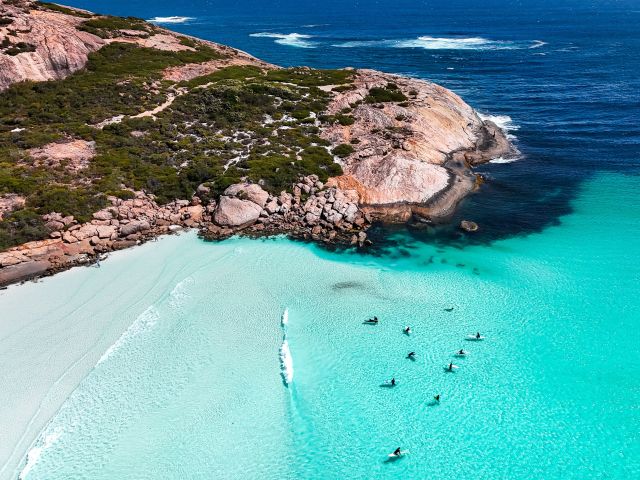
Wharton Beach, WA
Wharton Beach is officially among the top five beaches in the world. (Credit: Tourism Western Australia)

Wharton Beach in Western Australia’s Duke of Orleans Bay came in third place this year, impressively climbing from 21st in 2025. Widely considered one of the most beautiful beaches in the state, this local gem is loved for its tranquil atmosphere, crystalline waters and sand so fine it squeaks underfoot.
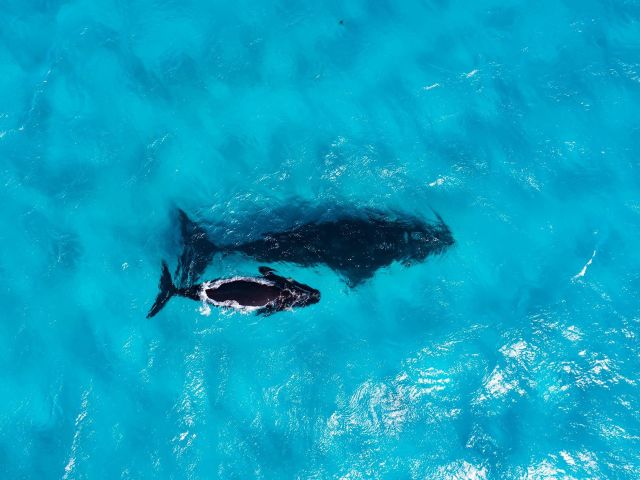
Whales off Western Australia's coastline
Whales migrate along WA’s coast from May to December. (Credit: Tourism Western Australia)

Thanks to its relative isolation (the nearest town is around an hour away), visitors rarely have to fight for a spot on the sand. But while the crowds are few, you won’t have the place entirely to yourself. Wharton Beach is home to an abundance of wildlife, from kangaroos lounging along the shore to pods of dolphins dancing in the waves. It’s also one of the country’s best whale-watching spots come migration season, with pods of humpback and southern right whales often sighted.

Turquoise Bay, WA
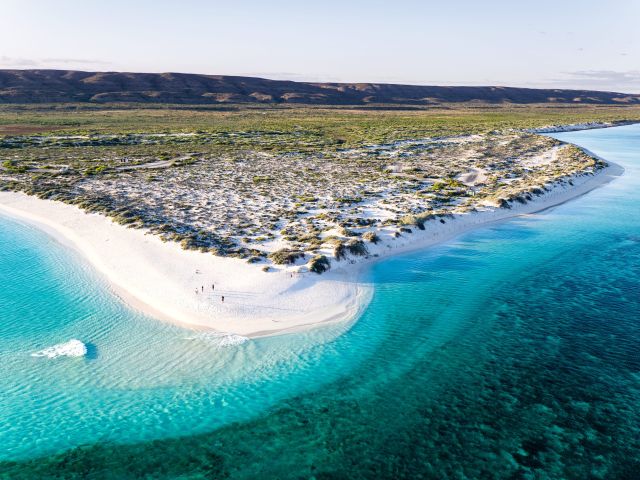
Turquoise Bay, WA
Turquoise Bay is hidden within Cape Range National Park. (Credit: Tourism Western Australia)

Coming in 15th this year is one of WA’s lesser-known beaches. And while it’s down a few spots from 11th place last year, it continues to hold a prominent place in the list among the world’s best. Situated near Exmouth on the North West Cape, Turquoise Bay wears its main asset on its sleeve – or should I say, in its name.
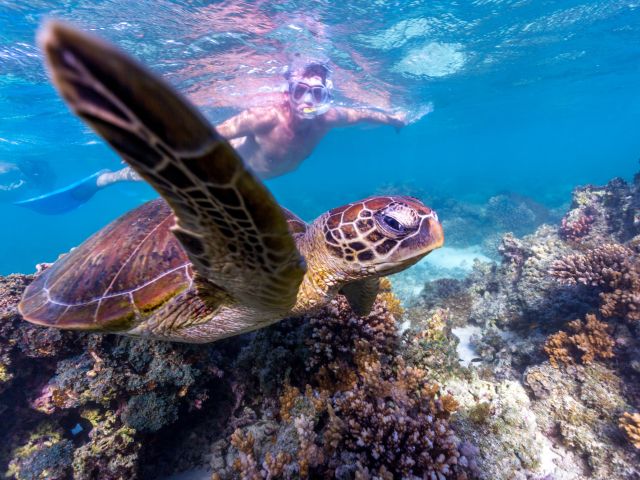
Turquoise Bay, WA
Admiring marine life from a distance ensures they remain protected. (Credit: Tourism Western Australia)

Known for boasting crystal-clear waters, gentle currents and plentiful marine life, the bay has become a natural playground for snorkellers. Its close proximity to Ningaloo Marine Park allows for easy spotting of fish, turtles, rays and coral reefs, as well as dolphins, sharks and whales – if you’re lucky. Set within Cape Range National Park, Turquoise Bay lends itself perfectly to a weekend of swimming, fishing, hiking and camping under the stars. 

Need tips, more detail or itinerary ideas tailored to you? Ask AT.

AI Prompt

Wineglass Bay, Tas
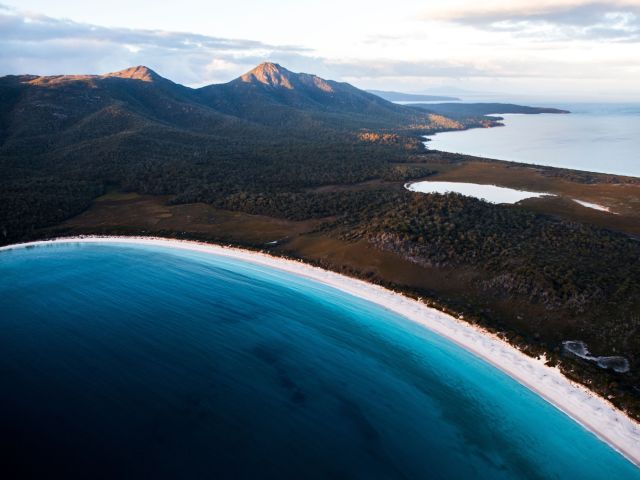
Wineglass Bay, Tasmania
Wineglass Bay has made its debut on the World’s 50 Best Beaches list for 2026. (Credit: Lauren Bath)

Making its debut on the World’s 50 Best Beaches list this year is Wineglass Bay, claiming 21st place, and cementing every Aussie inclusion comfortably within the top 25. Located on Tasmania’s Freycinet Peninsula, it’s part of the Tasmanian Wilderness UNESCO World Heritage Area – and for good reason.
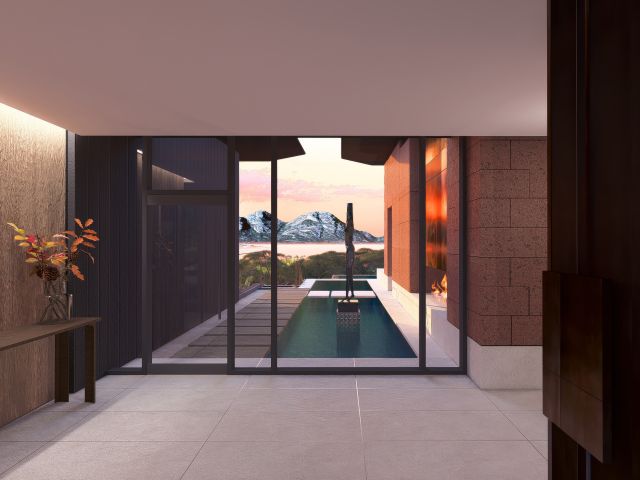
Saffire Jewel in Freycinet, Tasmania
Saffire Jewel will open later this year, just a 10-minute drive from Wineglass Bay.

Wineglass Bay is a place of striking contrasts, where rugged natural beauty meets refined luxury. Sandy shores quickly give way to verdant rainforests. Pink granite peaks rise over cerulean waters. A quiet stillness brings a true sense of calm. Better yet, you can take it all in from the comfort of five-star stays like Saffire Freycinet and its ultra-luxe private sister villa, Saffire Jewel, set to open later this year.

The world’s top 10 beaches for 2026

1. Entalula Beach, The Philippines
2. Fteri Beach, Greece
3. Wharton Beach, Australia
4. Nosy Iranja, Madagascar
5. East Beach, Fiji
6. Shoal Bay East, Anguilla
7. Dhigurah, The Maldives
8. Playa Balandra, Mexico
9. Koh Rong, Cambodia
10. Donald Duck Bay, Thailand

See the full World’s 50 Best Beaches list here.

Want to see more stories from Australian Traveller in your Google search results?

  1. Click here to set Australian Traveller as a preferred source.
  2. Tick the box next to "Australian Traveller". That's it.
Taylah Darnell
Taylah Darnell is Australian Traveller's Writer & Producer. She has been passionate about writing since she learnt to read, spending many hours either lost in the pages of books or attempting to write her own. This life-long love of words inspired her to study a Bachelor of Communication majoring in Creative Writing at the University of Technology Sydney, where she completed two editorial internships. She began her full-time career in publishing at Ocean Media before scoring her dream job with Australian Traveller. Now as Writer & Producer, Taylah passionately works across both digital platforms and print titles. When she's not wielding a red pen over magazine proofs, you can find Taylah among the aisles of a second-hand bookshop, following a good nature trail or cheering on her EPL team at 3am. While she's keen to check out places like Scotland and North America, her favourite place to explore will always be her homeland.
View profile and articles
hero media

Mornington Peninsula’s storied past: war, shipwrecks and a runaway convict 

    Kellie Floyd Kellie Floyd
    The Mornington Peninsula is a coastline of contrasts, where convict and military history meets shipwrecks, wild seas and adventures above and below the surface.

    The Mornington Peninsula can be the kind of place where salt-tangled hair feels like a badge of honour – proof you’ve been somewhere wild, raw and real. Peel back the layers and you’ll discover stories that anchor this region to something other than its famed food and wine.

    This land is the traditional Sea Country of the Bunurong/Boon Wurrung people. Long before grapevines were planted and artisanal goods were crafted, the Bunurong Traditional Owners lived in deep connection with the land and sea. Today, places such as Mushroom Reef Marine Sanctuary echo that tradition, with families exploring its rockpools in search of colourful sea stars and crabs at low tide and learning how these fragile ecosystems have been cared for across countless generations.

    a group of people visiting the Port Nepean National Park
    Take in the rugged coastal landscape at Port Nepean National Park. (Image: Tourism Australia)

    A visit to Point Nepean National Park feels like stepping back through time. The fort, built in 1882, protected the narrow entrance to Port Phillip Bay until the end of the Second World War. It was here that the first Allied shot of the First World War was fired – at a German cargo ship trying to escape just hours after war was declared. Nearby, the old Quarantine Station, one of Australia’s first permanent quarantine facilities, established in 1852, still stands. Walking through the hospital and disinfecting complex evokes stories of those who arrived from faraway shores.

    Not far from here is a story of survival that inspired the Aussie phrase ‘you’ve got Buckley’s chance’. In 1803, escaped convict William Buckley vanished into the bush near what’s now Sorrento. Everyone thought he had no hope of surviving, but he reappeared 32 years later, having lived with local Aboriginal people.

    Even the waters here hold history. The infamous stretch known as The Rip, just three kilometres wide at the entrance of Port Phillip Bay, is among the most treacherous waterways. Countless ships were lost here in the 19th and early 20th centuries, and in 1967, Australia’s own Prime Minister Harold Holt disappeared while swimming off the coast, never to be found.

    a seal swimming in Port Phillip Bay
    A seal swimming in Port Phillip Bay. (Image: Tourism Australia/Two Palms/Harry Pope)

    But for all its danger, the sea here also holds extraordinary beauty. Dolphins are often seen near Sorrento’s cliffs, while below the surface, seagrass meadows and rocky reefs teem with life. Marine tours offer a viewing to this underwater wonderland, while back on terra firma, walking trails lead along beaches, through coastal scrub, and over rock pools.

    And if you think you’ll forget about the Mornington Peninsula once you’ve left? You’ve got Buckley’s chance.

    A traveller’s checklist

    Staying there

    the suite interior at InterContinental Sorrento
    Luxury interiors at the historic InterContinental Sorrento. (Image: Greg Elms)

    Point Nepean Discovery Tents is immersive glamping beside the historic Quarantine Station. Or upgrade to luxury at the 1875-built InterContinental Sorrento.

    Playing there

    an aerial view of Cape Schanck Lighthouse
    Make your way to the Cape Schanck Lighthouse. (Image: Tourism Australia/Two Palms/Harry Pope)

    Bayplay Adventure Tours offer eco-adventures from snorkelling with sea dragons to kayaking with dolphins and cycling Point Nepean. Cape Schanck Lighthouse is fascinating to explore on a guided tour, which takes you into the lighthouse and keeper’s cottage.

    Eating there

    Portsea Hotel is a beautifully restored 1876 Tudor-style pub right on the beach, serving seasonal local fare.