You Will Decide the New 7 Wonders of Nature

hero media
Uluru and the Great Barrier Reef: Wonders of the nation, or great natural wonders of the world? You decide. Words by Flora King

By mid 2011, a predicted one billion members of the population will have cast a vote and participated in an epic global poll to determine the new seven wonders of the natural world. The New7Wonders of Nature campaign was launched in 2007 and is a contemporary effort to recognise our planet’s most phenomenal natural sites and landscapes, as seen through the eyes of its public. With the announcement of these new wonders scheduled for two years from now, and with two of our national icons in the running against 26 other finalists, it is time for Australia to mark her ballot.


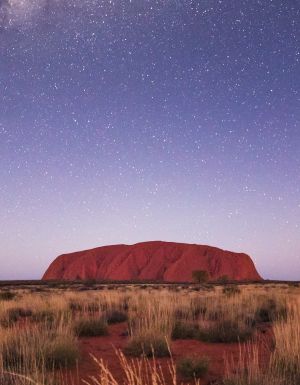
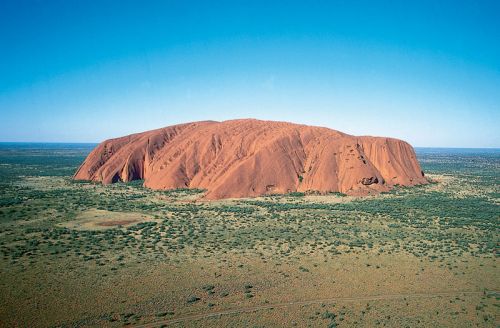
Breathtaking to behold and rich in cultural significance, it is without doubt the quintessential image of the Australian outback.

Uluru

Uluru, or Ayers Rock as it is also known, is the world’s largest monolith and an isolated remnant of what was once a full mountain range in the Kata Tjuta National Park. Grandly rising 340m above the surrounding plains it is perhaps Australia’s most recognisable natural site. Anyone who has stood before the huge rock formation at sunset and watched its smooth sandstone surface blaze a million shades of red in the changing evening light would wish to argue that it’s up there with the world’s best in terms of awe-inspiring natural beauty. Uluru is to the Aboriginal people and traditional Anangu owners of the land a scared place, emanating energy and containing the spirits of the ‘Dreamtime’ legend. Breathtaking to behold and rich in cultural significance, it is without doubt the quintessential image of the Australian outback.

The Great Barrier Reef

Australia is the only continent that can boast of having 340,000km2 of intricate live coral cays scattered across its warm, turquoise northeastern shores, and the stunning Great Barrier Reef is the world’s largest coral reef system. Made up of a myriad of over 3000 individual reefs and 900 sun-soaked golden islands, it is the only living organic collective visible from outer space. It is also one of the world’s richest areas in terms of biological diversity and home to a vast variety of sea life, including 30 species of whales and porpoises, 125 species of sharks and stingrays and over 15,000 species of fish. While the reef has been an important part of indigenous culture and spirituality for thousands of years, and parts are believed to be as much as 18 million years old, this ancient natural gift remains a dazzling jewel in Australia’s crown.

A brief look at some of the potential wonders we are up against;

The Amazon

Covering an area of 2.5 million miles, shared by nine different countries, home to a third of the world’s species, and provider of more than 20 percent of the oxygen we breathe, the sprawling, majestic Amazon represents half of our planet’s remaining rainforest and is often described as the “lungs of the world".

Need tips, more detail or itinerary ideas tailored to you? Ask AT.

AI Prompt

Puerto Princessa Underground River

Around 50km north of the city of Puerto Princesa in Palawan, Philippines is the Puerto Princesa Subterranean River National Park. Beneath the park’s spectacular limestone karst landscape flows an extraordinary underground river, which winds through 8.2km of underground caves and dark, cavernous chambers before it spills dramatically in to the South China Sea.

The Dead Sea

Landlocked between Jordan, Israel and the West Bank, the Dead Sea – at 400m below sea level – is the lowest body of water on Earth. A 30 percent salinity content means it is nearly nine times saltier than the ocean, and with little plant or animal life able to flourish in the immediate area, the sea possesses its own sparse and haunting kind of beauty.

The Grand Canyon

The Grand Canyon in northern Arizona has for many years been a world-renowned symbol of nature’s tremendous power, and almost two billion years of natural history are revealed in its layers of beautifully preserved rocks. From the top of the mile-high gorge are vistas stretching for hundreds of miles over the multicoloured, arid and strikingly inhuman landscape.

Kilimanjaro

At 5895 metres high, Tanzania’s Mount Kilimanjaro is the highest mountain in Africa, and the highest free-standing, snow-covered equatorial mountain in the world. Once a live volcano, and with a summit crater measuring 1.5 miles across, the isolated snowy peak rises spectacularly from the fertile green savannah, and is a potent motif of the country’s geographical extremes.

The Black Forest

The Black Forest is an area of mountain ranges, highland plateaus and dense fir and pine woods spread in a distinguishable rectangular shape across the Baden-Württemberg region of southwestern Germany. Once believed to be inhabited by werewolves, witches and dwarves, but perhaps now more renowned for the cuckoo clock and black forest cake, the forest remains rooted in traditional culture and mythology.

hero media

After dark: 6 experiences along the Murray lighting up the night

(Credit: Serena Munro)

    Gemma Kaczerepa Gemma Kaczerepa
    See the Murray region in an entirely different light by exploring its night-time experiences and attractions.

    By day, the mighty Murray River is a majestic and ever-changing sight, with river red gums and wetlands stretching along 2500 kilometres. But by night, its cities, towns, villages and landscapes totally transform.

    From Albury Wodonga to Mildura, and everywhere in between, you’ll be in for a multi-sensory and memorable treat encompassing mesmerising light shows, guided ghost tours and vibrant celebrations that capture the nocturnal magic of the river.

    This is no ordinary nighttime adventure; the region becomes an entirely different world when the sun sets. Discover six must-do activities along the Murray that can only be enjoyed after dark.

    1. Share in ghostly tales

    Port After Dark tour Murray at night
    Hold on to your nerve when learning local ghost stories. (Credit: Campaspe Shire Council)

    If you’re up for something a little more spine-tingling, Port After Dark in Echuca is your best bet. Rumour has it that the Port of Echuca Wharf and the buildings around it have long been home to lingering ghosts and mysterious events – like the vengeful woman said to haunt an old tramway bridge and spirits searching for stolen money through the town centre.

    You can hear all about them on this guided lantern tour, which takes place on Wednesday and Saturday nights after dark. The stories are atmospheric and intriguing – you may even spot a ghost or two yourself. If you’d like a more intimate experience, private tours are also available to groups of 15 or more.

    2. Wander art installations

    Bruce Munroe's Fibre Optic Symphoinic Orchestra Murray at night
    See Bruce Munro’s immersive art installation. (Credit: Serena Munro)

    Right near the Perry Sandhills, sits an experience that feels almost otherworldly. Artist Bruce Munro (of Uluru’s Field of Lights fame) has created a Fibre Optic Symphonic Orchestra, a network of 80 Hills Hoists illuminated with fibre optic light combined with the sounds of an orchestra. The clotheslines glow and pulse in time to the specially composed score, immersing you in a dreamscape of light and sound.

    For a different light experience, you’ll find stillness at Trail of Lights, also curated by Munro. Located just 30 minutes away on Lock Island in Mildura, thousands of lights stretch over the landscape, spotlighting both the river and a series of Munro’s sculptures. The trail is intended to be a peaceful and meditative setting for wandering and reflecting.

    3. Learn through lasers

    Heartbeat of the Murray at night
    Travel 30 million years into the Murray’s past at Heartbeat of the Murray. (Credit: Ewen Bell)

    Discover a fascinating history in this dual act of lights and projections on the banks of the Little Murray River. Legends of the Mallee is a multimedia show in Swan Hill combining lasers and lights, which tells the story of the region’s rich past. Learn about the Wamba Wamba and Wadi Wadi Peoples who first inhabited the area, as well as the figures and events that shaped the Mallee of today.

    The river steals the spotlight in the Heartbeat of the Murray, a multimedia spectacle inside the Pioneer Settlement encompassing lights, lasers, sound and special effects against the natural backdrop. Through a sequence of large-scale animated projections, you’ll go back 30 million years to explore the Murray River’s formation before travelling to the present to learn how it supports modern communities.

    4. Light up the lake

    Lake Mulwala Laser Light Show Murray at night
    Watch the lights and lasers of Lake Mulwala. (Credit: Mulwala Water Ski Club)

    Travelling with kids? Head to Yarrawonga Mulwala and nearby Lake Mulwala for the family-friendly Laser Light & Sound Show. Lights and lasers are projected over the lake and onto curtains of fog, creating a colourful and high-energy visual display. The show suits all ages and tastes, set to a mix of songs that everyone knows and loves.

    You can take in the spectacle from either the grassy banks of the lake or book a table at the Mulwala Water Ski Club’s Malibu Deck Cafe, serving pub-style food and refreshing drinks, including excellent classic cocktails. If you’re watching from the foreshore, the show is entirely free, making it a great budget-friendly option.

    5. Be captivated by local culture

    Bullanginya Dreaming Murray at night
    Soak in the culture of the Bangerang People. (Credit: Laser Vision)

    Set aside an evening to explore Bullanginya Dreaming in Cobram Barooga – you’ll want ample time to take in the stories and symbolism of this immersive laser light and sound trail. The 1.8-kilometre trail explores the storytelling and culture of the Bangerang People, who have long cared for the lands around Bullanginya Lagoon in Barooga. The trail features 12 activations – each telling a different story – and combines dramatic lights and lasers with water and fire.

    Intertwined with the visual displays are Bangerang narratives, giving you meaningful insight into the area’s Indigenous heritage. It’s designed to be explored over 90 or so minutes, encouraging you to move slowly and thoughtfully.

    6. Discover a winter glow

    winterglow festival
    See the streets of Albury Wodonga come to life after dark. (Credit: Visit Albury Wodonga)

    Albury Wodonga comes alive as the weather drops, with an annual celebration of the season on Saturday, 15 August. WinterGlow takes over the CBD and features a vibrant program of things to see, do, learn, eat and drink.

    Take part in hands-on workshops that let you try different art forms and crafts. Feast on street food and winter warmers from local eateries. Browse for artisan wares at the night markets. Watch musical acts on the main stage. Or get involved in different activations, including a silent disco and giant maze. Artificial snow will be falling to add to the festive atmosphere.

    Even wandering the streets and laneways and soaking up the late-night energy will leave you feeling enchanted.

    Start planning a day-to-night adventure along the Murray at visitthemurray.com.au.