hero media

Moree’s iconic hot springs have reopened after almost two years

Credit: Destination NSW

Time to dive back into Moree’s iconic hot springs. Here’s all you need to know.

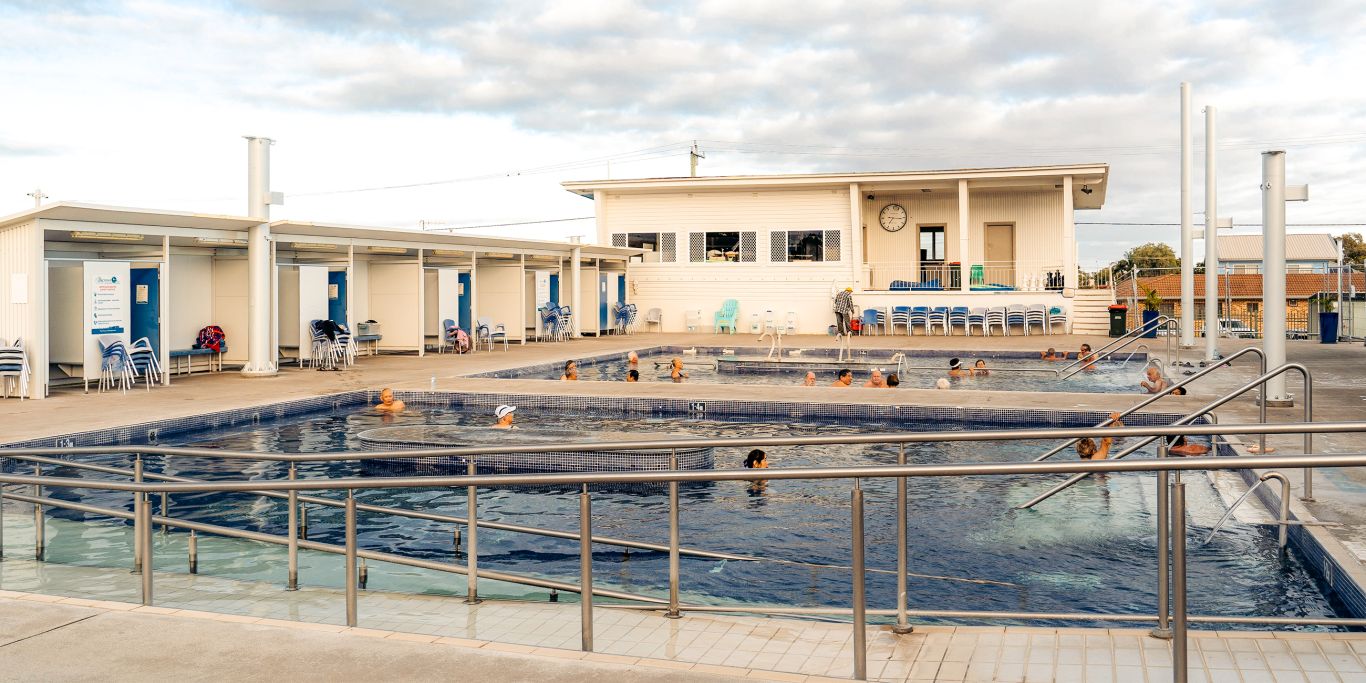
Renowned as the Artesian Spa Capital of Australia, Moree has been without its biggest tourism and wellness asset for almost two years. But no longer. The Moree Artesian Aquatic Centre is back in action this month.

Blessed to be sitting on top of the therapeutic Great Artesian Basin, these hot springs were discovered at this site in 1895. They feed the town of Moree (and other surrounding towns) with mineral-rich water at temperatures of 34-41°C (which is why you’ll want to visit a dedicated site where the temperatures are cooled to swimable levels). Not only does it just feel really nice to take a long bath, but the mineral water has also long been believed to help with skin health, joint function and tissue repair. What more could you want from a swim?

So why was this amazing asset closed? For a $3.223 million redevelopment, jointly funded by the NSW and Commonwealth governments, alongside Moree Plains Shire Council. Although the closure was never meant to take so long, something that the mayor acknowledged, she reiterated that it was essential to make sure the work was done properly after years of recurring issues.

“Witnessing the joy in the faces of families and visitors taking in the waters has been such a reward for our Councillors and team, following the reinstatement of one of the key jewels in the Moree Plains’ crown," said Moree’s Mayor, Cr Susannah Pearse.

“The artesian water has been a part of Moree’s identity since 1895. The love of artesian water and its thermal properties is a worldwide phenomenon, and we are so very lucky to have it here, beneath our feet".

What is the Great Artesian Basin?
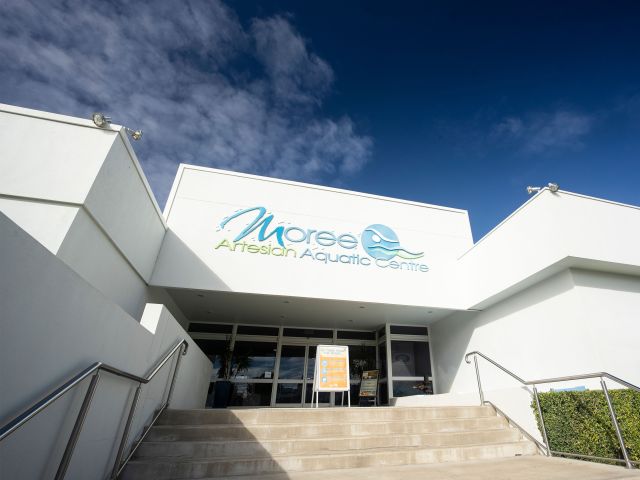
front of Moree Artesian Aquatic Centre
Step into bathing heaven, thanks to the Great Artesian Basin. (Credit: Destination NSW)

The Great Artesian Basin is a bit of a wonder all on its own. Covering 1.7 million square kilometres beneath 22 per cent of Australia (spanning parts of Queensland, New South Wales, South Australia and the Northern Territory), it’s the world’s largest and deepest underground freshwater resource.

Storing about 64,900 million megalitres, this millions-of-years-old water is rich in minerals like calcium, magnesium, potassium and silica, which is great for swimming, of course. But it’s also a vital water source for pastoral, agricultural and town supplies.

Need tips, more detail or itinerary ideas tailored to you? Ask AT.

AI Prompt

What to expect at Moree Artesian Aquatic Centre
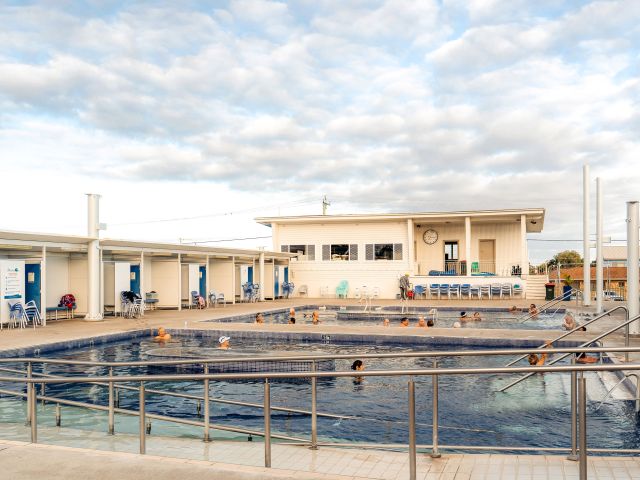
Moree Artesian Aquatic Centre pool
The new and improved centre is open for business. (Credit: Destination NSW)

Moree Artesian Aquatic Centre (MAAC) is a state-of-the-art aquatic centre offering multiple indoor and outdoor pools using water from the Great Artesian Basin. Originally opened in 1923 to commemorate those who served in the First World War, renovations started in 2021 to bring the structure up to modern building standards and make it what it is today.

The two newly reopened Active Thermal Pool and Passive Thermal Pool both have water maintained at a relaxing 39-41°C. The cooler Program Pool sits at a milder average of 25°C. There’s a waterslide that is operational on weekends and limited hours during the school holiday period (for an extra fee). Additionally, there is a Wellness Pool, which is a private booking space with a separate entrance and fee.

Are there other artesian pools you can visit in Moree?
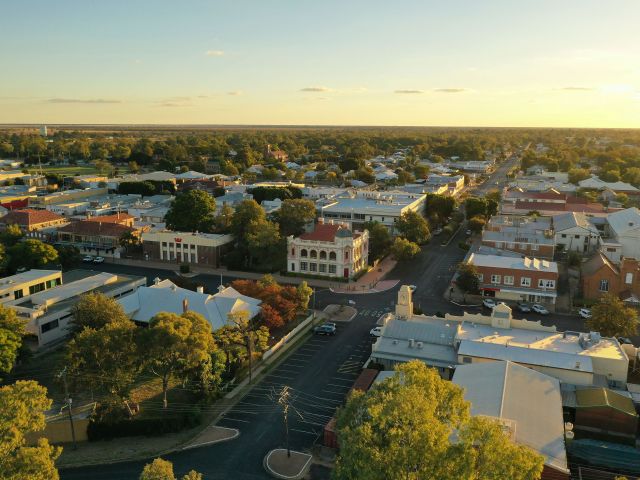
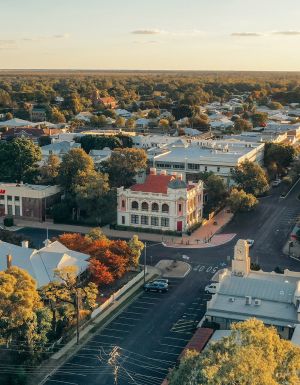
aerial of moree
Find more thermal pools around Moree. (Credit: Destination NSW)

Operating since 1979, Gwydir Thermal Pools Resort offers five artesian pools to motel and caravan park guests, ranging in soothing temperatures from 34 to 39 degrees. And that includes a 25-metre lap pool.

Really soak it all in by choosing from the resort’s range of accommodation, including one- and two-bedroom motel units, cabins, villas and caravan powered sites.

Weekly travel news, experiences
insider tips, offers, and more.

The details

How do you get to Moree?

Moree is in the New England region, approximately a seven-hour drive from Sydney and 5.5 hours from Brisbane. Qantas operate regular flights between Sydney and Moree.

Do you need to book?

Due to popularity, booking accommodation in advance is recommended.

How much does it cost to visit Moree Artesian Aquatic Centre?

Casual entry fees for non-locals are $9 for adults and $7 for kids (children under three have free entry).

Where can you find out more?

Find out more information via the Moree Artesian Aquatic Centre website.

Want to see more stories from Australian Traveller in your Google search results?

  1. Click here to set Australian Traveller as a preferred source.
  2. Tick the box next to "Australian Traveller". That's it.
Kassia Byrnes
Kassia Byrnes is the Native Content Editor for Australian Traveller and International Traveller. She's come a long way since writing in her diary about family trips to Grandma's. After graduating a BA of Communication from University of Technology Sydney, she has been writing about her travels (and more) professionally for over 10 years for titles like AWOL, News.com.au, Pedestrian.TV, Body + Soul and Punkee. She's addicted to travel but has a terrible sense of direction, so you can usually find her getting lost somewhere new around the world. Luckily, she loves to explore and have new adventures – whether that’s exploring the backstreets, bungee jumping off a bridge or hiking for days. You can follow her adventures on Instagram @probably_kassia.
View profile and articles
hero media

This new tour takes you to the best and most unexpected parts of NSW’s outback

Credit: Destination NSW

    Dilvin Yasa Dilvin Yasa

    The outback is calling, and the adventure is made all the easier with this hot new AAT Kings’ tour.

    It’s the desert palette of rust-red earth and vast cobalt sky that calls you at first, for where better to get away from it all than the outback? Of course, once you start driving, taking note of all the weathered pubs, dusty tracks and tiny towns held together with humour, resilience and more corrugated iron than ever deemed possible, something else grabs a hold of you: the idea that far from the celebrated icons and landmarks associated with Australia, you’re finally immersed in an authentic slice of local life that few have ever experienced.

    Ancient landscapes, proud pastoral histories, ghost towns, culinary powerhouses and a rich Indigenous heritage; there are plenty of facets to life on the land. The best way to experience all of the above with both ease and like-minded friends? AAT Kings’ new Outback New South Wales Adventurer, a 9-day small group tour. This Sydney-return itinerary is designed to connect travellers not only with iconic outback destinations, but with the characters, culture and experiences that bring each place to life.

    Highlights? The Adventurer has more than a few, but here are eight to start.

    1. Broken Hill

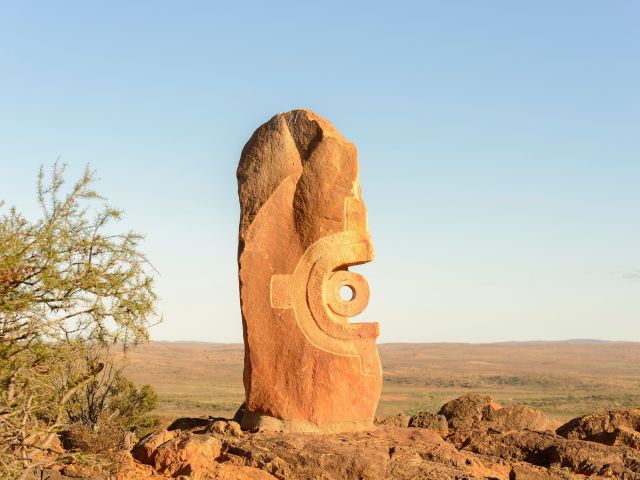
    See the striking art at Living Desert and Sculptures. (Credit: Destination NSW)

    Welcome to Broken Hill, where mining history, outback eccentricity and a surprisingly rich arts scene unite in a rusty desert landscape. In Australia’s first heritage-listed city, exploration is quickly rewarded. Begin with a guided walking tour taking in the city’s grand Victorian and Art Deco architecture. Later, enjoy visits to both the Broken Hill City Art Gallery and the Living Desert and Sculptures – the perfect place to enjoy the changing colours of an outback sunset. Of course, no visit to Broken Hill is complete without a stop at the historic Palace Hotel Broken Hill, famous for its role in The Adventures of Priscilla, Queen of the Desert. Happily, it makes for the perfect spot for dinner.

    2. White Cliffs

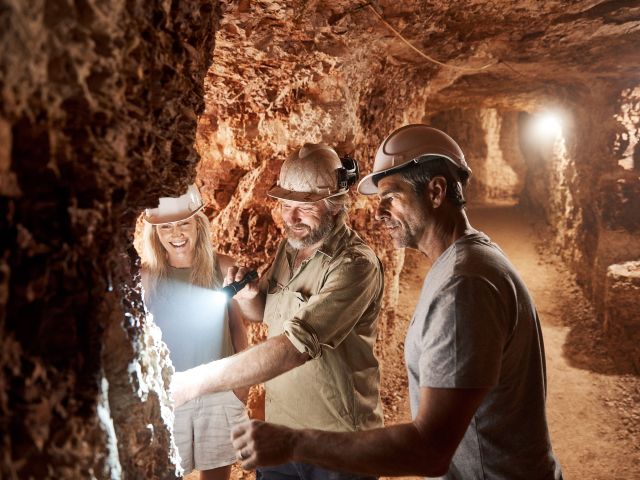
    people in a mine in white cliffs nsw
    Strap on your hardhat and head underground. (Credit: Destination NSW)

    Strap on your hardhat and start spending your imaginary fortunes; White Cliffs, Australia’s oldest commercial opal field, is begging you to come in search of rare pineapple opals. Admittedly, you’re much more likely to find white opals, but the true gems of White Cliffs – where much is built underground to escape the desert heat – are everywhere.

    Here, you’ll descend 13.5 metres underground into a working mine to learn about the region’s heritage, and observe how miners continue the search for these prized gemstones. Perhaps you’ll even find a couple yourself?

    3. Mungo National Park

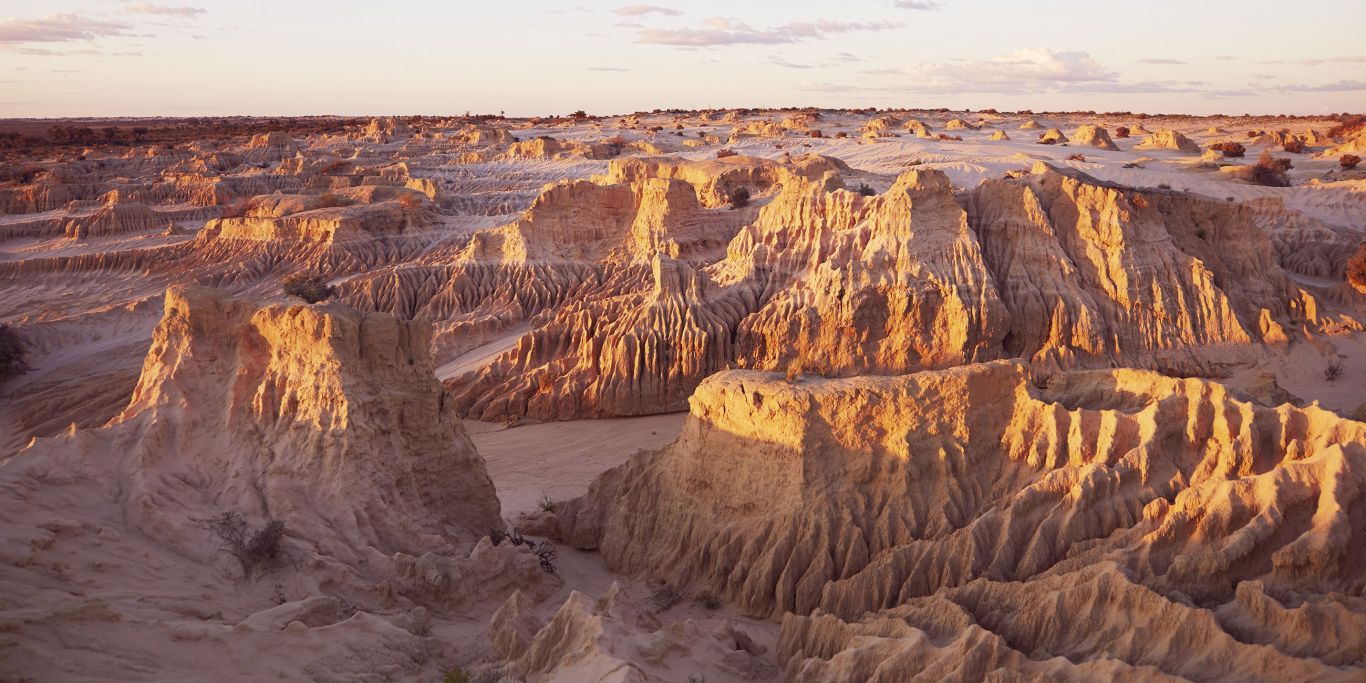
    mungo national park nsw outback
    Spend time in the striking, lunar-like landscape of Mungo National Park. (Credit: Destination NSW)

    With its lunar-like landscape made up of ancient, dried lake basins and sculpted sand and clay formations, a drive into UNESCO World Heritage-listed Mungo National Park is somehow two things all at once: uniquely Australian with vast outback skies, and somehow otherworldly, as though you’ve been dropped off by spaceship. At its heart lies the iconic Walls of China, a 30-kilometre sand-and-clay lunette shaped by thousands of years of erosion.

    Understanding more than 40,000 years of Barkindji, Mutthi Mutthi and Ngiyampaa history begins with a visit to the Visitor Centre, and concludes with a sunset tour led by local Aboriginal guides. A key experience? Learning about the discovery of Mungo Man and Mungo Lady. At 40,000+ years old, these are among the oldest human remains found anywhere in the world.

    4. Kinchega National Park

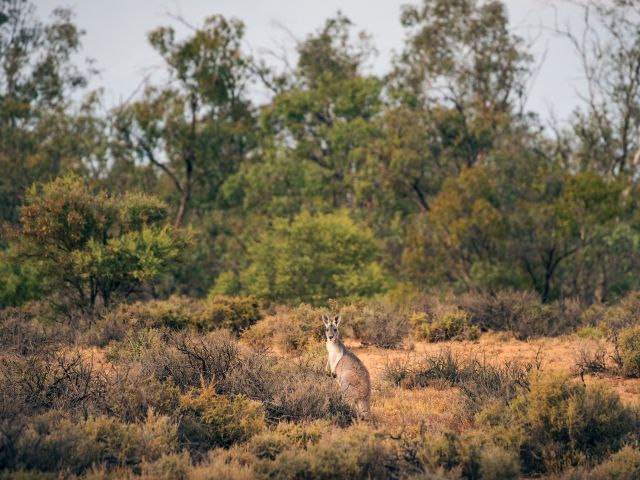
    kangaroo in Kinchenga National Park nsw
    Meet the locals of Kinchega National Park. (Credit: Destination NSW)

    Some come to Kinchega National Park for its iconic Darling River landscapes full of birdlife and haunting river red gums; others visit for its rich First Nations and pastoral history. Your visit will encompass all of the above, with a guided tour (part of AAT Kings’ MAKE TRAVEL MATTER Experience) designed to give a deeper understanding of Barkindji cultural heritage, history and traditions.

    Walk with local guide David as he shares ancestral knowledge and creation stories, and explains how native plants – through bush food and bush medicine – have sustained Indigenous communities for thousands of years. Then sit back and enjoy those views alongside native tea and sweet treats.

    5. Griffith

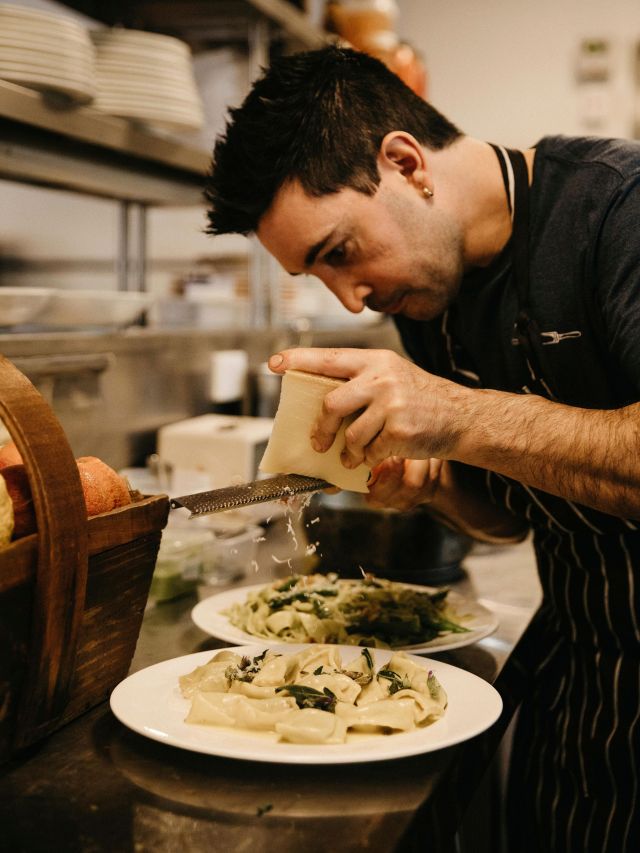
    chef at zecca restaurant in griffith
    Treat your tastebuds to ‘the food bowl of Australia’. (Credit: Destination NSW)

    How can you say no to a visit to a destination widely regarded as ‘the food bowl of Australia’? Shaped by fertile farmland and home to approximately 75 per cent of New South Wales’ wine grapes, this is a day to roll up your sleeves and enjoy the best gastronomy the state has to offer. Think vineyards, cellar doors, cafes and restaurants largely shaped by its multicultural heart (Griffith is not only home to over 60 nationalities, but has the highest proportion of Italian ancestry anywhere in Australia).

    6. Mudgee

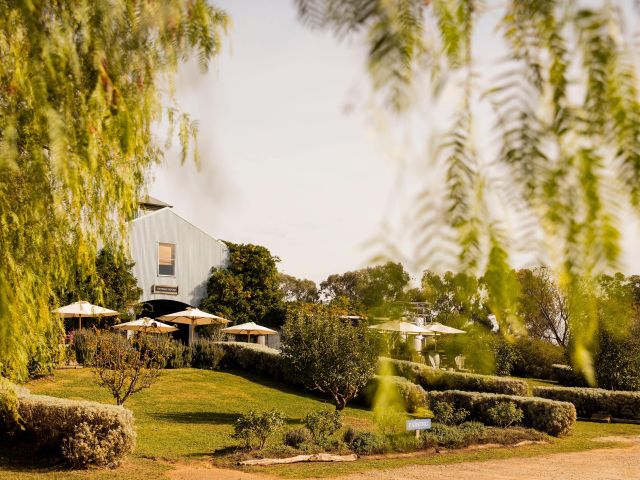
    exterior of lower wines in mudgee nsw
    Visit some of Mudgee’s best wineries. (Credit: Destination NSW)

    Nestled by the Cudgegong River, Mudgee packs a big punch for a heritage country town, having carved a reputation for itself as one of the country’s leading (and award-winning) wine regions, a key epicurean destination, and a regional arts centre growing in both visibility and vibrancy.

    Take a moment to enjoy the town’s 19th-century charm before heading to Lowe Family Wine Co. for a guided tasting of organic and biodynamic wine, followed by a relaxed lunch featuring a feast of homegrown and local produce. Will you walk away with bottles of Mudgee’s iconic reds under your arms? It’s a distinct possibility.

    7. Silverton

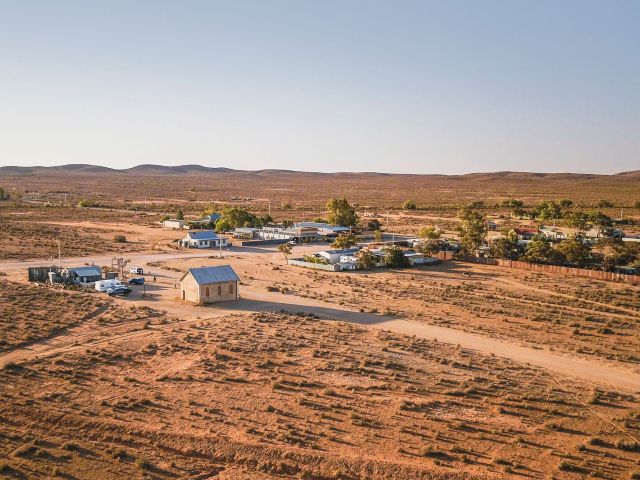
    see the living ghost town of silverton on AAT Kings new NSW outback tour
    See the living ghost town of Silverton.(Credit: Destination NSW)

    A once-booming silver mining hub, the dystopian setting for Mad Max 2, and now a tranquil settlement that’s home to around 50 people; Silverton is considered a living ghost town and remains a sight to behold.

    Take time to explore its heritage streets (and perhaps take a look at the quirky Mad Max 2 Museum) and the Silverton Hotel, an iconic outback pub, before a visit to Silverton Gaol & Historical Museum. It’s home to a wealth of colonial artefacts, early mining equipment and stories from the outback’s pioneering past which will serve to anchor you firmly in place.

    8. Shear Outback

    man working at shear outback in nsw
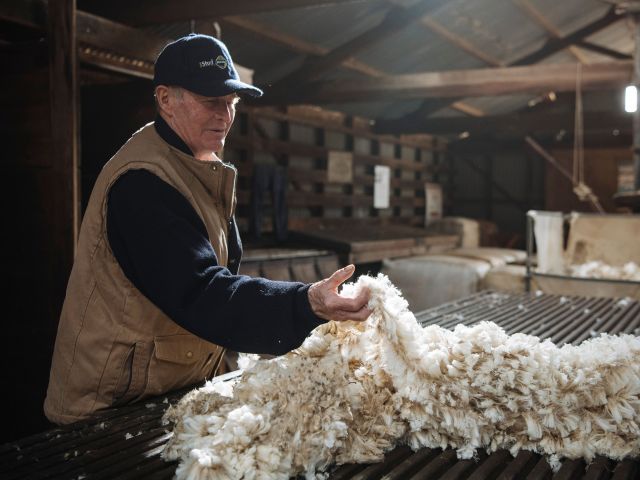
    Get a glimpse behind the wool curtain. (Credit: Destination NSW)

    If you ever find yourself singing, “click go the shears boys, click, click, click…”, you’ve come to the right place. Shear Outback, an award-winning tourist and education attraction located in Hay, brings to life the traditions and stories of one of the outback’s most enduring industries: sheep shearing.

    Here, in the heart of the Riverina, you’ll enjoy live shearing demonstrations, meet the shearers, shedhands, sheepdogs and yes, sheep, who come together to show guests exactly what it takes to provide Australians with all that glorious wool.

    Discover more of Outback NSW with AAT Kings. Visit aatkings.com.