hero media

The best hikes for whale watching in NSW

Credit: S Blanch

Spot gentle giants along these picturesque coastal trails.

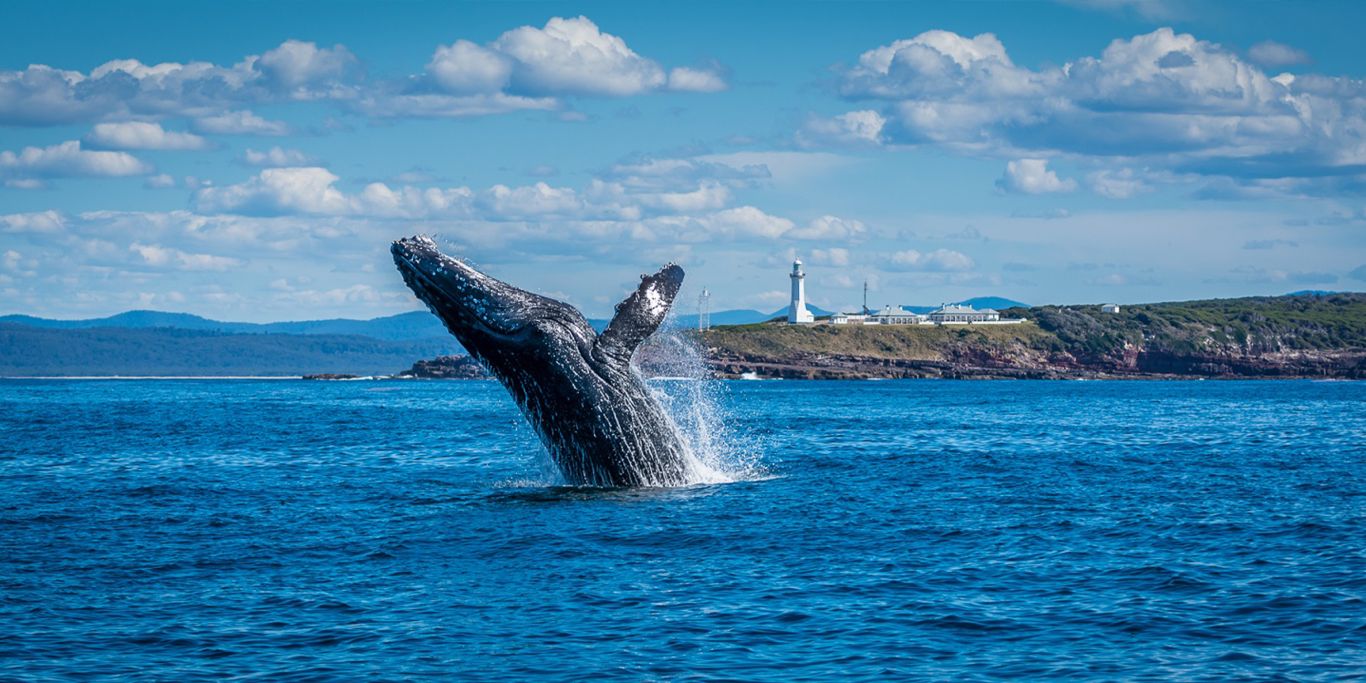
Whale watching season on the NSW coast is well and truly here, with some 40,000 eastern Australian humpback whales estimated to be making the yearly migration from Antarctica to the Great Barrier Reef. While getting up close on a whale watching tour offers the most thrilling viewing experience, you can easily spot these gentle giants playfully thrashing in the ocean from the shoreline.

The NSW coastline is abundant with national parks and reserves that have spectacular walking tracks for both beginner and keen hikers. Taking adventurers to clifftop lookouts and across headlands, these short jaunts and multi-day journeys offer front-row seats to this fascinating natural phenomenon.

Cape Baily walking track – Kamay Botany Bay National Park
Cape Bailey track
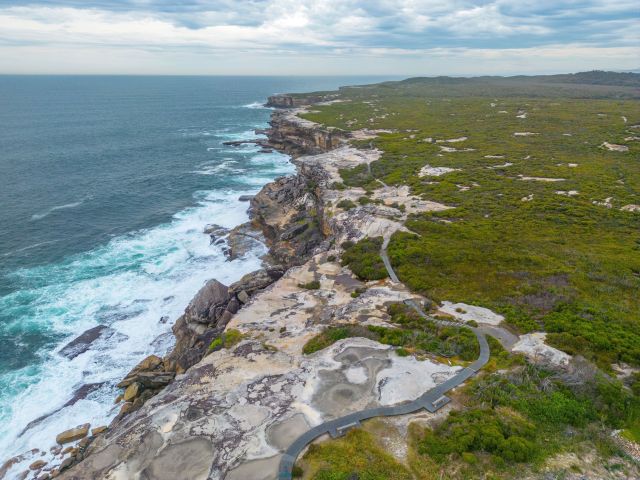
The Cape Bailey track features spectacular clifftop vantage points. (Credit: J Spencer DCCEEW)

Distance: Eight kilometres return

Difficulty: Easy 

Suggested time: Approximately three hours

Starting at Cape Solander in Kurnell, Cape Baily and ending at the Cape Bailey Lighthouse, this eight-kilometre track is less than an hour’s drive from Sydney CBD. It features clifftop lookouts and a viewing platform where whales have been spotted just 200 metres away, with June and July being the peak months to see them. Along the way, you’ll pass dramatic sandstone formations and coastal heath and may spot dolphins, seabirds and native wildflowers.

Fairfax walk – Sydney Harbour National Park
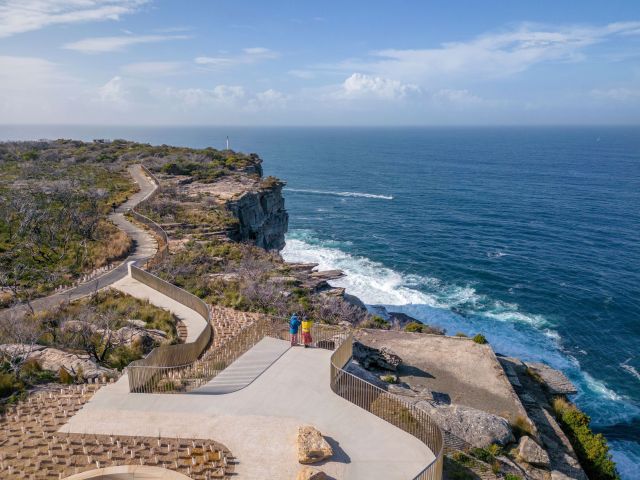
People on the Fairfax walk
The Fairfax walk offers some of Sydney’s best whale watching sighting opportunities. (Credit: J Spencer DCCEEW)

Distance: One-kilometre loop

Difficulty: Easy

Suggested time: 30 minutes to one hour

This gentle walk in Manly starts at the end of North Head Scenic Drive and loops around the top of North Head. One of the best spots in Sydney for whale watching, it offers panoramic ocean and harbour views, best enjoyed from the two lookout points. Those looking to extend their adventure can continue further as this walk forms part of The Bondi to Manly Walk. This family-friendly track is suitable for prams and wheelchairs.

Need tips, more detail or itinerary ideas tailored to you? Ask AT.

AI Prompt

Bouddi coastal walk – Bouddi National Park
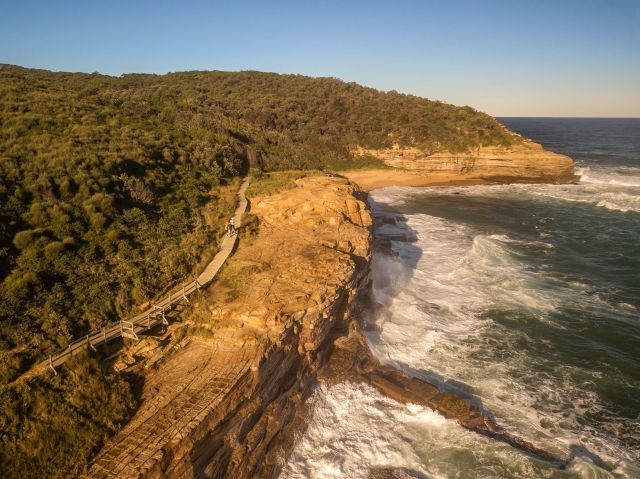
Bouddi coastal walk – Bouddi National Park
This idyllic walk is hidden in Bouddi National Park. (Credit: J Spencer DCCEEW)

Distance: Eight kilometres one way

Difficulty: Moderate

Suggested time: Three-and-a-half hours one way

Located an hour and a half north of Sydney CBD, the Bouddi coastal walk is a beach-to-beach hike, starting at Putty Beach and ending at MacMasters Beach. Whales can be spotted from most of the track, with the best vantage point being the Gerrin Point lookout. The full return hike can be completed in a day (camping also available), or it can be broken up into shorter hikes, including the Putty Beach to Maitland Bay three-kilometre walk. The national park is home to Aboriginal sites, one of the country’s first protected marine areas, the PS Maitland shipwreck and wildflowers. 

Tomaree Coastal Walk – Tomaree National Park
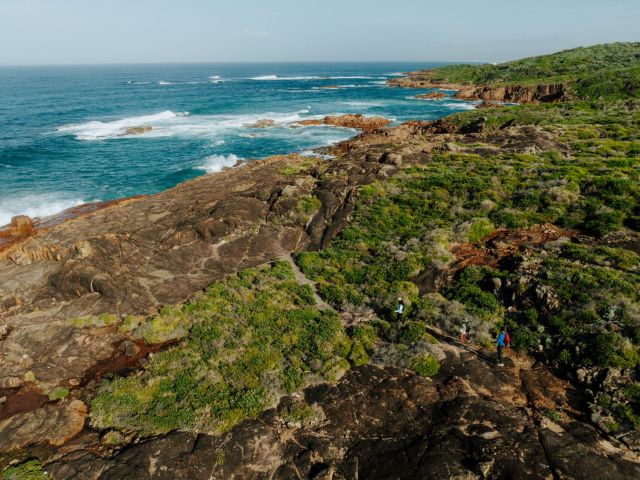
Tomaree coastal walk
Traverse ancient volcanic headlands, pristine beaches and coastal heathland. (Credit: D Parsons DCCEEW)

Distance: 27 kilometres one way

Difficulty: Moderate

Suggested time: two to three days

Stretching 27 kilometres of coastline in Port Stephens, this picturesque walk takes hikers across ancient volcanic headlands, pristine beaches and coastal heathland. One of the NSW Great Walks, it’s best experienced over two to three days, but can also be broken up into shorter sections. A 161-metre walk up to Tomaree Head Summit reveals spectacular views out to the ocean where humpbacks breach and out to Cabbage Tree Island and Boondelbah Island.

Walgun Cape Byron walking track – Walgun Cape Byron State Conservation Area

Distance: 3.7-kilometre loop

Difficulty: Easy

Suggested time: One-and-a-half hours 

You’ll be joined by the Byron Bay regulars on this much-loved walk, where whale sightings are practically guaranteed from May to October. The 3.7-kilometre circuit, which passes Byron Bay Lighthouse, meanders through rainforest and along clifftops and beaches, showcasing unforgettable NSW North Coast views. Dolphins and sea turtles are also regularly spotted from this walk. 

Weekly travel news, experiences
insider tips, offers, and more.

Murramarang South Coast Walk – Murramarang National Park
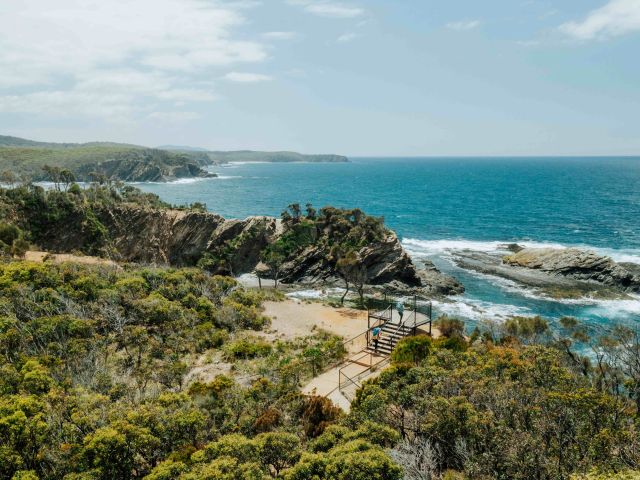
Murramarang South Coast Walk – Murramarang National Park
The trail stretches from Ulladulla to Batemans Bay. (Credit: R Brand DCCEEW)

Distance: 34 kilometres

Difficulty: Moderate

Suggested time: Three days

Designed to be tackled across three days, this NSW South Coast hike between Ulladulla and Batemans Bay reveals spotted gum forest, secluded beaches, dramatic rock platforms and crystal-clear water. Alongside seeing whales from coastal lookouts, dolphins, seabirds, and eastern grey kangaroos are common sightings. Hikers choosing to do the full hike can stay in cabins along the way or join a guided tour staying in private villas.

Light to Light Walk – Beowa National Park
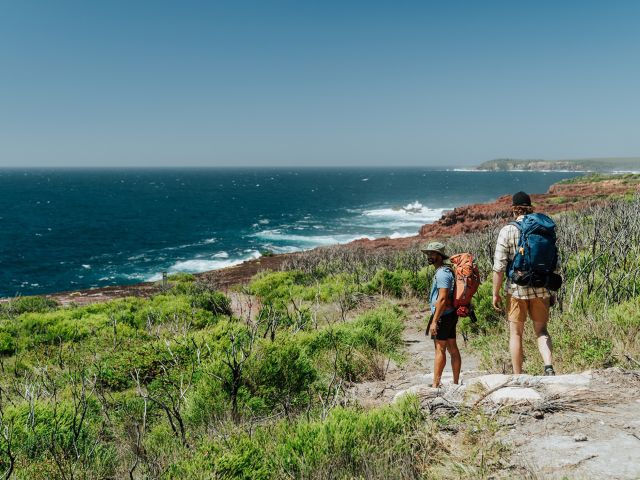
Light to Light Walk – Beowa National Park
The Light to Light walk received a significant upgrade in 2025. (Credit: R Brand DCCEEW)

Distance: 32 kilometres

Difficulty: Moderate

Suggested time: Three days

This multi-day hike near Merimbula and Eden on the Far South Coast of NSW reopened with new campgrounds and track sections last year. The significant upgrade has made it a must-do for hikers who are guided to rugged headlands, sheltered bays and fantastic whale-watching lookouts at Boyds Tower and Green Cap.  The best whale watching is from September to early December when humpback whales migrate back down to Antarctica. 

Rachael Thompson
Rachael Thompson is Australian Traveller's Evergreen Editor and Hotel Addict. She's responsible for the foundational content on AustralianTraveller.com, helping to manage and grow the brand’s destination guides. With a background in design and travel media, Rachael is dedicated to curating content that is as much informational as it is beautiful. She began her career at Belle magazine, before taking up editorial roles at Homes to Love and Bed Threads. When she's not writing, editing or optimising content, Rachael enjoys exploring the city's newest restaurants, bars and hotels. Next on her Aussie travel wish list is Lord Howe Island.
View profile and articles
hero media

This surprising regional town is making its mark on the culinary world

(Image: Visit Griffith)

    Carla Grossetti Carla Grossetti
    With more than 60 nationalities calling it home and a century of Italian influence shaping its paddocks and plates, Griffith is a regional Australian town with serious culinary cred.

    It might feel surprising to learn that Griffith is one of Australia’s leading food destinations. In-the-know Italians have understood this for generations, drawn to the Riverina region’s fertile soils that reminded them of the terrain they’d left behind more than a century ago. These days, Griffith supplies much of the nation’s pantry: 95 per cent of Australia’s prunes come from the region, it’s the country’s largest citrus-growing area, and it’s a leading producer of almonds and walnuts. Even the pickles in every McDonald’s burger nationwide are produced in Griffith. This is not just a farming town; the Griffith food scene is leading the way.

    Here, culinary confidence is rooted in migration. Italian families began arriving from 1913, with a second wave settling after the Second World War. Today, Griffith has the highest proportion of Italian ancestry of any Local Government Area in Australia. Add to that more than 60 nationalities represented across the community and you have a town where food is driven not by trends, but by tradition. Griffith’s motto, ‘Taste our culture’, isn’t marketing spin; it’s the reality.

    Where the vines tell a story

    A hand pouring wine into a glass, with a table filled with food.
    Uncover the stories behind every glass. (Image: Destination NSW)

    The Riverina has long been dubbed the food bowl of Australia, but it’s also a wine region that remains largely under the radar. What sets Griffith apart is that every one of its wineries is family-owned, many spanning generations.

    Calabria Family Wines is one of the region’s standard-bearers. The Calabria story began in 1945 when Francesco Calabria planted his first vines; today, the family continues to shape the region’s identity while also stewarding the historic McWilliam’s Wines brand. McWilliam’s was the first winery to plant vines in the area, and its barrel-shaped cellar door – complete with a soaring stained-glass window – remains one of the most distinctive in regional NSW.

    Yarran Wines, run by the Brewer family, showcases estate-grown fruit across Mediterranean varietals that thrive in the warm climate. Expect bold reds and textured whites that reflect both heritage and innovation.

    Set inside the old ambulance station, Harvest HQ is owned and operated by the Riverina Winemakers Association and pours a rotating selection of local wines under one roof. It also features spirits from The Aisling Distillery, reinforcing the region’s collaborative approach to craft.

    At the table

    A flat lay of a steak.
    Dine where tradition meets a bold new generation. (Image: Visit Griffith)

    If the vineyards tell one story, the dining rooms tell another. Griffith’s restaurants are where tradition and next-gen confidence meet.

    Zecca Handmade Italian occupies the former Rural Bank building, an imposing Art Deco landmark from the late 1930s. ‘Zecca’ means money print, and the name is a nod to the Zecca di Venezia in Venice. Here, find the Riverina’s only producer of dried artisan pasta and traditional Italian recipes. Importantly, the growers and producers supplying the kitchen are listed on the menu as a transparent expression of the region’s farm-to-table ethos.

    Established in 1977 and still run by the Vico family, La Scala puts authentic Italian cuisine on centre stage. Expect handmade pasta, traditional wood-fired pizzas, slow-cooked sauces and dishes that follow recipes guarded like family heirlooms. For something more contemporary, Bull & Bell in Gem Hotel is a shrine to the Euro-style steakhouse that works closely with local farmers and artisans to showcase Riverina produce.

    And then there are the institutions. Bertoldo’s Pasticceria, now in its third generation, draws locals daily for cannoli, biscotti, crostoli and house-made gelato, alongside classic sausage rolls and potato pies. La Piccola Grosseria feels like stepping into an Italian alimentari, its shelves lined with continental goods that wouldn’t feel out of place in Puglia.

    Meanwhile, Limone celebrates local and seasonal produce across breakfast and lunch menus, enriched by the produce and stories of Piccolo Family Farm. Find pastries and sourdough baked daily, and pop into the onsite retail pantry for products from regional producers – including the Piccolo family’s own wine range, Caro Piccolo.

    From the source

    A plated Aquna Sustainable Murray Cod dish.
    Taste world-renowned Aquna Sustainable Murray Cod, straight from its source. (Image: Visit Griffith)

    Behind every menu is a producer. Aquna Sustainable Murray Cod is perhaps Griffith’s most high-profile export; the brand’s Murray cod and Aquna Gold Murray Cod Caviar have achieved global recognition. In October 2024, Aquna presented its products to King Charles III and Queen Camilla at the NSW Premier’s Community BBQ in Parramatta. Impressed by the producer’s sustainable farming practices, the King requested the cod be sent to Buckingham Palace – not bad for a fish farm in regional NSW.

    Mandolé Orchard champions almonds grown on a family-run farm, transforming them into almond milk and value-added products. At Morella Grove, olives are pressed into premium olive oil and pantry staples that speak to Griffith’s Mediterranean heart. These producers are not peripheral; they are central to the town’s culinary ecosystem. Learn about local sustainable farming practices during a farm tour.

    Mark your calendar

    A woman walking past a food mural, something you can spot during A Taste of Italy Griffith.
    Plan your visit around A Taste of Italy Griffith. (Image: Visit Griffith)

    For a town that helps stock Australia’s supermarkets, Griffith has remained curiously absent from the national dining conversation. That’s beginning to change. If you’ve been searching for a regional food destination with substance, heritage and a clear sense of identity, you’ll find it here in the Riverina, right under your nose.

    Time your visit to the Riverina region to coincide with A Taste of Italy Griffith, held every August. This week-long celebration of Italian heritage and culture offers a wide range of Italian-inspired events and experiences to enjoy. Expect long-table lunches, wine tasting experiences, cooking classes and a Makers in the Piazza market. The headline event is a ticketed long lunch – Festa delle Salsicce (Salami Festival) – where winners of the best salami are announced.

    Start planning your foodie getaway at visitgriffith.com.au.