The incredible story behind the tiny Broken Hill Mosque

hero media
The astonishing story of Broken Hill’s tiny cameleer mosque spans the outback, oceans and generations, as Steve Madgwick discovers.

You won’t see fleets of grey nomads parked outside the curious brown corrugated shed at the end of a palm-flanked gravel driveway on the petering northern fringes of Broken Hill. Perhaps because the outback-spanning sagas that radiated from Broken Hill Mosque mostly fell outside the white-settler ‘Aussie’ narrative, lucky to receive even a cursory mention in our highschool history lessons. 

The Broken Hill Mosque Museum is located on the corner of Williams and Buck streets. To see inside the museum, you have to contact 82-year-old curator and caretaker Amanullah Shamroze. Bobby, as he’s been called for as long as he can remember, unlocks the door and, in doing so, unshackles the story of Broken Hill’s ‘Afghan’ cameleers. 
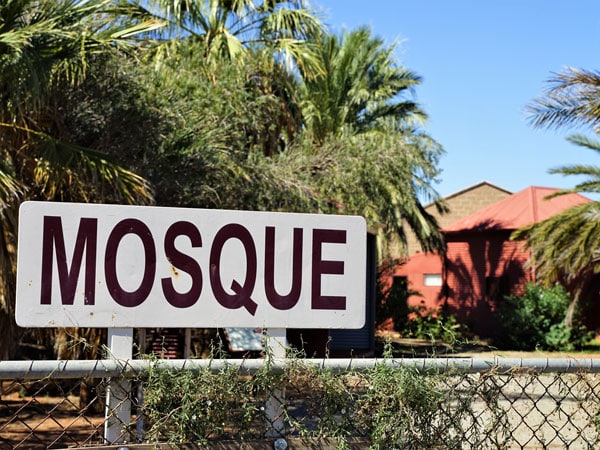
the outside signage of the Broken Hill Mosque
The mosque was built in 1891. (Image: Steve Madgwick)

The son and grandson of outback-building camel drivers, Bobby’s insight is rare and precious indeed. From the 1860s, the cameleers and their camels were shipped into Australia’s interior from India, Afghanistan and beyond. They became the backbone of the pre-railway outback transportation network, playing under-rewarded roles in building continent-traversing projects such as the Trans-Australian Railway and the Adelaide to Darwin Overland Telegraph Line.
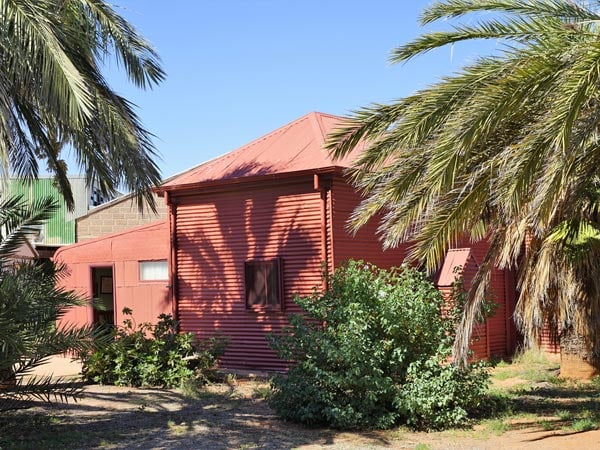
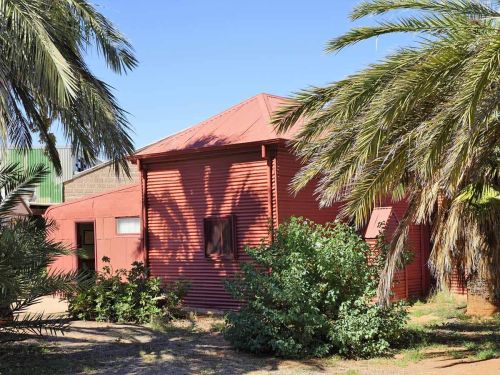
the exterior of Broken Hill Mosque
The mosque functions as a museum. (Image: Steve Madgwick)

The story behind the ‘Afghan Mosque’

The ‘Afghan Mosque’ was considered the spiritual hub of the cameleer camp that mushroomed on Broken Hill’s peripheries, just as the frontier town in far-western NSW was establishing itself as a key outpost in the crossroads of outback Australia. Because the cameleers lived on the fringes of society, however, the facts of their stories have been bent and stretched by time. 

“Some say the mosque was built in 1883, others say 1887, and I’ve also heard 1891, too," says Bobby of Australia’s oldest surviving ‘Ghan-town’ mosque. “I’m not quite sure, but it’s somewhere between those figures." 

Outside stands a vintage camel-drawn wagon, the semitrailer of its day, which may have even hauled the mosque’s corrugated iron inland from the coast. Past a small channel for ceremonial feet washing, a memorabilia-rich antechamber leads into the prayer room, with its faded mint-green pressed-metal walls, two rows of prayer mats and pair of Qurans resting on ornate wooden stands.
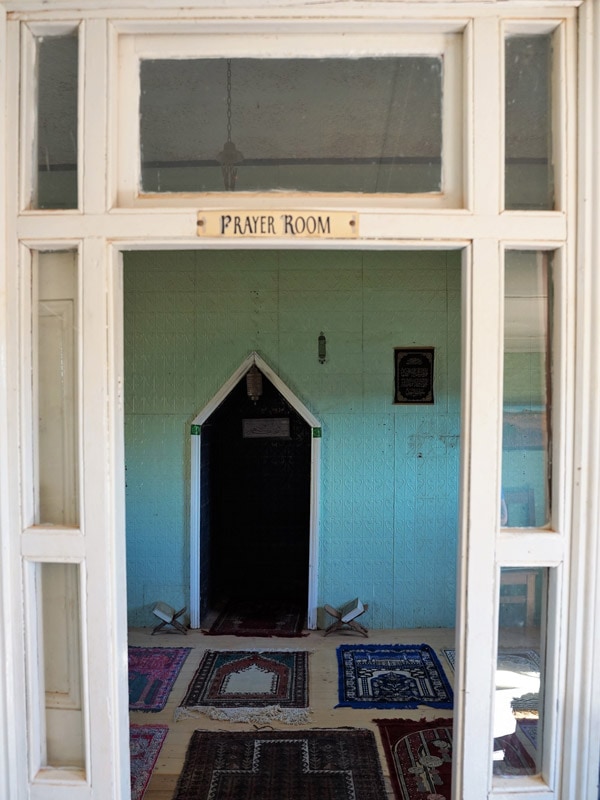
the door leading to the prayer room inside Broken Hill Mosque
The Prayer Room offers insights into Broken Hill history. (Image: Steve Madgwick)

Need tips, more detail or itinerary ideas tailored to you? Ask AT.

AI Prompt

Pioneer worshippers

Bobby’s father, Shamroze Khan, and grandfather, Fazulla Ziadulla, worshipped here. But the rest of their wayfaring lives are hard to pin down. “Strangely, Dad never ever said where he actually came from, never mentioned any family. Even my grandfather said nothing about him really." 

Bobby knows more about Grandpa’s story. Among surviving black-and-white photographs is one showing Fazulla outside his old house in the Punjab city of (then) Campbellpur, India (which became Attock, Pakistan, after the 1947 partition). He has been told that his father and grandpa came out together to Australia, but Bobby believes they arrived on different ships. 
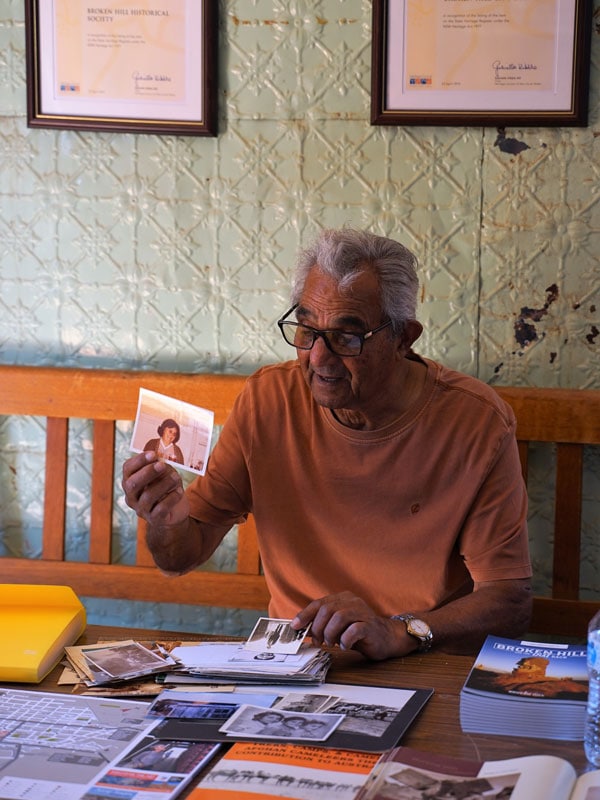
Bobby (Amanullah) Shamroze sharing the photos of his life
Bobby (Amanullah) Shamroze shares snapshots of his storied life. (Image: Steve Madgwick)

Grandpa’s boat apparently docked in Fremantle, while his father’s first stop was either Port Pirie, South Australia, or Port Albert, Victoria. “It must have been [Dad’s] first stop because he [met] his first woman down there. She was a governess, apparently, at some property. They must have got on together and took off together." 

Bobby’s father would buy camels “off the boat" in Port Augusta and then walk them 400 kilometres east to Broken Hill. “There was no other way to get them there. When they were building the railway line between Port Augusta and Marree [SA], he and a team carted all the water and shifted the camps."
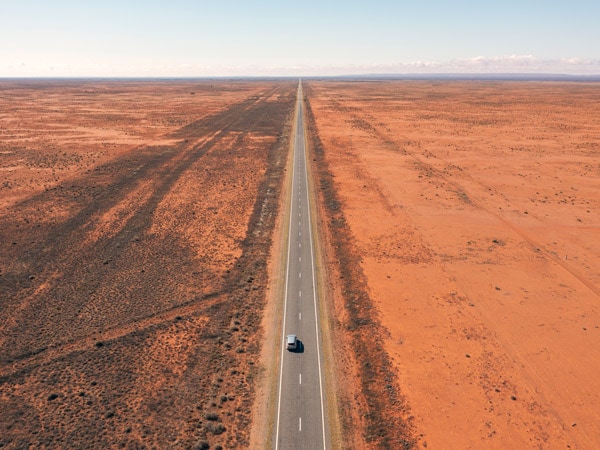
an aerial shot of a vehicle driving in the outback near Broken Hill
Broken Hill is home to some of Australia’s toughest terrain. (Image: Destination NSW)

His dad apparently stashed enough cash as a camel dealer to buy “seven or eight houses" in Broken Hill “back when you could get one for 200 pounds." But Bobby didn’t fare so well, especially after his mum left when he was just four. He blames his parents’ split on the age difference: 62 (dad) versus 24 (mum) when Bobby was born.

“It was a bit rough after Mum went. I ran away a few times. When I was seven or eight, I jumped on the train to Adelaide to look for Mum. I’d been down there with my father visiting the Adelaide Mosque. You could go for a month and no one would worry about you. Not like today. And I’d always have a couple of bob on me, to buy a pie or something."
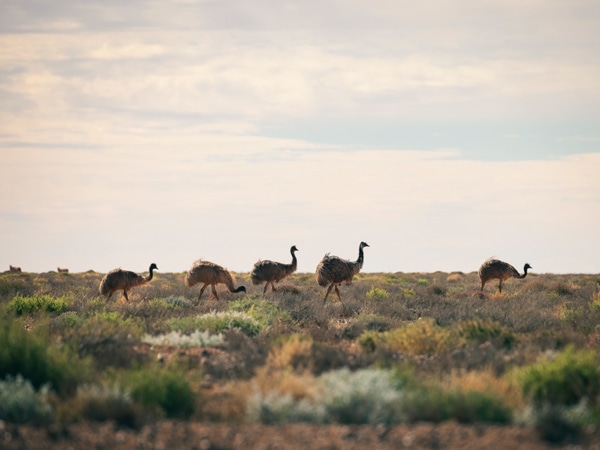
a parade of emus in Broken Hill
Emus on parade in Broken Hill. (Image: Destination NSW)

Weekly travel news, experiences
insider tips, offers, and more.

The rise of cameleers in town 

Bobby bounced around for a while, sporadically staying with his mum (who he found working in a pub) and going to school in Adelaide. When his dad died in 1950, “welfare grabbed him", before a relative eventually helped Bobby return to Broken Hill.

He lived with his grandfather briefly, before becoming a shearer and wool-presser out on a remote station, settling back into ‘the Hill’ in the mid-1960s with life partner Janet, lured by work in the mines.
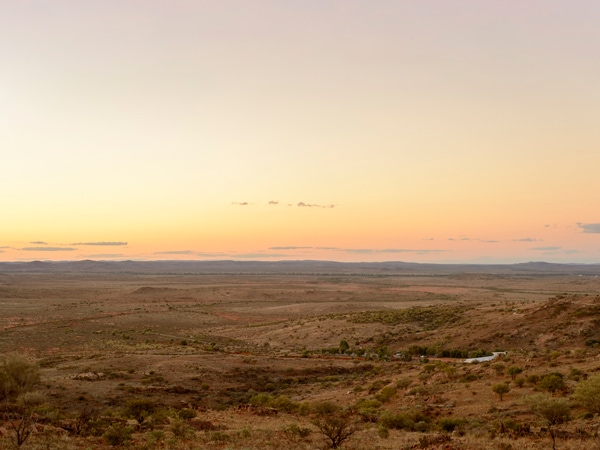
views across the outback desert, Broken Hill
There were about 400 cameleers living in Broken Hill in the early 1900s. (Image: Destination NSW)

After four decades as a place of worship, the mosque began to lose its worshippers in the late 1920s, as trains and trucks made camel transport redundant. Of the estimated 100 cameleers in town, many returned to the subcontinent, while others found work on stations, as tradesmen or in the mines (as Bobby’s dad and grandpa also did). 

After Broken Hill’s last practicing Muslim passed away, the mosque became little more than a cubbyhouse for local kids, eventually “rescued" by the Broken Hill Historical Society in and made into a museum a year later. Bobby agreed to be its custodian 12 years ago, under the condition that “they do a few things", such as putting up fences around the property.
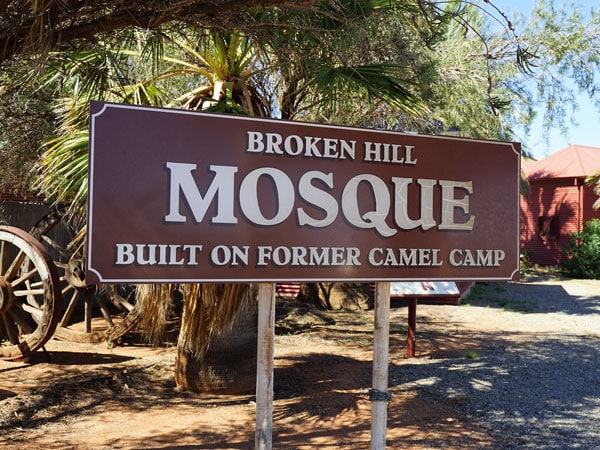
a signage saying Broken Hill Mosque was a former camel camp
The Broken Hill Mosque is built on a former camel camp. (Image: Steve Madgwick)

A familial connection with the mosque 

“There was no one left to do it, and I’d collected a lot of information. But since then, I’ve had three operations so they’re worrying about me dying." Bobby’s connection with the mosque has always been more familial than spiritual. “I’m a ‘bush Baptist’. When I was in the boys’ home, I went to a different church every week. I don’t even follow the language, but I’m here to keep the history and try to get a bit of a name for the old camel drivers who worked this country." 

Bobby’s brother and sister are gone now, and he’s “outlived" his mum’s family, too. He’s willing to pass on the mosque responsibilities to any of his three children or seven grandchildren but “only if they want to do it". 

For now, every time Bobby gets a call from a visitor or occasionally someone wanting to pray, the octogenarian travels the couple of kilometres from home to retell his stories, to the best of his recollection. He holds the photo of Grandpa close to him; a window into the indistinct past, and a tactile memory that might just help “keep the cameleer legacy alive for another generation." 

hero media

Your guide to what’s new and exciting this summer on the Central Coast

    Kassia Byrnes Kassia Byrnes
    From serene natural beauty to vibrant nightlife, with plenty of arts and culture in between, the NSW Central Coast has been enjoying a serious glow up.

    Just one hour from Sydney, the Central Coast has long been the perfect seaside getaway. And with its ECO Destination certification with a focus on sustainability, it’s a trip travellers can feel good about, too. Recently, new and exciting openings have turned the Central Coast into a place where incredible natural beauty is still on the table, but so is a vibrant and sophisticated arts, dining and nightlife scene.

    Find out what’s new to discover on the Central Coast.

    1. Gosford’s glow up

    room at voco gosford
    Book into voco and experience the best of Gosford.

    Long-time Central Coast lovers will hardly recognise Gosford these days. While always boasting gorgeous water views, a range of revamps and new openings have turned it into a busy hub of arts and culture, with an increasingly diverse and vibrant nightlife.

    Landmark lifestyle hotel voco Gosford is the perfect home base for a Central Coast getaway. At this IHG hotel overlooking sparkling Brisbane Water, guests can spend sunny days soaking in the rooftop pool (or just sipping a cocktail beside it). When it comes to meals, you can enjoy multiple venues serving up everything from modern Australian fare to fine-dining Japanese.

    Venture out to lay eyes on the Central Coast’s first permanent Moving Image Gallery (MIG). Opened this year inside the Gosford Regional Gallery, the immersive space is a showcase of screen-based and digital art. While at the gallery, wander around the Edogawa Commemorative Garden, a traditional Japanese strolling garden complete with teahouse, koi pond and an ornamental bridge.

    Meanwhile, the revamped Gosford Regional Library has even more than books to discover. Now, it’s one of the best in the southern hemisphere – find exhibitions, historical archives and community initiatives for all ages at this perfect family-friendly escape.

    2. Newcomers to the dining scene

    table full of food at Amarilla restaurant terrigal
    Treat yourself to sundowners and snacks at Amarilla.

    The Central Coast has long been the perfect destination for gourmands, with everything from casual eats to fine dining elevating the local offerings. And three new destinations have been added to the map.

    Amarilla at The Haven in Terrigal is the perfect seaside venue for sundowners, with blissed-out beats providing the soundtrack. Book in for golden hour and choose bites from a Spanish tapas menu made for sharing. Do as the locals do and wash it all down with sangria – the Sunday Sangria Sessions have become a local institution.

    Also in Terrigal, Little Miss has brought a premium Mediterranean menu to the waterfront. Try the wagyu tartare with Greek caviar or butter-poached lobster and tomato bisque, paired with inventive cocktails and a handpicked selection of Lebanese wines.

    Over in Ettalong, Bar Toto is perfect for pre- or post-dinner drinks. This award-winning cocktail bar is known for its creative concoctions, along with craft beer, wine and antipasti platters to snack on. The interior sets the mood, with dim lighting and wooden furnishings.

    3. New Central Coast experiences

    winemaker at Firescreek Botanical Winery
    Book an experience at Firescreek Botanical Winery.

    It’s entirely possible (and recommended) to spend a Central Coast getaway relaxing on one of its many peaceful and pristine beaches. But for those who crave more, there’s a long list of options to keep you busy.

    Pop into the iconic Australian Reptile Park to see the new Weigel Venom Centre, a state-of-the-art facility that’s home to over 200 of the country’s most venomous snakes.

    Get out on the water with Sail Central Coast, which offers 20 years of expertise in yacht charters. Book the Sunset Sail & Dine yacht charter for a private afternoon cruising the waterways of Bouddi National Park and Brisbane Water, stopping at Anchor on Hardys for a two-course meal with a cocktail.

    For something completely different, Firescreek Botanical Winery is now offering an Aboriginal Storytelling and Wine Tasting Experience. Learn about local cultures, stories and traditions from an Aboriginal Elder, then enjoy a botanical-inspired wine tasting led by a local winemaking expert.

    4. Central Coast accommodation

    view from a cottage at Noonaweena
    Sleep in the hinterland at Noonaweena.

    There’s simply too much to experience on the Central Coast to only stay for one day. Turn your trip into a relaxing getaway by the beach.

    Allawah, a retreat on the banks of the Hawkesbury River, is accessible only by boat. This secluded two-bedroom cottage is the perfect place to unwind, allowing you to spend lazy days fishing, kayaking, paddling or unwinding with a book on your own private jetty.

    In the Kulnura hinterland, Noonaweena features a range of accommodation styles, from a luxe glamping bell tent to cottages and a treetop suite. It’s a leader in green travel, with 10 years of certification from Eco Tourism Australia. Relax in the onsite wellness centre or get active on various courts and in the gym facilities.

    To stay by the ocean at Toowoon Bay, book into Kim’s Beachside Resort. This adults-only property offers a luxury escape nestled within a sub-tropical rainforest. Along with 36 private timber bungalows, indulge in massages or reiki treatments at the dedicated spa, or stop by the cocktail bar and à la carte restaurant.

    5. Shopping on the Central Coast

    Umina’s Centred Ceramics central coast
    Try your hand at Umina’s Centred Ceramics’ pottery courses.

    For those after unique trinkets, handmade treasures and beautiful homewares, the Central Coast is a haven.

    Markets on the Central Coast have a special flavour. Wander the Umina Beach Markets at twilight, where you’ll find small businesses from the local areas, and the Norah Head Ocean View Markets, where you can soak up good food, live music and artisan finds by the beach after sunset. ‘Tis the season for the Christmas twilight edition of the Avoca Beachside Markets, celebrating the season with pop-up bars, tasty treats and plenty of unique gift options from local artists and producers.

    Galleria Ettalong has also added to the Central Coast’s recent makers and creators renaissance, wrapping cinemas, a dining precinct and over 40 boutique shops into one area.

    Sign up for a pottery course at Umina’s Centred Ceramics, or peruse the shop for a range of one-of-a-kind pottery made on the premises for a special souvenir.

    For more eclectic arts and homewares, pop into Blue Bird Collective Co. This marketplace supports over 35 small, local and handmade businesses, artists and creatives. Take the time to check out fashion, jewellery and homewares that won’t be found anywhere else.

    Start planning your coastal getaway at lovecentralcoast.com.