The ultimate Cairns to Darwin 14-day road trip itinerary

hero media
Adventure through the eastern side of the Savannah Way from Cairns to Darwin.

Starting in Tropical North Queensland and finishing in the Northern Territory’s vibrant capital, the Cairns to Darwin road trip is an epic 2600-kilometre journey of a lifetime passing through an incredibly diverse landscape.

Taking around 40 hours to drive with fascinating stops and detours along the way, the eastern half of the Savannah Way is a unique opportunity to uncover the unexpected and discover tiny townships, relax in hot springs, look around in awe at ancient gorges, and wander through stunning national parks. If you’re up for a bigger challenge and want to take on the entire Savannah Way between Cairns and Western Australia, see our guide to the western half – Darwin to Broome.

Ready to jump right in? Here’s our 14-day road trip itinerary outlining the why, what, and where of how to explore from Cairns to Darwin.

Day 1: Cairns to Undara

Distance: 260 kilometres – around 3.5 hours.

Leave early and follow the Bruce Highway south from Cairns. Turn onto Route 52 into the rainforest-clad Atherton Tablelands . Take a break at Lake Eacham and admire Little Millstream Falls near Ravenshoe.
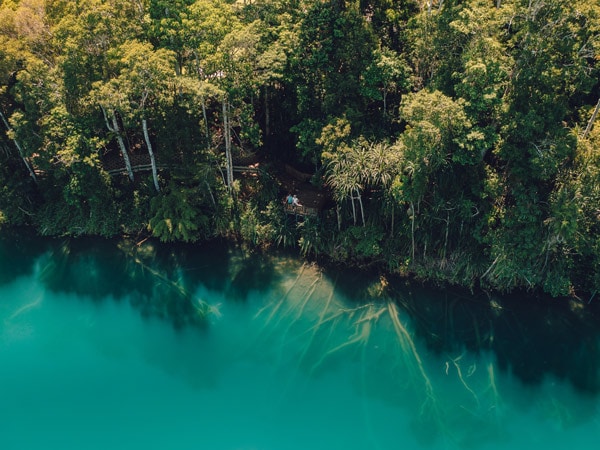
an aerial view of Lake Eacham
Take in the beauty at Lake Eacham. (Image: Tourism and Events Queensland)

You’re now on Route 1 (National Highway) all the way to Darwin. Continue west to the Undara Experience – try to arrive in time for a sunset wildlife tour. Accommodation here ranges from cabins to converted railway carriages and a campground.
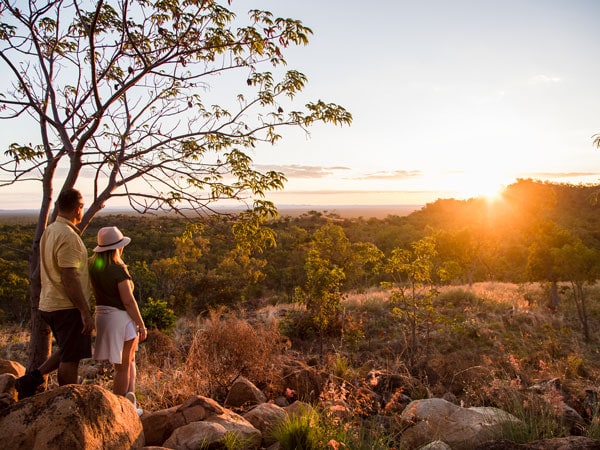
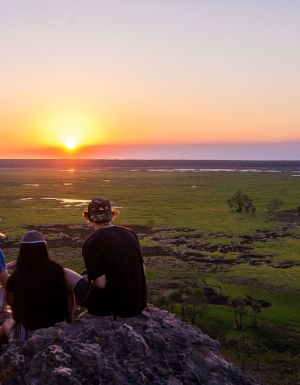
two people looking at the sunset during the sunset wildlife tour with Undara Experience
Immerse yourself in the wilderness at sunset with the Undara Experience. (Image: Tourism and Events Queensland)

Day 2: Undara

After yesterday’s long drive, start with a bush breakfast and relax in Undara Volcanic National Park where the outback begins and 164 ancient volcanoes pepper the landscape.
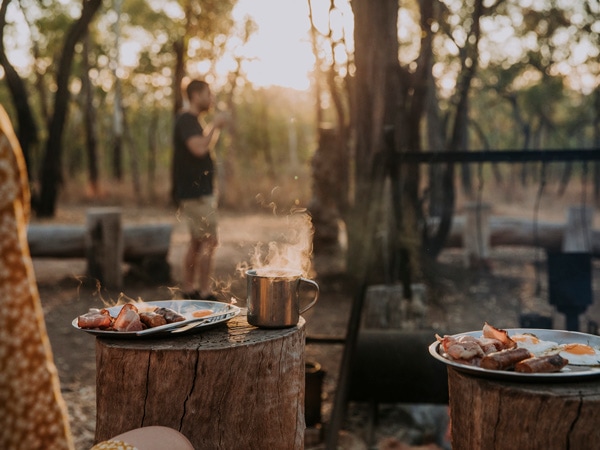
a person having breakfast in Undara
Refuel in the morning before exploring Undara. (Image: Tourism and Events Queensland)

Early morning is perfect for admiring the abundant birdlife before exploring the remarkable lava tubes. Finish with authentic country cooking and outback hospitality at the onsite Fettler’s Iron Pot Bistro.
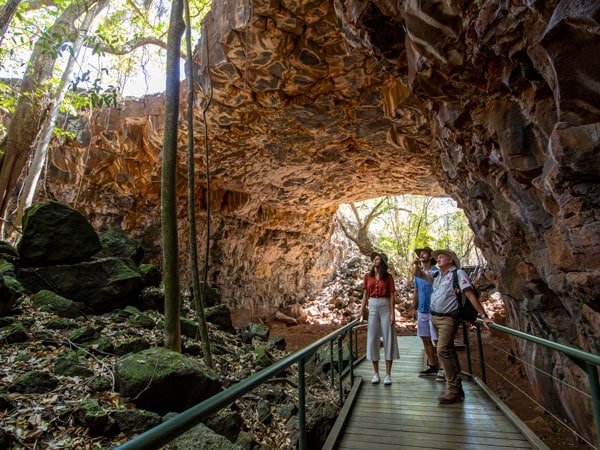
people exploring geological wonders during the Undara Experience tour
Explore the remarkable lava tubes. (Image: Tourism and Events Queensland)

Day 3: Undara to Cobbold Gorge

Distance: 250 kilometres – around 3.5 hours.

Continue west and you’ll come across Talaroo Hot Springs , one of Outback Queensland’s most extraordinary geological wonders. Its surreal landscape of pools combined with the Aboriginal hospitality of the Ewamian people is a wonderful experience. Join a guided tour to uncover the spring’s history and dip your feet in the healing water.
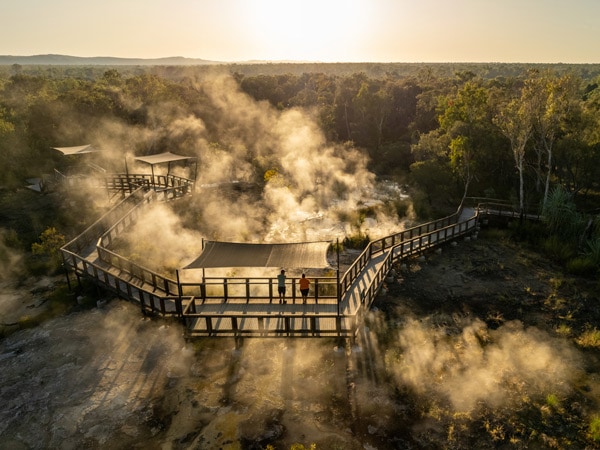
smoke coming from Talaroo Hot Springs
Don’t miss seeing Talaroo Hot Springs; a geological wonder hidden in the outback. (Image: Tourism and Events Queensland)

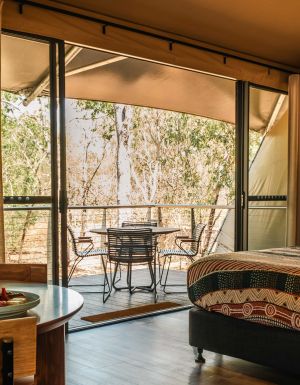
Make your way to Cobbold Gorge and stay the night at Gilberton Outback Retreat , where you can enjoy a little luxury at its infinity pool with a swim-up bar.
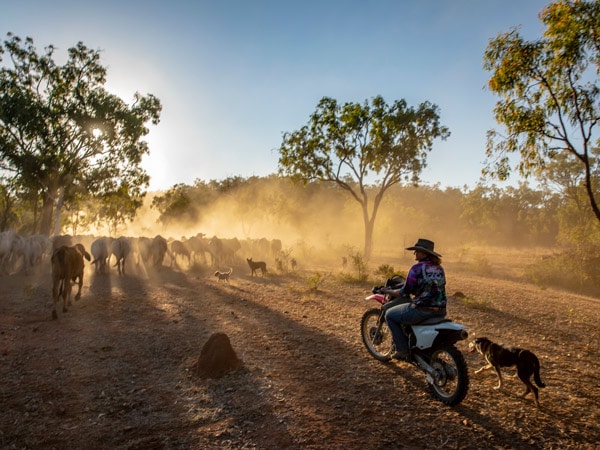
a man riding a motorcycle at Gilberton Outback Retreat
Get off-grid at Gilberton Outback Retreat. (Image: Tourism and Events Queensland)

Day 4: Cobbold Gorge

In the heart of the Gulf Savannah region, Cobbold Gorge is a true Outback Queensland destination well worth the stop. On a guided day tour, enjoy a cruise surrounded by sculpted red sandstone cliffs, walk atop its walls and across Australia’s first fully glass bridge, exploring the geological landforms along the way. With the rest of the day to spare, go bushwalking, bird watching, kayaking, mountain biking, or even treat yourself to a helicopter flight.
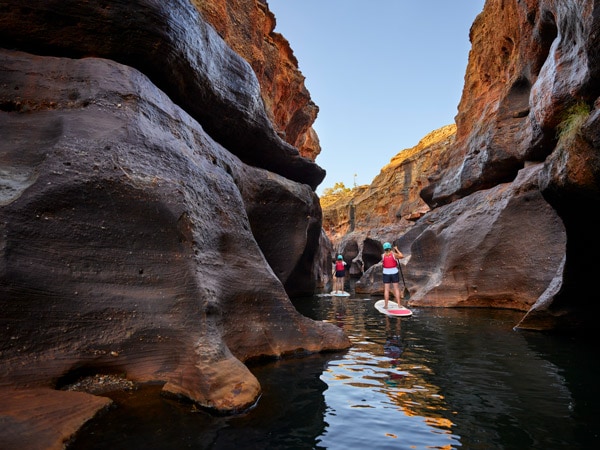
stand-up paddling amidst sandstone formations at Cobbold Gorge
Go stand-up paddleboarding at Cobbold Gorge. (Image: Tourism and Events Queensland)

Note: Cobbold Gorge is open seasonally from 1 April to 31 October – perfect for travelling in the dry season.

Day 5: Cobbold Gorge to Croydon

Distance: 230 kilometres – around three hours.

Back on the road again, you’ll pass through sleepy Georgetown on the Etheridge River, a former gold mining settlement. Stop in for a bite to eat and a quick visit to The TerrEstrial Centre to see the Ted Elliott Mineral Collection, a world-class exhibition of over 4500 minerals, gems, crystals and fossils.
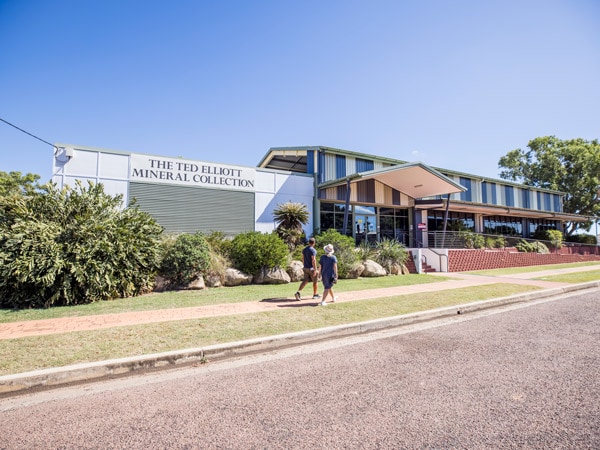
two people walking toward Ted Elliott Mineral Collection at TerrEstrial Visitor Information Centre
Visit the TerrEstrial Visitor Information Centre to see the Ted Elliott Mineral Collection. (Image: Tourism and Events Queensland)

Your destination for the night is the beautifully quaint town of Croydon , which also has a gold-mining history and an interesting heritage precinct. Grab a self-guide brochure from the True Blue Visitor Centre to explore the town’s police station, jail, Sergeant’s residence, town hall and courthouse.

If you prefer the great outdoors, Lake Belmore is close by for barramundi fishing and year-round recreational activities.
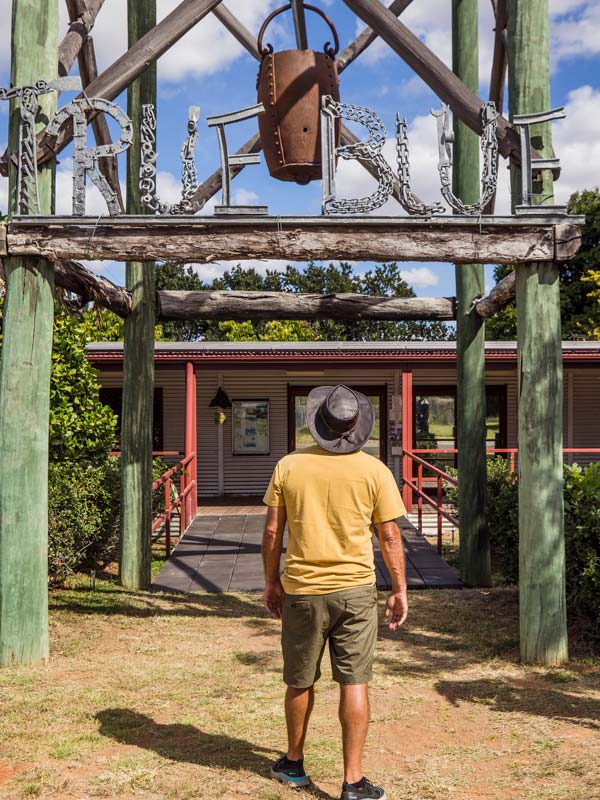
a man stopping by the True Blue Visitor Centre
Jumpstart your day by picking up info on Croydon at the True Blue Visitor Centre. (Image: Tourism and Events Queensland)

Day 6: Croydon to Karumba

Distance: 225 kilometres – around 2.5 hours.

The Savannah Way skirts the Gulf of Carpentaria, but this is one of a few chances to see the coast. First, pass through Mutton Hole Wetlands north of Normanton for stunning birdlife, including brolgas and black swans.
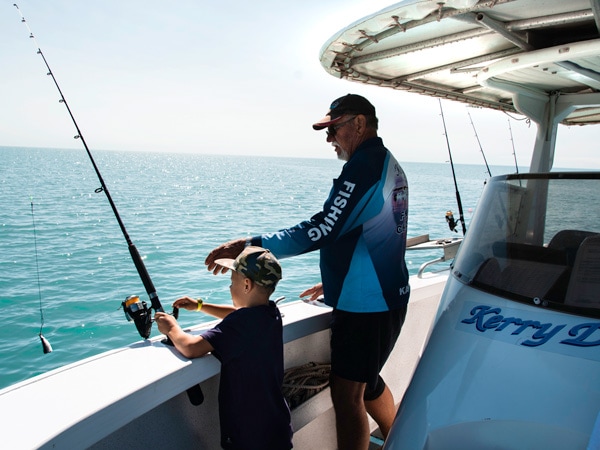
a father and son fishing at Karumba
Get out on the water at Karumba. (Image: Tourism and Events Queensland)

Karumba is a great spot to charter a fishing boat. Visit the fascinating Barramundi Discovery Centre and enjoy an evening meal at Sunset Tavern where the sun meets the sea.
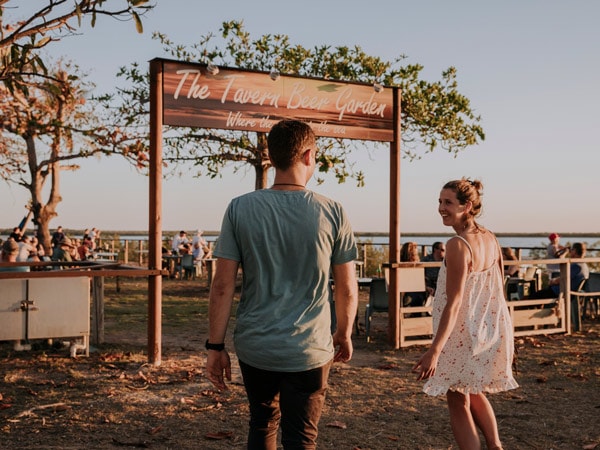
a couple heading to Sunset Tavern
The  Sunset Tavern is a beautiful spot to end the day. (Image: Tourism and Events Queensland)

Day 7: Karumba to Burketown

Distance: 370 kilometres – around 4.5 hours.

It’s hard to resist pausing in Normanton for a photo at its eight-metre crocodile (relax, it’s a replica) and bright Purple Pub .
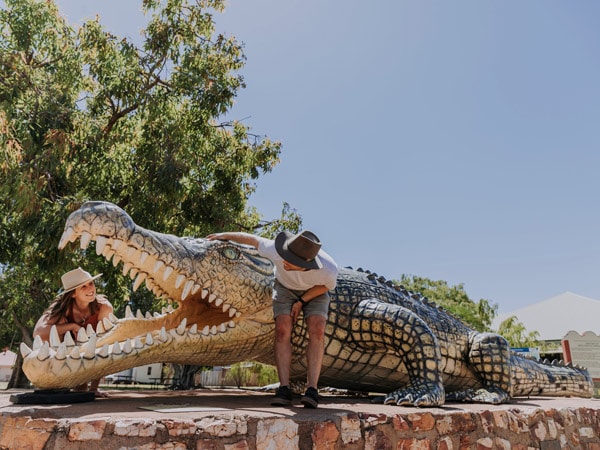
a man posing beside Krys the Crocodile
Meet Krys the Crocodile, the statue of Australia’s largest known crocodile. (Image: Tourism and Events Queensland)

Burketown on the Albert River is another terrific spot to tackle barramundi, so be sure to pack your fishing rod, or you can hire one locally. Take a sunset cruise or hot air balloon flight with Indigenous-owned Yagurli Tours .
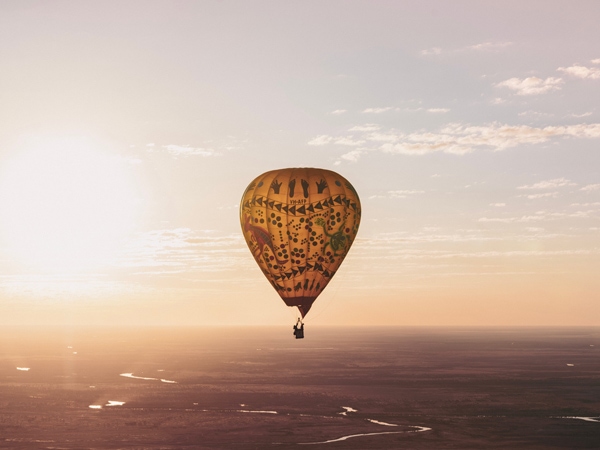
a hot air balloon floating above Burketown, Yagurli Tours
Take in the sights of Burketown from above in a hot air balloon. (Image: Tourism and Events Queensland)

Day 8: Burketown to Seven Emu Station (NT border)

Distance: 420 kilometres – around 7.5 hours.

Whiz on out west, filling up with petrol at Hells’ Gate Roadhouse and passing over the border into the Northern Territory. Your destination is working cattle station Seven Emu Station , where the campsites overlook the Robinson River. Enjoy birdwatching, fishing for trevally and mackerel, and chatting with the Shadforth family about their traditional Garawa culture. Seven Emu Station is accessible by 4WD only. Check road conditions before visiting.
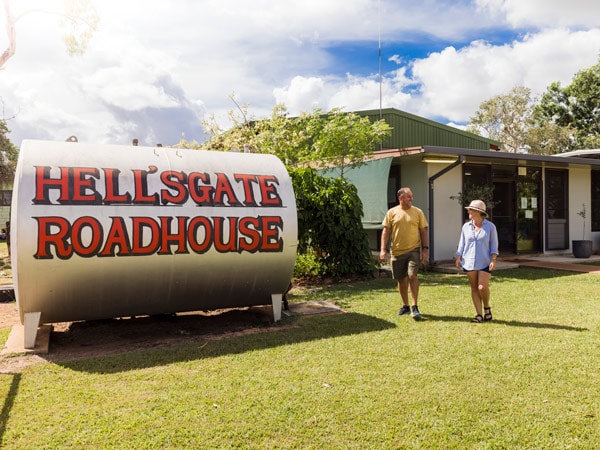
two people exploring Hell's Gate Roadhouse
Refuel at Hell’s Gate Roadhouse on Westmoreland Road. (Image: Tourism and Events Queensland)

Detour: If you have time to spare, make a pit stop at a phenomenal outback oasis —  Boodjamulla (Lawn Hill) National Park . Stay at Adels Grove Camping Park  and explore its emerald-green waters, fossil deposits and red sandstone walls.

Day 9: Seven Emu Station to Daly Waters

Distance: 484 kilometres – around 8.5 hours.

There’s no hiding the fact you have a long, lonely drive today, with only two towns along the way – Borroloola (where you can stock up on supplies) and Arnold with a population of about 30.
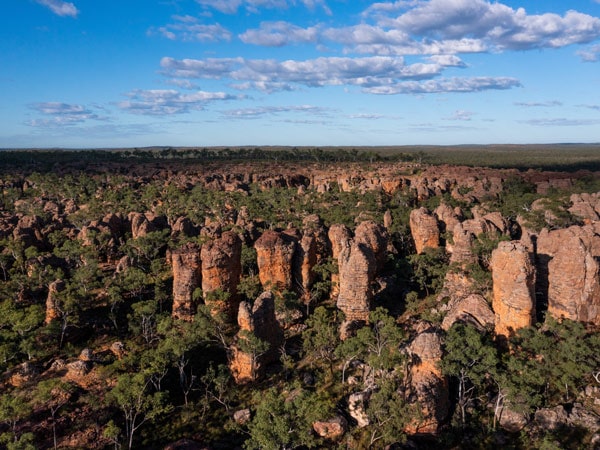
an aerial view of Caranbirini Conservation Reserve
Admire stunning views of weathered sandstone pillars at Caranbirini Conservation Reserve. (Image: Tourism NT/Sean Scott)

Birdwatchers should detour to Caranbirini Conservation Reserve and keen anglers to King Ash Bay, renowned for its barramundi. Then you hit the Stuart Highway that runs from Darwin to Adelaide. Turn right and aim to stay at The Daly Waters Pub – one of Australia’s most iconic outback pubs – which has a motel, cabins, budget rooms and camping. The eccentric outback pub features bras hanging from the ceiling and great beef-and-barramundi barbecues during the dry season.
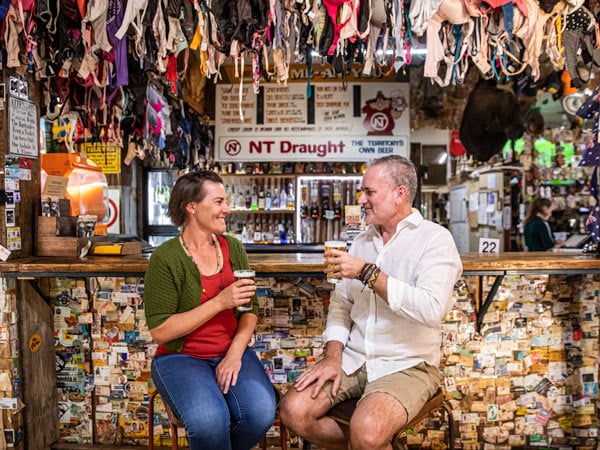
a couple enjoying a drink at Daly Waters Pub
Grab a drink at the quirky Daly Waters Pub. (Image: Tourism NT/Helen Orr)

Day 10: Daly Waters to Katherine

Distance: 280 kilometres – around three hours.

Heading north, pause at Larrimah, which has another historic bush pub (the highest bar in the Northern Territory), or in Mataranka , made famous in the 1908 Jeannie Gunn novel, We of the Never-Never. In adjacent Elsey National Park, you’ll find turquoise spring water pools perfect for a plunge, as well as a landscape patchworked with savannah woodland, stone country and monsoon rainforest.
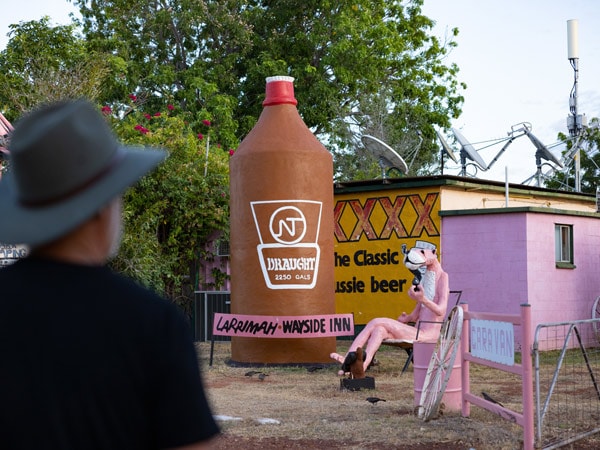
a man heading inside Larrimah Wayside Inn
Pop into Larrimah Wayside Inn for a cold pint. (Image: Tourism NT/Sean Scott)

Overnight in Katherine or 20 minutes away at Nitmiluk (Katherine) Gorge, where you’ll find campgrounds and the luxury Cicada Lodge.
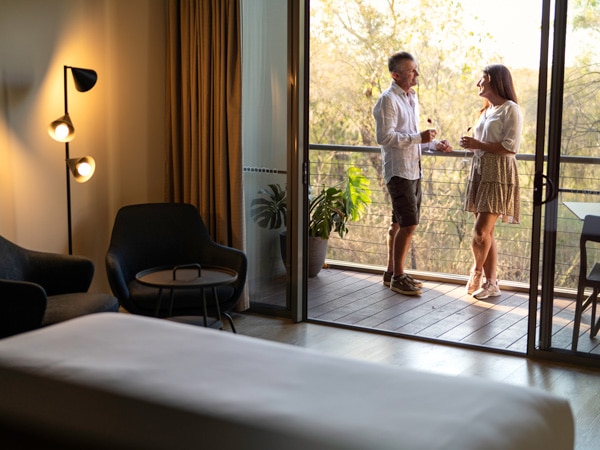
a couple talking on the balcony of their suite at Cicada Lodge, Nitmiluk Gorge
Stay in a luxe suite at Cicada Lodge. (Image: Tourism NT/Tourism Australia)

Day 11: Nitmiluk (Katherine) Gorge

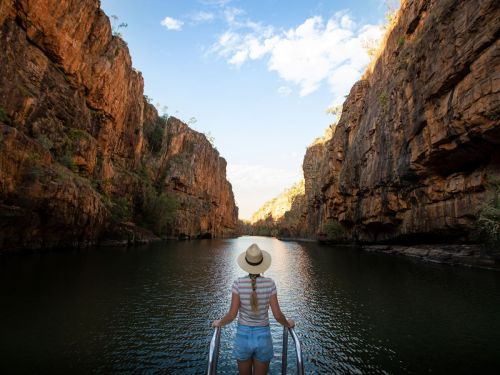
You’ll want to spend the day in this series of spectacular gorges in Nitmiluk National Park and stay for sunset when the cliffs glow red. Take a river cruise, paddle a hired kayak, or take to the hiking trails.
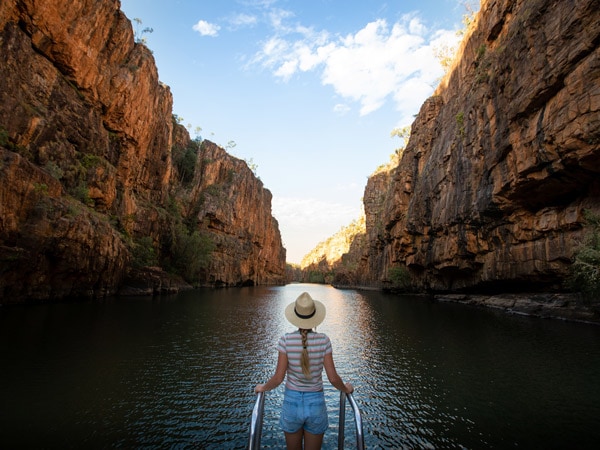
a woman on a cruise in Katherine Gorge
Tour Nitmiluk (Katherine) Gorge on a cruise. (Image: Tourism NT/Katie Goldie)

It’s worth splashing out on a scenic flight, which offers breathtaking views over the stunning countryside. Check out Baruwei Lookout for jaw-dropping views over the ancient gorge system.
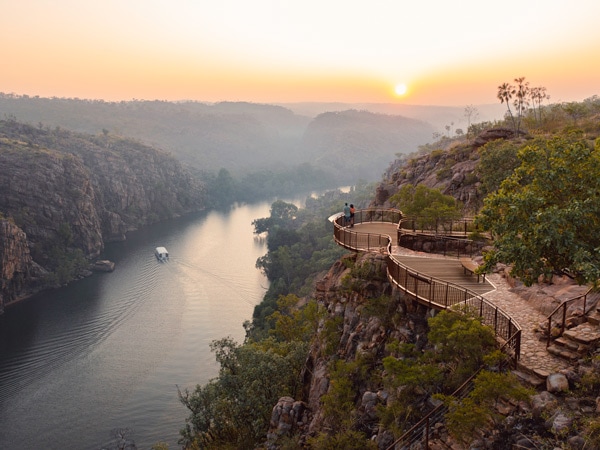
an aerial view of the Katherine Gorge on top of Baruwei Lookout
Baruwei Lookout offers breathtaking views of the spectacular gorge. (Image: Tourism NT/Tourism Australia)

Day 12: Katherine to Litchfield National Park

Distance: 280 kilometres – around three hours.

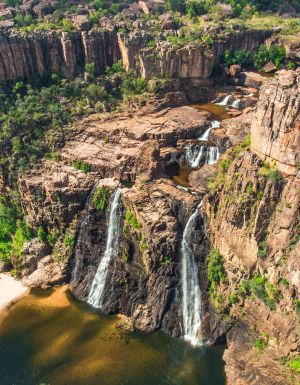
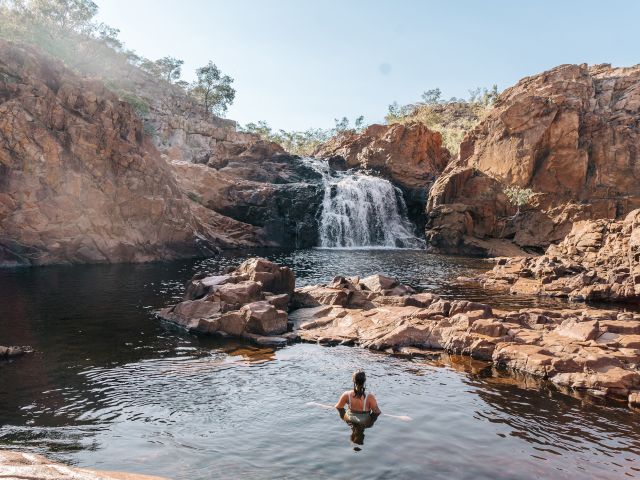
As you move out the next day, Leliyn (Edith Falls) is another Nitmiluk National Park must-see where you can enjoy a swim or hike.
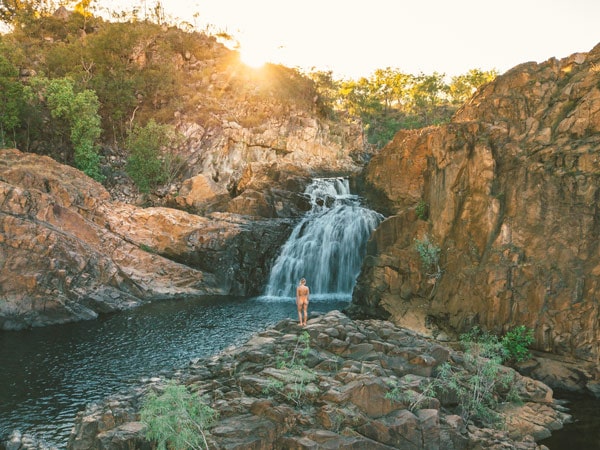
a woman standing in front of Edith Falls at Nitmiluk National Park
Take a sunrise dip at Edith Falls. (Image: Tourism NT/Mitch Cox)

Your next stops should be former gold-rush town Pine Creek and Adelaide River , famous for its jumping crocodile cruises. Finish your day in accommodation at Batchelor , gateway to Litchfield National Park, or camp in the park itself.
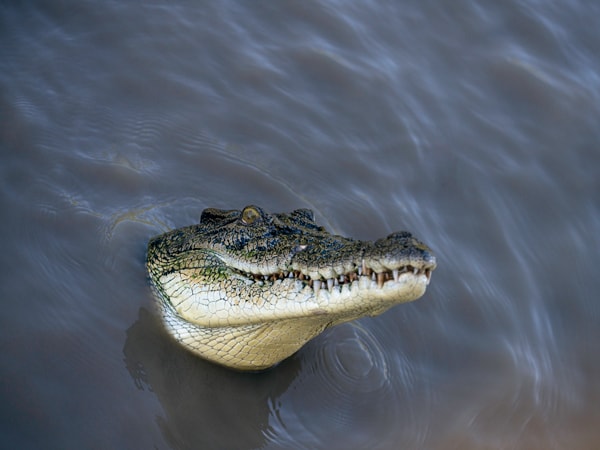
a crocodile spotted during the Spectacular Jumping Crocodile Cruise, Adelaide River
Spot the monster from the deep on a jumping crocodile cruise on the Adelaide River. (Image: Tourism NT/Tourism Australia)

Day 13: Litchfield National Park

There are plenty of waterfalls and waterholes (follow safety directions and check alerts for saltwater crocodiles before swimming) in Litchfield National Park that are accessible via sealed roads: Florence Falls and Buley Rockhole are popular among both locals and visitors.
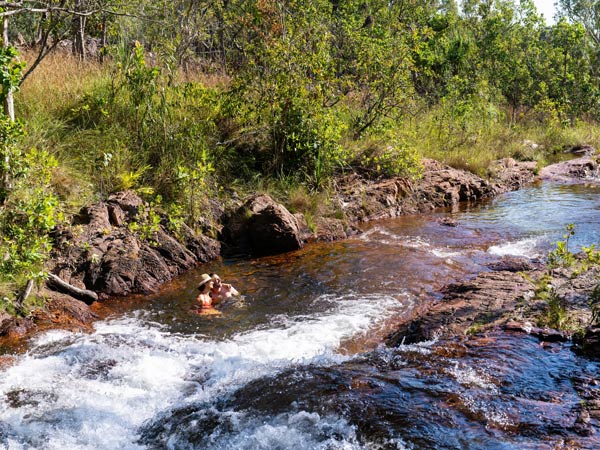
a rapid flowing stream at Buley Rockhole Litchfield
Buley Rockhole is tucked within rapid-flowing streams in Litchfield National Park. (Image: Tourism NT/Shaana McNaught)

Head to Wangi Falls where you can take a short rainforest walk or book a scenic helicopter flight year-round. Don’t forget to stop for a photo at the peculiar-looking magnetic termite mounds along the way, which take on an orange glow at sunset.
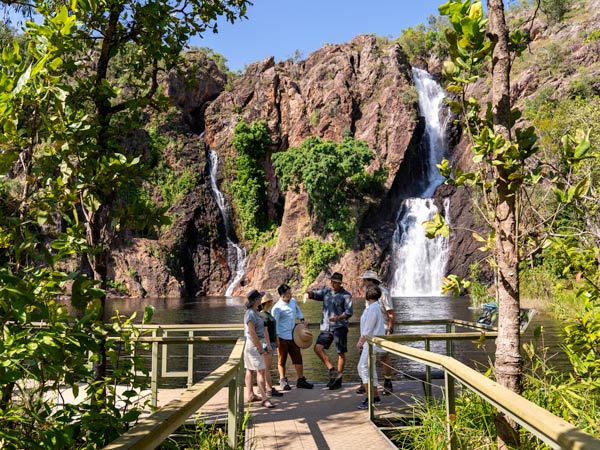
guests stopping at a falls during the Ethical Adventures Litchfield National Park Tour
Litchfield National Park is home to scenic Wangi Falls. (Image: Tourism NT/Shaana McNaught)

Day 14: Litchfield National Park to Darwin

Distance: 140 kilometres – around 1.5 hours.

Your destination is in sight, but you might also consider stopping at Berry Springs Nature Park for a swim in the cooling blue-green woodland pools and Territory Wildlife Park to see the full range of outback animals, including nocturnal creatures seldom seen in the wild.
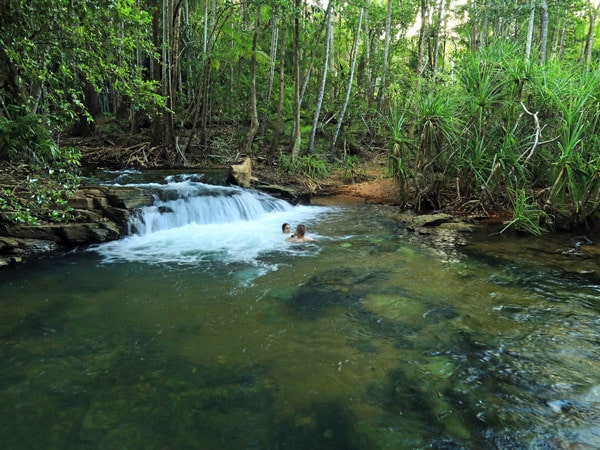
two people swimming in Berry Springs Nature Park
Cool off at Berry Springs Nature Park. (Image: Tourism NT)

Now you’ve arrived at Australia’s Top End, here’s our pick of the best things to see and do in and around Darwin.

Important information

  • Distances are approximate (add time on for detours). Hours refer to driving time only.
  • You need a 4WD as sections of the road on this route are unsealed. You could, however, do the first and last sections in a 2WD.
  • Travel in the dry season (from May to October). Avoid the wet season, as roads may be impassable and you risk getting stranded.
  • Keep watch on the fuel gauge as petrol stations are infrequent. Carry water and consider bringing a satellite phone as mobile reception can be patchy or non-existent.
  • Don’t swim without authoritative local advice, since waterways may be inhabited by saltwater crocodiles.
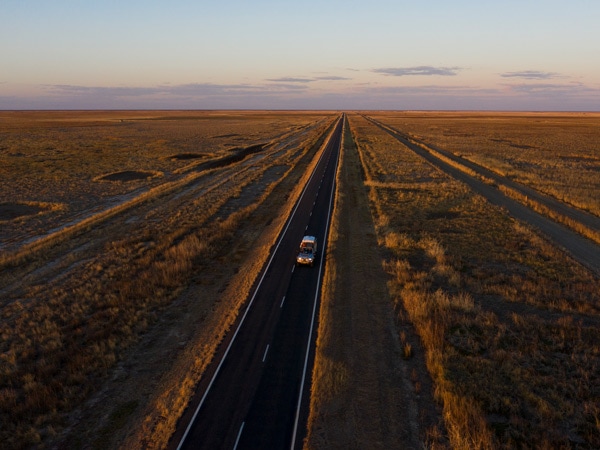
an aerial view of a car passing by Savannah Way
Venture across the Savannah Way from Cairns to Darwin. (Image: Tourism and Events Queensland)

Written by Brian Johnston with updates by Jemma Fletcher.

hero media

8 Red Centre locations to explore after seeing the new movie, Kangaroo

Spend a few days visiting the real-life Central Australian locations that inspired the new film everyone is talking about, and discover why Alice Springs is such an important part of Australian culture.

In the credits of the new Australian film Kangaroo , the first name under ‘cast’ should read ‘The Northern Territory ’. Not only is Alice Springs (and the surrounding landscape) integral to the movie itself, but the spiritual heart of Australia and its local Indigenous owners also inform the look and feel of every frame, explains Producer Trisha Morton-Thomas of Brindle Films, who also plays Charlie’s grandmother Gwennie.

“By setting Kangaroo in Alice Springs (Mparntwe), the film embraces how visible Aboriginal people are here, and the living Aboriginal culture that is woven through this community,” she explains.

still from kangarro film
See Kangaroo, then visit the real-life filming locations.

And while shooting in such a sacred part of the Northern Territory required extra planning, it was something the cast and crew were highly invested in.

“There are incredibly significant sacred sites and places of deep cultural stories in the area, that at times are very gender-specific, which we’ve kept out of the production,” she explains. “Even if overhead drone footage captures a sacred site that isn’t meant to be seen by other people outside of that clan, we’ve made sure to omit it from the film.”

If Kangaroo piqued your interest in a Central Australian holiday, we don’t blame you. Read on to discover eight places featured in the movie that you can visit in real life – and get planning. Don’t forget to pack sunscreen and a hat.

1. Alice Springs/ Mparntwe

artist at Many Hands Art Centre
Visit the galleries of Alice Springs, like Many Hands Art Centre. (Image: Tourism NT/ Helen Orr/ Many Hands Art Centre)

The red and dusty streets of the film’s fictional town of Silvergum were filmed on the outskirts of Alice Springs. And, while the art gallery featured in the film is fictional, Alice Springs is a hub of creativity. See the work of local artists at the Araluen Art Centre , Yubu Napa Art Gallery , Iltja Ntjarra (Many Hands) Art Centre and the famous Tjanpi Desert Weavers .

2. The Kangaroo Sanctuary & Kangaroo Rescue Centre

The Kangaroo Sanctuary Alice Springs, the inspiration for the Kangaroo move
Visit the movie’s inspiration at Kangaroo Sanctuary. (Image: Tourism NT/ Kangaroo Sanctuary)

Kangaroo was inspired by the journey of Chris ‘Brolga’ Barns, who founded the now world-renowned Kangaroo Sanctuary based in Alice Springs. For lead actor, Aussie Ryan Corr, the animals were central to the movie, alongside the landscapes.

“The animals in this story were a real calling point for me,” he explains. “What this story tries to tell us about the connection between humans and animals is beautiful.”

To gain a real insight into the fauna and flora of the Red Centre, you can visit the Kangaroo Sanctuary on a sunset tour, where you might even get the chance to hold a baby kangaroo.

3. Ormiston Gorge

woman walking along the edge of Ormiston Gorge near alice springs
Take a dip in Ormiston Gorge. (Image: Tourism NT/ @domandjesso)

The film captures the raw beauty of the West MacDonnell Ranges, known in the Arrernte language as Tjoritja. This national park is rich in Indigenous culture and stark geological wonders.

Only a 15-minute drive from Alice Springs, Tjoritja offers visitors the chance to camp, hike and swim among ancient landscapes (most attractions are less than a three-hour drive away).

Ormiston Gorge , a cooling oasis in among the red desert sands, is one of the most popular destinations, no doubt because of the permanent swimming hole and towering red cliffs. From here, visitors can also embark on the beautiful Ormiston Pound Walk and the shorter – more accessible – Ghost Gum Walk. Bring your bathers – it’s safe for swimming.

4. Standley Chasm

woman walking through Standley Chasm near alice springs
Wander through Standley Chasm. (Image: Tourism NT)

The 1.2-kilometre walk to nearby Standley Chasm will be a highlight for any visitor as the imposing 40 metre-high chasm walls project strength and ancient wisdom.

Visit at midday to experience the path illumined by the midday sun. Not only will you fill your camera roll with vibrant red images of the gorge and its intoxicating shadows, but you can also camp nearby in a powered or unpowered site so you can watch the brilliance of the desert stars fill the night sky after dusk.

5. Simpsons Gap

three people walking on path through simpsons gap near alice springs
Walk the trails of Simpson’s Gap. (Image: Tourism NT/ Helen Orr)

Closer to Alice Springs, the photogenic Simpsons Gap is the perfect place to spot the endangered Black-footed Rock wallaby near the permanent watering hole. While swimming isn’t permitted, soaking up the sun and views certainly is.

Explore the area’s numerous walking trails, appreciate the soaring cliffs on either side of the ‘gap’ and pick out the shooting locations of Kangaroo in the area.

6. Ellery Creek Big Hole

aerial of Ellery Creek Big Hole near alice springs
Dive into Ellery Creek Big Hole. (Image: Tourism NT/ Tourism Australia)

When it comes to classic Northern Territory landscapes, you can’t go past Ellery Creek Big Hole/ Udepata : tall gum trees sidling up to a refreshing watering hole (fed by the West MacDonnell Ranges and surrounded by rugged red cliffs.

Swim in the cooling waters, hike the cliff tops, watch for birds and even stargaze as you camp here overnight. It’s locations like this that attracted the film’s director Kate Woods to the project.

“It humbles you to be in this environment: it’s so beautiful, so old and so vast,” she explains. “I was thrilled to get a chance to … shoot such a beautiful story in the incredible landscape of the Northern Territory.”

7. Larapinta Drive

aerial of Larapinta Drive into alice springs
Drive along Larapinta Drive. (Image: Tourism NT)

There is no better way to get a feel for how the characters arrived at the fictional Central Australian town of Silvergum than to travel along the iconic state road, Larapinta Drive.

Connecting Alice Springs to the mighty King’s Canyon in the west, via the historic community of Hermannsburg, this road takes in the West MacDonnell National Park, Alice Springs Desert Park and artist Albert Namatjira’s house, among other attractions. Take your time, bring a camera and prepare for numerous stops along the way.

8. Todd River

competitors in Henley on Todd Regatta, alice springs
Join in the fun of the quirky Henley on Todd Regatta. (Image: Tourism NT/ TImparja Creative)

Meandering through Alice Springs like a lazy Western Brown snake, the Todd River is a central part of Alice Springs culture. Known as an ‘intermittent river’, the Todd can go from a dry dusty riverbed to a flowing waterscape in less than 15 minutes after heavy rainfall.

When it’s dry, the famous Henley on Todd Regatta fills the sandy riverbed with handmade ‘boats’ carried by sailors. This is the world’s only dry river boating event, and it’s referenced in the ‘Silvergum Boat Race’ in the movie. Inspired by the real-life event, the characters built quirky “Flintstones-style boats” and competed in teams.

See Kangaroo in cinemas now, and start planning your NT getaway at northernterritory.com.