hero media

A must-read guide to camping in Kakadu

Credit: Tourism & Events NT/Johan Lolos

Camping in Kakadu National Park is guaranteed to be a thousand-star experience.

Visiting Kakadu National Park is a nature lover’s dream. To truly immerse yourself among the World-Heritage surroundings, make tracks with a tent in tow to discover campsites that provide a gateway to the great outdoors.

Kakadu National Park, which spans nearly twenty thousand square kilometres of Bininj/Mungguy Country, is home to some of the most beautiful landscapes in Australia. We’ve rounded up the best places to camp in Kakadu, whether you’re looking for hiking trails, swimming spots or just a great base to pitch up and hang out.

Before setting out to camp in Kakadu, it’s important to be adequately prepared with information and supplies and check the Parks Australia Kakadu National Park website in advance for closures. Keep in mind what facilities are available, road conditions and 4WD access. But without further ado, here’s our list of the best places to camp in Kakadu.

Mardukal campground
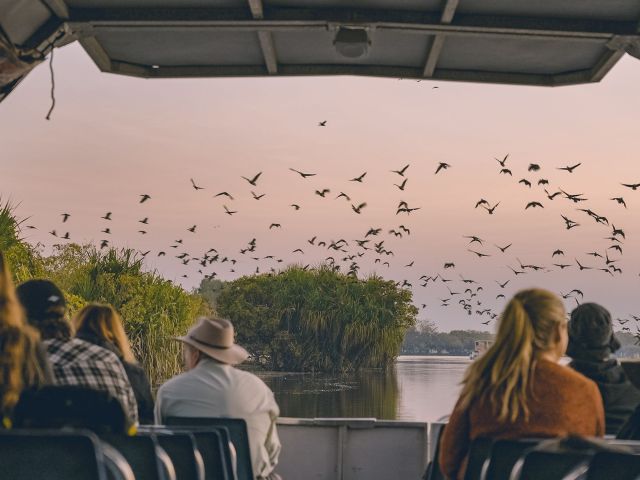
birdwatching on the Yellow Water (Ngurrungurrudjba) billabong
Witness birdlife on the Yellow Water (Ngurrungurrudjba) billabong. (Credit: Tourism & Events NT/@cruising.cat)

This managed campground is an ideal base for holidaymakers looking to explore Kakadu National Park. The campground is located near Cooinda Lodge, just a stone’s throw from Cooinda’s Barra Bar and Mimi’s Restaurant.

It’s also convenient if you’re interested in taking one of Kakadu’s most popular tours, the Yellow Water Billabong cruise, which also runs out of Cooinda Lodge. With creature comforts in close reach and a short drive to some of the park’s main attractions, this campsite is perfect for a leisurely camping stay.

Cost: $15 per adult per night
Facilities: Flushing toilets, hot showers, bins, picnic area
4WD required: No

Merl campground
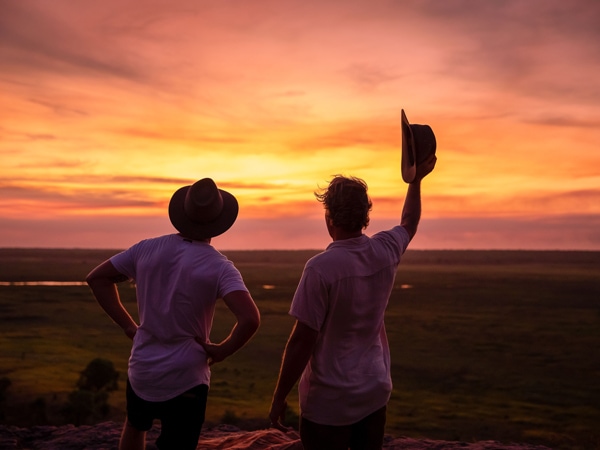
two people admiring the sunset from Ubirr, Kakadu
Take in incredible sunset views at Ubirr. (Credit: Tourism NT)

Merl campground is the best place to camp in Kakadu if you’re drawn to the park’s exquisite rock art. The campground is situated in the north of Kakadu, just three kilometres from the rock art site of Ubirr. Not only is Ubirr one of the best things to do in Kakadu, but it’s also an incredible spot to watch the sunset.

Catch a glimpse of one of Kakadu’s most photogenic views, before heading back to camp to gather around a fire pit. If you’re a keen hiker, you’ll enjoy tramping along the trails threaded throughout the East Alligator Region, too.

Cost: $15 per adult per night
Facilities: Flushing toilets, hot showers, bins, picnic area
4WD required: No

Karnamarr campground
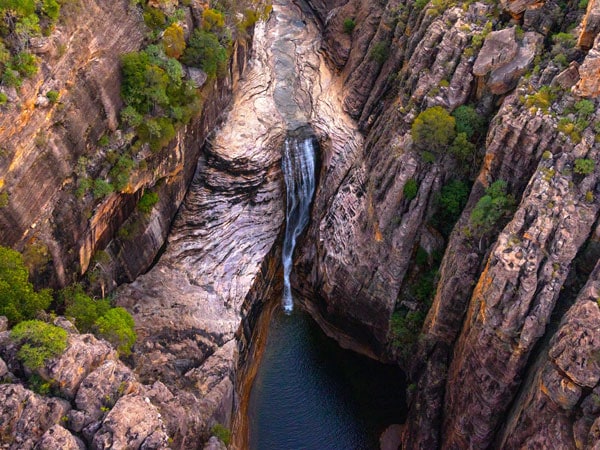
an aerial view of Kakadu falls
Admire Kakadu’s rugged beauty from above. (Credit: Tourism NT; Sean Scott)

If you’re keen to pay a visit to Kakadu’s famous waterfalls, then you’ll be in prime position at Karnamarr campground . The campsite is located a short drive between Twin Falls and Jim Jim Falls – two waterfalls that are not only miraculously beautiful, but sites of deep spiritual significance for the Bininj/Mungguy Traditional Owners. The campground is named for the red-tailed black cockatoo, a common sight to behold around the area.

Cost: $15 per adult per night
Facilities: Flushing toilets, hot showers, bins, picnic area
4WD required: Yes

Need tips, more detail or itinerary ideas tailored to you? Ask AT.

AI Prompt

Maguk campground
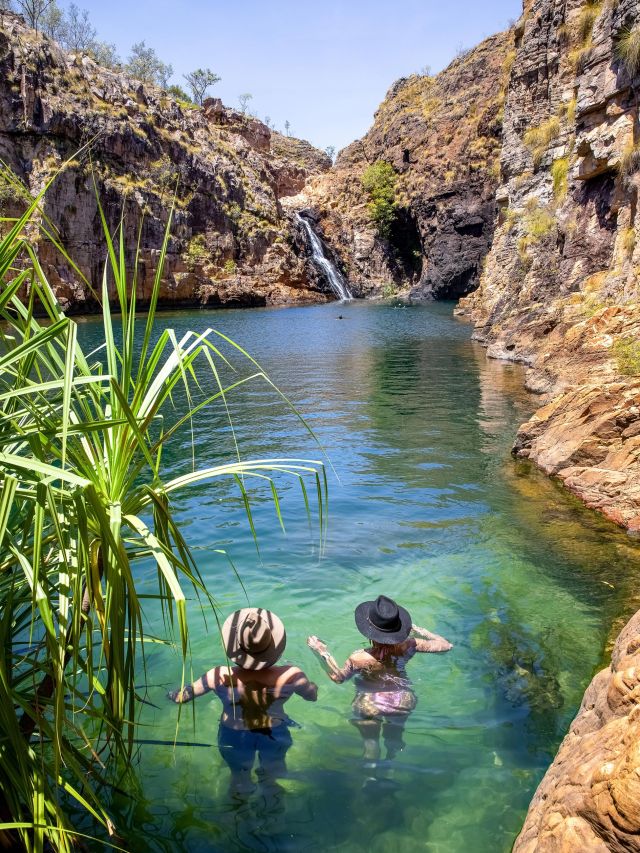
maguk falls
Cool off at Maguk, Kakadu. (Credit: Tourism & Events NT/Riana Crehan)

If a refreshing soak in emerald waters beneath cascading waterfalls sounds pleasant to you, then make a beeline for Maguk campground .

This campground is a little more on the wild side than the mainstream sites, but the rewards are certainly well worth it. Campers will be a stone’s throw from Maguk’s beautiful plunge pools, located just a short walk away through a lush rainforest canopy.
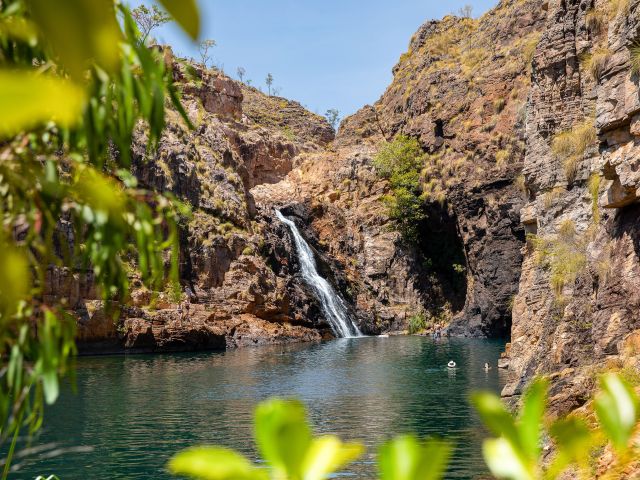
Maguk Falls kakadu
Maguk Falls features a plunge pool at the foot of a steep gorge. (Credit: Tourism NT)

Take a dip before moseying back to camp in the evening for a feed and some stargazing. When swimming or travelling near bodies of water, it’s important to be CrocWise . National Parks remove crocodiles each year, but it’s vital to exercise caution and follow local advice.

Cost: $6 per adult per night
Facilities: Pit toilet, no drinking water (bring your own)
4WD required: Yes

Kambolgie campground
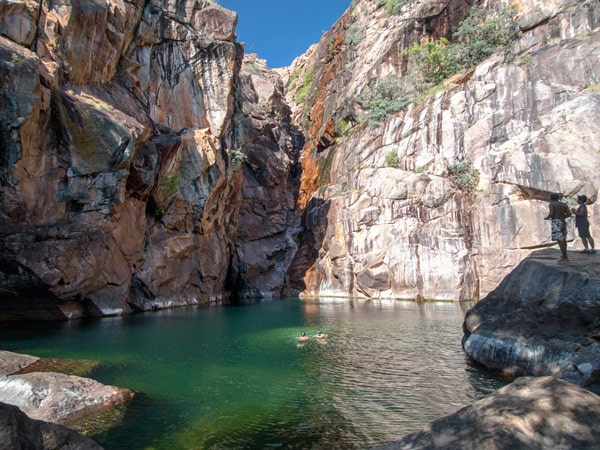
two people standing on the side of a rock formation at Motor Car Falls, Kakadu
Plunge into the cold waterfalls. (Credit: Flickr/adeshfr)

Ditch the crowds and carve out a pocket of peace at Kambolgie campground . If you’re looking for a quiet place to camp in Kakadu, Kambolgie might just fit the bill. This charming spot is close to a lot of Stone Country highlights, such as the Yurmikmik walks which wind around creeks and waterfalls. The campground is also just a little more than 10 minutes from the Kakadu Highway, making it a convenient base to explore the rest of the park.

Cost: $6 per adult per night
Facilities: Pit toilet, no drinking water (bring your own)
4WD required: Recommended

Jarrangbarnmi (Koolpin) campground
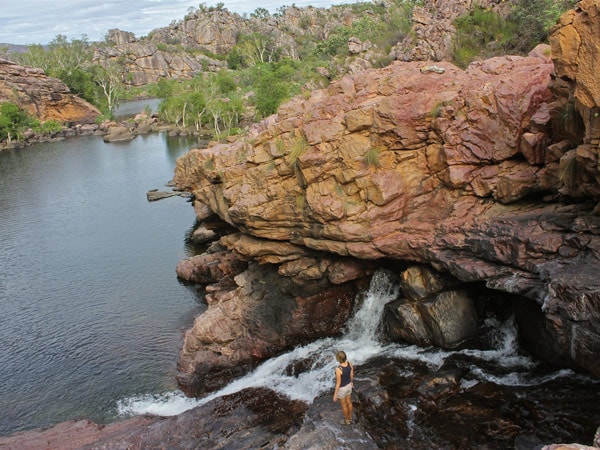
a woman surrounded by waterfalls and rocky ridges at Koolpin Gorge
Be surrounded by waterfalls and rocky ridges at Koolpin Gorge. (Credit: Flickr/Mattfrancey)

For those looking to get off the beaten track, Jarrangbarnmi (Koolpin) is a gorgeous place to base yourself in the south of Kakadu. It’s a bit of an effort to drive in, but it will be well worth the sweat. You’ll be surrounded by waterfalls and rocky ridges and close to the start of the stunning Jarrangbarnm (Koolpin Gorge) walk. It’s important to note that you need a permit to camp and bushwalk here. There are also sacred Indigenous sites that are off-limits to visitors, so keep informed and stay aware of local signage.

Cost: $6 per adult per night
Facilities: Pit toilet, no drinking water (bring your own)
4WD required: Yes

Weekly travel news, experiences
insider tips, offers, and more.

Glamping in Kakadu National Park
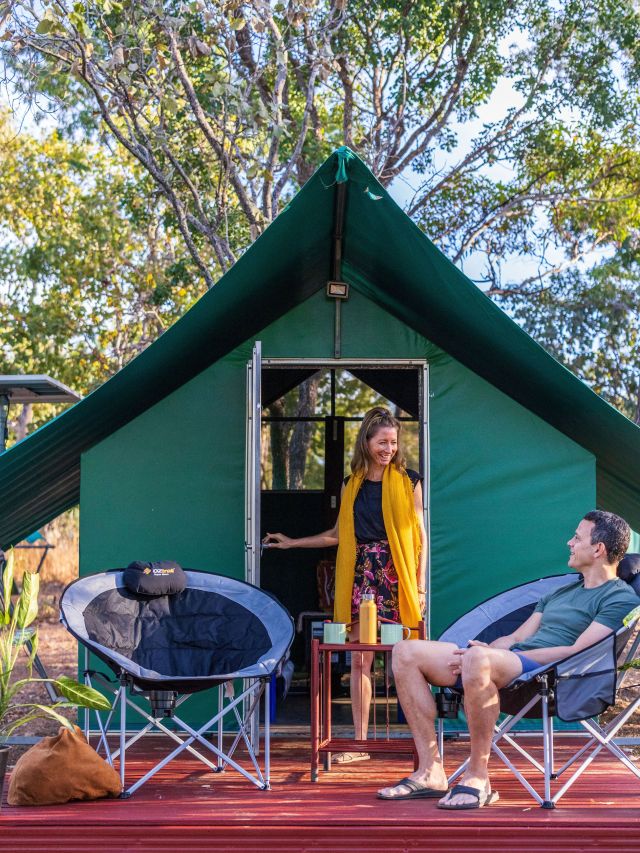
best places to camp kakadu national park
Go glamping to feel closer to nature. (Credit: Tourism & Events NT/Helen Orr Kakadu Billabong Safari Camp)

Want to feel close to nature, but still crave small luxuries? Glamping combines the best of both worlds. We’ve rounded up the best glamping spots in Kakadu and the rest of the Northern Territory, where you can feel all the perks of the great outdoors – from the comfort of a cosy bed. Rather go the more conventional accommodation route? We’ve got you covered with our accommodation guide to Kakadu.

West Alligator Head (Waldak Irrmbal)

Keen fishermen will be as happy as Larry at West Alligator Head (Waldak Irrmbal), one of the best places to camp in Kakadu if you’re hoping to reel in some barramundi.

Located at the very north of the park facing the sea, West Alligator Head is one of Kakadu’s more unexplored corners. You’ll find mainly local fishos here, but if you’re a traveller with a penchant for adventure, West Alligator Head is a blissfully remote escape.

Cost: $6 per night
Facilities: Pit toilet, no drinking water (bring your own)
4WD required: Yes

The best time to camp in Kakadu
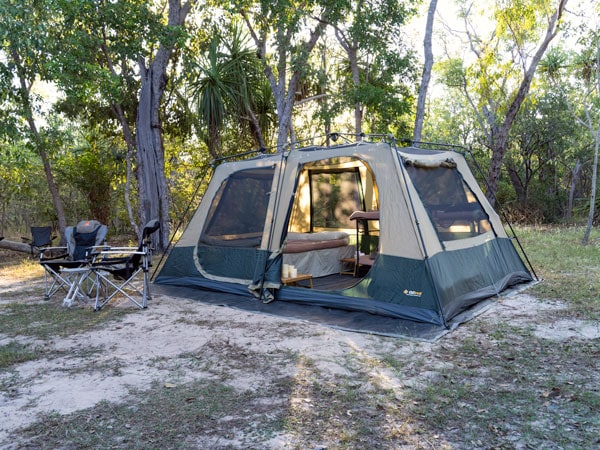
a tent on the grounds of Kakadu
The best time to camp in Kakadu is between May and October. (Credit: Tourism NT/Tourism Australia)

The most popular time to camp is during the drier months between May and October. However, if you don’t mind the rain and your gear is up to scratch, visitors can experience Kakadu in every season. We’ve gone into depth into the different seasons to visit Kakadu as well as the six Indigenous seasons of Kakadu National Park. If you’re combining your Kakadu visit with a road trip, we’ve also compiled some of the best campsites from Darwin to Kakadu and Katherine, too.

Can I camp for free in Kakadu? 
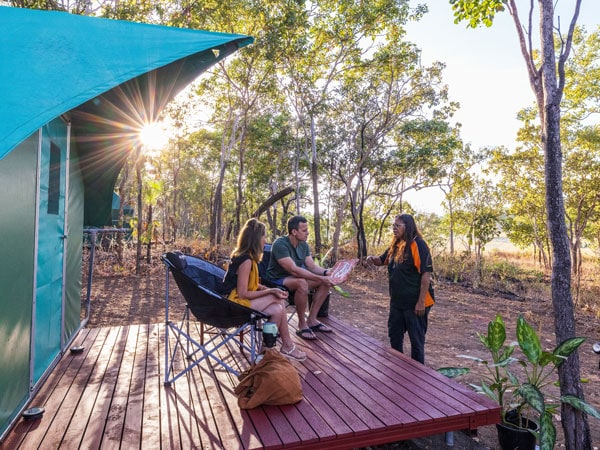
people hanging out in a Billabong Safari tent Kakadu
Get cosy in a Billabong Safari tent. (Credit: Tourism NT/ Helen Orr)

Yes! If you’re after the ultimate wilderness experience, there are some sites where you can pitch a tent free of charge. Check out Alligator Billabong, Four Mile Hole and Bucket Billabong, for instance. Free campsites tend to have minimal facilities and be 4WD accessible only, so make sure you have all the key information before heading out.

Kakadu National Park pass & permits

All visitors require a park pass to access Kakadu, although passes are free for Northern Territory residents. Cost varies depending on the season and passes are available either online or at select venues within the park. Some campgrounds, such as Jarrangbarnmi (Koolpin) campground, require specific permits. Consult Parks Australia  for more information.

Want to know more about staying and playing in Kakadu? We’ve got your ultimate guide to Kakadu National Park right here.

Elizabeth Whitehead
Elizabeth Whitehead is a writer obsessed with all things culture; doesn't matter if it's pop culture or cultures of the world. She graduated with a degree in History from the University of Sydney (after dropping out from Maths). Her bylines span AFAR, Lonely Planet, ELLE, Harper's BAZAAR and Refinery 29. Her work for Australian Traveller was shortlisted for single article of the year at the Mumbrella Publishing Awards 2024. She is very lucky in thrifting, very unlucky in UNO.
View profile and articles
hero media

Discovering East Arnhem: Australia’s most unique and rewarding corner

    Joanne Millares Joanne Millares

    Hard to reach and harder to forget, East Arnhem offers something rare in modern travel: the chance to slow down and experience Country on its own terms.

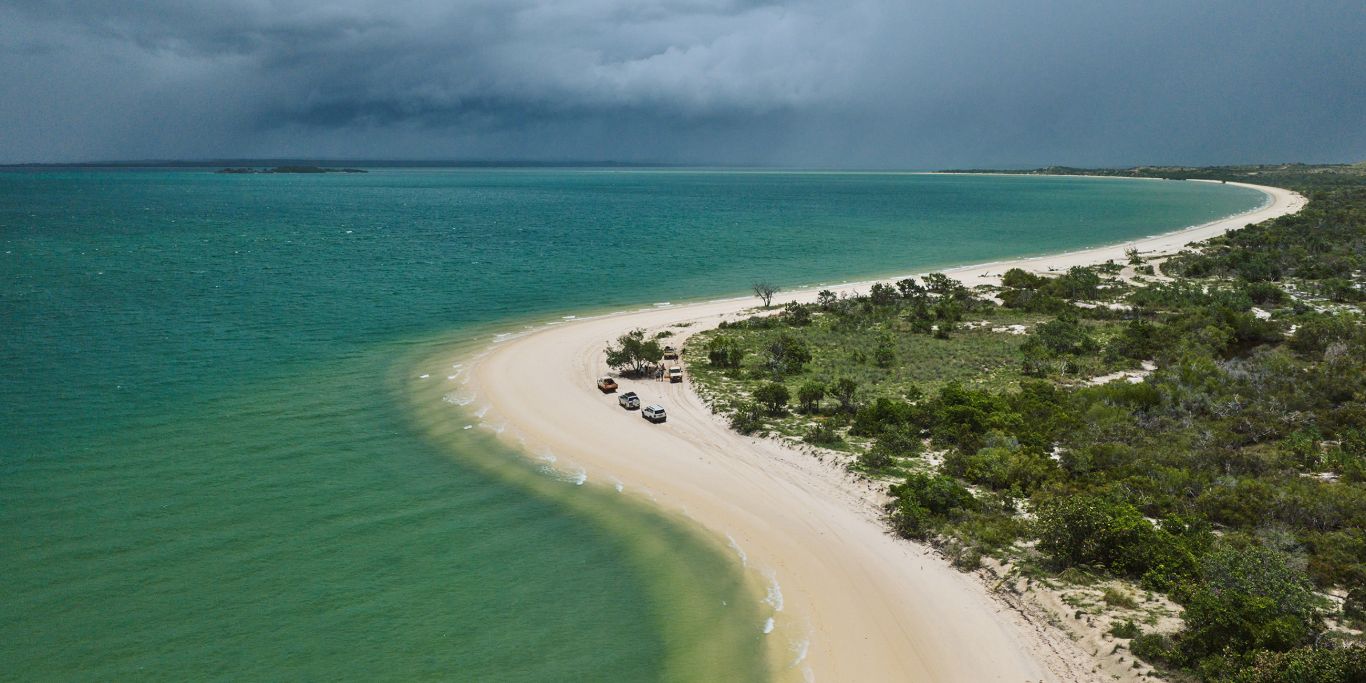
    The sky feels bigger in East Arnhem . It stretches wide and uninterrupted above rouged earth, stringybark woodland and beaches so empty they seem to belong to another era. The coastline curves for kilometres without a footprint and the horizon runs on forever.

    For comedian Lou Wall, the scale of the place was the first thing that hit them.

    “The sheer openness,” they say. “The sky feels infinite and the land stretches out endlessly. It’s pretty breathtaking visually.”

    But the physical landscape is only part of the story. The real reward isn’t only the scenery but the shift in perspective the journey brings. Visitors stop trying to tick off the destination and a real engagement takes over.

    “It made me never want to travel again,” Wall jokes. “In that I never wanted to leave East Arnhem.”

    Getting there

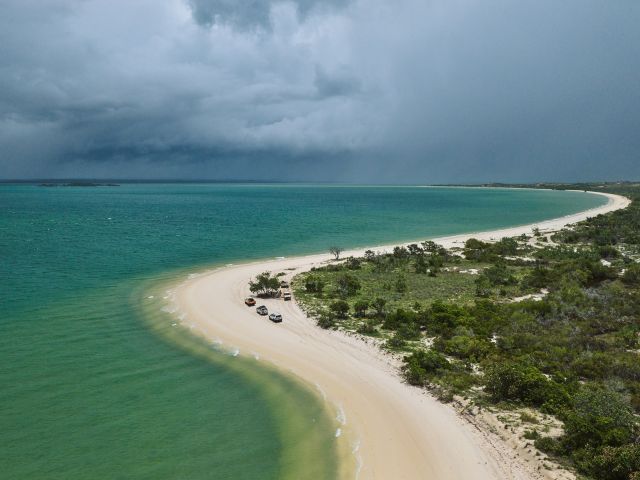
    Aerial shot of East Arnhem’s coastline as cars trace the curve of the shore.
    Sail along the remote coastline on an expedition cruise.

    Reaching East Arnhem is part of the adventure. Travellers typically fly into Gove Airport near Nhulunbuy via Darwin or Cairns, or arrive by expedition cruise along the remote coastline. Others make the journey overland along rutted dirt roads that cut through East Arnhem’s small pockets of monsoon forest.

    However you arrive, there’s a distinct feeling of crossing into somewhere different. Permits are required to visit the region, reflecting the fact that this is Yolŋu land where communities and traditional owners maintain deep cultural connections to Country.

    The extra planning becomes part of the experience. By the time visitors arrive, they understand they’re entering a place not just of respect, but also patience and curiosity.

    At one with nature

    East Arnhem’s  landscapes leave a strong imprint. For Wall, one place in particular still lingers in their memory: Ngalarrkpuy , also known as Lonely Beach, near Bawaka Homeland.

    “I genuinely felt like I was living inside an Instagram filter,” they say. “One of the most stunning feats of nature I’ve ever seen. The water was so clear I swear I could see even the fish smiling.”

    Across the region, natural experiences unfold at a slower pace. Fishing, beachcombing and island hopping reveal the rhythm of the coastline. The tides shape daily life and the vastness of the landscape makes even simple moments feel downright cinematic.

    For visitors with limited time, Wall says the Bawaka Homeland experience is unmissable.

    “I just left and I’m already planning when I can get back there.”

    The sense of remoteness is part of the appeal. In a country where many beaches are crowded and well-trodden, East Arnhem’s coastline still feels wonderfully wild.

    Immersing in local culture

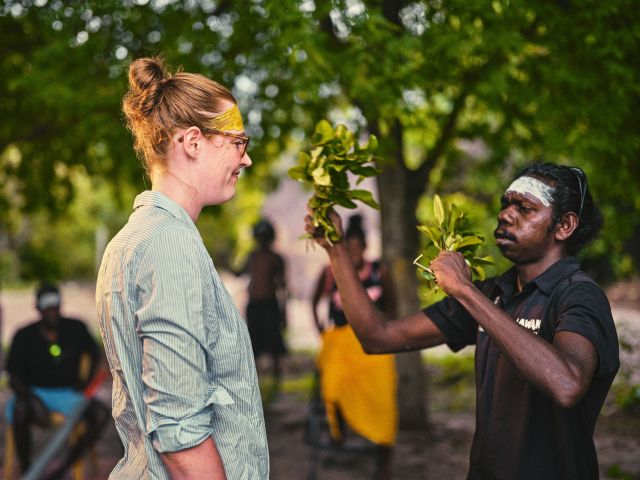
    A visitor spends a meaningful moment alongside Yolŋu guides, gaining insight into their deep cultural knowledge and connection to the land.
    Experience authentic moments with the locals.

    Culture is woven through every experience in East Arnhem. Visitors have the opportunity to spend time on Country with Yolŋu guides and knowledge holders who share stories and traditions that have been passed down for generations.

    For Wall, one of the most powerful moments came during a conversation with a Yolŋu elder.

    “I got to meet a traditional elder, Mayalil, in Nhulunbuy,” they say. “Listening to her talk about her home made the land feel alive in ways I couldn’t have imagined.”

    The region is also home to internationally recognised Aboriginal art centres where artists shape works deeply connected to land and family knowledge.

    Music carries the same cultural energy. East Arnhem has produced globally recognised artists such as King Stingray and Baker Boy, blending Yolŋu language, storytelling and contemporary sound.

    Wall experienced this musical spirit first-hand.

    “A jam session around the fire was it for me,” they say. “Letting the deep joy and history of their music wash over me…  and meeting a few of the King Stingray musicians was unreal.”

    These moments of human connection often become the most memorable part of a visit.

    Spotting local wildlife

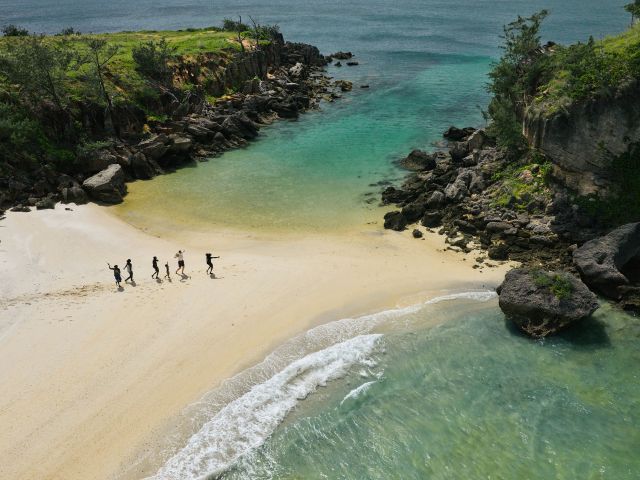
    An aerial view of the beach shows tiny figures lined up across the white sand, moving as if in a rhythmic dance.
    Step into a world where nature reigns.

    The wildlife of East Arnhem adds another layer to the experience. The region is home to an extraordinary range of animals, from waterbirds and turtles to dugongs, dolphins and the formidable saltwater crocodile.

    Wall admits they didn’t actually spot a croc during their visit.

    “Devastatingly, I didn’t see one,” they laugh. “But with all the stories from the locals I definitely gained a healthy respect for caution.”

    Some of the most memorable wildlife encounters can be surprisingly small., At Banubanu Beach Retreat on Bremer Island, Wall remembers walking along the beach one morning and watching it come alive.

    “As you walk through the sand you see hundreds of crabs scurrying into their holes as you pass by,” they say. “Such a small thing, but it was completely magical.”

    Moments like this reveal the quieter rhythms of East Arnhem, where even the smallest creatures seem to play a part in the landscape.

    Visitors who make the journey soon learn the most important travel tip of all.

    “Go in open-minded with a sense of curiosity,” Wall says. “Be prepared to ditch your plans. The land and the locals will guide you on an adventure no spreadsheets could ever compete with.”

    And most importantly, they add, don’t rush.

    “The land and people deserve your time and attention. You’ll be all the better for slowing down.”

    For more information on visiting East Arnhem, head to eastarnhem.com.au .