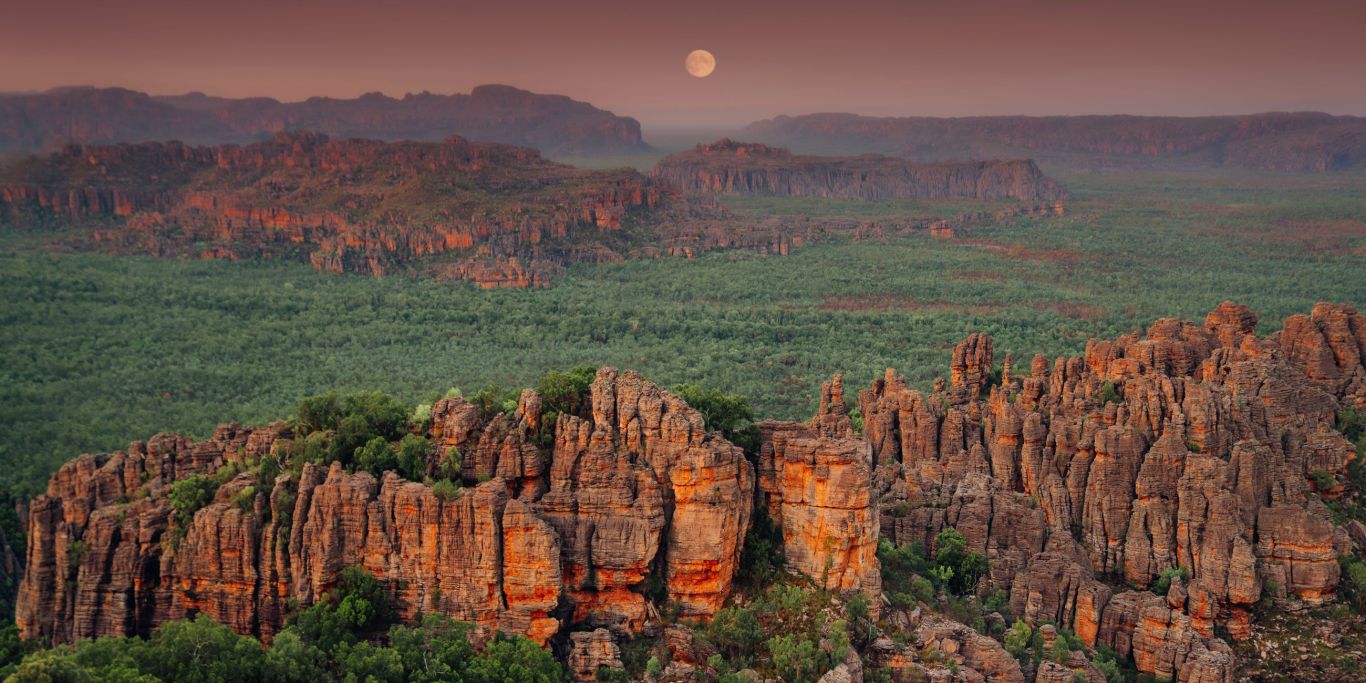

On a journey through Kakadu National Park, learn about the six Indigenous seasons of Kakadu which inflect the cultures, traditions and Dreaming stories held within the ancient landscape.
Unlike a human face, it’s difficult to tell the age of a landscape from its appearance. Yet in Kakadu National Park, you can feel it. There’s an ancient energy here, a primordial essence that imbues the earth and runs deep through the marrow of the land.
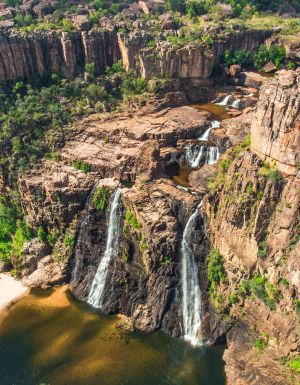
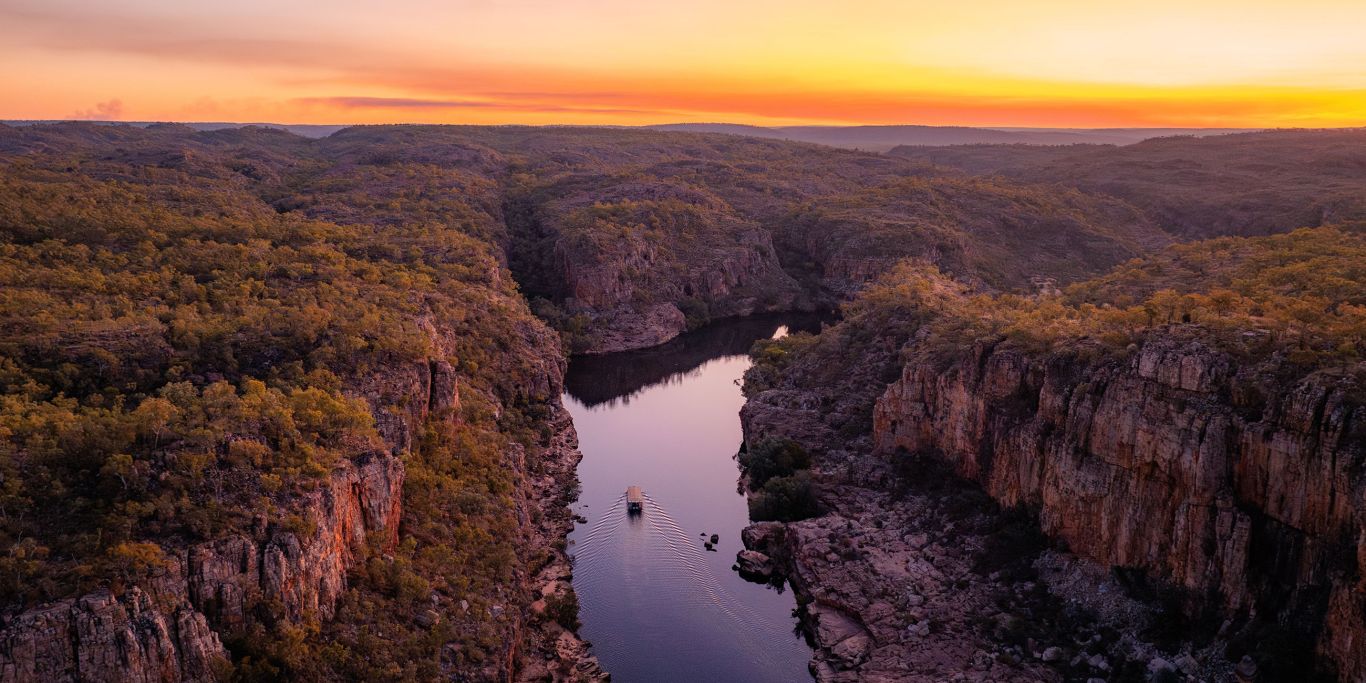
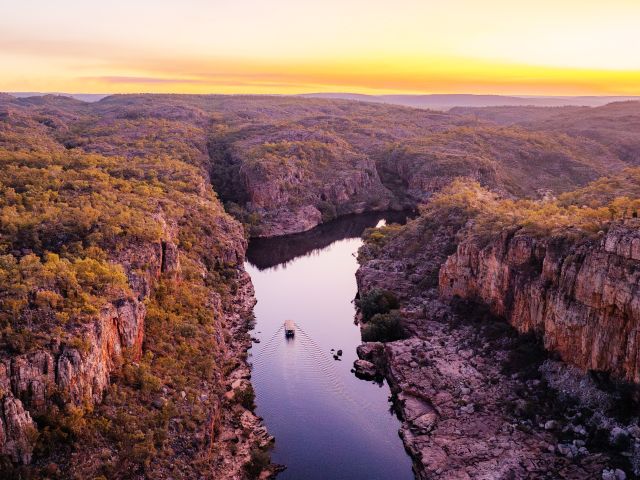
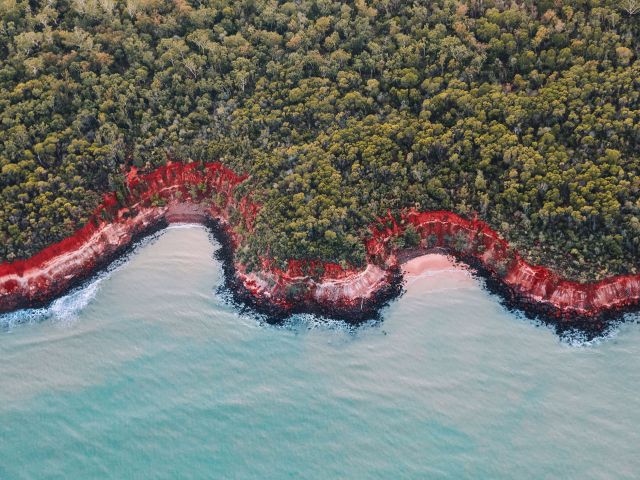
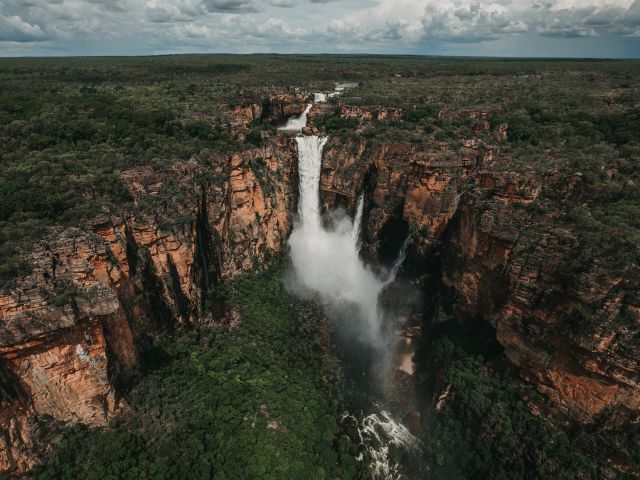
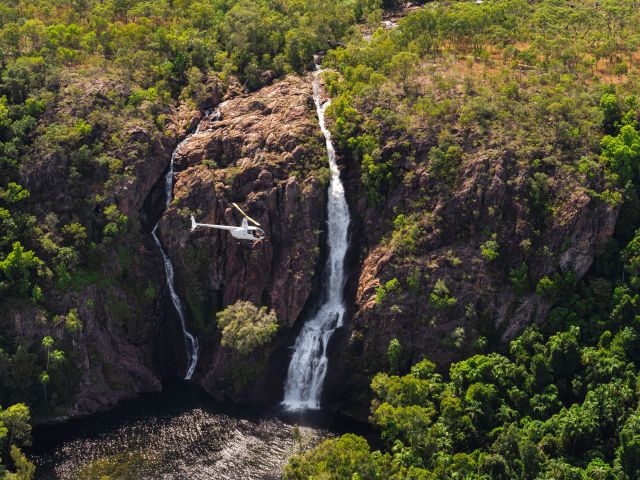
Our little helicopter soars over the UNESCO World Heritage-listed wetlands of Kakadu. We whizz past rocky rust-coloured escarpments and over sweeping sandstone plateaus. A sudden drop-off in the terrain beneath us reveals a mighty waterfall that glistens with mist. In the afternoon sun, the air is sweet and velvety, and the landscape is glacéed in a marmalade-orange hue.
This is Stone Country – home to some of the world’s oldest exposed rock dating back 2.5 billion years. Deep in the belly of the Northern Territory’s Top End, this is a landscape inscribed with Dreaming stories and 65,000 years of Indigenous history.
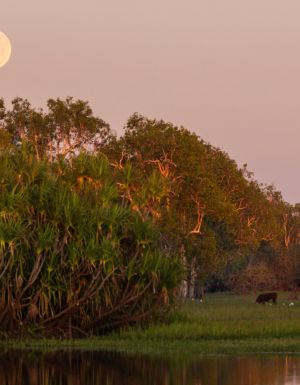
The Traditional Lands of the Bininj/Mungguy people sing with culture and nature, stretching out in a tapestry of green towards the horizon. There’s the glassy emerald of the water, the deep crocodilian green of the savanna woodlands and the bright chartreuse of the algae that blankets the wetlands. It’s green season in all its glory. Except, it isn’t just green season. It’s Kudjewk.
To know the season you need to read the Country
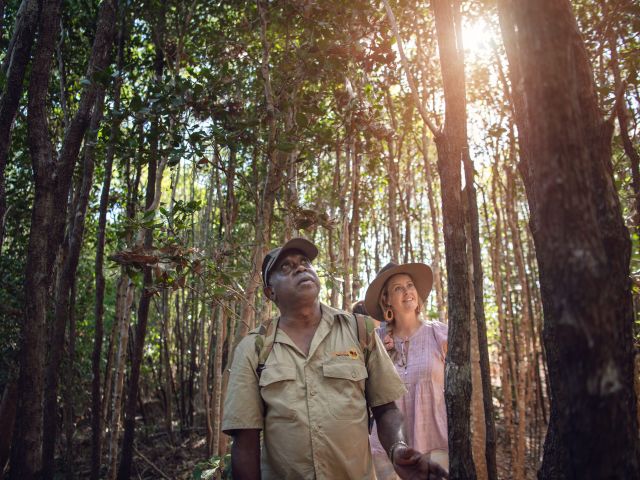
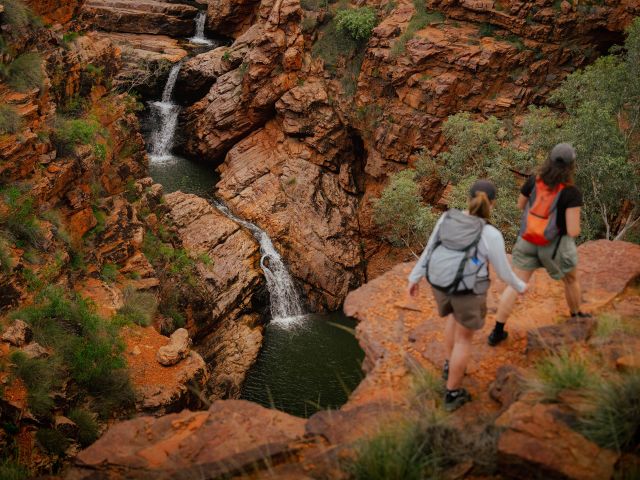
“There are six Indigenous seasons in Kakadu," explains Victor Cooper, a Minitja man, tour guide and owner of Ayal Aboriginal Tours. This morning, he’s leading us on a walk to visit Nanguluwurr rock art site. It’s currently Kudjewk, which falls between the calendar months of December and March, characterised by heavy rains and dank humidity. But unlike the neatly quartered seasons of the year, Indigenous seasons have no fixed dates.
Instead, as Victor explains, they’re marked by the migrations of the barramundi and the waterbirds; the blooming of the woollybutts; the metamorphosis of the landscape. “The trees are our calendar," says Victor. Varying by region and distinct to Aboriginal communities, Indigenous seasons are the result of knowledge culminated over thousands of years of careful observation, born from living closely with the land.
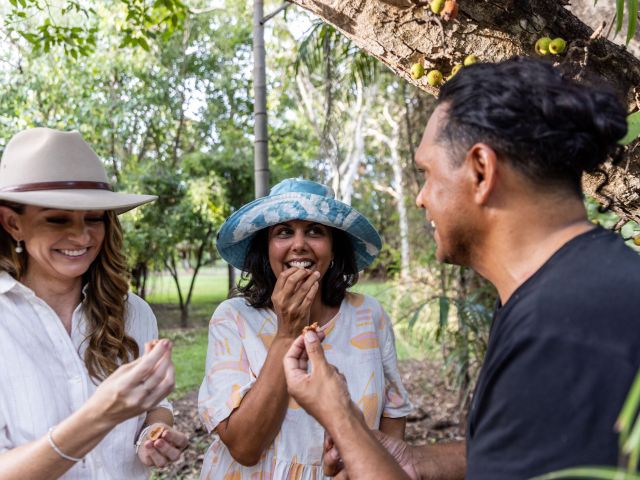
“You have to read the Country," Victor tells us. “As we’re walking, I’m reading the Country." He points out the verdant canopy of a blackberry tree. “When the fruits are dark black, that means it’s the right time to collect magpie geese eggs." Here, the seasons convey wisdom. It’s a language that speaks through the landscape, telling what bush foods are available, the fruiting time of medicinal plants, the breeding cycle of the animals. It’s a language that Victor is fluent in, his proficiency no doubt shaped by his previous 25-plus-year career as one of Kakadu’s original park rangers. “It’s like a school," Victor tells us. “You learn from Elders and then you learn yourself. It takes a lifetime, but then you hold the knowledge."
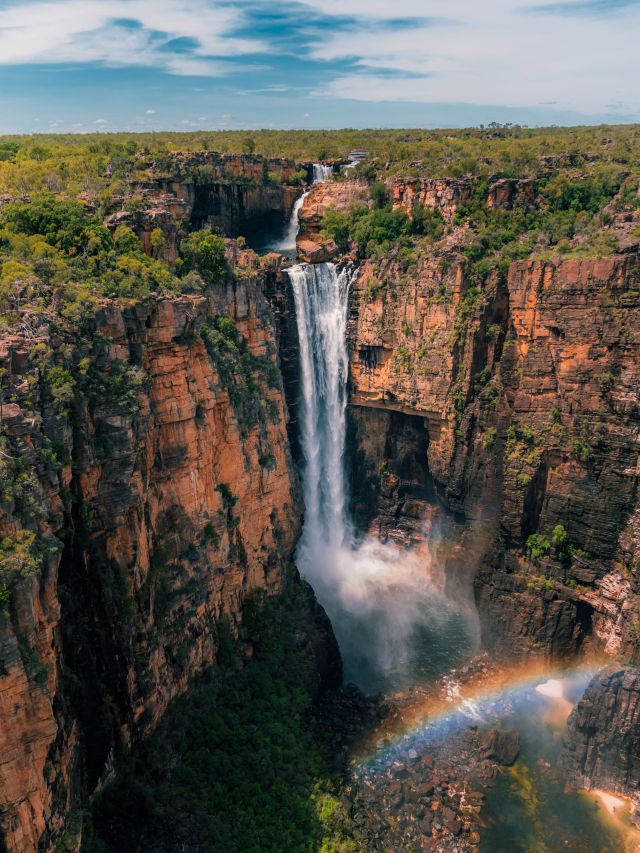
It seems that reading the Country is like reading the face of a person one knows deeply; it takes familiarity, intuition and an awareness of even the most subtle changes in expression. Every few minutes, Victor pauses to point out details in the landscape all but imperceptible to the rest of the group; the rough, calloused leaves of a sandpaper fig, traditionally used for sharpening spears; the fruits and flowers of scarlet bloodroot, collected by Aboriginal women for their vibrant purple-red dye. To Victor, a small impression in the dirt is a tip-off that “a water buffalo was here. But he’s been and gone… I hope."
We wade through tufts of towering speargrass that slice the sunlight into golden shards. They won’t be there for long, though – as Victor tells us, they’ll soon be flattened by the windy ‘knock-’em-down storms’ of Bangkerreng season, due just about any day now.
Visiting Burrungkuy (Nourlangie rock)

Tourism & Events NT/Helen Orr)
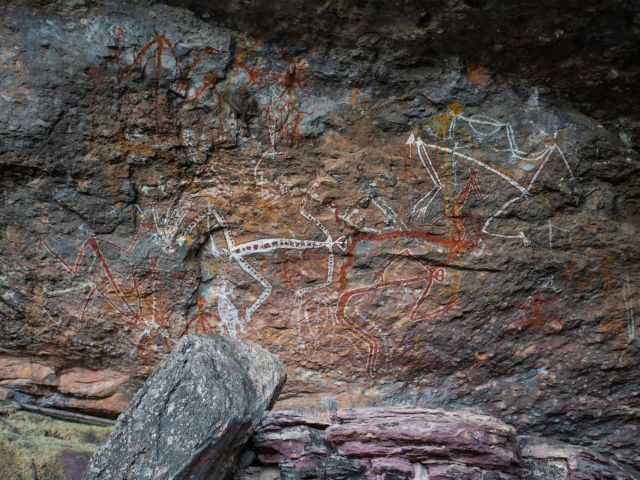
The rasping of insects and the honeyed call of bee-eater birds resound as we approach Nanguluwurr, a lesser-known rock art site on the northern side of Burrungkuy (Nourlangie rock). The site was used as a campsite by Indigenous people for thousands of years, their presence and culture documented in paintings on the rock face. There are millennia-old handprints immortalised in red pigment, clusters of animals suspended like constellations and enigmatic depictions of Ancestral beings.
The far end of the gallery is occupied by malevolent spirits depicted as spectral, elongated figures with six claw-like fingers. As I gaze at the eerie outlines, a chill rushes through the meridian of my body. Victor has chosen to steer well clear of this section of the gallery, and it doesn’t take much convincing for me to do the same.
Tourism Australia/Nicholas Kavo)
Later that afternoon, we return to Burrungkuy to visit the paintings on the south side of the rock. We see paintings of spindly Mimih, shy yet capricious Stone Country spirits said to have lived in the chasms of the rocks in Arnhem Land since the beginning of time.
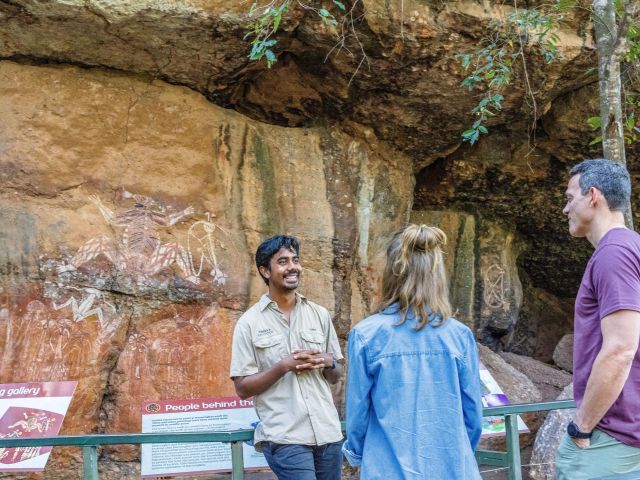
I’m with Bininj guide and Kakadu park ranger James Morgan of Yibekka Kakadu Tours when my stomach flips again. “People think these paintings are just depictions of spirits," James tells us. “No. When you look at a painting, you’re looking at the spirit… and the spirit looks back at you."
Need tips, more detail or itinerary ideas tailored to you? Ask AT.
AI Prompt
Stories written on the landscape
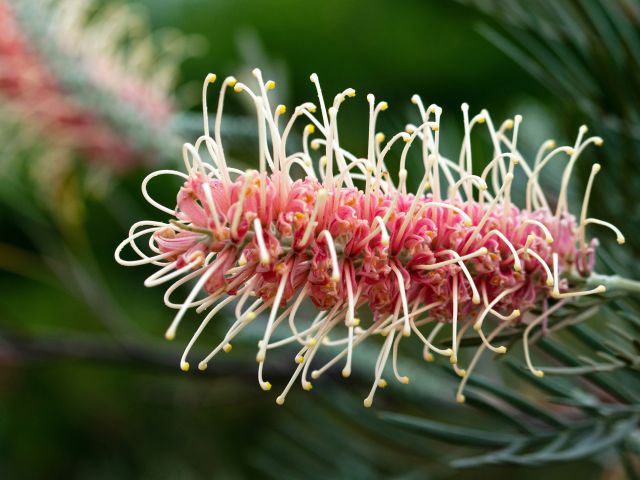
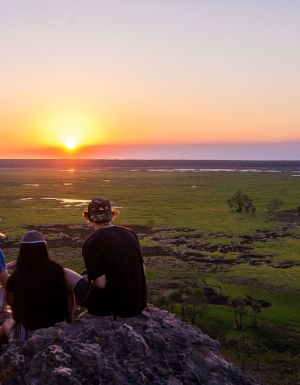
It’s golden hour at Kunwarddehwardde lookout, and James is directing us to “look, listen and feel" the Country. The grevilleas punctuate the flora with their bright fuchsia blooms. A red-tailed black cockatoo perches in a tree, content with nibbling gumnuts. In the distance, the mighty rock columns of Lightning Dreaming glow red like embers in the setting sun. “That’s where Namarrkon, Lightning Man, lives," explains James.
Namarrkon, as James recounts to us, is an Ancestral spirit responsible for the powerful thunderstorms that arrive during Kunumeleng (pre-monsoon season). Here, Ancestral beings shaped the terrain and created all its animals and people. “Us Bininj see stories written in the landscape," James tells us. “We didn’t have maps, so Dreaming sites became our waypoints."
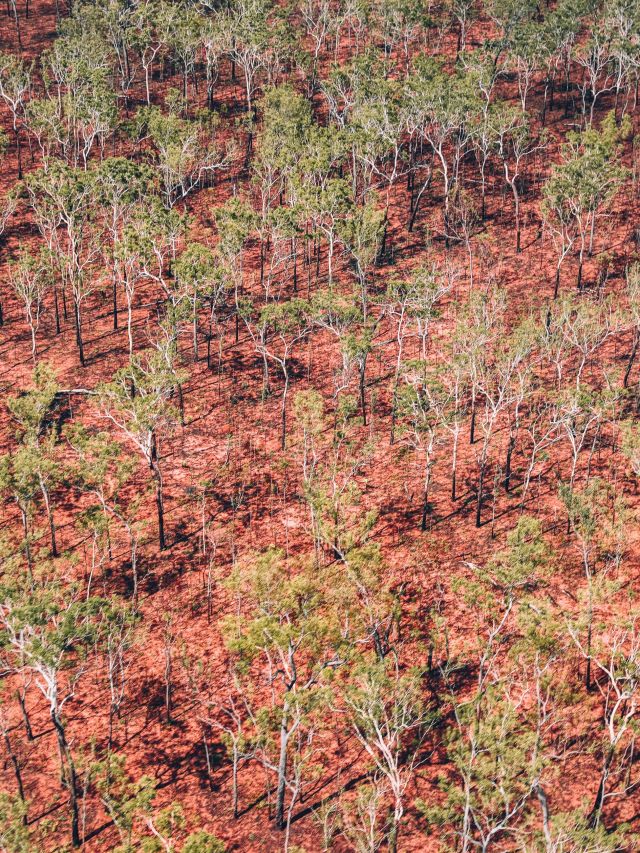
In the stillness of the afternoon, it seems impossible to imagine the clear sky marred by streaks of lightning or the peaceful eucalypts quivering in the wind. But as James tells us, “You see a completely different Kakadu in the wet and the dry." It’s a testament to the power of the seasons, the dynamism of the landscape and the magic in its transfiguration.
It’s not long before we encounter Namarrkon again – this time, as a painting in Anbangbang Rock Shelter. He’s depicted with a band of lightning that stretches from his ankles to his head and with an axe on his knees (that he uses to cut through clouds to make thunder and lightning).
Beside him is Creation Ancestor Namondjok, who floats above a group of people wearing headdresses. Painted by artist Nayombolmi in the 1960s, this is one of Kakadu’s most iconic art sites. The area was occupied and painted by Indigenous people for 20,000 years, and the relatively recent additions in Anbangbang Rock Shelter emphasise the continued legacy and immemorial journey of culture through time. As James informs us: “There are people still alive today who stayed in these shelters."
Tasting the season at Kakadu Full Moon Feast
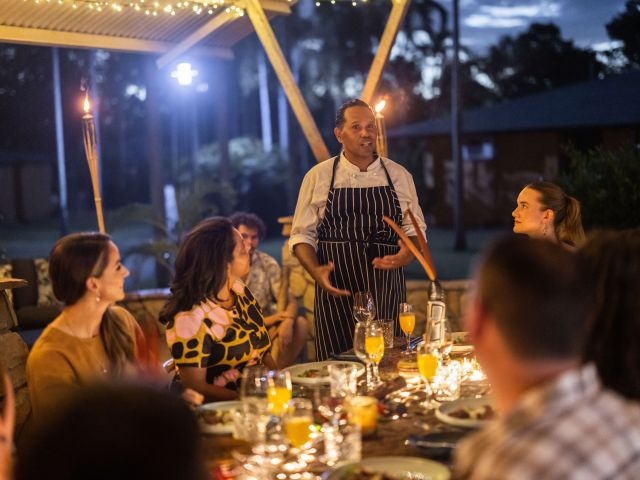
The table at Mimi’s restaurant in Cooinda Lodge is decorated with colourful painted clapsticks, and we receive a welcome as warm as the balmy Kudjewk evening. This is Kakadu Dird Full Moon Feast, spearheaded by Bininj chef Ben Tyler of Kakadu Kitchen, who is on a mission to “connect people with the flavours of Australia and Kakadu". Hosted six times yearly beneath a full moon, each feast is centred around the season in which it falls. For each instalment, Ben weaves together foraged bush ingredients to capture “65,000 years of culture on a plate".
Now, for instance, the trees are dripping with finger limes, and they make a welcome cameo alongside plump fillets of barramundi grilled atop fragrant beds of paperbark. There are also buttery melt-in-your-mouth scallops served with tangy dollops of Kakadu plum gel. For dessert, lime curd is topped with piquant, citrusy green ants that deliver a delightful shock of flavour to the palate. Altogether, it’s a taste of Kudjewk and a sensory journey into the aromatic, watery world of Kakadu.
Tourism & Events NT/Helen Orr)
Each course is complemented with a non-alcoholic beverage made with native, foraged ingredients. The tonic infused with lime leaves and green ants is not only wonderfully refreshing, but tastes and feels medicinal. It is, Ben tells me. Green ants are commonly used among Bininj people to alleviate symptoms of cold and flu. It’s a remedy Ben remembers from childhood.
For Ben, the alcohol-free beverages are a way to combine “health, nature and culture" as well as set the tone for Indigenous tourism. “You’re coming here to connect," he says. And it’s true. Besides, it’s hard to imagine anything more intoxicating than the flavours Ben has plated up for the evening and the stories of culture and tradition being shared with our table. It’s the perfect way to end my time in Kakadu, with great company and a meal that distils the exuberance and beauty of Kudjewk. I know that I’ll be back, though – there are still five more seasons to see.
Weekly travel news, experiences
insider tips, offers, and more.
A traveller’s checklist
Kakadu accommodation
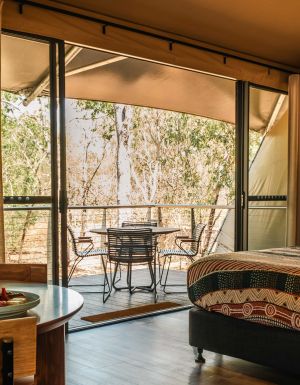
Cooinda Lodge is an Indigenous-owned business that offers comfortable family rooms and glamping-style tents. The Yellow Water Villas are Cooinda’s luxury product, where guests can experience the epitome of eco-luxe. In Jabiru, the Indigenous-owned Mercure Kakadu Crocodile Hotel built in the shape of a giant crocodilian is an icon of the region.
Where to eat in Kakadu
Don’t miss the Kakadu Dird Full Moon Dinner hosted at Cooinda Lodge, which pulls together a taste of the season featuring foraged bush tucker ingredients. Mimi’s Restaurant & Bar (onsite Cooinda Lodge) is open daily for lunch and dinner.
Things to do in Kakadu
Kakadu attractions are vast and varied, but a good place to start is with a scenic flight over the UNESCO World Heritage-listed landscape with Kakadu Air. Discover hidden gems with Ayal Aboriginal Tours. Embark on a guided Kakadu rock art tour with Yibekka Kakadu Tours to discover the fascinating stories held in the rocks. Browse exquisite artworks at Marrawuddi Arts & Culture in Jabiru, and be sure to grab a cuppa from the gallery cafe.
If you’re planning a trip to Kakadu National Park, we’ve rounded up everything you need to know before you go.
Want to see more stories from Australian Traveller in your Google search results?
- Click here to set Australian Traveller as a preferred source.
- Tick the box next to "Australian Traveller". That's it.