Before planning your trip to the Northern Territory, consider these amazing activities for your Kakadu National Park bucket list….
Kakadu National Park is nearly one-third of Tasmania in size. So, feeling bewildered when it comes to choosing the best things to do in Kakadu is understandable. The National Park is dual-listed by UNESCO as a World Heritage site for its cultural and natural attributes – meaning there’s plenty here to explore. Below, we’ve rounded up a guide on the best things to do in Kakadu whether you’re a foodie, nature lover or a history buff.
It’s worth noting that to enter, you’ll need to purchase a Kakadu National Parks Pass, which can be organised online or bought at one of the locations listed on the Parks’ website.
1. Join a Yellow Water Billabong cruise
Best for: Families and wildlife lovers.
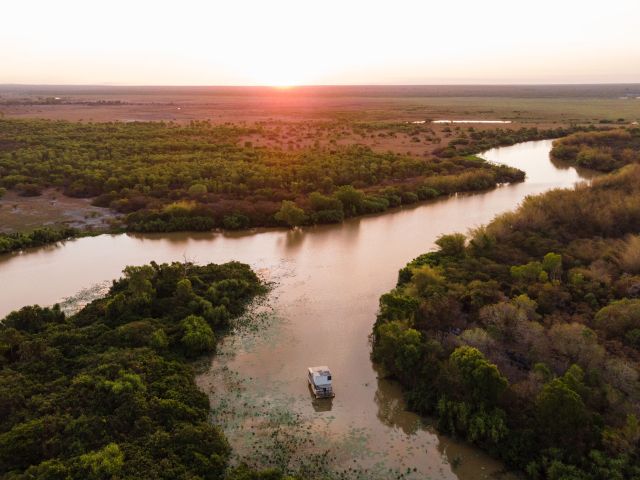
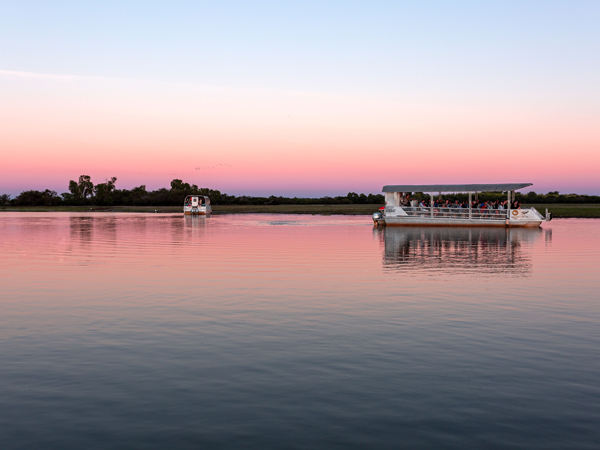
The Yellow Water Billabong is Kakadu’s postcard shot: regular boats cruise across its great swathes of floodwaters, half-submerged paperbarks, pandanus and water lilies, while crocs cruise beneath. It’s no surprise this is one of Kakadu’s most popular things to see and do.
You can see many of Kakadu’s birds: jabiru, sea eagles, magpie geese and egrets. Cruises operate all year round; in the dry season, you can also explore the billabong on foot via boardwalks.
If you’re after other cruises or tours in Kakadu, we’ve rounded up a guide to the best tours in Kakadu National Park.
Access information: Via 2WD in the dry season (you can drive virtually up to the boat ramp); in the wet season, you simply drive to the nearby hotel and hub Cooinda Lodge and hop on a shuttle bus.
2. Watch the sunset at Nawurlandja Lookout
Best for: Travellers seeking serene vistas or photographers looking for a postcard-perfect shot.
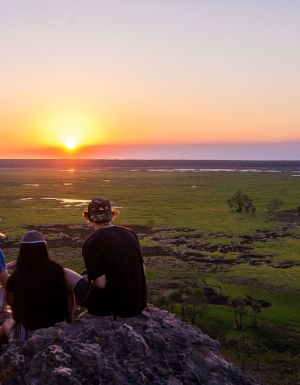
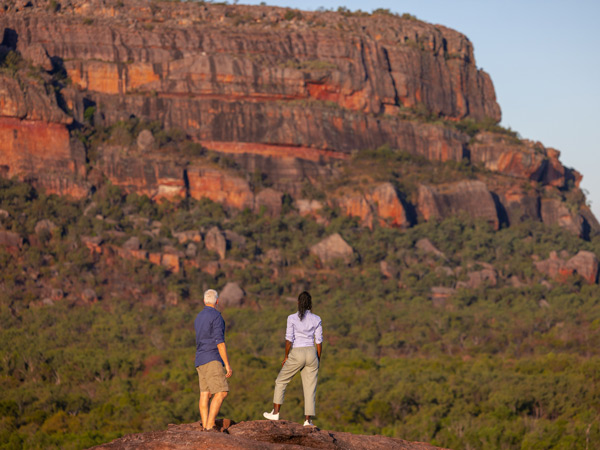
Nawurlandja lookout attracts locals, visitors and snap-happy photographers during golden hour, seeking the best vantage point to admire the surrounding rock formations as the escarpment starts to glow while the sun sets behind the vista.
Walk up the 300-metre incline for sweeping views over Anbangbang Billabong and towards Arnhem Land. Have your camera ready, this is one of the most picturesque spots in the park, especially when the sun starts to set.
3. Swim at Maguk
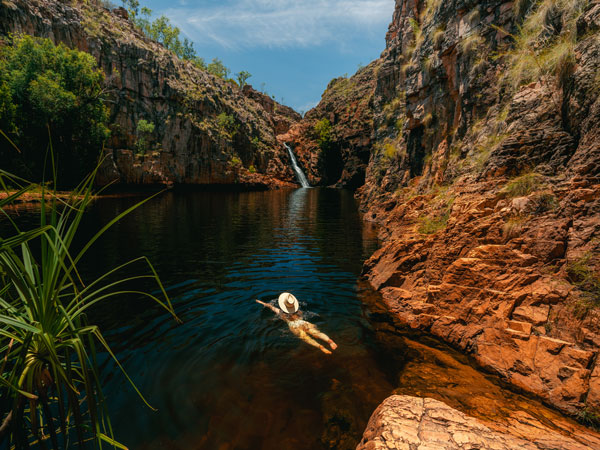
Best for: Active and adventurous travellers seeking off-the-beaten-path experiences.
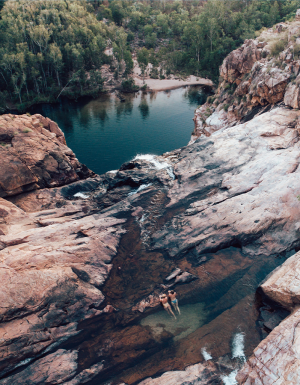
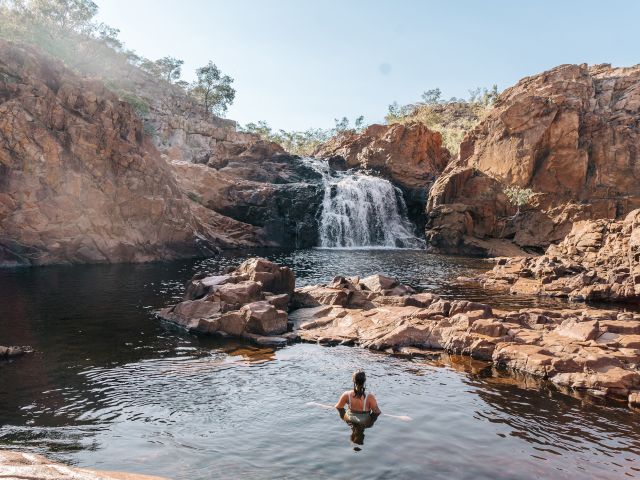
Of all the things to do in Kakadu, a swim at Maguk is one of the more under-the-radar activities, despite being absolutely stunning. It’s only an hour’s drive south of Cooinda Lodge (one of Kakadu’s popular accommodation options), but you’ll need to turn off the sealed highway and drive a 14-kilometre, 4WD-only track, then walk a kilometre to get here.
The effort required makes this one of the Park’s lesser-visited natural plunge pools, but it’s gorgeous to swim in, and the walk-in, via a beautiful creek and classic pandanus forest, is truly lovely. A short but steep climb will get you to the top of its waterfall, where more pools await you.
Access information: In the dry, you can access Maguk via 4WD; then, it’s a two-kilometre, easy-to-moderate, return walk. Maguk is inaccessible in the wet season.
4. Admire rock art at Ubirr and Burrungkuy (Nourlangie)
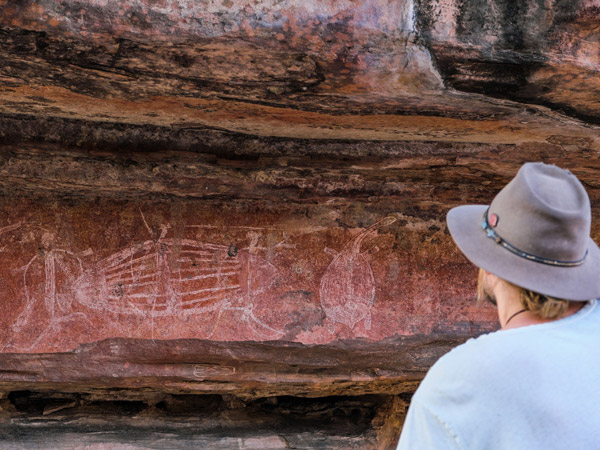
Best for: Anyone curious about local culture.
Did you know that there are more than 5000 rock art sites in Kakadu National Park? And that’s just what’s officially recorded. There are two key locations to explore some of the park’s incredible rock art, Ubirr and Burrungkuy.
The Ubirr art site involves a kilometre-long circular walk from the car park, which takes in the Main Gallery, the Namarrgarn Sisters Gallery, and the Rainbow Serpent Gallery. The art dates from over 15,000 years ago to as recent as 150 years ago. You’ll witness ‘X-ray’-style paintings of animals and figures from Dreamtime folklore.
The second of Kakadu’s most famous rock art sites, the well-preserved area of Burrungkuy (Nourlangie) offers spectacular views and a fascinating window into local Aboriginal culture.
You’ll need 90–120 minutes to tour the multiple art sites along a 1.5-kilometre circular walk that also includes the Anbangbang Shelter, providing refuge from the weather for 20,000 years for locals who whiled away the time by decorating the walls with their stories.
If you want to enrich your knowledge and experience of Kakadu’s rock art, we recommend booking a rock art tour with a Traditional Owner. Yibekka Tours offers an inspiring Bininj-led tour of Burrungkuy, sharing the incredible stories behind rock art and the Dreaming stories held within the landscape. Parks Australia also offers a range of free Bininj/Mungguy-led tours throughout the park in the high season, including rock art tours. For more information on available tours, visit the Bowali Visitor Centre , or give them a call on 08 8938 1120.
Access information: Access Ubirr via 2WD in the dry (though check road conditions early in the season). The circular track is partly wheelchair accessible. In the wet, only 4WDs can drive here; if 4WD access is also closed due to flooding, you might be lucky enough to access the site via boat, on a wet season Guluyambi Cultural Cruise. Access Burrungkuy 2WD, year-round. The 1.5-kilometre walk is easy; the 600-metre climb to the lookout is moderately steep.
Need tips, more detail or itinerary ideas tailored to you? Ask AT.
AI Prompt
5. Check out Jim Jim Falls and Twin Falls
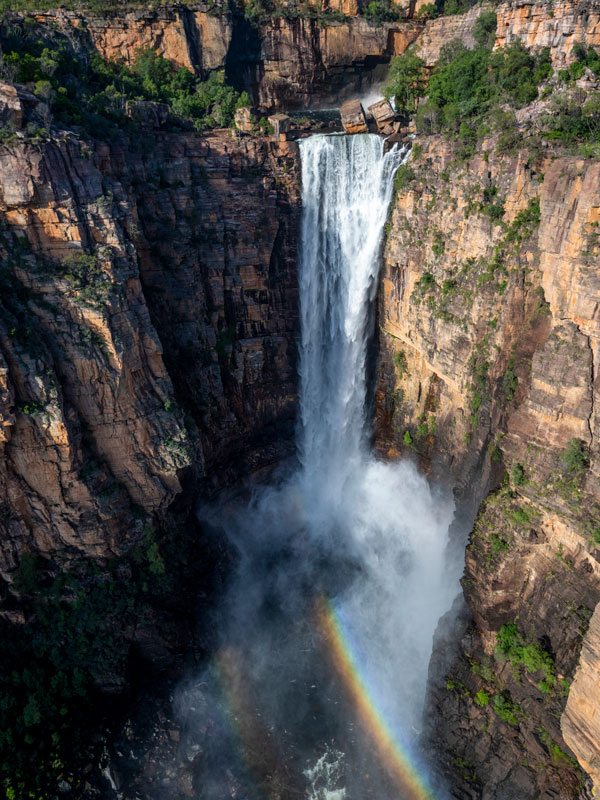
Best for: Travellers seeking a swim and some show-stopping scenery
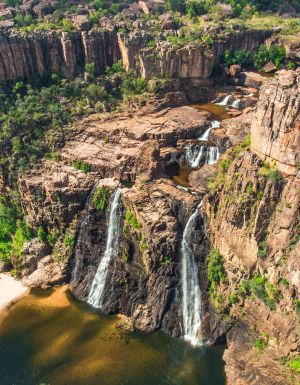
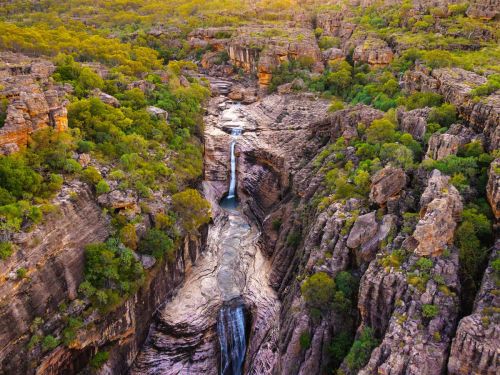
No visit is complete without seeing Kakadu’s beautiful waterfalls – they’re key to the massive movement of water that marks the seasons. However close to each other geographically, they’re actually very different. Jim Jim Falls features vertiginous 150-metre-high cliffs surrounding a beautiful, deep plunge pool, and flows only after the wet season.
You can swim in the top pool during the dry season and admire the unexpected presence of silica sand – this area was once an inland sea. Kakadu’s Twin Falls are in spectacular flow all year round, continuously gushing over a 220-metre drop onto the beach below.
Twin Falls has a very pretty plunge pool, but you can’t swim here; saltwater crocodiles do occasionally make their home here. The plateau above it is safe for swimming, though, and well worth the hike up.
Access information: You can get to Jim Jim Falls via 4WD in the dry season. From the car park, take a moderately difficult 45-minute walk over boulders to the top plunge pool where you can swim. To get to Twin Falls, you’ll need a snorkel on your vehicle to get through a 0.8-metre water crossing. You then board a shuttle boat from the car park, which takes you up the gorge before a short walk to the falls themselves.
6. Take one of the Yurmikmik Walks
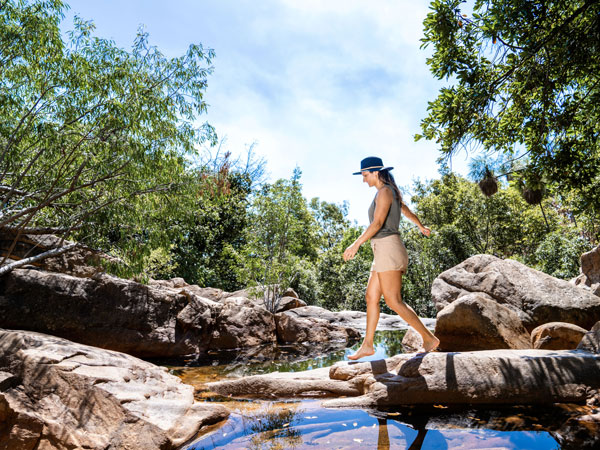
Best for: Nature lovers and travellers looking to get active
The Yurmikmik walks are a series of interconnected trails exploring the wilds of the park’s southern region. They are underutilised, underrated, and local favourites. These trails are especially beautiful during the wet season when the landscape becomes lush with greenery. You’ll also likely spot abundant wildlife, from wallaroos to cockatoos and finches.
The two-kilometre-return Boulder Creek Walk runs through monsoon forest and woodlands; the five-kilometre return walk to Yurmikmik Lookout takes you to the ridge for fantastic views over Yurmikmik country (pack your camera).
The ultimate Kakadu walking experience is the 14-kilometre overnight Motor Car and Kurrundie Creek circuit, with some sections best navigated by GPS and compass (you’ll need a permit to camp here).
Access information: Via 4WD year-round. The area may be closed due to flooding in the Wet.
7. Visit Mamukala Wetlands
Best for: Nature lovers and birdwatching enthusiasts
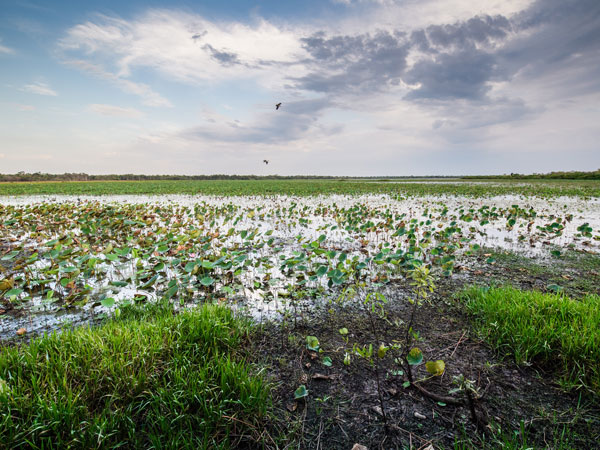
A hugely important part of Kakadu is its birdlife, and Mamukala has a bird hide shelter where you can have some quiet time and really enjoy the sight of thousands of magpie geese (particularly from September-October) coming together to feed, undisturbed.
Take a self-guided tour on the nearby walks, ranging from one to four kilometres; the three-kilometre walk alongside the wetlands is ideal for enjoying the paperbarks, pandanus, and water lilies. Beautiful and accessible for most of the year, it’s most dramatic in the late wet season when birds congregate in thousands.
Access information: Via 2WD year-round, although the area may be closed due to flooding in the wet. The bird hide is accessible by wheelchair, 500-metre return; the three-kilometre loop walk is rated easy.
8. Scenic Flights
Best for: Anyone with an adventurous streak
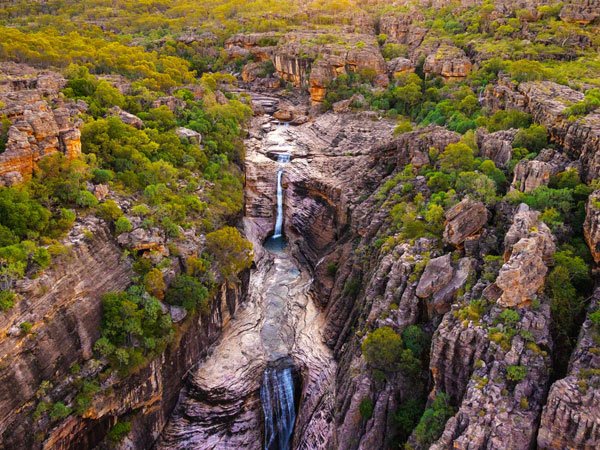
If breathtaking scenery is what you’re after, then a scenic flight is one of the best things to do in Kakadu. Take to the skies for a bird’s-eye view of the UNESCO World Heritage-listed Kakadu wetlands. Seeing Kakadu from a scenic helicopter – with the doors off – you’ll be treated to an unforgettable panorama.
Rise above verdant savannah woodlands, whizz past rocky escarpments and soar over exposed rocks that make up some of the world’s oldest. Watch magnificent waterfalls come into view, so close that you can almost feel the spray.
Kakadu Air Services, a local operator, offers scenic flights ranging from 20 minutes to an hour, and the Scenic Flight Company offers flight options ranging from 30 minutes to 1 hour and 45 minutes. A Kakadu scenic flight is the best way to witness the landscape and get your adrenaline pumping, too.
Access information: Flights depart from the townships of Jabiru, Cooinda or Darwin.
Weekly travel news, experiences
insider tips, offers, and more.
9. Go Croc Spotting
Best for: Thrill seekers
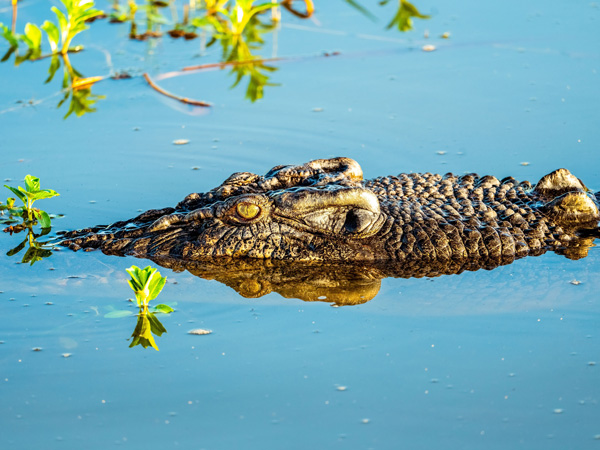
You can’t visit Kakadu National Park and miss out on some serious crocodile spotting! A bucket list item for any visit to the Northern Territory, Kakadu is one of the best places to see crocs in the wild, whether you venture out on a tour or visit a viewing deck.
The best viewing deck is Cahill’s Crossing . Just a few minutes from Ubirr, you can make the drive just before sunset (one of the best times to do the Ubirr walk), or – for an insider tip – check for the next high tide and try to arrive 30 minutes prior. As the water runs over the crossing, crocodiles will line up to catch fish as they pass.
Access information: 2WD access during the Dry season. Parking is available on site, including caravan parking.
The best time to visit is between July and October.
10. Cruise the East Alligator River
Best for: Family fun
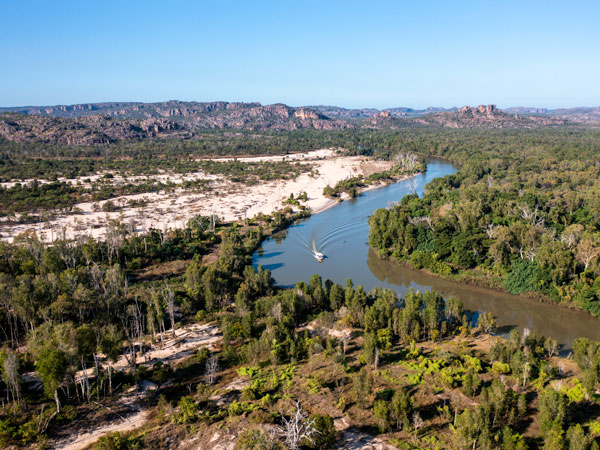
Want a more up-close crocodile-spotting experience? Jump on a Guluyambi Cultural Cruise . Led by an Aboriginal guide, you’ll see crocodiles idling right past your boat and sunbaking on the river’s edge, making for fantastic photo opportunities and an adventurous activity for the whole family.
Beyond crocs, the Guluyambi Cultural Cruise gives insight into local culture and the role of the East Alligator River for Indigenous inhabitants over thousands of years. Learn about plants and animals that rely on the river, and see Arnhem Land as you briefly depart on the other side, along with a hunting and gathering lesson.
Access information: Operating May to November, with departures at 9am, 11am, 1pm and 3pm daily for a 1-hour 45-minute cruise, departing from the Upstream Boat Ramp, East Alligator River.
11. Take a dip at Motor Car Falls
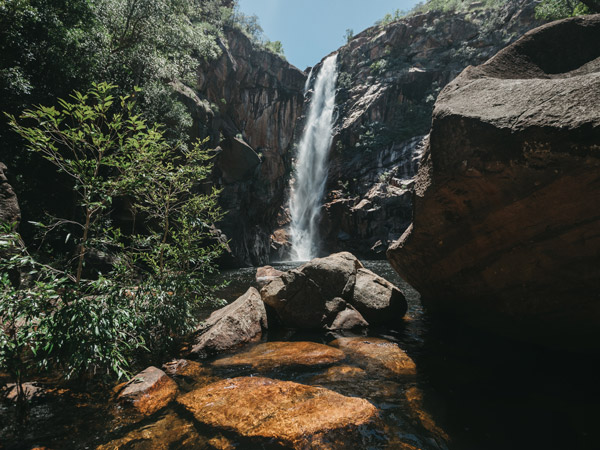
Best for: Visits during the Wet season
Visiting Kakadu National Park during the wet season? It can be tough to find things to do in the Northern Territory during the summer when heavy rain sees many attractions shut down for safety reasons. However, Motor Car Falls is open year-round (depending on weather events), meaning you can enjoy a beautiful hike and waterfall visit during Kakadu’s off-season.
Swimming is permitted, but always check the access report , as weather events can cause this to change suddenly. Also, be prepared—the trail to Motor Car Falls is moderately challenging at around 7.5km.
Access information: 4WD recommended, however, 2WD may be appropriate. Check the access report for current information.
12. Take A 4WD Tour
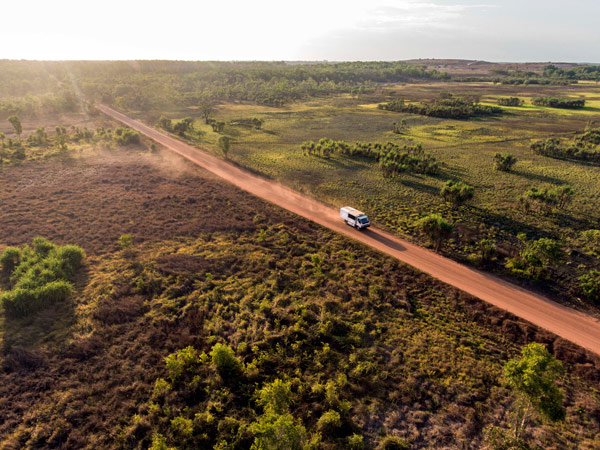
Best for: An all-access pass
Many parts of Kakadu National Park can only be accessed with a 4WD, and if you’ve flown into the Northern Territory, you may not have a hire car that fits the bill. Even if you do, you may not have the 4WD experience that makes you feel confident to handle some of the tricky trails that lead to some of the best things to do in Kakadu.
Enter 4WD tours – the stress-free way to see the sights. Multiple companies operate tours throughout the park, so you can choose what suits you, whether that’s a private tour, micro group tour or travelling in luxury. Regardless of the tour you choose, you’ll have access to the best Kakadu has to offer, with a trained 4WD driver as an escort.
Choose from day trips to multi-day adventures, and leave the driving stress back home!
Access information: Official 4WD tour options can be found on the Kakadu website here . For travel during the Dry season, it’s best to book ahead to avoid missing out.
Written by Liz Whitehead with updates by Melissa Mason
Discover the best accommodation in Kakadu