Camping Adventure at West Alligator Head

hero media
Australian Traveller looks at the remote camping outpost of West Alligator Head in NT’s Kakadu National Park.

When it comes to camping, we’ve tried to find one site that’s as off-the-beaten-track as possible. Hardy travellers Steve and Alison Kruger reckon it’s hard to go past this remote area of Kakadu.

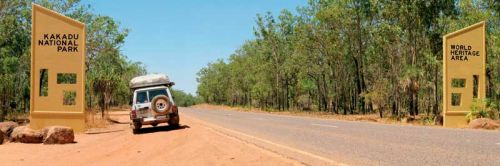
West Alligator Head is a fishing and birdwatching paradise. Getting there is a short but challenging 4WD trek on the Waldak Irrmbal Track southeast of Darwin. The track leaves the Arnhem Highway just 2km inside the North Western Entrance to the World Heritage-Listed Kakadu National Park. This area has limited access, as the track crosses the dark soils of the Wildman and West Alligator River flood plains, which remain water saturated months after the end of the wet season.

The 81km drive into West Alligator takes you past two good camping spots on the Wildman River: 2 Mile and 4 Mile Waterholes, named for their length, not their distance from the turnoff. These are both fresh waterholes with their own bush camping areas. But, frankly, once you’ve experienced the paradise ahead, you’ll decide to stop at the waterholes for a spot of morning tea or a quick overnight camp only. Take care after the turnoff to 4 Mile Waterhole, as the track becomes more narrow, winding and corrugated.

Engage 4WD to tread lightly and to ensure you don’t damage the track. Additionally, decreasing your speed will ensure you don’t flick up one of the many sticks on the edge of the track that can easily stake a tire or damage your undercarriage. The track can become impassable after wet weather for months at a time, so be sure to keep one eye on the skies during your visit or you’ll end up staying a lot longer than you’d planned.

As the track winds its way through the dry savannah woodlands for which the area is famous – and through various fire-scorched sections – you’ll encounter groves of screw top palms; these have the appearance of a giant screw, which becomes very obvious when the old foliage has been burnt from their tops.

Finally the woodlands yield to the flood plains of the local rivers and are replaced by tall grasses. When this vegetation is burnt out by one of the many fires common to the area, it quickly sprouts anew, becoming as green as the grass on a well-watered suburban front lawn. This lends a hint as to the moisture that exists just a few centimetres below the surface. It’s always a striking contrast between the charred and blackened remains of the burnt grass and the verdant green of new growth. Once you cross the plains, you quickly find yourself 4WDriving along the edges of sand dunes towards the beach, once again surrounded by savannah woodlands.

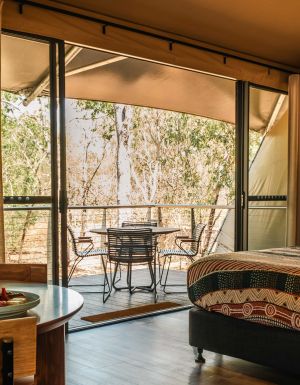
Camping is only permitted in three areas at West Alligator Head, on a first-come first-served basis. The smallest area will accommodate only two vehicles and the largest some 30 or so. The pick of the camping areas isn’t Pocock Beach, but a small private secluded beach on the eastern side of the headland. This site accommodates about five vehicles. The 4WD across the headland to this beach takes you through a monsoon forest in which kangaroos, wallabies, bush turkeys, birdlife and flying foxes are plentiful.

Upon reaching this secluded cove, you’ll find that the high tide mark is so close to your campsite that you’ll be able to cast a line to catch that barra or salmon and still be only a few metres from your esky, fireplace and sleeping bag. Keep in mind: when you’re beaching your boat, there’s a huge difference between the high and low tide marks in this area, and once the tide retreats all you’re left with is soft mud.

From October to December is turtle nesting season; they use the beach dunes for nesting, so 4WDs aren’t allowed on the sand except to launch boats. If you take your torch and you’re careful, you just might find a nesting site. But please remember that they’re protected and easily frightened. Something else to keep in mind is that these are crocodile-infested waters; sightings along the beach are common, including reports of a 4.5m croc in the area, so swimming is far from recommended.

Birdlife abounds in this area, with the blue-winged kookaburras being particularly friendly. These cheeky devils have the ability to hold a hermit crab in their beaks, which they then smack onto a branch until the borrowed shell is broken. The unprotected crab then falls to the ground and the kookaburra swoops down to eat its waiting meal.

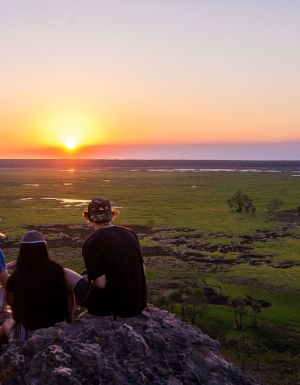
If your visit happens to coincide with a rising full moon, you’ll be treated to the visually spectacular scene of a huge, red, glowing orb lighting up your private cove and beach. The colours are strong and reflect from the calm ocean as though set on fire.

You never know who you might bump into in this idyllic paradise. During our last stopover, our camp was visited by the guys from HEMA (map-makers extraordinaire) in their Map Patrol vehicle. Over a cup of coffee, Charles and Keith told of their work. Surely they must have one of the best jobs in the world! They were replotting the route into West Alligator Head with GPS units for the next series of maps of the area. So make sure you visit before this secret is out and paradise is lost.

DETAILS // West Alligator Head

Getting There // The track leaves the Arnhem Highway 2km inside the North Western Entrance to Kakadu National Park, 170km southeast of Darwin.
Best Time To Visit // August to October – but be sure to check if the track has re-opened following the end of the wet season.
Permits // No permits are required as long as you camp within designated camp areas.
Camping // Camping is free and in designated areas only. Fires are allowed only in the cement rings provided. Be aware of any fire bans that may be in place.
Amenities // Basic in the main camping area at West Alligator Head, limited or none in the Pocock Beach, 2 and 4 Mile Waterhole areas. No drinking water available, and no rubbish disposal provided – so please take all your rubbish out with you.

hero media

8 Northern Territory secrets the locals don’t want you to know

Summer transforms the Northern Territory into a lush paradise of colour and life, as a visit during the ‘low-season’ reveals secrets the locals willingly share.

Waterlilies bloom, floodplains are alive with birdlife, waterfalls are gushing, and everywhere the green is dazzling. Summer in the Top End and the Red Centre is a kaleidoscope of unexpected wonders that delight and surprise visitors. Of course, the locals know only too well that the Northern Territory low season is often the best time to see and experience this amazing part of Australia.

Here are some of the reasons why savvy travellers – avoiding the crowds – are discovering a new dimension to the Territory. Remember that you’ll need a Parks Pass to visit national parks.

1. Take a dip in the Florence Falls waterhole

Wander through savanna woodland and monsoon forest to discover the perfect place to cool off – the waterhole at the base of spectacular Florence Falls in the magnificent Litchfield National Park , just 90 minutes’ drive from Darwin. The falls flow year-round but are most spectacular during the summer. Camping is available nearby but bookings are essential and must be made online before you visit.

Surrounded by lush forest, a woman cools off in Florence Falls, just one of many incredible things to do in the Northern Territory.
Cool off beneath the cascading waters of Florence Falls. (Image: Joshua Griffin)

2. Wind down at Buley Rock Hole

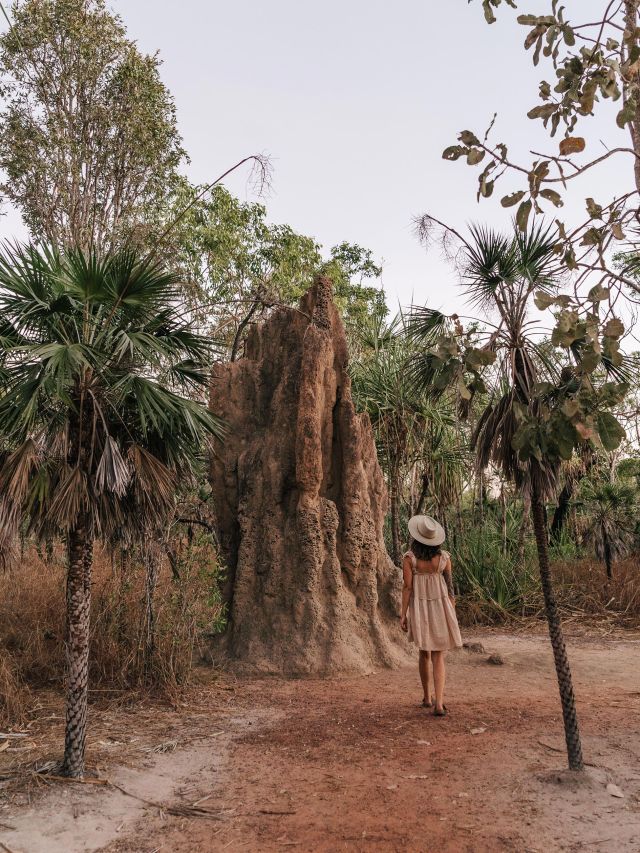
Another popular local swimming spot in Litchfield National Park is Buley Rock Hole , open year-round. This is a great place to wind down after exploring everything the park has to offer, including towering termite mounds. Wade through the rock pools, soak up the scenic bush or just lie back and relax as the cool water rolls over you.

Buley Rockhole, Litchfield National Park
Let the cool water wash over you. (Image: Tourism Australia)

3. Tour the Tiwi Islands

The Tiwi Islands , a scenic 80km flight from Darwin across the narrow Clarence and Dundas Straits, reveal a different side to the Territory, with their own distinctive culture. Take a day tour with Tiwi by Design to visit Bathurst Island and learn about creation stories, the Mission days, World War II history and the islanders’ obsession with AFL!

Take a ‘behind-the-scenes’ tour of Tiwi Design’s screen-printing workshop and pick up a great souvenir in the form of art. Choose from contemporary or traditional Tiwi designs and a wide range of work including carvings, paintings, pottery, printmaking, bark paintings and tunga (bark baskets).

A creative moment shared inside Tiwi Design’s screen-printing space.
Take a peek inside Tiwi Design’s screen-printing studio. (Image: Tourism NT)

4. Dine in Darwin

Foodies are spoilt for choice in multi-cultural Darwin. Try Sri Lankan flavours at Ella by Minoli, where Masterchef contestant Minoli De Silva creates delectable dishes, or head to Charlie’s of Darwin for gin-tasting, cocktails and more. Bowls of fragrant laksa, excellent coffee, fresh vegetables and authentic crafts are all part of a weekend visit to Darwin’s Parap Markets , Rapid Creek Markets and the Nightcliff Markets .

Prefer to catch your own dinner? Book a Top End fishing charter to bag a barramundi – and from October register for the annual Million Dollar Fish competition. Hooking one of the tagged barra released each year in waterways across the Territory could win you up to $1 million.

A bowl of Laksa.
Eat your way through multicultural Darwin. (Image: Tourism NT)

5. Up close with Uluṟu

The magnificent monolith Uluṟu is even more magical when the summer rains fall. When it rains on The Rock, the locals come out to watch – consider yourself lucky if that happens when you visit. Waterfalls cascading off the sides of Uluṟu is a sight that relatively few tourists see.

There’s so much to do at Uluṟu, from guided walks to learn the stories of the Aṉangu people and the ancient landscape they live in to scenic flights for a bird’s-eye view or a leisurely walk around the base of Uluṟu. Book ahead to spend the evening wandering through the Field of Light installation by Bruce Munro.

A closer look at Uluru and uncover its ancient stories, sacred sites, and striking natural beauty – one of the most iconic things to do in the Northern Territory.
Discover the details that make Uluṟu truly sacred. (Image: Tourism NT)

6. Drive the Red Centre Way

From Alice Springs, take an epic road trip along the Red Centre Way, taking in Uluru and Watarrka National Park, home to the magnificent Kings Canyon. Allow at least a week to drive through the red heart of Australia by 4WD, a little longer on the sealed road by 2WD vehicle, travelling through ochre deserts, palm-lined valleys and dramatic gorges. Stop off at waterholes for a refreshing dip along the way.

Kings Canyon offers hiking options for all levels of fitness, from the three-hour Rim Walk atop soaring sandstone walls to the gentler Kings Creek Walk. Either way, you’ll have breathtaking views.

SEIT Outback Australia is a small group touring specialist offering exciting, adventurous, exclusive and specialised iconic, pioneering and cultural touring in the Red Centre of Australia, giving you the time to learn, absorb and relax in the heart of Australia.<br /><br />This innovative tour company focuses on providing clients with the ultimate interpretive touring experiences with a range of products and customised touring itineraries for small groups and bespoke private charters.<br /><br />The company bases its philosophies from the key words of Spirit, Emotion, Intellect and Task (SEIT).
Drive through Australia’s heart. (Image: Outback Australia Tours)

7. Take a walk at Kata Tjuṯa

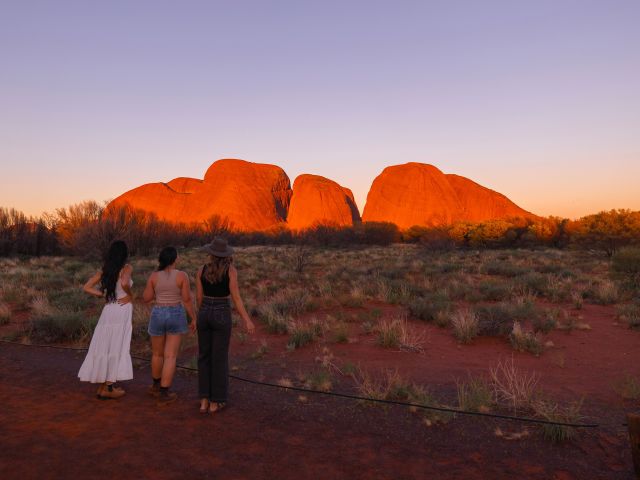
Head out early to tackle the Valley of the Winds Walk at Kata Tjuṯa . This natural wonder, also known as The Olgas, is a labyrinth of soaring ochre domes that glow golden at sunrise and sunset (the walk may be closed during the middle of the day as temperatures rise).

Walking trails range from easy to longer, more difficult tracks. At the Kata Tjuṯa dune viewing area, take in the panoramic view of the domes. The longest of the trails is the Valley of the Winds Walk, a 7.4km circuit that winds between the domes and through creek beds. It’s moderately difficult and steep in places, but offers stunning views – and occasional encounters with kangaroos.

The Valley of the Winds Walk at Kata Tjuta is one of the most awe-inspiring things to do in the Northern Territory, especially at sunrise when the domes glow golden.
Step into the golden light of Kata Tjuṯa. (Image: Tourism NT)

8. Explore Tjoritja/West MacDonnell Ranges

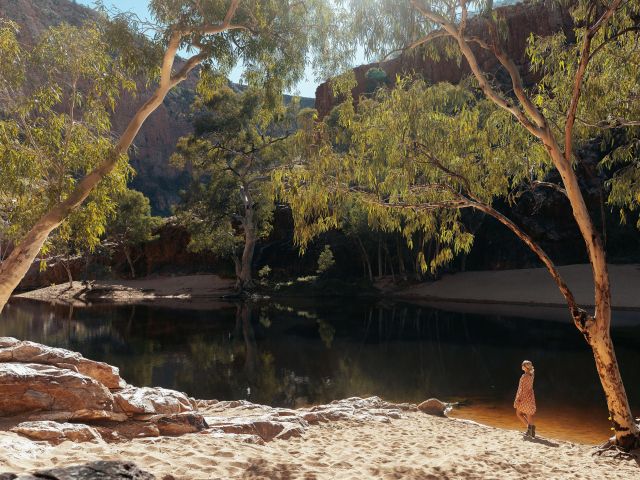
Tjoritja/West MacDonnell National Park lies 135km west of Alice Springs, with many fascinating natural features to beguile visitors. The ‘West Macs’ formations include chasms, gorges and waterholes – take your swimsuit for a dip at Ormiston Gorge waterhole, open year-round. The Ormiston Pound Walk is a three to four-hour circuit that leaves from the visitor centre and loops back along the gorge via the main waterhole. Other places of interest in the park include Simpsons Gap , Standley Chasm , Ellery Creek Big Hole and Glen Helen .

Soaking in the serenity of Ormiston Gorge, these two travellers enjoy one of the most scenic things to do in the Northern Territory.
Take the plunge at Ormiston Gorge waterhole. (Image: Joshua Griffin Litchfield)

Start planning the NT road trip of a lifetime at northernterritory.com