hero media

Kangaroo, a heartwarming new Aussie outback film inspired by real events

Director of Kangaroo Kate Woods on the filming of the movie and falling in love with Alice Springs and the Australian outback.

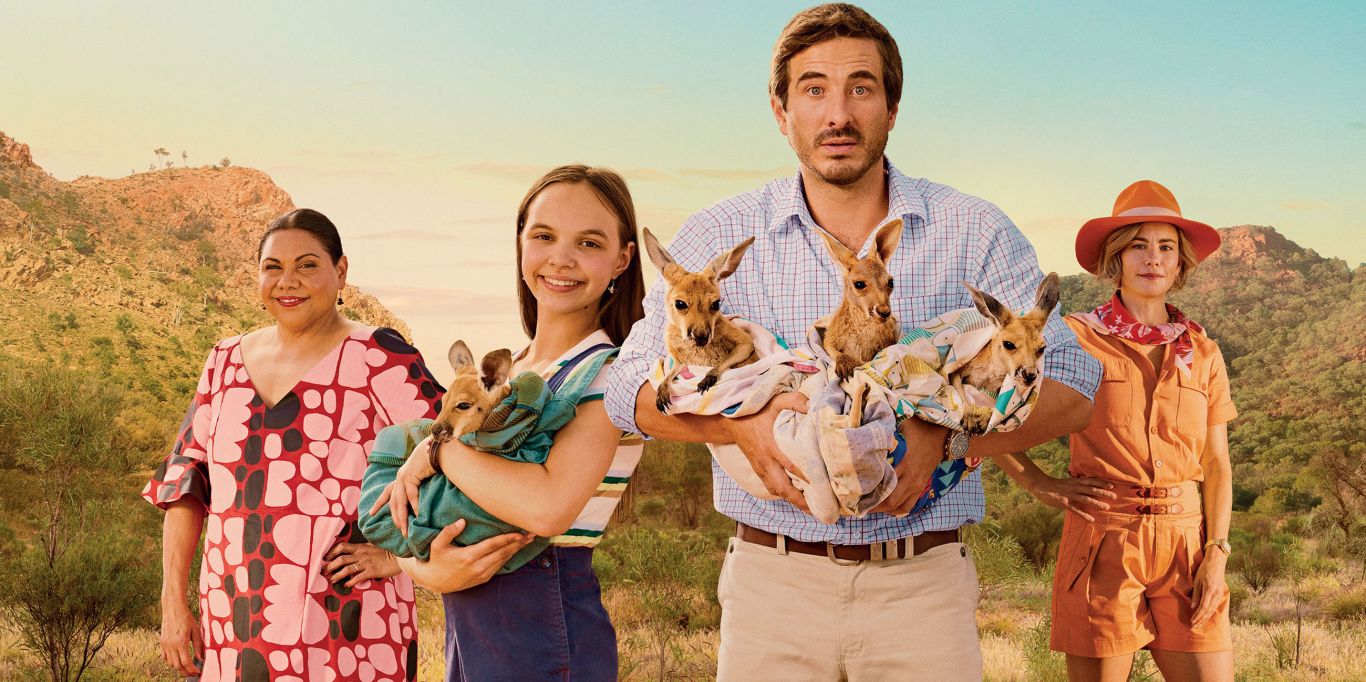
Kangaroo is a heart-warming film inspired by real events and the work done by the founder of the Kangaroo Sanctuary in Alice Springs, Chris ‘Brolga’ Barns. The Studiocanal film version tells the story of ex-TV personality Chris Masterman (Ryan Corr) who becomes stranded in a town outside Alice Springs (Mparntwe) where he forms an unlikely friendship with 12-year-old Indigenous girl Charlie (Lily Whiteley). The pair work together to rescue and rehabilitate orphaned joeys in the remote but stunning outback community, an endeavour that proves life-changing for them both. We spoke to director Kate Woods about the making of the film.

What was it that jumped (pardon the pun) out at you about this film?

When I read that first scene, which is word-for-word what Harry Cripps wrote on the page, I just thought, ‘Oh my god, this is gorgeous!’. The fact that you get to spend time with these little creatures in a very personal way is very special. But essentially, it was that there is a lot of depth and meaning within this really great story that is both funny and heartfelt.
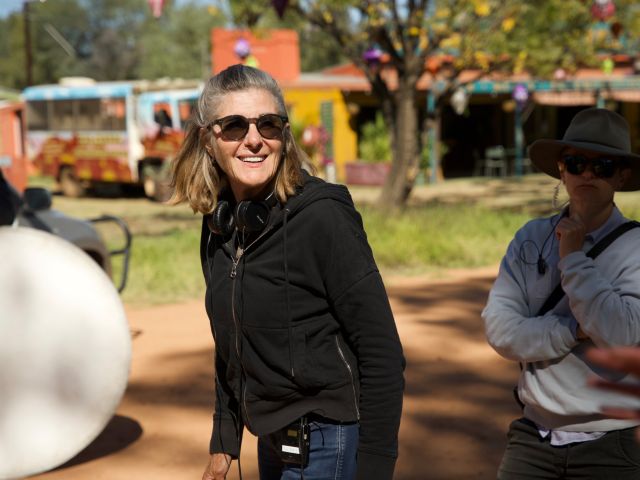
Director Kate Woods on set filming Kangaroo in Alice Springs.
Director Kate Woods on set filming Kangaroo in Alice Springs. (Image: Matt Sav)

The film highlights the work done by the Kangaroo Sanctuary in Alice Springs. It’s also billed as a comedy. What is the film’s broader message?

For me, the broader message is about community. Both of the main characters, Chris and Charlie, are sort of lost at the beginning of the film. Chris has kind of lost his whole life in the city. And, you know, Charlie’s lost her dad. And together they find a family within this community that envelops them. The broad message is really that we can’t live without each other. It’s as simple as that. That’s what I love about the film. And funnily enough, it really wasn’t until we put it all together that you see how strong that theme is in the film. And I’m thrilled about that.
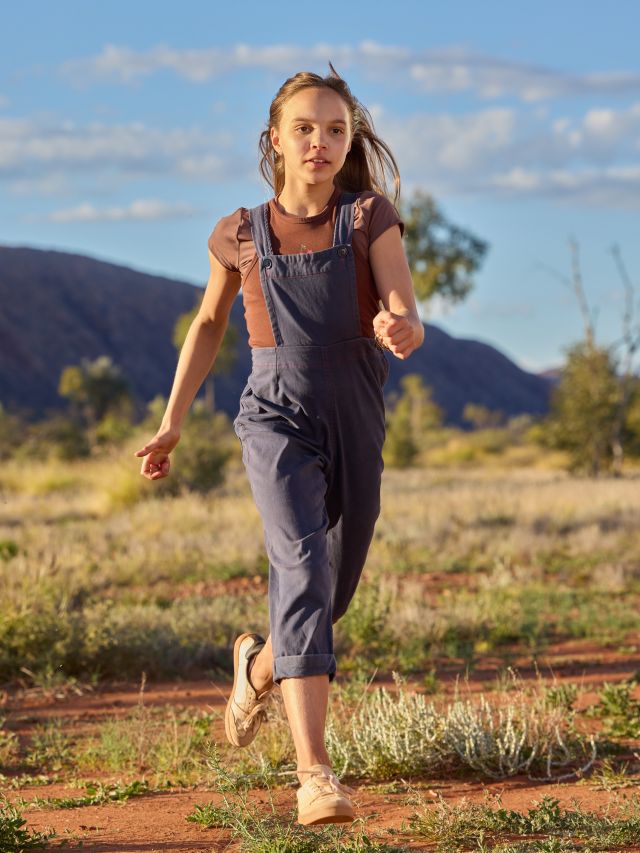
Lily Whiteley as Charlie in Kangaroo
Lily Whiteley’s character Charlie is grieving the loss of her dad in the film. (Image: Narelle Portanier)

Need tips, more detail or itinerary ideas tailored to you? Ask AT.

AI Prompt

Most of Kangaroo is filmed in Alice Springs and the Northern Territory. What did filming here teach you about the destination and the people who live there?

That Alice Springs and the Northern Territory are amazing. As Australians, we have seen so much imagery of the outback. But until you get there, you cannot believe the vastness of it, the redness of it. I mean, there really is no place like it on Earth. And it’s the colour of that Earth and the age of it. It has been there so much longer than we could even possibly imagine. And it’s the community. A lot of the film was shot around Alice Springs and we got to know many of the Arrernte people. We learned about what is important to them, their traditional places, their spiritual places, and how they look after them. It gives you a whole different perspective on what’s important. You stand in the middle of that kind of environment, and the weight of the spirituality is just mind-blowing. It makes you feel differently about being on the planet. It really does.

What aspects of the Australian wilderness do you think will inspire viewers’ sense of wanderlust?

The sunsets. Every single one of them. They are indescribably beautiful. It sounds kind of wanky to say but it really does something to your soul, to your very being. The colours are amazing, and the quiet of it all is amazing. We usually visited the Kangaroo Sanctuary at around dusk and to be with the animals and see them come alive at that time, with all the different colours in the sky, is incredibly moving. I can’t say there was a singular experience that stood out because there were many. I hope it gives people a different perspective on travelling to the Australian outback. We could not have made that movie without the Traditional Owners. I hope that when people visit this part of the world, they keep in mind who was there first and what it means to them. That’s incredibly important to me. We had a make-believe community in the film but there we were, black and white, working together and that was really special.
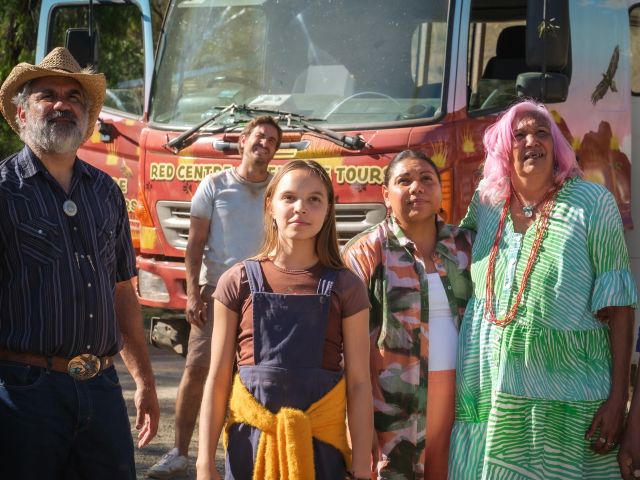
The cast of Kangaroo on set in Alice Springs
The cast of Kangaroo on set. (Image: John Platt)

You are based in LA. What did you learn during your time filming in outback Australia that surprised you or changed your perspective on the land or our wildlife?

We have a lot of myths and, dare I say, cliches about kangaroos with images of the boxing kangaroo and that kind of thing. By default, the kangaroo has become our national symbol. It’s unique because it’s only in Australia. And this film was an opportunity to show adult kangaroos and joeys exactly as they are in a really intimate way. I mean, what Chris Brolga Barns (founder of the Kangaroo Sanctuary) does is amazing. And the experience of going there and walking among the kangaroos is very moving. There are some of the older kangaroos that Chris keeps at the sanctuary because he doesn’t feel comfortable about letting them back into the wild. They come up close to you and you feel like you have a connection with them. And those little babies. They are wild animals and they’re traumatised. They’ve lost their mum and they are orphans, yet they are so affectionate and so communicative.
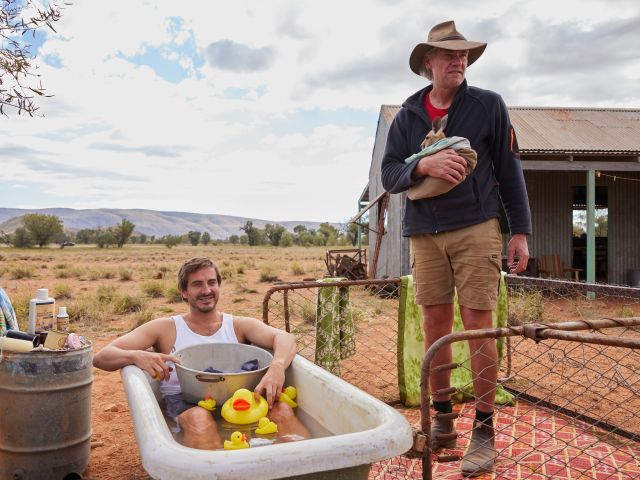
Ryan Corr on set alongside Chris 'Brolga' Barns at The Shed in Ilparpa
Ryan Corr on set alongside Chris ‘Brolga’ Barns, whose story inspired the film. (Image: Narelle Portanier)

Weekly travel news, experiences
insider tips, offers, and more.

What do you hope viewers take away from Kangaroo, both in terms of the film’s message and their appreciation for the Australian environment and wildlife?

I’m hoping it’s going to change a lot of people’s perspective about kangaroos, Central Australia and the outback. I hope it makes audiences think very differently about kangaroos and change their perspective about our native fauna and the wilderness.
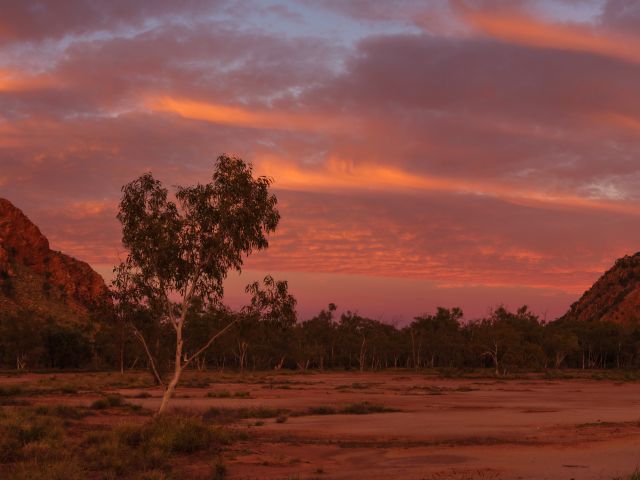
Location of The Shed Ilparpa with view of Mount Ertwa
Kate Woods says the sunsets of the Red Centre are incomparable. (Image: John Platt)

Australia is known for its incredible biodiversity. Did you or any of the actors develop any deeper connection to the animals or nature in general during the production?

It wasn’t just the actors. It was the crew as well. We were mesmerised by the kangaroos. Holding one of those little orphaned joeys was a really moving experience. The amazing thing is that the little kangaroo who played Liz was the same kangaroo all the way through until she got too big, which was about three-quarters of the way through the film. She was so great. She knew how to look at the camera. She kind of reacted to things in a beautiful way. You can’t train them. It was her personality, her willingness to trust humans, and that really says a lot about Chris and the Kangaroo Sanctuary and the way he looks after them.
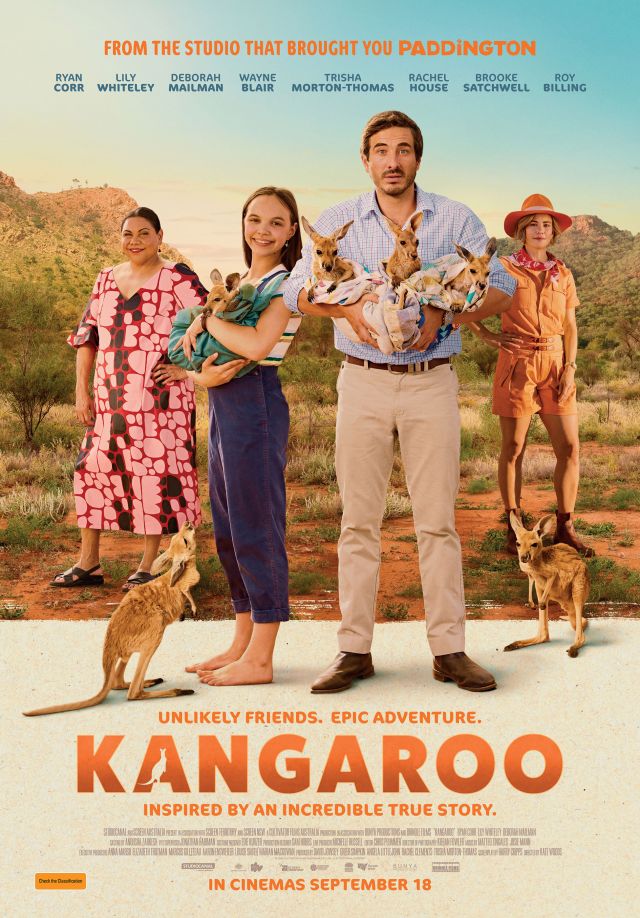
Movie poster for Kangaroo in cinemas September 18
Kangaroo is in cinemas nationwide from September 18, 2025.

Kangaroo will be in Australian cinemas from September 18. To learn more about the work being done by Chris ‘Brolga’ Barns and his team at the Kangaroo Sanctuary, visit the website

Carla Grossetti
Carla Grossetti avoided accruing a HECS debt by accepting a cadetship with News Corp. at the age of 18. After completing her cadetship at The Cairns Post Carla moved south to accept a position at The Canberra Times before heading off on a jaunt around Canada, the US, Mexico and Central America. During her career as a journalist, Carla has successfully combined her two loves – of writing and travel – and has more than two decades experience switch-footing between digital and print media. Carla’s CV also includes stints at delicious., The Sydney Morning Herald, and The Australian, where she specialises in food and travel. Carla also based herself in the UK where she worked at Conde Nast Traveller, and The Sunday Times’ Travel section before accepting a fulltime role as part of the pioneering digital team at The Guardian UK. Carla and has been freelancing for Australian Traveller for more than a decade, where she works as both a writer and a sub editor.
View profile and articles
hero media

Red earth, light shows and ancient culture: discover the ultimate NT road trip

(Credit: Tourism & Events NT/ Ben Savage)

    Kassia Byrnes Kassia Byrnes
    The Northern Territory is made for road trips, and this one hits all the highlights.

    Craggy mountain ranges, inviting waterholes, ochre soil: the landscape of the Northern Territory is asking to be explored by road and foot. There are many iconic road trips to choose from here, but none so all-encompassing than the roughly 3000 kilometres of sealed road that make up Explorer’s Way.

    Spend 14 days (or more, to really make the most of it) driving this route from Adelaide, hitting the NT near the small settlement of Kulgera before later finishing in Darwin. Along the way, you’ll find nearly all the territory’s most iconic sights.

    Discover some of the top highlights that make Explorer’s Way one of Australia’s most incredible road trips.

    1. Alice Springs

    echidna at Alice Springs Desert Park
    See the locals at Alice Springs Desert Park. (Credit: Tourism & Events NT)

    Recently hitting the big screen again with the story of The Kanagroo Sanctuary , there’s a lot to surprise you in Alice Springs.

    Three distinct desert habitats – desert rivers, sand country and woodland – are recreated over 1300 hectares at Alice Springs Desert Park . Time your visit for a presentation or a free bird show.

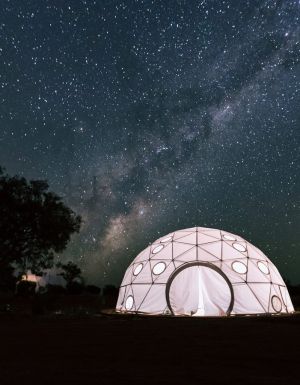
    Later, turn your attention to the skies above, taking a dive into local astronomy at Earth Sanctuary . You’ll find a range of experiences, from a 90-minute toe-dip into the stars through to an overnight adventure.

    Alice Springs packs a surprising punch with its tasty dining options, including pub grub and unique brews at Alice Springs Brewing Co , tapas and pizza at Epilogue Lounge and tasty cafe fare at the quirky Page 27 .

    2. Tjoritja/West MacDonnell National Park

    woman standing at Ormiston Gorge
    Dive into Ormiston Gorge. (Credit: Tourism & Events NT/ Dom and Jesso)

    Beginning 15 minutes from Alice Springs and stretching across 161 kilometres, Tjoritja/West MacDonnell National Park is packed with striking ancient landscapes and inviting water holes.

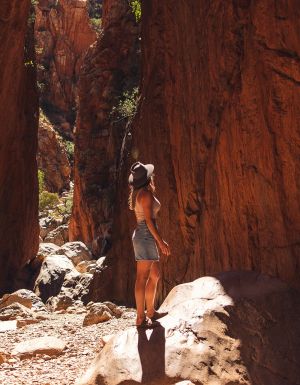
    Visit Standley Chasm – traditionally known as Angkerle Atwatye, meaning ‘Gap of Water’ – to take in its bold red and orange hues, and to observe the diverse bird species, lizards and wallabies that call it home.

    Cool off in one of several picturesque natural swimming holes, like Ellery Creek Big Hole and Ormiston Gorge.

    3. Uluru & Kata Tjuta

    three women looking at Kata Tjuta at sunset
    Explore Kata Tjuta. (Credit: Tourism & Events NT)

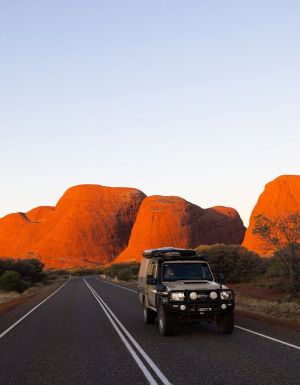
    Visiting the Cultural Heart of Australia is something everybody should experience. There are so many side trips in the Red Centre you could easily spend a week here, but to get the most out of a short time, park the car then get out on foot.

    Take the 10-kilometre Base Walk around the entirety of Uluru or join a free, ranger-guided Mala Walk along part of the base, learning about Tjukurpa (creation stories) and geology as you go.

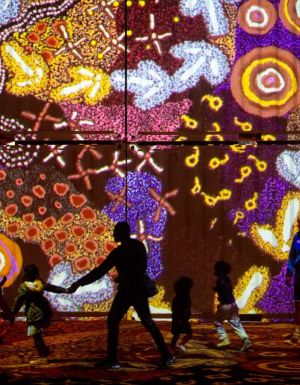
    For a change of pace, wait until nightfall and wander through the iconic Field of Light display by celebrated artist Bruce Munro, or see the Wintjiri Wiru lightshow that shares the ancient Mala story using drones, lasers and projections.

    4. Tennant Creek

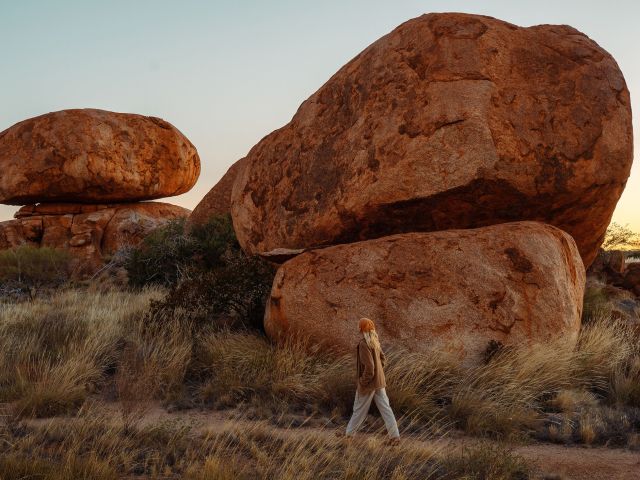
    pson looking at Karlu Karlu (Devils Marbles) northern territory
    See the ancient granite boulders of Karlu Karlu (Devils Marbles). (Credit: Tourism & Events NT/ Dom And Jesso)

    Tennant Creek was Australia’s third-largest gold mining town in the 1930s, and visitors can discover that history at Battery Hill Mining Centre – and even try their own hand at gold fossicking.

    For a completely different side of history, pop into Nyinkka Nyunyu Art & Culture Centre , which preserves and shares Warumungu culture through art, performance, a museum and more.

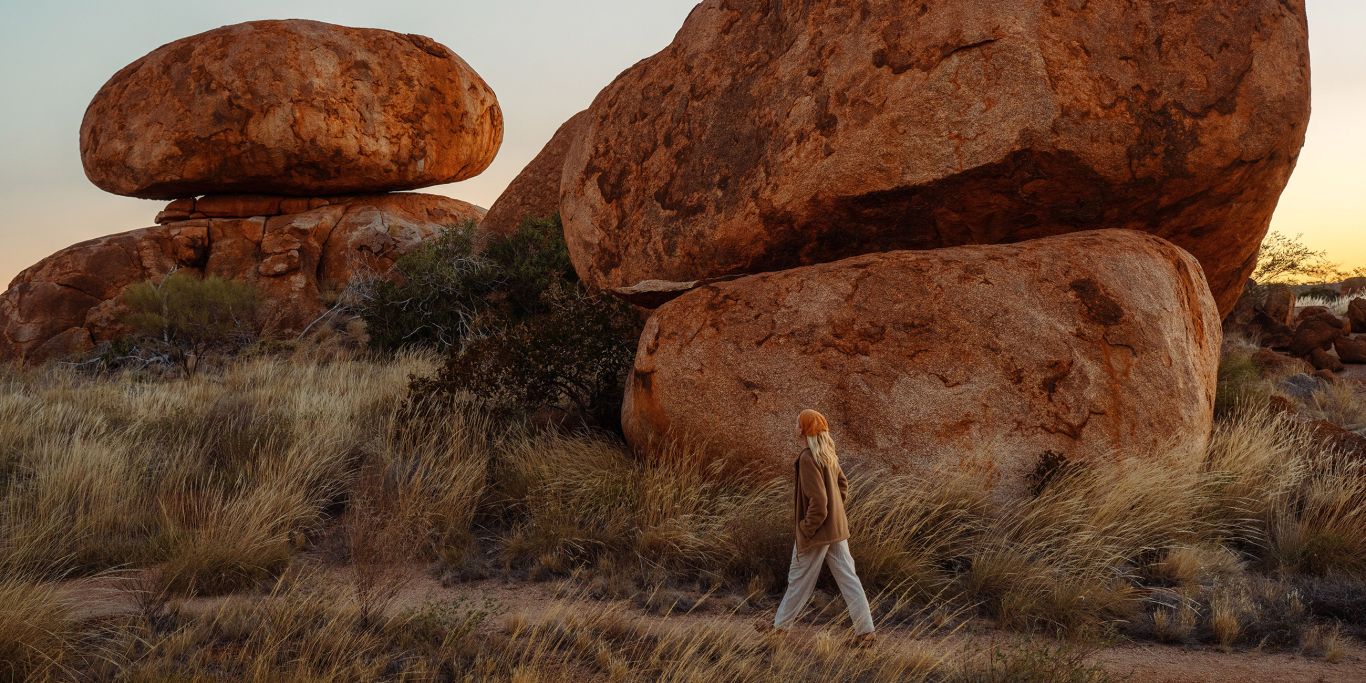
    Just outside town, find the ancient granite boulders of Karlu Karlu (Devils Marbles). A site integral to important stories held by the Warumungu, Kaytetye, Warlpiri and Alyawarra peoples, the boulders appear to almost have dropped out of the sky and seemingly continue to defy gravity.

    5. Mataranka

    aerial of people swimming in bitter springs northern territory
    Dive into Bitter Springs. (Credit: Tourism & Events NT/ Ben Savage)

    A town made famous by the novel We of the Never Never by Jeannie Gunn (and a movie of the same name), Mataranka is also known for its sandy-bottomed thermal pool, Bitter Springs , within Elsey National Park. Follow a 500-metre loop track around these spring-fed pools that stay a toasty 34°C year-round, before choosing your favourite spot to dive into. Enjoy the local birdlife while you relax.

    Elsewhere in the park, find historical sites, several scenic walks and Roper River, which is perfect for boating and fishing.

    6. Nitmiluk National Park

    Nabilil Dreaming Sunset Dinner Cruise
    Join a sunset cruise with Nabilil Dreaming. (Credit: Tourism & Events NT/ Lachlan Gardiner)

    Nitmiluk National Park is sandstone country, with 13 stunning gorges and plenty of waterfalls waiting to be explored.

    One of the most beautiful spots can be found along the 62-kilometre Jatbula Trail, a five-to-six day bushwalk that follows an ancient Jawoyn songline from Nitmiluk Gorge to Leliyn (Edith Falls). Numbers are restricted and book out quickly, so be sure to plan well ahead. Not up for the hike? Drive right up to the falls and enjoy a dip without the challenge.

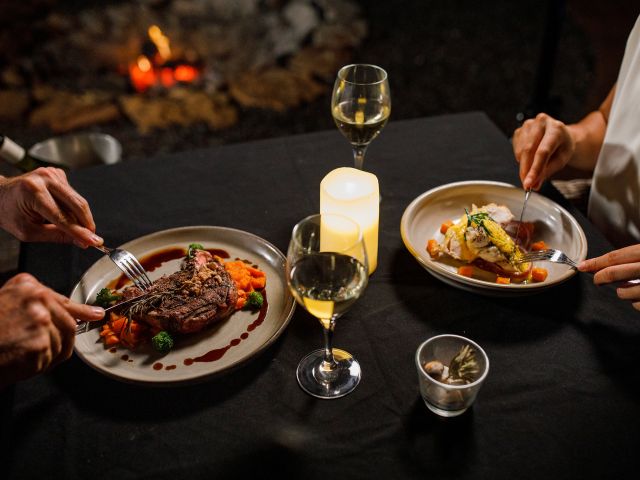
    Elsewhere, explore Nitmiluk (Katherine) Gorge. Paddle a kayak through the river running through the canyon, or save your energy on a Nabilil Dreaming Sunset Dinner Cruise , discovering the stories and ways of the Jawoyn people while enjoying a candlelit dinner as the cliffs around you shift colour and glow with the changing daylight.

    Continue your cultural journey at local art centres like Godinymayin Yijard Rivers Art & Culture Centre or Mimi Aboriginal Art & Craft .

    7. Litchfield National Park

    cathedral termite mounds in Litchfield national park
    Be awed by giant cathedral termite mounds. (Credit: Tourism & Events NT/ As We Wander)

    Just over an hour’s drive from Darwin lies the beautiful Litchfield National Park. It’s famous for stunning waterfalls and swimming holes, including Buley Rockhole, Wangi Falls, Florence Falls and Tjaynera Falls.

    Here you’ll also find hundreds of giant – and magnetic – cathedral termite mounds that are truly a sight to see. Ageing up to 100 years old, you won’t find mounds like these outside the northern parts of Australia. Stroll along the accessible boardwalk to see them up close.

    8. Darwin

    darwin street art
    Darwin art is streets ahead. (Credit: Tourism & Events NT/ Mark Fitzpatrick)

    This list wouldn’t be complete without the territory’s capital city: Darwin. Situate yourself upon arrival with a stroll through the main streets, admiring the many art murals by local, interstate and international artists. They’re all remnants of the annual Darwin Street Art Festival , one of Australia’s longest running street art festivals.

    Stop to recharge along Darwin’s Waterfront Precinct , an area of delectable restaurants, public swimming pools and free events. And, of course, it would be wrong to leave the city without enjoying a bowl of laksa at Mindil Beach Sunset Market as the sun goes down.

    Learn more and start planning your Explorer’s Way road trip at northernterritory.com/drive.