Riding Alice’s red earth camel train

hero media
Megan Arkinstall relives a childhood fascination, a vivid memory of the outback’s red dirt, but this time on the back of a camel, somewhere south west of Alice Springs.

The only other time I remember seeing dirt this red was during a trip to the back o’ Bourke, where my mother was born and bred, more than 15 years ago.

I was absolutely fascinated by it, so much so that I scooped some of it up in a film canister (remember those?) and took it home. I still have it in my box of special and very random things that I’ve collected over the years.
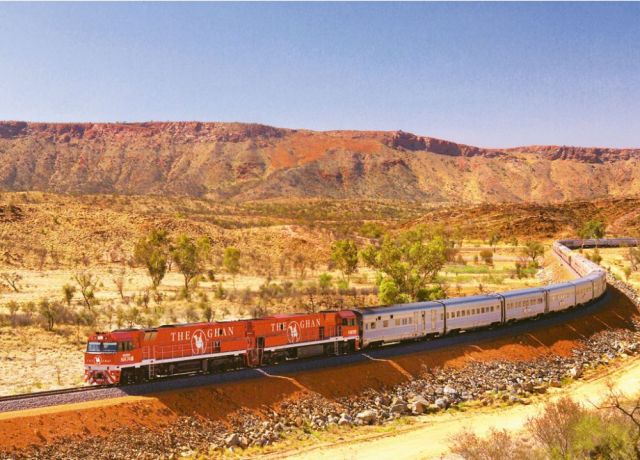
The Ghan on the MacDonnell Ranges near Alice Springs

Now, at almost at 30, I have finally returned to the outback – on board the Ghan, no less – and am still as fascinated by this deep red dirt that the heart of our country has in droves. In fact, I am fascinated by the outback in general: the colours, the history, the people, the wildlife, the towns, the absolute isolation. And here I am in Alice Springs, the centre of it all.

More than just the gateway to Uluru, Alice is a town of extraordinary character, shaped by its history and people.

The town has been a part of extraordinary infrastructure projects, such as the Overland Telegraph between Darwin and Adelaide and the original rail link from Port Augusta to Alice Springs, saw a boom in 1887 when gold was discovered in nearby Arltunga, was a major army supply depot during WWII, an integral base for the Royal Flying Doctor Service, and has been the stage for some of the country’s most successful indigenous rights campaigning.
cameleers history australia outback
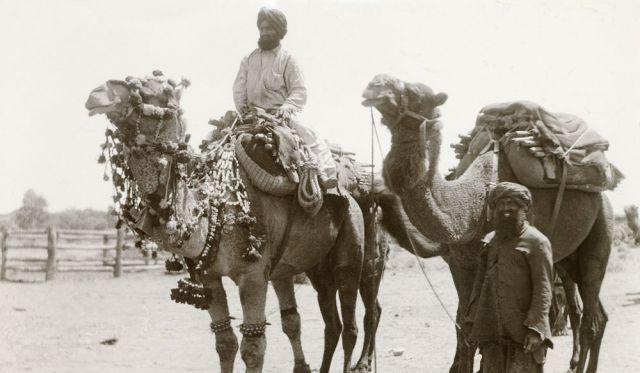
Two handlers with their hardy camels in the Australian outback (photo: State Library of South Australia).

On board the train journey to Alice, I got stuck into reading about the huge role the train’s namesake, the Afghan cameleers, had on the transportation of goods through our country’s inhospitable interior by way of camel. And, although Alice was the last place camels were settled in this country, they too have forged their place in the town’s history, being used to transport goods here from Oodnadatta and as part of the Overland Telegraph and major rail links.

I had also just read Robyn Davidson’s memoir, Tracks, a recount of her epic 2700-kilometre journey across the desert from Alice to the west coast, with only four camels and her dog. She describes camels as being typically misunderstood: “camels are cowards hiding delicate hearts behind aristocratic demeanours," she writes. “They have human qualities – they’re affectionate, cheeky, playful, witty, hard-working, charming…"

So, although I wasn’t about to pack up life and mimic a transcontinental trip like that one – and with only a short stop in this glorious town as part of the Ghan journey – a camel ride with Pyndan Camel Tracks seemed fitting.

Owner Marcus Williams, who greets us with a soothing “G’day" and a friendly grin from beneath his Akubra, caught his first herd of camels from Todd River Downs Station, just south of Alice, in 1994.
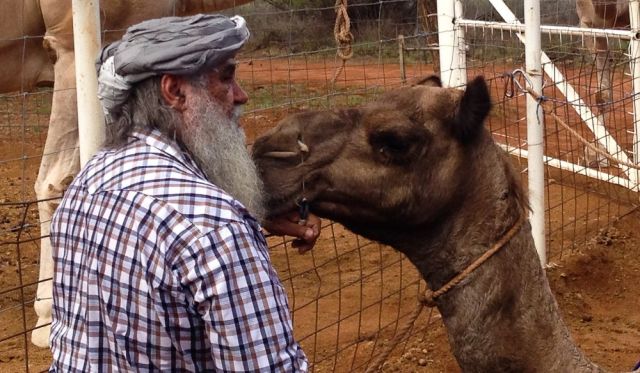
Pyndan Camel Tracks, Alice Springs Northern Territory
Pyndan Camel Tracks’ Ruby shares a tender moment.

“An old fellow out there pointed towards the Simpson Desert and told me to look for the camel tracks," he explains. It took him three weeks of training in a desert camp before he could walk them back to Alice Springs where he set up Pyndan Camel Tracks.

Two of these once-were-wild camels, Trillion and Anna, are still part of his 10-strong herd. These two ladies are also part of our ‘camel train’, along with Pixie, Dock, Ruby, Saleh and Odin, who is trailing at the back.

Each camel has its own distinct personality. Odin is described as being a little knock kneed, a bit dopey and pretty much blind, but a dependable anchor at the end of the line. I’m always rooting for the underdog, so Odin steals my heart.
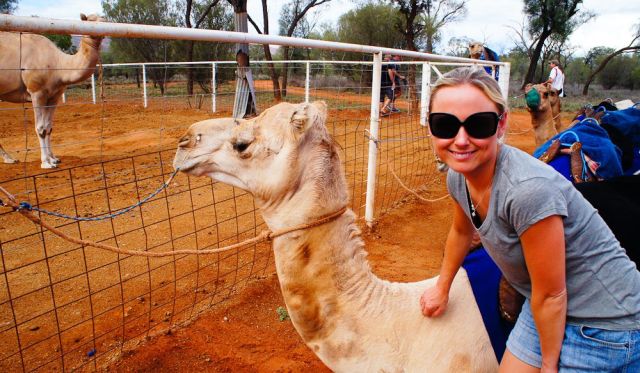
Pyndan Camel Tracks, Alice Springs
AT’s Megan gets to know her soon to be steed Saleh; Pyndan Camel Tracks, Alice Springs.

As does my noble stead, Saleh who was bought “from a camel fella" in 2009 and is, apparently, the most faithful of them all. He doesn’t like being spoken to harshly – who could do that? – and was incredibly shy at first. After a not so graceful mount (it’s a little tricky, but not as tricky as dismounting), my riding buddy and I are sitting high on board Saleh. Camels are magnificent creatures in manner and size: they can grow to be 2.3 metres tall and a whopping 690 kilograms.

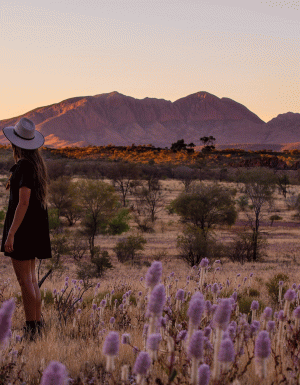
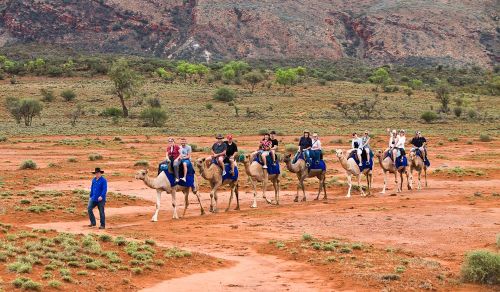
We are led into the neighbouring White Gums Station, following a track lined with mulga trees and iron bark, across clay pan flat and passing a herd of cows who stare as we meander on by. The station is surrounded by the majestic and ancient MacDonnell Ranges, offering the most spectacular setting with a colour palette of sage green and gorgeous ochre red.
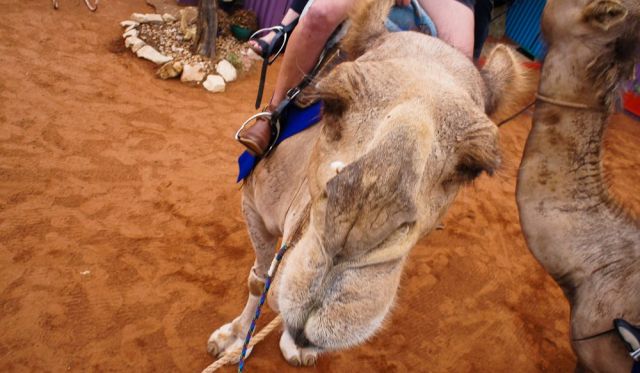
Pyndan Camel Tracks, Alice Springs, Northern Territory
Anna from Pyndan Camel Tracks, south west of Alice springs, hams it up for the camera.

It’s incredibly quiet and peaceful (apart from Odin who occasionally bellows for his mother, Anna, just ahead of him on the camel train) as the sun sets a warm glow over the ranges. We stop so that our guide, who juggles iPhones among SLRs, can get the token tourist shot for us. Who can pass up the opportunity to capture this quintessential Aussie scene – a camel train in the desert, with the MacDonnell Ranges in the background?

As we are posing Anna – who was named after Marcus’s friend ‘No-Tooth Anna’ because she, too, has lost a tooth – cheekily comes up behind me and gives me a big sloppy kiss on my leg. Yes, these camels know how to make an impression.
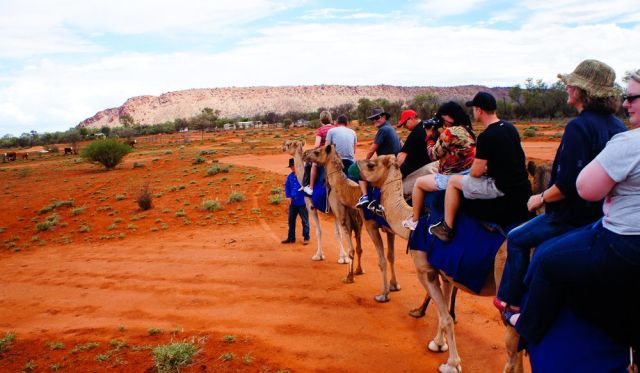
Pyndan Camel Tracks, Alice Springs Northern Territory
Get the camera out, dirt doesn’t get any redder than this: Pyndan Camel Tracks, south west of Alice Springs, NT.

Back at the camp, suitably sweaty and a little bit stinky, we sit in the ‘camel lounge’ – where there is some interesting camel memorabilia depicting their history in Australia and Alice – and enjoy a frosty beer, a welcome refreshment in the stifling heat and the perfect end to this Alice experience.

Oh, don’t forget your film canister when you come out this way.

Need tips, more detail or itinerary ideas tailored to you? Ask AT.

AI Prompt

Details: Pyndan Camel Tracks

Where: 17 kilometres south-west of Alice Springs(15-minute drive)
Cost: One-hour camel rides depart three times a day, from $79 per adult; $39 per child. If required, transfers from you accommodation are included. See Pyndan Camel Tracks

MORE:

How to get there? Six reasons to hop aboard The Ghan

Want to see more stories from Australian Traveller in your Google search results?

  1. Click here to set Australian Traveller as a preferred source.
  2. Tick the box next to "Australian Traveller". That's it.
Megan Arkinstall
Megan Arkinstall is a freelance travel writer who you’ll often find at the beach, bushwalking or boating with her young family. She loves reliving travel memories through writing, whether that be sipping limoncello in a sun-drenched courtyard of Monterosso or swimming with green turtles in the aquamarine waters of Tropical North Queensland.
View profile and articles
hero media

Untouched wilderness & unexpected pub crawls: 8 experiences you’ll only find in the NT

(Credit: Tourism & Events NT/ Sean Scott)

    Kassia Byrnes Kassia Byrnes
    The Northern Territory isn’t just different – it’s a whole new world. From the friendly locals and varied landscapes to its cultural layers, there’s nowhere else in Australia quite like it.

    The Northern Territory has to be experienced to be believed. The majesty of Uluṟu doesn’t quite hit until you’re standing before it. The untouched beauty of Arnhem Land strikes the heart in a way you can’t imagine. The quirky and friendly locals and the festivals they throw impart stories that won’t be forgotten. And that’s just the beginning. From natural hot springs and local larrikins to deep cultural ties and ancient stories, these are the experiences to be discovered only in the NT.

    1. Swim in pristine natural hot springs

    woman swimming in Katherine Hot Springs only in the nt
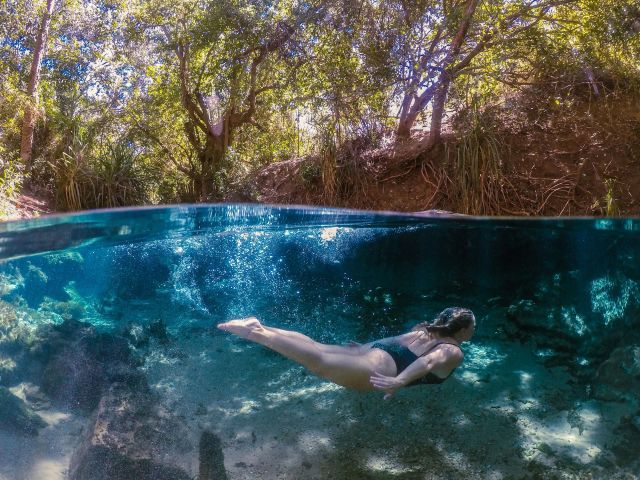
    Dive into Katherine’s crystal clear thermal springs. (Credit: Tourism & Events NT/ Backyard Bandits)

    The NT’s natural hot springs are truly picturesque. Katherine’s crystal clear thermal springs sit on the banks of the Katherine River, framed by nature. Picnic grounds and scenic walking tracks make it easy to linger.

    In Elsey National Park, the teal waters of Bitter Springs have long been popular with locals. It’s not uncommon to spot turtles as you drift with the gentle current, palm trees waving on the banks. The park also contains Mataranka Thermal Pool, a sandy-bottomed swimming hole sitting at a cosy 34°C year-round.

    2. Explore the Red Centre Light Trail

    Light Towers Kings Canyon
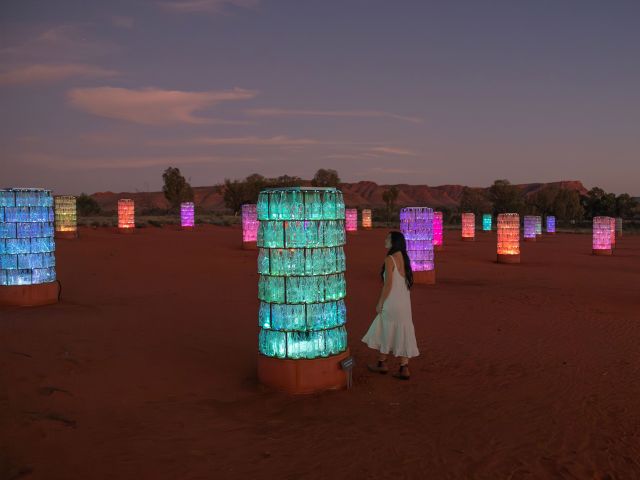
    Head to Kings Canyon to see the Light Towers. (Credit: Tourism & Events NT)

    Uluṟu-Kata Tjuṯa National Park is more than just a place; it’s earned its name as Australia’s cultural heart. Here, a wealth of stories is held by its Traditional Owners, the Aṉangu. And while there are many ways to connect, in more recent years, the Red Centre Light Trail has offered visitors one more way to interpret all this landscape holds.

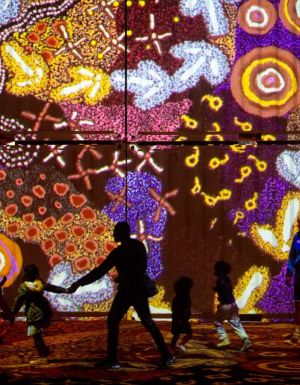
    Wander the Light Towers at Kings Canyon and watch the Field of Light transform the land before Uluṟu as day turns to night. Also, be sure to take in Wintjiri Wiṟu by light artist Bruce Ramus, sharing the Aṉangu’s Mala story.

    Arrive in April to experience Parrtjima, a free annual 10-night festival of light, featuring installations, workshops and more.

    3. See unrivalled views from a helicopter

    helicopter ride over kakadu only in the nt
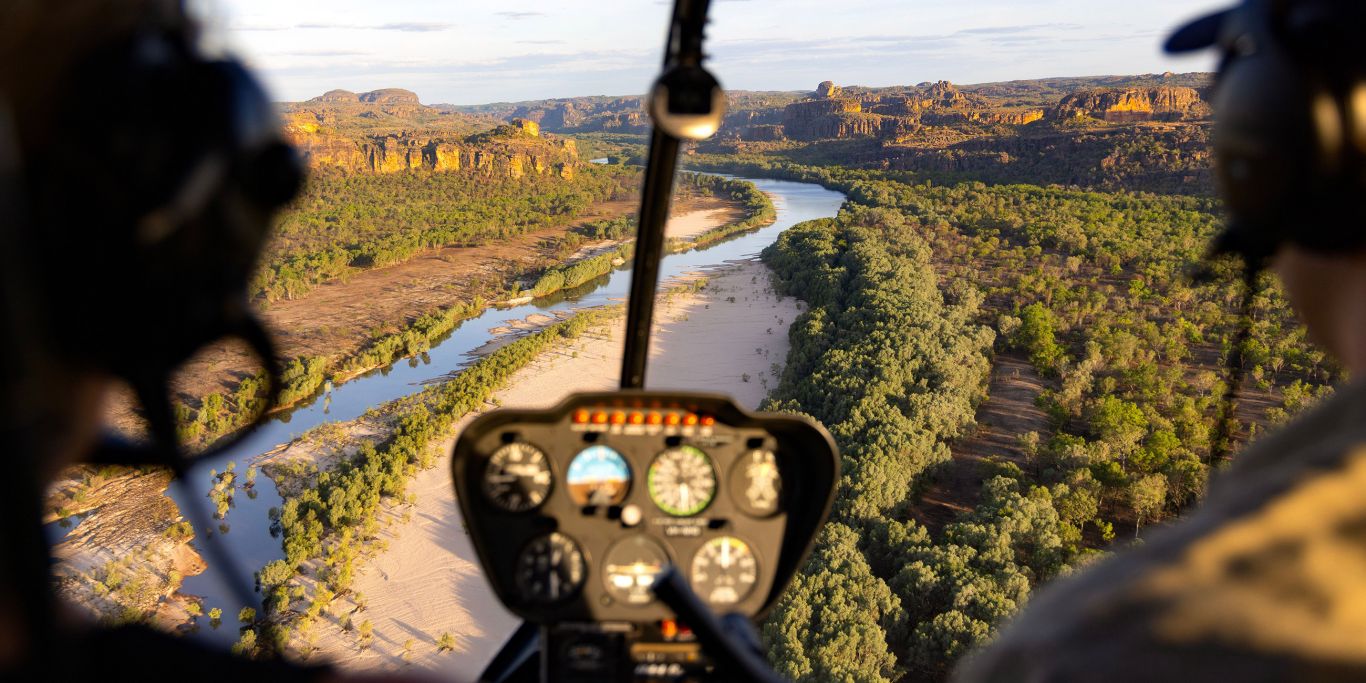
    See Kakadu from the air. (Credit: Tourism & Events NT/ Sean Scott)

    There’s no better place in the world to hit the skies in a helicopter. Soar over thundering waterfalls, world-famous wetlands and the floodplains of Kakadu National Park. A bird’s-eye view brings a special type of magic to this one-of-a-kind landscape.

    You can also meet local characters on the pub crawl of a lifetime as you fly between some of the NT’s best and most remote pubs.

    4. Discover the start of Western Arrarnta art

    Hermannsburg Potters only in the nt
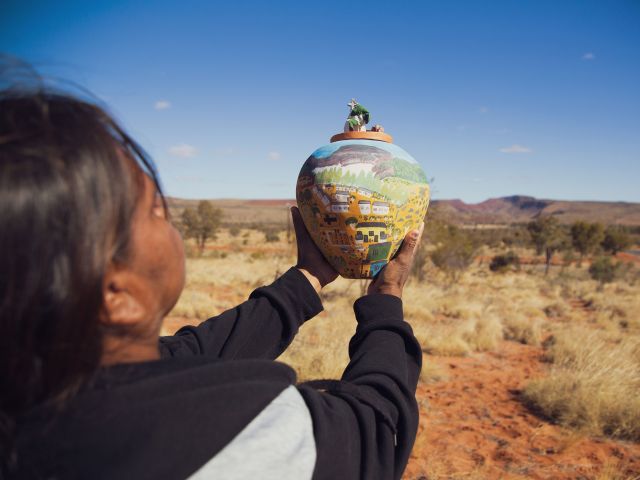
    Book ahead to visit Hermannsburg Potters. (Credit: Tourism & Events NT/ Felix Baker)

    Hermannsburg is one of the most unique towns in Australia. This historic mission town holds several claims to fame, including being the birthplace of Western Arrarnta art – a renowned style of Indigenous art using vibrant, naturalistic watercolours to depict Central Australian desert landscapes. Book ahead from April to September to visit Hermannsburg Potters, a collective of dedicated Western Arrarnta artists.

    Other options to see this art style near Alice Springs include the Araluen Arts Centre, Iltja Ntjarra (Many Hands) Art Centre and Standley Chasm (Angkerle Atwatye).

    5. Spot crocs on a cruise

    Crocodile being fed on a cruise on the Adelaide River nt
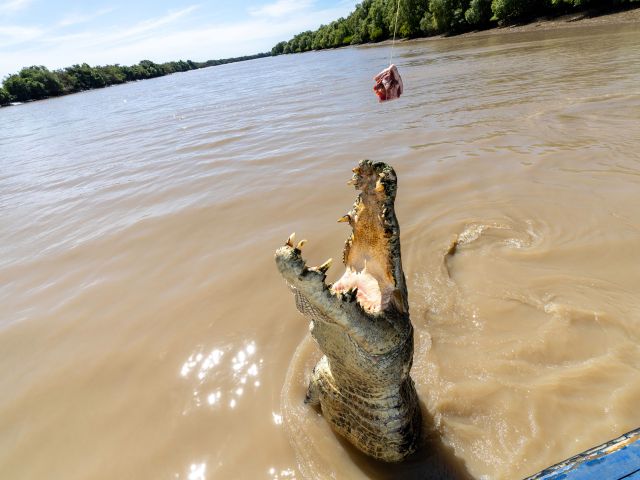
    Spot wild crocs up close. (Credit: Tourism Australia)

    The NT is the only territory that feeds wild crocs, putting the ‘wild’ in wildlife spotting experience. Join a cruise along the Adelaide River, just an hour from Darwin, to see these not-so-gentle prehistoric giants in their natural habitat.

    Be sure to stop into Humpty Doo or Noonamah for lunch on your way back to Darwin. Here, you’ll experience a real NT roadhouse.

    6. Experience local Indigenous cultures

    young participant at the Garma Festival Nhulunbuy arnhem land
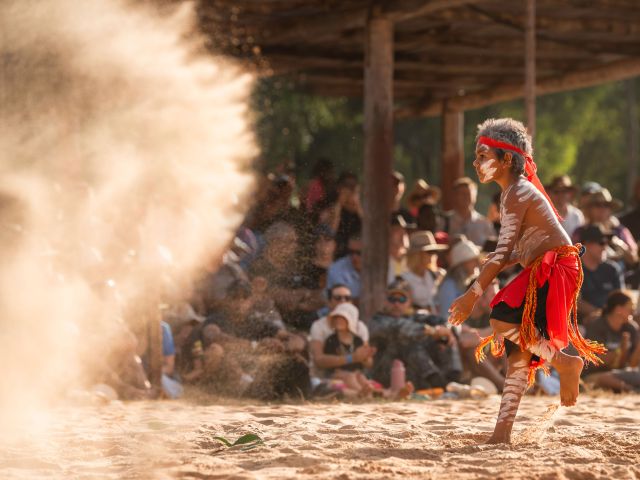
    Time a trip to Nhulunbuy for the Garma Festival. (Credit: Tourism & Events NT)

    The NT offers some of the best opportunities to experience the world’s most ancient living culture. Head to Nhulunbuy in East Arnhem mid-year for the Garma Festival, Australia’s largest Indigenous gathering, with four days of song, dance and art sharing Yolngu culture. Stop into Buku-Larrnggay Mulka Centre in nearby Yirrkala while you’re there, current home of the Yirrkala Church Panels. Painted in 1963, they form one of the first ‘title deeds’ to Country.

    Join a celebration of Indigenous music, art, culture and sport at the Barunga Festival, 80 kilometres from Katherine, every June. And year-round, book an Indigenous-led tour through Ubirr, one of the oldest rock art sites in Australia.

    7. Meet the larrikins of Alice Springs

    competitors in Henley on Todd Regatta
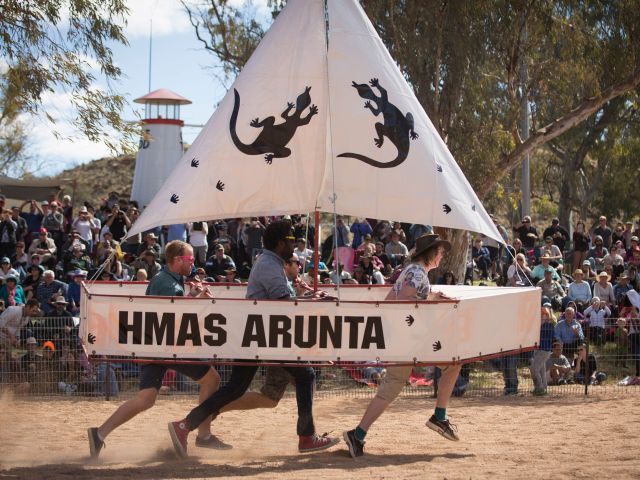
    Henley on Todd Regatta might be one of the NT’s whackiest events. (Credit: Tourism & Events NT/

    Head to Alice Springs at any time of year and you’ll be guaranteed to meet some colourful locals. But to really get to the heart of the eccentricities, mark a few dates on your calendar.

    March brings one of the best Pride events in the world, fabAlice. Inspired by the iconic Aussie movie The Adventures of Priscilla, Queen of the Desert, which was filmed in Alice Springs over 25 years ago, the festival has a strong focus on the art of drag and celebrates LGBTQI+ communities, as well as self-expression in general.

    Come August, Todd River’s typically dry, sandy bed comes alive with the world’s only dry river boating event, the Henley on Todd Regatta.

    8. Swim in a waterfall with no one else around

    Upper Cascades in Litchfield National Park
    Swim in the Upper Cascades with no one else around.

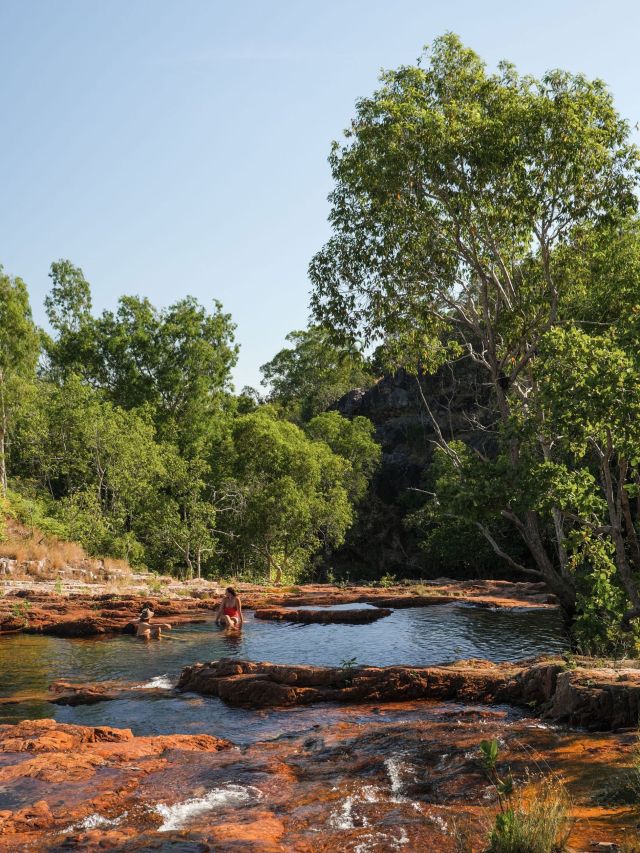
    So few of Australia’s most beautiful places remain untouched, but that’s not true in the NT. Take a short hike through monsoon forest in Litchfield National Park (just over an hour’s drive outside of Darwin) to reach the secluded Cascades swimming area. Here, take a dip in the lower or upper cascade pools, both surrounded by rugged bushland. And you’ll probably have it all to yourself.

    Plan your Northern Territory trip of a lifetime at northernterritory.com.

    Exploring the desert around Alice Springs by camel