The guide to visiting Trephina Gorge Nature Park

hero media
When it comes to pristine waterholes, you are spoiled for choice in the Red Centre. But if you can only visit one spot in Central Australia, make it Trephina Gorge Nature Park – home to sheer quartzite cliffs, a stunning rockhole, and the largest ghost gum in Australia. 

Situated in the East MacDonnell Ranges, Trephina Gorge is the perfect distance from Alice Springs for a day trip – or if you want to stay the night you can choose from one of three camping spots to sleep under the desert sky. This lesser-known nature park spanning 85 kilometres is significant to the Eastern Arrernte people because it is part of the sacred Wallaby Dreaming Trail, and was also once part of the early settlement of the Red Centre. 

From the must-do walks to the best camping spots, here’s your guide to visiting Trephina Gorge Nature Park. 
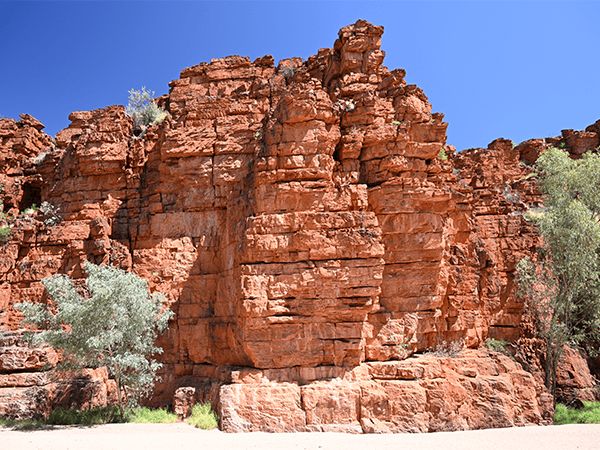
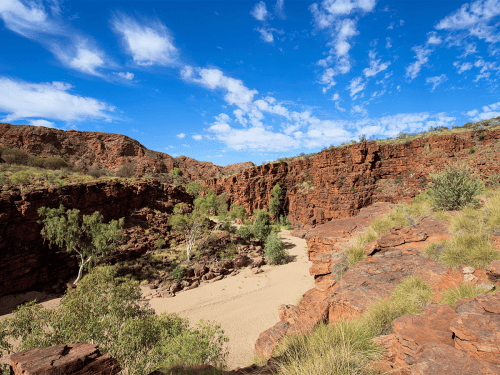
The striated red rockface at Trephina Gorge Nature Park.
The striated red rockface at Trephina Gorge Nature Park. (Image: Tourism NT/Shaana McNaught)

Things to do at Trephina Gorge Nature Park

Home to two gorges, Trephina and John Hayes, the park boasts walks for every age group and fitness level. Spend your days here scrambling up to lookouts, finding Australia’s largest ghost gum (best viewed in afternoon light), swimming, camping, and taking day trips to nearby N’Dhala Gorge Nature Park, Corrobboree Rock Conservation Reserve, and Arltunga Historical Reserve.  
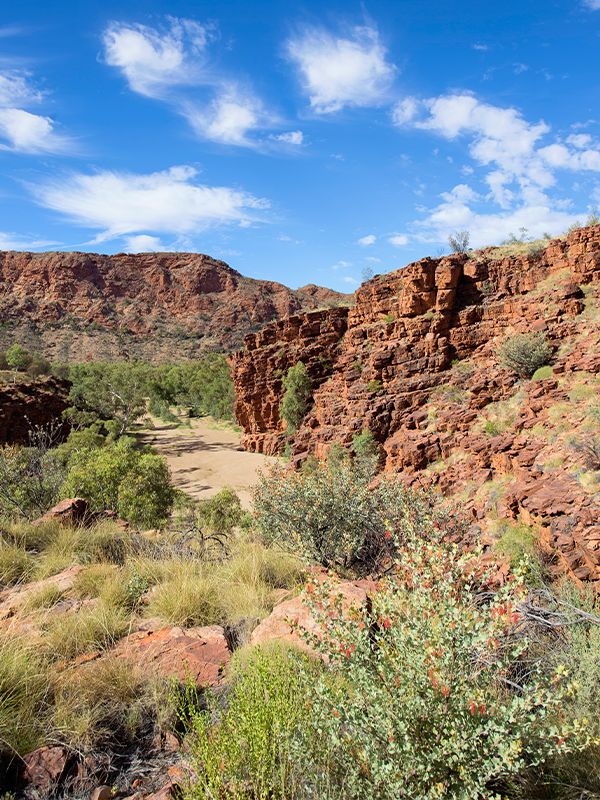
Trephina Gorge Nature Park
Trephina Gorge Nature Park, NT (Image: Tourism NT/Shaana McNaught)

Walks at Trephina Gorge

To warm up the legs, kick off your Trephina Gorge adventure with the Gorge Stroll, an easy 20-minute jaunt that takes you into Trephina Gorge along a sandy creek bed to the waterhole.   

To take it up a notch, opt for one of the three longer walks: Trephina Gorge Walk, Panorama Walk (both of which take one hour), or the challenging Ridgetop Walk to John Hayes Rockhole, which will keep you busy for four to five hours.   

Both the Trephina Gorge Walk and Panorama Walk will immerse you in gorge scenery from the creek level and showcase the gorge from both rims. Here you will see river red gums lining the sandy creek and ghost gums growing precariously on the rocky ledges above the waterhole. Look out for blank-flanked rock wallabies and birds, including Pacific herons, black-fronted plovers and fairy martins. The slightly longer Panorama Walk will take you on an uphill stretch to a high point where you will be rewarded with stunning panoramic views.   

For experienced walkers, the 9km one-way Ridgetop Walk to John Hayes Rockhole offers spectacular views of the rugged East MacDonnell Ranges. Keep an eye out for the rare Thozet’s Box (Eucalyptus thozetiana) and wildflowers, including holly grevilleas, desert hibiscus, mulla mulla, hop bushes and cat’s tails.   
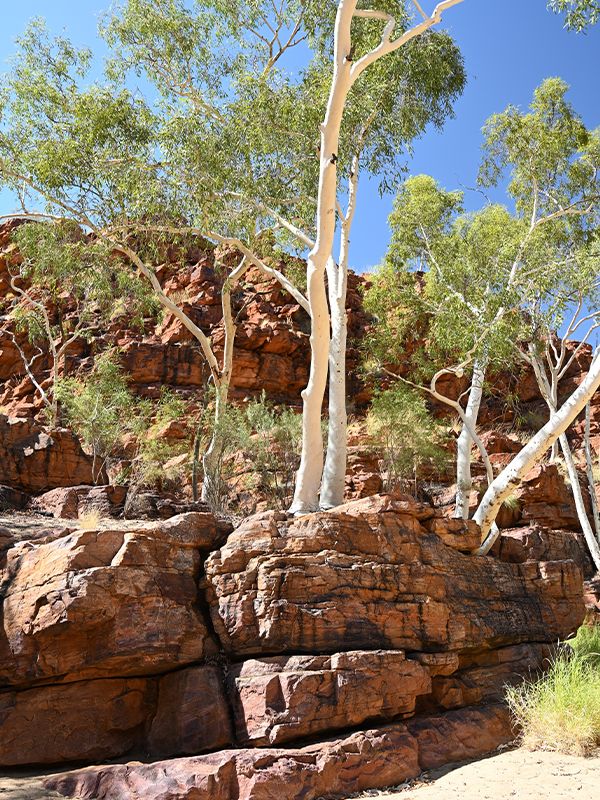
Trephina Gorge Natura Park ghostly gums
Ghostly gums stand to attention throughout the nature park. (Image: Northern Territory Government)

Need tips, more detail or itinerary ideas tailored to you? Ask AT.

AI Prompt

John Hayes Rockhole

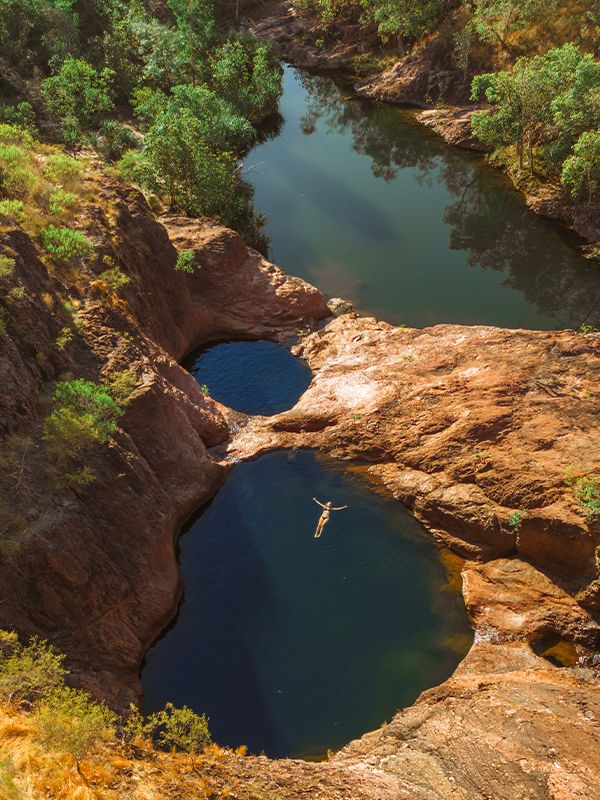
John Hayes Rockhole is a popular swimming spot with icy cold water. However, during prolonged dry periods, the waterholes at Trephina Gorge and John Hayes Rockhole can evaporate, leaving only a sandy creekbed.  

From John Hayes Rockhole, you can set out on the 3.5km loop Chain of Ponds Walk. It starts with an easy 20-minute walk to the rim of the narrow gorge, offering spectacular views and continues on with some difficult climbing and scrambling that’s well worth the effort for the stunning views.  

Trephina Gorge Camping

At the Trephina Bluff, Trephina Gorge and Panorama campgrounds you will find toilets, picnic tables, drinking water, communal firepits, and gas barbecues. John Hayes Rockhole Campground has the same facilities, except for the drinking water. 

 Day trips from Trephina Gorge

If you’re camping at Trephina Gorge, you can use your camp as a base to visit nearby Arltunga, the site of Central Australia’s first town, N’Dhala Gorge, a cultural treasure with 6,000 rock carvings, and the remote Ruby Gap Nature Park, the site of Central Australia’s ruby boom.   
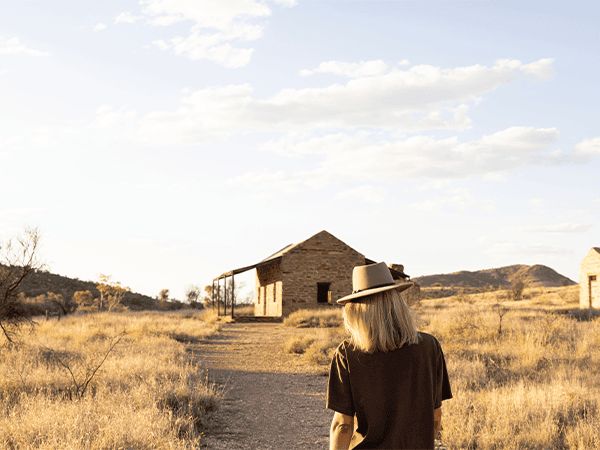
Arltunga Historical Reserve Trephina Gorge Nature Park Northern Territory
Arltunga Historical Reserve. (Image: Tourism NT/Sean Scott)

Want to see more stories from Australian Traveller in your Google search results?

  1. Click here to set Australian Traveller as a preferred source.
  2. Tick the box next to "Australian Traveller". That's it.
Leah McLennan
Leah McLennan is a freelance writer based in Darwin. She was a journalist in Sydney for over a decade and counts her time as travel editor for Australian Associated Press as one of the highlights of her career. From exploring remote campsites in the Top End with her family, to seeking out new art galleries in faraway cities, she’ll grab an adventurous or arty travel experience within her reach.
View profile and articles
hero media

8 reasons why the low season is the best time to explore the Northern Territory

Credit: Tourism and Events NT

September to April in the Northern Territory rewards those who seek adventure.

Sure, the Northern Territory shines during the high season, but did you know it transforms into lush magnificence in the summer low season? From September to April, hundreds of waterfalls roar into action, vegetation flourishes and natural pools swell, all thanks to spectacular storms. This is when some of the country’s best arts and cultural events hit the calendar, too.

Travelling at this time of year means you’ll also be rewarded with off-peak travel pricing on accommodation, tours and experiences, and can even enjoy many of the top sites all to yourself.

1. Kings Canyon is transformed

Kings Canyon Rim Walk Garden Of Eden in the rain
Kings Canyon transforms in the low season. (Image: Kassia Byrnes)

Kings Canyon’s towering sandstone domes and crevasses are a sight to behold year-round, but during the low season you can witness a rare phenomenon. This ancient outback wonder’s arid landscape bursts to life when it rains, temporarily transforming it with waterfalls that thunder down the cliffs. At the base of the canyon is the verdant Garden of Eden and its permanent watering hole.

2. John Hayes Rockhole is a natural wonder

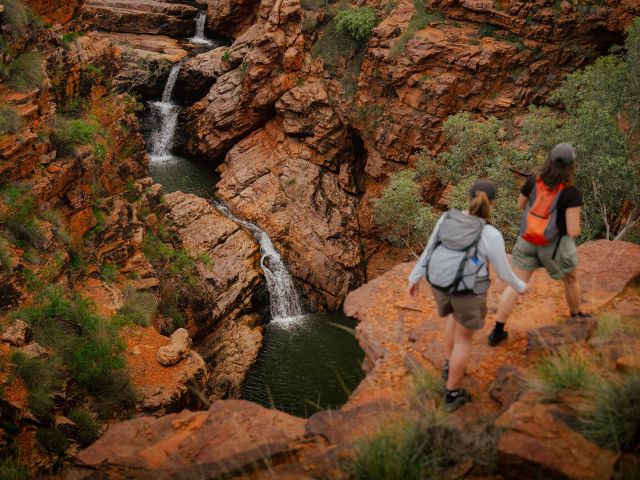
Two women hiking to John Hayes Rockhole, one of the unforgettable experiences during the best time to explore the NT.
Hike to a desert oasis. (Credit: Tourism and Events NT)

Hidden in the Trephina Gorge Nature Park in the East MacDonnell Ranges, John Hayes Rockhole is an oasis waiting to be discovered. Visit the narrow canyon during the high season, and you may see only a sandy creekbed, but after rain in the low season the pool is full of cool water. It’s accessible via a 4WD-only track off the Ross Highway, or you can set out early and join the nine-kilometre Trephina Ridgetop Walk. The reward for undertaking the hike is worth every step, and there’s a dedicated, tent-only campground for those who’d like to soak up the serenity overnight.

3. The Red Centre Light Trail shines bright

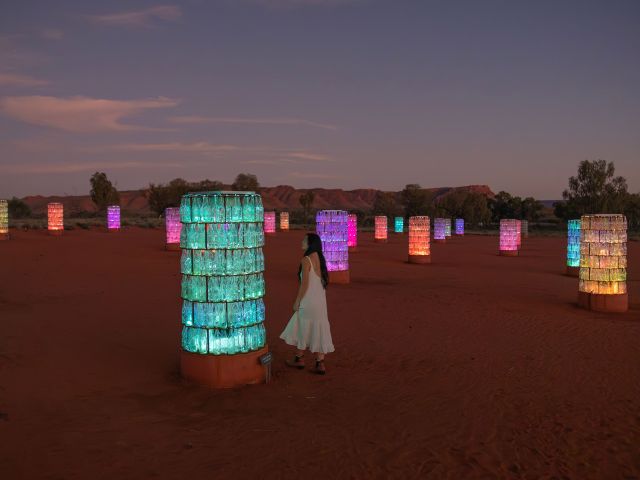
A woman admiring The Light Towers, one of the must-see attractions during the best time to explore the NT.
Watch the Outback light up after sunset. (Credit: Tourism and Events NT)

The Red Centre’s rich cultural heritage and lack of light pollution make it the ideal setting for immersive light shows, and you can experience the most iconic ones on an epic six-day road trip in April. Witness the Parrtjima cultural festival in Mparntwe (Alice Springs) before heading to Kings Canyon for Bruce Munro’s Light-Towers, where 69 glowing towers shine to a celestial soundscape. At Uluṟu, Munro’s Field of Light blankets the red soil with glowing frosted-glass stems, and the Wintijiri Wiru drone show lights up the sky in front of the sacred cultural site. Along the way you’ll witness the changing landscapes of the desert from the West MacDonnell Ranges to the Valley of the Winds.

4. The Parrtjima festival lights up the Red Centre

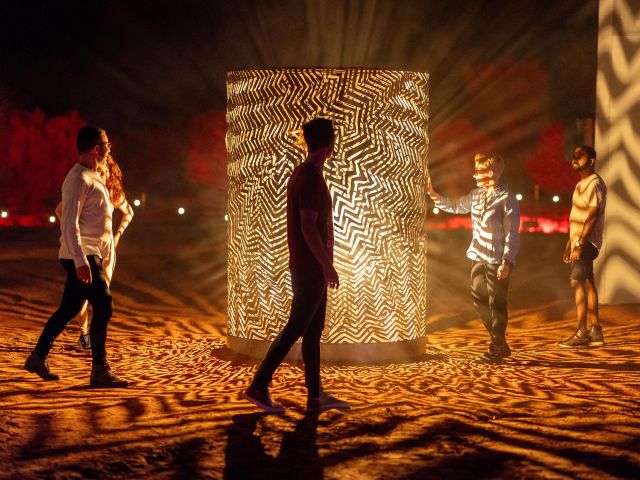
Festival lights illuminating the Northern Territory, showing why the best time to explore the NT is during festival season.
Witness the magic of Parrtjima. (Credit: Tourism and Events NT)

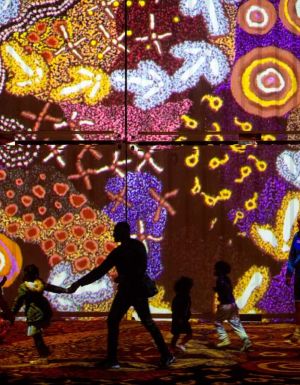
For 10 days every April, the Red Centre turns into a dazzling display of colour for the Parrtjima festival. Held at Alice Springs Desert Park, the unmissable celebration shines a spotlight on the world’s oldest living culture using modern technology. Artworks by local Aboriginal artists are transformed into large-scale illuminated installations with accompanying soundscapes, offering a unique opportunity to see the spectacular sunburnt landscapes, night skies and 300-million-year-old West MacDonnell Ranges in a new light. The jam-packed line-up of art and cultural events also includes workshops, markets, short films, talks and live music.

5. Cruising along Nitmiluk Gorge is breathtaking

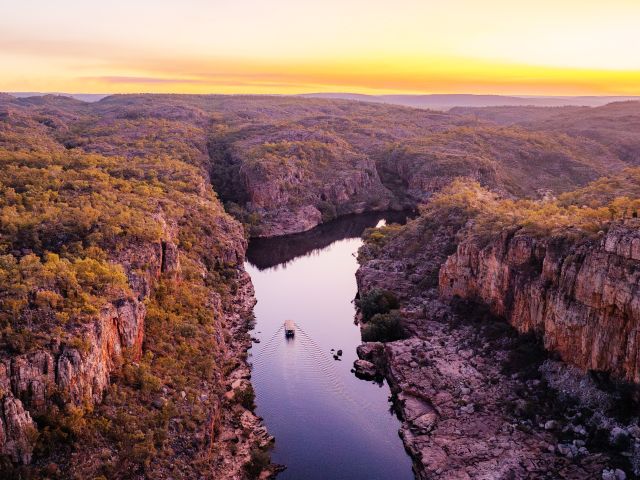
Aerial view of Nitmiluk Gorge, showcasing its dramatic cliffs and waterways.
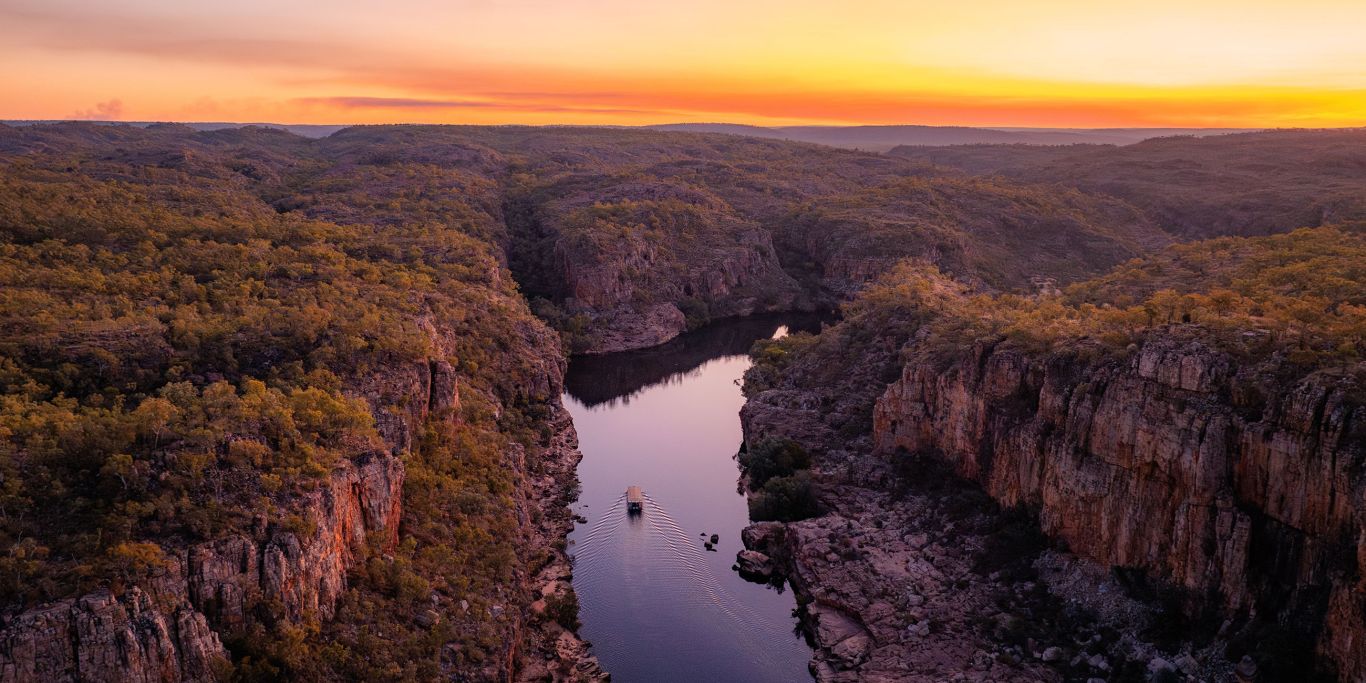
Sail between towering sandstone cliffs. (Credit: Tourism and Events NT/Nic Morley)

Drifting down the emerald waters of Nitmiluk (Katherine) Gorge between towering red sandstone cliffs carved over millions of years, all while waterfalls stream down around you, is an experience like none other. Nitmiluk Katherine’s two-hour NitNit Dreaming Two Gorge Tour sails through gorges past ancient rock art while a local guide imparts knowledge about the Jawoyn culture and significance of the landscape.

6. You can explore local culture on the Tiwi Islands

A quick boat ride from Darwin lies the peculiarly pink shores of Melville Island, Tiwi Islands. Populated by the hilariously cheeky Indigenous Tiwis, stepping onto the Islands is like stepping back in time. Sweeping rusty dirt roads meander through the eucalypt forest and are interspersed only by small communities and freshwater springs.
Immerse yourself in Tiwi culture. (Credit: Tourism and Events NT/Elise Cook)

Take an 80-kilometre ferry ride from Darwin to arrive at the Tiwi Islands, an archipelago of 11 picturesque islands and a haven for art lovers and anglers. On the Tiwi By Design walking tour you’ll be guided to the Tiwi Design Art Centre, one of Australia’s oldest art centres, to observe local artists in action and join a screen printing workshop.

If you’re more partial to sinking a line, book a stay at Tiwi Island Retreat in April. It’s one of the best months to fish for barramundi, and their world-class fishing adventures are your best chance at reeling in a prized catch.

7. Scenic flights over Kakadu’s waterfalls are jaw-dropping

Jim Jim Falls from above during a wet season helicopter tour. Covering nearly 20,000 square kilometres, Kakadu National Park is teeming with wildlife, home to important Aboriginal rock art sites, and takes in diverse and exotic landscape.
Soar above Jim Jim Falls. (Credit: Tourism and Events NT/Jarrad Seng)

Seeing Kakadu National Park’s gushing waterfalls and dramatic escarpments from above offers a dose of unparalleled beauty – and it’s all best witnessed in the low season.

Taking flight from Darwin, Kakadu Air Services offers an unforgettable experience, with doorless helicopters revealing unobstructed views of the 1.8-billion-year-old landscape. Soar above the untouched savannah that turns into a tropical green paradise, marvel at the thunderous Jim Jim Falls and Twin Falls, and whiz through ancient sandstone canyons. If you’re lucky, the scenery will look all the more dramatic with rolling tropical storm clouds in the distance.

8. Litchfield National Park is an amazing place to cool off

Litchfield National Park
Dive into natural swimming holes. (Image: Tourism NT/Joshua Griffen)

Litchfield National Park is peppered with stunning natural swimming pools for you to beat the heat in. Take a refreshing dip in pristine, crocodile-free spots such as Buley Rockhole, a series of spring-fed cascading pools, and the nearby Florence Falls, which is enveloped by monsoon rainforest and features a crystal-clear plunge pool fed by a 15-metre-high waterfall. Be sure to check the Northern Territory Parks & Reserves website for closures before you go.

Start planning your low season adventure of a lifetime at northernterritory.com.