The experts have spoken; this is the must-do experience in Australia next year.
Every year, the travel tastemakers at Lonely Planet curate 25 must-visit destinations and 25 must-do experiences from around the world for their hotlist. The Best in Travel 2027 book puts places on the map and scenes on the radar – and the new edition features an iconically Australian experience.
Where are we heading in 2027?
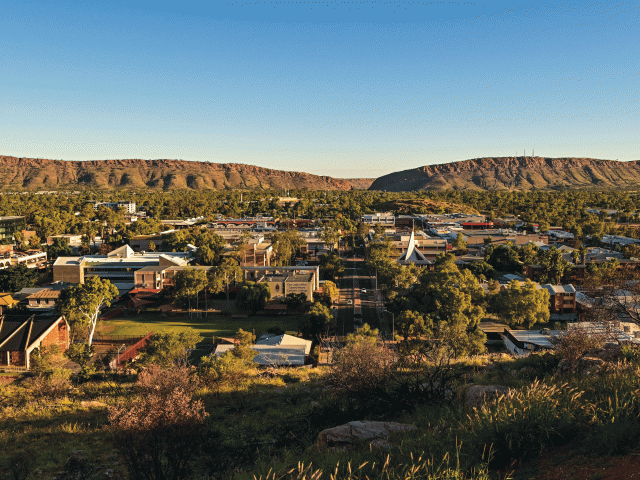
A view of Alice Springs from Anzac Hill. (Credit: Shutterstock)
Out of all the extraordinary experiences in the world – the Antarctica polar plunge, the Costa Rica cloud forest, the Tanzania safari trek – a cultural immersion in Australia has made the Top 25. So which Aussie experience has been given the Lonely Planet guernsey?
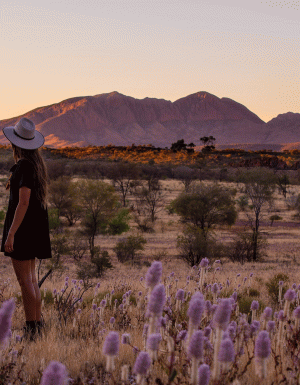
Ah yes, ‘Immersing Yourself in Art in the Red Centre’ is a must-do activity in 2027, according to Lonely Planet’s Destination Editor for Oceania, Jessica Lockhart, who describes Mparntwe (Alice Springs) as “a Red Centre creative hub" with “ethereal artwork in an ancient landscape."
Top of the list
Need tips, more detail or itinerary ideas tailored to you? Ask AT.
AI Prompt
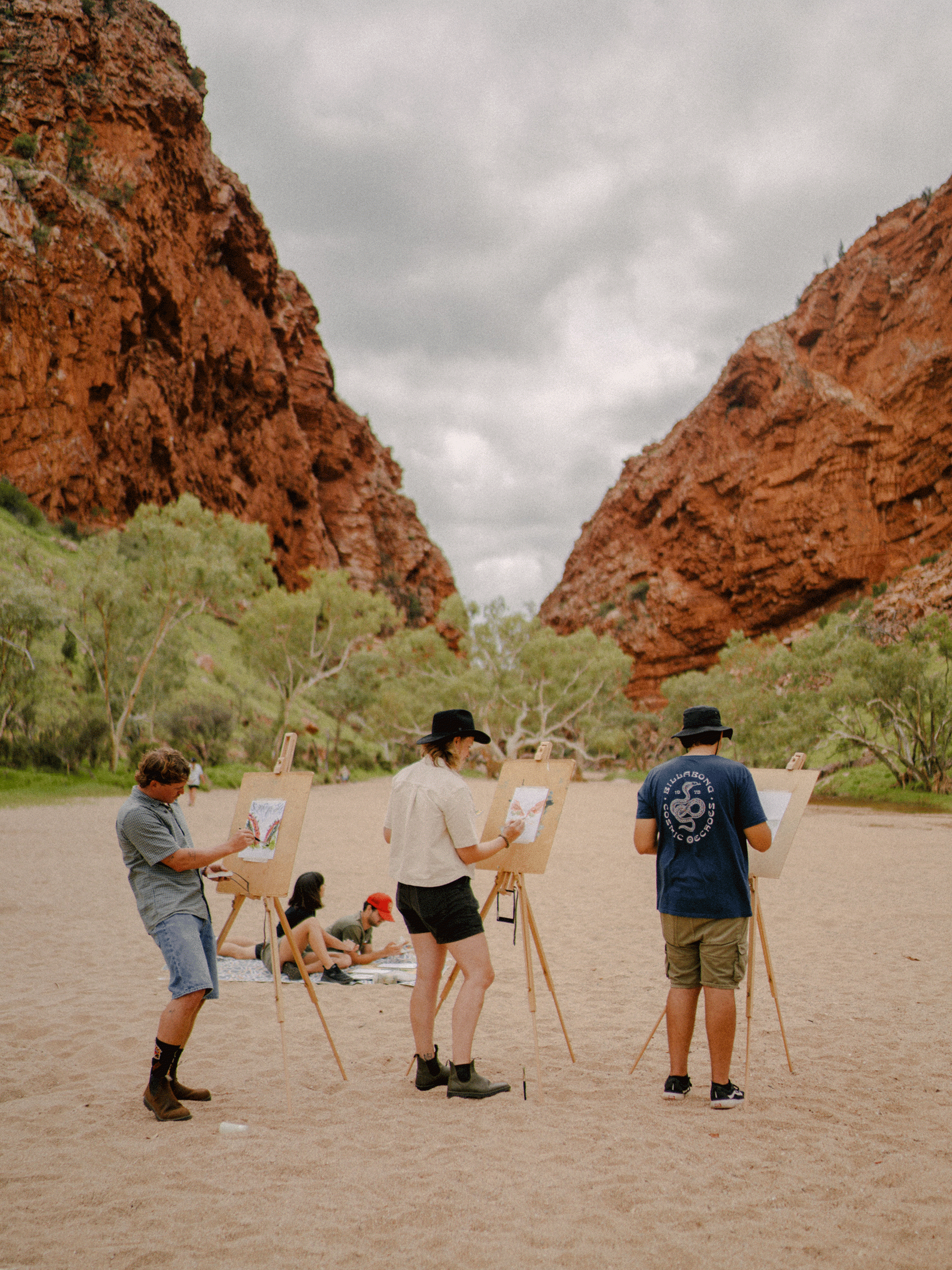
Learn basic watercolour skills at the scenic Simpsons Gap. (Credit: Tourism & Events NT/Michael Peters)
An array of paintings are created on site. (Credit: Tourism & Events NT/Shaana McNaught)
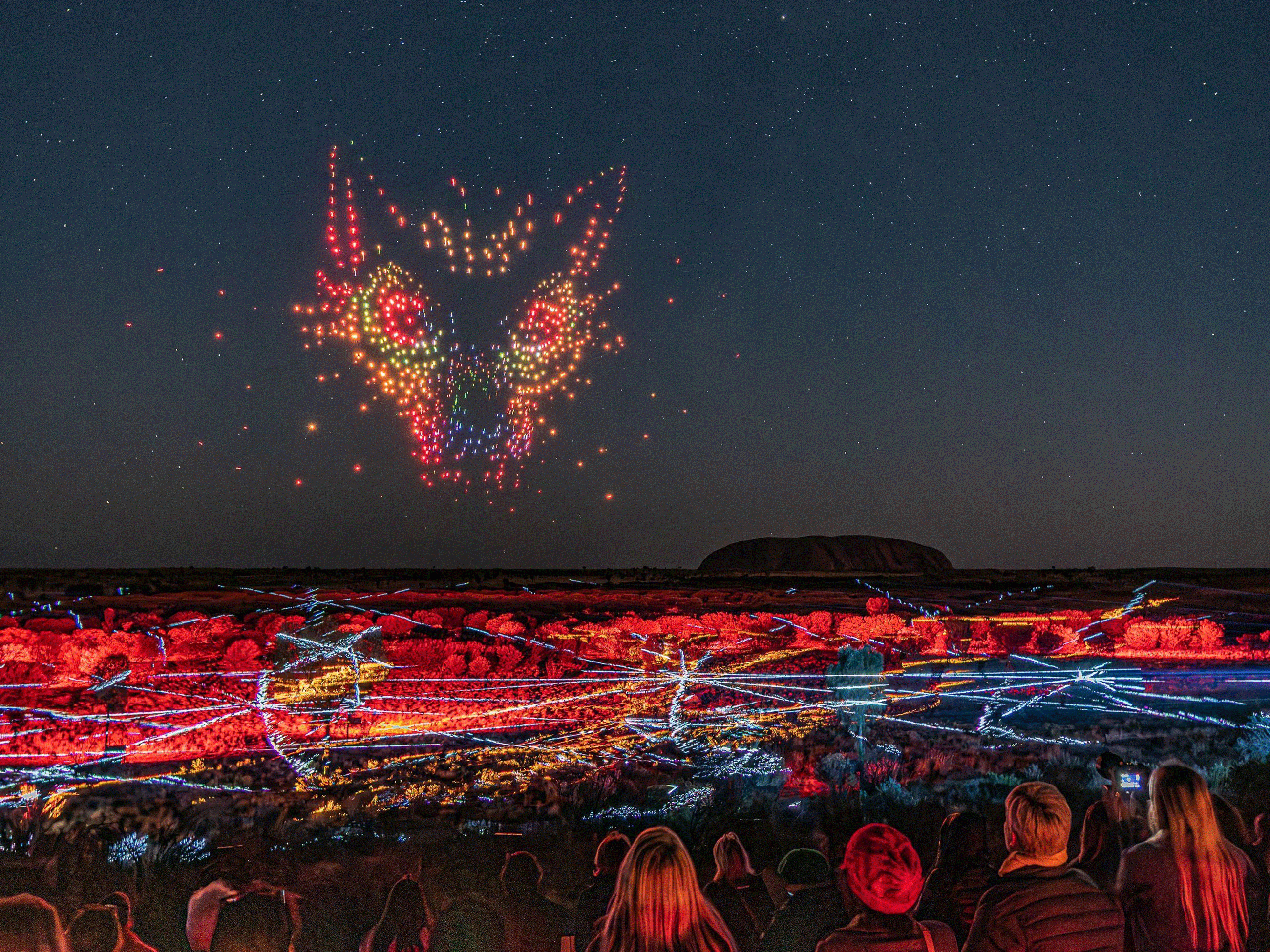
Numerous drones are choreographed with the lights, lasers, projection and sounds for an immersive storytelling experience. (Credit: Tourism NT/Ray Reyes)
To experience the art scene in all its glory, Lockhart recommends doing a watercolour painting class with Anna Dakin at Art Tours of Australia. The intimate tour takes small groups to Simpson’s Gap – a place that Albert Namatjira was inspired to capture in his work – and gives visitors the opportunity to learn watercolour techniques and to create a piece of art. Sitting in the sandy riverbed of the gap as the sun sets and the light hits the ranges is a moment worth capturing (or attempting to capture).
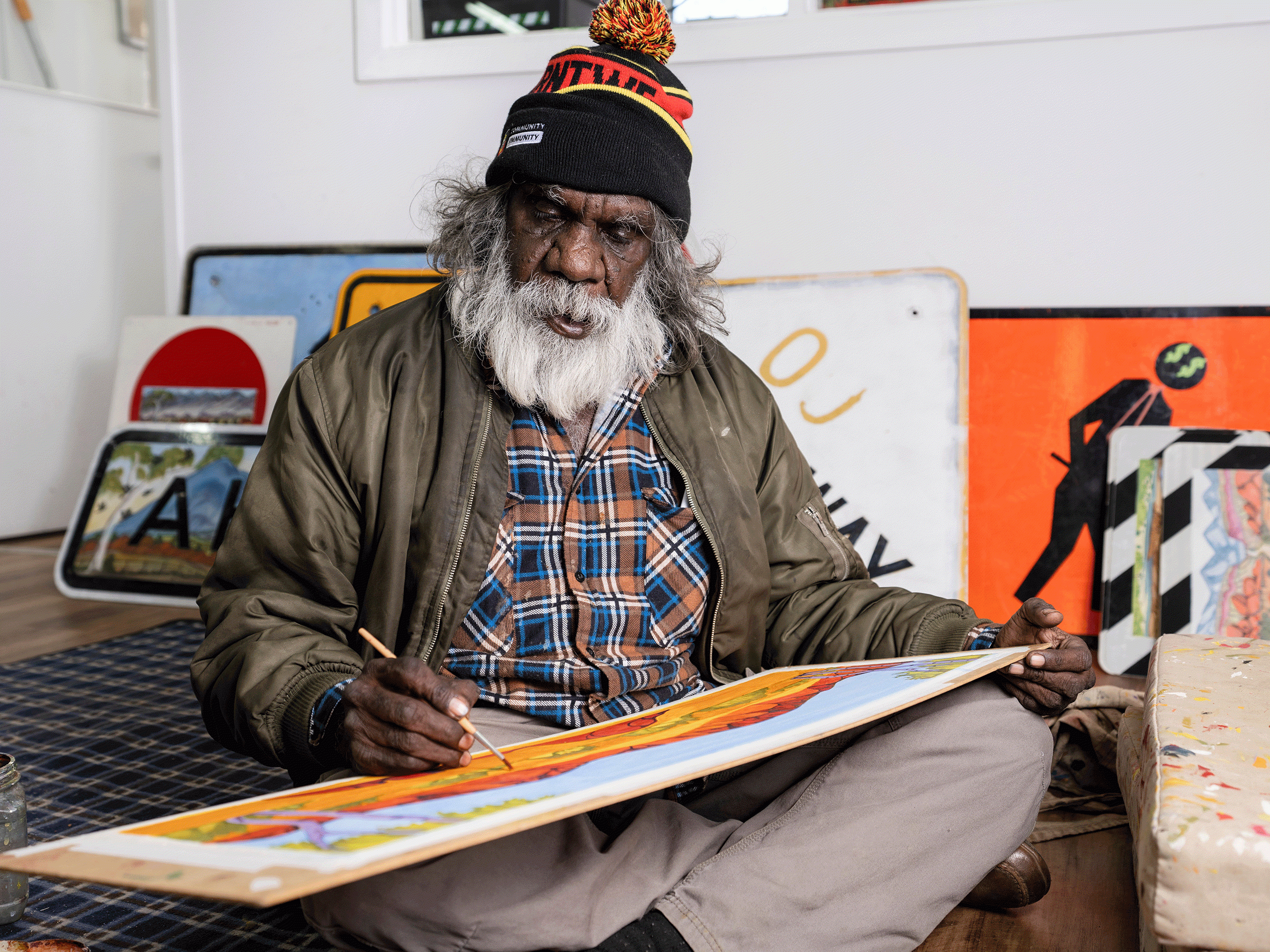
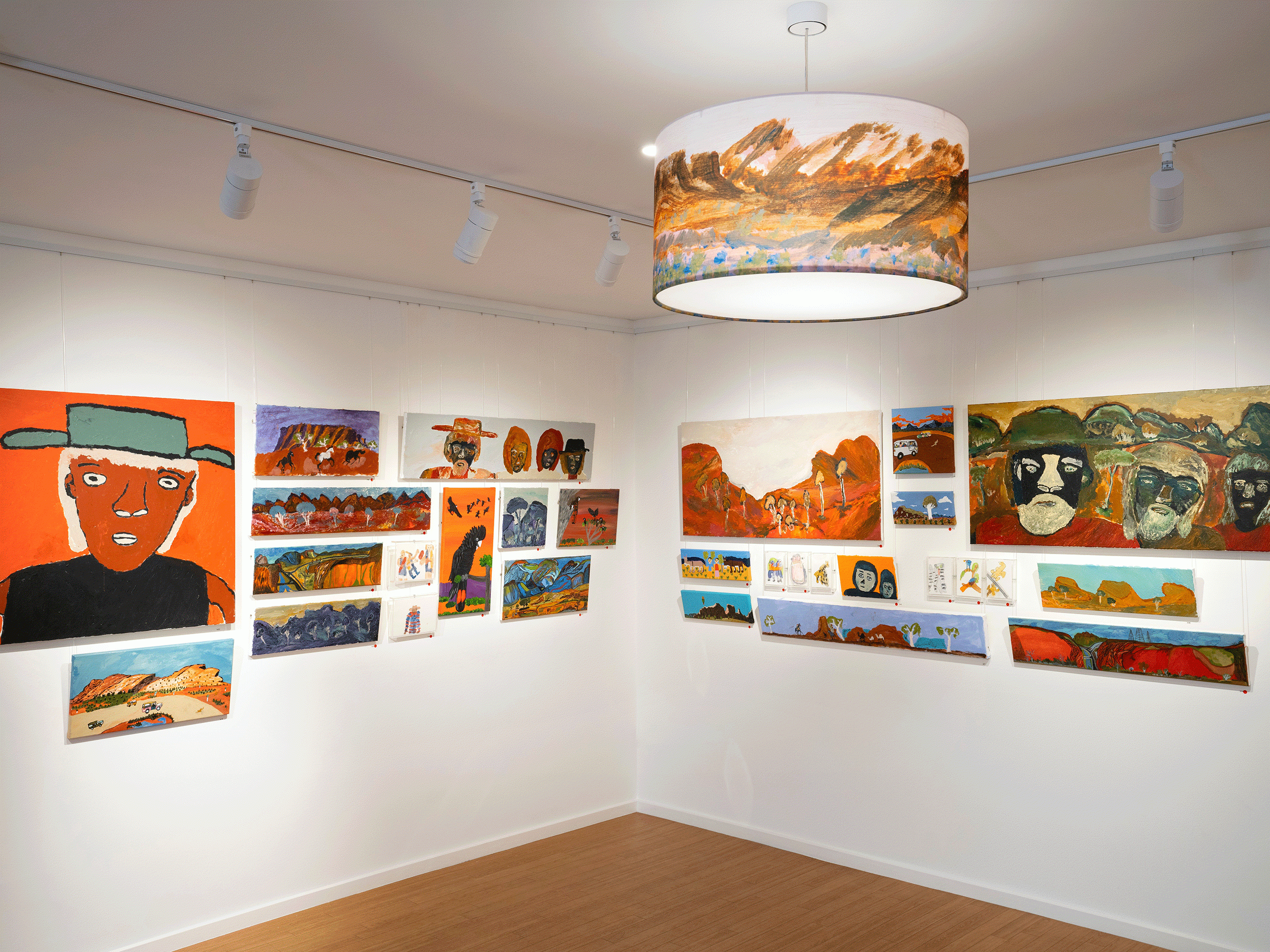
In the town of Alice Springs, we are encouraged to visit the Iltja Ntjarra (Many Hands) Art Centre, where the descendants of Albert Namatjira keep his legacy alive and continue to paint in the ‘Hermannsburg School’ style. The artists work on site, Monday to Thursday between 10am to 3pm, giving us the opportunity to see their craft in action.
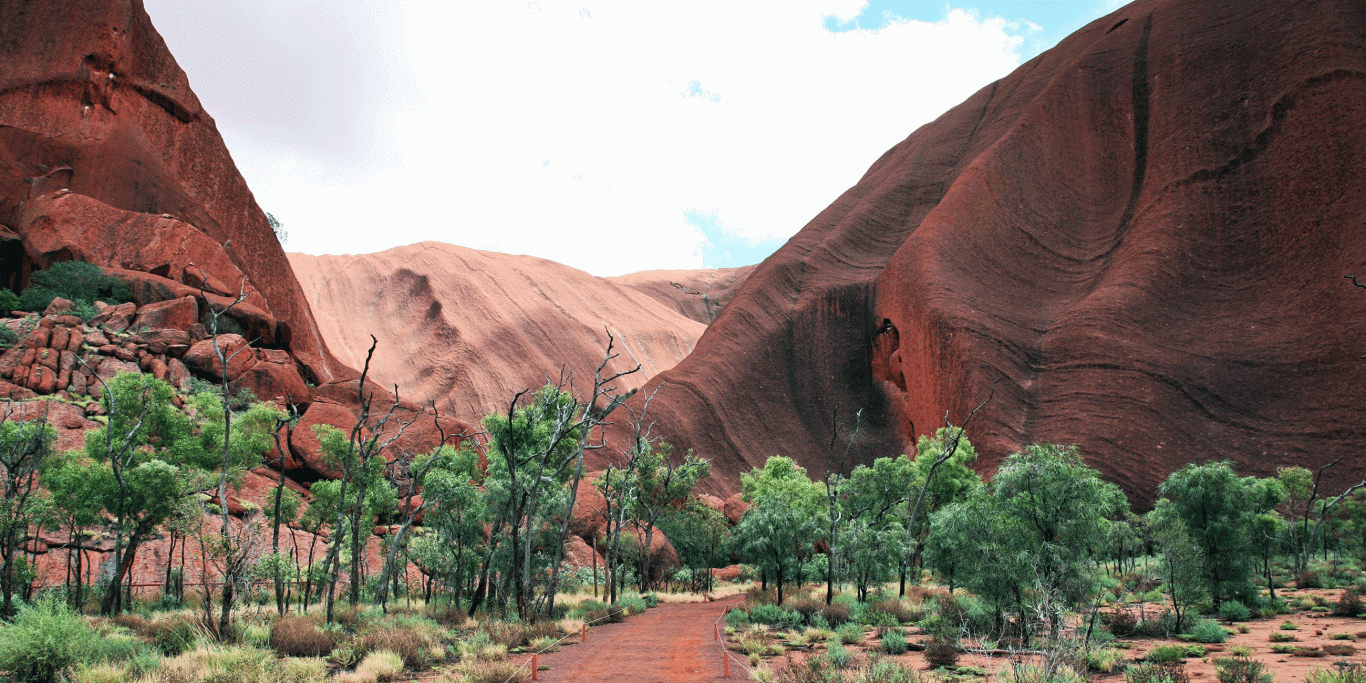
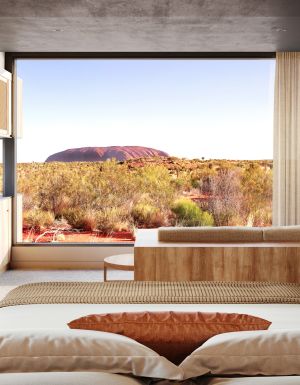
Further south of Alice Springs, the Uluṟu-Kata Tjuṯa National Park offers a new experience telling an ancient story: a drone show called Wintjiri Wiṟu, which means ‘beautiful view out to the horizon’ in the Aṉangu language. The night-time show is followed by a dawn experience, Sunrise Journeys, which Lockhart says is her favourite. “The artwork and music of four Aṉangu artists is projected onto the surrounding trees and sand," she writes in Best in Travel 2027. “As the sun breaks over the horizon, I feel like I have a better understanding of how the environment is seen through Aṉangu eyes."
Even more to explore
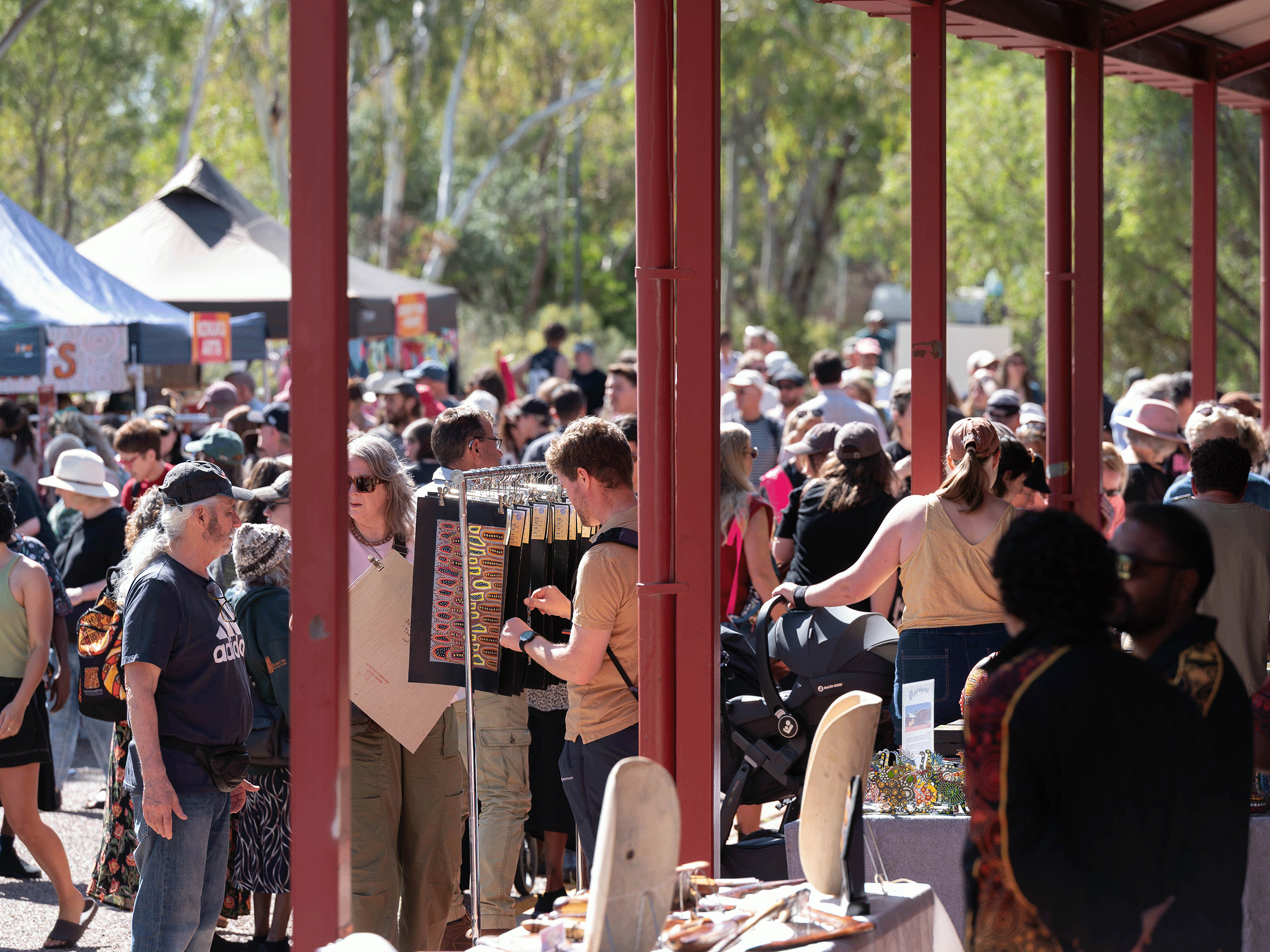
Desert Mob Art Market 2026. (Credit: Sara Maiorino)
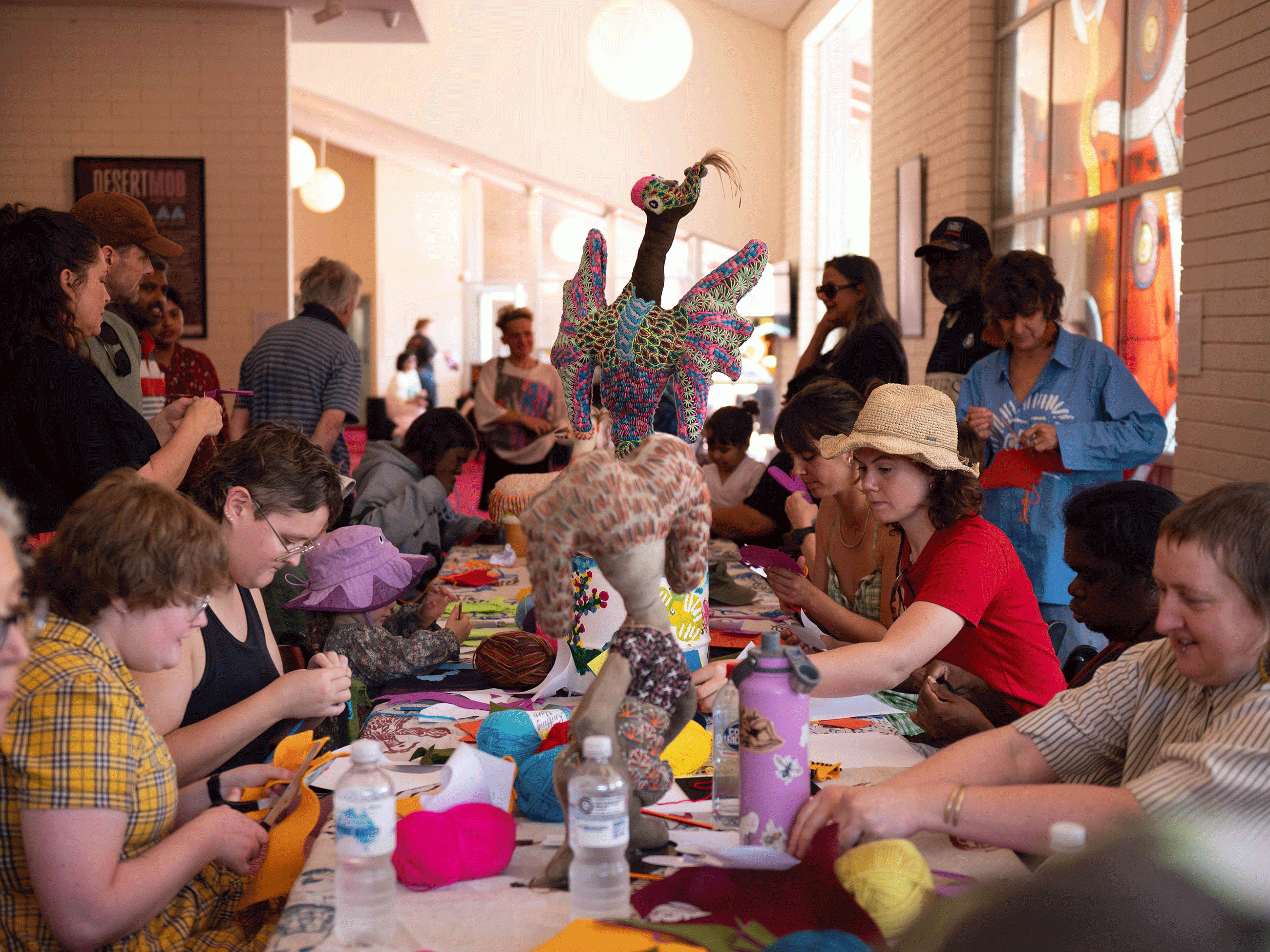
Yarrenyty Arltere Soft Scupture Workshop. (Credit: Sara Maiorino)
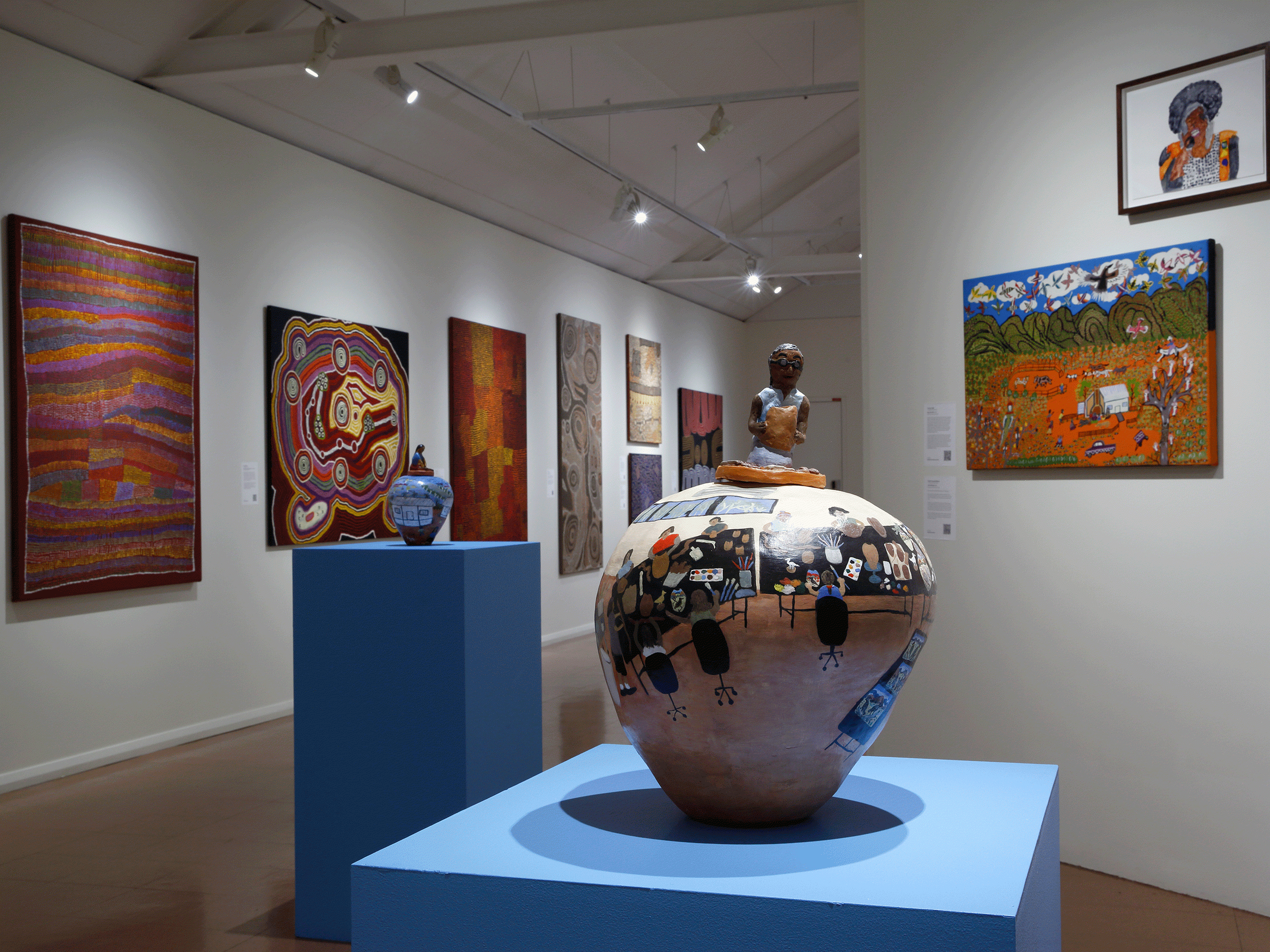
The VLAA exhibit. (Credit: Fiona Morrison)
With 65,000 years of living culture and the highest concentration of Aboriginal Art Centres in Australia, the Northern Territory’s epicentre (or epic-centre, as I’ve been calling it) is a worthy inclusion in the Lonely Planet’s guide. And there are so many other experiences to add to your to-do list.
Desert Mob is the region’s oldest Aboriginal art festival, drawing crowds to the Red Centre for 35 years. “It’s such a special time when the artists come together and see their work on the walls at Desert Mob. This is what we look forward to most," says co-curator Aspen Beattie, who has worked on the exhibition for the past four years with fellow curator Hettie Perkins. “As well as the exhibition, we have artist talks, workshops and the art market."
Fair warning: the art market is the highlight of the year for many locals and art aficionados – the talent, the beauty, the energy! – so arrive early and come prepared. Our advice is to see the exhibition first and take note of your favourite art centres, then head straight to their stall to snag a piece at the market.
Held in spring, Desert Mob also coincides with the Vincent Lingiari Art Award [VLAA], honouring Mr Lingiari, the Land Rights movement, and the power of art in politics. “As an Aboriginal woman myself – I’m Warumungu, Luritja – this exhibition is really amazing," says curator Kelli Cole. “There are so many diverse works, from painting to sculpture and soft sculpture. This year we’ve had so much water in Alice Springs – our rivers have been flooding – and there are 10 paintings alone in an exhibition of 56, that represent water."
Weekly travel news, experiences insider tips, offers, and more.
Year-round magic
A member of the Tjanpi Desert Weavers. (Credit: Tourism & Events NT/Shaana McNaught)
Some captivating art at The Bindi Mwerre Anthurre Artists Studio. (Credit: Tourism Australia)
When it comes to art centres and galleries, Alice Springs puts the ‘hot’ in ‘hot spot.’ These spaces are so much more than showrooms; they are hubs for community and connection, fire-starters for creativity and holders of living history.
At the Bindi Mwerre Anthurre Artists studio, Aboriginal artists living with a disability use art to share stories and communicate with the world. Interestingly, two of the studio members – Lizzie Trew and Billy Tjampitjinpa Kenda – often feature aliens and flying saucers in their work. For Lizzie, the aliens are self-portraits. And for Billy, they are memories passed down from his grandparents. For all of us, the extraterrestrial works are a must-see.
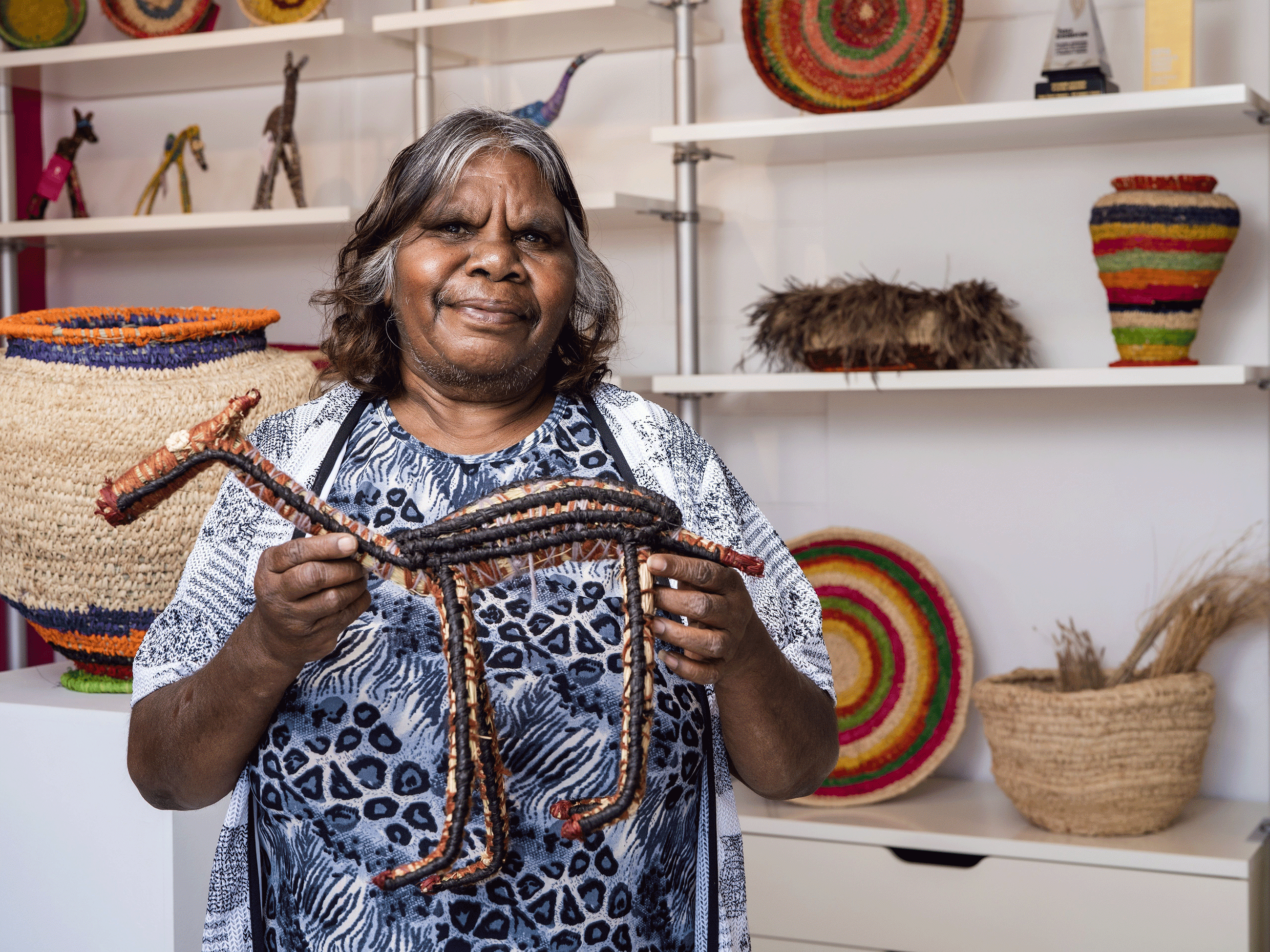
Likewise, the soft sculptures at Tjanpi Desert Weavers are a sight to behold. From camp dogs to buffalo, and camels to echidnas, the colourful woven pieces are full of character and culture. Tjanpi represents over 400 artists from 26 communities, and the gallery in Alice Springs showcases an ever-changing selection of their work.
Mbantua Gallery has been partnering with Aboriginal artists and championing their talents for 40 years. “We started out as a small gallery and we evolved to be a cultural centre," says founder and CEO Tim Jennings, who lights up when he talks about spending time with the artists of Utopia, a community north of Alice Springs. “When I look at these paintings, I don’t just see the art, I see the artist, their family and their stories."
Aboriginal peoples are the world’s first storytellers, and the Red Centre is a remarkable place to immerse yourself in their stories. Get amongst it.
Want to see more stories from Australian Traveller in your Google search results?
Tick the box next to "Australian Traveller". That's it.
Alley Pascoe is a bestselling, award-winning writer based on Larrakia Country in Darwin. She writes articles for all your favourite magazines, and she co-writes memoirs with the most fascinating people. Her books include Heartstrong with Ellidy Pullin, Love and Pain with Silverchair’s Ben Gillies and Chris Joannou, and Sink or Swim with Alexa Leary.
September to April in the Northern Territory rewards those who seek adventure.
Sure, the Northern Territory shines during the high season, but did you know it transforms into lush magnificence in the summer low season? From September to April, hundreds of waterfalls roar into action, vegetation flourishes and natural pools swell, all thanks to spectacular storms. This is when some of the country’s best arts and cultural events hit the calendar, too.
Travelling at this time of year means you’ll also be rewarded with off-peak travel pricing on accommodation, tours and experiences, and can even enjoy many of the top sites all to yourself.
1. Kings Canyon is transformed
Kings Canyon transforms in the low season. (Image: Kassia Byrnes)
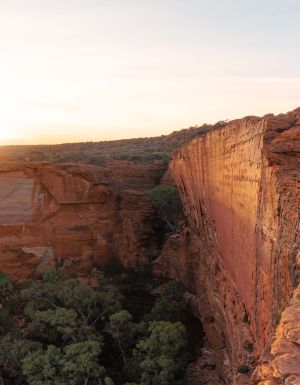
Kings Canyon’s towering sandstone domes and crevasses are a sight to behold year-round, but during the low season you can witness a rare phenomenon. This ancient outback wonder’s arid landscape bursts to life when it rains, temporarily transforming it with waterfalls that thunder down the cliffs. At the base of the canyon is the verdant Garden of Eden and its permanent watering hole.
2. John Hayes Rockhole is a natural wonder
Hike to a desert oasis. (Credit: Tourism and Events NT)
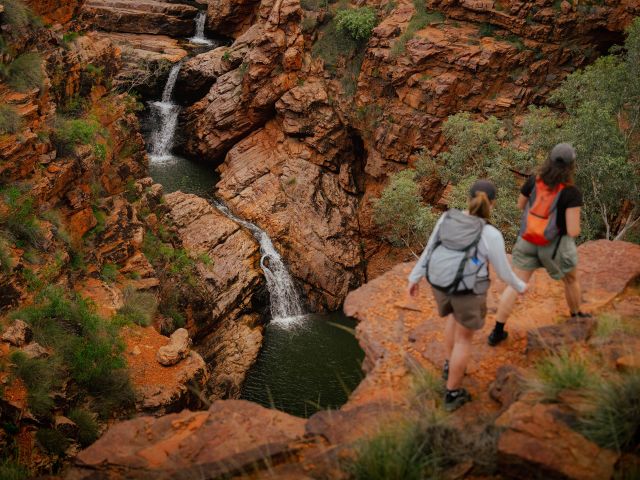
Hidden in the Trephina Gorge Nature Park in the East MacDonnell Ranges, John Hayes Rockhole is an oasis waiting to be discovered. Visit the narrow canyon during the high season, and you may see only a sandy creekbed, but after rain in the low season the pool is full of cool water. It’s accessible via a 4WD-only track off the Ross Highway, or you can set out early and join the nine-kilometre Trephina Ridgetop Walk. The reward for undertaking the hike is worth every step, and there’s a dedicated, tent-only campground for those who’d like to soak up the serenity overnight.
3. The Red Centre Light Trail shines bright
Watch the Outback light up after sunset. (Credit: Tourism and Events NT)
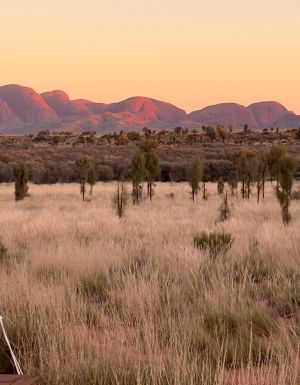
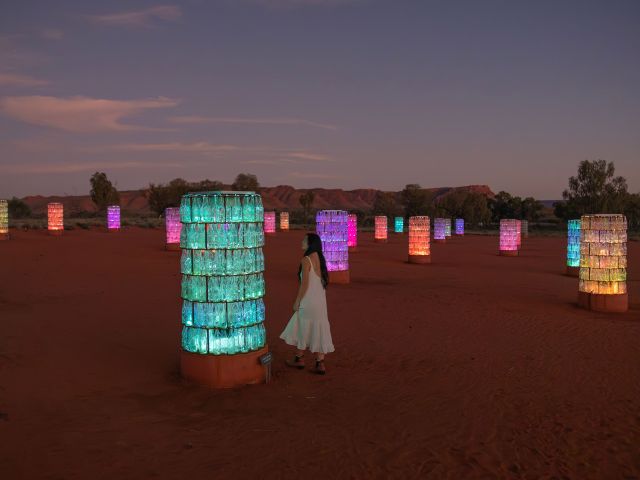
The Red Centre’s rich cultural heritage and lack of light pollution make it the ideal setting for immersive light shows, and you can experience the most iconic ones on an epic six-day road trip in April. Witness the Parrtjima cultural festival inMparntwe (Alice Springs) before heading to Kings Canyon for Bruce Munro’s Light-Towers, where 69 glowing towers shine to a celestial soundscape. At Uluṟu, Munro’s Field of Light blankets the red soil with glowing frosted-glass stems, and the Wintijiri Wiru drone show lights up the sky in front of the sacred cultural site. Along the way you’ll witness the changing landscapes of the desert from the West MacDonnell Ranges to the Valley of the Winds.
4. The Parrtjima festival lights up the Red Centre
Witness the magic of Parrtjima. (Credit: Tourism and Events NT)
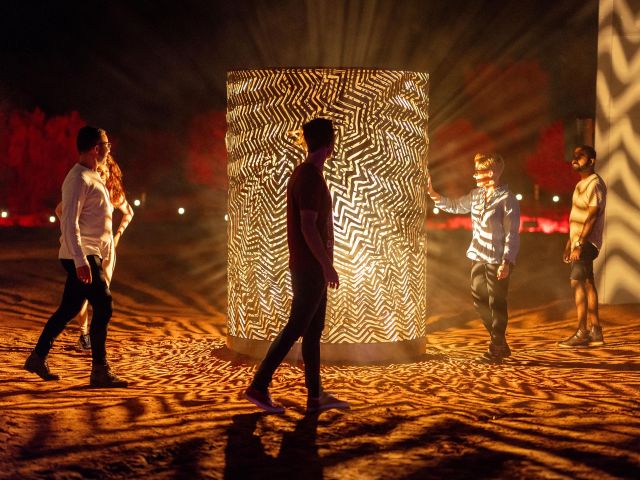
For 10 days every April, the Red Centre turns into a dazzling display of colour for the Parrtjima festival. Held at Alice Springs Desert Park, the unmissable celebration shines a spotlight on the world’s oldest living culture using modern technology. Artworks by local Aboriginal artists are transformed into large-scale illuminated installations with accompanying soundscapes, offering a unique opportunity to see the spectacular sunburnt landscapes, night skies and 300-million-year-old West MacDonnell Ranges in a new light. The jam-packed line-up of art and cultural events also includes workshops, markets, short films, talks and live music.
5. Cruising along Nitmiluk Gorge is breathtaking
Sail between towering sandstone cliffs. (Credit: Tourism and Events NT/Nic Morley)
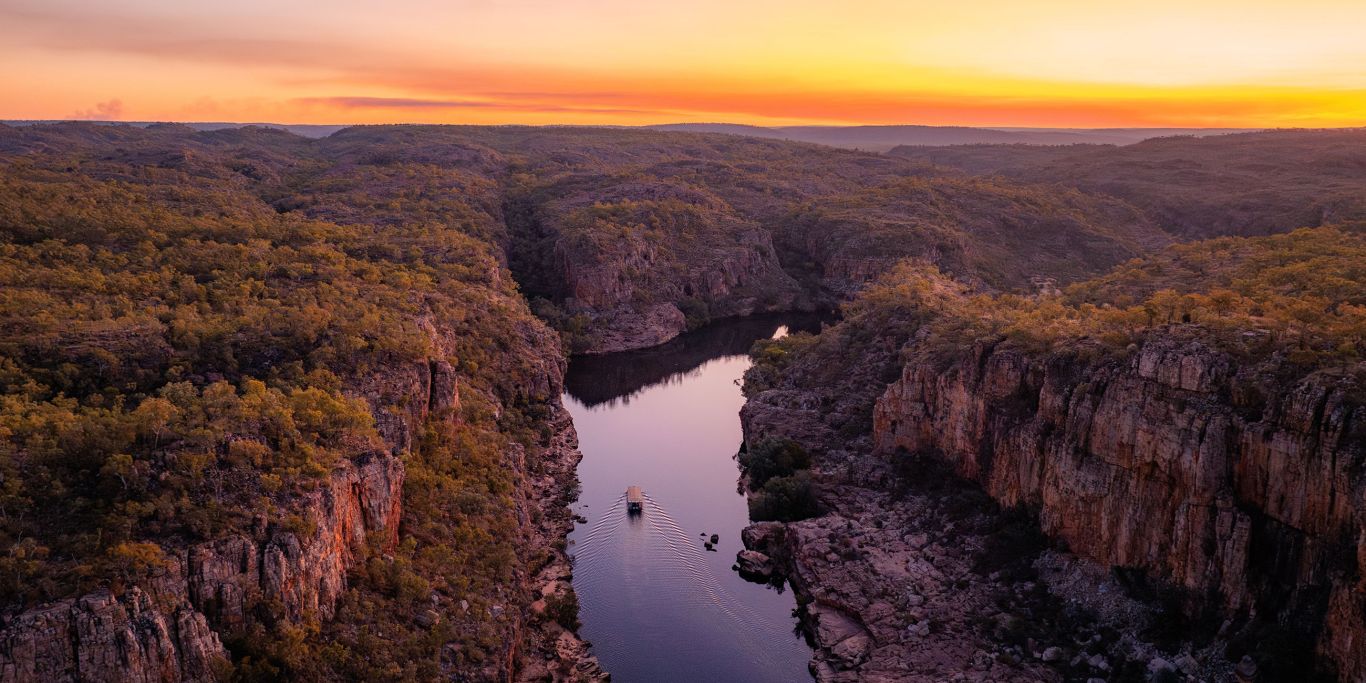
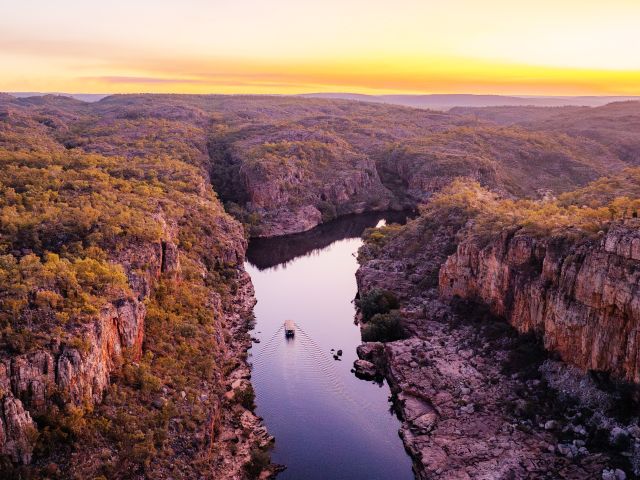
Drifting down the emerald waters of Nitmiluk (Katherine) Gorge between towering red sandstone cliffs carved over millions of years, all while waterfalls stream down around you, is an experience like none other. Nitmiluk Katherine’s two-hour NitNit Dreaming Two Gorge Tour sails through gorges past ancient rock art while a local guide imparts knowledge about the Jawoyn culture and significance of the landscape.
6. You can explore local culture on the Tiwi Islands
Immerse yourself in Tiwi culture. (Credit: Tourism and Events NT/Elise Cook)
Take an 80-kilometre ferry ride from Darwin to arrive at the Tiwi Islands, an archipelago of 11 picturesque islands and a haven for art lovers and anglers. On the Tiwi By Design walking tour you’ll be guided to the Tiwi Design Art Centre, one of Australia’s oldest art centres, to observe local artists in action and join a screen printing workshop.
If you’re more partial to sinking a line, book a stay at Tiwi Island Retreat in April. It’s one of the best months to fish for barramundi, and their world-class fishing adventures are your best chance at reeling in a prized catch.
7. Scenic flights over Kakadu’s waterfalls are jaw-dropping
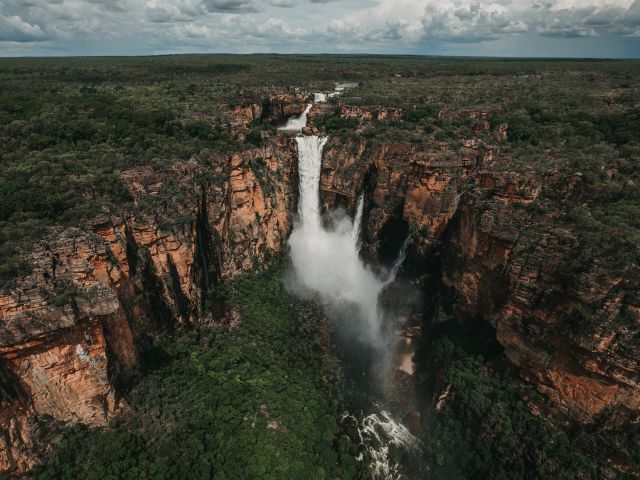
Soar above Jim Jim Falls. (Credit: Tourism and Events NT/Jarrad Seng)
Seeing Kakadu National Park’s gushing waterfalls and dramatic escarpments from above offers a dose of unparalleled beauty – and it’s all best witnessed in the low season.
Taking flight from Darwin, Kakadu Air Services offers an unforgettable experience, with doorless helicopters revealing unobstructed views of the 1.8-billion-year-old landscape. Soar above the untouched savannah that turns into a tropical green paradise, marvel at the thunderous Jim Jim Falls and Twin Falls, and whiz through ancient sandstone canyons. If you’re lucky, the scenery will look all the more dramatic with rolling tropical storm clouds in the distance.
8. Litchfield National Park is an amazing place to cool off
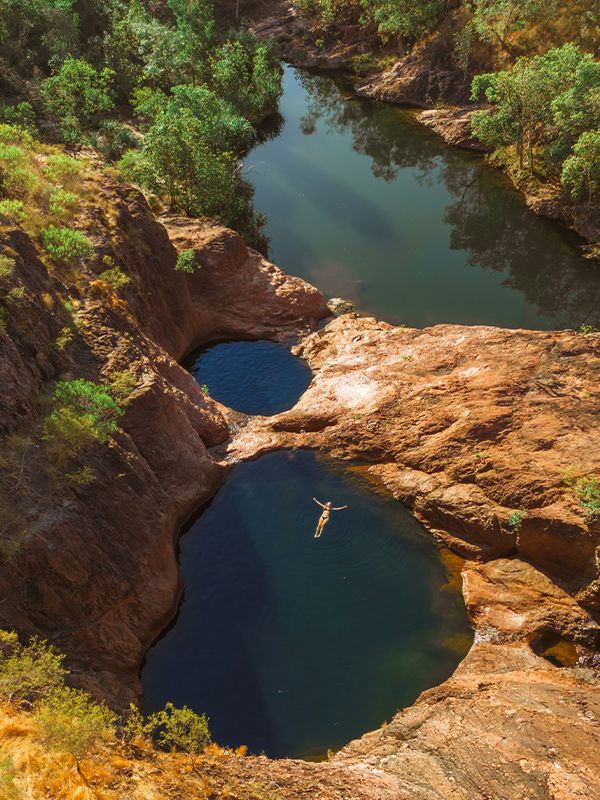
Dive into natural swimming holes. (Image: Tourism NT/Joshua Griffen)
Litchfield National Park is peppered with stunning natural swimming pools for you to beat the heat in. Take a refreshing dip in pristine, crocodile-free spots such as Buley Rockhole, a series of spring-fed cascading pools, and the nearby Florence Falls, which is enveloped by monsoon rainforest and features a crystal-clear plunge pool fed by a 15-metre-high waterfall. Be sure to check the Northern Territory Parks & Reserves website for closures before you go.