Australian Traveller was part of the first group to join the Uluṟu-Kata Tjuṯa Signature Walk, which delivers an experience like no other.
There’s no shortage of spectacular hiking trails in Australia. But I’m here to make a strong case that the new Uluṟu Kakararra Trail is the most beautiful and significant of them all. The Tasmanian Walking Company, in consultation with Yankunytjatjara and Pitjantjatjara people (Aṉangu), the Country’s Traditional Owners, has launched the Uluṟu-Kata Tjuṯa Signature Walk – a multi-day hike along the trail that traverses Uluṟu-Kata Tjuṯa National Park inthe Northern Territory. Last week, I had the privilege of joining the inaugural test group for the hike – a historic 54-kilometre, five-day journey that, for the first time, allows visitors who are not Traditional Owners to sleep overnight within the park.
Australia’s next best hike is here! The Tasmanian Walking Company, in consultation with the Aṉangu people, has launched the Uluṟu-Kata Tjuṯa Signature Walk – a multi-day hike along the newly opened Uluṟu Kakararra Trail.
What sets this hike apart is that it presents a unique opportunity to walk between two geological wonders, slow down and connect with people, the land and a living culture that spans more than 30,000 years.
What to expect on the Uluṟu-Kata Tjuta Signature Walk
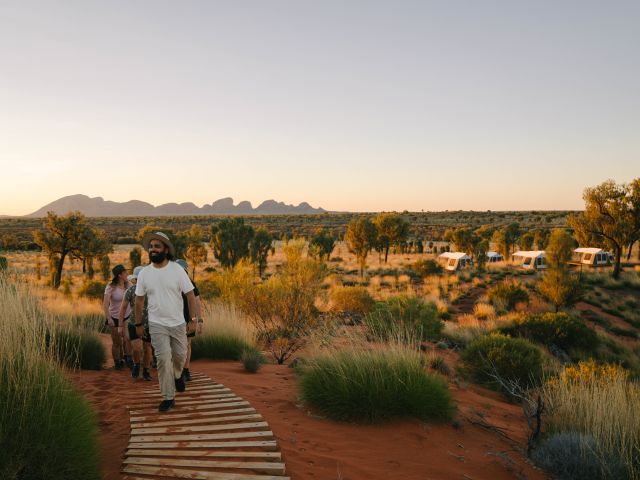
Traverse the Uluṟu Kakararra Trail on Tasmania Walking Company’s Uluṟu-Kata Tjuṯa Signature Walk. (Credit: Tasmanian Walking Company)
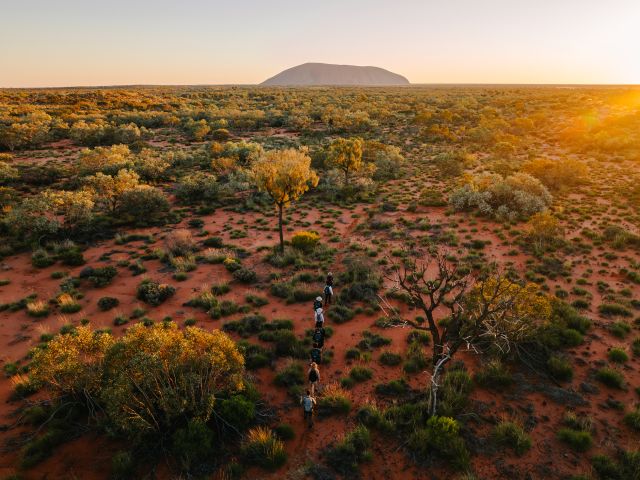
Each day involves traversing the 500-million-year-old landscape along remote tracks with a team of highly experienced guides leading small groups of just 16 people.
Starting near the 36 colossal domes of Kata Tjuṯa, you’re immersed in the desert landscape as soon as your boots hit the red soil. Here you’ll walk the Valley of the Winds, which takes approximately three to four hours to complete across 7.4 kilometres and reveals stunning geological formations and unique flora and fauna. The site is of immense cultural significance to the Aṉangu people, and visitors are discouraged from taking photographs.
The trail stretches 54 kilometres. (Credit: Tasmania Walking Company)
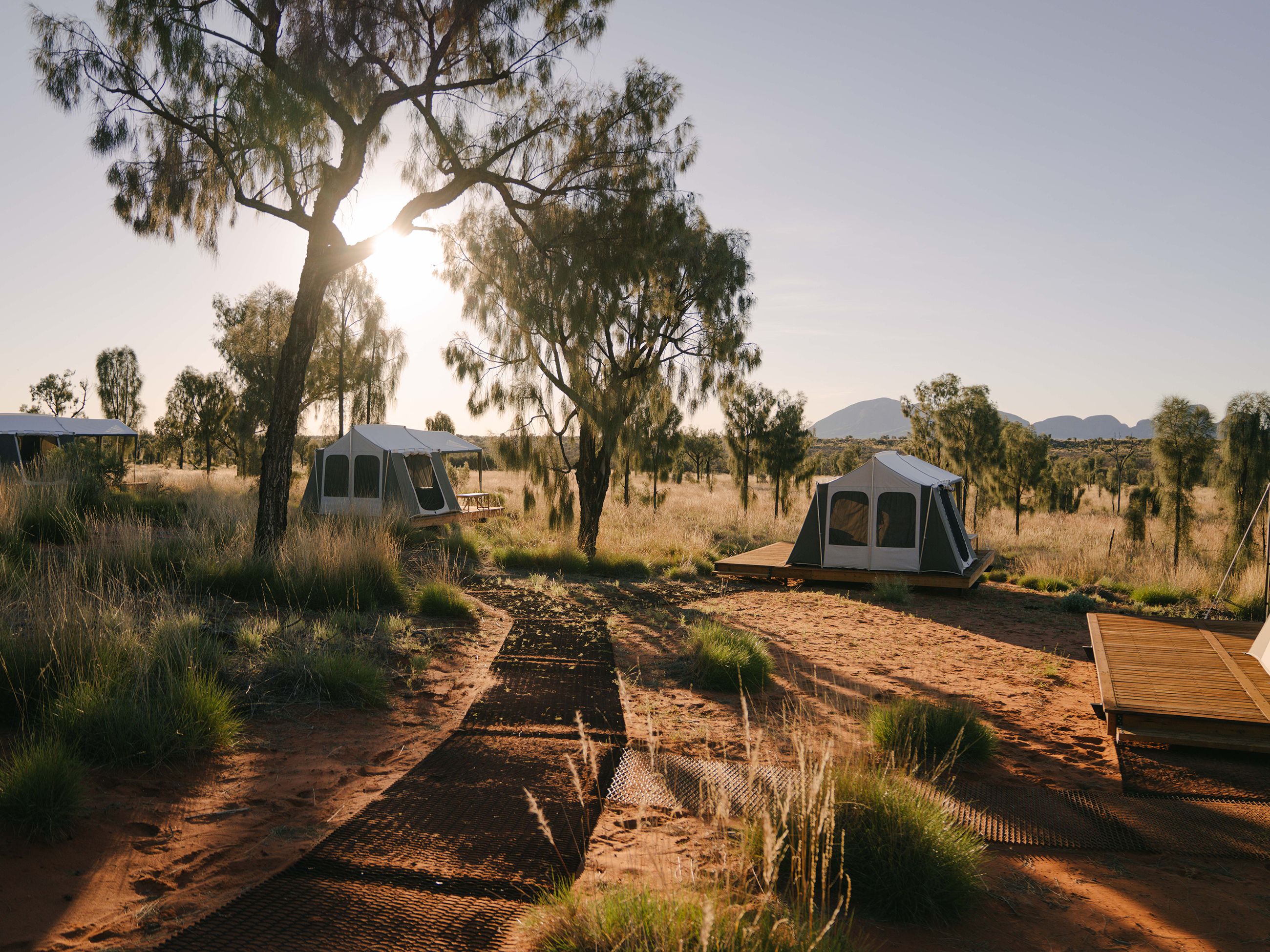
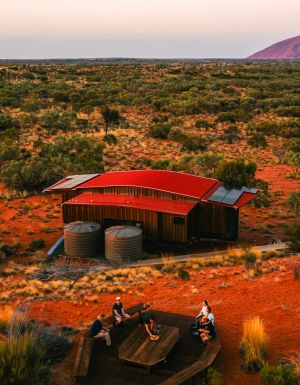
Spend two nights camping under the stars. (Credit: Tasmania Walking Company)
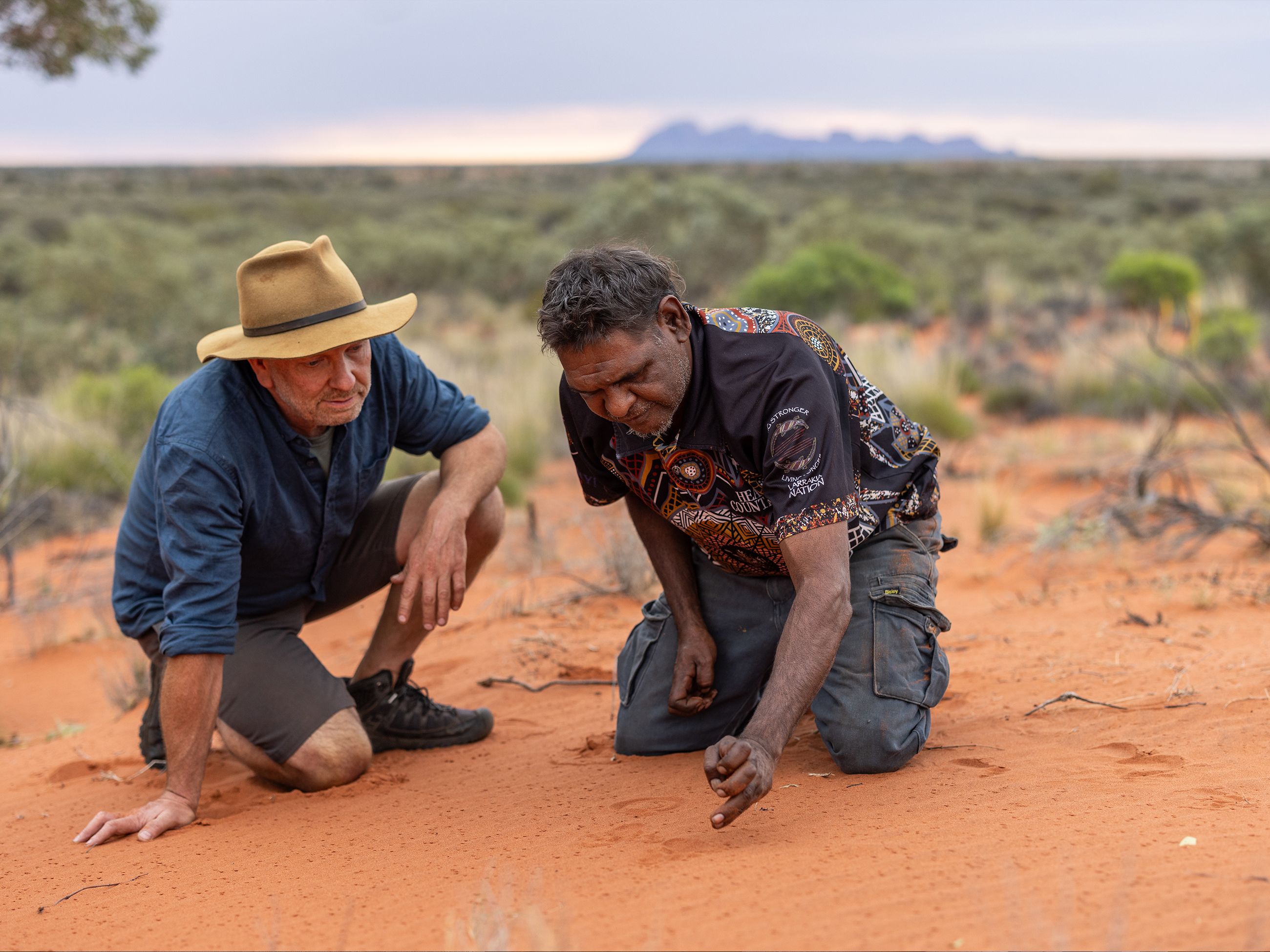
Hear stories that stretch back tens of thousands of years. (Credit: Tasmania Walking Company)
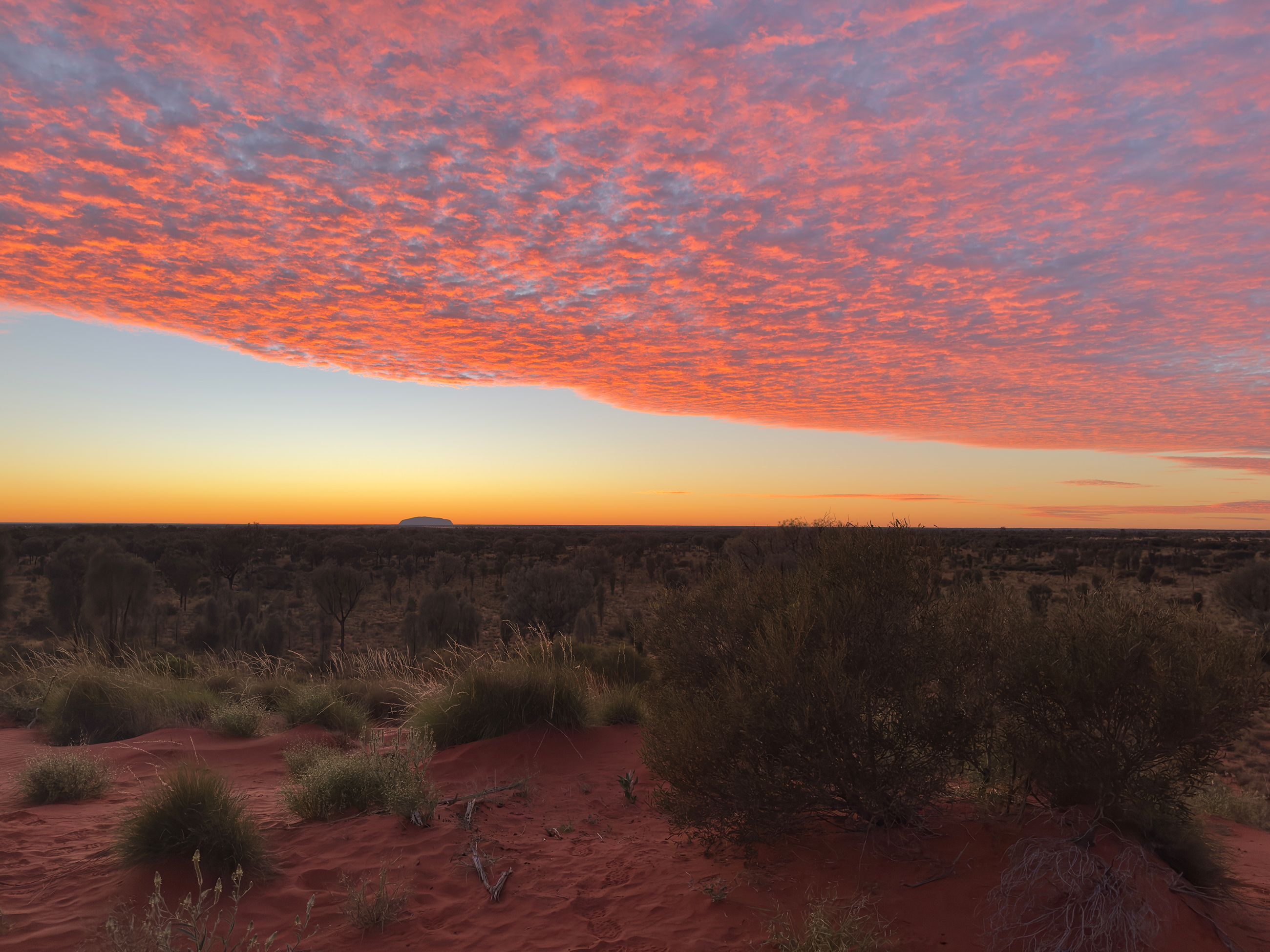
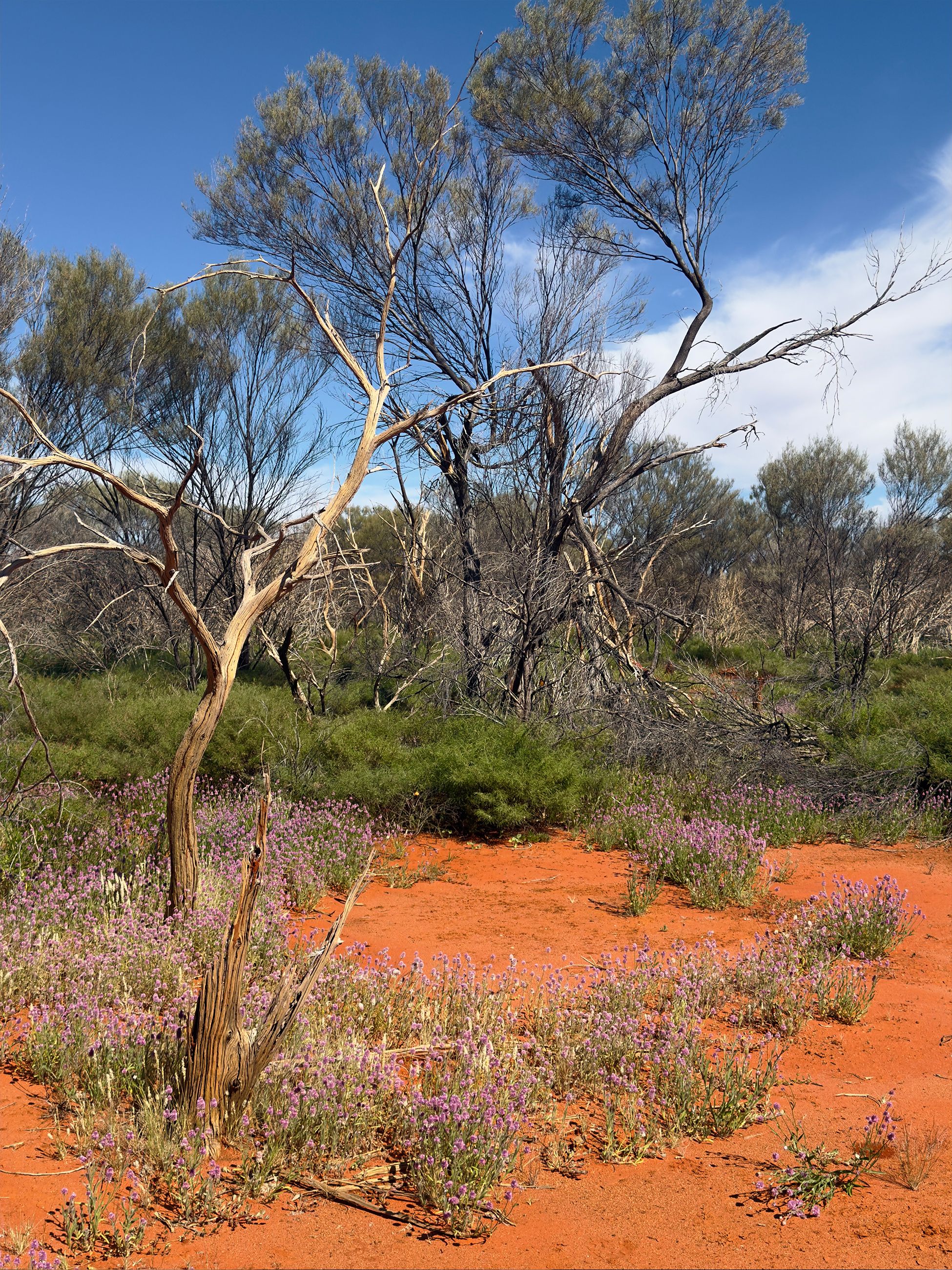
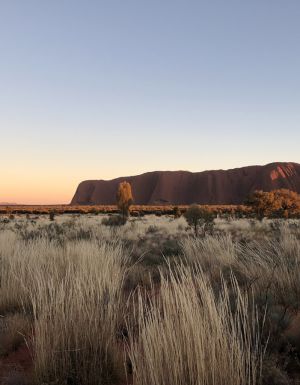
Day two was the group’s favourite day. We rose at 5.30am to walk up a sand dune to catch the sunrise over Uluṟu, the most visually exquisite one I’ve ever seen. Another moment that really struck me was on day three, when, after spending a few hours weaving through spinifex and crossing the red soil, the landscape suddenly shifted to one that was blanketed in mulla mulla, a stunning wildflower with feathery mauve flower heads, which attracted hundreds of butterflies.
The final day of Tasmanian Walking Co’s new hike will end at Uluṟu, arguably Australia’s most iconic landmark. The massive sandstone monument stands at 348 metres high and is estimated to be around 550 million years old. On this day, we also tried our hands at spear throwing and visited the Muṯitjulu Waterhole and Cultural Centre.
Need tips, more detail or itinerary ideas tailored to you? Ask AT.
AI Prompt
Spectacular sunrises and sunsets await. (Credit: Rachael Thompson)
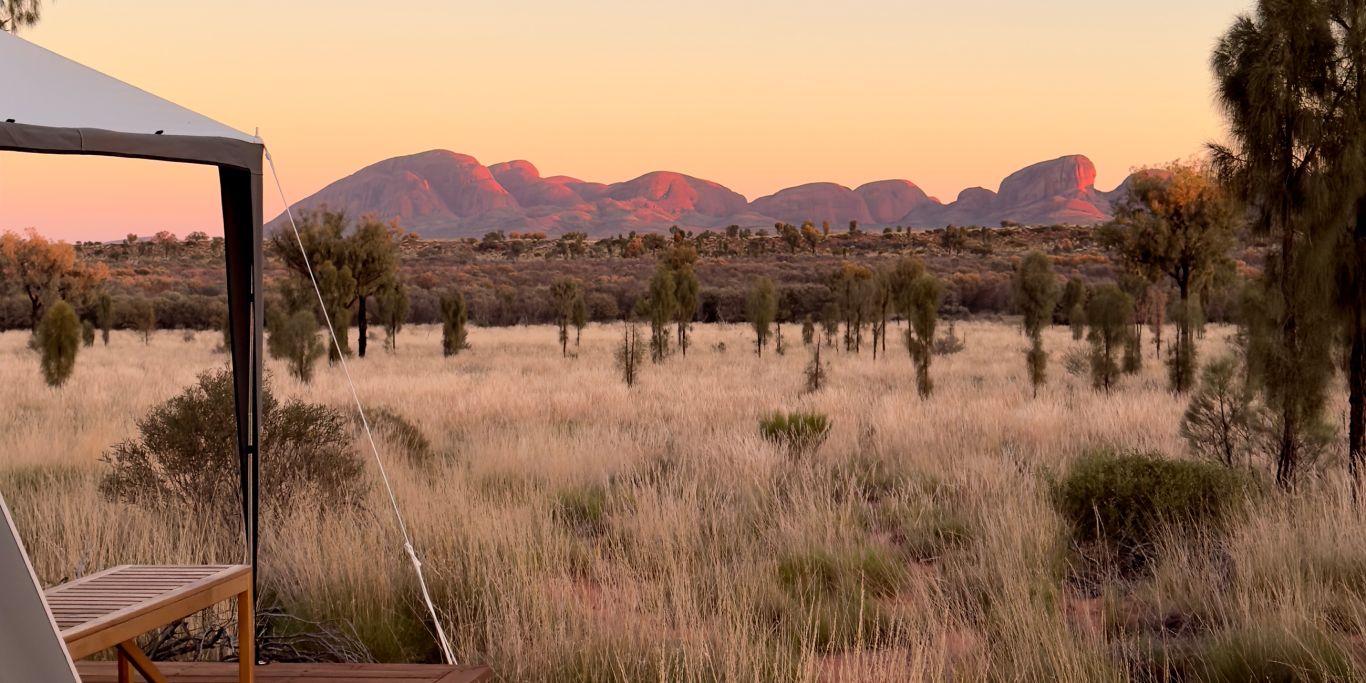
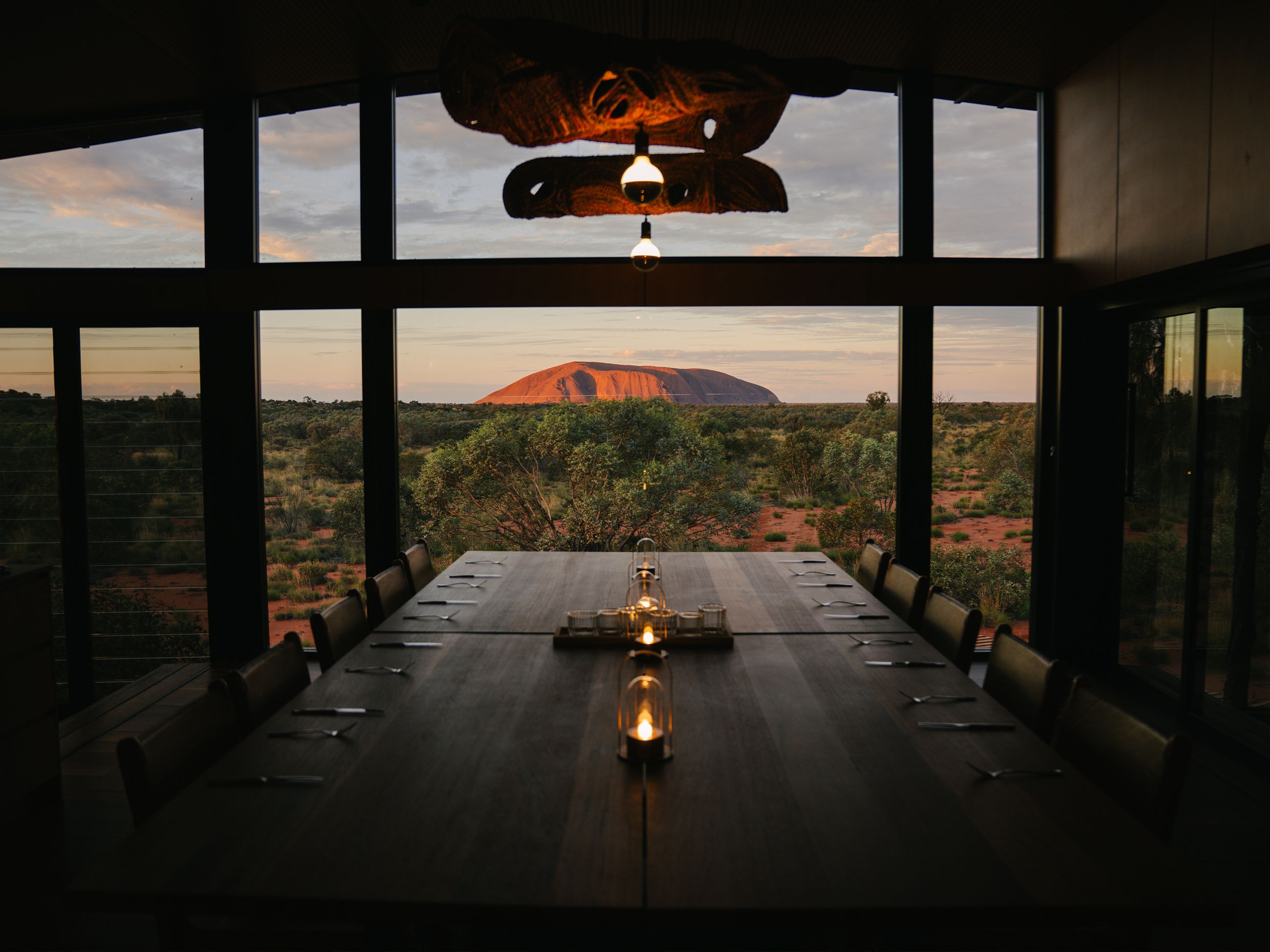
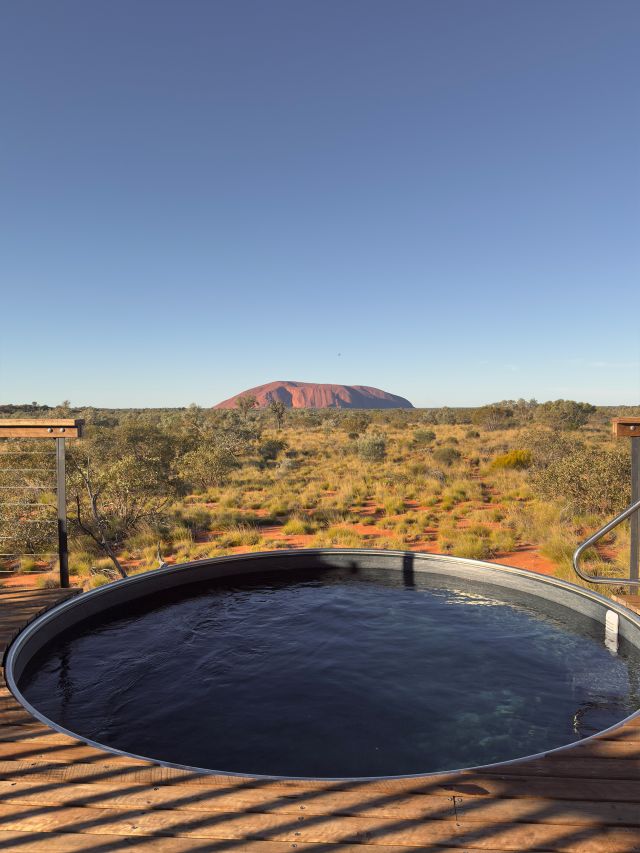
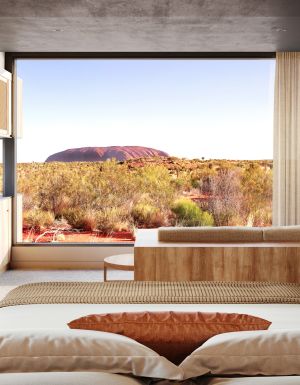
The accommodations take travellers on a journey, with each night better than the last, starting with environmentally sustainable eco camps, followed by a private lodge. The first night is spent at Tjakura Camp, sleeping under the stars in elevated tents fitted with beds overlooking Kata Tjuṯa. A full-size kitchen and entertaining space reminiscent of what you’d find on an African safari is the perfect spot to relax. Night two is spent at Tali Camp, which showcases even more impressive views of Kata Tjuṯa and an indoor entertaining space with air conditioning. The final two nights are spent at the Mala Camp, which features private rooms and bathrooms that overlook Uluṟu, a spa (I highly recommend booking in for a post-walk massage), a saltwater outdoor tub overlooking Uluṟu and an air-conditioned living and dining area.
Each evening, the guides don their aprons and cook up a delicious meal for the group using local produce to enjoy while debriefing the day’s events. Packed breakfast and lunches (think burritos, salads and homemade sourdough) are also prepared to keep you fueled during the day.
Wi-fi along the trail is very limited, which turned out to be a blessing as it helped foster a sense of calm and disconnection from city life I didn’t know I needed. Having the opportunity to slow down, listen to the landscape, and hear stories that stretch back tens of thousands of years was a privilege I will never forget.
Uluṟu-Kata Tjuṯa Lodge features a dining room with a view. (Credit: Tasmanian Walking Company)
Expect hearty, wholesome meals that showcase local produce. (Credit: Tasmanian Walking Company)
Traditional Owner and member of the APY Land Council, Tapaya Edwards, was instrumental in the development of this walk. “This is an important place for healing the spirit," he said. “People will come here and feel the land as they walk through it. The Spirit of the Dreaming will wash over them. The walk is going to blow their mind."
Is the Uluṟu-Kata Tjuṯa Signature Walk ethical?
Tasmanian Walking Company worked closely with the Aṉangu. (Credit: Tasmanian Walking Company)
Developed in consultation with Yankunytjatjara and Pitjantjatjara people (Aṉangu), the Country’s Traditional Owners, including Steering Committee Chair Tapaya Edwards, the Uluṟu-Kata Tjuṯa Signature Walk is as much about people as it is place.
The carbon-neutral experience will create a minimum of 20 positions in the first 10 years of business, with revenue-sharing agreements being fed directly back to local Aṉangu communities. Respect is a guiding tenet throughout, with guests learning about Aṉangu culture and history through Indigenous-led storytelling sessions, educational workshops and lessons in land management practices along the way.
“Millions have stood before Uluṟu, but few have been invited by Aṉangu Owners to move through its landscape like this," said Tasmanian Walking Company co-owner, Brett Godfrey.
Weekly travel news, experiences insider tips, offers, and more.
Can you join a shorter walk?
Yes. The Tasmanian Walking Company is also offering the Uluṟu-Kata Tjuṯa Lodge Walk – a fully-guided, four-day, 35-kilometre journey along the Uluṟu Kakararra Trail. The walk is designed for first-time walkers and international travellers, with shorter daily distances and one night at Yulara followed by two nights at the Uluṟu-Kata Tjuṯa Lodge.
Details
Uluṟu-Kata Tjuṯa Lodge features an outdoor saltwater pool. (Credit: Rachael Thompson)
Pricing: The five-day walk starts from AUD$5395 pp/twin share.
Day 1: Kata Tjuṯa and a guided Valley of the Winds Walk to private Eco Campsite 1 (8.4 kilometres).
Day 2: Arc east across the rolling dunes to Eco Campsite 2 (16.5 kilometres).
Day 3: Continue across desert landscapes with cultural interpretation (16.5 kilometres). Overnight at the Uluṟu-Kata Tjuṯa Lodge.
Day 4: Uluru walks, including Muṯitjulu Waterhole and Cultural Centre (12.3 kilometres) with optional base walk (8 kilometres). Overnight at Uluṟu-Kata Tjuṯa Lodge.
Day 5: Lodge to Ayers Rock Resort (0.8 kilometres) and departure.
Want to see more stories from Australian Traveller in your Google search results?
Tick the box next to "Australian Traveller". That's it.
Rachael Thompson is a freelance travel journalist. With a background in design and travel media, Rachael is dedicated to curating content that is as much informational as it is beautiful. She began her career at Belle magazine, before taking up editorial roles at Homes to Love, Bed Threads and Australian Traveller/International Traveller. When she's not writing, editing or optimising content, Rachael enjoys exploring the city's newest restaurants, bars and hotels. Next on her Aussie travel wish list is Lord Howe Island.
September to April in the Northern Territory rewards those who seek adventure.
Sure, the Northern Territory shines during the high season, but did you know it transforms into lush magnificence in the summer low season? From September to April, hundreds of waterfalls roar into action, vegetation flourishes and natural pools swell, all thanks to spectacular storms. This is when some of the country’s best arts and cultural events hit the calendar, too.
Travelling at this time of year means you’ll also be rewarded with off-peak travel pricing on accommodation, tours and experiences, and can even enjoy many of the top sites all to yourself.
1. Kings Canyon is transformed
Kings Canyon transforms in the low season. (Image: Kassia Byrnes)
Kings Canyon’s towering sandstone domes and crevasses are a sight to behold year-round, but during the low season you can witness a rare phenomenon. This ancient outback wonder’s arid landscape bursts to life when it rains, temporarily transforming it with waterfalls that thunder down the cliffs. At the base of the canyon is the verdant Garden of Eden and its permanent watering hole.
2. John Hayes Rockhole is a natural wonder
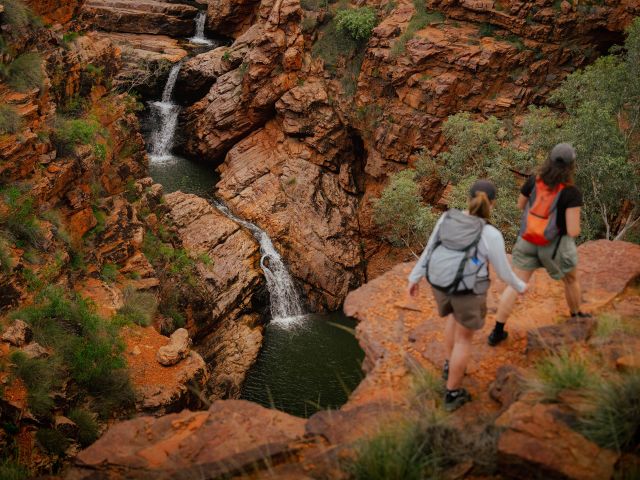
Hike to a desert oasis. (Credit: Tourism and Events NT)
Hidden in the Trephina Gorge Nature Park in the East MacDonnell Ranges, John Hayes Rockhole is an oasis waiting to be discovered. Visit the narrow canyon during the high season, and you may see only a sandy creekbed, but after rain in the low season the pool is full of cool water. It’s accessible via a 4WD-only track off the Ross Highway, or you can set out early and join the nine-kilometre Trephina Ridgetop Walk. The reward for undertaking the hike is worth every step, and there’s a dedicated, tent-only campground for those who’d like to soak up the serenity overnight.
3. The Red Centre Light Trail shines bright
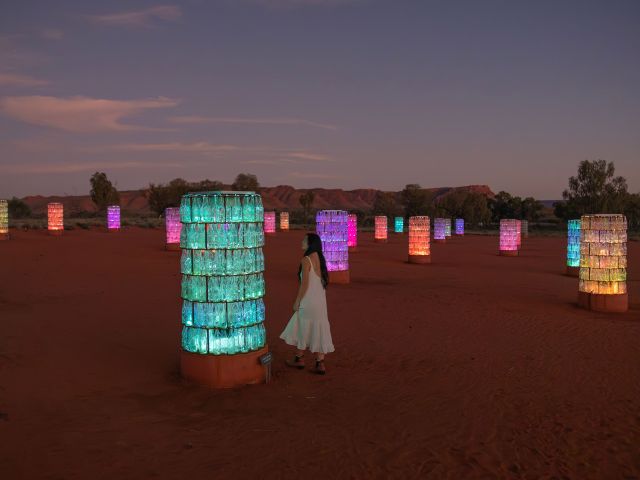
Watch the Outback light up after sunset. (Credit: Tourism and Events NT)
The Red Centre’s rich cultural heritage and lack of light pollution make it the ideal setting for immersive light shows, and you can experience the most iconic ones on an epic six-day road trip in April. Witness the Parrtjima cultural festival inMparntwe (Alice Springs) before heading to Kings Canyon for Bruce Munro’s Light-Towers, where 69 glowing towers shine to a celestial soundscape. At Uluṟu, Munro’s Field of Light blankets the red soil with glowing frosted-glass stems, and the Wintijiri Wiru drone show lights up the sky in front of the sacred cultural site. Along the way you’ll witness the changing landscapes of the desert from the West MacDonnell Ranges to the Valley of the Winds.
4. The Parrtjima festival lights up the Red Centre
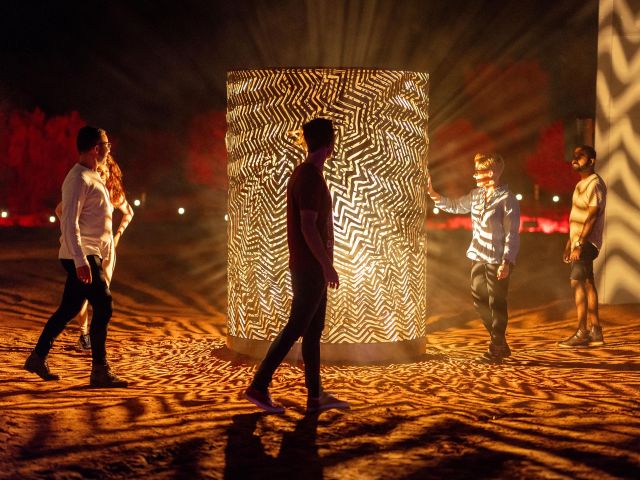
Witness the magic of Parrtjima. (Credit: Tourism and Events NT)
For 10 days every April, the Red Centre turns into a dazzling display of colour for the Parrtjima festival. Held at Alice Springs Desert Park, the unmissable celebration shines a spotlight on the world’s oldest living culture using modern technology. Artworks by local Aboriginal artists are transformed into large-scale illuminated installations with accompanying soundscapes, offering a unique opportunity to see the spectacular sunburnt landscapes, night skies and 300-million-year-old West MacDonnell Ranges in a new light. The jam-packed line-up of art and cultural events also includes workshops, markets, short films, talks and live music.
5. Cruising along Nitmiluk Gorge is breathtaking
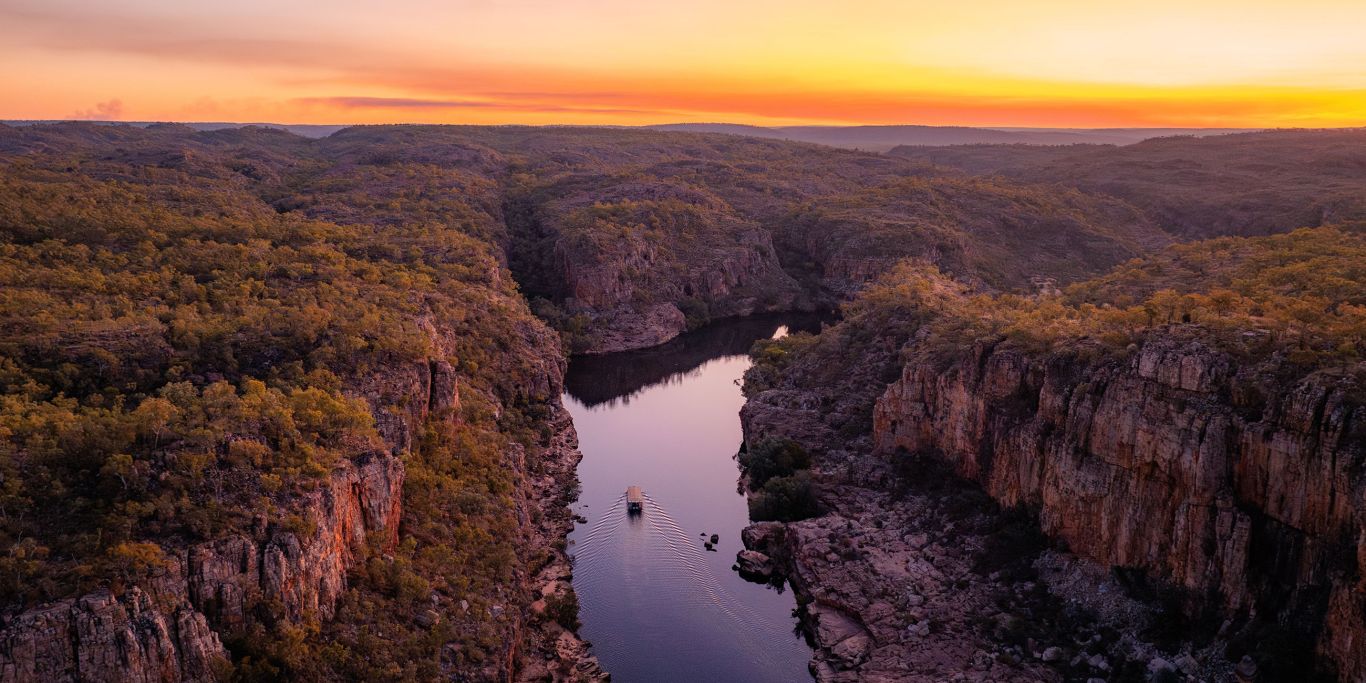
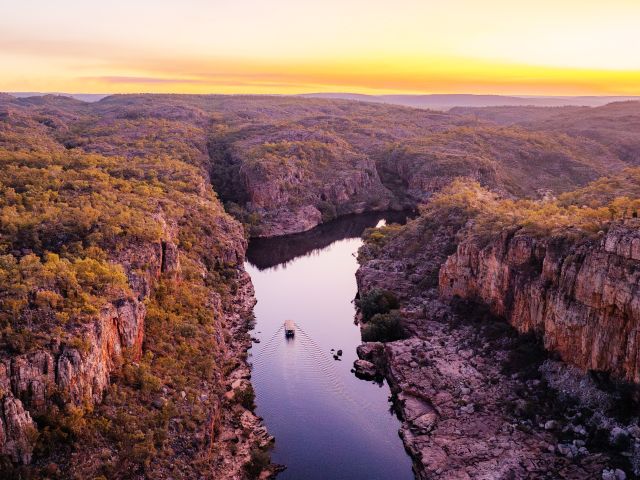
Sail between towering sandstone cliffs. (Credit: Tourism and Events NT/Nic Morley)
Drifting down the emerald waters of Nitmiluk (Katherine) Gorge between towering red sandstone cliffs carved over millions of years, all while waterfalls stream down around you, is an experience like none other. Nitmiluk Katherine’s two-hour NitNit Dreaming Two Gorge Tour sails through gorges past ancient rock art while a local guide imparts knowledge about the Jawoyn culture and significance of the landscape.
6. You can explore local culture on the Tiwi Islands
Immerse yourself in Tiwi culture. (Credit: Tourism and Events NT/Elise Cook)
Take an 80-kilometre ferry ride from Darwin to arrive at the Tiwi Islands, an archipelago of 11 picturesque islands and a haven for art lovers and anglers. On the Tiwi By Design walking tour you’ll be guided to the Tiwi Design Art Centre, one of Australia’s oldest art centres, to observe local artists in action and join a screen printing workshop.
If you’re more partial to sinking a line, book a stay at Tiwi Island Retreat in April. It’s one of the best months to fish for barramundi, and their world-class fishing adventures are your best chance at reeling in a prized catch.
7. Scenic flights over Kakadu’s waterfalls are jaw-dropping
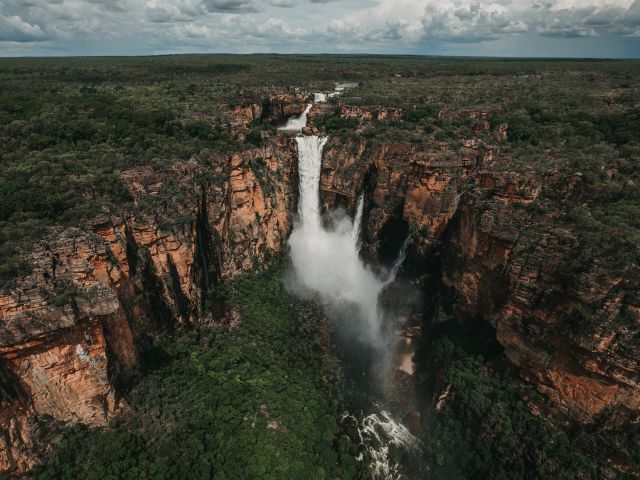
Soar above Jim Jim Falls. (Credit: Tourism and Events NT/Jarrad Seng)
Seeing Kakadu National Park’s gushing waterfalls and dramatic escarpments from above offers a dose of unparalleled beauty – and it’s all best witnessed in the low season.
Taking flight from Darwin, Kakadu Air Services offers an unforgettable experience, with doorless helicopters revealing unobstructed views of the 1.8-billion-year-old landscape. Soar above the untouched savannah that turns into a tropical green paradise, marvel at the thunderous Jim Jim Falls and Twin Falls, and whiz through ancient sandstone canyons. If you’re lucky, the scenery will look all the more dramatic with rolling tropical storm clouds in the distance.
8. Litchfield National Park is an amazing place to cool off
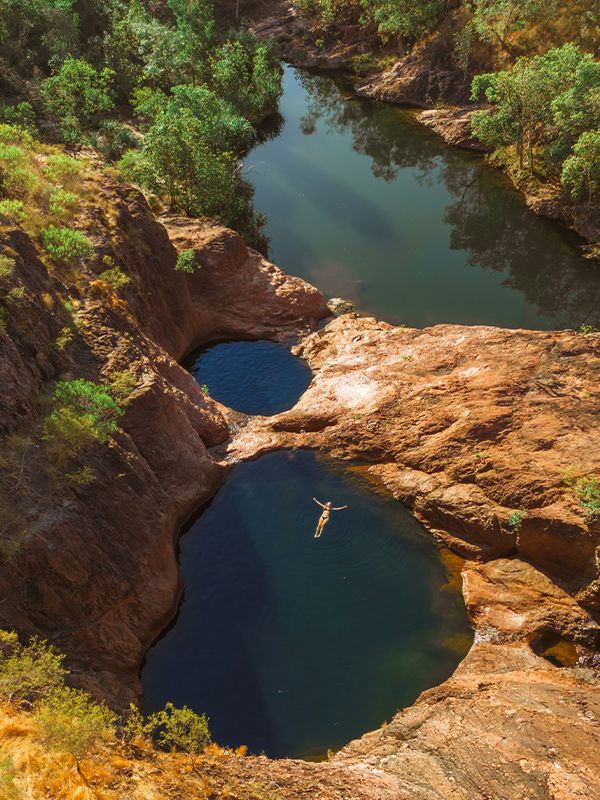
Dive into natural swimming holes. (Image: Tourism NT/Joshua Griffen)
Litchfield National Park is peppered with stunning natural swimming pools for you to beat the heat in. Take a refreshing dip in pristine, crocodile-free spots such as Buley Rockhole, a series of spring-fed cascading pools, and the nearby Florence Falls, which is enveloped by monsoon rainforest and features a crystal-clear plunge pool fed by a 15-metre-high waterfall. Be sure to check the Northern Territory Parks & Reserves website for closures before you go.