Why these Aussie couples have visited Uluṟu so much they’ve lost count

hero media
For two couples, Uluṟu has been more than a destination – it’s been a spiritual touchstone across decades of changing landscapes, culture and understanding. 

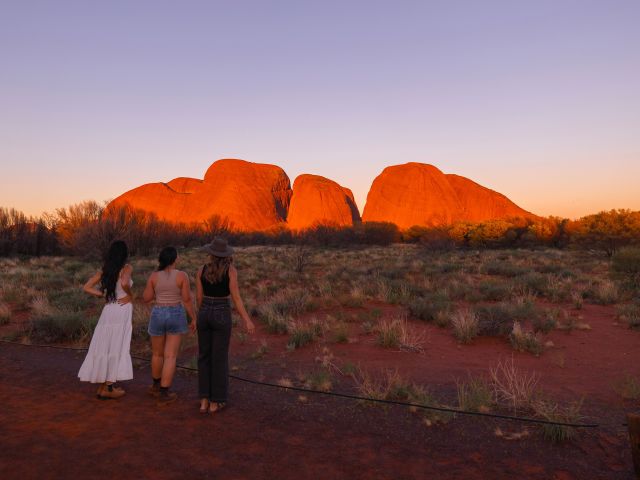
Few places on Earth possess the power to transform a visitor with a single glance. Uluṟu is one of them. Towering out of the red heart of Australia, it has drawn people from every corner of the world – and left them forever changed.

Among those who have felt its pull time and again are Brian and Lynda Ralph, and June and Geoff Tidey, two couples whose journeys to Uluṟu span decades. 

First encounters with the magic of Uluṟu 
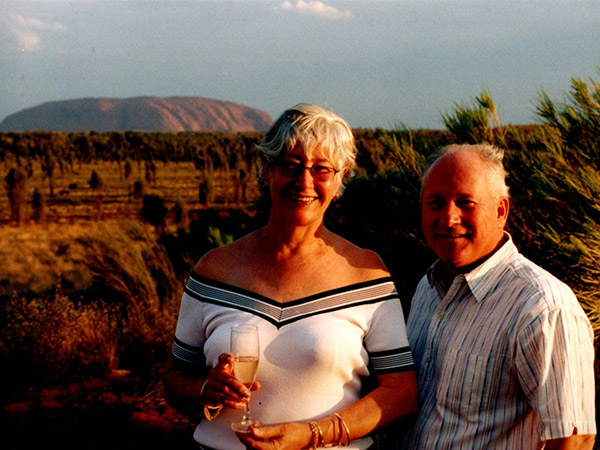
Lynda and Brian at Sounds of Silence Dinner
Lynda and Brian at the Sounds of Silence Dinner in 2004. (Image: Brian and Lynda Ralph)

When geography teachers Brian and Lynda Ralph first approached Uluṟu in the early 1970s, it was a raw, untamed experience.  

“We drove in, and it was late evening, and we thought, ‘Okay, this is huge,'" Brian recalls. But by the next morning, heavy rain had transformed the landscape.  

“We woke up, it was pouring rain, and the Rock was silver, just the way the light was in the early morning with waterfalls cascading down its sides. Unbelievable," Brian says. 

A family connection 
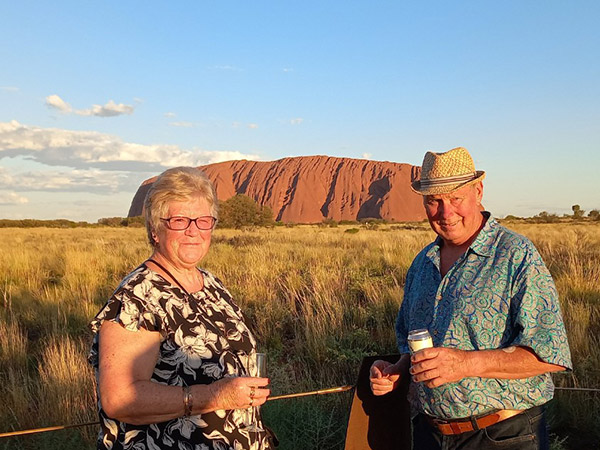
June and Geoff Tidey's Uluru journey
June and Geoff’s Uluru journey was inspired by their daughter. (Image: June and Geoff Tidey)

For June and Geoff Tidey, originally from Buckinghamshire in the UK, their journey to Uluṟu began much later, in 2008, sparked by their daughter, who has worked and lived in the region for the majority of the last 20 years. 

“We visited because of her," June says, “but we fell in love with the place ourselves." Over more than 10 visits, June and Geoff found Uluṟu to be both a family touchstone and a personal retreat. 

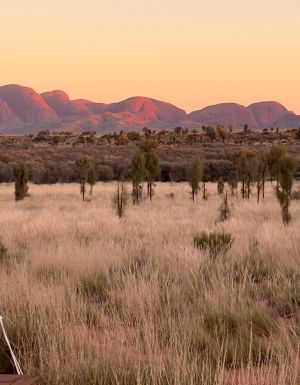
“It’s a very spiritual place, very calming," she reflects. “And it’s not what you expect. People imagine a barren desert – but it’s green, it’s full of life." 

Need tips, more detail or itinerary ideas tailored to you? Ask AT.

AI Prompt

Watching change unfold 
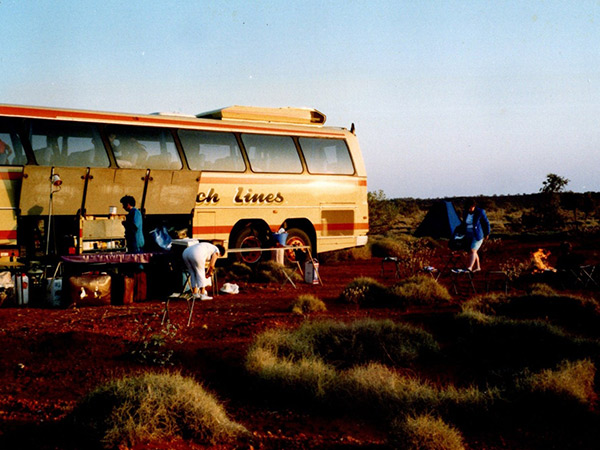
campsite in 1991
Camping in 1991. (Image: Brian and Lynda Ralph)

Both couples have witnessed – and welcomed – the sweeping changes that have transformed how visitors engage with Uluṟu. For Brian and Lynda, the evolution has been profound over their seven or eight visits (they can’t quite remember how many times they’ve been). 

“In the 70s, people would just hop out of the bus and, often without a second thought, they’d climb the Rock," Brian says. 

“But now, there’s a deep respect. And the Aṉangu culture has been openly recognised and embraced, and visitors are far more conscious of the cultural importance of the site." 

“We didn’t know enough," Brian admits. “But there wasn’t much information available then. Looking back, I just regret we didn’t understand the cultural significance." 
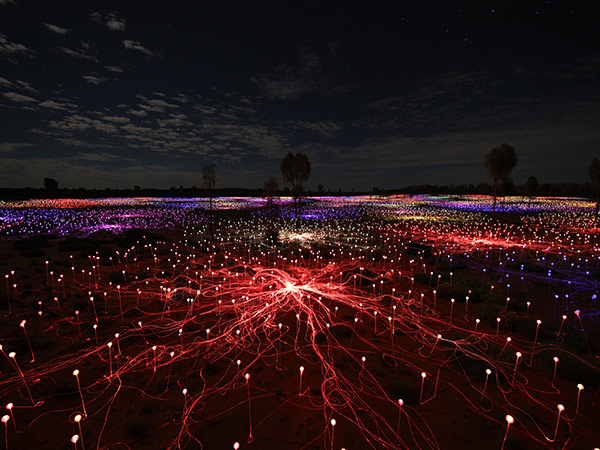
Uluṟu Field of Light
The mesmerising Uluṟu Field of Light installation by Bruce Munro. (Image: Voyages Indigenous Tourism Australia)

Brian points to the Uluṟu-Kata Tjuṯa’s Traditional Owners, the respectful interpretive signs, and the re-routing of roads to protect sacred sites. “It’s heartwarming," he says. “You feel like you’re being invited to experience something truly special, but with the understanding that you are a guest." 

Brian and Lynda also point out the difference in accommodation options over the years. 

“[In the early days] we were in two-man tents on red dirt and that was it, there was nothing else," Brian says. 

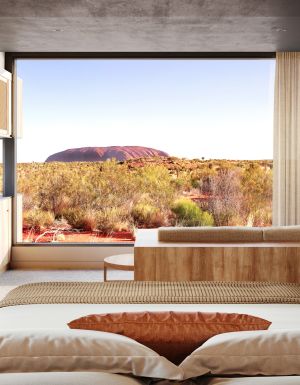
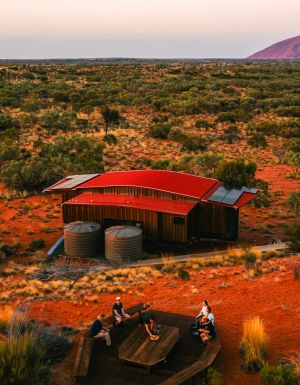
“Now, with Ayers Rock Resort, for people considering going there, there’s a really wide range of accommodation and pricing. There are a variety of options. We usually stay at the Outback Hotel." 

June and Geoff have visited Uluṟu more than 10 times, but the exact number is difficult to recall. They, too, have a favourite accommodation – Emu Walk Apartments – and have discovered a favourite room as well.

“We always stay in the same room – 209," June laughs. “The room is a one-bedroom apartment, it’s so good, so centrally located, we just loved it, so we’ve asked for it ever since!" 

Memories made across generations 
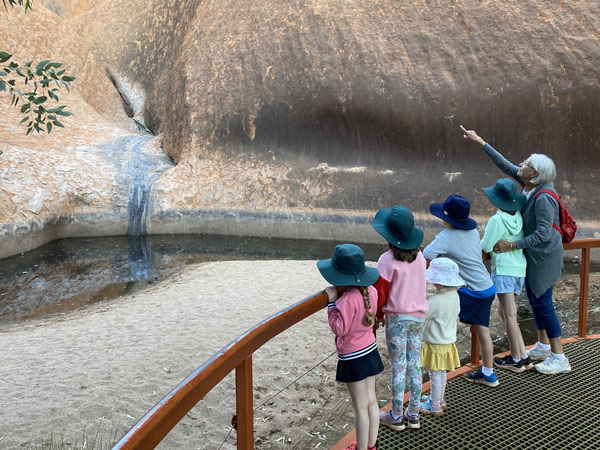
Brian and Lynda Ralph grandkids at Mutitjulu Waterhole
The Ralphs visited with their grandchildren in 2022. (Image: Brian and Lynda Ralph)

For the Ralphs, Uluṟu has become a part of their family’s story. They’ve returned with their children, and later their grandchildren, weaving memories of sunrise walks, Indigenous tours and quiet moments of awe into the fabric of their lives. 

“Every time we visit, we discover something new," Lynda says. “Taking our grandchildren to see the Aboriginal rock art and watch their faces light up – it’s unforgettable." 

“As teachers, we started teaching very differently as we became more and more aware of the cultural importance [of Uluṟu] to the local people and being sensitive to that," Brian tells Australian Traveller. 

The Tideys, too, have found fresh experiences on each return trip. From laidback stays at their beloved Emu Walk Apartments to memorable moments with their daughter’s family, their connection has deepened beyond sightseeing. 

“It’s not just about seeing Uluṟu anymore," June says. “It’s about feeling it. Listening, learning, respecting." 

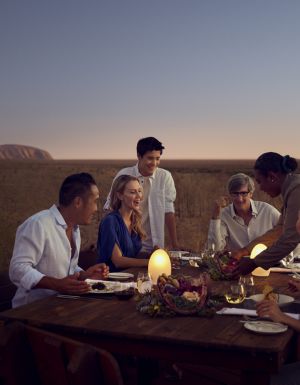
“For the next trip, we want to do the Wintjiri Wiṟu dinner and drone show. That’s the only one we haven’t done." 

Weekly travel news, experiences
insider tips, offers, and more.

Why Uluṟu still calls them back
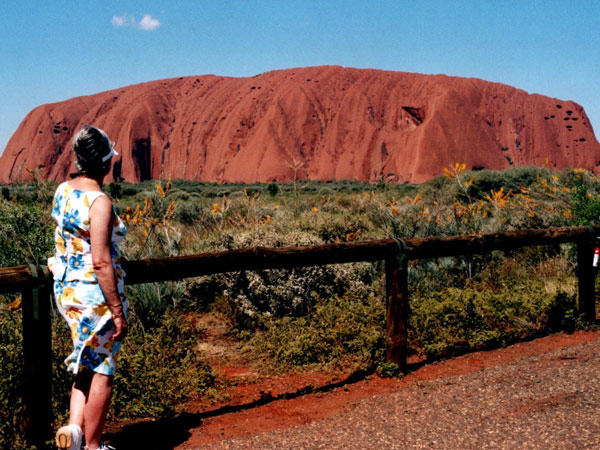
Woman reflects on the significance of Uluru in 2004
“Seek to understand, not just to see." – Brian Ralph (Image: Brian and Lynda Ralph)

If they could go back to their first visits, Brian and Lynda know exactly what advice they’d give their younger selves. “Learn more," Brian says simply. “Seek to understand, not just to see." 

June, meanwhile, would advise newcomers to slow down. “Spend at least five days if you can. Have fun and join all the experiences that you can." 

Despite the years, both couples feel the magnetic pull of Uluṟu as strongly as ever. “It’s become a very special place to us," Brian says. “It always feels like coming home." 

As for future visits? “Absolutely," Lynda says. “We’ll go back again and again." 

Because some places don’t just mark the map. They mark the soul. 

Want to see more stories from Australian Traveller in your Google search results?

  1. Click here to set Australian Traveller as a preferred source.
  2. Tick the box next to "Australian Traveller". That's it.
Emily Murphy
Emily Murphy is Australian Traveller's Email & Social Editor, and in her time at the company she has been instrumental in shaping its social media and email presence, and crafting compelling narratives that inspire others to explore Australia's vast landscapes. Her previous role was a journalist at Prime Creative Media and before that she was freelancing in publishing, content creation and digital marketing. When she's not creating scroll-stopping travel content, Em is a devoted 'bun mum' and enjoys spending her spare time by the sea, reading, binge-watching a good TV show and exploring Sydney's vibrant dining scene. Next on her Aussie travel wish list? Tasmania and The Kimberley.
View profile and articles
hero media

Untouched wilderness & unexpected pub crawls: 8 experiences you’ll only find in the NT

(Credit: Tourism & Events NT/ Sean Scott)

    Kassia Byrnes Kassia Byrnes
    The Northern Territory isn’t just different – it’s a whole new world. From the friendly locals and varied landscapes to its cultural layers, there’s nowhere else in Australia quite like it.

    The Northern Territory has to be experienced to be believed. The majesty of Uluṟu doesn’t quite hit until you’re standing before it. The untouched beauty of Arnhem Land strikes the heart in a way you can’t imagine. The quirky and friendly locals and the festivals they throw impart stories that won’t be forgotten. And that’s just the beginning. From natural hot springs and local larrikins to deep cultural ties and ancient stories, these are the experiences to be discovered only in the NT.

    1. Swim in pristine natural hot springs

    woman swimming in Katherine Hot Springs only in the nt
    Dive into Katherine’s crystal clear thermal springs. (Credit: Tourism & Events NT/ Backyard Bandits)

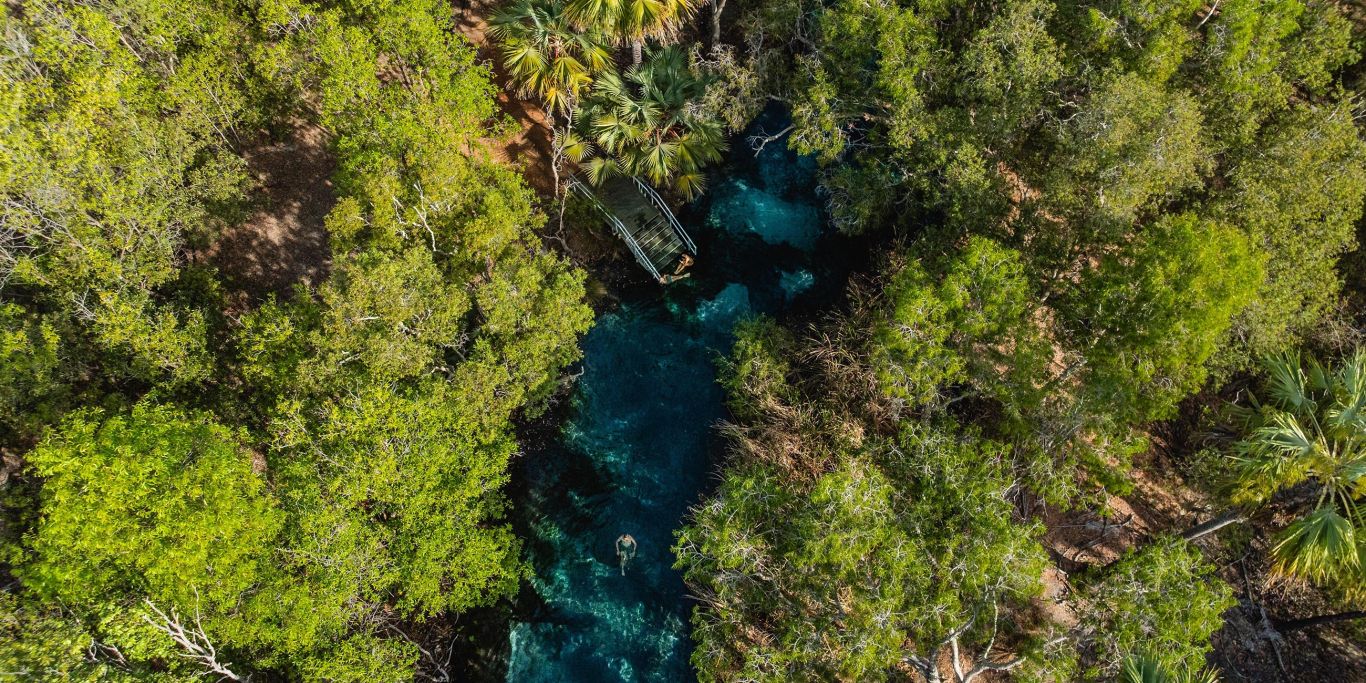
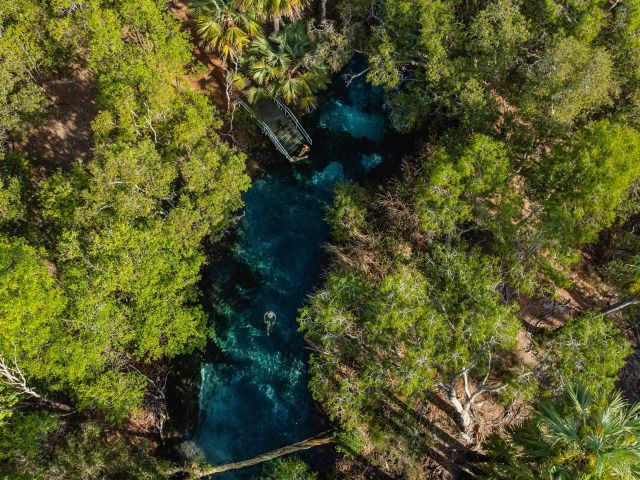
    The NT’s natural hot springs are truly picturesque. Katherine’s crystal clear thermal springs sit on the banks of the Katherine River, framed by nature. Picnic grounds and scenic walking tracks make it easy to linger.

    In Elsey National Park, the teal waters of Bitter Springs have long been popular with locals. It’s not uncommon to spot turtles as you drift with the gentle current, palm trees waving on the banks. The park also contains Mataranka Thermal Pool, a sandy-bottomed swimming hole sitting at a cosy 34°C year-round.

    2. Explore the Red Centre Light Trail

    Light Towers Kings Canyon
    Head to Kings Canyon to see the Light Towers. (Credit: Tourism & Events NT)

    Uluṟu-Kata Tjuṯa National Park is more than just a place; it’s earned its name as Australia’s cultural heart. Here, a wealth of stories is held by its Traditional Owners, the Aṉangu. And while there are many ways to connect, in more recent years, the Red Centre Light Trail has offered visitors one more way to interpret all this landscape holds.

    Wander the Light Towers at Kings Canyon and watch the Field of Light transform the land before Uluṟu as day turns to night. Also, be sure to take in Wintjiri Wiṟu by light artist Bruce Ramus, sharing the Aṉangu’s Mala story.

    Arrive in April to experience Parrtjima, a free annual 10-night festival of light, featuring installations, workshops and more.

    3. See unrivalled views from a helicopter

    helicopter ride over kakadu only in the nt
    See Kakadu from the air. (Credit: Tourism & Events NT/ Sean Scott)

    There’s no better place in the world to hit the skies in a helicopter. Soar over thundering waterfalls, world-famous wetlands and the floodplains of Kakadu National Park. A bird’s-eye view brings a special type of magic to this one-of-a-kind landscape.

    You can also meet local characters on the pub crawl of a lifetime as you fly between some of the NT’s best and most remote pubs.

    4. Discover the start of Western Arrarnta art

    Hermannsburg Potters only in the nt
    Book ahead to visit Hermannsburg Potters. (Credit: Tourism & Events NT/ Felix Baker)

    Hermannsburg is one of the most unique towns in Australia. This historic mission town holds several claims to fame, including being the birthplace of Western Arrarnta art – a renowned style of Indigenous art using vibrant, naturalistic watercolours to depict Central Australian desert landscapes. Book ahead from April to September to visit Hermannsburg Potters, a collective of dedicated Western Arrarnta artists.

    Other options to see this art style near Alice Springs include the Araluen Arts Centre, Iltja Ntjarra (Many Hands) Art Centre and Standley Chasm (Angkerle Atwatye).

    5. Spot crocs on a cruise

    Crocodile being fed on a cruise on the Adelaide River nt
    Spot wild crocs up close. (Credit: Tourism Australia)

    The NT is the only territory that feeds wild crocs, putting the ‘wild’ in wildlife spotting experience. Join a cruise along the Adelaide River, just an hour from Darwin, to see these not-so-gentle prehistoric giants in their natural habitat.

    Be sure to stop into Humpty Doo or Noonamah for lunch on your way back to Darwin. Here, you’ll experience a real NT roadhouse.

    6. Experience local Indigenous cultures

    young participant at the Garma Festival Nhulunbuy arnhem land
    Time a trip to Nhulunbuy for the Garma Festival. (Credit: Tourism & Events NT)

    The NT offers some of the best opportunities to experience the world’s most ancient living culture. Head to Nhulunbuy in East Arnhem mid-year for the Garma Festival, Australia’s largest Indigenous gathering, with four days of song, dance and art sharing Yolngu culture. Stop into Buku-Larrnggay Mulka Centre in nearby Yirrkala while you’re there, current home of the Yirrkala Church Panels. Painted in 1963, they form one of the first ‘title deeds’ to Country.

    Join a celebration of Indigenous music, art, culture and sport at the Barunga Festival, 80 kilometres from Katherine, every June. And year-round, book an Indigenous-led tour through Ubirr, one of the oldest rock art sites in Australia.

    7. Meet the larrikins of Alice Springs

    competitors in Henley on Todd Regatta
    Henley on Todd Regatta might be one of the NT’s whackiest events. (Credit: Tourism & Events NT/

    Head to Alice Springs at any time of year and you’ll be guaranteed to meet some colourful locals. But to really get to the heart of the eccentricities, mark a few dates on your calendar.

    March brings one of the best Pride events in the world, fabAlice. Inspired by the iconic Aussie movie The Adventures of Priscilla, Queen of the Desert, which was filmed in Alice Springs over 25 years ago, the festival has a strong focus on the art of drag and celebrates LGBTQI+ communities, as well as self-expression in general.

    Come August, Todd River’s typically dry, sandy bed comes alive with the world’s only dry river boating event, the Henley on Todd Regatta.

    8. Swim in a waterfall with no one else around

    Upper Cascades in Litchfield National Park
    Swim in the Upper Cascades with no one else around.

    So few of Australia’s most beautiful places remain untouched, but that’s not true in the NT. Take a short hike through monsoon forest in Litchfield National Park (just over an hour’s drive outside of Darwin) to reach the secluded Cascades swimming area. Here, take a dip in the lower or upper cascade pools, both surrounded by rugged bushland. And you’ll probably have it all to yourself.

    Plan your Northern Territory trip of a lifetime at northernterritory.com.