Does the Field of Light outshine Uluṟu?

hero media
Field of Light, one of the largest art installations in Australia’s history, sits in the shadows of Uluru’s ancient wonder. Does Bruce Munro’s creation shine brighter than the Red Centre, asks Steve Madgwick?

Bruce Munro has every right to be “bloody petrified". Sure, the logistical riddle of amassing 50,000 lights in the Central Australian desert is reputation-threateningly perplexing. But add to this the multicultural complexity of placing one of this continent’s largest ever art installations smack bang near Uluru, the sacred heart of a culture that has been there “since the first sunset".

This self-effacing “Pom" is fully aware that his choice of canvas is a sensitive one, with a well-documented history of white men trampling willy-nilly over its sacred sites.

“I couldn’t just be a Westerner coming here to impose ideas on this landscape – this is the Anangu’s [the traditional owners’] landscape," says Munro.

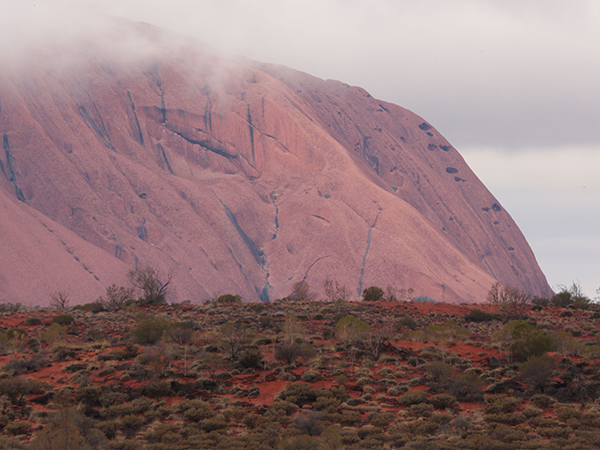
It doesn't get much better than this view of Uluṟu.

Munro describes his negotiations with Anangu elders as a “gentle, four-year discourse", where he tried to convey the spirit and scope of the project. But try explaining to anyone why you want to dump four football fields’ worth (49,000 square metres) of changing-hued frosted lights in the outback.

“It’s hard to visualize and abstract – you really have to see it to understand," he says.

Bruce Munro
Bruce Munro, the man of light: Creator and artist behind Field of Light, Uluru (photo: Mark Pickthall).

The Anangu community seem to have embraced the installation, helping to clear the land using traditional fire-stick farming techniques, and translating the name into their language, Pitjantjatjara. Tellingly, elders also asked Munro if they could do their own interpretation of the lights down the track.

As of its opening night back in April 2016, the Field of Light is the largest iteration of Munro’s immersive light displays that have graced various landscapes including a field behind his house in southwest England and various sites in the US. He insists, however, that Uluru is something of a homecoming for him as an artist. Back in 1992, on his farewell trip after living in Australia for eight years, Munro and his partner finally made it to the Red Centre (only just) in a “banger" of an old Toyota Corona.

He couldn’t have predicted as he sketched the idea into his notebook, while camping in Uluru, the unprecedented demand his ‘swan song’ would create.

“It sounds like a cliché, but seeing Uluru actually changed my life," he says. “That inspiration gave me a chance to work full-time as an artist.

“And I think that the Anangu understand that I have no ulterior motive – I just want to express how this place has changed my life."
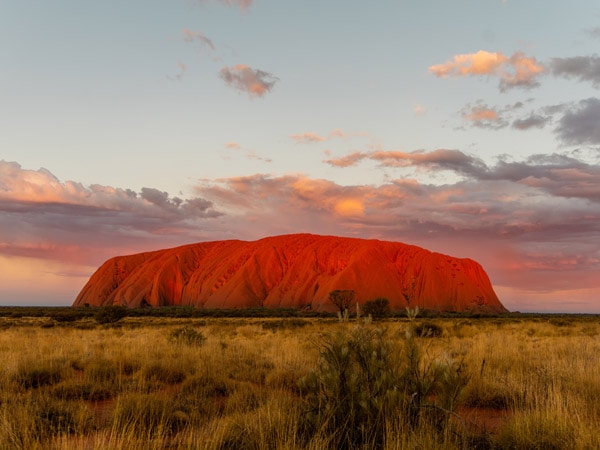
Uluru at sunset
The impact of seeing Uluru inspired Bruce Munro’s Field of Light. (Image: Tourism-NT/ Bronte Stephens)

Seeing the Field of Light at sunrise or sunset

To appreciate art that defines itself only in relation to darkness, you’ll have to prepare to become one of the nocturnal desert mammals; immerse yourself in the desert before the sun kisses the outback horizon and wander through it well after sunset.

From the dune-top viewing area in daylight, the Field of Light merely resembles an incongruous, glistening patch of wild dandelions among the spinifex-rich deep red earth. Stubborn desert oaks spectate in wonder.
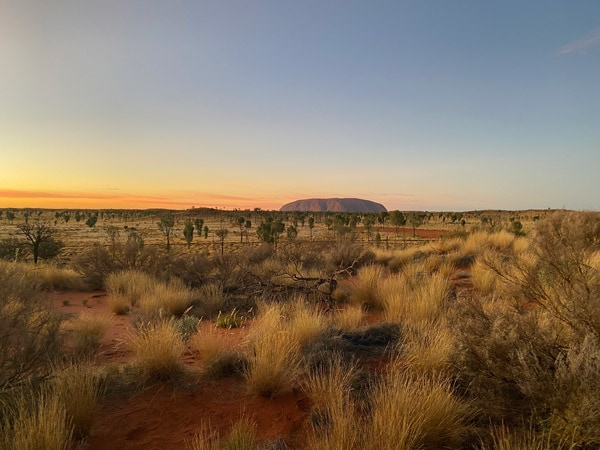
The Field of Light in daylight
The Field of Light disappears in daylight. (Image: Katie Carlin)

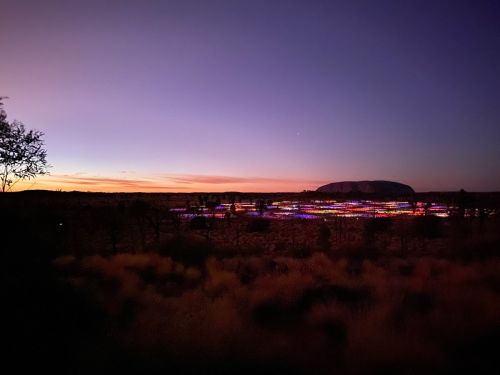
At dusk, glass of Champagne in hand, the installation barely draws your eye from The Rock’s awesome presence (it’s located just outside the national park, a respectable distance from Uluru).

Then at twilight, the splendour of the outback stars are intent on pilfering the show. For the Field of Light, it must be like coming on stage after The Beatles have warmed up the crowd for you.

Immersed at eye level is where you want to be after dark. Wander out of the blackness into the impromptu avenues that dissect rhythmic waves of mutable hues, to a chorus of chirping crickets, and accompanied by a tender desert breeze.

It feels like you’ve landed in a psychedelic Netherlands bulb field – subtle violets, soft electric blues and limes, gentle ochres, spectral whites.
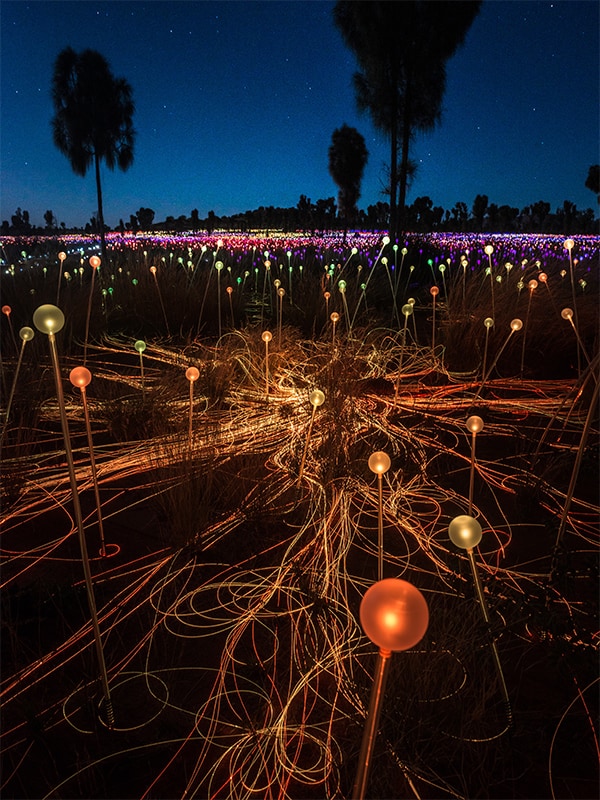
Field of light
The Field of Light has become one of the most popular Uluru attractions.

Need tips, more detail or itinerary ideas tailored to you? Ask AT.

AI Prompt

Field of Light vs Uluṟu

Local artist-in-residence Heather Dunn underlines the futility of comparing the lights with the “natural atmospherics" of the desert.

“The Field of Light is only a complement to a grand space; to the transitory things that happen to Uluru, the colour and change," she says.

“It’s only when Uluru goes to sleep, that this thing takes over on the ground while the stars do above. At first, you think, ‘oh, yeah, there it is; it’s not doing much’, but it starts to build, like an orchestra. Then you get among it!"
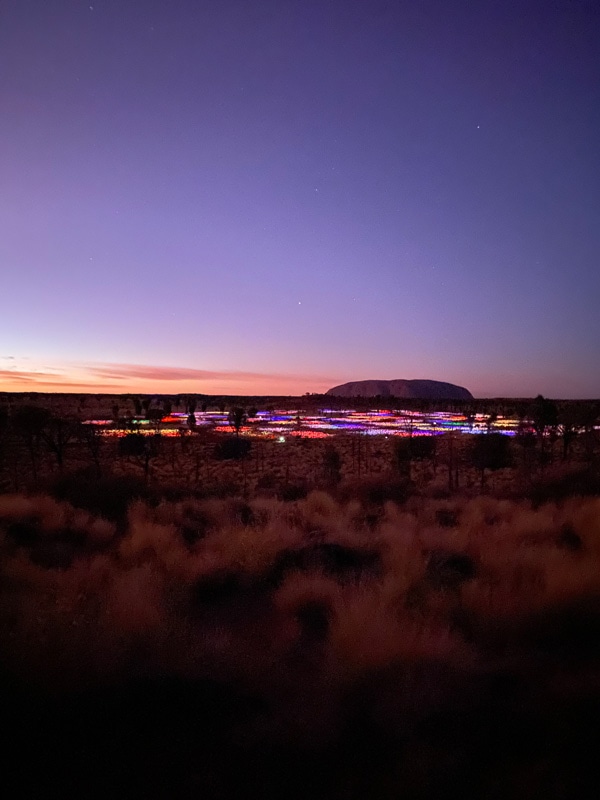
Field of Lights at sunrise at Uluru
It is futile to compare the Field of Light with the wonder of Uluru. (Image: Katie Carlin)

The concept behind the Field of Lights

Around 380 kilometres of crisscrossed fibre-optic cables creep along the ground; tendrils of silvery light, a confusion of trippy snail trails.

Munro chose a colour palette sympathetic to the desert, omitting deep greens because he saw none way back in 1992. Instead, the spindly stems breathe and sway through a sympathetic desert spectrum of ochre, deep violet, blue and white.

Not only is this his first solar-powered work (well, there are not many power outlets in the desert), but it’s also “a lot less designed" and geometric than its forerunners; a concession to the untamable desert scape.
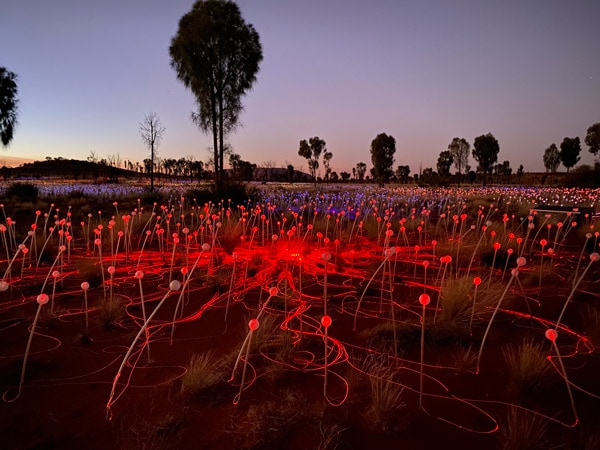
Close up of Field of Lights at Uluru
The Field of Light is coloured a desert spectrum of ochre, deep violet, blue and white. (Image: Katie Carlin)

Aṉangu art and culture

But back in daylight, with some truly local knowledge, you realise that this most modern of art installations is not just sitting alone on a barren desert, but actually on the cusp of a monumental outdoor gallery.

Literally, hundreds of Aṉangu rock paintings and etchings perch among the crags and nooks of Uluru and nearby Kata Tjuta (the Olgas), embedded physically and metaphysically into the landscape and lore.

Each on its own seems sparse and simple, surely no match for the lights, but collectively they weave an immensely bigger picture.
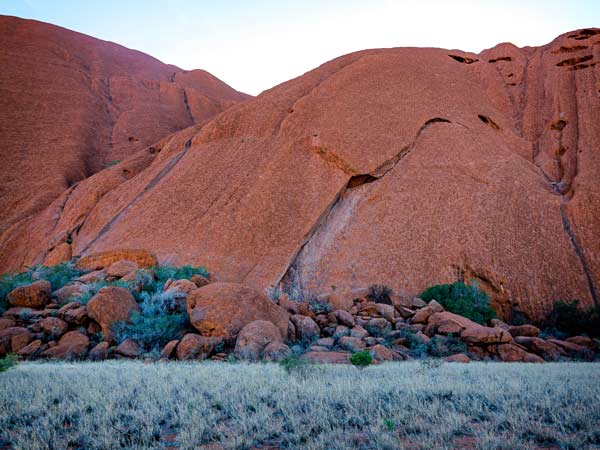
Close up of Uluru
For Anangu art is about survival in the desert landscape. (Tourism NT/ Kate Flowers)

“Art is about survival out here," says Anangu man Leroy Lester, from Wintjiri Arts & Museum. “In places like Kakadu, they’ve got plenty of food so they had lots of time to paint things like big barramundis with all the organs. We had no time for that.

“Out here, especially when it’s dry, you’d rather drink the water than mix ochre with it. The main art was body paint and ceremonies – but even ceremonies were cancelled in times of drought."

According to Leroy, art out here acts like a billboard spruiking Tjukurpa (creation stories). The Rock is a physical embodiment of it and the Anangu read them both like a scripture and as a daily life roadmap.

“The paintings might show a big lizard, so everyone who’s looking for a big lizard to eat can find one. Or so you can find a waterhole."

Weekly travel news, experiences
insider tips, offers, and more.

The Field of Light is a grain of sand in Uluru’s grand narrative

While Uluṟu is primarily just a powerful muse for Munro, he does relate to one principle of Anangu art and culture; a sense that the past informs the present.

“It intrigues me that the Anangu have an interwoven concept of time that reflects mine: of time past, when I first saw Uluru; of time present, the exhibition now; and time future, how once this has been swept away, the living memory that goes into people’s hearts and minds."

The living memory is enough to sate Munro, aware that the Field of Light is barely a grain of sand in Uluru’s grand narrative. “I actually like the fact it’s ephemeral – you can flick it on and off."

He’s not the kind of artist to scribble his name on a tree trunk or cast a bronze statue (and much of the installation will be recycled, too). “Ultimately, I think we’re all just pushing ideas through time."
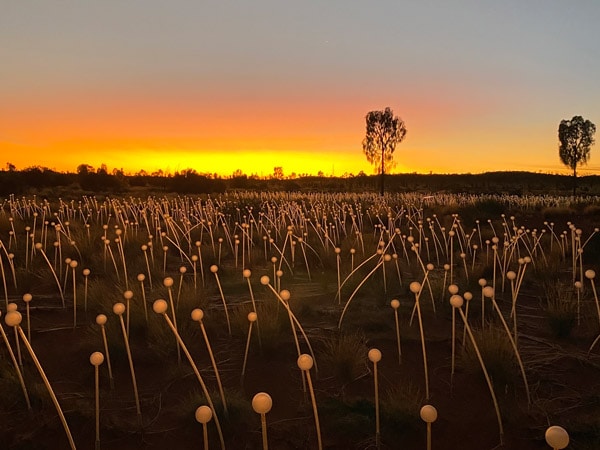
Field of Light in sun
The last glow of the Field of Light before it disappears with the sun. (Image: Katie Carlin)

Field of Light, Uluru details

Playing there

The Field of Light (also named Tili Wiru Tjuta Nyakutjaku or ‘looking at lots of beautiful lights’ in the local language) is now showing indefinitely.

It is currently open for tours with a Field of Light pass ($45). The four-and-a-half-hour, three-course A Night at Field of Light Dinner inspired by bush tucker costs $280 per person (with Australian wines and beers as well). Other options include a Field of Light Star Pass with viewings of the work and outback canapes with sparkling wine or beer.

Staying there

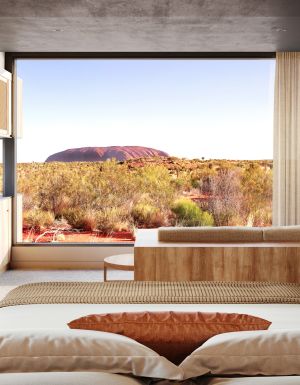
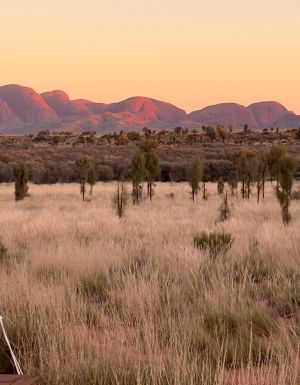
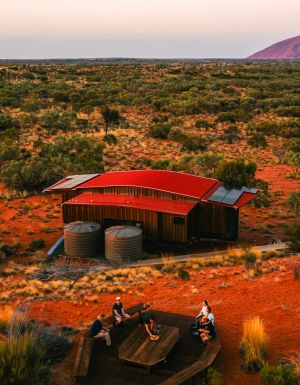
Ayers Rock Resort offers an array of family-friendly accommodation options including the five-star Sails in the Desert. Book ahead to go glamping at Longitude 131.
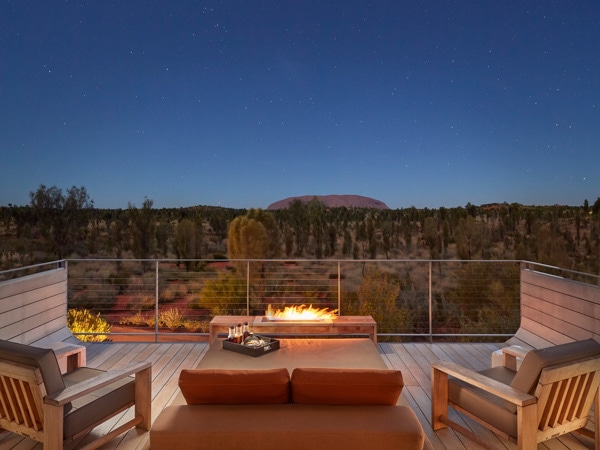
Longitude 131's collection of pavilions provide jaw-dropping views of Uluru and Kata Tjuta. (Image: Tourism NT and George Apostolidis)
Longitude 131’s collection of pavilions provides jaw-dropping views of Uluru and Kata Tjuta. (Image: Tourism NT and George Apostolidis)

Getting there

Jetstar, Qantas and Virgin fly regularly to Ayers Rock Airport, Uluru.

Want to see more stories from Australian Traveller in your Google search results?

  1. Click here to set Australian Traveller as a preferred source.
  2. Tick the box next to "Australian Traveller". That's it.
hero media

8 reasons why the low season is the best time to explore the Northern Territory

Credit: Tourism and Events NT

September to April in the Northern Territory rewards those who seek adventure.

Sure, the Northern Territory shines during the high season, but did you know it transforms into lush magnificence in the summer low season? From September to April, hundreds of waterfalls roar into action, vegetation flourishes and natural pools swell, all thanks to spectacular storms. This is when some of the country’s best arts and cultural events hit the calendar, too.

Travelling at this time of year means you’ll also be rewarded with off-peak travel pricing on accommodation, tours and experiences, and can even enjoy many of the top sites all to yourself.

1. Kings Canyon is transformed

A woman reaching out to touch a natural waterhole at Kings Canyon during the best time to explore the NT.
See Kings Canyon at its most spectacular. (Credit: Tourism and Events NT)

Kings Canyon’s towering sandstone domes and crevasses are a sight to behold year-round, but during the low season you can witness a rare phenomenon. This ancient outback wonder’s arid landscape bursts to life when it rains, temporarily transforming it with waterfalls that thunder down the cliffs. At the base of the canyon is the verdant Garden of Eden and its permanent watering hole.

2. John Hayes Rockhole is a natural wonder

Two women hiking to John Hayes Rockhole, one of the unforgettable experiences during the best time to explore the NT.
Hike to a desert oasis. (Credit: Tourism and Events NT)

Hidden in the Trephina Gorge Nature Park in the East MacDonnell Ranges, John Hayes Rockhole is an oasis waiting to be discovered. Visit the narrow canyon during the high season, and you may see only a sandy creekbed, but after rain in the low season the pool is full of cool water. It’s accessible via a 4WD-only track off the Ross Highway, or you can set out early and join the nine-kilometre Trephina Ridgetop Walk. The reward for undertaking the hike is worth every step, and there’s a dedicated, tent-only campground for those who’d like to soak up the serenity overnight.

3. The Red Centre Light Trail shines bright

A woman admiring The Light Towers, one of the must-see attractions during the best time to explore the NT.
Watch the Outback light up after sunset. (Credit: Tourism and Events NT)

The Red Centre’s rich cultural heritage and lack of light pollution make it the ideal setting for immersive light shows, and you can experience the most iconic ones on an epic six-day road trip in April. Witness the Parrtjima cultural festival in Mparntwe (Alice Springs) before heading to Kings Canyon for Bruce Munro’s Light-Towers, where 69 glowing towers shine to a celestial soundscape. At Uluṟu, Munro’s Field of Light blankets the red soil with glowing frosted-glass stems, and the Wintijiri Wiru drone show lights up the sky in front of the sacred cultural site. Along the way you’ll witness the changing landscapes of the desert from the West MacDonnell Ranges to the Valley of the Winds.

4. The Parrtjima festival lights up the Red Centre

Festival lights illuminating the Northern Territory, showing why the best time to explore the NT is during festival season.
Witness the magic of Parrtjima. (Credit: Tourism and Events NT)

For 10 days every April, the Red Centre turns into a dazzling display of colour for the Parrtjima festival. Held at Alice Springs Desert Park, the unmissable celebration shines a spotlight on the world’s oldest living culture using modern technology. Artworks by local Aboriginal artists are transformed into large-scale illuminated installations with accompanying soundscapes, offering a unique opportunity to see the spectacular sunburnt landscapes, night skies and 300-million-year-old West MacDonnell Ranges in a new light. The jam-packed line-up of art and cultural events also includes workshops, markets, short films, talks and live music.

5. Cruising along Nitmiluk Gorge is breathtaking

Aerial view of Nitmiluk Gorge, showcasing its dramatic cliffs and waterways.
Sail between towering sandstone cliffs. (Credit: Tourism and Events NT/Nic Morley)

Drifting down the emerald waters of Nitmiluk (Katherine) Gorge between towering red sandstone cliffs carved over millions of years, all while waterfalls stream down around you, is an experience like none other. Nitmiluk Katherine’s two-hour NitNit Dreaming Two Gorge Tour sails through gorges past ancient rock art while a local guide imparts knowledge about the Jawoyn culture and significance of the landscape.

6. You can explore local culture on the Tiwi Islands

A quick boat ride from Darwin lies the peculiarly pink shores of Melville Island, Tiwi Islands. Populated by the hilariously cheeky Indigenous Tiwis, stepping onto the Islands is like stepping back in time. Sweeping rusty dirt roads meander through the eucalypt forest and are interspersed only by small communities and freshwater springs.
Immerse yourself in Tiwi culture. (Credit: Tourism and Events NT/Elise Cook)

Take an 80-kilometre ferry ride from Darwin to arrive at the Tiwi Islands, an archipelago of 11 picturesque islands and a haven for art lovers and anglers. On the Tiwi By Design walking tour you’ll be guided to the Tiwi Design Art Centre, one of Australia’s oldest art centres, to observe local artists in action and join a screen printing workshop.

If you’re more partial to sinking a line, book a stay at Tiwi Island Retreat in April. It’s one of the best months to fish for barramundi, and their world-class fishing adventures are your best chance at reeling in a prized catch.

7. Scenic flights over Kakadu’s waterfalls are jaw-dropping

Jim Jim Falls from above during a wet season helicopter tour. Covering nearly 20,000 square kilometres, Kakadu National Park is teeming with wildlife, home to important Aboriginal rock art sites, and takes in diverse and exotic landscape.
Soar above Jim Jim Falls. (Credit: Tourism and Events NT/Jarrad Seng)

Seeing Kakadu National Park’s gushing waterfalls and dramatic escarpments from above offers a dose of unparalleled beauty – and it’s all best witnessed in the low season.

Taking flight from Darwin, Kakadu Air Services offers an unforgettable experience, with doorless helicopters revealing unobstructed views of the 1.8-billion-year-old landscape. Soar above the untouched savannah that turns into a tropical green paradise, marvel at the thunderous Jim Jim Falls and Twin Falls, and whiz through ancient sandstone canyons. If you’re lucky, the scenery will look all the more dramatic with rolling tropical storm clouds in the distance.

8. Litchfield National Park is an amazing place to cool off

Litchfield National Park
Dive into natural swimming holes. (Image: Tourism NT/Joshua Griffen)

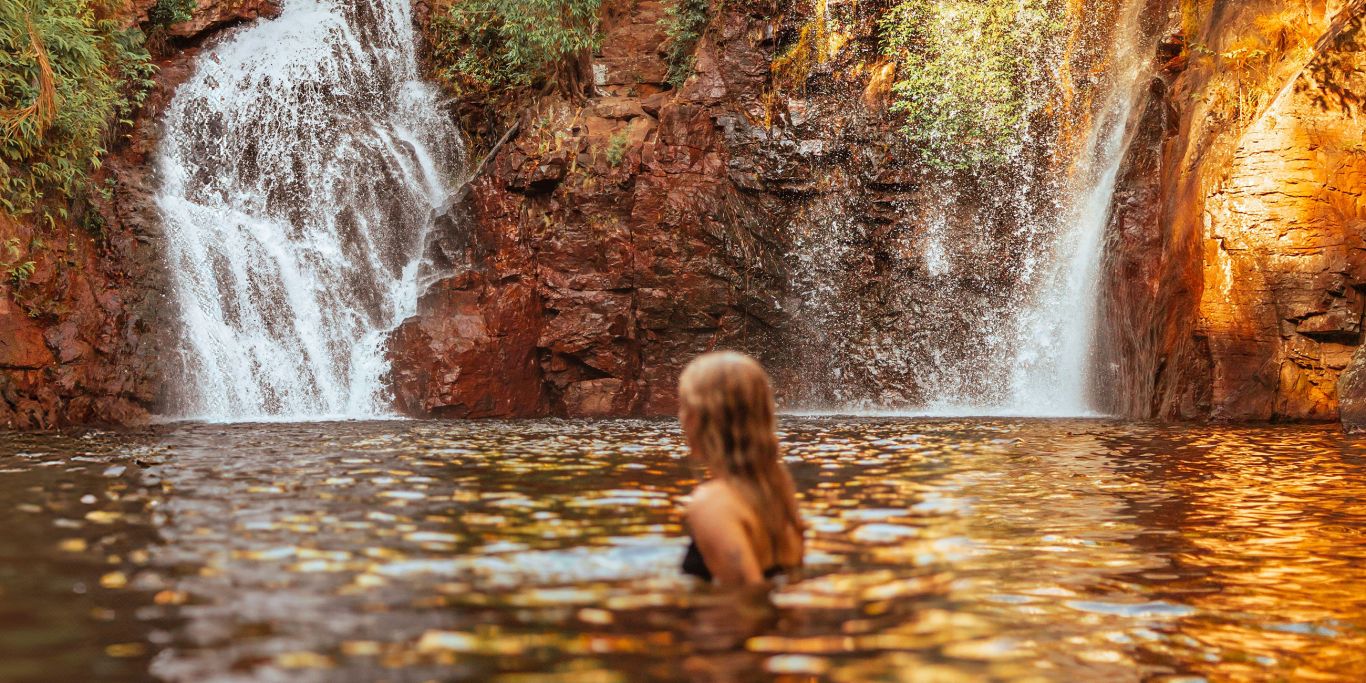
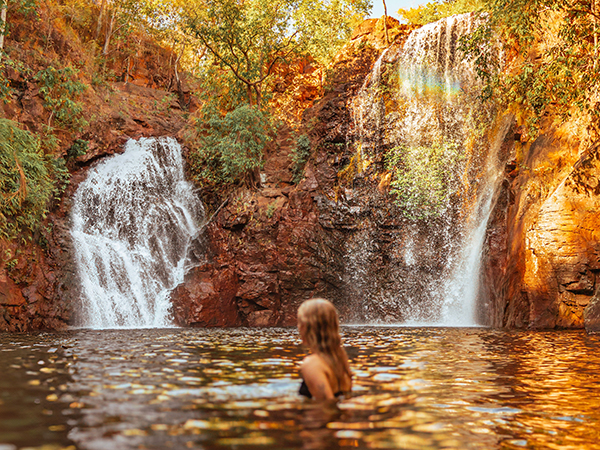
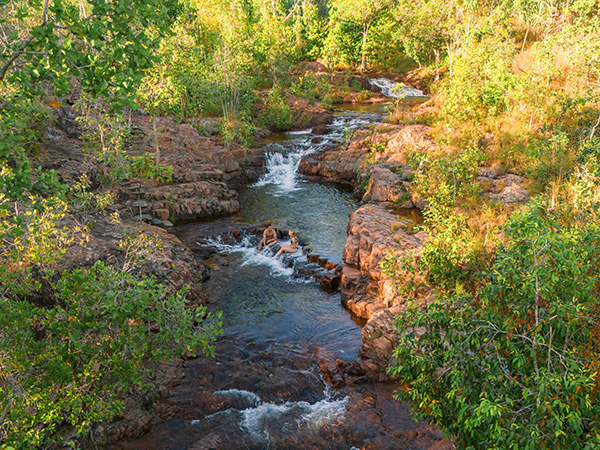
Litchfield National Park is peppered with stunning natural swimming pools for you to beat the heat in. Take a refreshing dip in pristine, crocodile-free spots such as Buley Rockhole, a series of spring-fed cascading pools, and the nearby Florence Falls, which is enveloped by monsoon rainforest and features a crystal-clear plunge pool fed by a 15-metre-high waterfall. Be sure to check the Northern Territory Parks & Reserves website for closures before you go.

Start planning your low season adventure of a lifetime at northernterritory.com.