Top Uluṟu tours for an unforgettable trip

hero media
Finally booked that trip to Uluṟu? Don’t head off without reading this list of top Uluṟu tours there first.

The spectacular is a bucket-list item for most Australians, as well as travellers from further afield. And it’s no wonder. This glowing monolith isn’t just a force to be reckoned with in the wider Australian cultural imagination; it also forms the centre of many stories for the Aṉangu people who consider Uluṟu, as well as many of the surrounding watering holes, caves and gorges, deeply sacred. With so many stories to be told and to listen to at this UNESCO World Heritage Site, our list of top tours will make it easier to get every drop out of your visit to the Red Centre

Uluṟu sunrise and sunset tours

Uluṟu & Kata Tjuṯa Scenic Flight with Fly Uluru

Watch the sunrise from the air over one of the world’s most iconic views, that of Uluṟu. To take in a majestic birds-eye-view, book with Fly Uluru , who operates Ayers Rock Helicopters and Ayers Rock Scenic Flights.
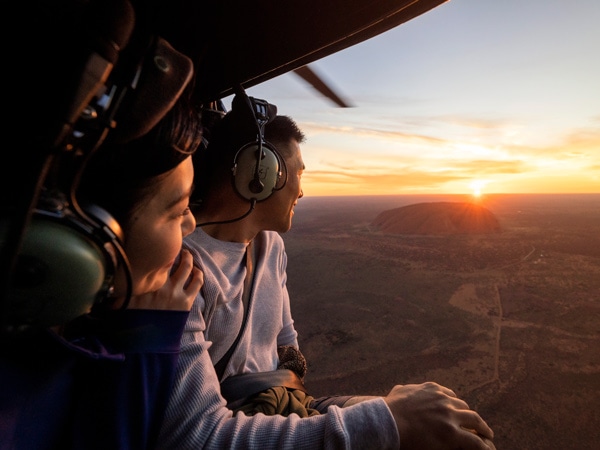
a couple viewing Uluru at sunrise on a helicopter flight
Fly above the breathtaking Uluru rocks while admiring the sunrise. (Image: Tourism NT/Shaana McNaught)

Fly Uluṟu has been flying in the outback since 1989 and is still going strong. Head out for a 40- or 30-minute spin on a plane or helicopter at sunrise or sunset on the Uluṟu & Kata Tjuṯa Scenic Flight, or extend to two hours to include sights like Lake Amadeus and King’s Canyon. Their 15-minute Uluṟu Rock Blast 15-minute tour starts from $145.
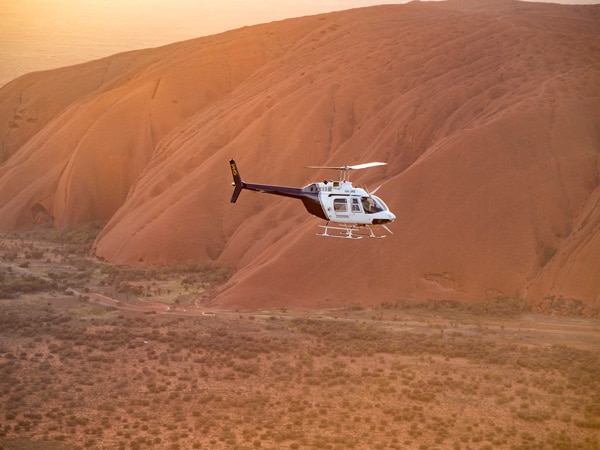
Uluru sunrise helicopter flight
Get the most amazing views of the desert surrounds. (Image: Tourism NT/Shaana McNaught)

Uluṟu Camel Tours

Alternatively, you can opt for this golden hour tour where your feet are a lot closer to the ground — but still not quite touching. Uluṟu Camel Tours is a family-friendly group, that runs mid-morning and sunrise and sunset camel rides through the sands of the Red Centre.
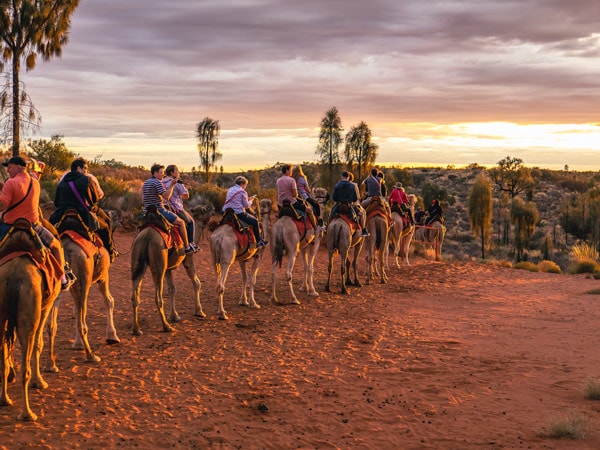
a group of travellers riding a camel during sunset in Uluru
Enjoy an hour of a camel ride during sunset or sunrise. (Image: Tourism NT/Plenty of Dust)

Watch the colours change, as you listen to your guide tell you about the surrounding flora and fauna, all from behind the hump of your noble desert steed. Prices from $135 include freshly baked beer damper with jams, tea and coffee.
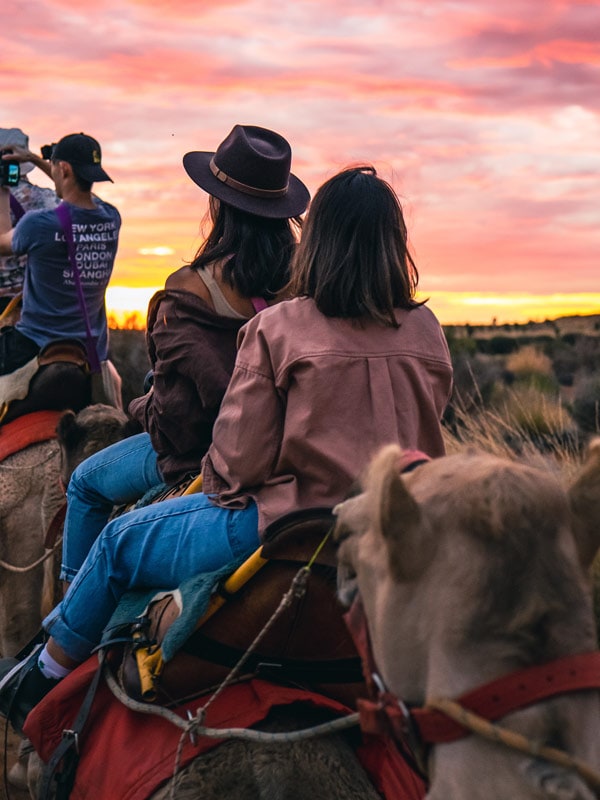
a group of tourists capturing the sunset while riding a camel
Admire the Uluṟu landscape as the colours change over the horizon. (Image: Tourism NT/Plenty of Dust)

Uluṟu Sunrise and Field of Light tour with AAT Kings

While nothing can compete with watching the dawn break over Uluṟu and Kata Tjuṯa , the tens of thousands of light that comprise artist Bruce Munro’s Field of Light installation sure gives it a run for its money. Watch the shifting hues of this massive artwork wax and wane as the frosted spheres dim as the sun comes up. Costs run from $75 per person.
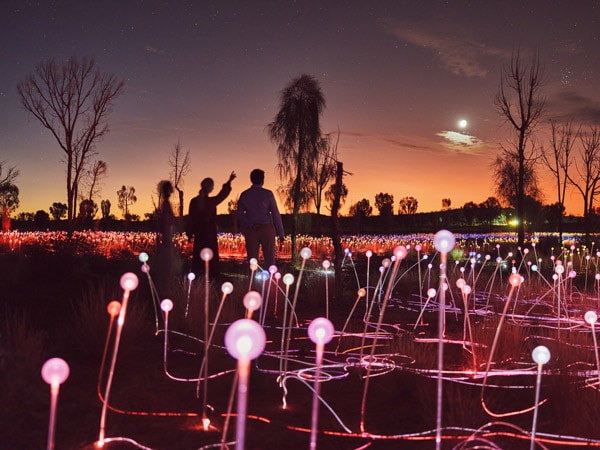
a field of lights glowing vibrantly
Catch the spectacular Field of Light. (Image: Tourism NT/Tourism Australia)

Sunrise with Uluṟu Motorcycles

Hey there, Easy Rider. Fancy seeing the sandstone monolith on the back of a Harley? Stupid question. Book onto Uluṟu Motorcycles’ Sunrise Harley tour to be chauffeured around on the back of your bike by a rider, who will take you to the Talinguru Nyakunytjaku viewing area before doing a lap of Uluṟu. From $229 for 90 minutes.
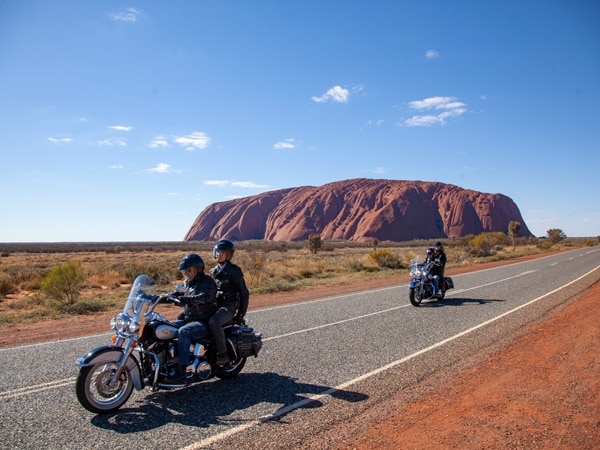
motorcycle riders navigating the roads of Uluru
Ride a Harley-Davidson across the beautiful Uluṟu-Kata Tjuṯa National Park. (Image: Tourism NT)

Uluṟu day tours

Ranger-guided Mala Walk

Did you know you can get a free guided walk of the base? Take the Mala Walk at the base of Uluru , which is named for the Mala people (the local Aṉangu’s peoples ancestors), with a local ranger. Learn about the meaning of the rock art along the ancient walls, and hear the Tjukurpa (creation stories) of the formations here. The walk is two kilometres and wheelchair accessible. It ends at Kantju Gorge, which is a wonderful place to finish and watch the sunset.
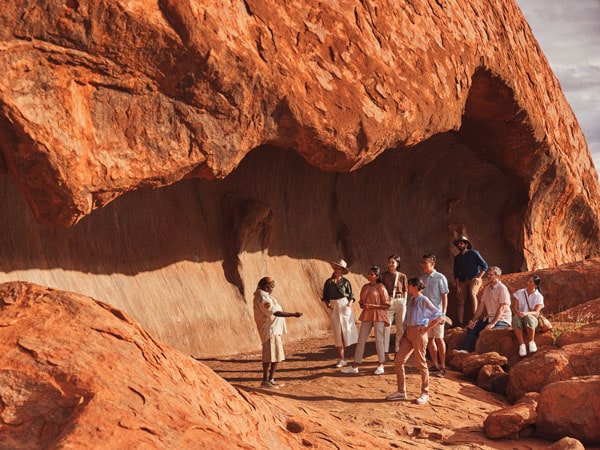
a group of travellers on a Mala Walk tour at Uluru
Take the scenic path from Mala carpark to Kantju Gorge. (Image: Tourism NT/Tourism Australia)

Ulurṟu Morning Guided Base Walk with AAT Kings

Go the whole hog with this guided 10.5-kilometre walk around Uluṟu’s base , which starts when you are picked up an hour before sunrise. Next is a light breakfast, before starting on the Kuniya Walk and watching the desert wake up around you.

As you walk, you will hear stories of Tjukurpa, stop by the Kantju Gorge and see the rock art of the Mutitjulu Waterhole, and hear about the battle between Kuniya, the woman python woman, and Liru, the poisonous brown snake man, that occurred here, with their story told in the landscape . The cost starts from $189 and includes return travel.
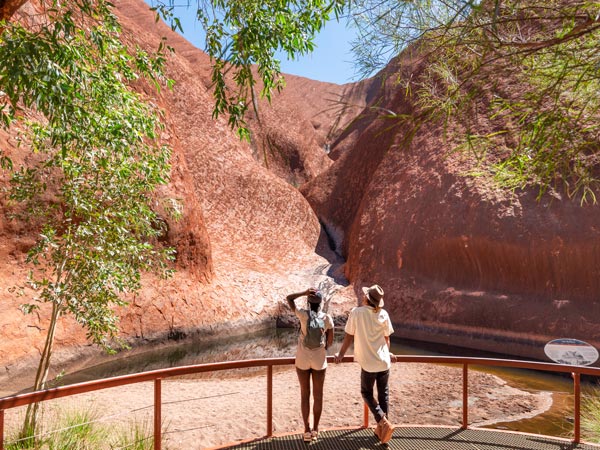
two tourists capturing the Mutitjulu Waterhole
Marvel over the Aboriginal rock art at the Mutitjulu Waterhole. (Image: Tourism NT)

Need tips, more detail or itinerary ideas tailored to you? Ask AT.

AI Prompt

Uluṟu Segway Tours

Don’t try to be a snob, segways are the bomb. Easy to use and fun; you get to travel as a tight group from the fast walkers to the slow pokes.
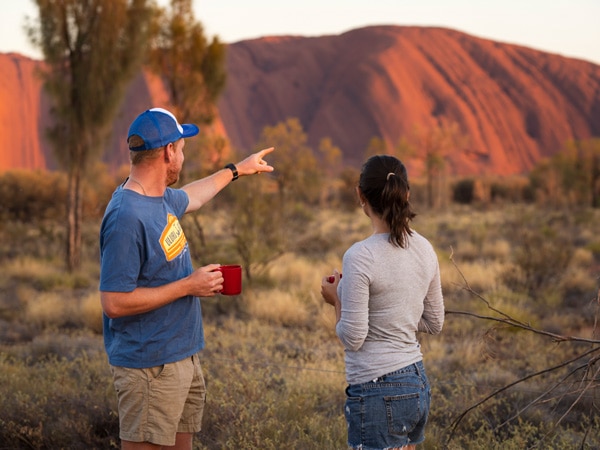
a couple gazing out the Uluru landscape
Get up close and personal with the picturesque landscape of Uluṟu. (Image: Tourism NT/Tourism Australia)

Try out a small group tour with Uluṟu Segways and journey 12 kilometres around the base of Uluṟu on a guided tour. Options include tours that include and exclude returns, as well as sunset tours that come with nibbles and sparkling wine. Priced from $149.
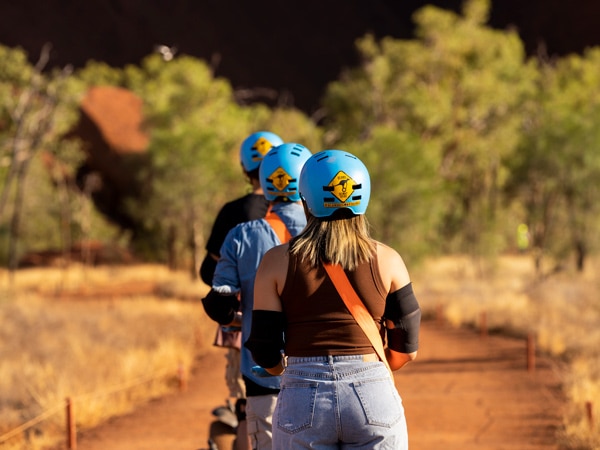
a group of travellers wearing a helmet during an Uluru Segway Tour
Explore the entire Uluṟu without having to walk. (Image: Tourism NT/Tourism Australia)

Cave Art Tour with Maruku Arts

The Maruku Arts group is an Indigenous-owned and operated organisation, whose name literally means “belonging to black". Staggeringly, almost 900 Aṉangu artists make up the collective.
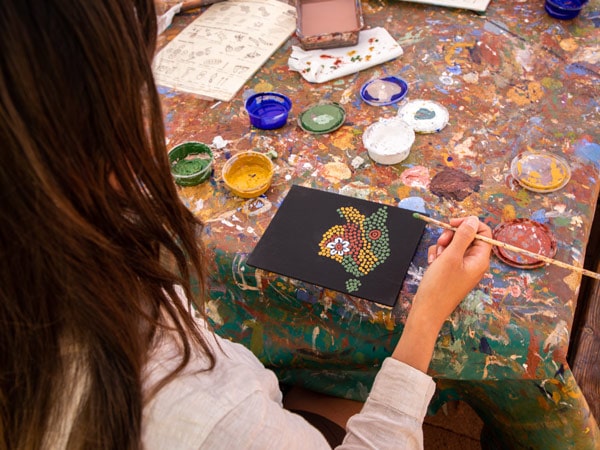
a local Anangu artist and her Maruku dot-painting artwork
Witness the wonders of making a Maruku dot painting. (Image: Tourism NT/The Salty Travellers)

Support their work and learn from their knowledge on the Cave Art Tour, which sees travellers take the Kuniya Walk to hear the Tjukurpa stories.
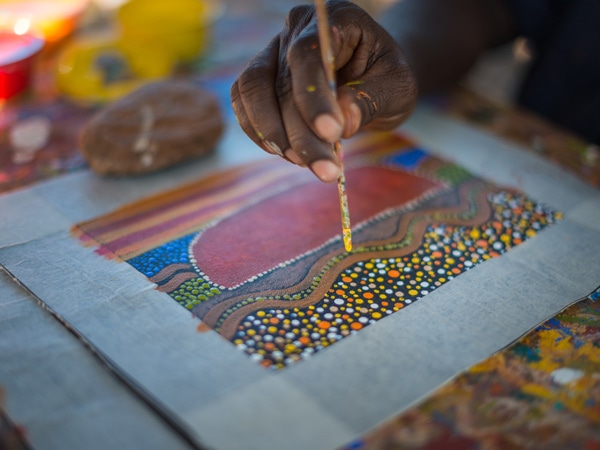
dot painting using the hands
Learn about the ancient symbols used in Aṉangu art. (Image: Tourism NT/Matt Glastonbury)

The stories are first told by your Aṉangu guide in Pitjantjatjara, then in English. Prices are from $89 . Pair with a dot-painting workshop taught by a local Aṉangu artist, assisted by an interpreter from $72.
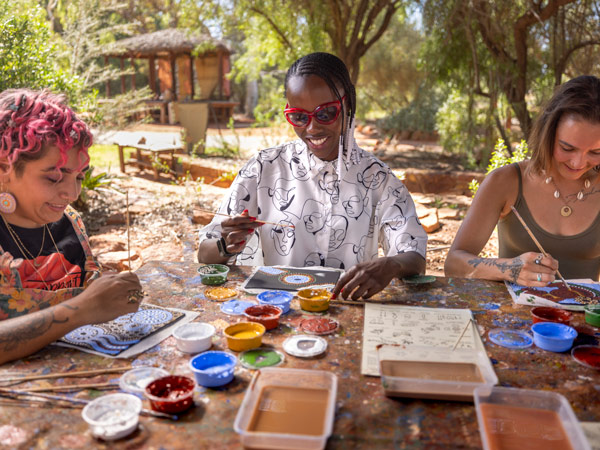
three women participating in a Maruku Arts dot painting workshop
Immerse in the colourful Aṉangu art culture. (Image: Tourism NT)

Uluṟu Sunrise and Kata Tjuta Tour with AAT Kings

Venture out to see Uluṟu’s sister site of Kata Tjuṯa with this AAT Kings tour. Begin the day before the crack of dawn as you watch the sunrise at Talinguru Nyakunytjaku , the viewing area. Next, drive to Kata Tjuṯa, a sacred space for Anangu men, as your guide tells you the history of the surrounding parklands.
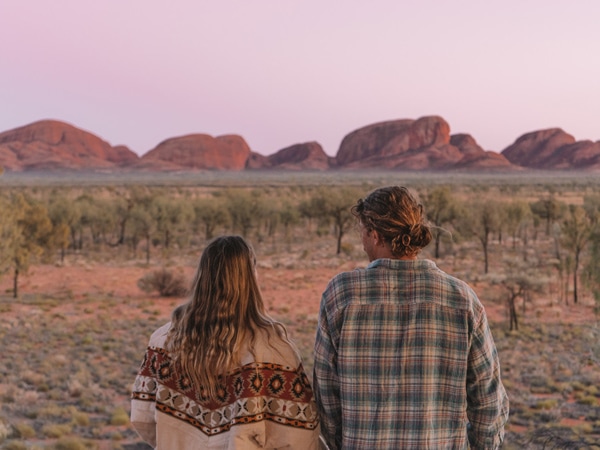
a couple admiring Kata Tjuta
Catch stunning sunrise views amidst the rugged landscape. (Image: Tourism NT/Salty Aura)

On your arrival at the steep-sided domes, the group will explore Walpa Gorge and check out the oasis there. While you are allowed to visit the sacred space of Kata Tjuṯa, remain respectful and be careful what you photograph; you don’t want to reveal hidden secrets of the area.
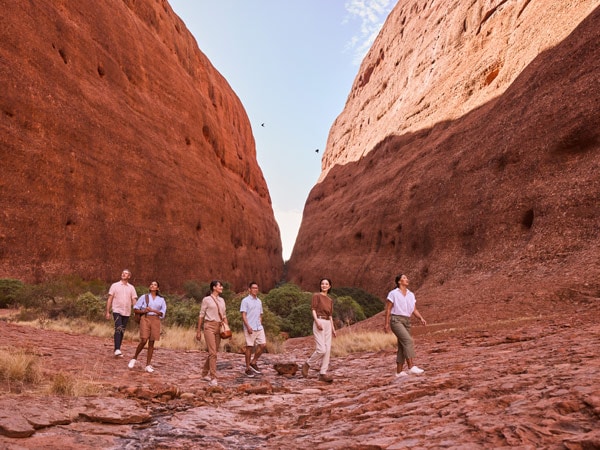
a group of travellers exploring Walpa Gorge
Go on a scenic sunrise tour across Uluṟu’s marvellous jagged scenery. (Image: Tourism NT/Tourism Australia)

Uluṟu food tours

Tali Wiṟu

An intimate night of fabulous dining that will take your sense of taste on a veritable tour.
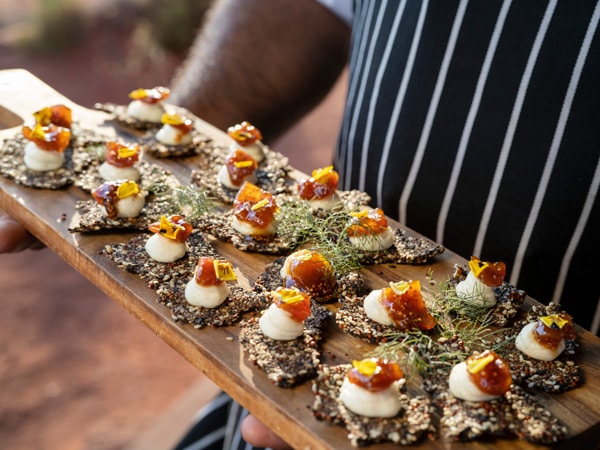
appetisers beautifully arranged on a plate
Indulge in the appetising Tali Wiṟu dining experience. (Image: Tourism NT/Tourism Australia)

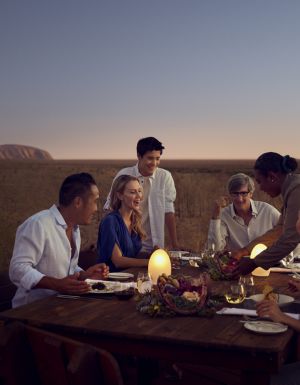
The Tali Wiṟu dining experience sees you travel out to a nearby dune (the name ‘Tali Wiṟu’ means beautiful dune), for a night of bush tucker canapes, a three-course meal, and matched wines. And when we say bush tucker, we’re not talking about your average crocodile steak — or making any part of this experience snappy.
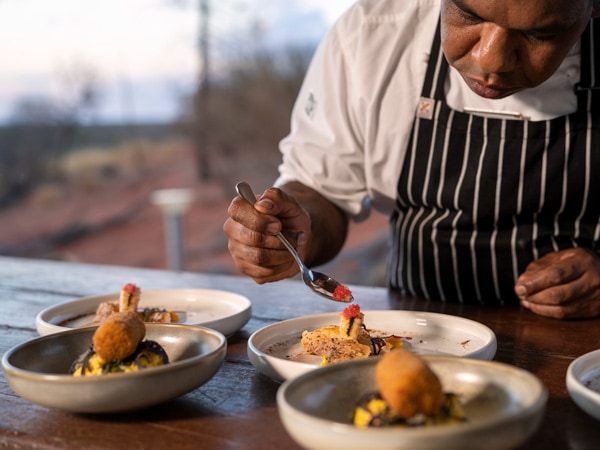
a chef carefully prepares the dishes for Tali Wiru dining
Savour international flavours carefully curated just for you. (Image: Tourism NT/Tourism Australia)

Instead, delight over course after course of quandong coulis and native warrigal greens, toothfish with bush honey marinated heirloom carrots, gulguk (green ant) gin and tonics, kangaroo croquettes and more.
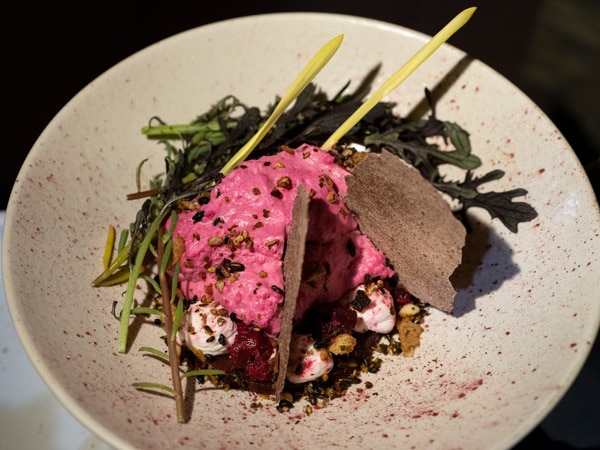
one of the dishes included in the four-course meal during your Tali Wiru dining experience
Each meal bursts with ornamental flavours. (Image: Tourism NT/Tourism Australia)

Your time out among the dunes also includes a didgeridoo performance and Indigenous storytelling. The price starts from $440 per person.
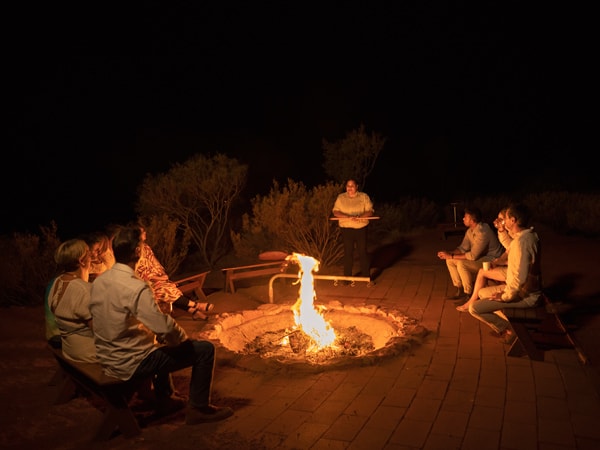
a group of people sitting around a bonfire during their Tali Wiru dining experience
Experience dining with a bonfire setup. (Image: Tourism NT/Tourism Australia)

Weekly travel news, experiences
insider tips, offers, and more.

Sound of Silence with Field of Light

Pair one of the most famous Uluru dining experiences with one of the most celebrated artworks, Bruce Munro’s Field of Light.
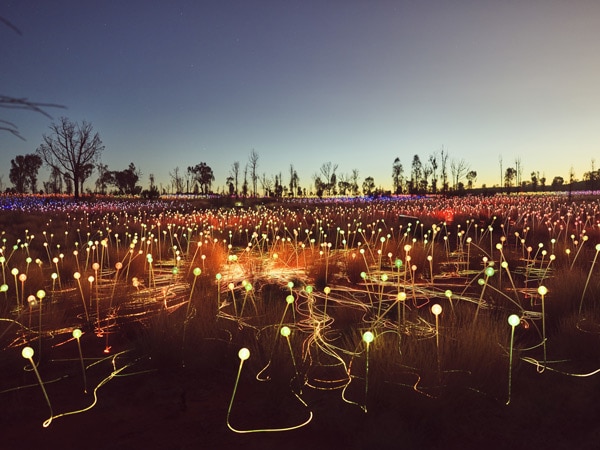
the spectacular field of light in Uluru
Be surrounded by a field of colourful lights. (Image: Tourism NT/Tourism Australia)

Get picked up at your hotel, where you’ll be taken out to the outback between Kata Tjuṯa and Uluṟu, for canapés, wines and a barbecue buffet characterised by indigenous flavours. Includes installation entry, ​​a three-course bush tucker menu, a stargazing talk and a didgeridoo performance.
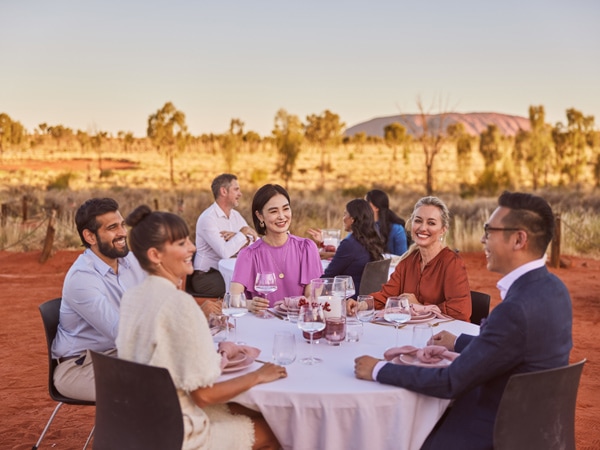
a group of travellers having dinner
Drink and dine under the Southern Desert sky. (Image: Tourism NT/Tourism Australia)

Still hungry? The best options for dining at Uluṟu can be found here.

Self-guided tours

Self-guided Uluṟu base walk

You don’t need a guide to do the Uluṟu base walk (although there is a free one available, see above). Instead, have some spiritually refreshing alone time as you follow the rock around its base along the 10-kilometre track. It is recommended to start at the Mala car park, and to do so in the early hours in hotter weather. There is water and toilets available on the hike, and a map can be found at Parks Australia.
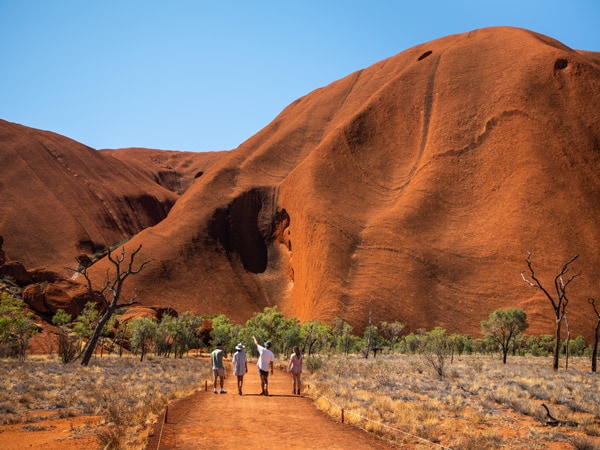
travellers walking at the base of Uluru
Traverse the Uluṟu scenic path during a self-guided base walk. (Image: Tourism NT/The Salty Travellers)

Uluṟu Bike ride

After attending the free presentation on the Uluṟu-Kata Tjuṯa National Park and Aṉangu culture at the Cultural Centre, and checking out some of the art and activities there, it’s time to pick up the bikes and head on out. Outback Cycles has bicycle rentals , which you can hire between sunrise and late afternoon.
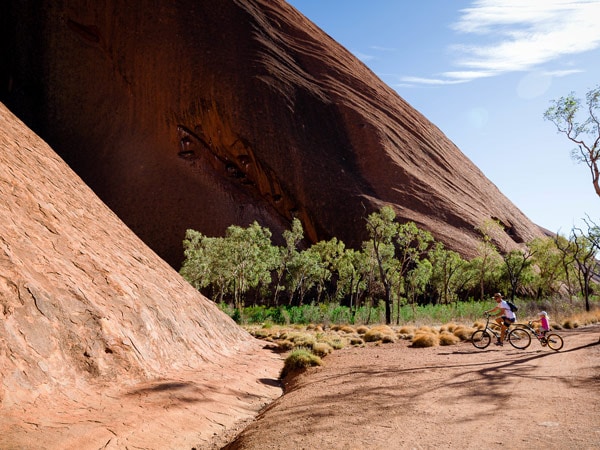
cycling around Uluru
Hop on a bike and explore the rugged landscapes. (Image: Tourism NT/Kate Flowers)

Family tours at Uluṟu

Free tours at Ayers Rock Resort

If you’re staying near Uluṟu, chances are it’ll be at Ayers Rock Resort, which offer a whole range of free activities you can check out. See a Bush Tucker Experience with a free cooking demonstration, check out the local flora and bush foods with a guide in the gardens of the Desert Gardens Hotel, sign up for the daily tour of the Gallery of Central Australia (GoCA) (read more about GoCA in our three-day itinerary) and take a visit to pat the camels at the Uluṟu Camel Tour petting farm.
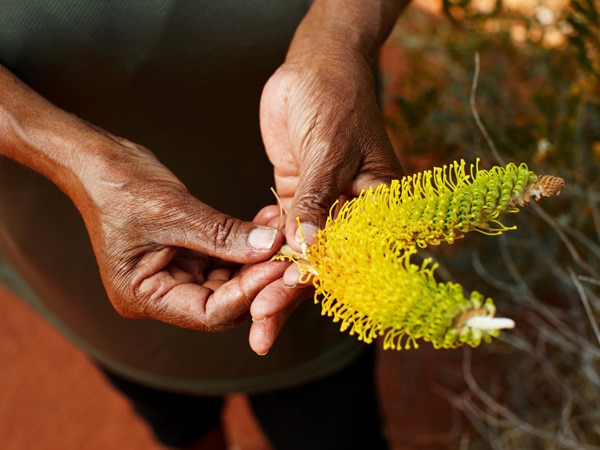
a person holding a local flora during the Bush Tucker Experience at Ayers Rock Resort
Learn about the indigenous bush food ingredients at the Ayers Rock Resort. (Image: Voyages Indigenous Tourism Australia)

Uluru Astro Tours

The whole family will love gazing up at the stars that lie above Uluru-Kata Tjuta National Park at night, listening quietly as the resident guide explains the astronomy of the planets and heavenly bodies above.
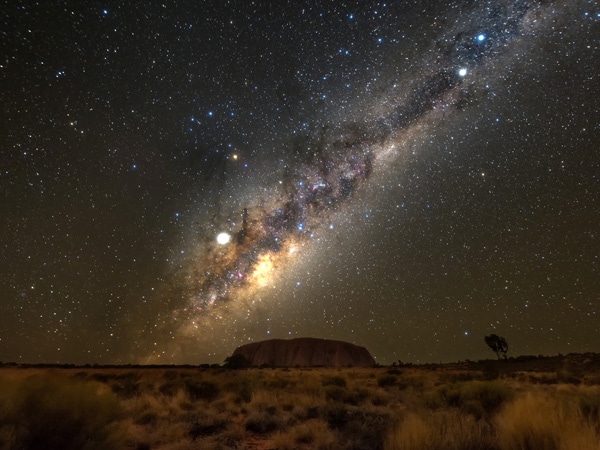
Uluru under the night sky
Gaze at the night sky lit by a thousand stars in the Milky Way. (Image: Tourism NT/New Asia Pacific Travel Pty Ltd.)

Uluru Astro Tours has a special permit to run stargazing tours in the park, so it is well worth booking this small-group experience. Children are from $60 and adults are from $99 for this 2.5-hour tour.
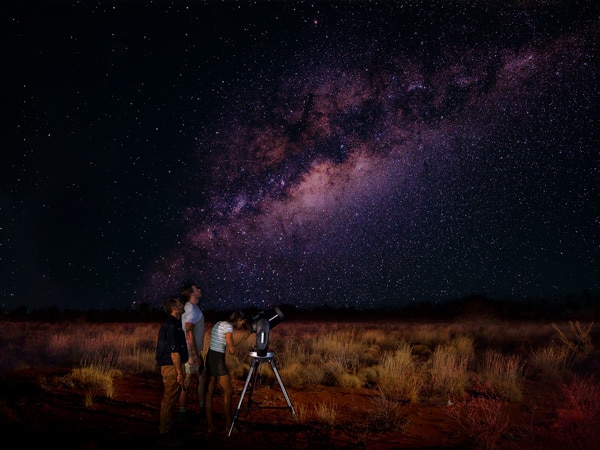
three people stargazing at night in Uluru
Head to Uluru for a deep stargazing experience you’ll never forget. (Image: Voyages Indigenous Tourism Australia)
Have you booked your stay in Uluru yet? Check out our ultimate guide to visiting Uluru.
Kate Bettes
Kate Bettes is a freelance travel writer. Whether having a picnic in Vietnamese jungle with new friends, or partying in the back of a limousine in Hollywood, Kate’s experiences have left her with the sneaking suspicion that the best travel memories happen when you least expect. It’s this feeling - and how to get it - that she loves to write about.
View profile and articles
hero media

Discovering East Arnhem: Australia’s most unique and rewarding corner

    Joanne Millares Joanne Millares

    Hard to reach and harder to forget, East Arnhem offers something rare in modern travel: the chance to slow down and experience Country on its own terms.

    The sky feels bigger in East Arnhem . It stretches wide and uninterrupted above rouged earth, stringybark woodland and beaches so empty they seem to belong to another era. The coastline curves for kilometres without a footprint and the horizon runs on forever.

    For comedian Lou Wall, the scale of the place was the first thing that hit them.

    “The sheer openness,” they say. “The sky feels infinite and the land stretches out endlessly. It’s pretty breathtaking visually.”

    But the physical landscape is only part of the story. The real reward isn’t only the scenery but the shift in perspective the journey brings. Visitors stop trying to tick off the destination and a real engagement takes over.

    “It made me never want to travel again,” Wall jokes. “In that I never wanted to leave East Arnhem.”

    Getting there

    Aerial shot of East Arnhem’s coastline as cars trace the curve of the shore.
    Sail along the remote coastline on an expedition cruise.

    Reaching East Arnhem is part of the adventure. Travellers typically fly into Gove Airport near Nhulunbuy via Darwin or Cairns, or arrive by expedition cruise along the remote coastline. Others make the journey overland along rutted dirt roads that cut through East Arnhem’s small pockets of monsoon forest.

    However you arrive, there’s a distinct feeling of crossing into somewhere different. Permits are required to visit the region, reflecting the fact that this is Yolŋu land where communities and traditional owners maintain deep cultural connections to Country.

    The extra planning becomes part of the experience. By the time visitors arrive, they understand they’re entering a place not just of respect, but also patience and curiosity.

    At one with nature

    East Arnhem’s  landscapes leave a strong imprint. For Wall, one place in particular still lingers in their memory: Ngalarrkpuy , also known as Lonely Beach, near Bawaka Homeland.

    “I genuinely felt like I was living inside an Instagram filter,” they say. “One of the most stunning feats of nature I’ve ever seen. The water was so clear I swear I could see even the fish smiling.”

    Across the region, natural experiences unfold at a slower pace. Fishing, beachcombing and island hopping reveal the rhythm of the coastline. The tides shape daily life and the vastness of the landscape makes even simple moments feel downright cinematic.

    For visitors with limited time, Wall says the Bawaka Homeland experience is unmissable.

    “I just left and I’m already planning when I can get back there.”

    The sense of remoteness is part of the appeal. In a country where many beaches are crowded and well-trodden, East Arnhem’s coastline still feels wonderfully wild.

    Immersing in local culture

    A visitor spends a meaningful moment alongside Yolŋu guides, gaining insight into their deep cultural knowledge and connection to the land.
    Experience authentic moments with the locals.

    Culture is woven through every experience in East Arnhem. Visitors have the opportunity to spend time on Country with Yolŋu guides and knowledge holders who share stories and traditions that have been passed down for generations.

    For Wall, one of the most powerful moments came during a conversation with a Yolŋu elder.

    “I got to meet a traditional elder, Mayalil, in Nhulunbuy,” they say. “Listening to her talk about her home made the land feel alive in ways I couldn’t have imagined.”

    The region is also home to internationally recognised Aboriginal art centres where artists shape works deeply connected to land and family knowledge.

    Music carries the same cultural energy. East Arnhem has produced globally recognised artists such as King Stingray and Baker Boy, blending Yolŋu language, storytelling and contemporary sound.

    Wall experienced this musical spirit first-hand.

    “A jam session around the fire was it for me,” they say. “Letting the deep joy and history of their music wash over me…  and meeting a few of the King Stingray musicians was unreal.”

    These moments of human connection often become the most memorable part of a visit.

    Spotting local wildlife

    An aerial view of the beach shows tiny figures lined up across the white sand, moving as if in a rhythmic dance.
    Step into a world where nature reigns.

    The wildlife of East Arnhem adds another layer to the experience. The region is home to an extraordinary range of animals, from waterbirds and turtles to dugongs, dolphins and the formidable saltwater crocodile.

    Wall admits they didn’t actually spot a croc during their visit.

    “Devastatingly, I didn’t see one,” they laugh. “But with all the stories from the locals I definitely gained a healthy respect for caution.”

    Some of the most memorable wildlife encounters can be surprisingly small., At Banubanu Beach Retreat on Bremer Island, Wall remembers walking along the beach one morning and watching it come alive.

    “As you walk through the sand you see hundreds of crabs scurrying into their holes as you pass by,” they say. “Such a small thing, but it was completely magical.”

    Moments like this reveal the quieter rhythms of East Arnhem, where even the smallest creatures seem to play a part in the landscape.

    Visitors who make the journey soon learn the most important travel tip of all.

    “Go in open-minded with a sense of curiosity,” Wall says. “Be prepared to ditch your plans. The land and the locals will guide you on an adventure no spreadsheets could ever compete with.”

    And most importantly, they add, don’t rush.

    “The land and people deserve your time and attention. You’ll be all the better for slowing down.”

    For more information on visiting East Arnhem, head to eastarnhem.com.au .