Uluṟu and Alice Springs holiday on $150 a day

hero media
It’s easy to enjoy the Red Centre on a shoestring budget, and you don’t have to rough it.

With the Northern Territory’s borders reopening and less people on the road, now is the time to journey to the Red Centre. Fuel prices are down and tourism operators are keen for company, so pack your bags and head to the heart of Australia for a budget-friendly holiday.

Day 1 – Alice Springs

Play: It may be one of the most geographically remote towns in Australia but the people of Alice Springs know how to keep you entertained, and many activities are kind on your wallet. Your first stop should be Anzac Hill, a memorial to fallen servicemen and women with fantastic views. It’s easy to reach and the sunsets here are special (and free). You’ll also want to spend time at Alice Springs Desert Park to learn about outback animals; entry costs $37 per adult. To prioritise money on activities and not just food, it’s a good idea to mix DIY meals with dinners out. Alice Springs Brewing Co . is a cool choice. It opened in 2018 and you can enjoy a burger (try the pulled pork) or wood-fired pizza (super cheese, please) for about $20.
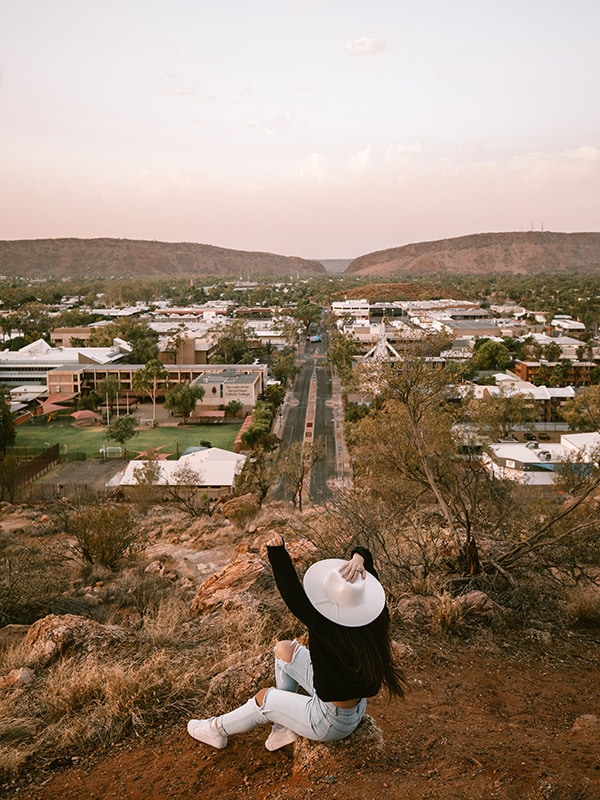
Alice Springs from Anzac Hill
Alice Springs from Anzac Hill. (Image: Tourism Australia/Nicholas Kavo)

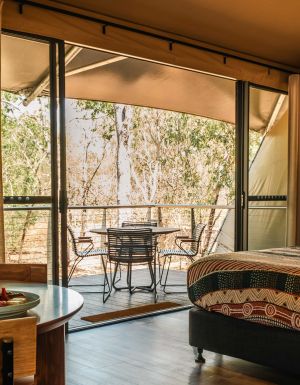
Stay: You may be on a budget but that doesn’t mean you can’t enjoy a few holiday perks, such as glamping. BIG4 MacDonnell Range Holiday Park has safari tents sleeping up to four, from $85 per night (minimum two-night stay). Children will love the pool, waterslide and BMX track, while parents will appreciate the camp kitchens, supermarket and access to fuel. Wow the kids by staying on a weekend so you can take advantage of the pancake breakfast held every Sunday.


Pay: $99.50 per person (based on two adults in accommodation)
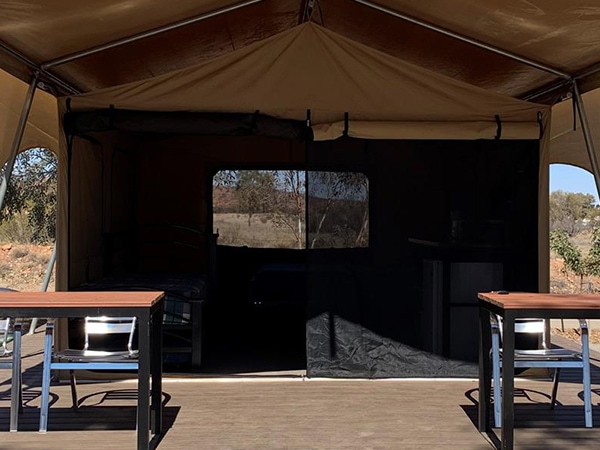
BIG4 MacDonnell Range Holiday Park
BIG4 MacDonnell Range Holiday Park has safari tents sleeping up to four.

Day 2 – Alice Springs

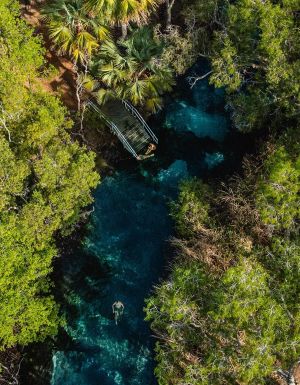
Play: Head out into the West MacDonnell Ranges for a morning of wild swimming. Two popular permanent waterholes are Ellery Creek Big Hole and Ormiston Gorge, and the cold water offers a refreshing break from the NT’s warm days. Jump Inn Bar & Restaurant is a fun spot for dinner, with retro lounges and a beer garden. A dish from the Mediterranean and Asian menu will set you back about $20.
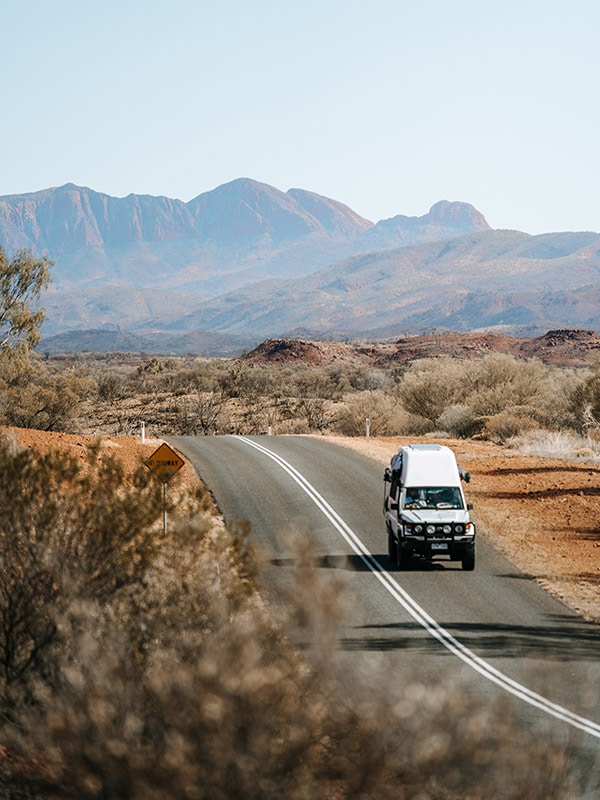
Driving through West MacDonnell Range National Park
Driving through West MacDonnell Range National Park. (Image: Tourism NT/Jess Caldwell & Luke Riddle)

Stay: Bed down at Desert Palms Alice Springs . Villas for two start from $145 per night; resort facilities include a pool and licenced mini-mart.


Pay: $92.50 per person
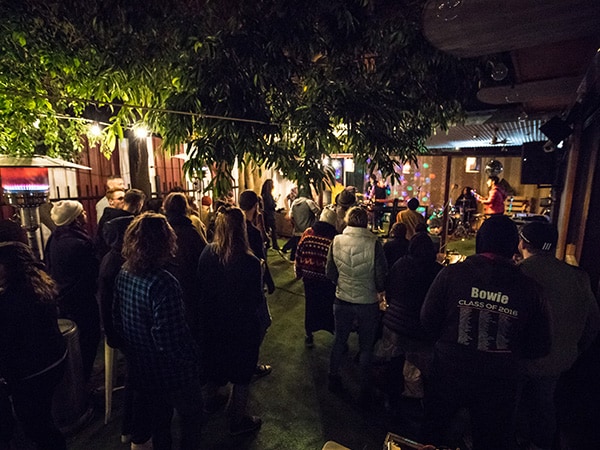
Jump Inn Bar & Restaurant
Jump Inn Bar & Restaurant is a fun spot for dinner.

Need tips, more detail or itinerary ideas tailored to you? Ask AT.

AI Prompt

Day 3 – Alice Springs to Kings Canyon

Play: Hit the road early for your next adventure to Kings Canyon, in Watarrka National Park. You’ll be travelling south-west of Alice for about 450km and the easiest route is along the sealed Stuart and Lasseter highways (the other options require a 4WD). Mingle with other travellers over a late lunch at Kings Creek Station; the camel burger will cost about $15. Afterwards, continue up the road to Kings Canyon Resort, where you can catch sunset from a viewing platform and enjoy an al fresco film (for free).
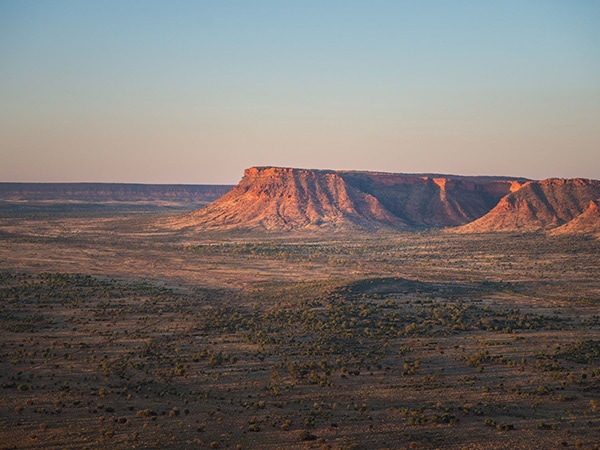
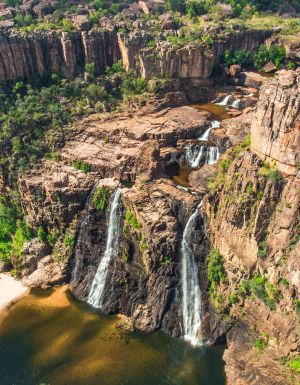
Kings Canyon, Watarrka National Park
Kings Canyon, Watarrka National Park.

Stay: Kings Canyon Resort has basic lodge rooms with shared bathroom and kitchen facilities for about $155 for two people per night. Take advantage of the resort’s creature comforts, such as the pool, restaurant and bar.


Pay: $92.50 per person
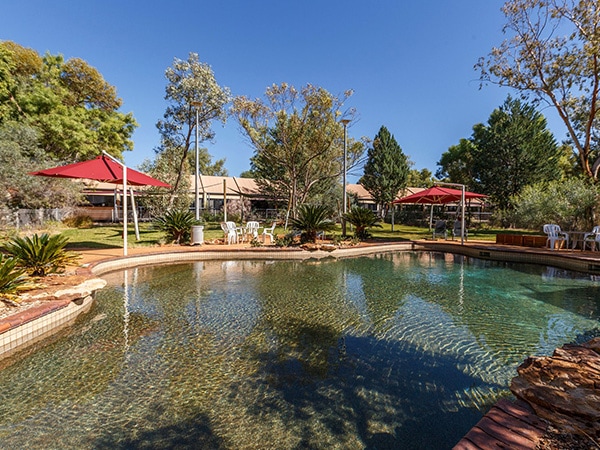
Kings-Canyon-Swimming-pool
Take advantage of the resort’s creature comforts, such as the pool, restaurant and bar.

Day 3 – Kings Canyon to Uluru-Kata Tjuta National Park

Play: Wake with the sun to make the most of the many walking trails in Watarrka National Park . Kings Canyon Rim Walk is a popular choice. It’s 6km and takes three to four hours, making it perfect for fit and experienced hikers. Kings Creek Walk is a gentler option and at only 2.6km it will take one hour (return). The creek track is great for families, and is wheelchair-friendly for the first 700 metres. For lunch, call Curtain Springs Wayside Inn to check if they’re serving (they’ll open if traffic warrants it). Expect to spend about $25 on a classic homestead meal, such as steak. You should also grab your three-day Uluru-Kata Tjuta National Park Pass today (adult $25). Entry fees have been waived for travel until 31 December 2020; book here . Cap off your day by watching the sun set over Uluru.
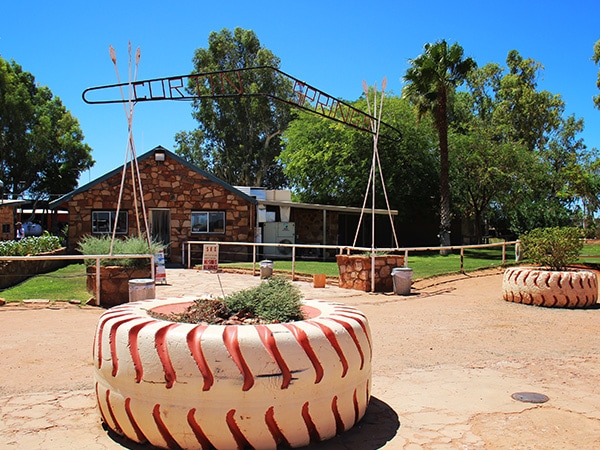
Curtin Springs Wayside Inn
Curtin Springs Wayside Inn. (Image: Tourism NT/Sarena Hyland)

Stay: When it comes to Uluru accommodation, don’t look past Ayers Rock Campground , part of Ayers Rock Resort. If you don’t have camping gear, you can stay in an air-conditioned cabin (sleeps up to six) with shared bathroom facilities from $179 per cabin per night.


Pay: $92.50 per person (based on two adults in accommodation)
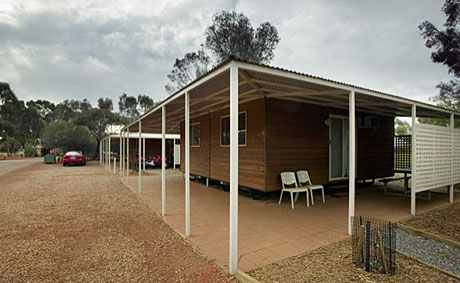
 

Ayers Rock Resort Campground Cabin
An affordable option at Uluru are the air-conditioned cabins at the Ayers Rock Resort campground.

Weekly travel news, experiences
insider tips, offers, and more.

Day 4 – Uluru-Kata Tjuta National Park

Play: Make the most of your park pass by hitting the trails again, this time in the shadow of Uluru. A favourite is the easy 2km Mala walk to Kantju Gorge, where you’ll come across caves and rock art. Also included in your park pass is entry to Uluru-Kata Tjuta Cultural Centre, home to galleries of Aboriginal art, community-owned shops, and free presentations. While it’s currently closed due to Covid, do call ahead in case it’s re-opened when you visit. A not-to-miss experience is the mesmerising Field of Light Uluru art installation. A huge swathe of desert is covered with 50,000 lights, leaving a lasting impression. Pre-book your tickets (adult $44).


Stay: Return to your two-bedroom cabin at Ayers Rock Campground and whip up an easy meal for dinner.


Pay: $133.50 per person (based on two adults in accommodation)
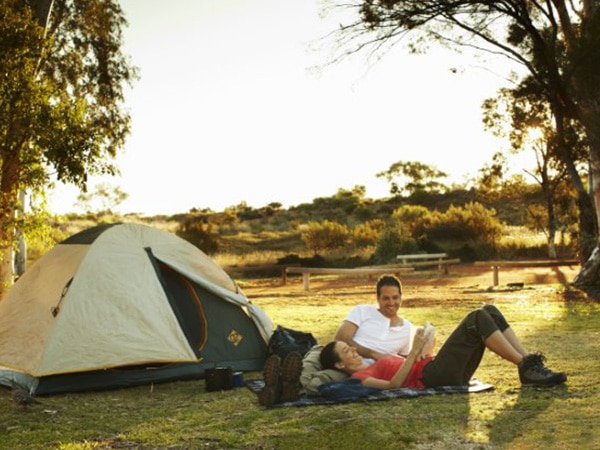
Ayers Rock Campground

Day 5 – Uluru to Alice Springs

Play: It’s time to loop back to Alice Springs and, if you leave around breakfast, you can arrive in time for lunch at The Watertank Cafe. Cheers to an awesome, budget-friendly Red Centre trip while you enjoy a salad or focaccia and drink (about $25). Spend your afternoon learning about the town’s origins at Alice Springs Telegraph Station Historical Reserve (adults $15) and then check out the fossils at the Megafauna Central gallery (free entry).
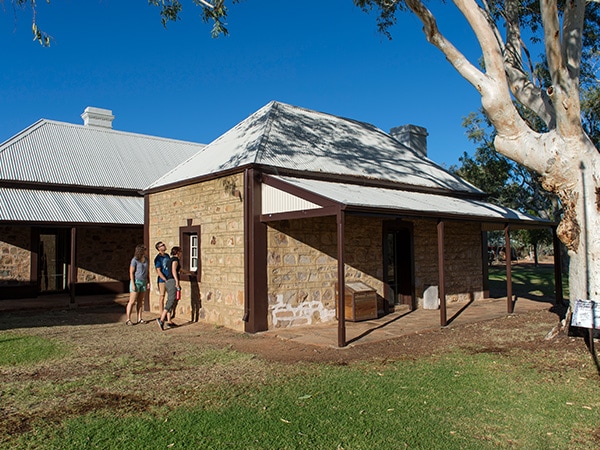
Alice Springs Telegraph Station Historical Reserve
Alice Springs Telegraph Station Historical Reserve. (Image: Tourism NT/Shaana McNaught)

Stay: Spend your last night in a comfortable and modern serviced apartment at Quest Alice Springs . You can grab a studio with kitchenette and queen bed from $140 per night.


Pay: $110 per person (based on two adults in accommodation)

Day 6 – Depart or explore the NT further
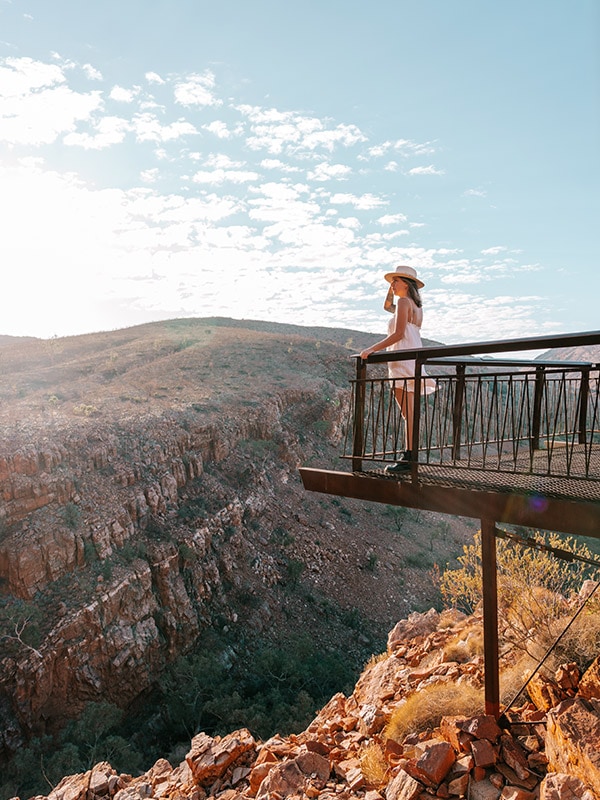
Woman at the lookout at Ormiston Gorge
Woman at the lookout at Ormiston Gorge. (Image: Tourism NT/Jess Caldwell & Luke Riddle)
Jennifer Ennion
Jennifer Ennion is a freelance travel and ski journalist who loves encouraging people to spend more time outdoors. From snorkelling with belugas in sub-Arctic Canada to hiking the Himalayas, Jennifer is constantly searching for stories that inspire readers to push their boundaries.
View profile and articles
hero media

Discovering East Arnhem: Australia’s most unique and rewarding corner

    Joanne Millares Joanne Millares

    Hard to reach and harder to forget, East Arnhem offers something rare in modern travel: the chance to slow down and experience Country on its own terms.

    The sky feels bigger in East Arnhem . It stretches wide and uninterrupted above rouged earth, stringybark woodland and beaches so empty they seem to belong to another era. The coastline curves for kilometres without a footprint and the horizon runs on forever.

    For comedian Lou Wall, the scale of the place was the first thing that hit them.

    “The sheer openness,” they say. “The sky feels infinite and the land stretches out endlessly. It’s pretty breathtaking visually.”

    But the physical landscape is only part of the story. The real reward isn’t only the scenery but the shift in perspective the journey brings. Visitors stop trying to tick off the destination and a real engagement takes over.

    “It made me never want to travel again,” Wall jokes. “In that I never wanted to leave East Arnhem.”

    Getting there

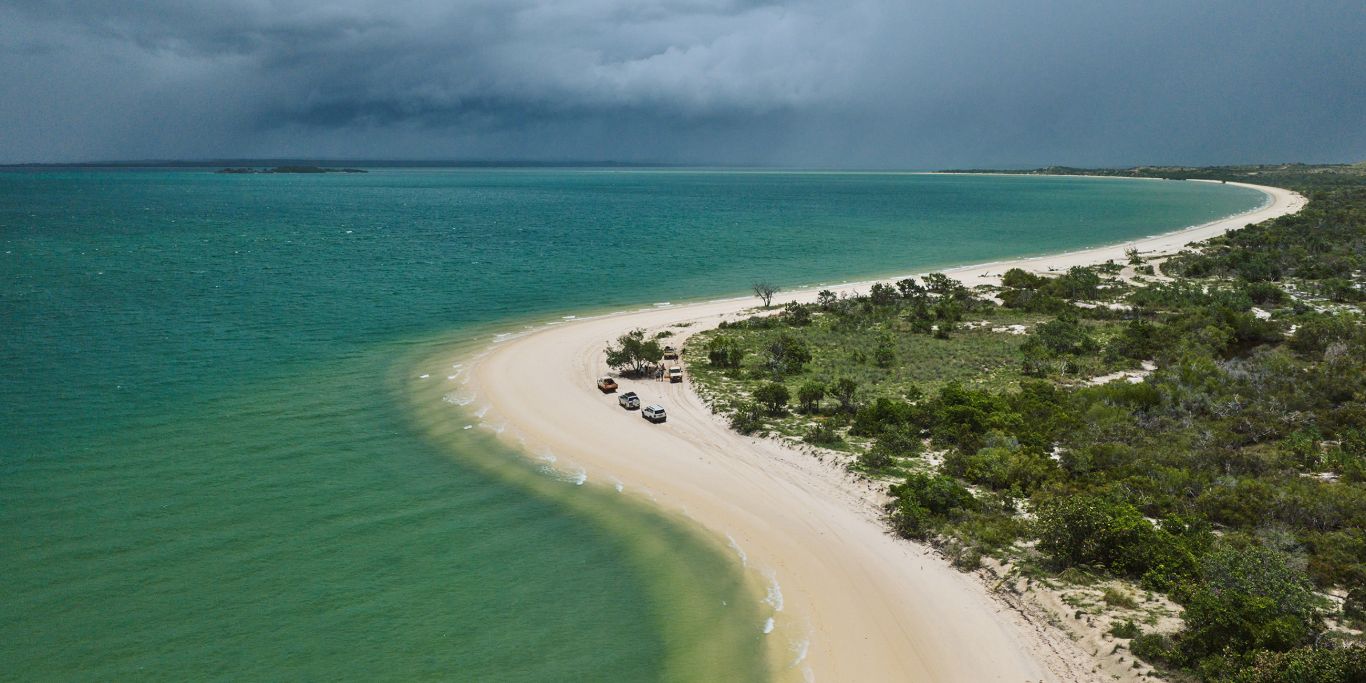
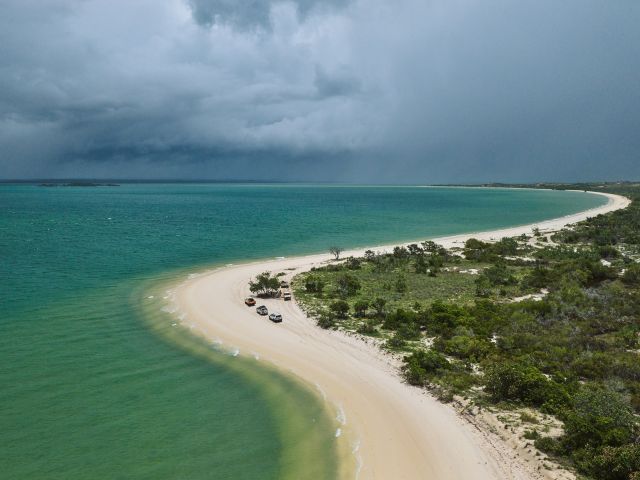
    Aerial shot of East Arnhem’s coastline as cars trace the curve of the shore.
    Sail along the remote coastline on an expedition cruise.

    Reaching East Arnhem is part of the adventure. Travellers typically fly into Gove Airport near Nhulunbuy via Darwin or Cairns, or arrive by expedition cruise along the remote coastline. Others make the journey overland along rutted dirt roads that cut through East Arnhem’s small pockets of monsoon forest.

    However you arrive, there’s a distinct feeling of crossing into somewhere different. Permits are required to visit the region, reflecting the fact that this is Yolŋu land where communities and traditional owners maintain deep cultural connections to Country.

    The extra planning becomes part of the experience. By the time visitors arrive, they understand they’re entering a place not just of respect, but also patience and curiosity.

    At one with nature

    East Arnhem’s  landscapes leave a strong imprint. For Wall, one place in particular still lingers in their memory: Ngalarrkpuy , also known as Lonely Beach, near Bawaka Homeland.

    “I genuinely felt like I was living inside an Instagram filter,” they say. “One of the most stunning feats of nature I’ve ever seen. The water was so clear I swear I could see even the fish smiling.”

    Across the region, natural experiences unfold at a slower pace. Fishing, beachcombing and island hopping reveal the rhythm of the coastline. The tides shape daily life and the vastness of the landscape makes even simple moments feel downright cinematic.

    For visitors with limited time, Wall says the Bawaka Homeland experience is unmissable.

    “I just left and I’m already planning when I can get back there.”

    The sense of remoteness is part of the appeal. In a country where many beaches are crowded and well-trodden, East Arnhem’s coastline still feels wonderfully wild.

    Immersing in local culture

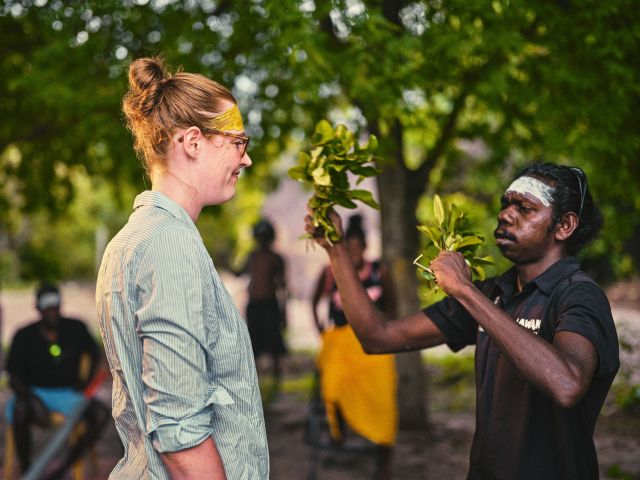
    A visitor spends a meaningful moment alongside Yolŋu guides, gaining insight into their deep cultural knowledge and connection to the land.
    Experience authentic moments with the locals.

    Culture is woven through every experience in East Arnhem. Visitors have the opportunity to spend time on Country with Yolŋu guides and knowledge holders who share stories and traditions that have been passed down for generations.

    For Wall, one of the most powerful moments came during a conversation with a Yolŋu elder.

    “I got to meet a traditional elder, Mayalil, in Nhulunbuy,” they say. “Listening to her talk about her home made the land feel alive in ways I couldn’t have imagined.”

    The region is also home to internationally recognised Aboriginal art centres where artists shape works deeply connected to land and family knowledge.

    Music carries the same cultural energy. East Arnhem has produced globally recognised artists such as King Stingray and Baker Boy, blending Yolŋu language, storytelling and contemporary sound.

    Wall experienced this musical spirit first-hand.

    “A jam session around the fire was it for me,” they say. “Letting the deep joy and history of their music wash over me…  and meeting a few of the King Stingray musicians was unreal.”

    These moments of human connection often become the most memorable part of a visit.

    Spotting local wildlife

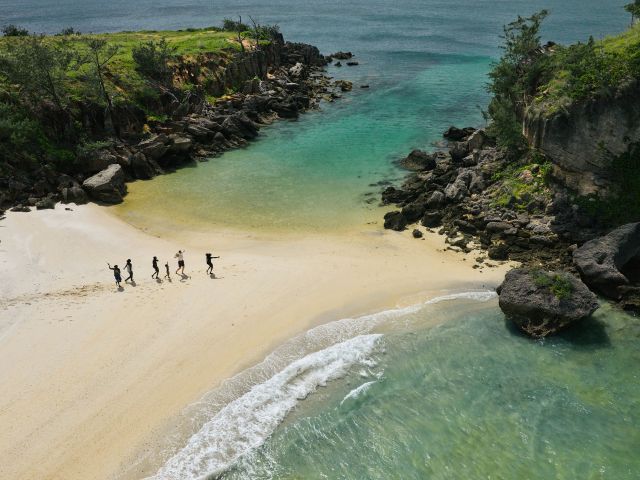
    An aerial view of the beach shows tiny figures lined up across the white sand, moving as if in a rhythmic dance.
    Step into a world where nature reigns.

    The wildlife of East Arnhem adds another layer to the experience. The region is home to an extraordinary range of animals, from waterbirds and turtles to dugongs, dolphins and the formidable saltwater crocodile.

    Wall admits they didn’t actually spot a croc during their visit.

    “Devastatingly, I didn’t see one,” they laugh. “But with all the stories from the locals I definitely gained a healthy respect for caution.”

    Some of the most memorable wildlife encounters can be surprisingly small., At Banubanu Beach Retreat on Bremer Island, Wall remembers walking along the beach one morning and watching it come alive.

    “As you walk through the sand you see hundreds of crabs scurrying into their holes as you pass by,” they say. “Such a small thing, but it was completely magical.”

    Moments like this reveal the quieter rhythms of East Arnhem, where even the smallest creatures seem to play a part in the landscape.

    Visitors who make the journey soon learn the most important travel tip of all.

    “Go in open-minded with a sense of curiosity,” Wall says. “Be prepared to ditch your plans. The land and the locals will guide you on an adventure no spreadsheets could ever compete with.”

    And most importantly, they add, don’t rush.

    “The land and people deserve your time and attention. You’ll be all the better for slowing down.”

    For more information on visiting East Arnhem, head to eastarnhem.com.au .