Queensland national park is a croc-spotter’s dream

hero media
Go searching for crocodiles in Queensland’s second-largest national park and you’ll discover a true adventure territory of sandstone hills, sweeping grasslands, coastal estuaries and more than a few salties.

I’m a little nervous as I walk down towards the Normanby River at Kalpowar Crossing. The waterways around here, inside Queensland’s Rinyirru National Park, are notorious for two resident species.

The first of those, barramundi, are prized by anglers and best cooked over hot coals, with perhaps a squeeze of lemon. The second, estuarine crocodiles, are likely to reverse that scenario.

There’s already a man up ahead standing by the riverbank, though not too close to risk being trapped inside the jaws of a dinosaur. He’s wearing the Cape York Peninsula uniform of garish fishing polo and trucker cap over quick-dry shorts and thongs so, rather obviously, I ask him if he’s come here to fish for barra.

“No chance," he says, shaking his head vigorously. “I’m not going near that water. We’re just happy having a few days’ camping."

I have to admit I’m envious. He and his travelling companions look like they’ve chosen a lovely spot to camp, back from the river among some stately eucalypts. But that river’s proximity would still worry me.

Though I can’t see any, I have little doubt crocs would be lurking somewhere in those waters, waiting patiently for a slip in concentration or a moment’s misplaced bravado. In fact, I’m certain of it, especially after hearing the tragic story about the owner of Laura’s Peninsula Hotel being taken by a croc not far from here a couple of years back.
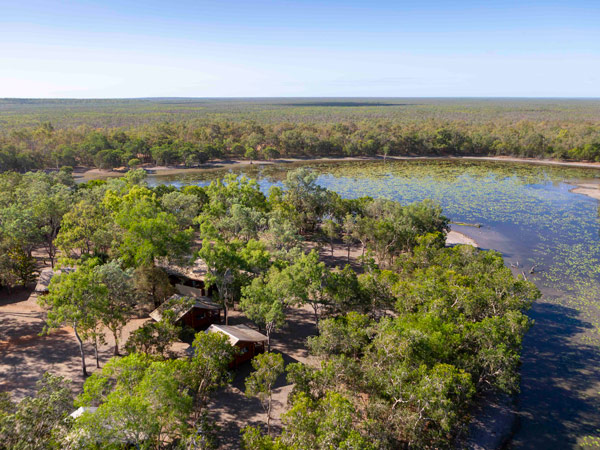
the Lotusbird Lodge by the water
Lotusbird Lodge sits on a lagoon edge. (Image: Mark Daffey)

Our base for exploring Queensland’s second-largest national park over two days is the Outback Spirit-owned Lotusbird Lodge. It’s a little further up the road, just outside its western boundary, where the countryside mirrors that inside the park.
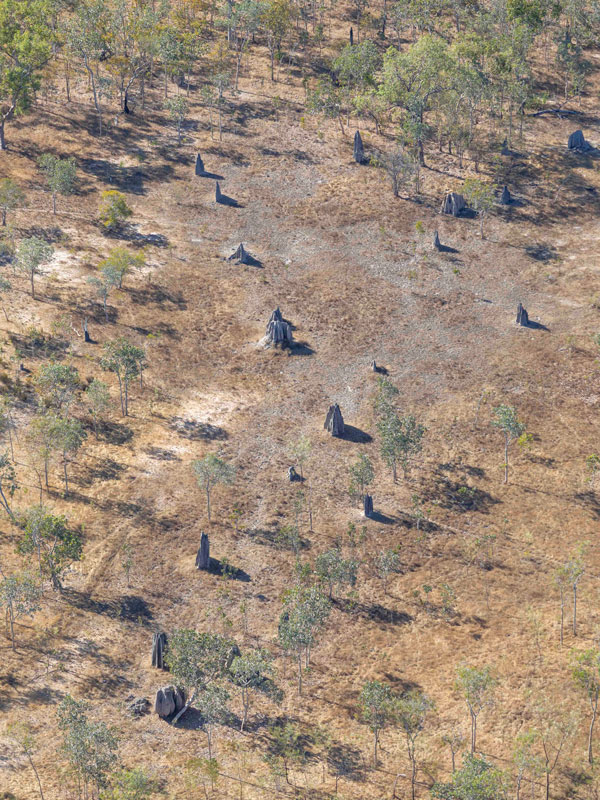
the termite mounds in Rinyirru National Park
Termite mounds as seen from above. (Image: Mark Daffey)

In places, spindly eucalypts and ironwood trees sprout from plains plagued by termite mounds. In others, extensive paperbark forests fringe marshy swamps. The one constant is the presence of water; the park is a natural floodplain.

On my first morning at the lodge, I’m roused by birdsong and jump out of bed to walk down to a blackwater lagoon shaded by Leichhardt, bloodwood and black wattle trees. Wandering-whistling ducks and magpie geese mill around the water’s edge.
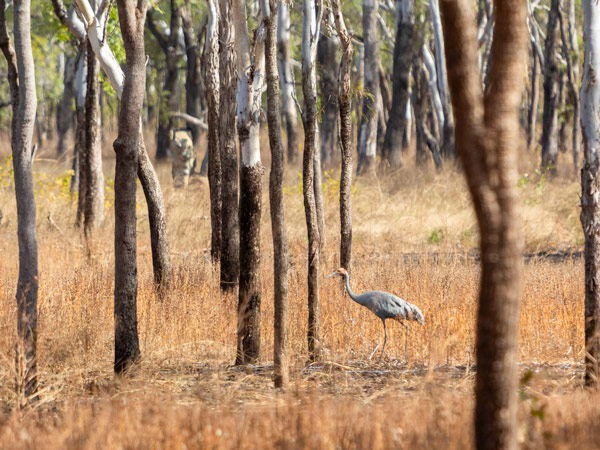
the Brolga waterbird
The brolga, Australia’s largest waterbird. (Image: Mark Daffey)

Black ibises fly overhead. Egrets tiptoe through the shallows and jacanas tap-dance across lily pads on the water’s surface. Darters perch on fallen tree trunks, drying outstretched wings. A shy jabiru keeps watch from the opposite bank.

I can’t see any crocodiles in the water, and nor do any appear to be sunning themselves on the banks. But of course, that doesn’t mean they’re not around.
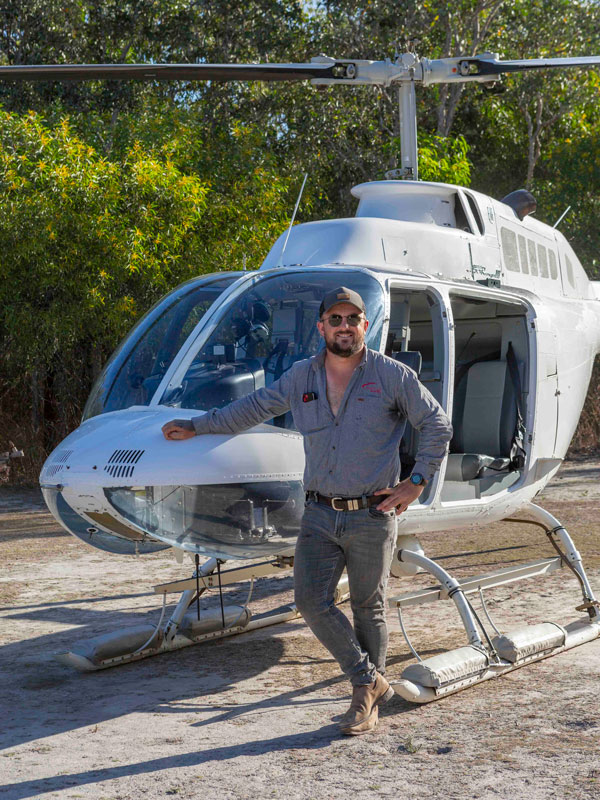
pilot Nathan Summerfield posing beside a helicopter, Cape York Wilderness Adventure
Helicopter pilot Nathan Summerfield. (Image: Mark Daffey)

Lagoons like this are splashed all over the national park, as I discover during a scenic helicopter flight that afternoon. Pilot Nathan Summerfield offers a running commentary as he navigates east over the national park then north, hovering over Saltwater Creek and the North Kennedy River as they coil towards the tidal mudflats bordering Princess Charlotte Bay.
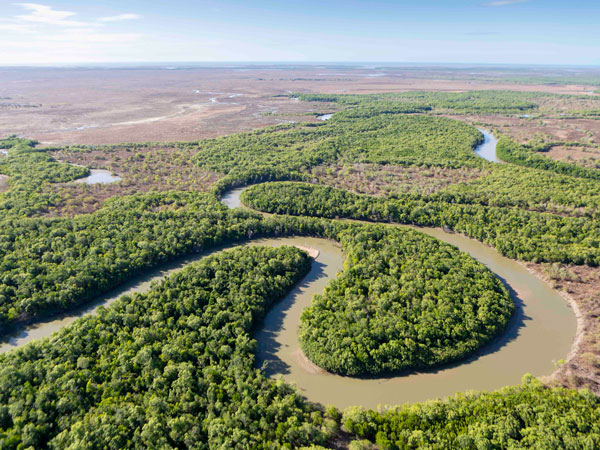
an aerial view of the Kennedy River
The snaking Kennedy River from above. (Image: Mark Daffey)

As we fly over the inky expanses of Sweetwater Lagoon – “the biggest bit of water around here" according to Nathan – I ask him if it would contain any crocs. “Oh, yeah. There are crocs in every piece of water around here," he says. “I won’t even wash my hands in a puddle."

Eventually, I spot one of the reptilian monsters slicing through a forest of green algae in a billabong, leaving a blackened trail behind it.

“All of those lines you see are made by crocs," says Summerfield. There are lines everywhere I look.
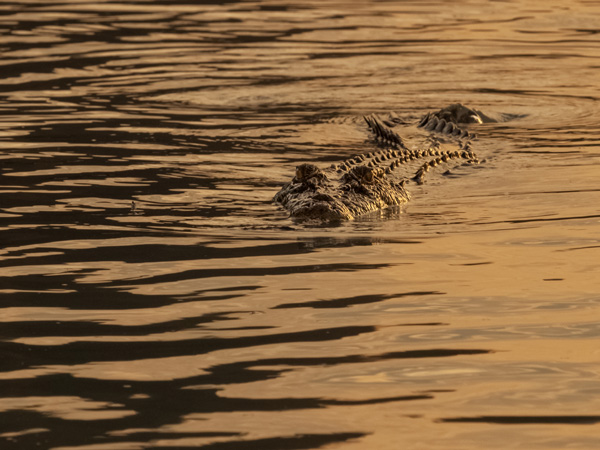
a saltwater crocodile lurking in the water
The national park is notorious for saltwater crocodiles. (Image: Mark Daffey)

As we continue to fly over the marshy northern reaches of the park, I spy more and more crocs drying out on mudflats and on slimy riverbanks. But there are also pelicans and jabirus. And a surprising number of wild cattle and pigs wallow about in the lagoons.

“Crocs don’t need to feed too often," says lodge manager Dan Costantino back at camp. “… the feral pigs are always getting taken." Better them than me.
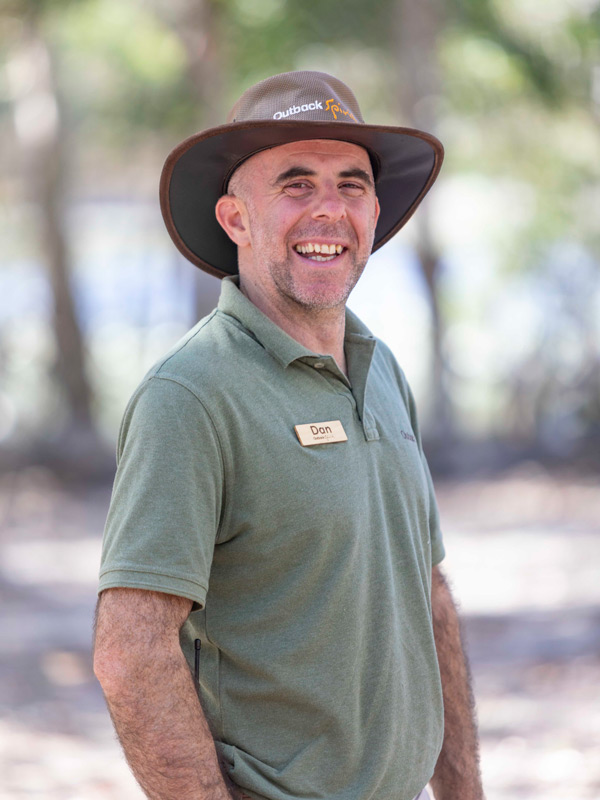
Lotusbird Lodge manager Dan Costantino
Meet Lodge manager Dan Costantino. (Image: Mark Daffey)

Need tips, more detail or itinerary ideas tailored to you? Ask AT.

AI Prompt

A traveller’s checklist

Outback Spirit’s 13-day Cape York Wilderness Adventure tours depart between May and September. The itinerary starts in Cairns/Gimuy and travels north to the tip of Queensland, including stops in Port Douglas, the Daintree, Laura and Thursday Island, among others.
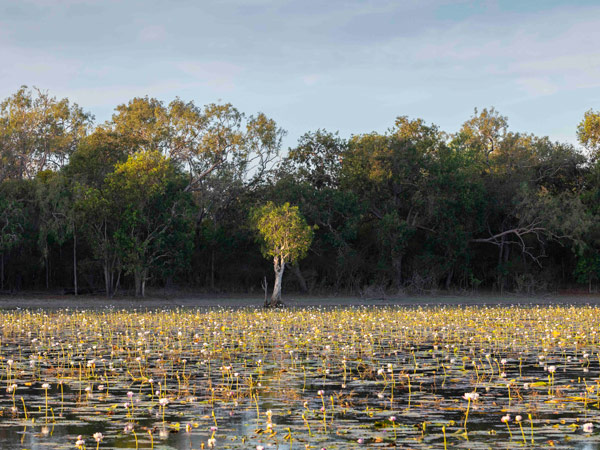
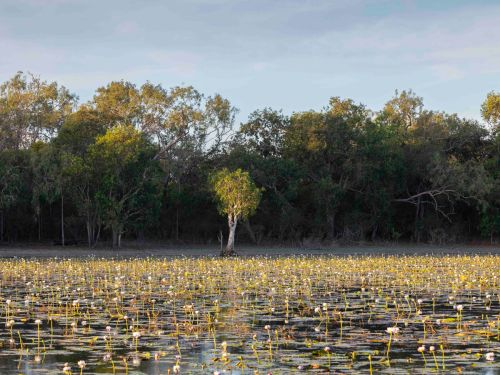
the Blackwater Lagoon covered in lilies
This lilypad-covered blackwater lagoon is the view from Lotusbird Lodge. (Image: Mark Daffey)

Guests stay in comfortable cabin accommodation for two nights at Lotusbird Lodge while they explore Rinyirru National Park. A 45-minute scenic helicopter ride over the national park is included, as well as guided walks and all food and drinks.
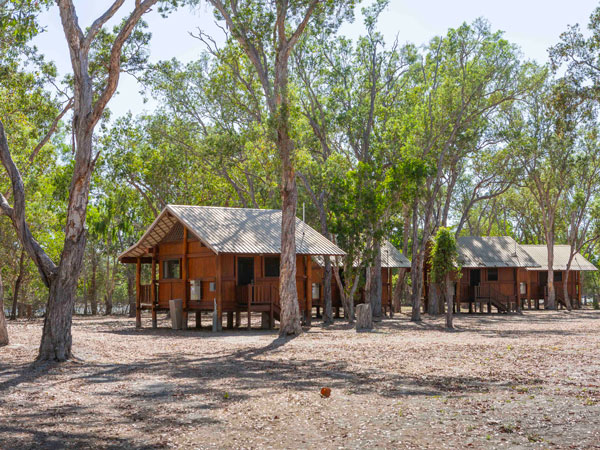
the Outback Spirit’s Lotusbird Lodge
Base yourself at Outback Spirit’s Lotusbird Lodge. (Image: Mark Daffey)

Want to see more stories from Australian Traveller in your Google search results?

  1. Click here to set Australian Traveller as a preferred source.
  2. Tick the box next to "Australian Traveller". That's it.
Mark Daffey
Mark Daffey is a writer, photographer and editor specialising in travel and business. He's an avid traveller and a health and fitness nut who loves to explore destinations that are off the beaten track.
View profile and articles
hero media

From reef to rainforest: Discover the best Port Douglas experiences

(Credit: TTNQ)

    Lucy Cousins Lucy Cousins
    Ancient rainforest, coral reefs, laid-back luxury and adrenaline-fuelled adventures, Port Douglas offers a side of Australia unlike anywhere else.

    Mornings in Port Douglas start with a beautiful symphony. As day breaks, the lyrical calls of Rainbow Lorikeets, cries of the sulphur-crested cockatoos and rhythmic Coral Sea waves create a colourful soundtrack for Tropical North Queensland’s sunrise. If there’s one place in Australia that captures the sweet spot between luxury and laid-back living, it’s here. This small, seaside village has just enough glamour to feel indulgent and just enough barefoot charm to make you feel like you’ve escaped the chaos of everyday life.

    Whether you’re diving into the warm waters on Four Mile Beach or enjoying an ice-cold drink and a Barramundi burger overlooking the marina, Port Douglas offers more than just a seaside holiday.

    Local gourmet goodies

    Nautilus restaurant port douglas
    Nab an open-air table beneath a canopy of palms at Nautilus. (Image: Toby Stanley)

    The tropical food scene in Port Douglas is influenced by the rich agricultural regions surrounding it, with fresh produce arriving daily from nearby farms and tropical growers across the region. At Nautilus – a hidden, palm-fringed restaurant just off Macrossan Street – the menu showcases regional flavours. Its Signature Nautilus Mango Soufflé is a long-time favourite.

    Nearby, Hi-Tide by the Beach offers a relaxed way beachfront dining experience overlooking the Coral Sea. From crocodile and lemon myrtle spring rolls to wild barramundi and a volcanic hot stone steak, taste the diverse flavours of Tropical North Queensland.

    Visitors can also explore the region’s local markets. Port Douglas Markets offers artisan products and tropical treats each Sunday, while the Saturday morning Mossman Markets is the place for fresh local produce from the surrounding farming community.

    Just outside of Port Douglas, Ospreys at Thala Beach Nature Reserve has one of the region’s most memorable dining outlooks. Perched on a small headland between rainforest and sea, take in views across the coastline and mountains while you dine. The seasonal menu highlights local seafood, tropical fruits and native ingredients sourced from across the region

    Travelling with young humans

    Hartley's Crocodile Adventures port douglas
    Catch a spectacle at Hartley’s Crocodile Adventures. (Credit: TTNQ)

    Port Douglas caters for all types of visitors, but families especially love the walkable streets, wide beaches and range of activities nearby. An attraction that never fails to delight all ages is Hartley’s Crocodile Adventures – a wildlife sanctuary and ecotourism park with some of the region’s largest crocodiles. Here, you’ll also find koalas, cassowaries, turtles and other Australian wildlife.

    For something slower paced, sit back and enjoy a tranquil visit aboard the historic Lady Douglas River Cruise. Glide along the calm waters of Dickson Inlet, keeping an eye out for birdlife and estuarine crocodiles along the mangroves. Children can take part in activity sheets onboard and even have the opportunity to help steer the boat.

    This region is also deeply connected to Indigenous culture, and a Dreamtime Walk is one way to learn about it. Discover the stories, traditions and connection to Country of the local Kuku Yalanji people from local Indigenous guides, while exploring the rainforest and waters of Mossman Gorge.

    Exploring local waterways

    Coya Beach port douglas
    Walk along the peaceful Cooya Beach. (Credit: TTNQ)

    Join a guided tour with Walkabout Cultural Adventures to explore the peaceful Cooya Beach. Led by deeply knowledgeable local Aboriginal guides, try seasonal local bush tucker, take in the beautiful landscape and gain insight into the history, culture and traditions of this land.

    Surrounded by dense canopy and ancient species, nearby Hartley’s Creek Falls are at their finest after rain. These beautiful falls are reached via a lush rainforest walk that winds through creek crossings, towering greenery and moss-covered boulders.

    To swim where the locals swim, head out past local farms and into the foothills of the Mossman River to Shannonvale – a low-key freshwater swimming hole surrounded by sun-warmed rocks and deep pockets of clear water. It’s a quiet area to spend a few hours retreating from the world.

    Adrenaline adventures

    Sailaway Port Douglas
    Take to the ocean with Sailaway Port Douglas. (Credit: TTNQ)

    One of the most high-octane ways to enjoy the nature of Tropical North Queensland is white-water rafting down the impressive Barron River. With Grade two and Grade three rapids, expect plenty of splashing, some teamwork, and a few moments where everyone in the raft screams and laughs at the same time.

    Join Back Country Bliss for the most unique floating experience you’ll ever encounter. Head into the rainforest and float along the serene Mossman River on your individual board, taking in the sights and sounds of the ancient landscape around you.

    If you prefer ocean swimming, Sailaway Port Douglas explores the idyllic Low Isles and the outer reef on their snorkelling tours. Enjoy the Great Barrier Reef from above or below and look out for coral gardens, giant clams, colourful reef fish and, if you’re lucky, sea turtles.

    For land-lovers, the Devil’s Thumb is a challenging but rewarding hike with incredible views over the coast and endless cane fields. This 10km return hike will take around six to eight hours, so leave a whole day and pack snacks!

    Experiences that give back

    Skyrail Rainforest Cableway port douglas experiences
    See the rainforest from above on The Skyrail Rainforest Cableway. (Credit: TTNQ)

    With two UNESCO World Heritage-listed sites – the Great Barrier Reef and the Wet Tropics of Queensland rainforest region – it’s not surprising Tropical North Queensland is a hub for eco-tourism. The stunning Daintree Ecolodge was founded on the principles of minimising environmental impact, supporting the local community and teaching guests about the local Indigenous culture. Their elevated rainforest-style ‘bayans’ are tucked among the trees, bringing nature into every part of a guest’s stay.

    Further down the coast, the luxury bungalows and treetop hideaways of Thala Beach Nature Reserve are dotted across 45 acres of protected headland, forest and beach. The property’s design intentionally preserves large areas of native vegetation and beachfront ecosystem, while conserving the surrounding habitat. The private beach and various swimming pools offer a cool retreat from the heat of the day, while the main lodge offers the perfect place to read and relax.

    The Skyrail Rainforest Cableway, a 7.5-kilometre cableway between Cairns and nearby Kuranda, has won multiple tourism and environmental awards. It’s also the first tourism attraction in the world to achieve Platinum EarthCheck Accreditation, for its long-term environmental management and sustainability initiatives.

    Start planning your Port Douglas adventure at tropicalnorthqueensland.org.au.