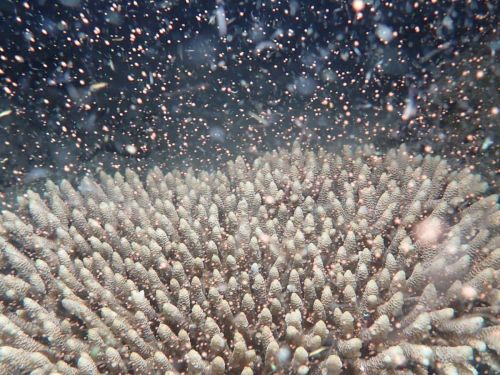
Coral spawning in the Great Barrier Reef

hero media
A cruise in the dead of night offers up the perfect opportunity to witness the wonder of nature in all its kinky glory.

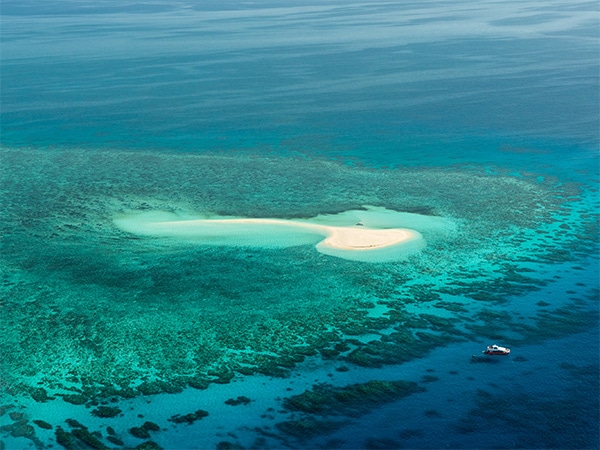
We board the Tusa Dive T6, a 24-metre dive vessel, at the city marina, the other voyeurs and me. Soon we’re at sea and heading for Saxon Reef, on the Outer Barrier Reef 55 kilometres north-east of Cairns. It’s five nights after the November full moon, which shines across dark millpond waters at the reef mooring. The sea is a summery 27 degrees Celsius – perfect conditions for our oceanic orgy.


The Great Barrier Reef’s annual mass coral spawning has been called the biggest sexual event on the planet – and even the world’s biggest orgasm on the world’s biggest organism. Over two or three nights at various times between October and December, the waters of individual reefs across the 2300-kilometre Great Barrier Reef suddenly burst with new life – countless egg and sperm bundles released simultaneously by billions of coral polyps in a spectacular explosion of synchronous breeding.
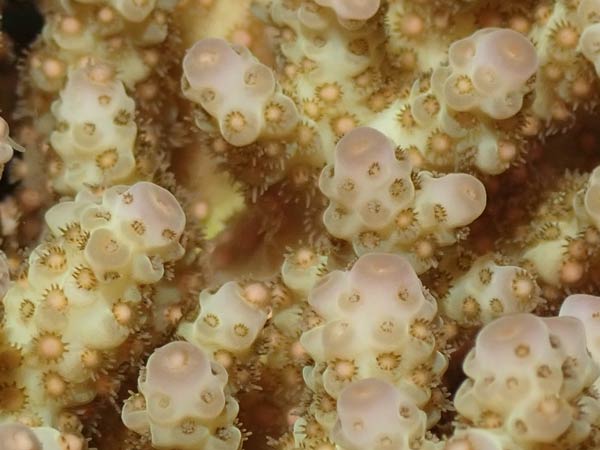
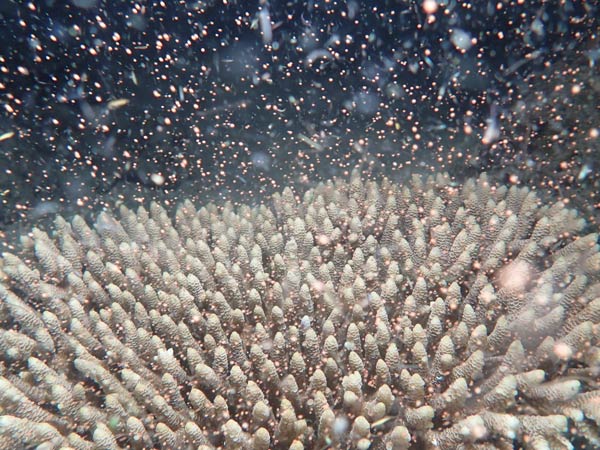
Close up shot of coral ready to release on the Great Barrier Reef
Close up shot of engorged arcropora ready to release. (Image: Gareth Phillips/Reef Teach)

Looking like a blizzard of tiny snowdrops, they bubble to the surface over a few nocturnal hours and form a pungent, pinkish slick. Splitting apart, the egg and sperm bundles fertilise en masse. The result: billions of pinprick-sized coral larvae, which a few days later settle back down on the reef to begin their life’s work of reef-building. Remarkably, this vast, vital aspect of coral life was unknown until 1981, when Australian scientists observed it on the Great Barrier Reef off Townsville.


Forty years later, with mass coral bleaching due to climate change and escalating existential threat, spawning seems a mighty and cheering demonstration of Reef resilience. It’s also emerging as a potential means of safeguarding the future: scientists now use the yearly boom to scoop up millions of healthy newborn corals for resettlement in bleach-depleted areas.
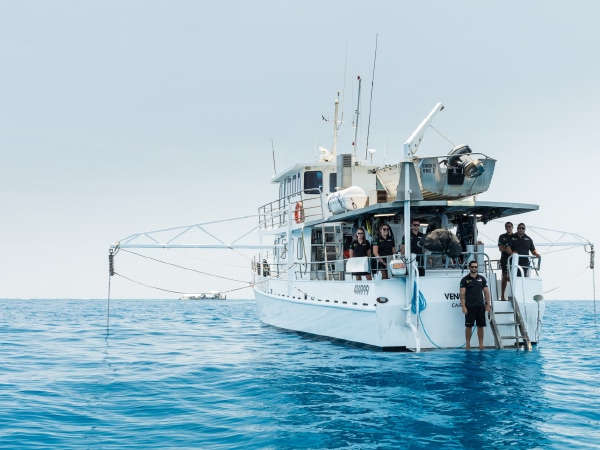
A control vessel monitors the waters during the coral spawning off the coast of Cairns.

A greater goal – to help coral fight deadly bleaching – also harnesses spawn power. Almost all corals keep algae in their tissue to supply vital nutrients. In overheated conditions they lose it and begin to starve – and bleach. During last year’s spawning, the Larval Restoration project mixed large volumes of coral larvae on a Cairns reef with more heat-tolerant algae, enhancing their ability to resist bleaching. Also, supplying algae so early in the life cycle (before it is naturally acquired) speeds growth, boosts health and improves survival chances.


Time to check out chapter one of that life cycle. Donning scuba gear – though plenty onboard choose to snorkel shallower parts instead – we descend into 10 metres of seawater, shadows and coral, lit only by the bright moon and our dive leader’s soft but wide-ranging torchlight. Visibility is excellent; there’s no chance of being lost in the night.
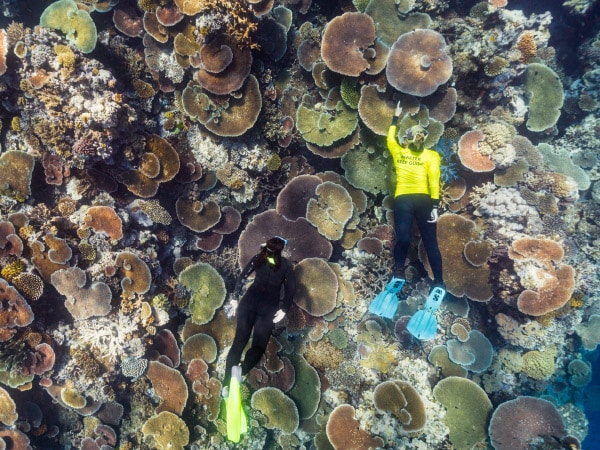
Duck diving on Moore Reef during its November 2019 coral spawning.

A spectacularly flame-patterned eel, thicker than an arm, slithers from its hole in a reef outcrop. A two-metre-long grey reef shark suddenly looms from the blackness and shoots along the sandy channel beside us, dwarfing two whitetip reef sharks alongside it. None pay us any attention; they’re on secret shark business. A trio of giant trevally are more interested, lurking just inside our beam, as if hoping we’ll light the way to prey.


For all these enchantments, the first dive ends with no spawning. We’re a tad early, it seems, but Mother Nature doesn’t publish timetables. Back on the boat, our surface interval passes with a welcome cooked dinner. And then, during the second (10pm) dive, it happens. A broad patch of coral, carpeted by white blobs, is brewing something marvellous. Suddenly we’re inside a snowdome. Rising above the coral are myriad snowy dots, shimmering as they flutter and fly before our eyes. Some seem to shine with an inner light. Against the inky backdrop of the night sea, they could almost be stars or meteors.
Flynn Reef erupts Flynn Reef erupts in an explosion of pink as corals begin their annual spawning on the Great Barrier Reef
Flynn Reef erupts in an explosion of pink as corals release tiny balls containing sperm and eggs into the water. (Image: Gareth Phillips/Reef Teach)

You might think, ‘eeeww, swimming in sperm, no thanks’ – but it’s not like that at all. To hover weightless in the sea while meeting the first flakes of an underwater, upside-down snowstorm at night is a moment of pure wonder and magic. It feels like seeing Santa actually land his sleigh on the roof.
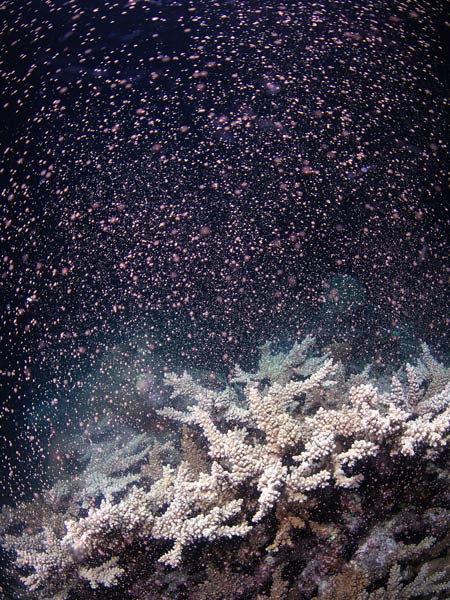
Underwater view of coral spawning on the Great Barrier Reef
The extraordinary event gives the impression of being inside a snowdome. (Image: Gareth Phillips/Reef Teach)

But there’s also a grounding reality amid the sense of unreality, and that feels special too. It’s an intimate encounter with life’s grandeur, with that fundamental, never-say-die impulse to propagate that keeps the primordial cycle going. This is literal immersion in the miracle of life itself, this private moment between me and coral, silent but for my bubbling breath.


We’re not back in Cairns until almost 1am. The cabin lights are out and we’re dozing in the dark, the other voyeurs and me. Midnight has passed and it’s been such a magical night I wonder that the boat hasn’t turned back into a pumpkin. Cinderella went to the ball, and I’ve seen coral spawning.
Getting there
The Cairns marina is located within walking distance of most centrally located hotels.


Playing there
Spawning on Cairns’ reefs is usually within a week of the November full moon. Book here


Staying there
The design-focused Bailey in central Cairns is a great option.

Need tips, more detail or itinerary ideas tailored to you? Ask AT.

AI Prompt

Want to see more stories from Australian Traveller in your Google search results?

  1. Click here to set Australian Traveller as a preferred source.
  2. Tick the box next to "Australian Traveller". That's it.
hero media

From reef to rainforest: Discover the best Port Douglas experiences

(Credit: TTNQ)

    Lucy Cousins Lucy Cousins
    Ancient rainforest, coral reefs, laid-back luxury and adrenaline-fuelled adventures, Port Douglas offers a side of Australia unlike anywhere else.

    Mornings in Port Douglas start with a beautiful symphony. As day breaks, the lyrical calls of Rainbow Lorikeets, cries of the sulphur-crested cockatoos and rhythmic Coral Sea waves create a colourful soundtrack for Tropical North Queensland’s sunrise. If there’s one place in Australia that captures the sweet spot between luxury and laid-back living, it’s here. This small, seaside village has just enough glamour to feel indulgent and just enough barefoot charm to make you feel like you’ve escaped the chaos of everyday life.

    Whether you’re diving into the warm waters on Four Mile Beach or enjoying an ice-cold drink and a Barramundi burger overlooking the marina, Port Douglas offers more than just a seaside holiday.

    Local gourmet goodies

    Nautilus restaurant port douglas
    Nab an open-air table beneath a canopy of palms at Nautilus. (Image: Toby Stanley)

    The tropical food scene in Port Douglas is influenced by the rich agricultural regions surrounding it, with fresh produce arriving daily from nearby farms and tropical growers across the region. At Nautilus – a hidden, palm-fringed restaurant just off Macrossan Street – the menu showcases regional flavours. Its Signature Nautilus Mango Soufflé is a long-time favourite.

    Nearby, Hi-Tide by the Beach offers a relaxed way beachfront dining experience overlooking the Coral Sea. From crocodile and lemon myrtle spring rolls to wild barramundi and a volcanic hot stone steak, taste the diverse flavours of Tropical North Queensland.

    Visitors can also explore the region’s local markets. Port Douglas Markets offers artisan products and tropical treats each Sunday, while the Saturday morning Mossman Markets is the place for fresh local produce from the surrounding farming community.

    Just outside of Port Douglas, Ospreys at Thala Beach Nature Reserve has one of the region’s most memorable dining outlooks. Perched on a small headland between rainforest and sea, take in views across the coastline and mountains while you dine. The seasonal menu highlights local seafood, tropical fruits and native ingredients sourced from across the region

    Travelling with young humans

    Hartley's Crocodile Adventures port douglas
    Catch a spectacle at Hartley’s Crocodile Adventures. (Credit: TTNQ)

    Port Douglas caters for all types of visitors, but families especially love the walkable streets, wide beaches and range of activities nearby. An attraction that never fails to delight all ages is Hartley’s Crocodile Adventures – a wildlife sanctuary and ecotourism park with some of the region’s largest crocodiles. Here, you’ll also find koalas, cassowaries, turtles and other Australian wildlife.

    For something slower paced, sit back and enjoy a tranquil visit aboard the historic Lady Douglas River Cruise. Glide along the calm waters of Dickson Inlet, keeping an eye out for birdlife and estuarine crocodiles along the mangroves. Children can take part in activity sheets onboard and even have the opportunity to help steer the boat.

    This region is also deeply connected to Indigenous culture, and a Dreamtime Walk is one way to learn about it. Discover the stories, traditions and connection to Country of the local Kuku Yalanji people from local Indigenous guides, while exploring the rainforest and waters of Mossman Gorge.

    Exploring local waterways

    Coya Beach port douglas
    Walk along the peaceful Cooya Beach. (Credit: TTNQ)

    Join a guided tour with Walkabout Cultural Adventures to explore the peaceful Cooya Beach. Led by deeply knowledgeable local Aboriginal guides, try seasonal local bush tucker, take in the beautiful landscape and gain insight into the history, culture and traditions of this land.

    Surrounded by dense canopy and ancient species, nearby Hartley’s Creek Falls are at their finest after rain. These beautiful falls are reached via a lush rainforest walk that winds through creek crossings, towering greenery and moss-covered boulders.

    To swim where the locals swim, head out past local farms and into the foothills of the Mossman River to Shannonvale – a low-key freshwater swimming hole surrounded by sun-warmed rocks and deep pockets of clear water. It’s a quiet area to spend a few hours retreating from the world.

    Adrenaline adventures

    Sailaway Port Douglas
    Take to the ocean with Sailaway Port Douglas. (Credit: TTNQ)

    One of the most high-octane ways to enjoy the nature of Tropical North Queensland is white-water rafting down the impressive Barron River. With Grade two and Grade three rapids, expect plenty of splashing, some teamwork, and a few moments where everyone in the raft screams and laughs at the same time.

    Join Back Country Bliss for the most unique floating experience you’ll ever encounter. Head into the rainforest and float along the serene Mossman River on your individual board, taking in the sights and sounds of the ancient landscape around you.

    If you prefer ocean swimming, Sailaway Port Douglas explores the idyllic Low Isles and the outer reef on their snorkelling tours. Enjoy the Great Barrier Reef from above or below and look out for coral gardens, giant clams, colourful reef fish and, if you’re lucky, sea turtles.

    For land-lovers, the Devil’s Thumb is a challenging but rewarding hike with incredible views over the coast and endless cane fields. This 10km return hike will take around six to eight hours, so leave a whole day and pack snacks!

    Experiences that give back

    Skyrail Rainforest Cableway port douglas experiences
    See the rainforest from above on The Skyrail Rainforest Cableway. (Credit: TTNQ)

    With two UNESCO World Heritage-listed sites – the Great Barrier Reef and the Wet Tropics of Queensland rainforest region – it’s not surprising Tropical North Queensland is a hub for eco-tourism. The stunning Daintree Ecolodge was founded on the principles of minimising environmental impact, supporting the local community and teaching guests about the local Indigenous culture. Their elevated rainforest-style ‘bayans’ are tucked among the trees, bringing nature into every part of a guest’s stay.

    Further down the coast, the luxury bungalows and treetop hideaways of Thala Beach Nature Reserve are dotted across 45 acres of protected headland, forest and beach. The property’s design intentionally preserves large areas of native vegetation and beachfront ecosystem, while conserving the surrounding habitat. The private beach and various swimming pools offer a cool retreat from the heat of the day, while the main lodge offers the perfect place to read and relax.

    The Skyrail Rainforest Cableway, a 7.5-kilometre cableway between Cairns and nearby Kuranda, has won multiple tourism and environmental awards. It’s also the first tourism attraction in the world to achieve Platinum EarthCheck Accreditation, for its long-term environmental management and sustainability initiatives.

    Start planning your Port Douglas adventure at tropicalnorthqueensland.org.au.