Only 40 people a day can hike Australia‘s largest island national park

hero media
Just 40 people are permitted to camp on this idyllic island at any one time.

Australia is home to many spectacular national parks. From the vast Uluṟu-Kata Tjuṯa National Park to the lush Daintree, a diverse range of landscapes offers unique experiences for nature lovers, adventure seekers and cultural enthusiasts alike. Australia’s largest island national park, Hinchinbrook Island, offers verdant peaks, golden shores, expansive mangroves and cascading waterfalls just waiting to be explored. 

Where is Hinchinbrook Island
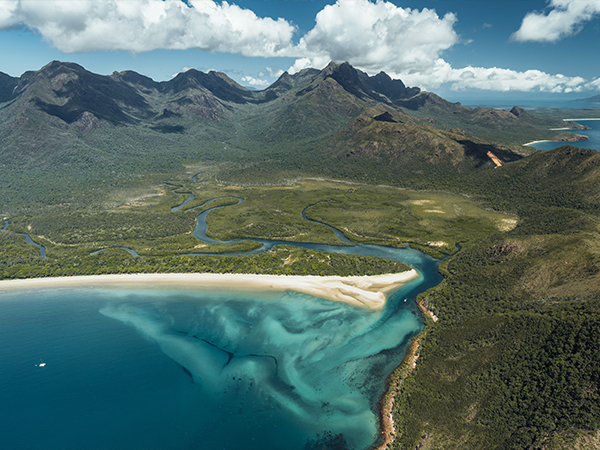
An aerial view of Hinchinbrook Island.
This lush island lies approximately eight kilometres offshore. (Image: Tourism and Events Queensland)

Hinchinbrook Island is located in Tropical North Queensland on the Cassowary Coast Region. Sitting between Cardwell and Lucinda, it’s separated from the north-eastern coast of Queensland by the narrow Hinchinbrook Channel and lies approximately eight kilometres offshore.

How to get to Hinchinbrook Island
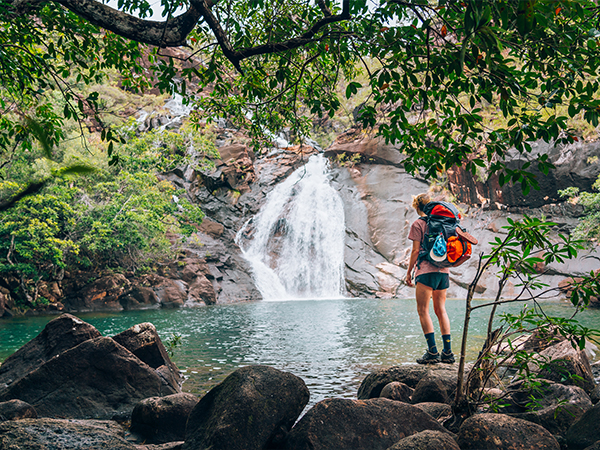
A waterfall on the The Thorsborne Trail.
The Thorsborne Trail is one of Queensland’s great multi-day hikes. (Image: Tourism & Events Queensland)

You can reach Hinchinbrook Island by an approximately one-hour ferry ride from either Lucinda or Cardwell, or by private vessel. Absolute North Charters offers daily ferry rides from Lucinda to the northern and southern ends of Hinchinbrook Island as well as from Cardwell to Ramsay Bay the northern access point for the Thorsborne Trail. There are no cars on this 393 kilometres-squared island, so the main way to get around is either on foot or by boat.

Things to do on Hinchinbrook Island

This uninhabited destination welcomes a maximum of 40 hikers and campers at any one time and is a playground for wildlife and nature enthusiasts. 

Thorsborne Trail
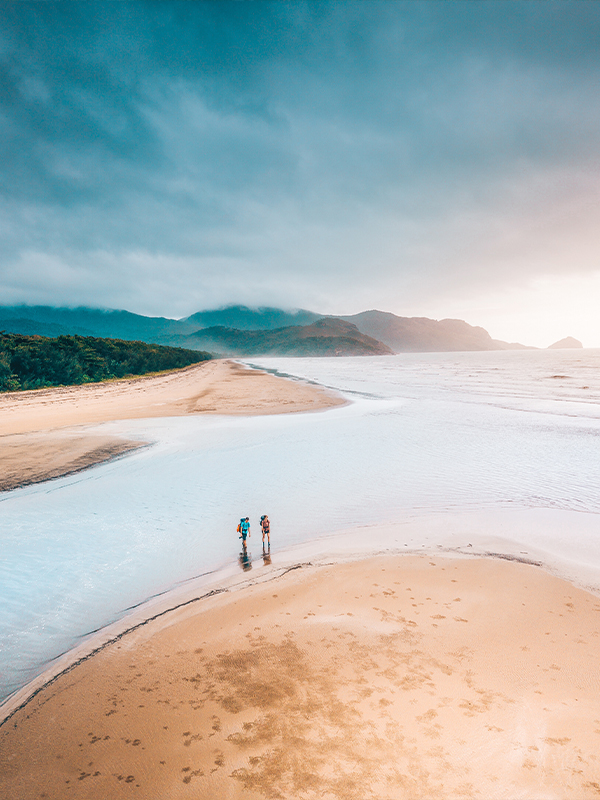
An aerial view of the beaches at Hinchinbrook Island.
The hike takes you to secluded beaches. (Image: Tourism and Events Queensland)

The hiking season runs from 1 March to 31 December each year, and the 32-kilometre Thorsborne Trail is both the island’s most popular activity and one of Queensland’s greatest multi-day hikes. The hike takes you through lush rainforests, past mangrove swamps, over rocky headlands and to secluded beaches. Reaching an elevation of 939 metres, this challenging hike typically takes three to five days to complete. However, it can be done in a single day, with an average walking time of around eight and a half hours from start to finish.

There are designated camping areas with toilets along the way and a maximum of two nights’ stay per site for $7.25 per person per night. Permits and campsite bookings are required and can be obtained through the Queensland Parks and Wildlife Service.

Those who don’t want to commit to the entire hike can choose to undertake a specific section. The Ramsay Bay to Little Ramsay Bay route spans five kilometres of rocky headlands and sandy beaches, while the 4.8-kilometre Ramsay Beach to Nina Bay walk, which includes a rocky ascent of Nina Peak, offers rewarding views stretching over Missionary Bay.

It’s worth noting that dogs are not allowed on the trail, and to make sure to be aware of saltwater crocodiles and marine stingers. Check the QWildlife app for recent crocodile sightings.

Need tips, more detail or itinerary ideas tailored to you? Ask AT.

AI Prompt

Zoe Falls
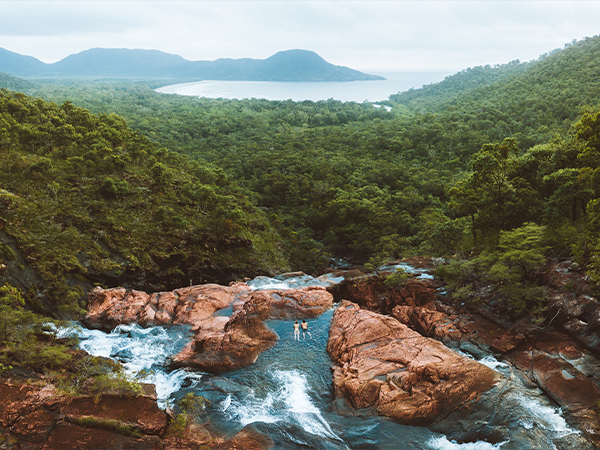
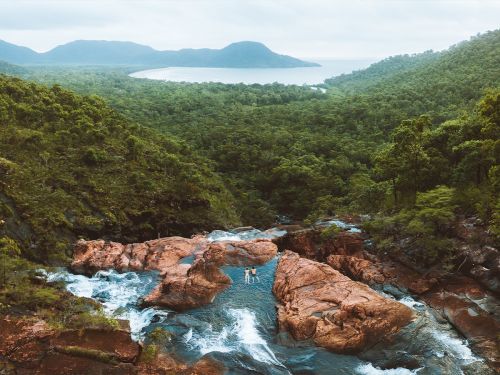
An aerial view of Zoe Falls.
Zoe Falls is one of Australia’s most beautiful natural pools. (Image: Tourism & Events Queensland)

Also accessible via the Thorsborne Trail is the spectacular Zoe Falls, one of the most photographed spots on the island. A cascading series of waterfalls flows into a crystal-clear freshwater pool that’s surrounded by rainforest. 

At the top of the falls, you’ll find a stunning infinity pool with pristine waters, perfect for a refreshing splash, along with sweeping views of Zoe Bay and the Coral Sea. Access to the pool requires a short but steep climb from the base of the falls.

Those not wanting to undertake the full Thorsborne Trail hike can access the falls via a 30-minute walk from the Zoe Bay campground. There are picnic tables at the site for a post-swim snack.

Wildlife and bird watching

The island offers excellent opportunities for wildlife spotting. Keep a keen eye out for endangered dugongs and turtles, saltwater crocodiles, and a variety of seabirds such as Brahminy Kites, honeyeaters, and White-breasted Sea Eagles.

Want to see more stories from Australian Traveller in your Google search results?

  1. Click here to set Australian Traveller as a preferred source.
  2. Tick the box next to "Australian Traveller". That's it.
Rachael Thompson
Rachael Thompson is Australian Traveller's Evergreen Editor and Hotel Addict. She's responsible for the foundational content on AustralianTraveller.com, helping to manage and grow the brand’s destination guides. With a background in design and travel media, Rachael is dedicated to curating content that is as much informational as it is beautiful. She began her career at Belle magazine, before taking up editorial roles at Homes to Love and Bed Threads. When she's not writing, editing or optimising content, Rachael enjoys exploring the city's newest restaurants, bars and hotels. Next on her Aussie travel wish list is Lord Howe Island.
View profile and articles
hero media

Exploding supernovas & gold fever: discover the past at this outback Qld town

    Kassia Byrnes Kassia Byrnes
    Under wide-open outback skies, discover a fossicking gem that’s managed to slip under the radar.

    While the name Clermont may feel new to even the most intrepid traveller, its gilded history stretches back centuries. You’ll find it just off the highway, humming quietly under the hazy veil of Queensland’s outback sun. It’s here, hemmed in by mountains and perched atop soil heavy with the earth’s treasures, that one of Australia’s most accessible outback adventures awaits.

    Thanks to deposits of gold, copper and gemstones – souvenirs left by exploding supernovas and the heave of tectonic plates – Clermont became a centre point of Queensland’s Gold Rush. And now? Australia’s fossicking capital is yours to discover.

    Getting there

    car driving along Capricorn Way in queensland
    Take a drive through Queensland’s Mackay Isaac region. (Image: Sean Scott/ TEQ)

    You’ll find Clermont in Queensland’s Mackay Isaac region. To get here, it’s an easy three-hour drive over sealed roads from Mackay. Or, if you’re heading from the Sapphire Fields of Emerald, the drive will carve out just over an hour from your day.

    Whether you’re road-tripping through outback Queensland or just tracing your way through all that Australia has to offer, Clermont is remote but easily accessible.

    Best accommodation in Clermont

    Theresa CreekDam in clermont
    Camp by Theresa Creek Dam. (Image: Riptide Creative/ TEQ)

    All accommodation comes with a generous helping of country hospitality here. The choice is yours between modern hotels, parking up the camper or pitching a tent.

    Theresa Creek Dam lies just outside town. Begin each day with crisp country air and bright outback sunrises. Spend the night under the sparkling country stars and your days out on the dam fishing or kayaking. Even if you aren’t camping, be sure to save space in your itinerary for an afternoon on the red dirt shore.

    To stay closer to town, opt for a central hotel to base yourself between exploring and fossicking, like Smart Stayzzz Inn and Clermont Country Motor Inn.

    Things to do in Clermont

    three people on a tour with Golden Prospecting
    Join a tour with Golden Prospecting.

    One does not visit Clermont without trying their hand at fossicking. There are strict rules when it comes to fossicking, so stick to areas dedicated for general permission and make sure you obtain your license beforehand. Try your luck at McMasters, Four Mile, Town Desert, McDonald Flat and Flat Diggings. To increase your odds, sign on for a tour with the expert team at Golden Prospecting. They’ll give you access to exclusive plots and expert advice along the way.

    Once you’ve tried your luck on the gold fields, head to the Clermont Township and Historical Museum. Each exhibit works like an archaeologist’s brush to dust away the layers of Clermont’s history. Like the steam engine that painstakingly relocated the entire town inch by inch to higher ground after it was decimated by flooding in 1916. See the tools that helped build the Blair Athol mine, historic fire engines, shearing sheds and all sorts of relics that make up Clermont’s story.

    The historic Copperfield Chimney offers a change of pace. Legend has it that fossickers found a solid wall of copper here, over three metres high, kick-starting Queensland’s first-ever copper mine.

    Bush Heli Services flying over clermont queensland
    See Clermont from above with Bush Heli Services. (Image: Riptide Creative/ TEQ)

    For hiking, nearby Dysart is the best place to access Peak Range National Park. Here, mountainous horizons stretch across the outback as if plucked from another world. Set off for a scenic drive along the Peak Downs Highway for access to countless geological wonders. Like the slanting rockface of Wolfang Peak. Summit it, and you’ll find yourself looking out across a scene surely conjured up by Banjo Paterson. Dry scrub dancing in the warm breeze, grazing cattle, eucalypts and the gentle creak of windmills. Don’t miss visiting Gemini Peaks, either, for one of the park’s best vistas, and a blanket of wild flowers after rain.

    Then, take to the skies with a scenic helicopter tour with Bush Heli-Services. Shift your perspective and cruise above all the sights from your trip. Spots like Lords Table Mountain and Campbell’s Peak are best viewed from the skies.

    Before you head home, be sure to explore the neighbouring townships. Spend a lazy afternoon in the shade of Nebo Hotel’s wrap-around verandahs. The hotel’s 1900s dance hall has since been replaced with one of the area’s biggest rodeo arenas, so consider timing your trip to line up with a boot scootin’ rodeo. Or, stop by a ghost town. Mount Britton was once a thriving town during the 1880s Gold Rush. It’s been totally abandoned and now lies untouched, a perfect relic of the Gold Rush.

    Best restaurants and cafes in Clermont

    meal at Commercial Hotel
    Stop into the Commercial Hotel Clermont.

    Days spent fossicking, bushwalking and cramming on history call for excellent coffee and hearty country meals. Luckily, Clermont delivers in spades.

    Lotta Lattes Cafe is beloved by locals for a reason. Start your days here for the best caffeine fix in town and an impeccable brunch menu.

    For a real country meal, an icy cold beer and that famed country hospitality, head straight to the town’s iconic hotel: the Commercial Hotel (known endearingly to locals as ‘The Commie’). It’s been a staple in Clermont since 1877. The hotel even survived the flood of 1916 when it was sawn in two and moved to higher ground.

    Naturally, time spent in the outback must include calling into the local bakery. For delicious pies and a tantalising array of sweet treats, make Bluemac Bakehouse your go-to while in town.

    Discover more of The Mackay Isaac region, and start planning your trip at mackayisaac.com.