These spirits aren’t just inspired by the ocean; they’re made from it.
On South Australia’s Eyre Peninsula, life is ruled by the tides. It’s a region famous for wild coastlines, fresh seafood and a thriving aquaculture industry, where everyone from fisherfolk to marine biologists make a living on the sea.
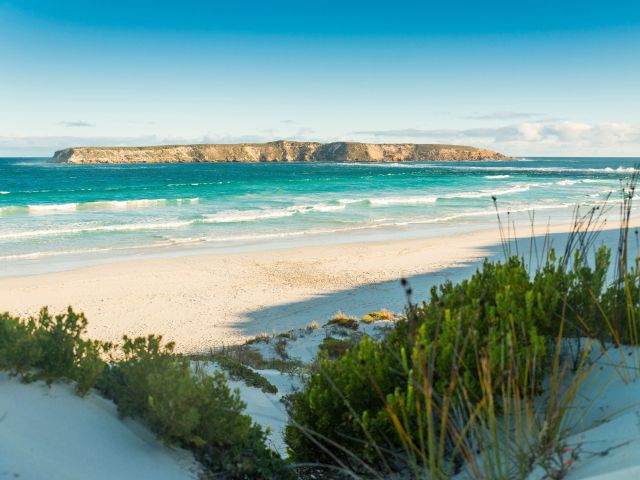
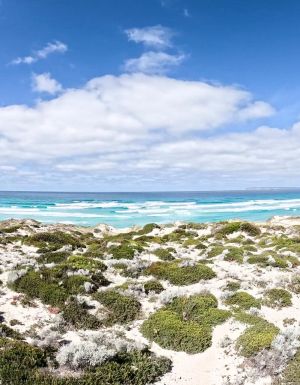
Wildly beautiful coastlines characterise Coffin Bay. (Image: South Australian Tourism Commission)
But tucked between these sandy folds is something far more unexpected – a distillery redefining what it means to work with the ocean.
Don’t let its (slightly morbid) name fool you – Coffin Bay is a town full of colour and life. Over 600 kilometres south of Adelaide, it’s a place primarily known for its oyster production, a prosperous industry driven by local businesses offering everything from tours to tastings.
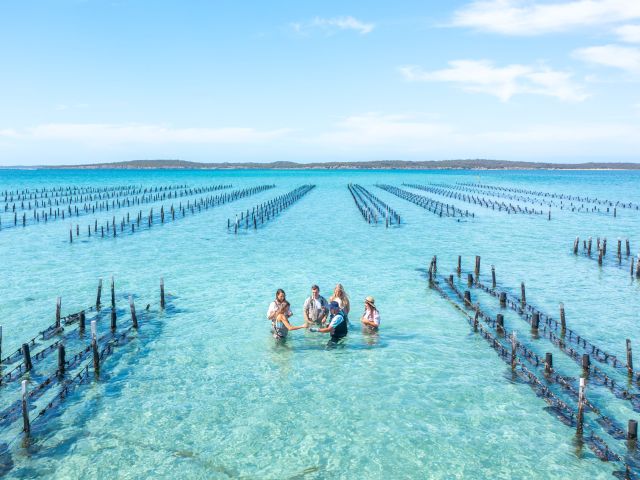
The Eyre Peninsula’s oyster production is an industry of abundance. (Image: Tourism Australia)
But on the other side of town, a small team is capturing the coast and its flavours in a whole new way. On the surface, Coffin Bay Spirits doesn’t seem too dissimilar to its neighbours, deeply rooted in its surrounds and championing local produce.
But take a closer look and you’ll start to notice the small differences that set it apart: hyperlocal ingredients, exclusive experiences, hands-on processes, and a product so specialised there’s nothing else quite like it.
Need tips, more detail or itinerary ideas tailored to you? Ask AT.
AI Prompt
A distillery doing things differently
Coffin Bay Spirits was officially opened in 2021 by owners Ben and Caro Deslandes.
Inspired by the region’s raw natural beauty and unique vegetation, local couple Ben and Caro Deslandes began experimenting with gin distillery in 2020. What started out as a fun hobby quickly evolved into something much bigger, leading to the official opening of Coffin Bay Spirits in 2021.
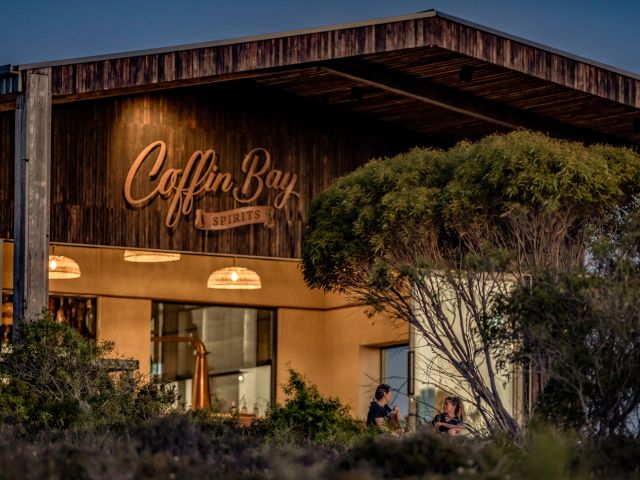
Hidden in a small pocket of Coffin Bay National Park on roughly 200 hectares of bushland, it’s the sort of place you’d breeze right past if you didn’t know about it.
This doesn’t bother the couple too much; the distillery is more of a passion project than a commercial venture. Ben and Caro never chased the crowds – but once their bottles hit shelves, the crowds found them anyway.
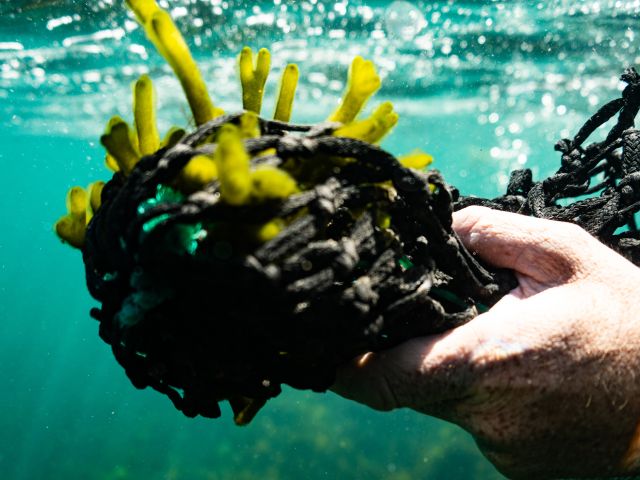
Each bottle is infused with hand-foraged local seaweed.
You see, the spirits produced here aren’t just inspired by the ocean; they’re made from it. Using a specialised fishing licence, the team – Ben, in particular – freedives for seaweed right off the national park’s shoreline. They collect fresh samples from eight different seaweed families, which are infused in the distillery’s four signature gins.
Samples from eight different seaweed families are used.
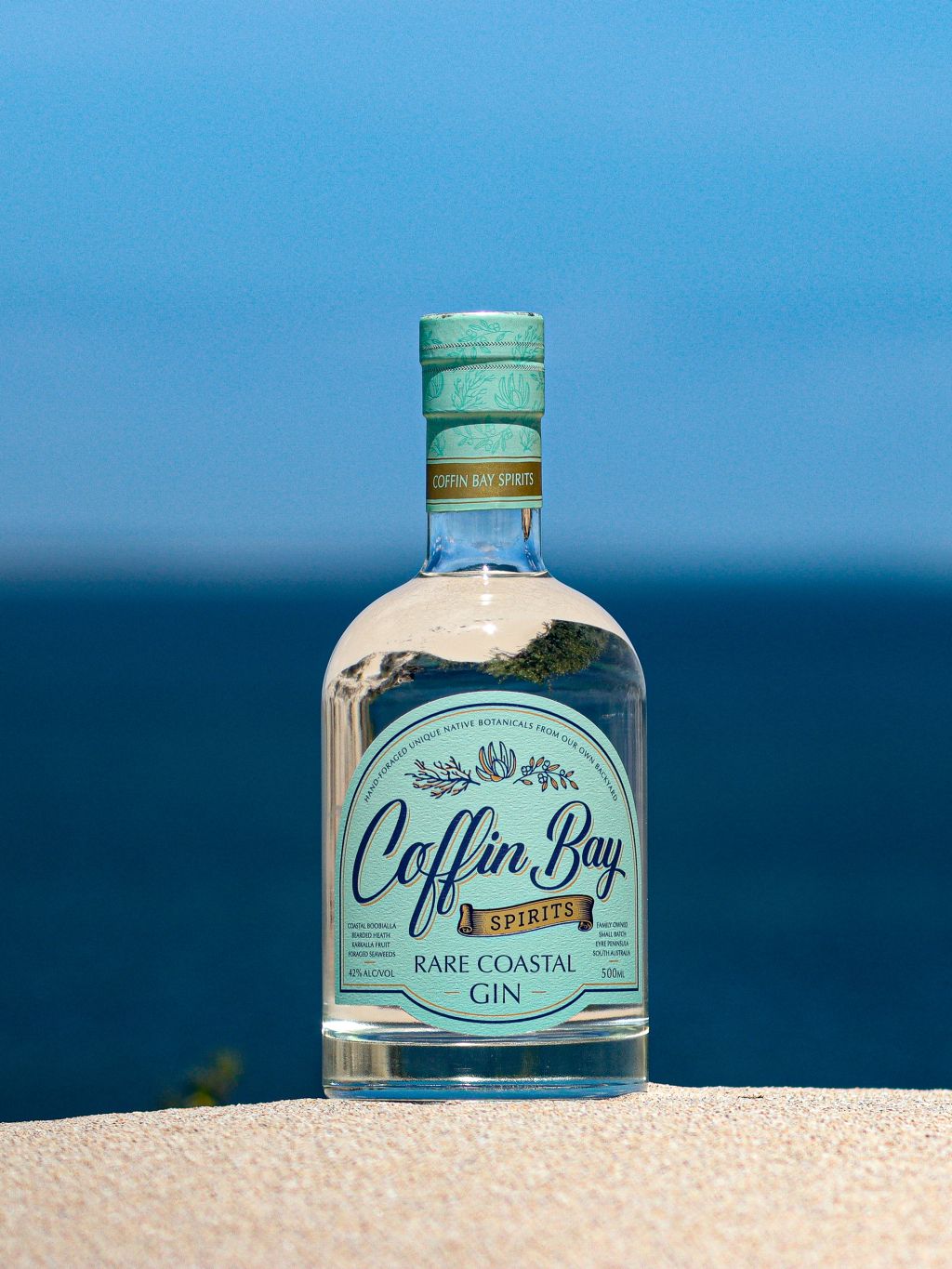
The Rare Coastal Gin is softened by locally foraged native juniper.
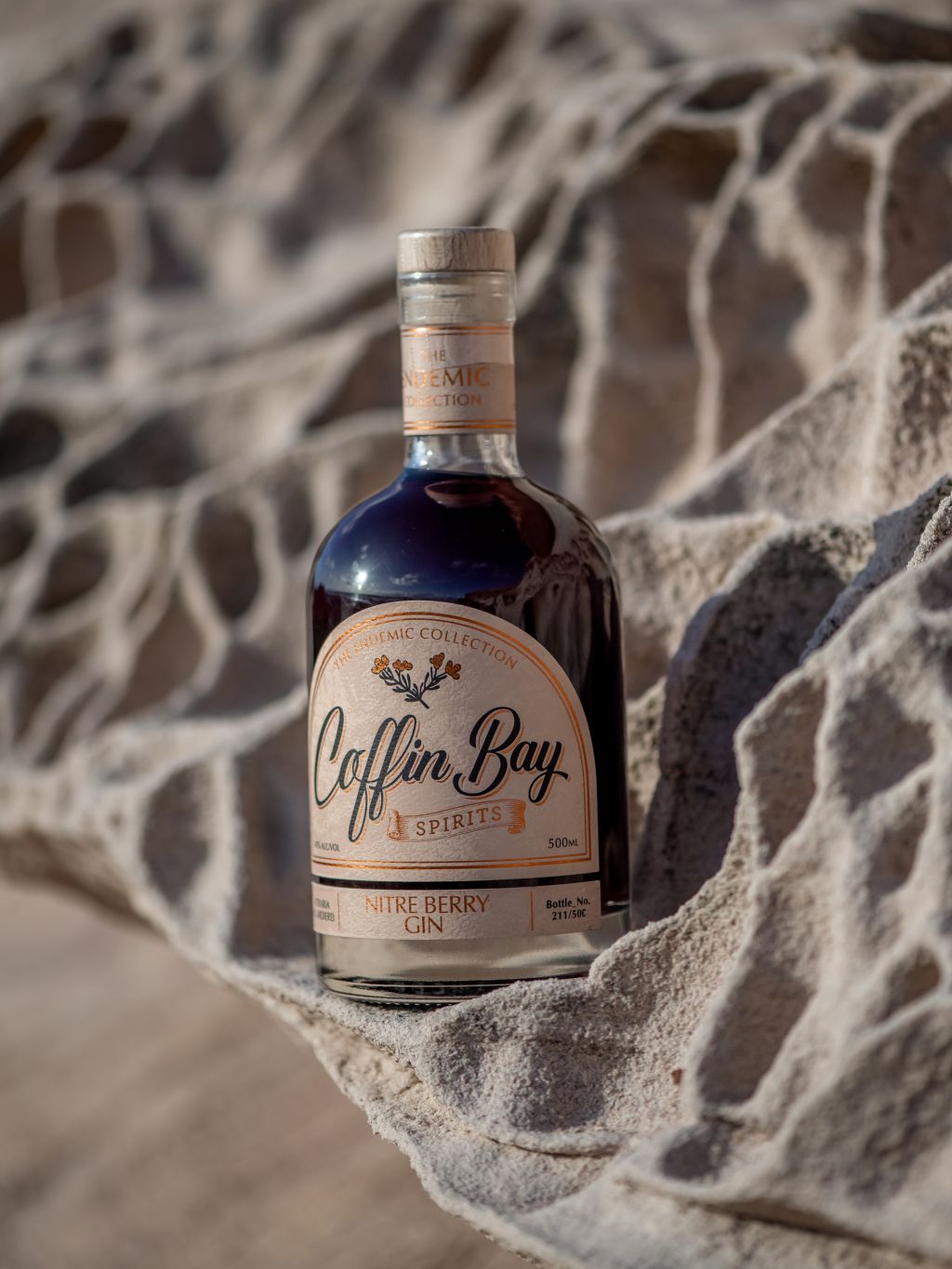
Expect a lingering sweetness from the Nitre Berry Gin.
The Nitre Berry Gin leans in gently, with a focus on sweet red fruit and a whisper of brine, while the Bush Blossom Gin is made with locally foraged natives, creating a more botanical profile.
Although softened by native juniper, the Rare Coastal Gin promises a true taste of the sea. The High Tide Gin embraces it completely, delivering an ‘oceanic mineral burst’ with an earthy black-pepper warmth.
Weekly travel news, experiences insider tips, offers, and more.
A new experience in Coffin Bay
Since its conception, Coffin Bay Spirits has mostly operated behind closed doors. But in a moment of quiet reverence, small groups are now being accepted for exclusive tours and tastings.
Available by appointment only, the new Wild Spirits – A Seaweed & Botanical Exploration experience offers a rare glimpse inside the distillery and its workings of wizardry, all backdropped by pristine coastal bushland.
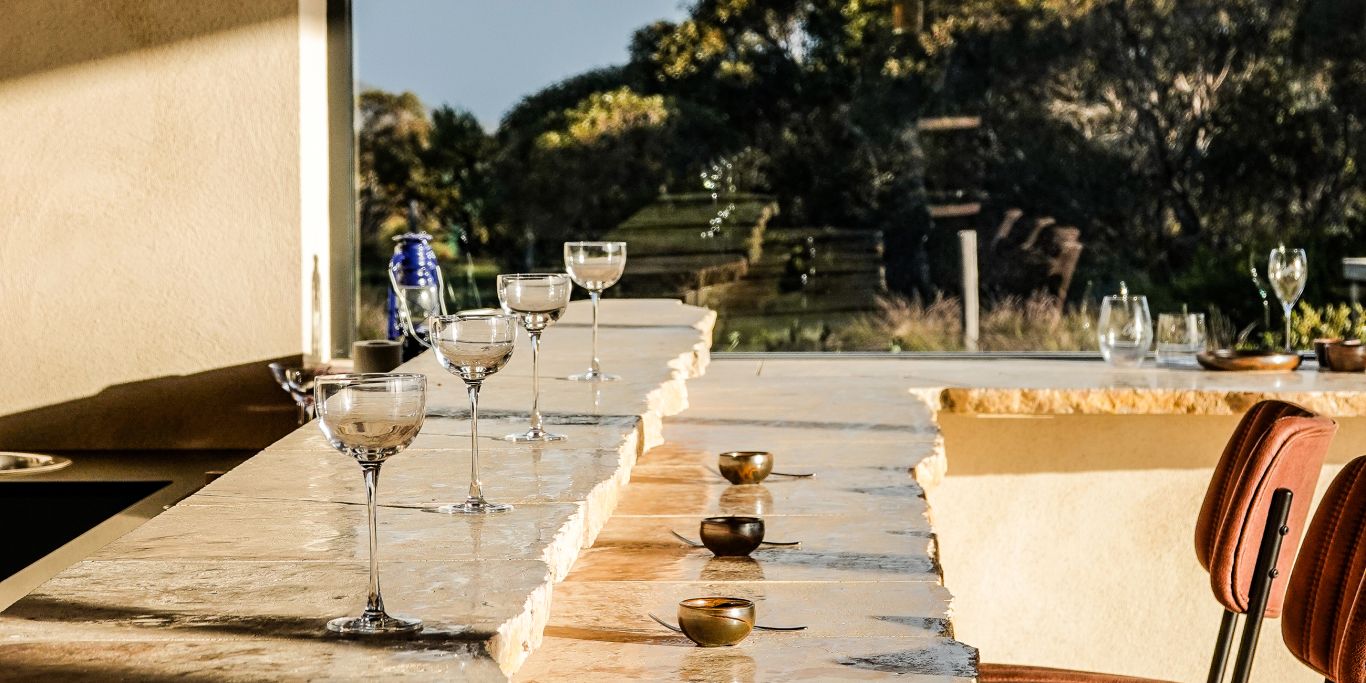
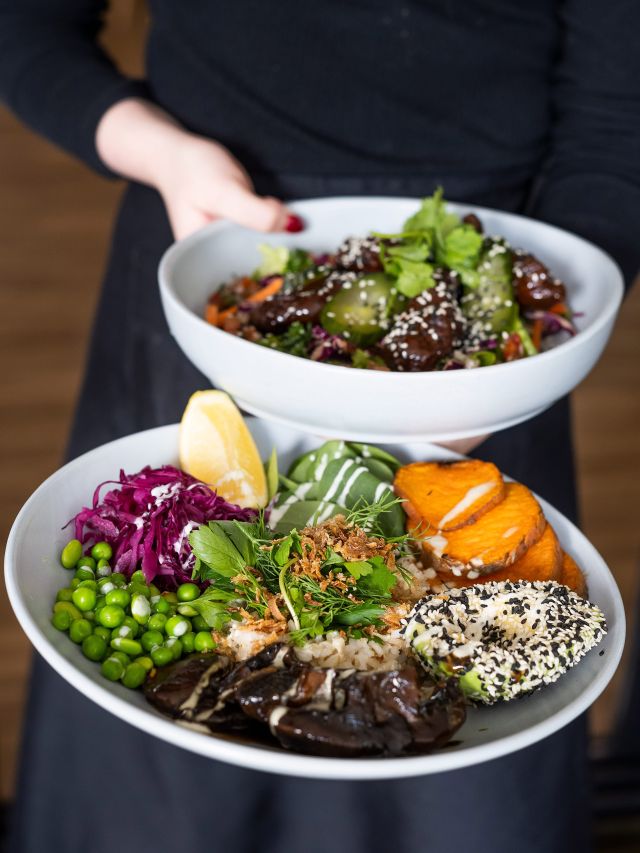
An exclusive tasting session includes fresh seafood paired with Coffin Bay cocktails.
Guests will be led through two tasting sessions. The first introduces your palate to the wild seaweed varieties and botanical plant species used to infuse the spirits, the second pairs a flight of specialty gin-based cocktails with local delicacies made from the same ingredients.
The three-hour tour, priced at $170 per adult, also includes transportation to and from Coffin Bay’s town centre. But watch this space. Ben and Caro Deslandes continue to work hard behind the scenes, with more exciting developments expected in the months ahead. We’ll cheers to that.
Coffin Bay Spirits is stocked widely across South Australia, or can be purchased directly online.
Taylah Darnell is Australian Traveller's Writer & Producer. She has been passionate about writing since she learnt to read, spending many hours either lost in the pages of books or attempting to write her own. This life-long love of words inspired her to study a Bachelor of Communication majoring in Creative Writing at the University of Technology Sydney, where she completed two editorial internships. She began her full-time career in publishing at Ocean Media before scoring her dream job with Australian Traveller. Now as Writer & Producer, Taylah passionately works across both digital platforms and print titles. When she's not wielding a red pen over magazine proofs, you can find Taylah among the aisles of a second-hand bookshop, following a good nature trail or cheering on her EPL team at 3am. While she's keen to visit places like Norway and New Zealand, her favourite place to explore will forever be her homeland.
More than just a stopover, Albury Wodonga is an elevated city escape immersed in nature.
Perhaps best known as a road trip stop between Sydney and Melbourne, Albury Wodonga offers a combination of natural beauty, cultural experiences and a vibrant food scene that make it well worth its own journey.
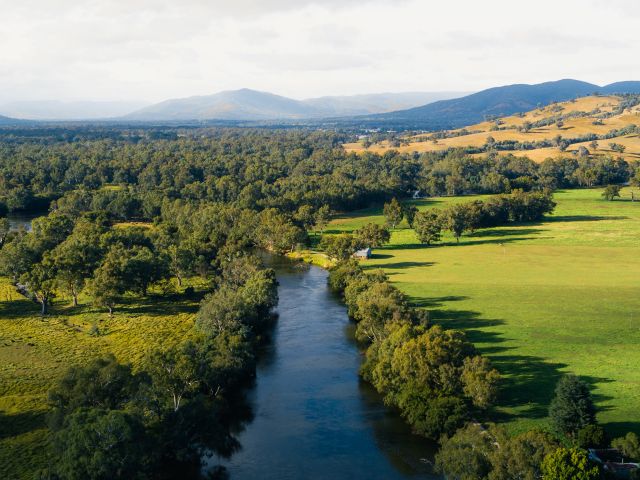
Nestled on the banks of the mighty Murray River and surrounded by famed wine and gold rush regions, this riverside town packs a broad punch. Discover how best to spend your days on the border.
Exploring the Murray River
1. The Crossing Place Trail
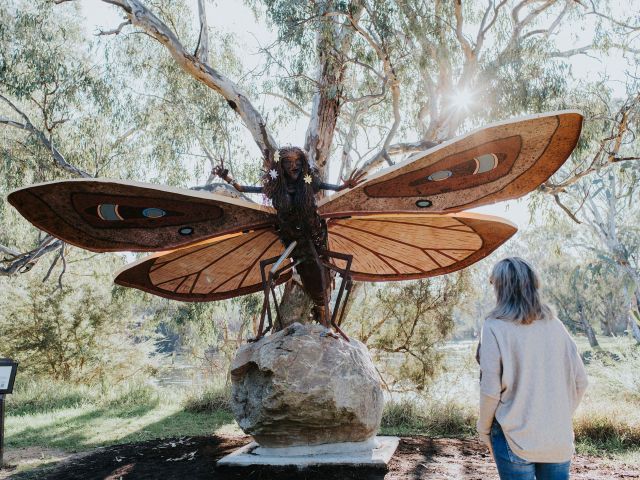
Admire sculptural works from local Indigenous artists.
Head to the original crossing places of the Murray River since 1848 – at the junctions of Bungambrawatha Creek and Oddies Creek. Today, these crossings are still used by cars and cattle, but the five-kilometre Crossing Place Trail loop connects the two bridges for bike riders and walkers.
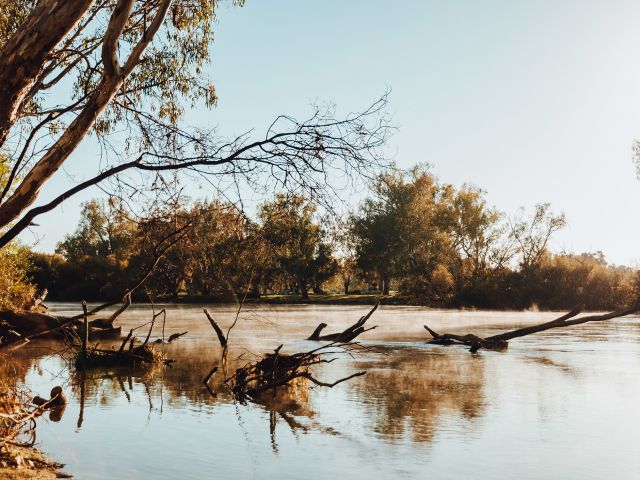
Wander through gum trees, and maybe even spot local platypus and birdlife. Stop along the way to admire sculptural works from local Indigenous artists, see evidence of a scar tree and learn about the importance of this billabong environment to Aboriginal and Torres Strait Islander peoples.
2. Canoe The Murray
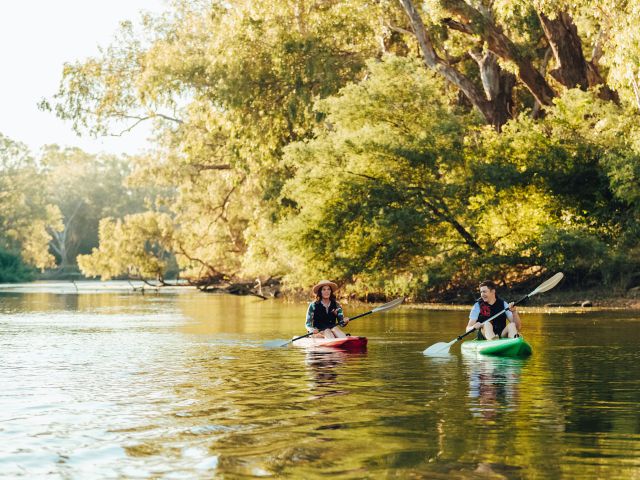
Hire canoes or kayaks and get out on the river.
What better way to get a feel for the Murray River than by getting out on its waters? Hire canoes or kayaks from Canoe the Murray , then explore solo or join one of the offered tours. Get up early for a Sunrise and coffee tour, watch the sun dip below the water on a sunset tour or choose one of several daytime trips.
Stand-up paddleboard hire and other water sports, fishing and swimming are also available to river explorers.
3. Noreuil Park Foreshore
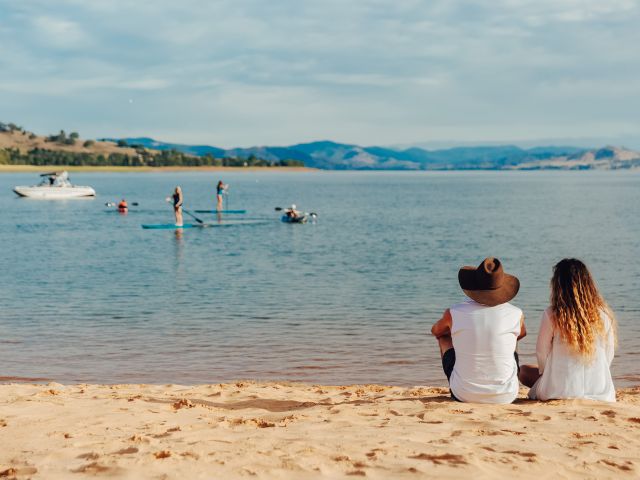
Cool off at Noreuil Park Foreshore. (Image: Visit Victoria)
Just outside Albury’s CBD, the riverside Noreuil Park becomes a hub of activity as the weather heats up. Set up on picnic tables under shady trees, use the public barbecues (or pop into the nearby cafe) and cool off with a float down the river.
4. Mungabareena Reserve and Water Works
Spend time at Mungabareena Reserve. (Image: Visit Albury Wodonga)
Delve into nature and culture at the beautiful Mungabareena Reserve . Recognised by state law as a ‘Declared Aboriginal Place’, it was once a historical meeting point for trade and journeys to Mount Bogong for the local Wiradjuri people and still holds deep significance.
It’s another popular spot for fishing, swimming and picnics, while the nearby Water Works area is a great place for spotting wildlife. Try your luck seeing platypuses, wood ducks or rainbow bee-eaters.
Adventuring on Lake Hume
1. Walk the dam wall
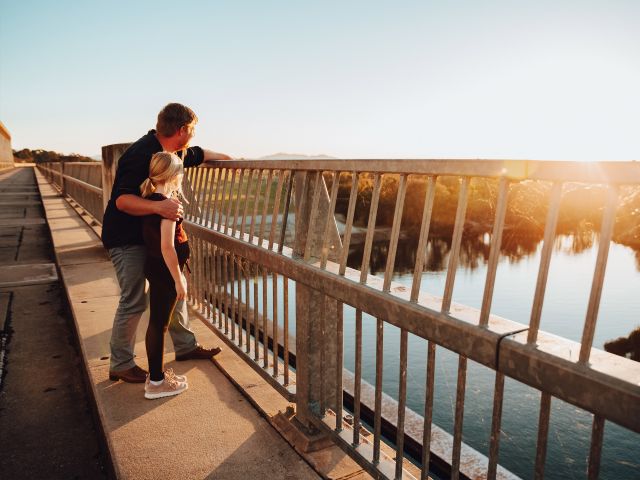
Enjoy the view from the dam wall. (Image: Visit Albury Wodonga)
The majestic Lake Hume – a massive man-made reservoir on the Murray River – was once the largest dam in the Southern Hemisphere.
A great way to get acquainted is by walking along the dam wall, taking in views of outflows, electricity turbines and the transmission plant from above. Not to mention vistas of the lake and the Murray. It’s a particularly gorgeous spot for sunsets and sunrises.
A wide sealed walkway gives easy access to the wall, and informative signs and displays along the way educate on the dam’s construction.
2. The High Country Rail Trail
This 44-kilometre trail hugs the shoreline. Stop along the way at the historic town of Tallangatta, relocated to its current position in the 1950s after its original location was flooded. Cross the lake over the bright red Sandy Creek Bridge. Enjoy a lakeside picnic or go for a swim at Ebden, Ludlow’s or Huon Reserve.
3. Water sports
Dive into water sports on Lake Hume.
Lake Hume is a popular local spot for boating, fishing, and swimming. Drop a line or dive right into the clear waters.
Sip and Savour
1. Dux Albury
Sit down to delicious meals and wine at Dux.
Those looking for a high-end dining experience need to book a table at Dux Albury in the heart of Albury Wodonga. Sit down for curated wine lists, cocktails and share plates. Think starters like burrata with beetroot, chervil, caper berry and sherry, mains like Wagyu sirloin with Café De Paris, red wine and caramelised onions and all manner of fresh seafood.
2. Murray Towns Brewing Co.
Recharge at Murray Brewing Co.
Perched on the banks of the river, Murray Towns Brewing Co . has come a long way since two mates started experimenting in their backyard chook shed. With all beer brewed onsite and a sun-drenched beer garden to drink them in, it’s a perfect stop along a bike ride or walk.
3. Temperance and General
Step into Albury’s original laneway bar, Temperance and General . Set inside a historic building, but offering a modern vibe, the bar is locally famous for its cocktail list. Stop in before or after dinner for a creative tipple.
4. BeanStation Cafe
Dine on a modern Australian menu.
Dine on a modern Australian menu , inside the historic Wodonga train station building, dating back to 1873. Pop over in the morning and line up with the locals for great coffee and all-day brekkie, or head over after midday to swap the beans for local wines and Aussie boutique beers.
5. River Deck Cafe
Soak in views and good food at Riverdeck Cafe. (Image: Visit Victoria)
Another dining destination next to the Murray, the award-winning River Deck Cafe provides a large deck covered in dappled sunlight that makes for the ideal long lunch spot. Here, menus focus on natural, native and local ingredients sourced from regional farmers and producers across Albury Wodonga and surrounds.
Museums, murals and more
1. Albury Wodonga Public Art Trail
Gain a sense of Albury Wodonga’s vibrant arts community while wandering the Public Art Trail. Works range from sculptures and murals to wrapped infrastructure. Be sure to check the council map before you head out, so you don’t miss a thing.
2. Murray Art Museum Albury (MAMA)
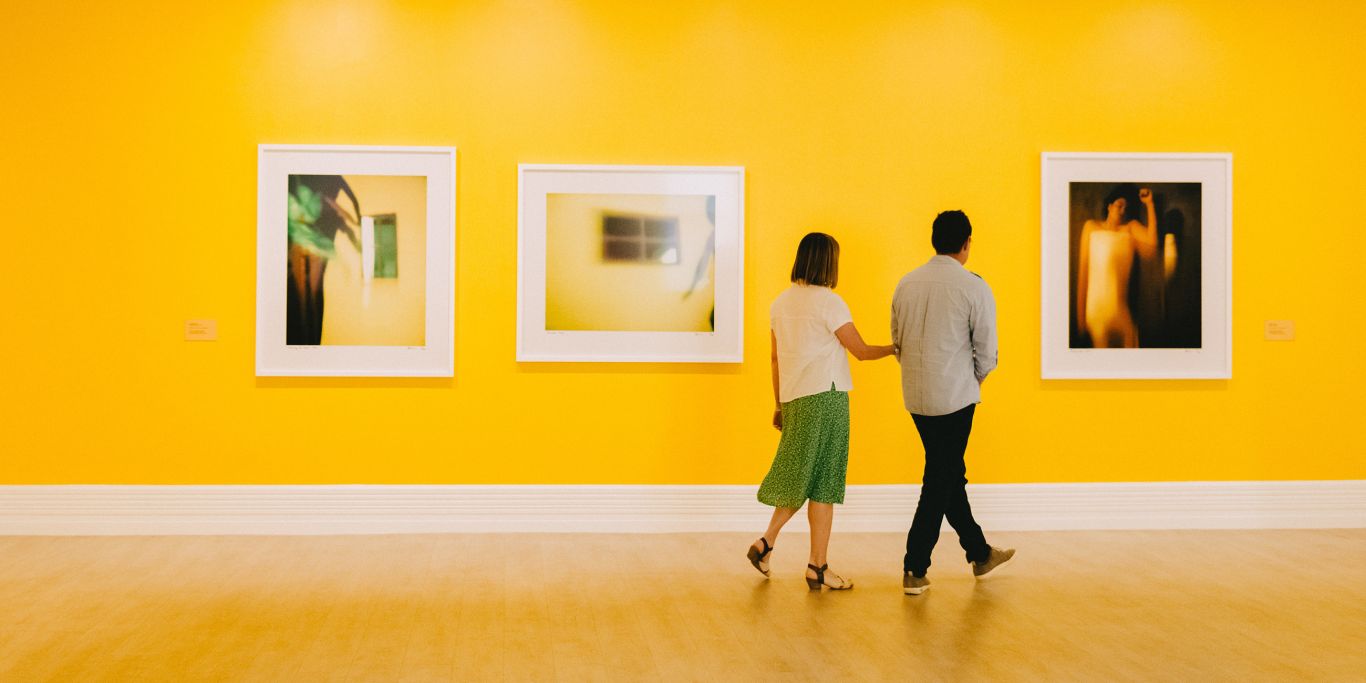
Stop into one of the most visited galleries outside of Sydney. (Image: Visit Albury Wodonga)
MAMA forms the heart of art and culture in Albury Wodonga, some may say the entire Murray region. In fact, it’s one of the most visited galleries outside of Sydney. What makes it so lauded? The museum has earned a reputation for curating innovative, original exhibitions from some of the best contemporary Australian and international artists.
3. HotHouse Theatre
Originally built in 1928 as the Butter Factory Theatre, HotHouse Theatre has been a home of performance since 1997. Stop by to see the best of new Australian theatre. Continue to explore unique architecture on the Historic Building Walking Tour of Albury, the perfect way to round out your stay.