Hike the Kangaroo Island Wilderness Trail

hero media
The Kangaroo Island Wilderness Trail, which winds through Flinders Chase National Park, was razed by the Black Summer bushfires. Two years later, it is reopen for a unique experience that encourages walkers to help in its recovery and see for themselves the resilience of nature and resolute beauty of this special part of South Australia.

High above me, the ghostly white limbs of sugar gums stand out starkly against a pale blue sky. Each one is attached to a slender trunk shrouded in tufts of greenery that threaten to hide it completely while at ground level spiky acacia, bracken and vivid pink bottlebrush close in around me so densely that I sometimes need to push them aside to find the path ahead. Some walking trails deviate to avoid fallen trees, but as I forge ahead I find myself regularly detouring around trees that are growing too quickly. It would appear the reports of Kangaroo Island’s demise have been greatly exaggerated.
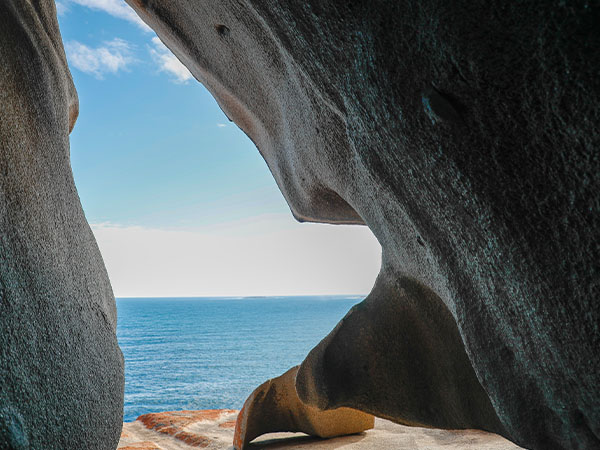
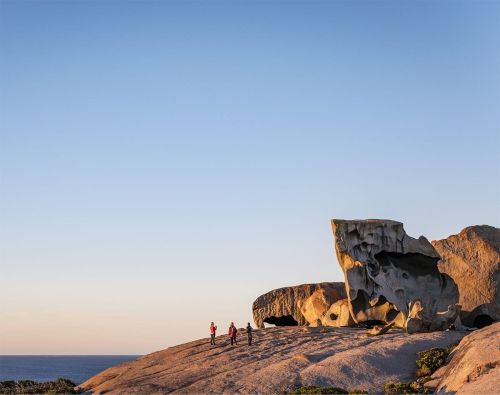
Remarkable Rocks Kangaroo Island
The sculptural forms of Remarkable Rocks can be seen on the Kangaroo Island Wilderness Trail.

Where the sunlight breaks through this thick growth, delicate orchids have sprouted up and in places the path is flanked by a mosaic of white, yellow and purple wildflowers. Slender rosellas flash past in a blur of crimson and royal blue, pigeons burst from the undergrowth with a panicked flurry of wings and, when I enter a clearing, a chestnut-black pardalote that looks as if it’s had white paint spilled on its back watches me carefully from a branch before fluttering off. Echidnas pay no heed to the trail and scratch for food and shelter wherever they please, leaving me with the distinct impression that humans are very much an afterthought.

Landscape regeneration

Even when the vegetation opens up a bit, the path twists and turns so regularly that I can never see more than 20 metres ahead. The locals are equally oblivious to their surroundings and when I round a corner to see a large goanna sunning itself in the middle of the path, it seems shocked that I’ve intruded upon its world. I admire its handsome yellow-and- black-banded tail and pixelated calico throat for a few seconds before it comes to its senses and scrambles frantically into the bush.
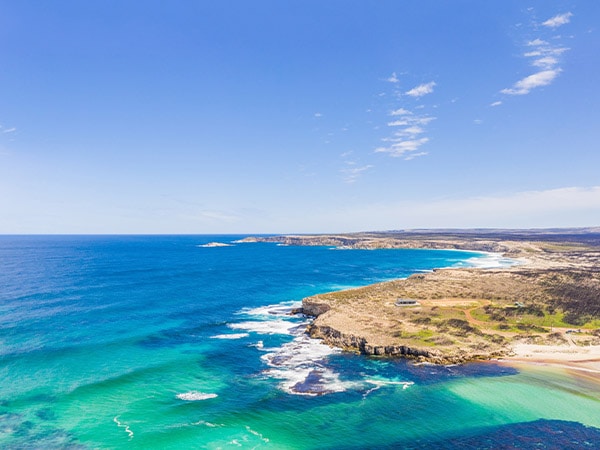
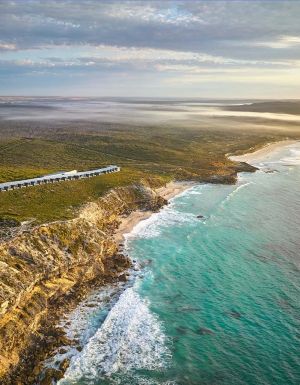
Kangaroo Island dramatic coastline
KIWT traverses the stretch of dramatic coastline.

I’m walking the Kangaroo Island Wilderness Trail’s Fire Recovery Experience and, everywhere I look, new growth is reclaiming this landscape. Even when evidence of the devastating fires of January 2020 appears, it simply serves to highlight the region’s natural resilience. Leafless mallee trunks point skyward like worshippers frozen in place mid-prayer, but a profusion of new growth sprouts from the base of each plant, providing vital shelter for smaller animals and food for larger ones.


So intense is the regrowth that in places it threatens to overwhelm the path completely; rangers have to maintain it regularly and my very presence here is aiding their cause. Alison Buck is the manager of the Kangaroo Island Wilderness Trail (KIWT) and when I meet up with her she tells me that simply by walking the trail, which reopened in March 2021, I’m helping to stop new shoots from growing on the path and making sure it can be followed by future walkers.
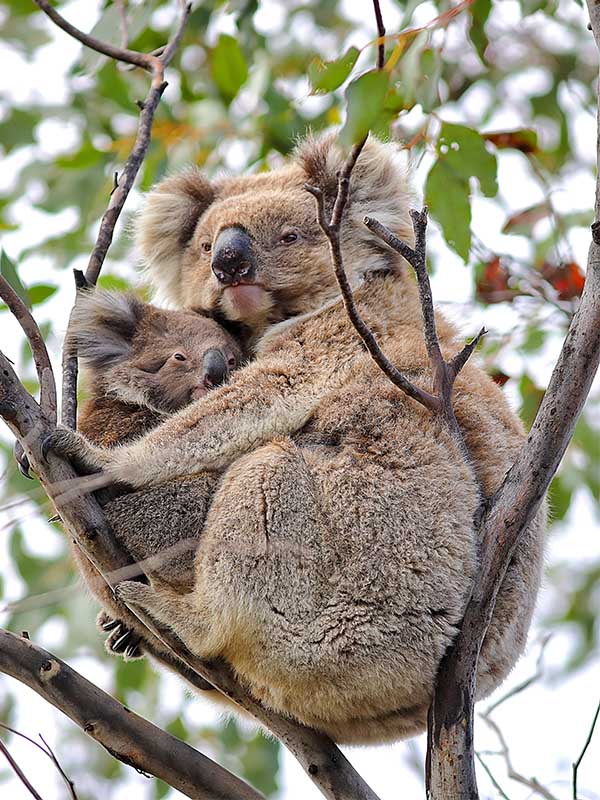
Koalas kangaroo island
Spot koalas in the crook of a branch.

Buck has spent the past two decades working in Flinders Chase, the national park that dominates Kangaroo Island’s western end and through which the trail largely passes, and knows it as well as anybody. So I’m surprised when she tells me that she’s seen a host of new plants sprout up in the last two years. “You can see the path changing on a weekly basis at the moment," she says before pausing to casually point out a grey fantail that’s stalking us through the trees. “Last year, there were masses of snake orchids here, whereas the spider orchids have emerged in big patches this year," she continues, adding that some fire-adapted plants have flowered for the first time in living memory and, at the moment, the trail passes “all kinds of things that you wouldn’t normally see."

Need tips, more detail or itinerary ideas tailored to you? Ask AT.

AI Prompt

The hike

The five-day hike can only be tackled in one direction and, with 12 permits issued a day, there’s little chance of being trapped in a crowd. In fact, I don’t see another walker the entire time I’m on the trail and, despite never being more than a few kilometres from a road, it feels as if I’ve left civilisation behind for long stretches.
Because much of the park’s infrastructure burned in the fires, camping on the trail isn’t permitted at the moment and the nearest place to stay is Western KI Caravan Park and Wildlife Reserve. Fortunately it’s located just minutes from the park entrance and provides transfers to and from each trailhead. That means a cold drink and a hot shower beckon after each day out on the trail and it’s easy to spot fellow walkers enjoying the same simple pleasures.
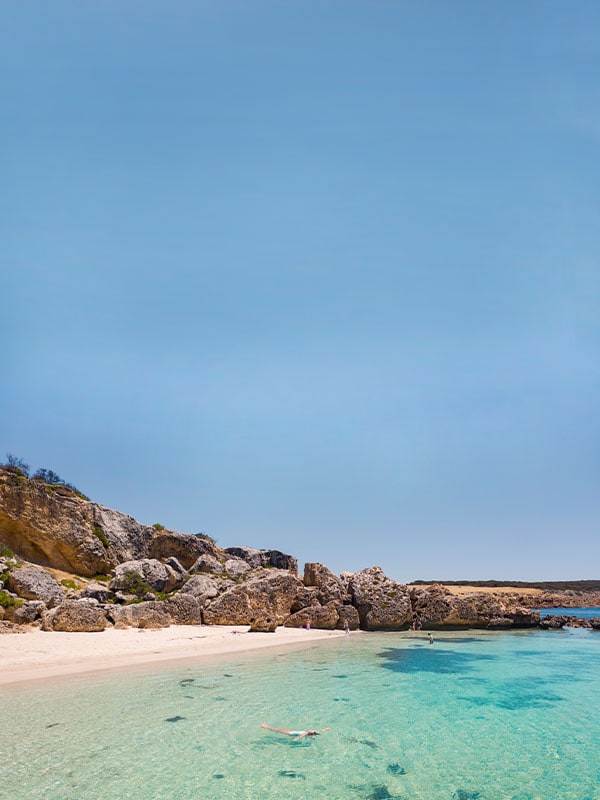
Hidden Stokes Bay
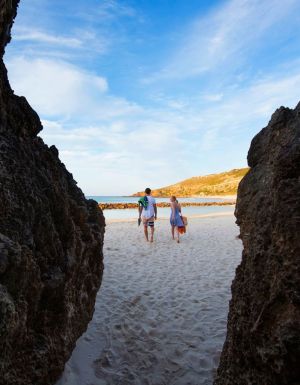
Hidden Stokes Bay is a scenic spot for a dip.

It’s here that I meet laid-back Kiwi couple Ian and Jenna, who have relished the trail’s sense of isolation. “It’s just so peaceful, you feel like you have the whole place to yourself," Jenna says from the back of the campervan that’s been their home for the last five months. “And the strange thing is, it doesn’t really feel like a fire walk – some of the trees are burned but wherever I see that there are three new trees growing in their place."


Owner Mark Jago jokes that the incredibly thick regrowth at the caravan park, set on 17 hectares of bush and grassland, means that “people see more wildlife here than in the national park". As if to prove his point, I walk past a couple staring upwards a few metres from the campervan and follow their gaze to see a plump koala holding its baby in the crook of a branch. Even after the fires there are twice as many koalas as humans here and the island’s namesake marsupials are more numerous again. Minutes later, I spot one with a joey that stares at me for an instant before plunging headlong through a dense wall of fresh green shoots that closes behind it like a curtain.
I first walked the KIWT not long after it opened in 2016, and one of the things that struck me was the sheer variety of ecosystems it passed through over five days. That’s something the team of rangers has worked hard to preserve and, despite a few detours, the Fire Recovery Trail is the same length (63 kilometres) and follows largely the same route as the original walk.
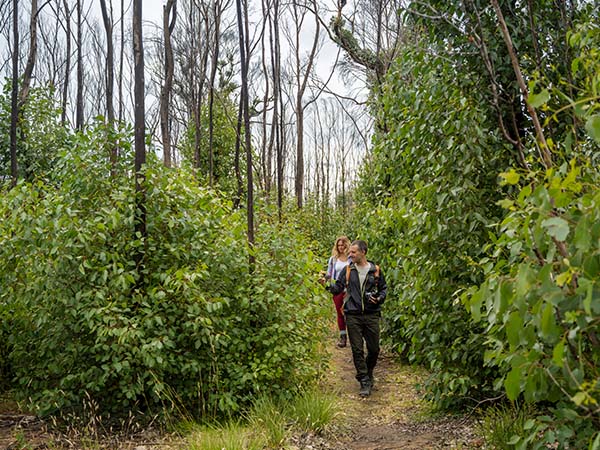
Fire Recovery Experience Kangaroo Island
Walking the Fire Recovery Experience – photographed here in December 2020 and evolving constantly.

The first day passes through thick forest and open scrub, up ancient dunes and along a tannin-stained creek where dragonflies buzz above bubbling cascades. There are stretches where the vegetation is so dense I can’t see more than a few metres, but by day two I feel as if I’m walking on the edge of the world. This section traverses weather-beaten limestone cliffs that stand sentinel above the endless expanse of the Southern Ocean before descending to a long beach that begs walkers to plant the first set of footsteps in its sand.
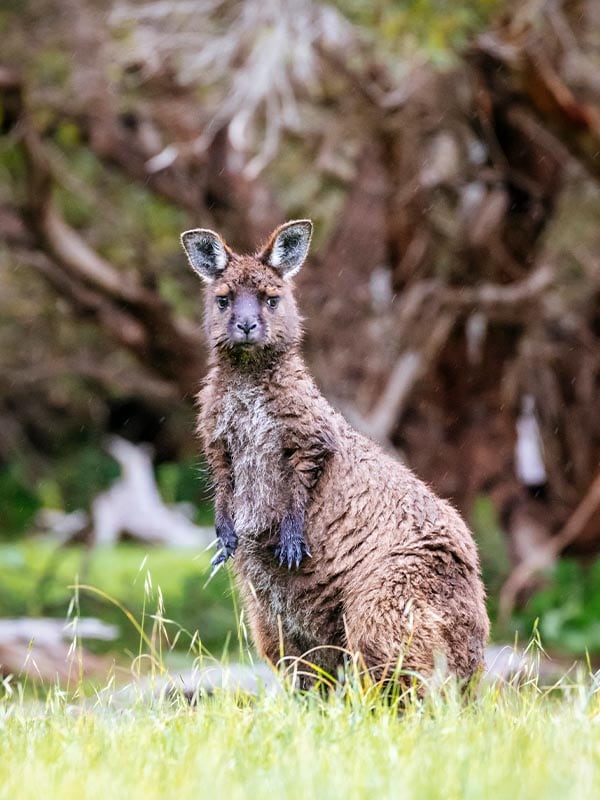
Kangaroos on Kangaroo Island
The island’s namesake kangaroos are bouncing back.

Off-the-beaten-track

Day three adds the wind-eroded formations of Remarkable Rocks to the mix, the red-tinged natural sculptures looking more like a surrealist exhibition than ever as they take on new forms when viewed from different angles. This is the same stretch of coastline that was home to the Southern Ocean Lodge, and it’s every bit as dramatic as its promotional material suggests. Almost two years after the island’s most iconic accommodation was destroyed, the jaw-droppingly beautiful clifftop location has been cleared and hundreds of trees planted in preparation for the rebuild of this ultra-luxurious getaway.
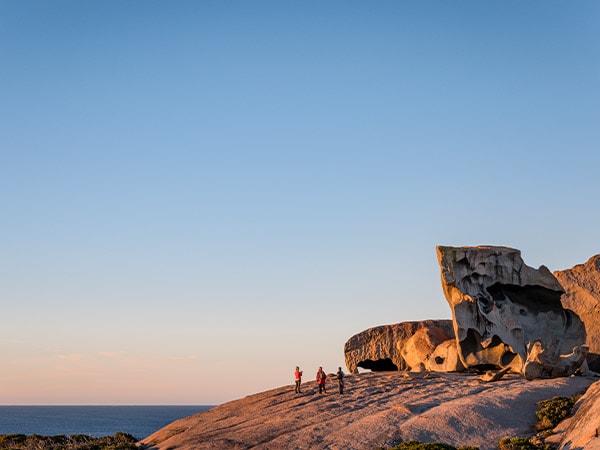
Kangaroo Island’s iconic Remarkable Rocks.
The KIWT affords new perspectives on Kangaroo Island’s iconic Remarkable Rocks.

Closer at hand, I’m struggling to keep my eyes on the rocky limestone path because, just metres away, sheer slopes plunge down to jumbles of lichen-covered boulders in inaccessible coves that turn from moody blue to dazzling turquoise when the sun flashes on them. In the distance, jagged peninsulas jut into the ocean and whitewater foams around offshore rocks as a salt-laden sea breeze whips my hair in every direction.


Then the trail turns inland and everything changes abruptly. Within minutes I’ve sunk into a swale between sand dunes and the atmosphere is eerily still. As I continue, the surrounding vegetation slowly grows from stunted bushes to gangly trees and it feels as if I’m walking in a tunnel when they close together overhead. Suddenly, kangaroos are crashing through the bush on all sides and it’s a slight shock to emerge into a clearing where a car is waiting for me.
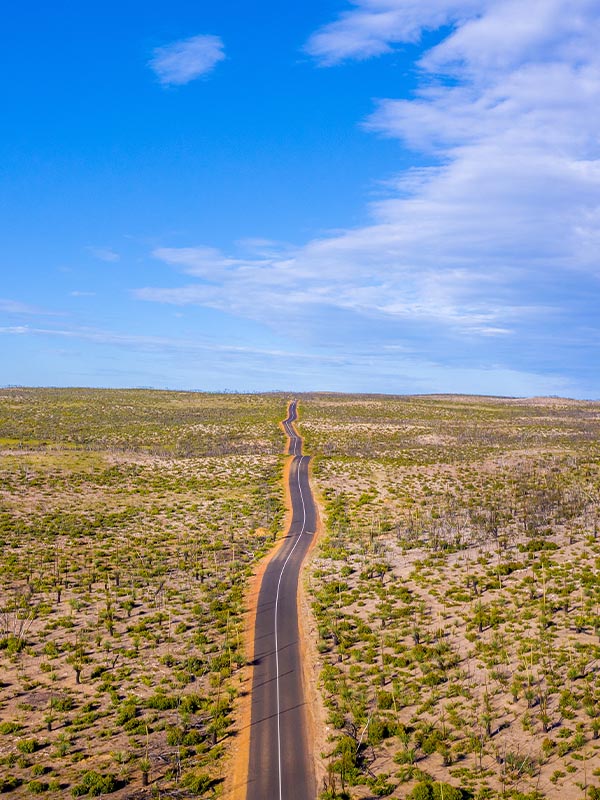
Flinders Chase National Park
The road that snakes through Flinders Chase National Park captured in 2021 – the landscape is changing every month.

Along with the promise of a comfortable bed at the end of each day, one advantage of experiencing the trail as a series of day walks is the chance to see sections of the park that the hike doesn’t cover and I watch from the front seat as the winding ribbons of tarmac fringed with brightly coloured wildflowers unspool invitingly ahead, each gentle slope providing a new reveal. But speeding through the park in silence also reminds me of what I’m missing; the tinkling call of rosellas, the ceaseless roar of the ocean and the deep, twanging call of banjo frogs hiding in the reeds. It makes me impatient for the next day, to see what other revelations await on this trail that continuously defies expectations.

Weekly travel news, experiences
insider tips, offers, and more.

A traveller’s checklist

Getting there

Qantas and Rex both fly into Kingscote, Kangaroo Island’s largest town, which is 100 kilometres from Flinders Chase National Park. SeaLink also operates car and passenger ferries from Cape Jervis (100 kilometres south of Adelaide) to Penneshaw on the island’s eastern tip. These get busy at peak times so it’s worth booking in advance, especially during school holidays.

Playing there

The Kangaroo Island Wilderness Trail Fire Recovery Experience covers 63 kilometres over five days and requires a moderate level of fitness. Campsites on the trail are expected to open in spring 2022. Until then Western KI Caravan Park & Wildlife Reserve is the closest accommodation and provides transfers to and from each trailhead as part of its Wilderness Trail packages. A number of operators also offer guided tours – more information can be found here. 

Alexis Buxton-Collins
Alexis Buxton-Collins spent his twenties working as a music journalist and beer taster before somehow landing an even dreamier job as a freelance travel writer. Now he travels the world from his base in Adelaide and contributes to publications including Qantas, Escape, The Guardian and Lonely Planet. Alexis has never seen a hill he didn't want to climb and specialises in outdoor adventures (he won the 2022 ASTW award for best nature/wildlife story for a feature on Kangaroo Island). When he's not scouring South Australia for the newest wineries and hikes, he's looking for excuses to get back to spots like Karijini and Ningaloo.
View profile and articles
hero media

Inside Geelong’s glow-up from factory town to creative capital

    Chloe Cann Chloe Cann
    Abandoned mills and forgotten paper plants are finding second lives – and helping redefine a city long underestimated. 

    Just 15 years ago, Federal Mills was a very different place. Once among the most significant industrial sites in Victoria, the historic woollen mill was one of a dozen that operated in Geelong at the industry’s peak in the mid-20th century, helping the city earn its title as ‘wool centre of the world’. But by the 1960s global competition and the rise of synthetic fabrics led to the slow decline of the industry, and Federal Mills finally shuttered its doors in 2001. Within a few years, the abandoned North Geelong grounds had become makeshift pastoral land, with cows and goats grazing among the overgrown grass between the empty red-brick warehouses. It was a forgotten pocket of the city, all but two klicks from the bustle of the CBD.  

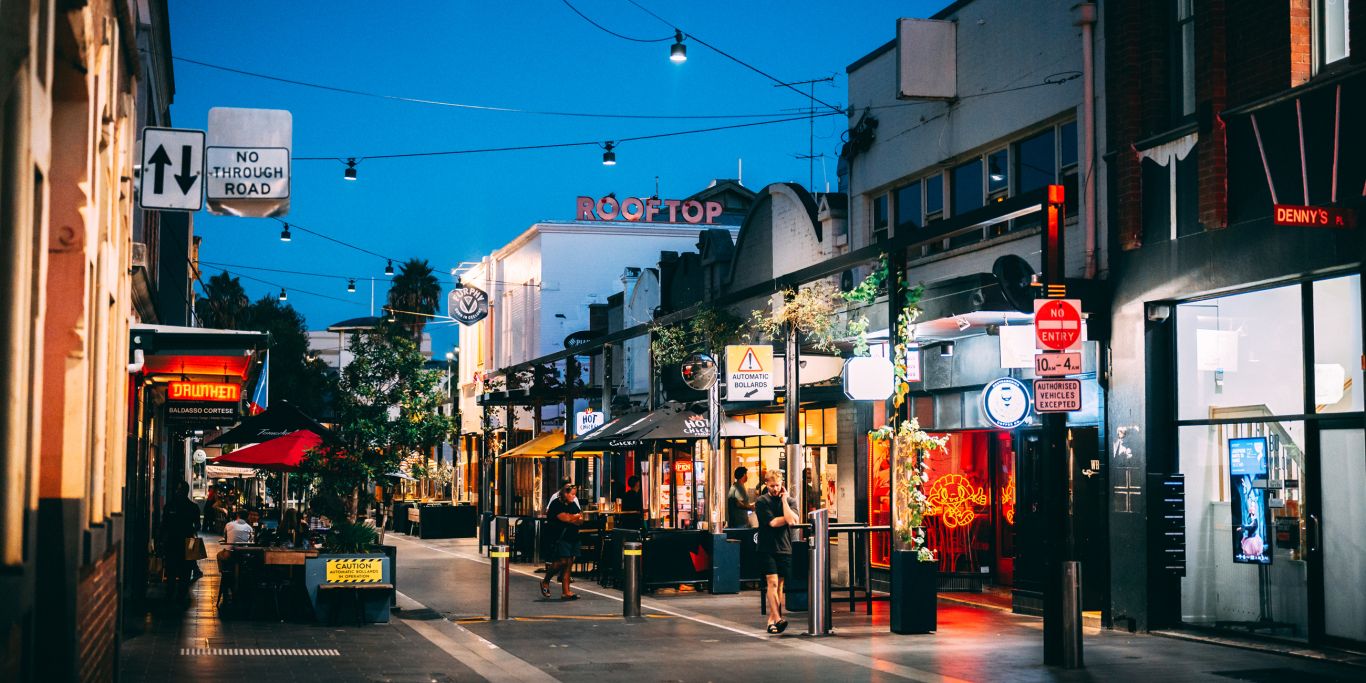
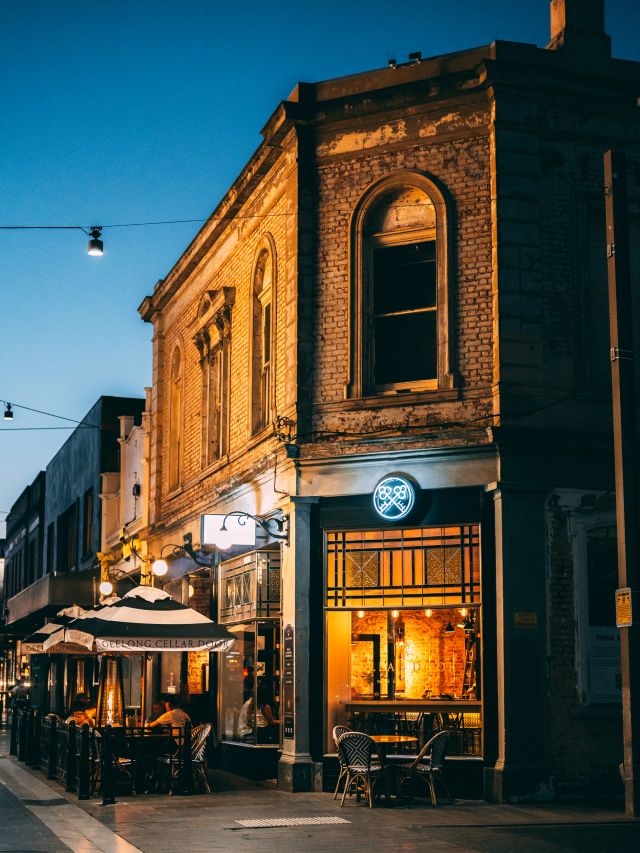
    Geelong cellar door wine bar
    Geelong has shed its industrial identity to become an innovative urban hub with reimagined heritage spaces. (Image: Ash Hughes)

    Federal Mills: from forgotten factory to creative precinct 

    Today, the century-old complex stands reborn. The distinctive sawtooth-roof buildings have been sensitively restored. An old silo is splashed with a bright floral mural, landscapers have transformed the grounds, and the precinct is once again alive with activity. More than 1000 people work across 50-plus businesses here. It’s so busy, in fact, that on a sunny Thursday morning in the thick of winter, it’s hard to find a car park. The high ceilings, open-plan design, and large multi-paned windows – revolutionary features for factories of their time – have again become a drawcard.  

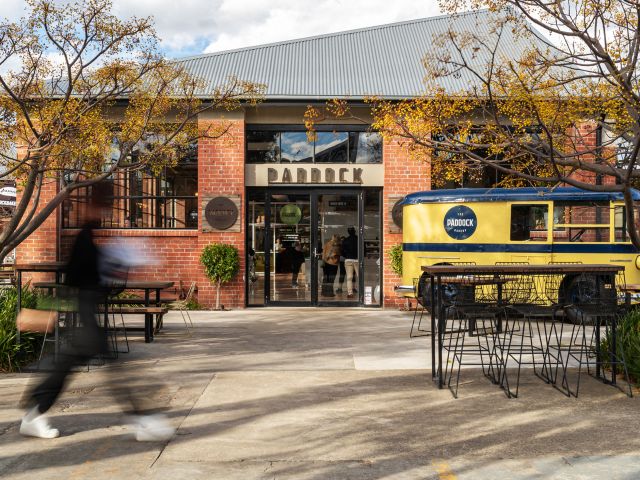
    Paddock Bakery andPatisserie
    Paddock Bakery and Patisserie is housed within the historic wool factory. (Image: Gallant Lee)

    At Paddock , one of the precinct’s newer tenants, weaving looms and dye vats have been replaced by a wood-fired brick oven and heavy-duty mixers. Open since April 2024, the bakery looks right at home here; the building’s industrial shell is softened by ivy climbing its steel frames, and sunlight streams through the tall windows. Outside, among the white cedar trees, families at picnic benches linger over dippy eggs and bagels, while white-collar workers pass in and out, single-origin coffee and crème brûlée doughnuts in hand. 

    Geelong: Australia’s only UNESCO City of Design 

    Paddock Bakery
    Paddock Bakery can be found at Federal Mills. (Image: Gallant Lee)

    “A lot of people are now seeing the merit of investing in Geelong,” says Paul Traynor, the head of Hamilton Hospitality Group, which redeveloped Federal Mills. A city once shunned as Sleepy Hollow, and spurned for its industrial, working-class roots and ‘rust belt’ image, Geelong has long since reclaimed its ‘Pivot City’ title, having reinvented itself as an affordable, lifestyle-driven satellite city, and a post-COVID migration hotspot.  

    And the numbers stand testament to the change. In March 2025, and for the first time in its history, Greater Geelong became Australia’s most popular regional town for internal migration, overtaking Queensland’s Sunshine Coast. Current forecasts suggest Geelong will continue to outpace many other Australian cities and towns, with jobs growing at double the rate of the population.

    Tourism is booming, too. The 2023-24 financial year was Geelong and The Bellarine region’s busiest on record, with 6.4 million visitors making it one of the fastest-growing destinations in the country. It’s not hard to see why: beyond the city’s prime positioning at the doorstep of the Great Ocean Road, Geelong’s tenacity and cultural ambition stands out.  

    As Australia’s only UNESCO City of Design, Geelong is swiftly shaking off its industrial past to become a model for urban renewal, innovation, sustainability and creative communities. The signs are everywhere, from the revitalisation of the city’s waterfront, and the landmark design of the Geelong Library and Heritage Centre and Geelong Arts Centre, to the growing network of local designers, architects and artists, and the burgeoning roster of festivals and events. That’s not even mentioning the adaptive reuse of storied old industrial buildings – from Federal Mills, to Little Creatures’ brewery ‘village’ housed within a 1920s textile mill – or the city’s flourishing food and wine scene.  

    The rise of a food and wine destination  

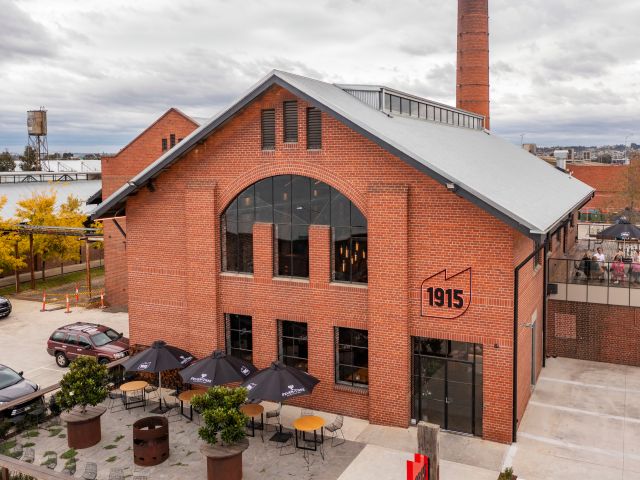
    boiler house
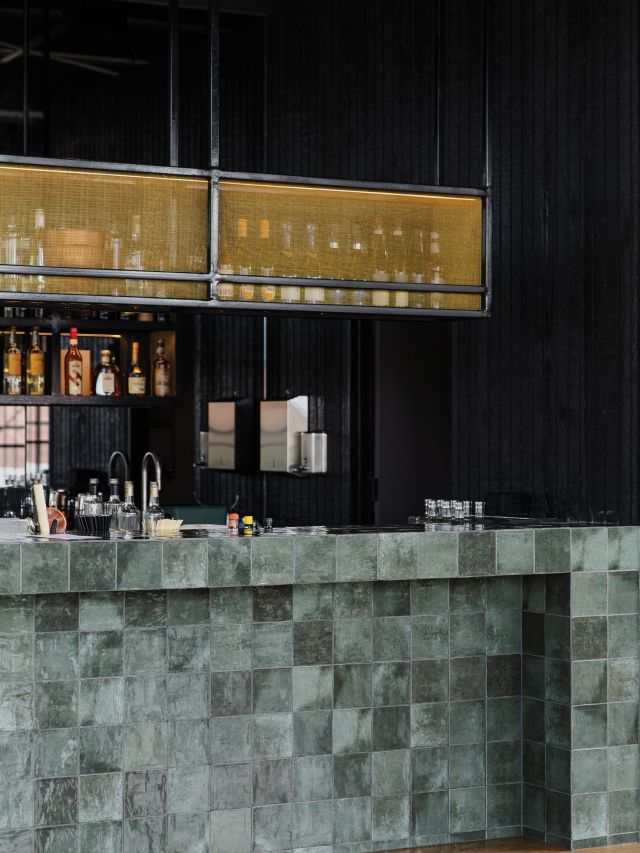
    Restaurant 1915 is housed within a restored former boiler house. (Image: Harry Pope/Two Palms)

    Traynor credits now-closed local restaurant Igni, which opened in 2016, as the turning point for Geelong’s hospo industry. “[Aaron Turner, Igni’s chef-patron] was probably the first guy, with all due respect, to raise the bar food-wise for Geelong,” he says. “People now treat it really seriously, and there’s clearly a market for it.” While Igni is gone, Turner now helms a string of other notable Geelong venues, including The Hot Chicken Project and Tacos y Liquor, all within the buzzy, street art-speckled laneways of the CBD’s Little Malop Street Precinct. Many others have also popped up in Igni’s wake, including Federal Mills’ own restaurant, 1915 Housed within the cavernous boiler house, 1915’s interior is dramatic: soaring, vaulted ceilings with timber beams, exposed brick, a huge arched window. The share plates echo the space’s bold character, playing with contrast and texture, with dishes such as a compressed watermelon tataki, the sweet, juicy squares tempered by salty strands of fried leeks, and charred, smoky snow peas dusted with saganaki on a nutty bed of romesco. 

    Woolstore
    The Woolstore is a new restaurant and bar housed within a century-old warehouse. (Image: Amy Carlon)

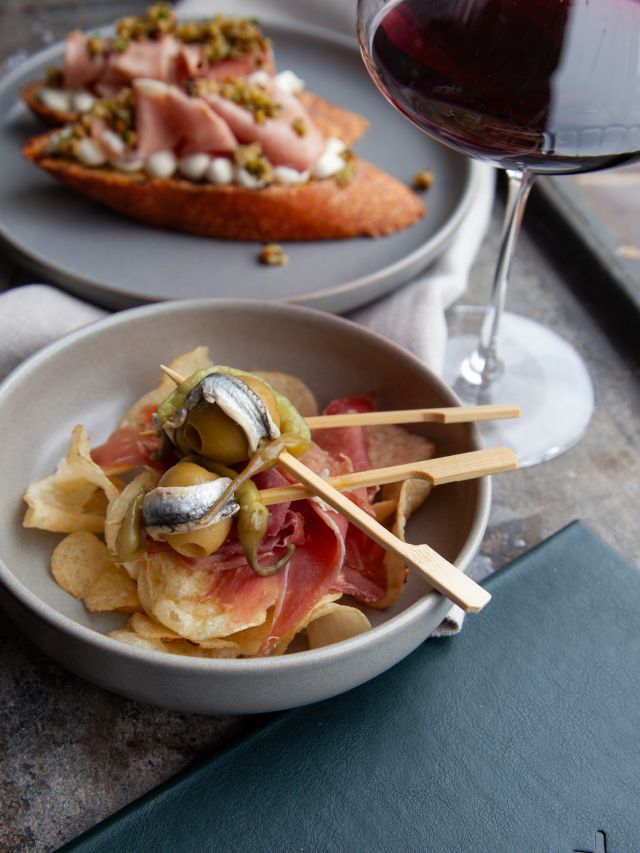
     The Woolstore , one of The Hamilton Group’s most recent hospo projects, opened in February. It occupies a century-old riverside warehouse and exudes a more sultry, fine dining ambience. Much like Federal Mills, the blueprint was to preserve the original brickwork, tallowwood flooring and nods to the building’s former life. That same careful consideration extends to the well-versed, affable waitstaff as well as the kitchen. Head chef Eli Grubb is turning out an eclectic mix of ambitious and indulgent mod Oz dishes that deliver: strikingly tender skewers of chicken tsukune, infused with hints of smoke from the parrilla grill, and glazed with a moreish, sweet gochujang ‘jam’; nduja arancini fragrant with hints of aniseed and the earthy lick of sunny saffron aioli; and golden squares of potato pavé, adorned with tiny turrets of crème fraîche, crisp-fried saltbush leaves, and Avruga caviar, to name but a few stand-out dishes.  

    Woolstore menu
    Woolstore’s menu is designed for sharing.

    Breathing new life into historic spaces  

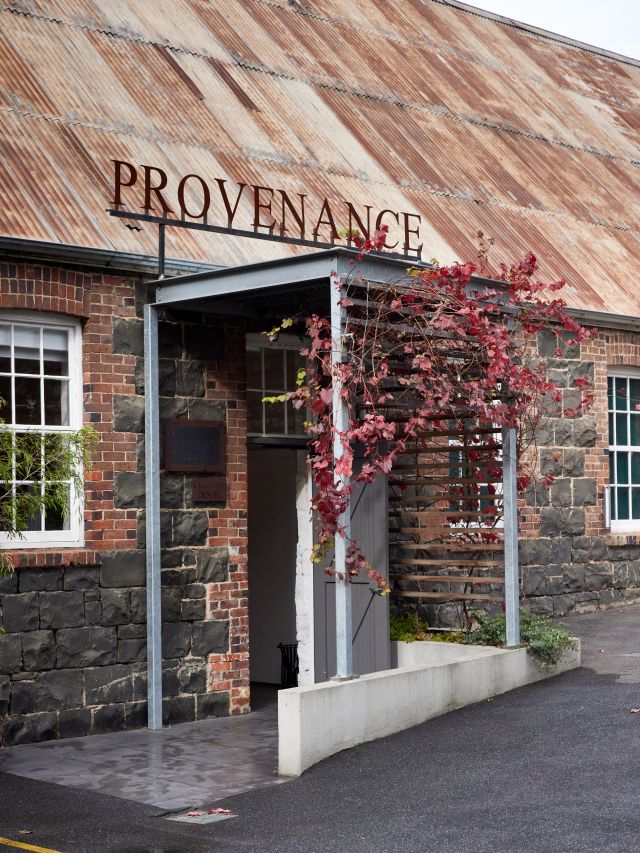
    On the city’s fringe, hidden down a winding side road with little fanfare, lies a long-dormant site that’s being gently revived. Built from locally quarried bluestone and brick, and dating back to the 1870s, the complex of original tin-roofed mill buildings is lush with greenery and backs onto the Barwon River and Buckley Falls; the audible rush of water provides a soothing soundtrack. Fyansford Paper Mill is one of few complexes of its time to survive intact. It feels steeped in history and spellbindingly rustic.  

    “We were looking for an old industrial place that had some charm and romance to it,” explains Sam Vogel, the owner, director and winemaker at Provenance Wines which moved here in 2018. When he first viewed the building with his former co-owner, it was in such a state of disrepair that the tradie tenant occupying the space had built a shed within it to escape the leaking roof and freezing winter temperatures. “To say it was run down would be an understatement,” he notes. “There was ivy growing through the place; the windows were all smashed. It was a classic Grand Designs project.” 

    Provenance Wines
    Provenance Wines moved to Fyansford Paper Mill in 2018. (Image: Cameron Murray Photography)

    The team has since invested more than a million dollars into their new home. Where paper processing machinery once sat, wine barrels are now stacked. Vaulted cathedral ceilings are strung with festoon lights, and hidden in plain sight lies a shadowy mural by local street artist de rigueur Rone – one of only three permanent works by the artist.

    While the award-winning, cool-climate pinot noir, riesling and chardonnay naturally remain a key draw at Provenance, the winery’s restaurant is a destination in itself. Impressed already by whipsmart service, I devour one of the most cleverly curated and faultlessly executed degustations I’ve had in some time. It’s all prepared in a kitchen that is proudly zero-waste, and committed to providing seasonal, ethical and locally sourced meat and produce under head chef Nate McIver. Think free-range venison served rare with a syrupy red wine jus and a half-moon of neon-orange kosho, shokupan with a deeply savoury duck fat jus (a modern Japanese take on bread and drippings), and a golden potato cake adorned with a colourful confetti of dehydrated nasturtiums and tomato powder, and planted atop a sea urchin emulsion.  

    handcrafted pieces
    Bell’s handcrafted functional pieces on display.

    The complex is home to a coterie of independent businesses, including a gallery, a jeweller, and its latest tenant, ceramicist Elizabeth Bell, drawn here by the building’s “soul”. “There’s so much potential for these buildings to have new life breathed into them,” says Bell, whose studio is housed within the old pump room. “Even people in Geelong don’t know we’re here,” she says. “It’s definitely a destination, but I like that. It has a really calming atmosphere.”  

    A Melbourne transplant, Bell now feels at home in Geelong, which offers something Melbourne didn’t. “If this business was in Melbourne I don’t think it would’ve been as successful,” she notes. “It’s very collaborative in Geelong, and I don’t think you get that as much in Melbourne; you’re a bit more in it for yourself. Here it’s about community over competition.”  

    Elizabeth Bell
    Ceramicist Elizabeth Bell has a store in Fyansford Paper Mill.