11 awe-inspiring things to do in Mount Gambier

hero media
Lakes, caves, volcanoes, and sinkholes – Mount Gambier is a little city with a lot to offer.

Despite being the second-most populous city in South Australia, this Limestone Coast destination tends to slip under the radar – a great shame given the natural wonders and cultural attractions it has to offer, many of which are free to visit. Here are some of the top things to do in Mount Gambier. 

1. Blue Lake

Prepare to be floored by Mount Gambier’s Blue Lake. This sizable body of water, situated within a dormant volcanic crater, transforms from an otherwise pedestrian navy blue into a startling milky turquoise between November and March.
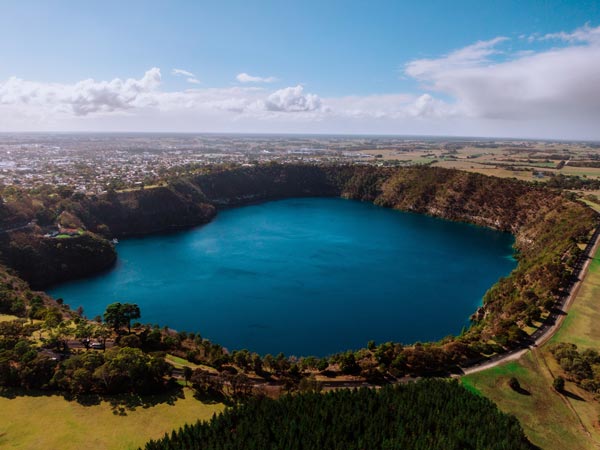
Blue Lake in Mount Gambier South Australia
Visit Mount Gambier’s Blue Lake between November and March to see its transformation. (Image: Jaxon Foale/South Australia Tourism Commission)

While you can’t swim in it, you can walk (or drive) around the lake’s rim, which measures some 3.6 kilometres, taking around 45 minutes to complete on foot. Or visit with Aquifer Tours , which takes visitors in a glass-panelled lift down the original dolomite well shaft, through a tunnel to see the Blue Lake in close proximity. You’ll also hear yarns about local folklore and Aboriginal legend, as well as the lake’s history and European settlement.

2. Little Blue Lake

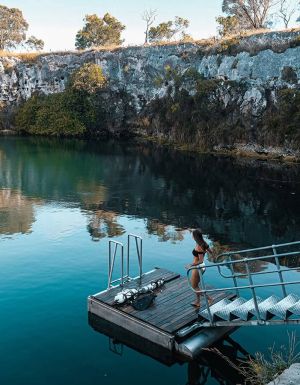
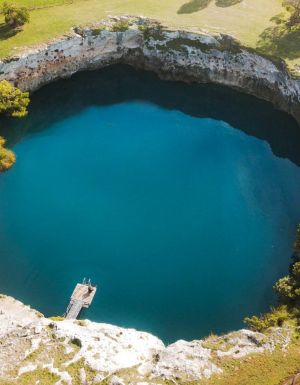
A volcanic sinkhole located in the middle of a paddock, about a 17-kilometre drive south of Mount Gambier, off an otherwise nondescript country road, Little Blue Lake has that wonderful air of chancing upon a secret local spot.
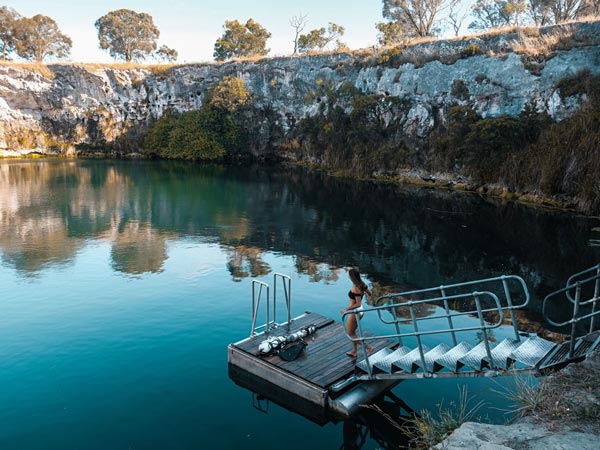
Woman swimming in Little Blue Lake Mount Gambier
The Little Blue Lake is a volcanic sinkhole located in the middle of a paddock. (Image: Lucy Adamopoulos/South Australia Tourism Commission)

Walk down the stairs, cut into the side of the sinkhole’s cliff, and jump off the floating pontoon into the cool waters, which reach a depth of around 47 metres. Cave divers with a CDAA Deep Cavern grade certification can even dive here.
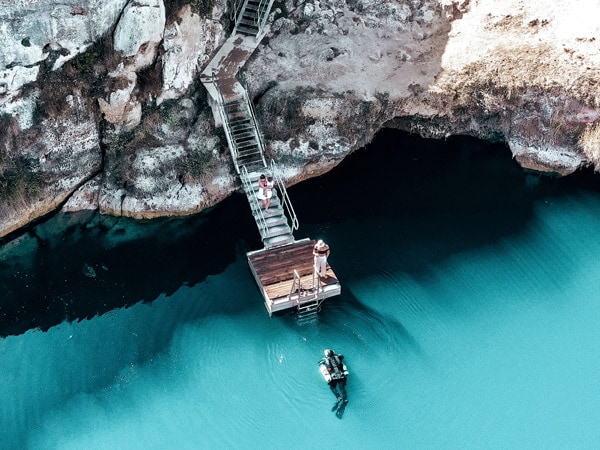
Little Blue Lake Mount Gambier
Jump off the floating pontoon in Little Blue Lake. (Image: Lucy Adamopoulos)

3. Umpherston Sinkhole

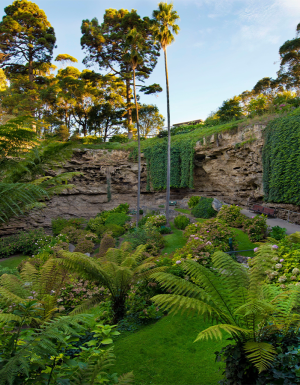
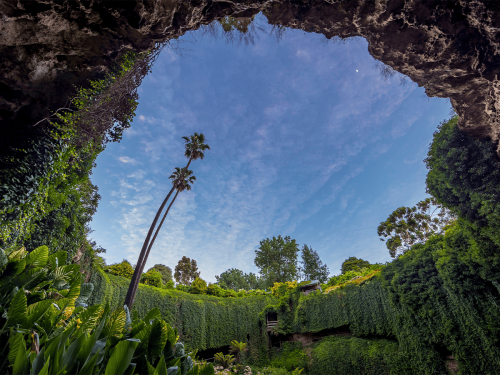
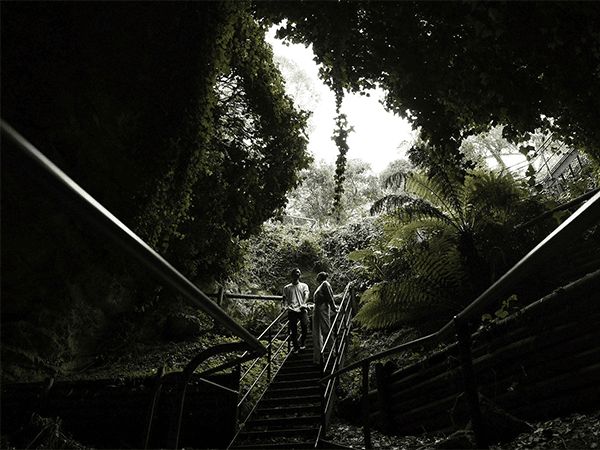
Positively dripping with greenery, this vast sunken garden is arguably Mount Gambier’s landmark attraction. Lying just on the edge of town, this sinkhole was first transformed into a garden in 1886, when local farmer and politician James Umpherston took it upon himself to plant a garden in the former cave.
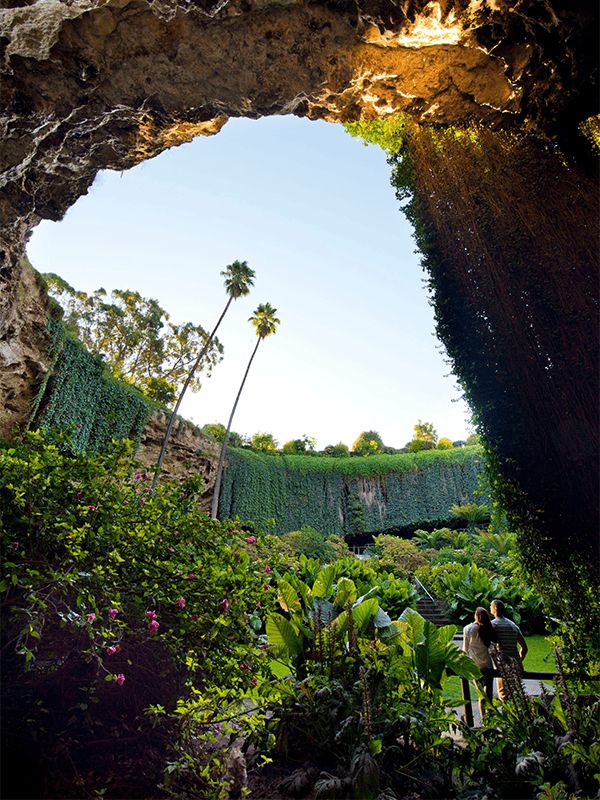
Umpherston Sinkhole Mount Gambier
Umpherston Sinkhole is arguably Mount Gambier’s landmark attraction. (Image: South Australian Tourism Commission/Adam Bruzzone)

Whether you’re looking down into it or taking a wide-angle picture from the floor of the 20-metre-deep, 50-metre-wide natural wonder, the views are something special. Follow the public park’s walking paths, admire the lush foliage from its viewing platforms and benches, and mosey past its sculptures and fountains. It’s the perfect place for a picnic. Umpherston Sinkhole is also home to a colony of common brushtail possums, which make an appearance every evening at dusk to feed.

4. Cave Garden/Thugi

Much like its Mount Gambier cousin, the Umpherston Sinkhole, Cave Garden is an impossibly scenic spot, alive with greenery and tucked away right in the heart of the city.

A much smaller wedge of a sinkhole, you can’t descend to the base of Cave Garden: instead, exploit the viewing platforms and peer down into the chasm. And if you visit during, or shortly after wet weather, you can even admire a waterfall pouring into it. It’s believed that this sinkhole was in fact the original water source for early settlers in the area.

Refusing to be beaten on nighttime draws by the Umpherston Sinkhole, Cave Garden also has its own after-dark attraction – a nightly light show that tells Aboriginal Dreamtime stories.
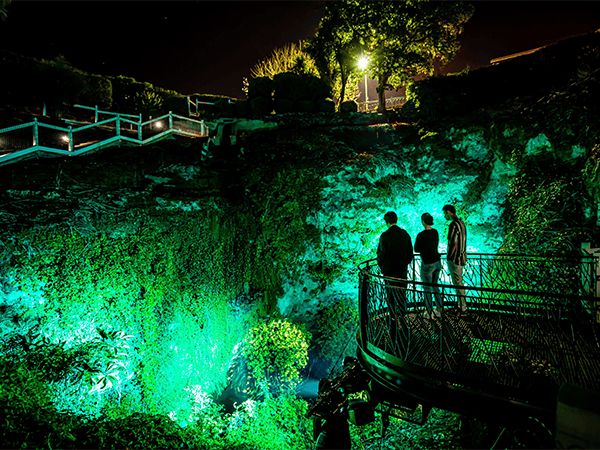
Cave Gardens, Mount Gambier
The Cave Gardens illuminated as part of a winter light festival. (Image: South Australian Tourism Commission)

5. Mount Gambier caves

It’s estimated that there are a whopping 800 caves littered throughout the Limestone Coast region like honeycomb. Here are some of the must-sees.

Engelbrecht Cave

Experienced divers come from all over to take to the waters of Engelbrecht Cave , in the centre of Mount Gambier, with its secret, water-filled tunnels. But you don’t need to brandish a certificate just to gain entry to the cave: guided tours of two of Engelbrecht’s caverns are available, lasting around 40 minutes long. There’s also a cafe at the site if you’d like to sit and enjoy cake and coffee after your visit.
Engelbrecht Cave Mount Gambier
Engelbrecht Cave is a geological wonderland. (Image: City of Mount Gambier/ Take Us With You)

Naracoorte Caves National Park

It’s a one-hour drive north of Mount Gambier to South Australia’s only UNESCO World Heritage Site – the Naracoorte Caves National Park . Recognised for its extensive fossil record, which covers several ice ages and the arrival of humans in the area, it’s part of the 800,000-year-old Naracoorte East Range. Four caves are open to the public, and visitors can choose from a self-guided, guided or adventure caving tour, wandering through the warren of passages, festooned with stalactites and stalagmites.
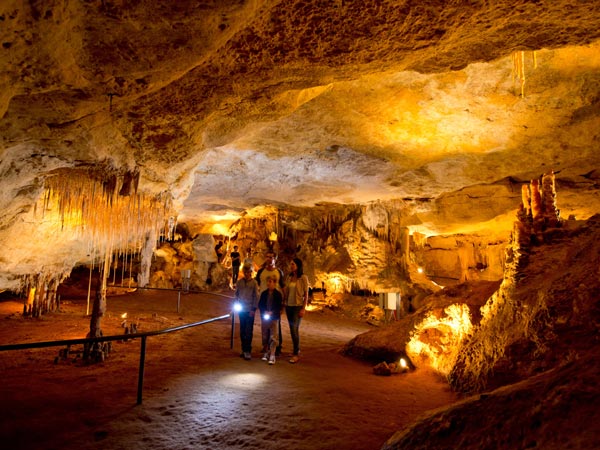
Family tour a cave inside the Naracoorte Caves National Park
Wander through the warren of passages, festooned with stalactites and stalagmites inside Naracoorte Caves National Park. (Image: South Australia Tourism Commission/Adam Bruzzone)

Tantanoola Caves Conservation Park

Unlike many other caves in the region – or, in fact, many other caves in Australia – Tantanoola Caves Conservation Park is wheelchair-accessible. Just a 20-minute drive northwest of Mount Gambier, these vast, beautiful caverns are decorated with speleothems. Before your stroll freely through the subterranean wonder, each visit starts with an introduction from a guide, who will tell you the history and geology of the caves and explain how their formations have developed over thousands of years.

6. Riddoch Arts & Cultural Centre

The largest regional gallery in South Australia, the Riddoch plays host to a large collection of early 20th-century Aboriginal art, interactive displays, free guided tours, and a daily screening of the documentary film Volcano, which chronicles Mount Gambier’s geological history and the Aboriginal Dreamtime story of the giant ancestor Craitbul.
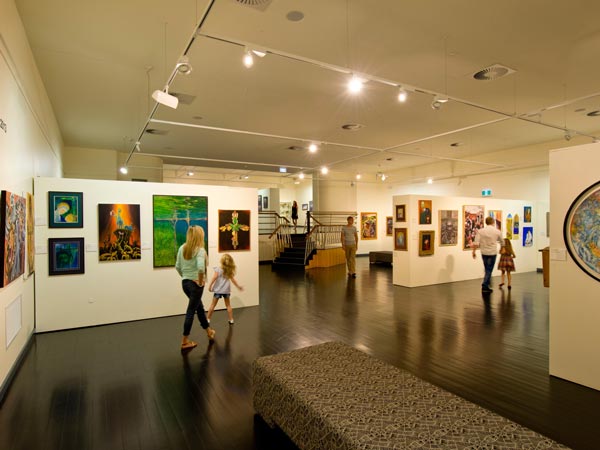
The Riddoch Art Gallery Mount Gambier
The Riddoch is the largest regional gallery in South Australia. (Image: South Australia Tourism Commission/Adam Bruzzone)

7. Mount Gambier Farmer’s Markets

Every Saturday from 9am to 12pm, the Mount Gambier Farmer’s Markets are an easy, cheap and cheerful family-friendly experience. Grab a tasty takeaway breakfast from one of the stalls, shop fresh produce, and enjoy the stunning Cave Gardens where the markets are located.
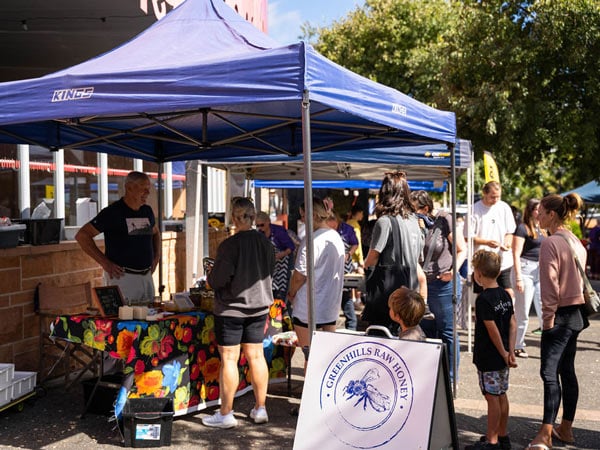
Honey stall at Mount Gambier Farmer's Markets
Find all kinds of edible treats at the markets. (Image: Luna Socials & Design)

Foodies will be in heaven, with a wide array of seasonal fruit and vegetables, locally grown fish, pork, beef, honey, eggs and olive oil, and baked goods, and green thumbs will also find a whole lot of plants and seedlings on offer. A visit to the markets will make for a wholesome morning out.
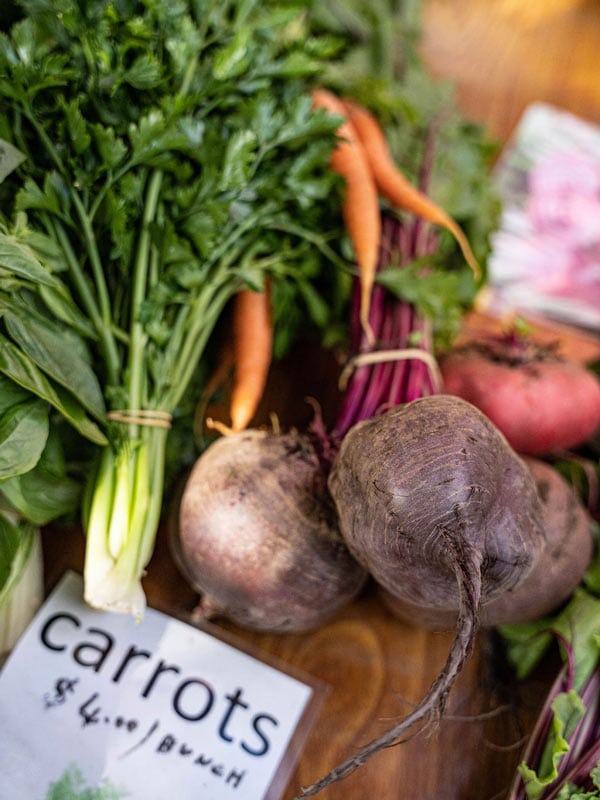
Fresh produce Mount Gambier Farmer's Markets
Stock up on fresh produce. (Image: Luna Socials & Design)

8. Echo Farm, Mount Gambier

Reconnect with nature and get the ultimate serotonin boost by hanging out and interacting with the animals at Mount Gambier’s Echo Farm . The charming farm has an assortment of historic displays as well as an opportunity to feed the animals, explore the outbuildings, and chat with the farmers who live on-site, making it a perfect activity for singles, couples, and families alike.
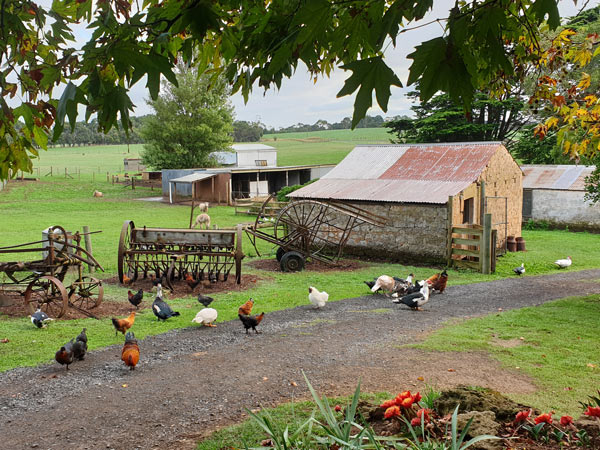
Echo Farm Mount Gambier
Feed the animals at the charming Echo Farm.

You can take a self-guided tour on Sundays to Fridays, and stroll around at your own pace taking in all the sights – the farm itself suggests allowing at least an hour for your visit. There’s also a range of snacks and souvenirs along with some delightful homemade scones. You can also book a guided tour most mornings.

9. Explore Mount Gambier’s best wineries

Did you know Mount Gambier is an up-and-coming wine region? The wineries may be young, but they’re producing prized wines, with the region best known for its pinot noir. Due to the climate and rich volcanic soils, Mount Gambier is home to a handful of must-see emerging wineries from family-run businesses to boutique vineyards. From the well-known Herbert Vineyard , renowned for its silky smooth pinot noir, to the hidden gem that is Noski Wines , located on the slopes of the Blue Lake, you won’t be short of places to visit for a tipple. 

10. Kilsby Sinkhole

Kilsby sinkhole’s crystal clear water makes it one of the best diving and snorkelling locations in Australia. Book a 50-minute guided tour to learn the history and geology of this naturally occurring karst sinkhole and/or enjoy the tranquillity of the water by booking a snorkel tour .
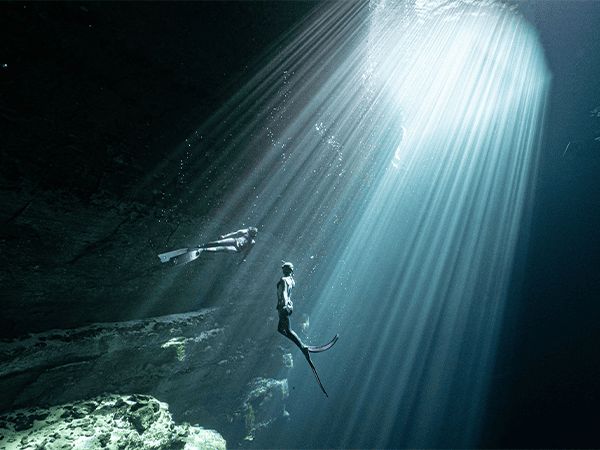
Kilsby sinkhole Mount Gambier
Dive into the clear waters. (Image: Adam Stern)

11. Centenary Tower

To enjoy beautiful views of the volcanic, lake-dotted countryside, head 190 metres above sea level to the Centenary Tower. The medieval-looking tower opened in 1904 and was built to commemorate 100 years since Mt Gambier was first sighted by Europeans.

Original article written by Chloe Cann with updates by Tahlia Pritchard and Rachael Thompson.

For more travel tips, read our guide to planning your ultimate Mount Gambier holiday.
Chloe Cann
Chloe Cann is an award-winning freelance travel and food writer, born in England, based in Melbourne and Roman by adoption. Since honing her skills at City St George's, University of London with a master's degree in journalism, she's been writing almost exclusively about travel for more than a decade, and has worked in-house at newspapers and travel magazines in London, Phnom Penh, Sydney and Melbourne. Through a mixture of work and pleasure, she's been fortunate enough to visit 80 countries to date, though there are many more that she is itching to reach. While the strength of a region's food scene tends to dictate the location of her next trip, she can be equally swayed by the promise of interesting landscapes and offbeat experiences. And with a small person now in tow, travel looks a little different these days, but it remains at the front of her mind.
See all articles
hero media

5 of the best Sunshine Coast day trips

City buzz, gourmet trails, surf breaks and art scenes are all at your fingertips.

When it comes to planning a trip, picking a holiday destination is the easy part. The real dilemma is where to set yourself up for the night. Do you go coastal, city, or countryside? Somewhere remote and rugged, or right in the action? Luckily, the Sunshine Coast, and huge number of amazing Sunshine Coast day trips, have kindly made the choice for you.

Ditch the hotel-hopping and suitcase-lugging. Instead, base yourself at Novotel Sunshine Coast or Mantra Mooloolaba , where big-city culture, vine-covered valleys, and theme parks are all within a two-hour drive.

1. Sunshine Coast to Brisbane

Drive time: 1 hour 20 minutes (105km)

Shake off the sand from your sandals and swap the beach for the throb of the Queensland capital. Ease in gently with a bougainvillea-filled stroll through South Bank, iced latte in hand, before cooling off at Streets Beach lagoon – Brisbane’s answer to the coast (but without the waves).

Once firmly in big-city mode, hit up the Gallery of Modern Art (GOMA) , home to Australia’s largest collection of modern and contemporary artworks. Dive into the past at the Queensland Museum, where prehistoric fossils of Australian dinosaurs and megafauna collide with First Nations cultural collections and interactive science exhibits.

All this learning got you hungry? Howard Smith Wharves calls. Here, riverside dining delivers breweries with meat-forward menus, Japanese fine dining and overwater bars. If you’ve got room for more, Fortitude Valley’s shopping boutiques await you and your wallet.

woman walking around Gallery of Modern Art (GOMA)
Wander the Gallery of Modern Art. (Image: TEQ)

2. Sunshine Coast to the Scenic Rim

Drive time: 2 hours 15 minutes (170km)

Make your way inland to the Scenic Rim for the state’s best vineyards and age-old volcanic slopes. Start your day early (like, sparrow’s breakfast early) at O’Reilly’s Rainforest Retreat in Lamington National Park . Here, take a treetop walk through the canopy and hand-feed the wild birds who flock here.

Next, it’s your turn to eat. Here, the food scene operates where locally sourced produce is an expectation, not an exception. Order a picnic basket crammed with regional wine and cheese to devour next to the creek at Canungra Valley Vineyards . Or perhaps a grazing platter of vegan and non-vegan cheeses at Witches Falls Winery .

Feeling bold? Tackle the Twin Falls circuit in Springbrook National Park. Or keep the gourmet life going with a Scenic Rim Brewery tasting paddle, best enjoyed while taking in the rise of the Great Dividing Range.

woman with cheese and wine at Witches Falls Winery
Enjoy a cheese platter at Witches Falls Winery. (Image: TEQ)

3. Sunshine Coast to the Gold Coast

Drive time: 2 hours (180km)

Surf, sand and sparkling skylines might be the Gold Coast’s MO, but there’s more to Surfers Paradise and beyond. Kick things off with a beachfront coffee at Burleigh Heads, then hike through Burleigh Head National Park to look over the ocean and whale sightings (dependent on the season, of course).

Cool off in the calm waters of Tallebudgera Creek before chowing down on the famously buttery Moreton Bay bug rolls at Rick Shores . Travelling with the kids? Then you can’t miss Australia’s theme park capital, with Dreamworld ’s big rides and Warner Bros. Movie World ’s Hollywood treatment at hand to keep the family entertained.

aerial view of Tallebudgera Creek
Dive into Tallebudgera Creek. (Image: TEQ)

4. Sunshine Coast to Tweed Heads

Drive time: 2 hours 15 minutes (200km)

Dare to cross enemy lines? Then welcome to New South Wales. Tweed Heads blends the laid-back attitude of the Northern Rivers with high-quality dining, experimental art, and farm-fresh indulgence – a combo worth the drive.

Start strong with a long, lazy brunch at Tweed River House , then swing by Tropical Fruit World for exotic finds like red dragon fruit, handfuls of lychees and black sapote. Next, hit M|Arts Precinct – an art deco hub of micro galleries, artist workshops and one-off boutiques.

Round off the day with sunset drinks at Husk Distillers among the glowing cane fields, and order one with their famous Ink Gin. You’ll thank us later.

exterior of Husk Distillers
Taste the famous Ink Gin at Husk Distillers. (Image: Destination NSW)

5. Sunshine Coast Hinterland

Drive time: 1 hour (70km)

Strap on those hiking boots and make tracks inland, where volcanic peaks, misty rainforest and hinterland townships beckon. Ease in with the Glass House Mountains Lookout Walk, or, if you have energy to burn, tackle the Mount Ngungun Summit Walk for a 360-degree sight of the surrounding summits.

Next: Montville. This township delivers European-style architecture and old-world appeal. Nearby, settle in at Flame Hill Vineyard, where a large pour of estate-grown wine comes with encompassing views of the countryside.

Not ready to leave the hinterland villages just yet? Of course not. Meander past art galleries and indie shops at Maleny. Nab some fudge from Sweets on Maple for a sweet fix. Or go salty at Maleny Dairies with a farm tour and a chunky wedge of their deliciously creamy cheese.

End the day among the eucalypts and rainforests of Kondalilla National Park. Here, the Kondalilla Falls Circuit winds down through trees humming with life to a rock pool beneath a waterfall – as if designed for soaking tired feet before heading back to the coast.

view of Mount Ngungun on the scenic rim queensland
Take on the Mount Ngungun Summit Walk (Image: TEQ)

Start planning your Sunshine home base at all.com.