
Forget crowded Spanish pilgrimage routes. South Australia’s Aussie Camino offers long-distance walking, country pubs, volcanic landscapes and a deeply Australian story of resilience.
Europe has the Camino de Santiago, Japan has the Kumano Kodo and tucked away on South Australia’s Limestone Coast, Australia has its own pilgrimage trail, one that swaps medieval villages for country pubs, volcanic craters, pine forests and paddocks stretching towards the horizon.
The Aussie Camino isn’t a wilderness survival challenge. There are no mountain passes to conquer, tents to pitch or dehydrated meals to endure. Instead, walkers spend five days travelling between Port MacDonnell and Penola, carrying only a daypack while their luggage is transferred ahead. Nights are spent in comfortable country accommodation, meals are shared, while stories are exchanged, and somewhere between the blisters and belly laughs, something shifts.
“Travellers have sought out pilgrimages for thousands of years," says Natasha Dawson, owner of Walk the Limestone Coast. “Walking calms the mind and opens the heart. Slow, meaningful travel experiences are deeply enriching. They stay with a person far longer than a standard travel experience, warming the soul and lighting a fire in the belly for more."
It’s a sentiment that feels increasingly relevant in a world obsessed with speed.
Trail overview
The Aussie Camino follows the footsteps of Australia’s first saint, Mary MacKillop, retracing part of her journey through the Limestone Coast. The guided walk covers approximately 71 kilometres over four walking days, averaging between 12 and 21 kilometres per day.
Distance: 71 kilometres.
Duration: Five nights / four walking days.
Difficulty: Grade 2–3 (moderate).
Best suited to: Beginner and intermediate walkers who are comfortable covering up to 20 kilometres in a day.
Accessibility: Unlike many of Australia’s iconic long-distance walks, the Aussie Camino is designed to be accessible. There are luggage transfers, accommodation bookings, meals and support along the way. Walkers receive a Camino passport, shell and guidebook, collecting stamps throughout the journey before receiving a completion certificate in Penola.
Where the trail goes
The route traverses Bunganditj and Boandik Country, beginning in the fishing village of Port MacDonnell before winding inland through some of South Australia’s most underrated landscapes.
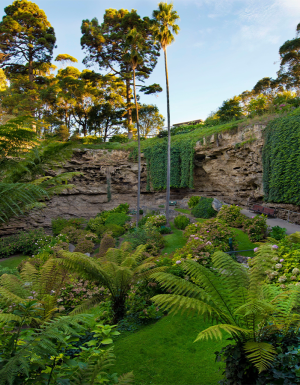
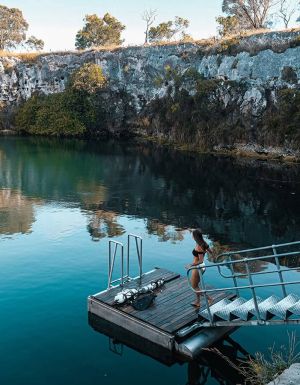
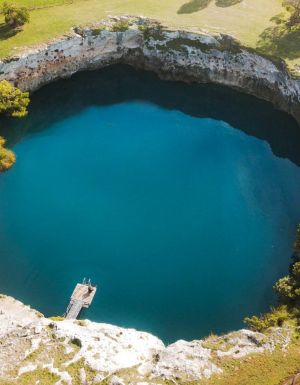
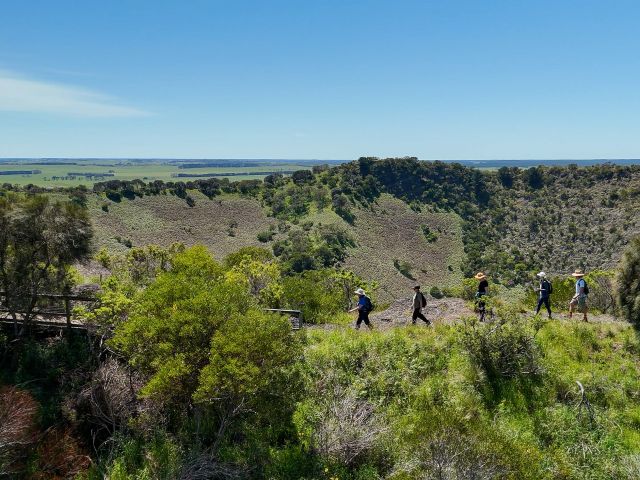
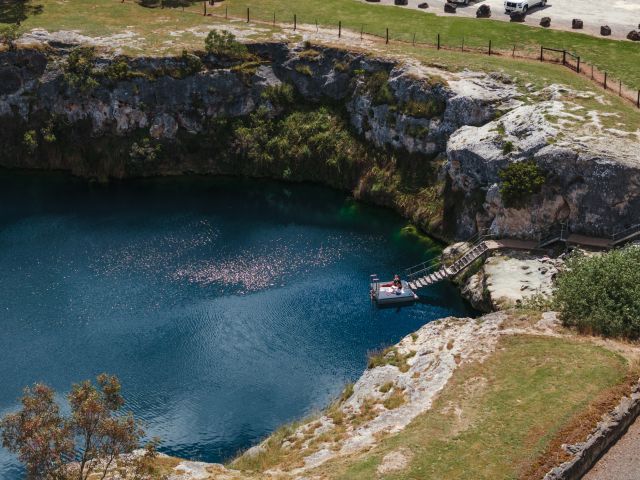
Day one follows the coastline before heading towards Mount Schank, an extinct volcano offering sweeping views of lush farming lands back towards the sea. The trail then passes the famous Blue Lake in Mount Gambier, a striking volcanic crater that turns cobalt blue during summer.
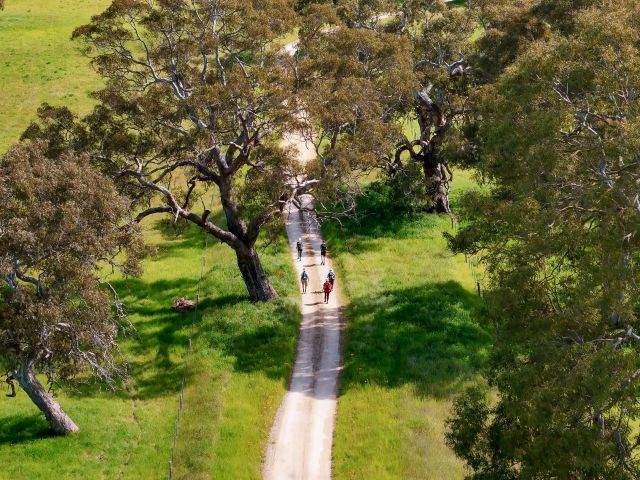
From there, walkers move through pine plantations, farmland and stringybark forests towards Mingbool before continuing through red gum country and agricultural landscapes dotted with wetlands, orchards and grazing cattle. One highlight is the eucalyptus-lined avenue known locally as Lovers Lane on the approach to Kalangadoo.
The final day leads into Penola, where Mary MacKillop and Father Julian Tenison Woods established St Joseph’s School in 1866 – the birthplace of a movement that would transform education for rural and disadvantaged Australian children.
Need tips, more detail or itinerary ideas tailored to you? Ask AT.
AI Prompt
What it’s like to walk
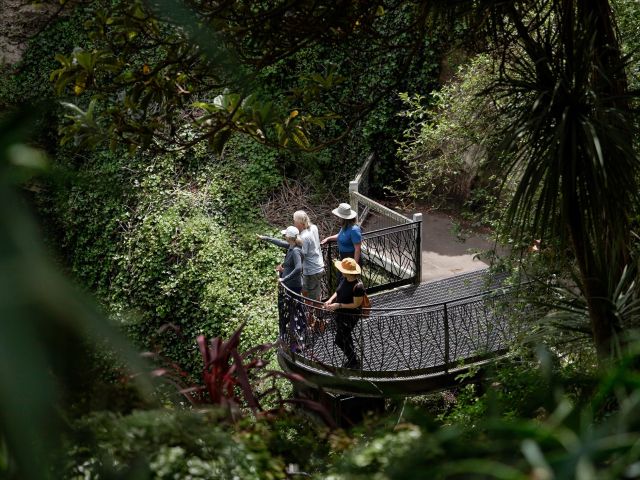
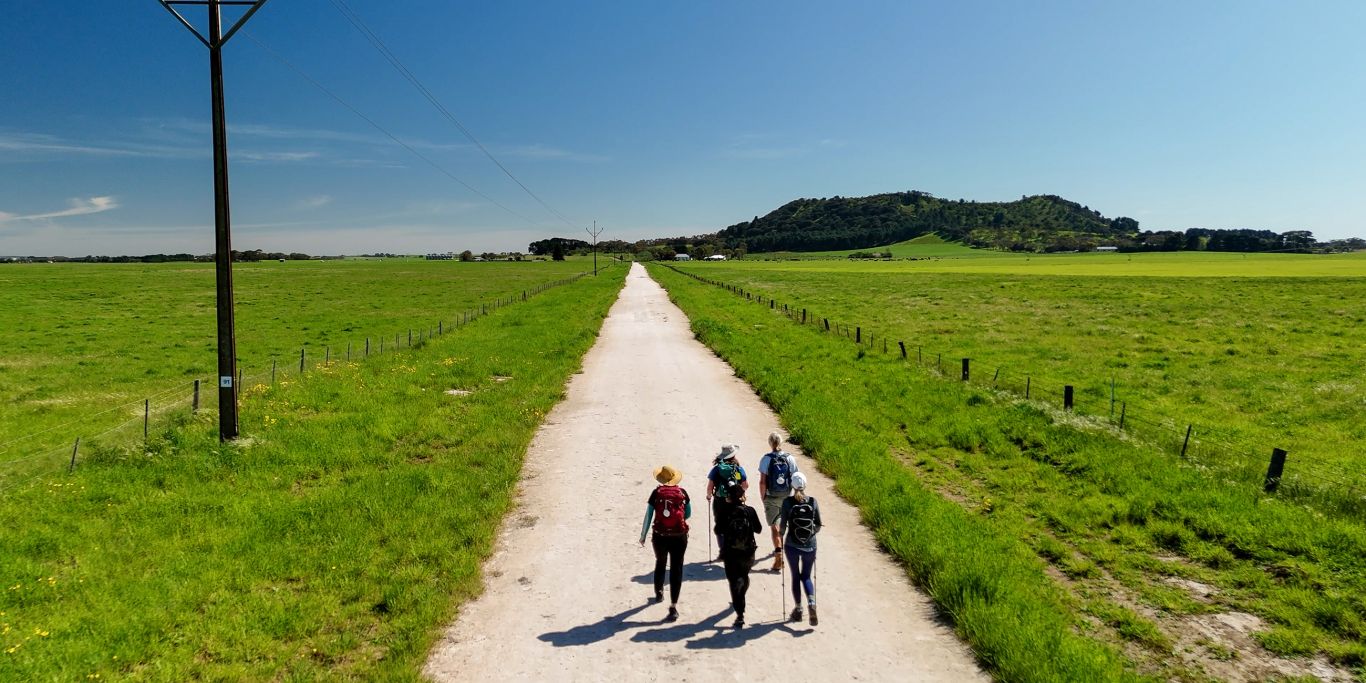
The beauty of the Aussie Camino lies in its simplicity. There are no dramatic alpine ascents or technical sections demanding specialist skills; instead, the landscape unfolds slowly. Limestone roads give way to bushland, and volcanic craters emerge unexpectedly from farmland. Small towns appear just when a coffee or cold drink feels most needed.
“What surprises people most is how quickly they relax and connect," says Dawson. “The friendships that are made, the characters they meet along the way and how the history and landscape eases them."
There is a rhythm to walking here, and phones are often set to silent while conversations drift among fellow walkers. Sometimes the group spreads out, each person finding their own pace and space. The Limestone Coast seems designed for contemplation.
“What makes people slow down almost immediately?" says Dawson. “Space. Fresh air. Open countryside. Less people, noise and traffic."
Who this walk is best for
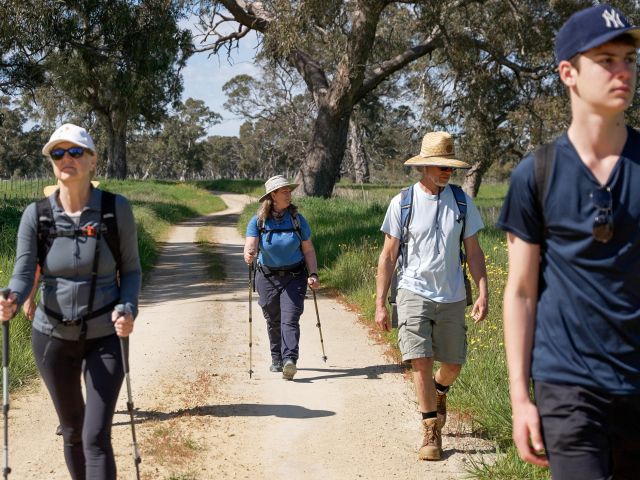
The Aussie Camino is ideal for travellers curious about long-distance walking but intimidated by Australia’s more demanding multi-day hikes.
Because accommodation, meals and luggage transfers are organised, walkers can focus on the experience rather than logistics. It appeals equally to solo travellers, groups of friends and couples looking for a challenge without roughing it.
“You will be supported," says Dawson, and that reassurance is part of the appeal.
Unlike the Camino de Santiago, where extensive infrastructure supports walkers every few kilometres, Australia’s version feels more remote and self-reliant.
“There are less people and less infrastructure," Dawson explains. “People need to plan and be comfortable travelling through the countryside without access to many facilities along the way, though they’re only ever about 30 minutes from a town."
What is the accommodation like?
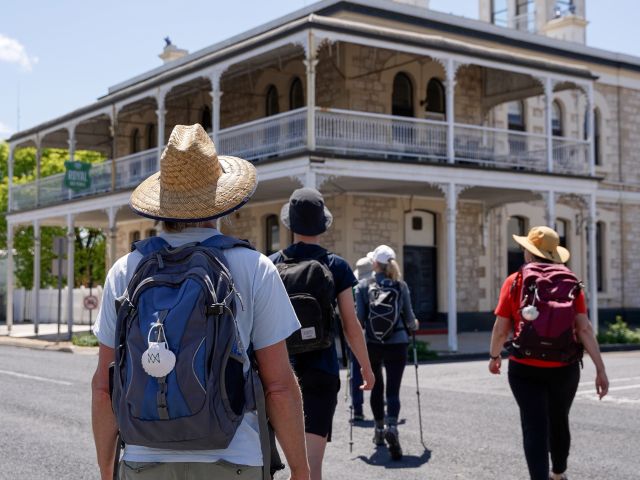
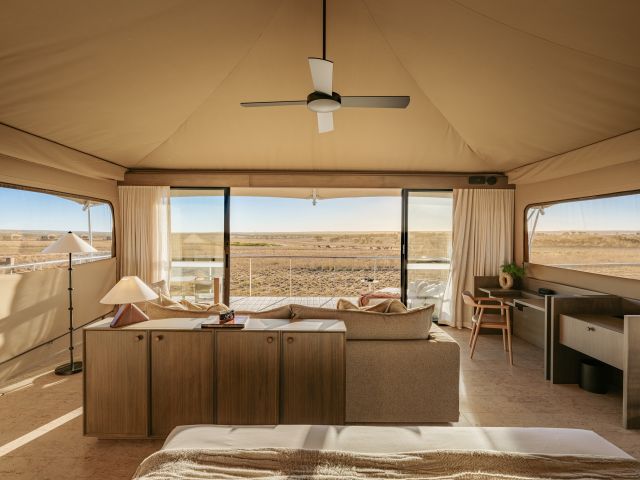
Forget tented accommodation, the Aussie Camino accommodation can change due to availability and include cabins, converted Churches, hotels, and small-town lodgings with beds, linen and shared facilities. Depending on group size, walkers may enjoy private rooms or twin-share arrangements.
After spending the day walking through open countryside, there’s something deeply satisfying about arriving at a warm room, a hot shower and a shared dinner. The walk is designed to offer the rewards of a pilgrimage without the discomfort often associated with one.
Weekly travel news, experiences
insider tips, offers, and more.
What is the food like?
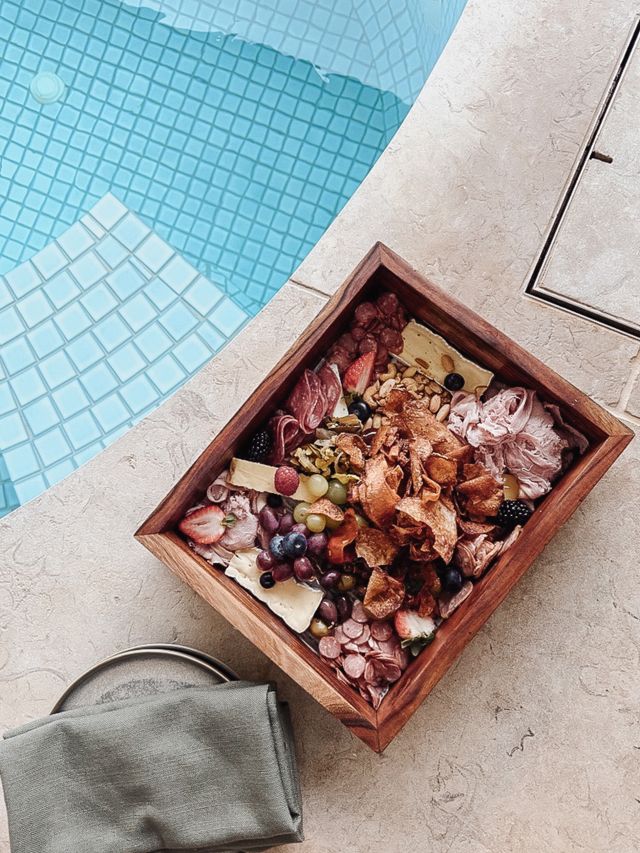
Breakfasts are simple, nourishing and designed for days on the trail, with porridge or muesli, yoghurt, fresh fruit, toast and eggs setting walkers up each morning. Lunches typically feature freshly made wraps and salads, while evenings alternate between home-cooked meals and hearty country pub fare. Dietary requirements can be accommodated, but one piece of advice: pack more snacks than you think you’ll need. After hours on the track, you’ll be surprised how quickly hunger catches up with you.
More than the food itself, it’s the communal aspect that stays with walkers. Shared meals become part of the experience, creating space for stories, laughter and connection.
How to plan your walk
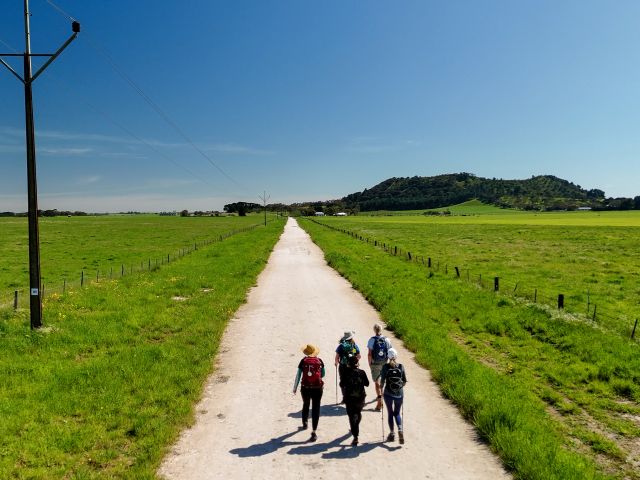
Training is recommended but achievable for most reasonably active people. Organisers suggest gradually building up to a 15-kilometre walk while carrying a backpack and wearing your intended footwear before departure. Hiking poles are also recommended.
Expect to carry only a daypack. Luggage is transferred daily between accommodations. Walkers should bring comfortable, worn-in footwear, wet-weather gear, sun protection, a water capacity of at least two litres, a blister kit and snacks.
Good to know
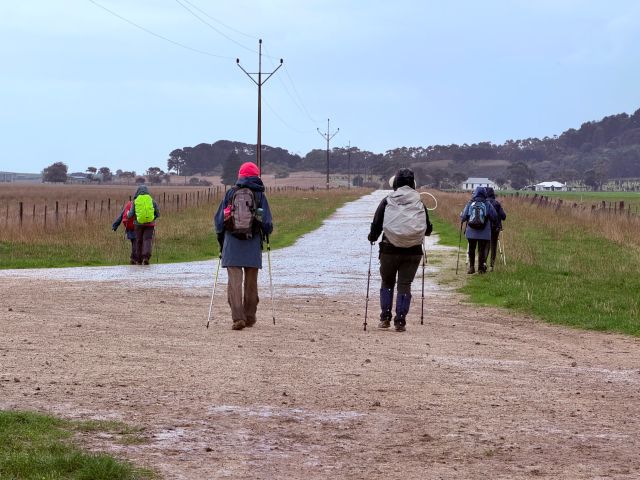
Best time to walk: May and September–November. The walk operates in the cooler months, as autumn and spring offer the most comfortable temperatures.
Weather: Summer temperatures in Mount Gambier average 24°C, while winter highs typically reach around 16°C. Walkers should be prepared for changing conditions, including rain and strong winds. Waterproof layers are essential.
Mobile reception: Limited for Optus and Vodafone users around Kalangadoo.
Water and food: Carry at least two litres of water daily. Meals are included on most walking days.
Toilets: Limited in some rural sections. Carry toilet paper and hand sanitiser.
Parking: Available in Penola for walkers leaving vehicles during the journey.
Accessibility: Suitable for reasonably fit walkers but not wheelchair accessible.
Safety: Ambulance cover is recommended. Check your insurance before travelling.
The verdict? The Aussie Camino proves you don’t need to fly to Europe to discover the transformative power of pilgrimage. Sometimes, the journey starts with simply putting one foot in front of the other on a quiet country road in South Australia.
Want to see more stories from Australian Traveller in your Google search results?
- Click here to set Australian Traveller as a preferred source.
- Tick the box next to "Australian Traveller". That's it.

Rebecca Foreman
View profile and articles