7 Flinders Ranges tours that will enrich your experience

hero media
This sprawling mountain range is vast and filled with mystery, but the right tours can help unlock the secrets of an ancient and beguiling landscape.

From a distance, the serrated ridges and deep gullies of the Flinders Ranges are as forbidding as they are impressive. But up close this sunburnt range of rust-coloured mountains is brimming with fascinating stories. Adnyamathanha traditional owners talk of the ancient and powerful forces that sculpted this land, while the resident astronomers at Arkaroola give form to the stars that glitter across some of the clearest night skies you’ll ever see.

Immaculately preserved fossil beds and sheer rock walls that expose millions of years of geological history tell a story older than time. There are countless adventures to be had in the region, but connecting with a local on one of these Flinders Ranges tours can help bring this ancient landscape to life, providing an entirely new perspective on one of Australia’s most enchanting regions.

1. Scenic flight over Ikara (Wilpena Pound)
Scenic Flight over Wilpena Pound in the Flinders Ranges
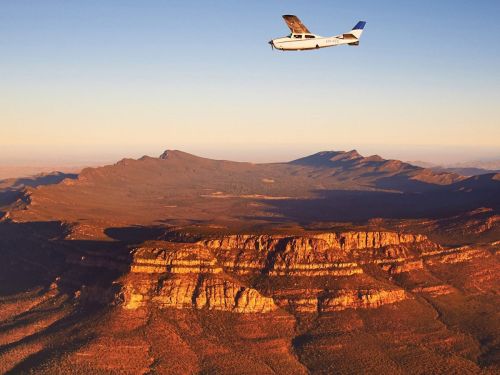
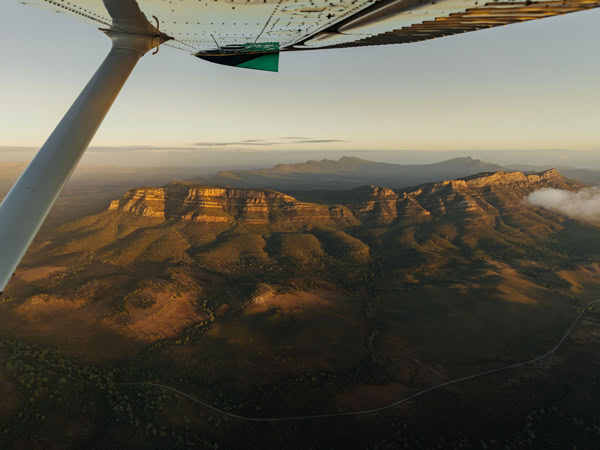
See Ikara (Wilpena Pound) from a bird’s-eye view. (Image: Emilie Ristevski)

You could easily spend weeks driving through every gorge, creek and canyon that cuts through the majestic Flinders Ranges. Or you can do things the easy way and see them all at once from above.

Join an early morning scenic flight  over Ikara (Wilpena Pound) and you can watch the shrubs and spinifex tussocks quickly recede into tiny specks as the entire landscape magically transforms into a three-dimensional dot painting.

A 20-minute flight will take you over the Elder and Heysen Ranges as the first rays of the sun bring a golden glow to Ikara’s perfectly curved walls, while longer tours can bring you all the way to the glittering expanse of Kati Thanda-Lake Eyre.
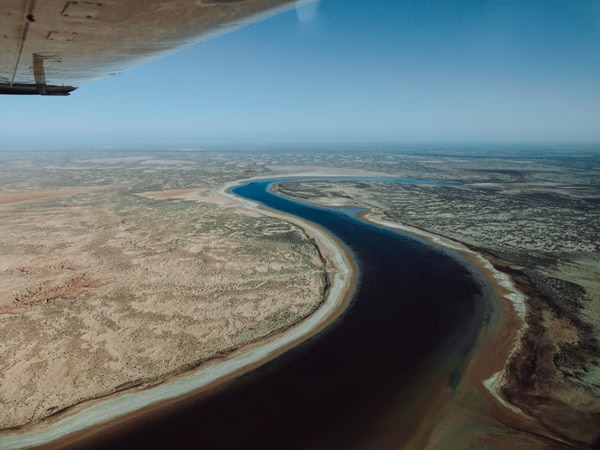
an aerial view of the Kati-Thanda Lake
Kati Thanda-Lake Eyre is stunning. (Image: South Australian Tourism Commission)

2. See the dawn of life on Earth in Nilpena Ediacara National Park
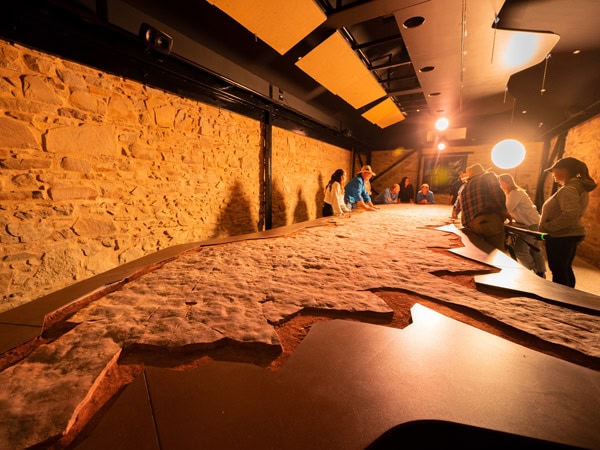
a fossil tour inside Nilpena Ediacara National Park
Discover a breathtaking collection of fossils at Nilpena Ediacara National Park. (Image: (Image: Tourism Australia/South Australian Tourism Commission)

Opened in 2023, Nilpena Ediacara is South Australia’s youngest National Park. But those fortunate enough to visit will discover a breathtaking collection of fossils more than twice as old as the first dinosaurs. 550 million years ago, this entire region lay at the bottom of a shallow tropical sea, and the perfectly preserved fossil beds nearby are so significant that they’ve lent their name to the Ediacaran era when complex life first emerged.

The only way to enter the park is on a two-hour guided tour  that takes in the 1870s shearer’s quarters and blacksmith’s shop before bringing visitors in to view a giant bed with more than 200 fossils that look like sand dollars, anchors and giant spirals. An array of six interlinked projectors spotlights individual fossils from different angles and shows how they would have moved over the ocean floor, while young visitors in particular will get a thrill from the opportunity to touch these unbelievably ancient specimens.

3. Walk with the Traditional Owners

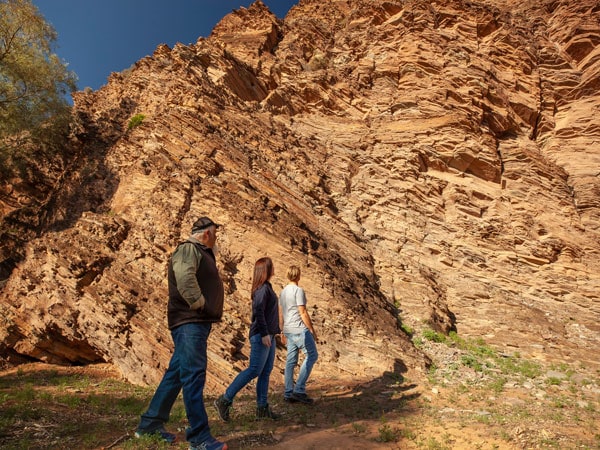
a group of travelers exploring the rock walls, Wilpena Pound Resort
Wilpena Pound Resort holds a range of tours. (Image: Tourism Australia)

The word ikara means “meeting place" in the language of the Adnyamathanha people, and Ikara (Wilpena Pound) has been an important ceremonial site for tens of thousands of years. Geologists have their version of how this vast natural amphitheatre was formed, but take a walk with the traditional owners and you’ll get a very different perspective and this living, breathing land.

Wilpena Pound Resort  holds a daily welcome to country and a range of tours that let you learn the stories of the local flora and fauna, as well as how two fearsome serpents shaped many of the features of the landscape before coiling up to form the impressive rock walls that encircle the pound.

You can also join Adnyamathanha guides as they visit the vibrant paintings at Akurra Adnya (Arkaroo Rock) and the ancient rock carvings of the eerily quiet Sacred Canyon (which is only accessible on an Adnyamathanha-guided tour).

4. Go on a ghost tour with a difference in Blinman
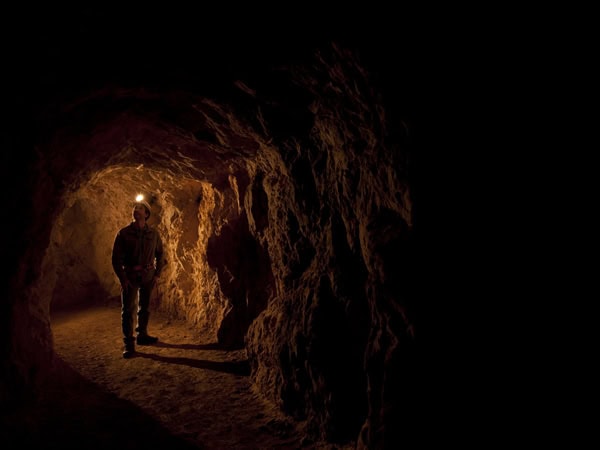
the Blinman Mine Tour, Flinders Ranges
Venture down the narrow tunnels in Blinman. (Image: South Australian Tourism Commission)

Though it now has a permanent population of just 20, Blinman was once a thriving frontier town with 1500 residents. And it was the bustling copper mine that brought fortune hunters from as far away as Cornwall. Daily mine tours take you back to the 1860s with a sound and light show that illuminates the narrow tunnels and demonstrates what life would have been like for these hardy miners and their families.

If you’re feeling especially brave, stick around on Friday or Saturday night for a lantern-lit ghost tour that tells the stories of the poor souls who perished in the mine and populates the shafts with Cornish spirits, including the diminutive piskies, mischievous knockers and fearsome buccas.

5. Spot some stars at Arkaroola Wilderness Sanctuary
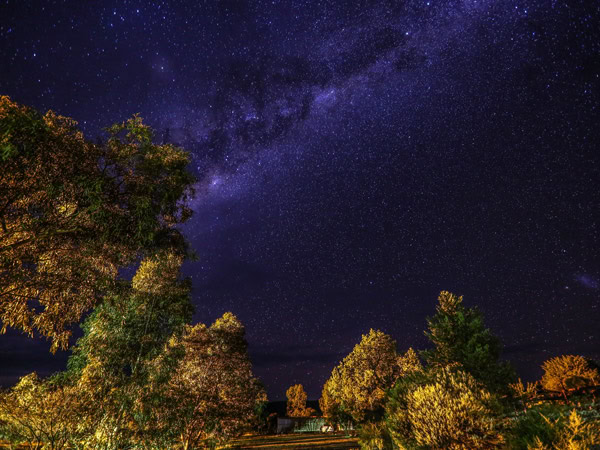
the Arkaroola Night Sky
Go stargazing at Arkaroola Wilderness Sanctuary. (Image: Tourism Australia)

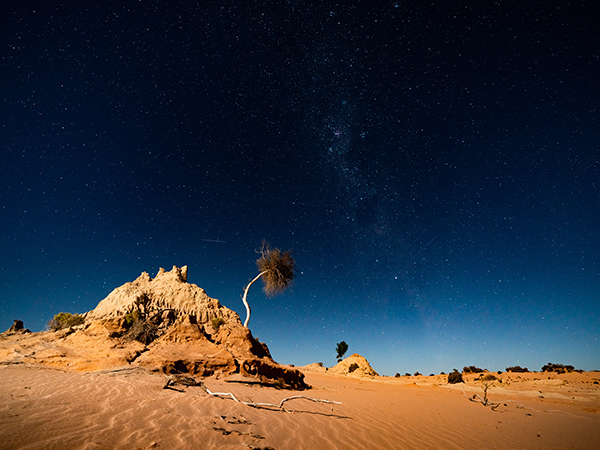
Low humidity and a complete absence of light pollution make Arkaroola Wilderness Sanctuary  one of the best places to go stargazing in the country. In fact, conditions are so good that the property was recently named Australia’s second Dark Sky Sanctuary.

Exploring the fabulously rugged landscape around Arkaroola Village is one of the highlights of any Flinders visit, but once the sun goes down the resident astronomers emerge to guide visitors around the night skies. Guests can choose from several tours  that let them gaze up at the heavens from specially designed reclining chairs or venture deep into space at a high-powered observatory that offers a closer view of planets and other celestial bodies.

6. Tackle one of Australia’s Great Walks at Arkaba
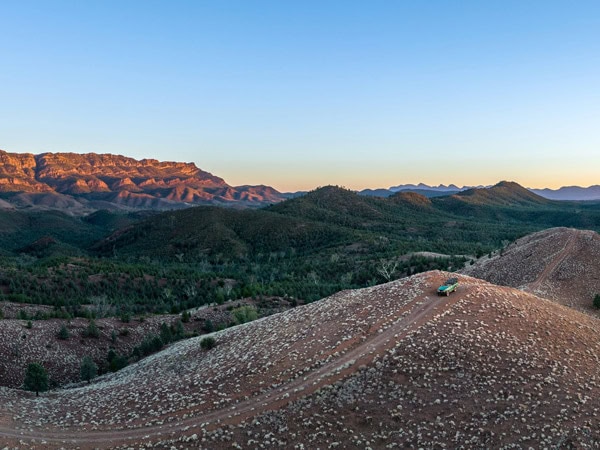
Arkaba Conservancy in Flinders Ranges
Arkaba is one of the best places to get a sense of just how full of life this arid region can be. (Image: Isaac Forman)

Since the former sheep station at Arkaba was destocked in 2014, the local flora and fauna have rebounded, and the highly successful rewilding project has made it one of the best places to get a sense of just how full of life this arid region can be. Explore the property by foot on the three-day Arkaba Walk and you’ll trek over weathered peaks, into dramatic ravines and through patches of forest filled with animal and birdlife.

And despite the seeming isolation, each night is spent at a bush camp that epitomises outback luxury with chef-prepared meals enjoyed around a campfire, swags featuring a turndown service and steaming mugs of tea delivered to your private sleeping platform while you admire the sunrise.

7. Relive the golden age of rail on the Pichi Richi Railway
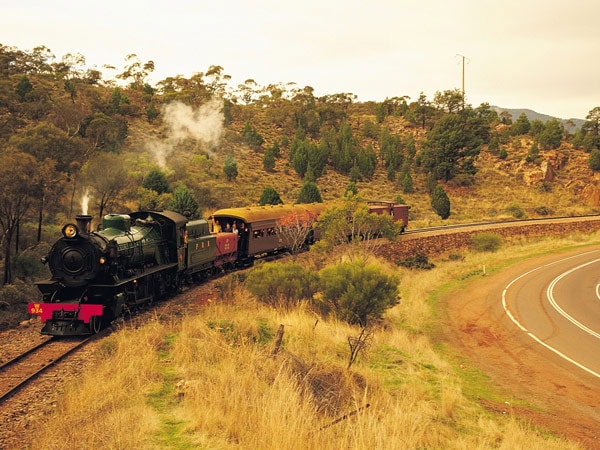
the Pichi Richi Railway, Flinders Ranges
Relive the golden age of rail on the narrow-gauge Pichi Richi Railway. (Image: South Australian Tourism Commission/Peter Fisher)

If you think the Flinders Ranges are remote, spare a thought for the pioneers who once faced a weeks-long wagon trip to stock up on supplies in Port Augusta. For them, the arrival of the railway in 1879 was a cause of great celebration, and it was such a success that it was eventually extended all the way to Alice Springs.

Much of the line fell into disuse after the Ghan was rerouted through less flood-prone regions, but you can still relive the golden age of rail on the narrow-gauge Pichi Richi Railway  from Port August to Quorn. Lovingly restored Ghan carriages from the 1920s and an elaborately decorated Edwardian railcar known as the Coffee Pot still follow the original route over dry stone walls, heritage iron bridges and steep cuttings as they traverse the Pichi Richi Pass, a picturesque gorge that cuts through the Southern Flinders Ranges.

For more inspiration and itinerary tips, read our travel guide to the Flinders Ranges.

Alexis Buxton-Collins
Alexis Buxton-Collins spent his twenties working as a music journalist and beer taster before somehow landing an even dreamier job as a freelance travel writer. Now he travels the world from his base in Adelaide and contributes to publications including Qantas, Escape, The Guardian and Lonely Planet. Alexis has never seen a hill he didn't want to climb and specialises in outdoor adventures (he won the 2022 ASTW award for best nature/wildlife story for a feature on Kangaroo Island). When he's not scouring South Australia for the newest wineries and hikes, he's looking for excuses to get back to spots like Karijini and Ningaloo.
See all articles
hero media

The road trips and trails you need to experience in Victoria now

Wind through fern tunnels, stop for a wine in a tram bar, or chase giant murals across the wheatbelt. These drives and rides prove Victoria’s best stories are found off the straight and narrow. 

There’s something unmistakably Australian about a road trip: car packed, playlist on, landscapes shifting. Travelling down the highway toward Healesville, in Victoria’s Yarra Valley , the mountains rise, flanking me on both sides. I feel its embrace, a silent invitation to explore what lies beyond.  

Moss-covered embankments rise on either side, and towering mountain ash trees form a green tunnel overhead. Road signs warn of wombats and cyclists but with giant ferns lining the roadside, the landscape feels prehistoric, as if a dinosaur might suddenly emerge. This, the Black Spur , is one of my favourite road trips. 

The Black Spur 

The Black Spur drive
Through the forested canopy of The Black Spur drive that winds from Healesville to Narbethong. (Image: Neisha Breen)

Location: Yarra Ranges
Duration: 30 kilometres / 30 minutes 

The Black Spur is short compared to other Victorian road trips, just 30 kilometres, stretching from Healesville to Narbethong. But what it lacks in distance, it makes up for in scenery. Just outside Healesville, Maroondah Dam offers bushwalks and scenic views. However, if pressed for time, Selover’s Lookout is an easy roadside stop offering uninterrupted views of the dam.  

In Narbethong, close to the Marysville’s snowfield, is the Black Spur Inn , a charming double-storey brick hotel that’s been welcoming travellers since 1863. Here, diners cosy up by the roaring fire or gaze through the floor-to-ceiling windows, imagining horse-drawn coaches carrying hopeful gold seekers to the eastern goldfields.   

Victoria’s Silo Art Trail 

Silo Art Trail
The Silo Art Trail in the Wimmera Mallee region. (Image: Visit Victoria/Anne Morely)

Location: Various towns across the Wimmera Mallee region
Duration: More than 200 kilometres / 4–5 hours but best over a minimum of three days  

What began as a way to draw travellers back into town bypassed by highways – places such as Nullawil, Sea Lake and Patchewollock – has grown into a celebrated outdoor art movement. The Silo Art Trail now includes 23 silos, each transformed with large-scale mural portraits sharing local stories, celebrating community heroes, Indigenous history, farming life, or regional identity.  

The Nullawil silo, for example, is a portrait of a local farmer in a chequered flannelette shirt alongside his loyal kelpie, painted by artist Sam Bates (AKA Smug). And the silos at Albacutya in the Grampians, painted by artist Kitt Bennett, depict her joyful memories of growing up in the countryside. Many of the murals sit right in the heart of small towns, such as Rochester and St Arnaud , making them perfect spots to pause for a country pub meal or something sweet from a local bakery.   

Metung to Mallacoota  

Gippsland lakes
Gippsland Lakes. (Image: Visit Victoria/Josie Withers)

Location: Gippsland
Duration: Approximately 220 kilometres / 4 hours  

The Gippsland Lakes are a much-loved holiday spot in Victoria, but road-tripping further east reveals much more. Begin in Metung and time your visit with the monthly farmers’ market, or simply linger over lunch on the lawn of the Metung Hotel. Twenty minutes away is Lakes Entrance , where you can watch the fishing boats return with their catch. 

Lakes Entrance
Lakes Entrance. (Image: Visit Victoria/Iluminaire Pictures)

Continue to Marlo, where the Snowy River spills into the sea, and Cape Conran for its many beaches and walks. If needing to stretch your legs, Croajingolong National Park is home to the historic Point Hicks Lighthouse and the Wilderness Coast Walk. Birdwatching and rainforest trails near Bemm River are worth a pit stop before arriving in Mallacoota, where the forest meets the sea. 

Great Ocean Road 

12 Apostles on the Great Ocean Road
The 12 Apostles on the Great Ocean Road. (Image: Tourism Australia/Two Palms/Harry Pope)

Location: South-west Victoria, from Torquay to Allansford
Duration: Approximately 250 kilometres / 4–5 hours but best over a minimum of three days  

Victoria’s most famous road trip delivers it all: world-class surf breaks, rainforest walks, clifftop lookouts and wildlife encounters. The journey begins in Torquay, the state’s surf capital, then hugs the coast past Anglesea and Lorne to Apollo Bay, before curving inland through the lush rainforest of the Otways. Stop at Cape Otway Lightstation or take to the treetops at Otway Fly.  

Between Cape Otway and Port Campbell lies the most photographed stretch – seven of the Twelve Apostles still standing, alongside the golden cliffs of Loch Ard Gorge. Further west, Warrnambool is a winter whale-watching hotspot, before the road winds to Port Fairy, a charming fishing village of whalers’ cottages, walking trails and offshore seal colonies further along the coast. 

Bellarine Taste Trail 

Terindah Estate
Terindah Estate. (Image: Visit Victoria/Emily Godfrey)

Location: Bellarine Peninsula
Duration: Approximately 80 kilometres / 2–3 hours  

The Bellarine Taste Trail is a feast for the senses, winding through coastal towns, past boutique wineries and artisan producers. It’s a choose-your-own-adventure style trail – simply grab a map and build your own delicious journey.  

You might wander historic, seafront Queenscliff, sip wine in a converted tram bar at Terindah Estate , sample a locally distilled whisky at The Whiskery in Drydale or pick up a jar of honey at Wattle Grove in Wallington. Seafood lovers can head to Portarlington, famous for its mussels. Eat them fresh at local restaurants or head out on the water with Portarlington Mussel Tours. 

O’Keefe Rail Trail – Bendigo to Heathcote 

Pink Cliffs Reserve
Pink Cliffs Reserve in Heathcote can be seen on the O’Keefe Rail Trail. (Image: Visit Victoria/Emily Godfrey)

Location: Central Victoria
Duration: Approximately 50 kilometres / 4 hours cycling 

Travellers first journeyed between Heathcote and Bendigo in 1888, when the railway line was built to link the towns. Trains stopped running in 1956, but today the route has a new life as the O’Keefe Rail Trail . The path is mostly level for easy riding, and along the way you’ll cycle past bushland, waterways and reserves. There are plenty of places to picnic, birdwatch, and if you’re lucky, spot a platypus.  

The trail is well supported with water stations, bike repair points, shelters, and signage. Axedale makes a great halfway stop, with the pretty Campaspe River Reserve for a rest and local cafes for refuelling. Begin in Heathcote, known for its wineries and cafes, or in Bendigo, which is easily reached by train from Melbourne/Naarm. Shorter sections, such as Heathcote to Axedale, are also popular. 

Goldfields Track – Ballarat to Bendigo 

Location: Central Victoria
Duration: Approximately 210 kilometres / 2–3 days cycling  

The Goldfields Track traces a route once so rich in gold it made Melbourne one of the wealthiest cities in the world. Starting at Mt Buninyong, south of Ballarat, the trail leads mountain cyclists and walkers north through Creswick, Daylesford and Castlemaine before finishing in Bendigo. Along the way, you’ll encounter granite outcrops, eucalypt forests, rolling farmland and remnants of the region’s mining past.  

As it passes through the lands of the Dja Dja Wurrung and Wadawurrung people, the track shares gold rush history and Indigenous stories brought to life by interpretive signs. Walk or ride the full trail or choose from one of its three distinct sections. With cosy stays, cafes and pubs, it’s easy to mix wilderness with comfort.