6 incredible wonders in South Australia to explore

hero media
Australia is full of wonders, from icons to the lesser known. Here, we’ve curated 6 wonders from our 100 list that South Australia gets to call its very own.

This article is part of our 100 Australian Wonders series. Throughout the series, we explore our nation’s wonders across culture, nature, food, islands and many more. We hope it inspires your own exploration of Australia’s many wonders.

1. Adelaide Oval, SA

Travelling with: Alexis Buxton-Collins

Whether you’re standing in the shade of the giant Moreton Bay figs looming over The Hill or sitting 50 metres above the turf on the roof of the new Riverbank Stand, being at Adelaide Oval on game day is always a thrill.
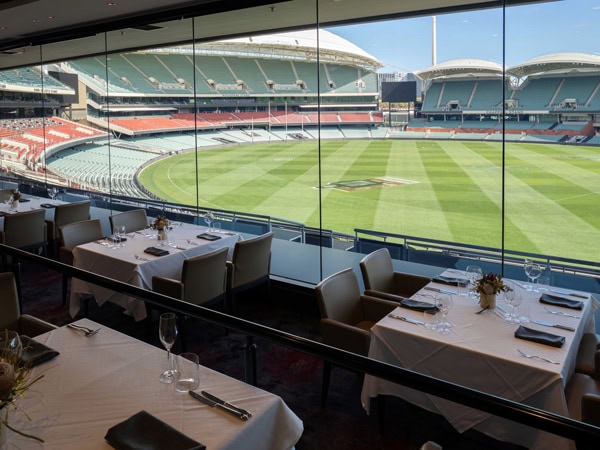
the Adelaide Oval in SA
Visit Adelaide Oval to see AFL, cricket, and more. (Image: Oval Hotel)

The rest of the time, visitors can step inside the hand-operated 1911 scoreboard or test their skills against the world’s greatest batsman at The Bradman Collection.

Want to stay the night? Australia’s first stadium stay, Oval Hotel , is just a few steps away behind soundproofed walls thick enough to withstand a Guns N’ Roses concert.
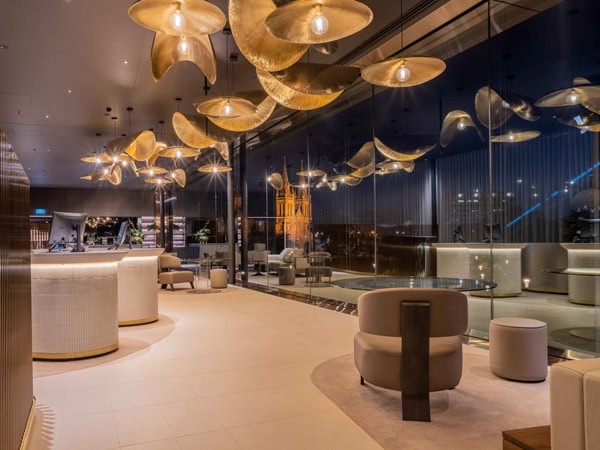
the elegant interior of Oval Hotel
The Oval Hotel is just a few steps away from Adelaide Oval. (Image: Oval Hotel)

2. Balumbul/Umpherston Sinkhole, Mt Gambier, SA

Travelling with: Kassia Byrnes

As the ocean slowly retreated, the exposed volcanic landscape of the aptly named Limestone Coast rose to the surface. Today, sinkholes, caves, ponds and lakes make this region of South Australia a paradise for serious divers, recreational swimmers and curious travellers alike.

But none leave an impression quite like the almost magical garden of Balumbul/Umpherston Sinkhole in Mt Gambier. Walk along impossibly green terraced gardens of ferns and hydrangeas and wind through hanging vines while towering palm trees make a bid for freedom as they reach towards the sky.

Stay until dusk, when the garden begins to come alive with possums coming out to feed.
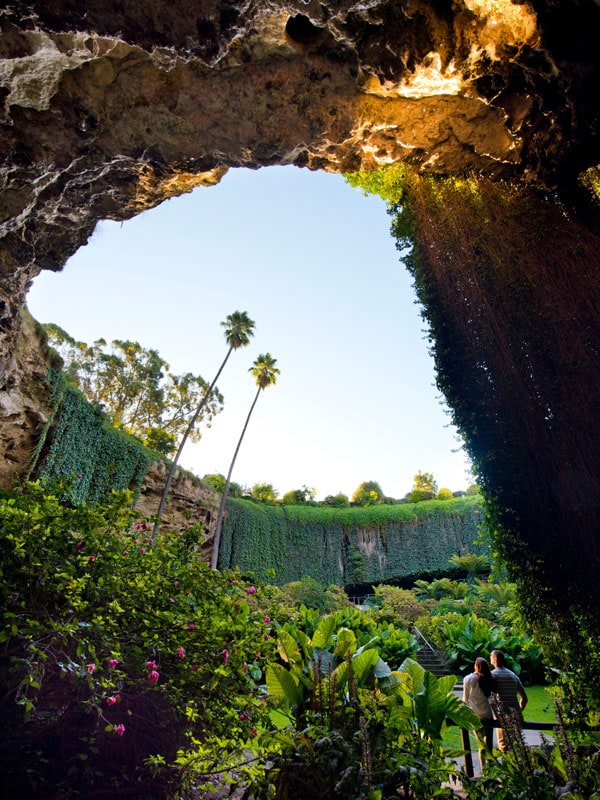
the Umpherston Sinkhole in Mt Gambier, SA
Towering palm trees reach toward the sky at Umpherston Sinkhole. (Image: South Australia Tourism Commission)

3. Seal Bay, Kangaroo Island, SA

Travelling with: Imogen Eveson

One of Australia’s most extraordinary wildlife encounters lies in wait on the wild southern coast of the country’s third largest island. A Kangaroo Island trip is incomplete without padding your way down through the sand dunes to Seal Bay, home to Australia’s third-largest colony of Australian sea lions.

Pups play in the sand and surf, bulls fight for supremacy and mothers rest with their young. Seal Bay has been a protected area since 1954 and the population of this endangered species numbers 1000 here.
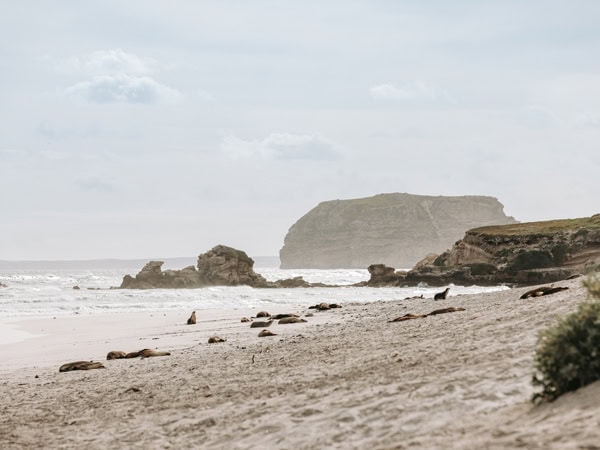
the rugged shoreline of Seal Bay, Kangaroo Island
The rugged shoreline of Seal Bay has been a protected area since 1954. (Image: Kangaroo Island Tourism Alliance)

Head to the visitor centre to follow a guide to the heart of the colony on the beach (from a safe and respectful distance) while learning about the unique breeding cycle of these magnificent wild creatures and the site’s ongoing research programs. You can also observe the action from the self-guided and wheelchair-accessible boardwalk that winds through the dunes.

A visit to Seal Bay with a guide from Southern Ocean Lodge is also a highlight of a stay at the newly relaunched luxury accommodation that puts guests in the wild heart of this wild island.
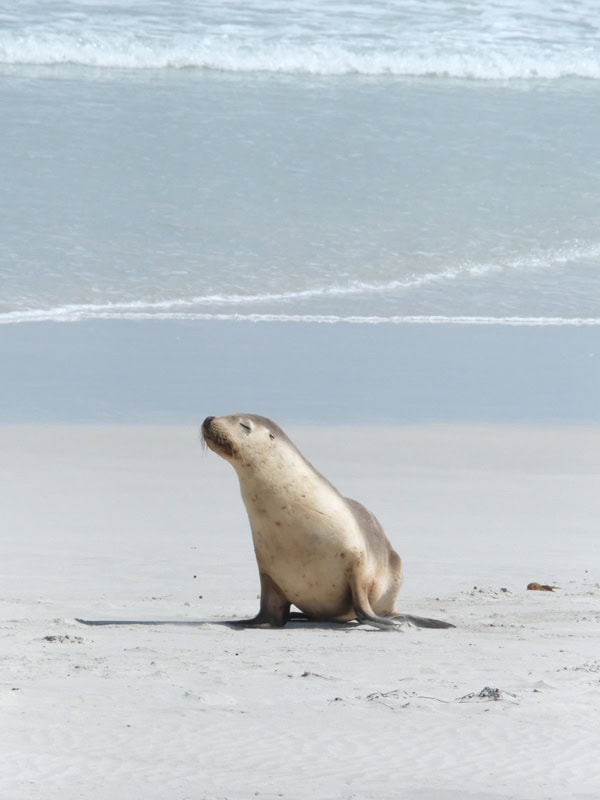
a sea lion at Seal Bay
See a resident sea lion at Seal Bay, Kangaroo Island. (Image: Imogen Eveson)

4. Kangaroo Island’s Ligurian honey bees, SA

Travelling with: Elizabeth Whitehead

It’s an ironic peculiarity that the purest strain of Ligurian bees resides on the opposite side of the world to their homeland. Twelve hives of Ligurian bees were brought from Italy to Kangaroo Island in 1881, chosen for their docile temperament and productivity.

The bees thrived – thanks to KI’s pristine landscape and climate that mirrors that of their ancestral home in northern Italy. This happenstance made Kangaroo Island the oldest bee sanctuary in the world, and as a result, a legacy of beekeeping has been instilled here.
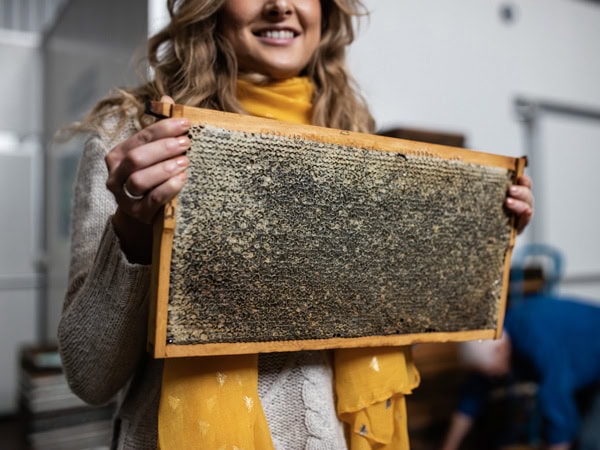
a beekeeper holds eaten honeycombs in Kangaroo Island
Kangaroo Island is the oldest bee sanctuary in the world. (Image: Tourism Australia)

This is evidenced by the passionate apiarists across KI who combine Italian bees with local botanicals to create a truly idiosyncratic honey – such as the organic Boobialla honey, with nectar harvested from native juniper and coastal beard heath.

Visit the Kangaroo Island Ligurian Bee Co. in Kingscote to learn all about this legacy.
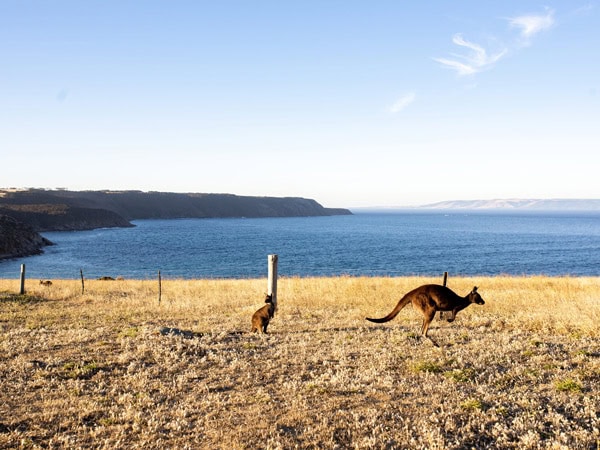
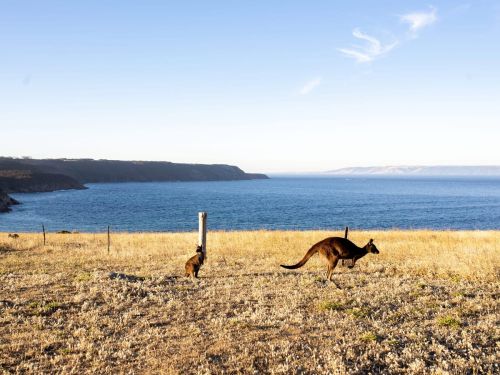
roos on Kangaroo Island
See resident roos on Kangaroo Island. (Image: Tourism Australia)

5. Flinders Ranges, SA

Travelling with: Alexis Buxton-Collins

Studded with more than 200 fossils, the nine-metre Alice’s Restaurant Bed records the very dawn of complex life on Earth. But the most astonishing thing about this 600 million-year-old slab of rock in the newly opened Nilpena Ediacara National Park is that visitors are allowed – even encouraged – to touch silverfish-like Spriggina, raisin-shaped Attenborites and Parvancorina that look like buttons stamped with an anchor.

Visit nearby Wilpena Pound in Ikara-Flinders Ranges National Park, which looks like the aftermath of some cataclysmic eruption, and gaze up at the unblemished night skies over Arkaroola Wilderness Sanctuary, and it’s easy to see why this region has been nominated for UNESCO World Heritage status.
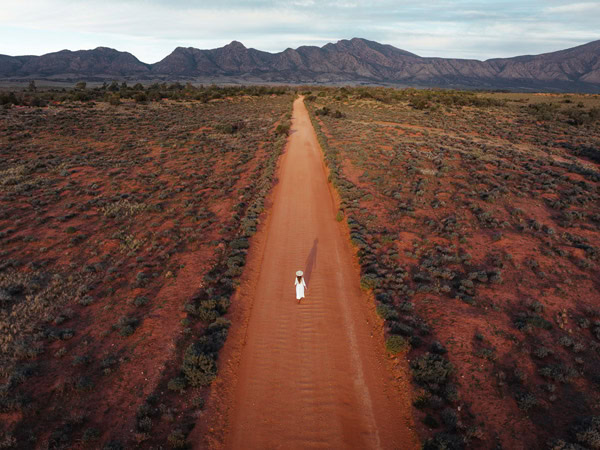
a woman standing in the middle of the desert plains in Flinders Ranges
Explore the ancient rocky landscapes of Ikara-Flinders Ranges National Park. (Image: Emilie Ristevski)

6. Kati Thanda-Lake Eyre, SA

Travelling with: Megan Arkinstall

This glistening salt pan, which stretches for hundreds of kilometres across South Australia’s barren desert, is expected to transform into a pink and orange oasis of floodplains, channels and streams that attract a plethora of birdlife after heavy downfalls in the north earlier this year.

This natural phenomenon only happens once every few years, so 2024 is the time to witness it from above and from the ground with Outback Spirit’s exclusive and specialised Lake Eyre & Wilpena Pound Adventure or a scenic flight with Wrightsair .
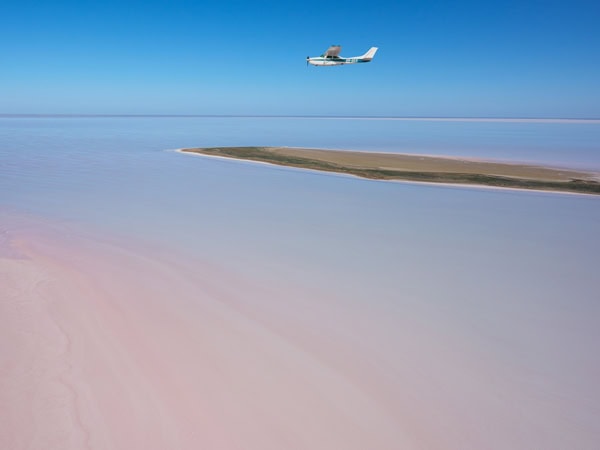
a helicopter above Kati Thanda-Lake Eyre, SA
See Lake Eyre as it transforms into a pink and orange oasis from above. (Image: South Australian Tourism Commission)
Keep reading our 100 Australian Wonders series; from road trips, outback and cultural wonders to foodie wonders and many more.
hero media

Inside Geelong’s glow-up from factory town to creative capital

Abandoned mills and forgotten paper plants are finding second lives – and helping redefine a city long underestimated. 

Just 15 years ago, Federal Mills was a very different place. Once among the most significant industrial sites in Victoria, the historic woollen mill was one of a dozen that operated in Geelong at the industry’s peak in the mid-20th century, helping the city earn its title as ‘wool centre of the world’. But by the 1960s global competition and the rise of synthetic fabrics led to the slow decline of the industry, and Federal Mills finally shuttered its doors in 2001. Within a few years, the abandoned North Geelong grounds had become makeshift pastoral land, with cows and goats grazing among the overgrown grass between the empty red-brick warehouses. It was a forgotten pocket of the city, all but two klicks from the bustle of the CBD.  

Geelong cellar door wine bar
Geelong has shed its industrial identity to become an innovative urban hub with reimagined heritage spaces. (Image: Ash Hughes)

Federal Mills: from forgotten factory to creative precinct 

Today, the century-old complex stands reborn. The distinctive sawtooth-roof buildings have been sensitively restored. An old silo is splashed with a bright floral mural, landscapers have transformed the grounds, and the precinct is once again alive with activity. More than 1000 people work across 50-plus businesses here. It’s so busy, in fact, that on a sunny Thursday morning in the thick of winter, it’s hard to find a car park. The high ceilings, open-plan design, and large multi-paned windows – revolutionary features for factories of their time – have again become a drawcard.  

Paddock Bakery andPatisserie
Paddock Bakery and Patisserie is housed within the historic wool factory. (Image: Gallant Lee)

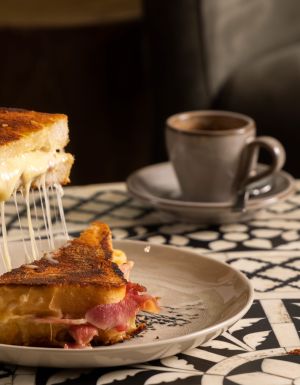
At Paddock , one of the precinct’s newer tenants, weaving looms and dye vats have been replaced by a wood-fired brick oven and heavy-duty mixers. Open since April 2024, the bakery looks right at home here; the building’s industrial shell is softened by ivy climbing its steel frames, and sunlight streams through the tall windows. Outside, among the white cedar trees, families at picnic benches linger over dippy eggs and bagels, while white-collar workers pass in and out, single-origin coffee and crème brûlée doughnuts in hand. 

Geelong: Australia’s only UNESCO City of Design 

Paddock Bakery
Paddock Bakery can be found at Federal Mills. (Image: Gallant Lee)

“A lot of people are now seeing the merit of investing in Geelong,” says Paul Traynor, the head of Hamilton Hospitality Group, which redeveloped Federal Mills. A city once shunned as Sleepy Hollow, and spurned for its industrial, working-class roots and ‘rust belt’ image, Geelong has long since reclaimed its ‘Pivot City’ title, having reinvented itself as an affordable, lifestyle-driven satellite city, and a post-COVID migration hotspot.  

And the numbers stand testament to the change. In March 2025, and for the first time in its history, Greater Geelong became Australia’s most popular regional town for internal migration, overtaking Queensland’s Sunshine Coast. Current forecasts suggest Geelong will continue to outpace many other Australian cities and towns, with jobs growing at double the rate of the population.

Tourism is booming, too. The 2023-24 financial year was Geelong and The Bellarine region’s busiest on record, with 6.4 million visitors making it one of the fastest-growing destinations in the country. It’s not hard to see why: beyond the city’s prime positioning at the doorstep of the Great Ocean Road, Geelong’s tenacity and cultural ambition stands out.  

As Australia’s only UNESCO City of Design, Geelong is swiftly shaking off its industrial past to become a model for urban renewal, innovation, sustainability and creative communities. The signs are everywhere, from the revitalisation of the city’s waterfront, and the landmark design of the Geelong Library and Heritage Centre and Geelong Arts Centre, to the growing network of local designers, architects and artists, and the burgeoning roster of festivals and events. That’s not even mentioning the adaptive reuse of storied old industrial buildings – from Federal Mills, to Little Creatures’ brewery ‘village’ housed within a 1920s textile mill – or the city’s flourishing food and wine scene.  

The rise of a food and wine destination  

boiler house
Restaurant 1915 is housed within a restored former boiler house. (Image: Harry Pope/Two Palms)

Traynor credits now-closed local restaurant Igni, which opened in 2016, as the turning point for Geelong’s hospo industry. “[Aaron Turner, Igni’s chef-patron] was probably the first guy, with all due respect, to raise the bar food-wise for Geelong,” he says. “People now treat it really seriously, and there’s clearly a market for it.” While Igni is gone, Turner now helms a string of other notable Geelong venues, including The Hot Chicken Project and Tacos y Liquor, all within the buzzy, street art-speckled laneways of the CBD’s Little Malop Street Precinct. Many others have also popped up in Igni’s wake, including Federal Mills’ own restaurant, 1915 Housed within the cavernous boiler house, 1915’s interior is dramatic: soaring, vaulted ceilings with timber beams, exposed brick, a huge arched window. The share plates echo the space’s bold character, playing with contrast and texture, with dishes such as a compressed watermelon tataki, the sweet, juicy squares tempered by salty strands of fried leeks, and charred, smoky snow peas dusted with saganaki on a nutty bed of romesco. 

Woolstore
The Woolstore is a new restaurant and bar housed within a century-old warehouse. (Image: Amy Carlon)

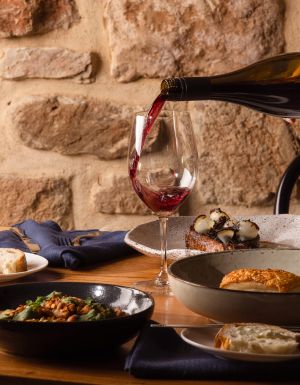
 The Woolstore , one of The Hamilton Group’s most recent hospo projects, opened in February. It occupies a century-old riverside warehouse and exudes a more sultry, fine dining ambience. Much like Federal Mills, the blueprint was to preserve the original brickwork, tallowwood flooring and nods to the building’s former life. That same careful consideration extends to the well-versed, affable waitstaff as well as the kitchen. Head chef Eli Grubb is turning out an eclectic mix of ambitious and indulgent mod Oz dishes that deliver: strikingly tender skewers of chicken tsukune, infused with hints of smoke from the parrilla grill, and glazed with a moreish, sweet gochujang ‘jam’; nduja arancini fragrant with hints of aniseed and the earthy lick of sunny saffron aioli; and golden squares of potato pavé, adorned with tiny turrets of crème fraîche, crisp-fried saltbush leaves, and Avruga caviar, to name but a few stand-out dishes.  

Woolstore menu
Woolstore’s menu is designed for sharing.

Breathing new life into historic spaces  

On the city’s fringe, hidden down a winding side road with little fanfare, lies a long-dormant site that’s being gently revived. Built from locally quarried bluestone and brick, and dating back to the 1870s, the complex of original tin-roofed mill buildings is lush with greenery and backs onto the Barwon River and Buckley Falls; the audible rush of water provides a soothing soundtrack. Fyansford Paper Mill is one of few complexes of its time to survive intact. It feels steeped in history and spellbindingly rustic.  

“We were looking for an old industrial place that had some charm and romance to it,” explains Sam Vogel, the owner, director and winemaker at Provenance Wines which moved here in 2018. When he first viewed the building with his former co-owner, it was in such a state of disrepair that the tradie tenant occupying the space had built a shed within it to escape the leaking roof and freezing winter temperatures. “To say it was run down would be an understatement,” he notes. “There was ivy growing through the place; the windows were all smashed. It was a classic Grand Designs project.” 

Provenance Wines
Provenance Wines moved to Fyansford Paper Mill in 2018. (Image: Cameron Murray Photography)

The team has since invested more than a million dollars into their new home. Where paper processing machinery once sat, wine barrels are now stacked. Vaulted cathedral ceilings are strung with festoon lights, and hidden in plain sight lies a shadowy mural by local street artist de rigueur Rone – one of only three permanent works by the artist.

While the award-winning, cool-climate pinot noir, riesling and chardonnay naturally remain a key draw at Provenance, the winery’s restaurant is a destination in itself. Impressed already by whipsmart service, I devour one of the most cleverly curated and faultlessly executed degustations I’ve had in some time. It’s all prepared in a kitchen that is proudly zero-waste, and committed to providing seasonal, ethical and locally sourced meat and produce under head chef Nate McIver. Think free-range venison served rare with a syrupy red wine jus and a half-moon of neon-orange kosho, shokupan with a deeply savoury duck fat jus (a modern Japanese take on bread and drippings), and a golden potato cake adorned with a colourful confetti of dehydrated nasturtiums and tomato powder, and planted atop a sea urchin emulsion.  

handcrafted pieces
Bell’s handcrafted functional pieces on display.

The complex is home to a coterie of independent businesses, including a gallery, a jeweller, and its latest tenant, ceramicist Elizabeth Bell, drawn here by the building’s “soul”. “There’s so much potential for these buildings to have new life breathed into them,” says Bell, whose studio is housed within the old pump room. “Even people in Geelong don’t know we’re here,” she says. “It’s definitely a destination, but I like that. It has a really calming atmosphere.”  

A Melbourne transplant, Bell now feels at home in Geelong, which offers something Melbourne didn’t. “If this business was in Melbourne I don’t think it would’ve been as successful,” she notes. “It’s very collaborative in Geelong, and I don’t think you get that as much in Melbourne; you’re a bit more in it for yourself. Here it’s about community over competition.”  

Elizabeth Bell
Ceramicist Elizabeth Bell has a store in Fyansford Paper Mill.