This Tasmanian whisky maker is going to sheepish lengths to stand out. Don’t pooh-pooh it until you try it.
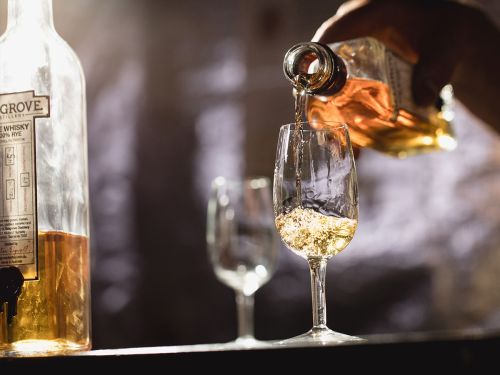
You’ve heard of Bali’s poo coffee, but how about a poopy product that’s a little more homegrown? Tasmanian whisky maker, Belgrove Distillery, has a lot of unique whiskey-making methods. They make 100 per cent rye whisky using rye corn they grow themselves. It’s distilled in a copper pot made by the distiller, Peter Bignell. They keep the processes closed-loop and sustainable, like using waste cooking oil to heat the fires, collecting the water for brewing and diluting from the roofs of their farm sheds, and feeding any remnants that aren’t whiskey to their sheep.
Of course, they also use their sheep to help flavour – and in a most unexpected way.
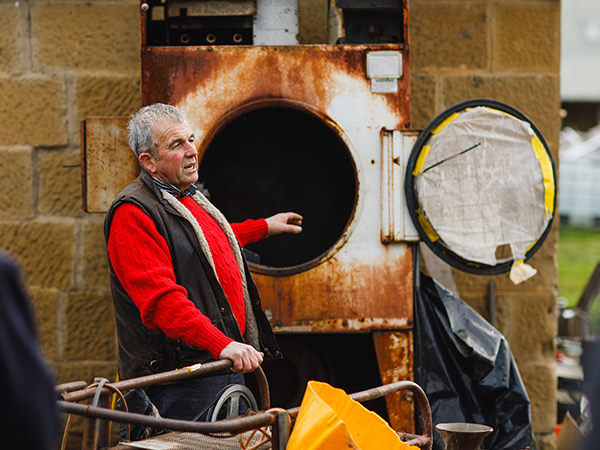
Peter Bignell started smoking grains with sheep dung. (Image: Lusy Productions)
Known for being experimental and creating whiskies with a smokey flavour, Belgrove began by smoking peat. To keep the flavour unique in an ever-expanding market, that peat was soon replaced with sheep dung. So no, there’s not literally dung in your drink, but the smoking process is used to change the flavour profile of the grains before they’re turned into whisky. What’s left is aptly named Belgrove’s ‘Wholly Shit’ range. And apparently the result has earned Belgrove a loyal following.
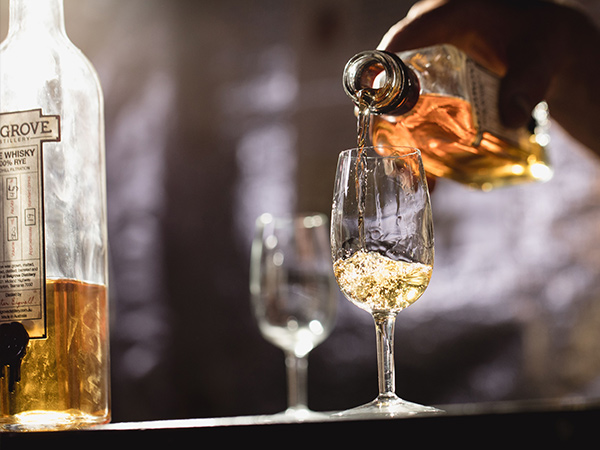
Be whiskied into a frenzy. (Image: Samuel Shelley)
This certainly isn’t the first instance of animal poo being used as a culinary delicacy. In fact, Australian Traveller’s own Art Director was very quick to jump to the defence of elephant poo as a botanically delicious ingredient in a South African gin.
According to the owners Paula and Les Ansley, Indlovu gin was born when Paula was “sipping a G&T while watching a herd of elephants listening to the guide explain how particular elephants are in their browsing habits and yet how little of the plant material they actually digest". As it turns out, elephants only digest about half of their food, and what’s left is a veritable pooh-pooh platter of plant life – from roots and bark to fruit and flowers.

Looks like apperitvo hour. (Image: Getty/Nicky Lloyd)
Sounds a lot like a gin-tasting profile, no? Don’t worry, the dung is sterilised and dried before being added to the gin.
And, of course, there’s Indonesia‘s infamous Kopi luwak, also known as civet coffee. It doesn’t get much more poopy than this, yet among coffee lovers it’s particularly coveted. Essentially, the coffee is made using beans that have been partially digested and defecated out by the mongoose-like Asian palm civet. The beans are fermented as they make their way through this little critter’s intestines and carefully collected by coffee makers. According to those in the know, this poopification adds an extra level of smoothness and richness to the flavour. Go figure. Of course, if you try it, be sure to source ethically made Kopi luwak, as this practice has led to the capture and containment of some wild civets.
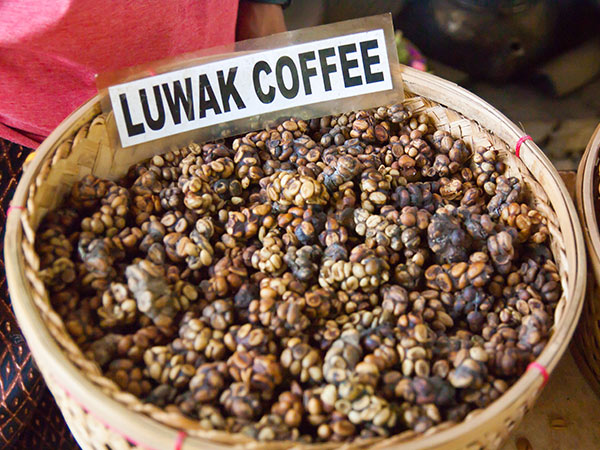
Indonesia’s famous poop coffee is questionable for more than one reason. (Image: Getty/ hedge111)
Have we convinced you to give it a go? Let us know your thoughts in the comments below.
Want to see more stories from Australian Traveller in your Google search results?
Tick the box next to "Australian Traveller". That's it.
Kassia Byrnes is the Native Content Editor for Australian Traveller and International Traveller. She's come a long way since writing in her diary about family trips to Grandma's. After graduating a BA of Communication from University of Technology Sydney, she has been writing about her travels (and more) professionally for over 10 years for titles like AWOL, News.com.au, Pedestrian.TV, Body + Soul and Punkee. She's addicted to travel but has a terrible sense of direction, so you can usually find her getting lost somewhere new around the world. Luckily, she loves to explore and have new adventures – whether that’s exploring the backstreets, bungee jumping off a bridge or hiking for days. You can follow her adventures on Instagram @probably_kassia.
Overlooking the winding Tamar River, the Tamar Ridge & PIRIE Cellar Door is where two of Tasmania’s most acclaimed wine labels come together. Sip award-winning cool-climate wines and world-class sparkling while soaking up the vineyard views in one spectacular setting.
The fire crackles softly as you settle into a comfortable armchair, a glass of Tamar Ridge Reserve Pinot Noir warming your hands. Outside, rows of vines stretch across the Tamar Valley, their gentle contours framed by rolling hills and ever-changing skies. Or perhaps it’s a sunlit afternoon, and you’re on the terrace with a flute of PIRIE Vintage sparkling in hand, watching the valley shimmer beneath you as each crisp sip captures the freshness of Tasmania. At the Tamar Ridge and PIRIE Cellar Door, the setting in one of Australia’s most celebrated cool-climate wine regions is every bit as special as the wines.
The two brands now share a beautifully refurbished cellar door, giving visitors the opportunity to sample both still and sparkling wines from the Brown Family Wine Group’s luxury portfolio in a single stop. Alongside the shared tasting space, they’ve also introduced a range of premium experiences tailored to each brand.
Tamar Ridge’s story began in 1994, when vines were planted at Kayena in Tasmania’s Upper Tamar Valley. Guided by renowned viticulturist Dr Richard Smart – the “Flying Vine Doctor” – the vineyard quickly gained a reputation for quality, with a new winery established in 1998 and the Tamar Ridge label born.
Sit outside to soak in the sun as you enjoy Tamar Valley views. (Credit: Natasha Mulhall)
Today, New Zealand-born head winemaker Tom Wallace leads the cellar, brings his passion for cool-climate winemaking to help shape Tamar Ridge’s reputation for elegant, expressive wines.
Founded by Dr Andrew Pirie in 1995, PIRIE helped prove the island’s potential for world-class cool-climate sparkling.
Crafted in the traditional method from hand-picked Pinot Noir and Chardonnay grown in the Valley, PIRIE Tasmania sparkling wines are celebrated for their fine beads, depth and elegance. With a collection of trophies, gold medals and top honours behind them, these rare vintages showcase the very best of the state’s sparkling wine.
Brown Brothers – now known as the Brown Family Wine Group – acquired Tamar Ridge, PIRIE and Devil’s Corner on the island’s east coast in 2010, extending the legacy of a family wine company founded in 1889 at Milawa in Victoria’s King Valley. The company has continued its pursuit of exceptional cool-climate vineyards, recognising Tasmania’s unique potential in a changing climate.
Location
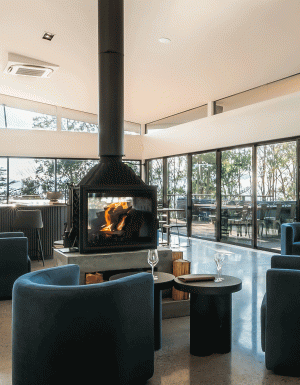
Get cosy by the roaring fireplace. (Credit: Natasha Mulhall)
Tamar Ridge & PIRIE Cellar Door is set on the west bank of the Tamar River, just 20 minutes north of Launceston and around two and a half hours’ drive from Hobart near the riverside village of Rosevears in northern Tasmania. Stretching more than 60 kilometres along the river, from the mouth near Launceston north towards Bass Strait, the Valley is a vast patchwork of vineyards, orchards, farmland and historic townships.
Style & decor
Come for a regular tasting, or book an experience. (Credit: Natasha Mulhall)
Floor-to-ceiling windows showcase panoramic views, while outdoor decks make the most of the surrounding scenery. Inside, the refined contemporary interiors strike a balance between modern luxury and the natural surrounds, with a double-sided fireplace to linger by. A Tamar River view creates a warm focal point. Natural wood accents add a sense of place, including a handcrafted 12-seat Tasmanian oak table that anchors the space with understated elegance.
Wine experiences
The cellar door’s curated wine experiences pair award-winning wines with local produce and the stories behind them. For those who prefer a leisurely visit without a set itinerary, the cellar door also offers cheese platters and small plates, best enjoyed with a glass in hand while taking in those Tamar River views.
Come for a taste, stay for an experience.
PIRIE & Oyster Experience
Taste the best of PIRIE matched with oysters. (Credit: Natasha Mulhall)
A true taste of Tasmania comes to life in the PIRIE & Oyster Experience, created in partnership with Tasmanian Oyster Co. Exploring the connection between merroir and terroir – the influence of the sea and soil on flavour – this guided tasting pairs three premium oysters from different Tasmanian growing regions with three expressions of PIRIE sparkling wine: the NV, 2021 Vintage and Blanc de Blanc.
As each oyster and wine pairing is revealed, guests discover how Tasmania’s unique landscapes shape flavour, from the mineral freshness of the ocean to the elegance and precision of cool-climate sparkling wine.
Pinot Noir Blending Experience
Try your own hand at mixing. (Credit: Natasha Mulhall)
For those who want to step behind the winemaker’s bench, the Pinot Noir Blending Experience offers a hands-on journey into the art of creating great wine.
Guests taste through three to four individual Pinot Noir clones from the previous vintage, each revealing its own personality through aroma, structure and character. Guided by the cellar door team, visitors explore how these individual components come together to create balance and complexity – before attempting their own blend.
Will you recreate the house style, or create something entirely original? This immersive experience offers a fascinating insight into the craft, creativity and precision that goes into every bottle.
Supreme Indulgence
Settle in for true indulgene. (Credit: Natasha Mulhall)
The most elevated experience at the cellar door, the Supreme Indulgence (PIRIE Sparkling with Caviar tasting) is a celebration of luxury, refinement and Tasmania’s exceptional produce.
Priced at $99 per person, the tasting pairs PIRIE Tasmania’s most distinguished sparkling wines with carefully selected sturgeon caviar, chosen to enhance the elegance, texture and finesse of each cuvée. Hosted by an expert member of the team, the experience unfolds as a thoughtful exploration of fine bubbles, delicate flavours and the craftsmanship behind every bottle.