15 things you didn’t know about Christmas Island

hero media
Located 2600 km north-west of Perth and closer to Asia than to mainland Australia, Christmas Island is unlike anywhere you’ve ever visited before.

Christmas Island, unfairly, is no stranger to bad headlines. So if the only thing you know about this tropical island in the middle of the Indian Ocean is what you’ve read in the news, read on to find out why – between its luxury eco-retreat, unique wildlife encounters and secret swimming spots – it might just be Australia’s best-kept secret, and one of the most unforgettable places you’ll ever visit.

1. It’s a tropical jungle paradise

With a tropical climate that enjoys balmy temperatures in the mid-20s year-round and a landscape characterised by lush jungle and an emerald-green coastline, Christmas Island is a true island paradise. It’s home to a dazzling array of rare and unusual birds and a crazy numbers of crabs, not to mention secret swimming spots and jungle waterfalls – and 63 per cent of its footprint is designated national park.


Tropical reefs teeming with life lie beyond the shoreline; with water temperatures bobbing around a clement 28°C, they make for some of the best diving and snorkelling spots you’ll find anywhere.
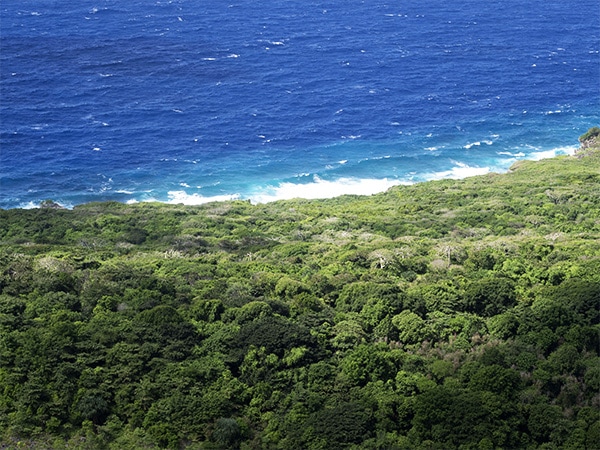
Christmas Island is a true paradise.

2. It’s home to one of Australia’s most remote and exclusive eco-lodges

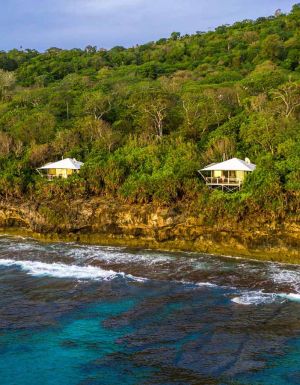
Swell Lodge is Christmas Island’s first luxury eco-retreat, set deep within the jungle of Christmas Island National Park on the edge of a cliff-side that drops away into the Indian Ocean. Its two solar-powered eco chalets are completely secluded from each other and thoughtfully designed in suitably natural and oceanic tones.


The pièce de résistance in each eco-chalet is an expansive private deck that provides your very own audience with the Indian Ocean – with its mighty swell and mesmerising sunsets.


Hire a car to explore the nature trails, waterfalls, hidden beaches and swimming holes around the island, as well as the magical wetland area known as the Dales (a popular crab hangout).
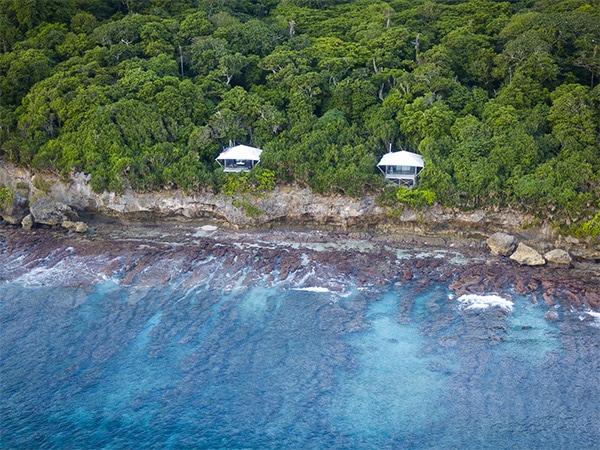
 

Swell Lodge is Christmas Island’s first luxury eco-retreat.

You can find more Christmas Island accommodation here.

3. It’s closer to Asia than mainland Australia

A trip to Christmas Island lets you feel like you’re leaving the country without having to think about visa requirements or plug adaptors: a speck in the Indian Ocean 2600 kilometres north-west of Perth, this Australian territory is closer to Asia than to mainland Australia; its nearest neighbour is Java, just 360 kilometres away. A direct flight from the WA capital takes just under four hours (and departs from the international terminal – all part of the adventure).

Virgin Australia runs flights twice a week from Perth.
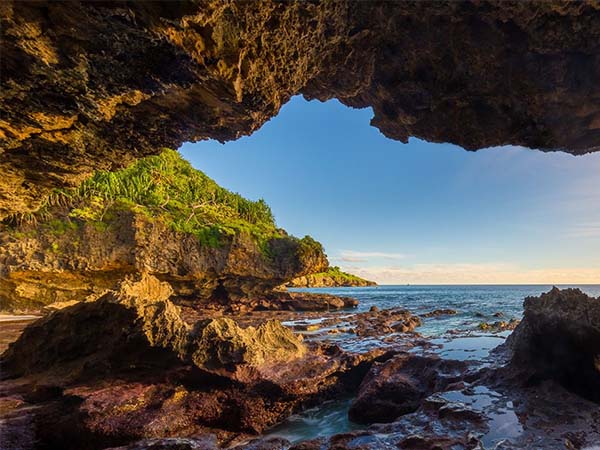
 

Merrial Beach on Christmas Island
Christmas Island is a wild destination in the Indian Ocean that’s closer to Asia than Perth. (Image: Christmas Island Tourism Association)

4. It has some of Australia’s best – and most hidden – beaches

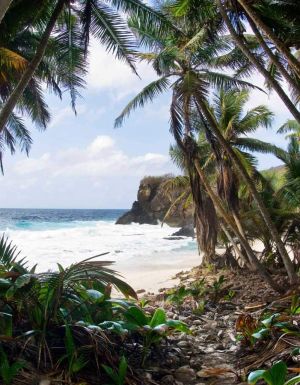
Secluded, fringed by coconut palms and only accessible via a forest boardwalk, Dolly Beach on Christmas Island’s east coast was voted seventh best beach in Australia by Tourism Australia beach ambassador Brad Farmer in 2017. And it’s just one of many similarly hidden gems on the island.


While its 80-kilometre coastline is dominated by an almost continuous sea cliff, it gives way to some shallow bays and a series of small and impossibly pretty sand and coral shingle beaches. There’s even one so petite, Merrial Beach (only accessible at low tide), that it comfortably accommodates a couple of people at a time; local ‘law’ dictates that if you already see a car parked at the trail’s entrance, drive on.
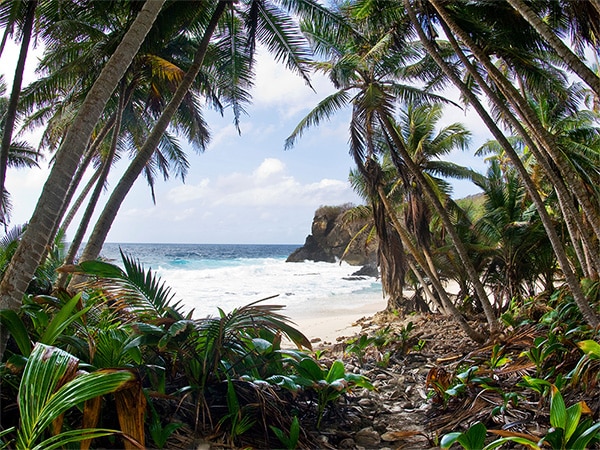
Explore Australia’s best – and most hidden – beaches. (Photo: Chris Bray)

Need tips, more detail or itinerary ideas tailored to you? Ask AT.

AI Prompt

5. There are secret swimming spots to discover

One of the joys of a trip to Christmas Island is getting to experience its myriad secret swimming holes, from a grotto associated with Chinese legend to Hughs Dale Waterfall (which makes not so much for a swimming spot as it does a rainforest shower spot).
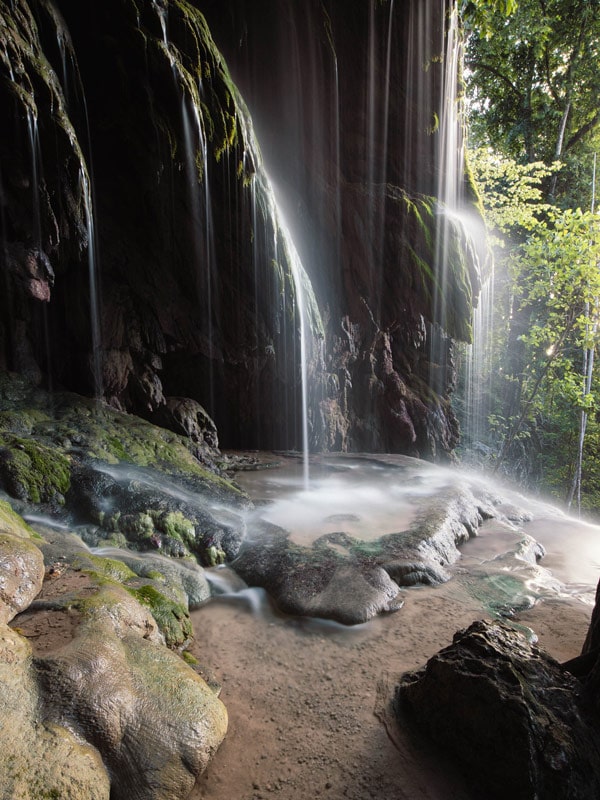
Hughes Dale Waterfall Christmas Island
Indulge in a rainforest shower at Hughs Dale Waterfall.

Take the mostly easy 1.5-kilometre walk through the rainforest along a boardwalk to get to the Hughs Dale Waterfall. This waterfall is set within the Dales, a unique wetland ecosystem that is fed from streams that bubble up from underground caves that flow into the ocean and have resulted in pooling water that has hewn a series of gorges into the landscape over time.


The Grotto, a sandy-floored hidden pool drenched with streaks of sunlight flowing in from the entrance of the cave, is equally magical and just a 10-minute drive from the Settlement. Then there are the island’s many beaches to explore; put Lily Beach at the top of your list, it is surrounded by cliffs on both sides and the at low tide the ocean recedes to reveal a collection of pretty rock pools to explore.

6. Christmas Island has some of the world’s best snorkelling and diving

Ringed by tropical reef, Christmas Island erupts dramatically from the edge of the Java Trench, the Indian Ocean’s deepest point – and with practically no coastal shelf, this means the water plummets to a depth of about 500 metres not far offshore, which means you don’t have to sail (or swim) very far to find some spectacular diving walls. All this combines to make for some of the best snorkelling and diving conditions in the world.


Take a day trip out with Christmas Island Wet ‘n’ Dry Adventures to explore untouched corals and shipwrecks and meet all manner of tropical fish including surgeon fish, wrasse, butterfly fish and giant trevally. You might even spot dolphins, sea turtles, and, between November and April, the majestic whale shark.
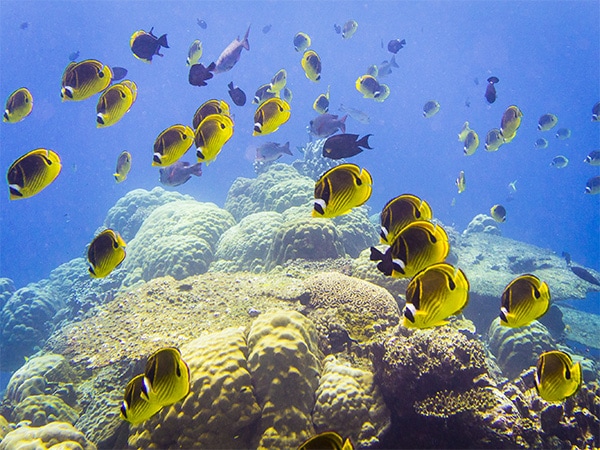
Christmas Island has some of the world’s best snorkelling and diving.

7. You can see crabs all year round. Lots of ’em.

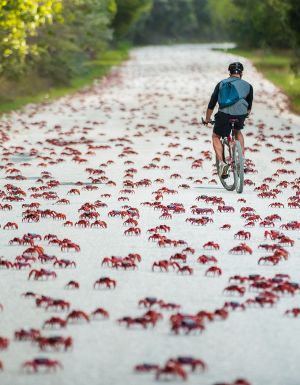
You might have heard of the annual red crab migration that takes place on Christmas Island and was made famous by Sir David Attenborough; the naturalist has described witnessing this phenomenon while shooting a documentary in 1990 as one of his greatest TV moments.


An estimated 40 to 50 million bright red land crabs live in shady spots all over the island and every year, with the first rainfall of the wet season, they start their merry march across the island to the ocean to breed – swarming across roads, streams, rocks and beaches and turning them all into blankets of red. The migration (which can happen anytime between October and January) is the island’s biggest tourist attraction but if your visit doesn’t coincide, rest assured you’ll still see crabs. Lots of ’em.


In fact, their proliferation contributes to a sense of ‘island time’ – the time it takes you to drive anywhere is dependent on how many crabs you must carefully navigate around and gently sweep off the road (your Swell Lodge hosts will show you how). In fact, you get so used to this idiosyncratic island ritual that it makes going to home to crab-free roads a rather strange sensation at first.
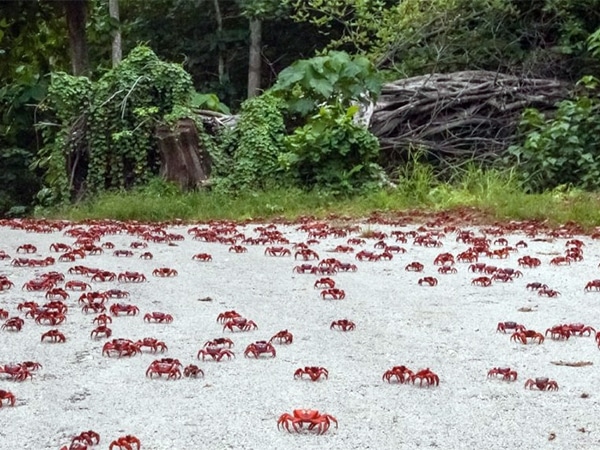
The annual crab migration is a sight to behold.

8. But it’s not all about the red crabs

The red crab is just one of 14 species of land crab that lives on Christmas Island. There’s also the endemic Christmas Island blue crab – with its beautiful sky-blue hues – and the coconut crab, the largest land-living arthropod in the world that’s also known as the robber crab on account of its thieving tendencies. Christmas Island hosts the largest and best-protected population of these magnificent creatures in the world.
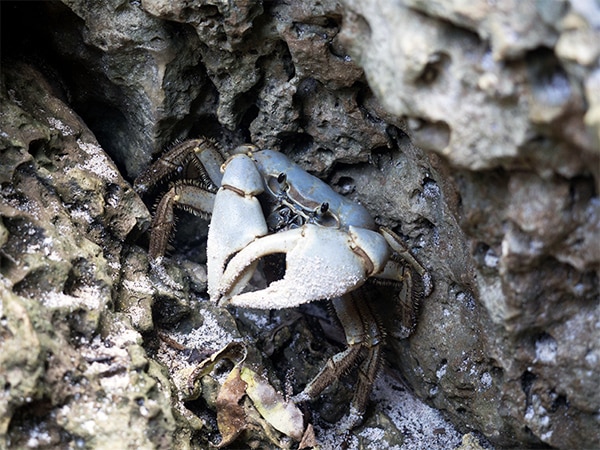
Keep your eyes peeled for a blue crab.

9. It’s a birdwatcher’s paradise

People flock (pun intended) from around the world to catch sight of Christmas Island frigatebird patrolling the sky, the rarest of its kind in the world, and the Abbott’s booby, a species of the seabird that only breeds here on the island. There are hundreds of bird species here, with seven of the 13 land birds endemic to the island. Watch out for the elegant golden bosun, the melodious Christmas Island thrush and the elusive Christmas Island hawk owl.


One place you’re all but guaranteed a sighting of an Abbott’s booby, or one of the island’s other feathered friends, is during feeding time at the volunteer-run bird rehabilitation centre at the Parks Australia headquarters.
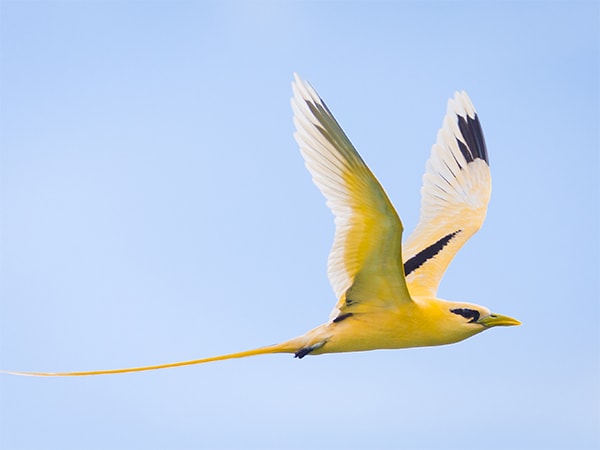
There are hundreds of bird species on the island.

Weekly travel news, experiences
insider tips, offers, and more.

10. And a natural scientist’s dream, too

With so many endemic species, Christmas Island is considered the Galápagos of the Indian Ocean; you’ll meet plenty of PhD students out here researching its weird and wonderful fauna. Their efforts are focused on the Pink House, a research station in the middle of the rainforest that includes a reptile house and Lizard Lounge, which is open to tourists every Wednesday.


Here, Parks Australia is busy breeding the blue-tail lizard, which is extinct in the wild, and other endemic reptiles

11. Christmas Island is a melting pot of cultures

The island is home to a multicultural community that harmoniously blends Buddhist, Christian, Taoist and Muslim residents. The foundation of this melting pot was laid in the late 19th century, when Britain annexed Christmas Island to claim its valuable phosphate deposits and migrant workers, including Chinese, Malays and Sikhs, arrived from overseas to staff the mine and its operations.


The island became an Australian territory in 1958 and today its 2000-strong population, focused largely on the settlement at Flying Fish Cove, is a mixture of Chinese and Malay Australians as well as people from mainland Australia. Watch out for the Taoist temples and shrines that overlook the ocean, and the gleaming mosque in Kampong, the island’s traditionally Malay neighbourhood.
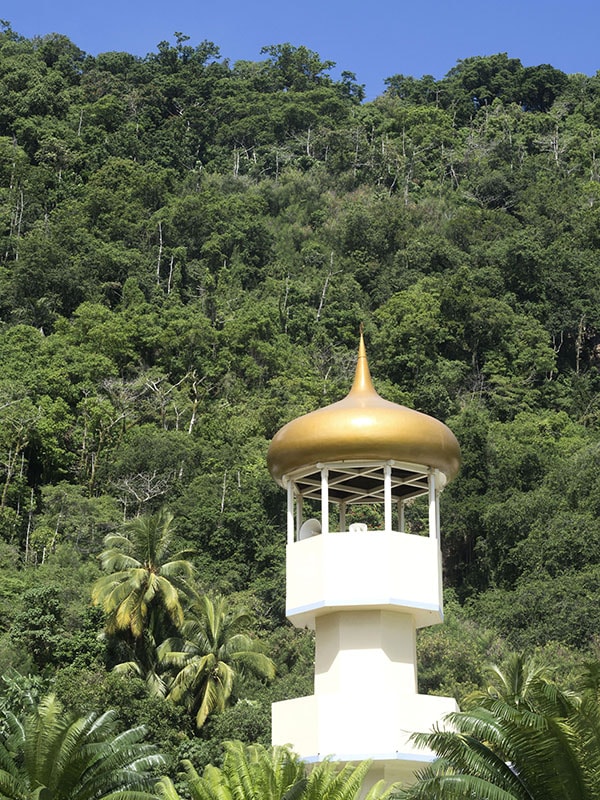
You’ll find the melting pot of cultures reflected in the architecture on Christmas Island.

12. It’s got one of the world’s most unique golf courses

This one’s for those who like their nine-hole golf course with a view. Australia’s northernmost golf course is located among palm trees and tropical rainforest with a sweeping view of the Indian Ocean. Just watch out for robber crabs trying to pinch your golf ball. Established in 1955, the golf course hosts the Christmas Island Golf Open every year in May.

13. There’s even an open-air cinema

Cap off your unique island experience by watching a movie in the balmy open-air of Christmas Island Outdoor Cinema. Established in the ’80s, this community-based organisation is run by volunteers and screens new-release and cult-classic movies at 7.30pm every Saturday. Tickets are just $5 a pop for adults and $2 for children (up to 17 years), and there’s a kiosk, too, selling choc tops, popcorn and other snacks.

14. You can stopover in the Cocos Keeling Islands

Get two holidays for one when you visit Christmas Island by stopping over in the Cocos Keeling Islands – another external Australian territory in the Indian Ocean, about halfway between Perth and Sri Lanka.

Of the two return flights between Perth and Christmas Island a week, one leg of each goes via the Cocos Keeling Islands. This atoll of 27 islands, of which only two are inhabited (with a tiny community of about 600 Cocos Malay people), is a perfect complement to a stay on Christmas Island. Both fall into tropical paradise territory: whereas Christmas Island is all wild jungle and dramatic sea cliffs, the Cocos (Keeling) Islands are all long stretches of white-sand beaches fringed by lazily swaying palm trees.
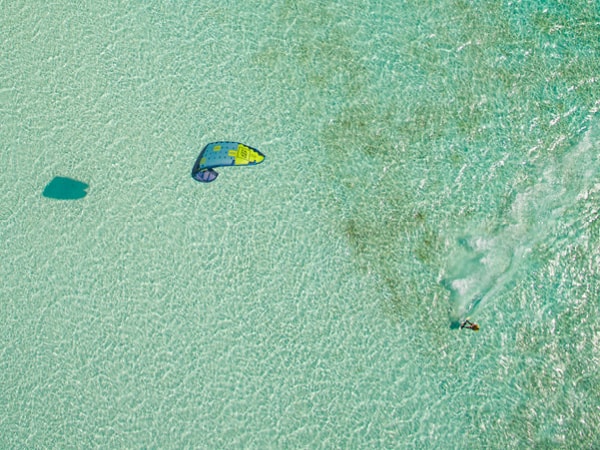
Cocos Keeling Islands Beach
The waters off the island are famously pristine.

15. Christmas Island is a freediver’s dream

A dreamy destination for both the professional freedivers and for those wanting to learn the skills to dive beneath the surface on one breath. Australian freediving champion and AIDA/Molchanovs instructor David Mulheron, has a passion for teaching others to freedive. Christmas Island is blessed with crystal clear water, incredible marine life and freedivers are blessed with the luxury of the reef dropping off only a short swim from shore. You won’t believe what you can see in just one breath.

Whether you are a complete newbie or are fine-tuning your skills, you will learn techniques in a short period of time that will leave you feeling confident and in awe of what your body is capable of. Our tip would be to schedule your freediving course for the first two days of your trip, that way you can continue to improve your skills every day for the rest of your visit to this remote slice of paradise.
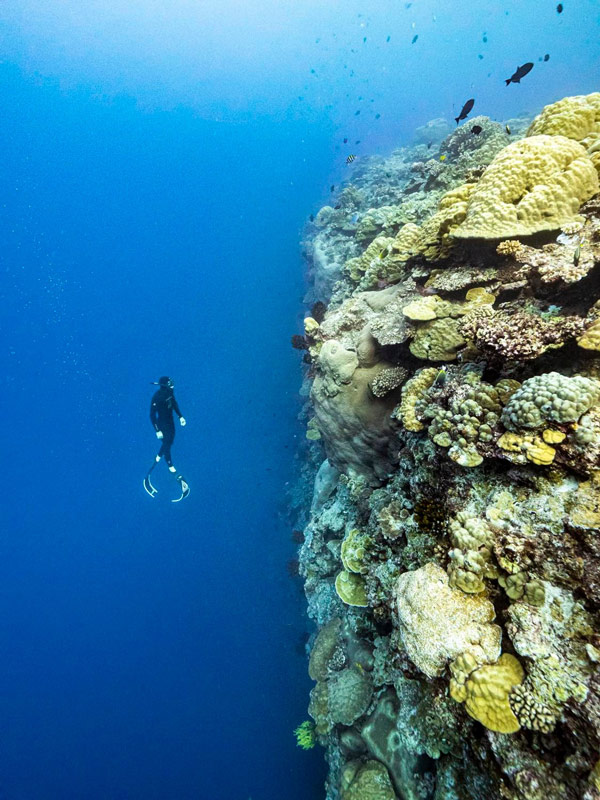
Freediving with Dave Mulheron on Christmas Island
Learn to freedive to explore the underwater paradise of Christmas Island.
Read our guide to Christmas Island for more about this unique Indian Ocean destination.
Imogen Eveson
Imogen Eveson is Australian Traveller’s Print Editor. She was named Editor of the Year at the 2024 Mumbrella Publish Awards and in 2023, was awarded the Cruise Line Industry Association (CLIA) Australia’s Media Award. Before joining Australian Traveller Media as sub-editor in 2017, Imogen wrote for publications including Broadsheet, Russh and SilverKris. She launched her career in London, where she graduated with a BA Hons degree in fashion communication from world-renowned arts and design college Central Saint Martins. She is the author/designer of The Wapping Project on Paper, published by Black Dog Publishing in 2014. Growing up in Glastonbury, home to the largest music and performing arts festival in the world, instilled in Imogen a passion for cultural cross-pollination that finds perfect expression today in shaping Australia’s leading travel titles. Imogen regularly appears as a guest on radio travel segments, including ABC National Nightlife, and is invited to attend global travel expos such as IMM, ILTM, Further East and We Are Africa.
View profile and articles
hero media

Inside Geelong’s glow-up from factory town to creative capital

    Chloe Cann Chloe Cann
    Abandoned mills and forgotten paper plants are finding second lives – and helping redefine a city long underestimated. 

    Just 15 years ago, Federal Mills was a very different place. Once among the most significant industrial sites in Victoria, the historic woollen mill was one of a dozen that operated in Geelong at the industry’s peak in the mid-20th century, helping the city earn its title as ‘wool centre of the world’. But by the 1960s global competition and the rise of synthetic fabrics led to the slow decline of the industry, and Federal Mills finally shuttered its doors in 2001. Within a few years, the abandoned North Geelong grounds had become makeshift pastoral land, with cows and goats grazing among the overgrown grass between the empty red-brick warehouses. It was a forgotten pocket of the city, all but two klicks from the bustle of the CBD.  

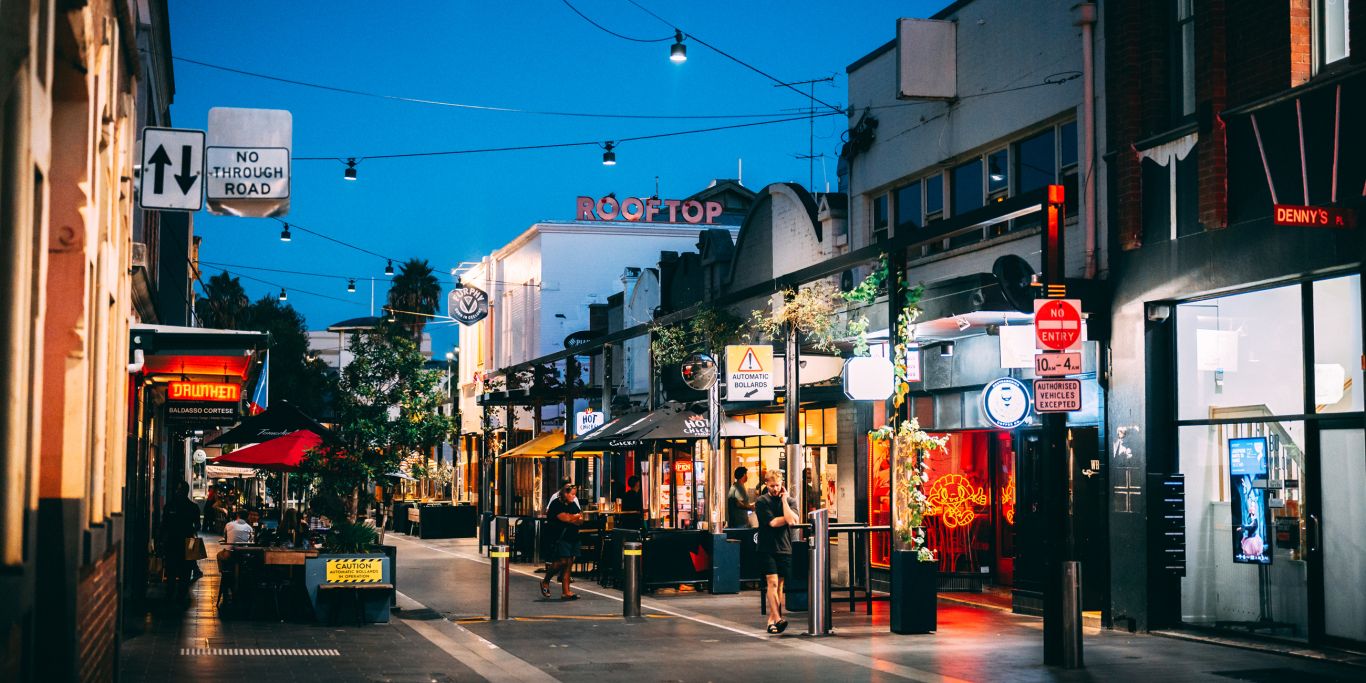
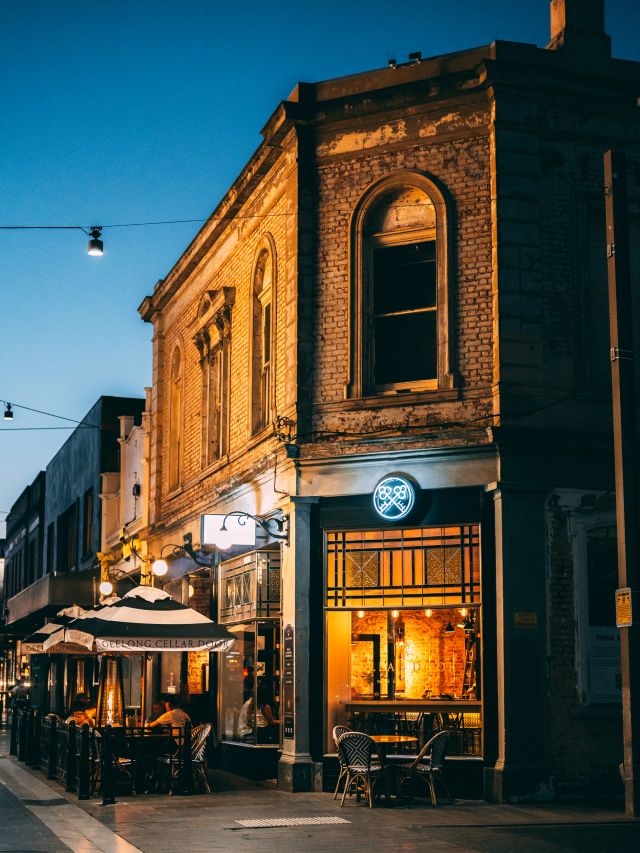
    Geelong cellar door wine bar
    Geelong has shed its industrial identity to become an innovative urban hub with reimagined heritage spaces. (Image: Ash Hughes)

    Federal Mills: from forgotten factory to creative precinct 

    Today, the century-old complex stands reborn. The distinctive sawtooth-roof buildings have been sensitively restored. An old silo is splashed with a bright floral mural, landscapers have transformed the grounds, and the precinct is once again alive with activity. More than 1000 people work across 50-plus businesses here. It’s so busy, in fact, that on a sunny Thursday morning in the thick of winter, it’s hard to find a car park. The high ceilings, open-plan design, and large multi-paned windows – revolutionary features for factories of their time – have again become a drawcard.  

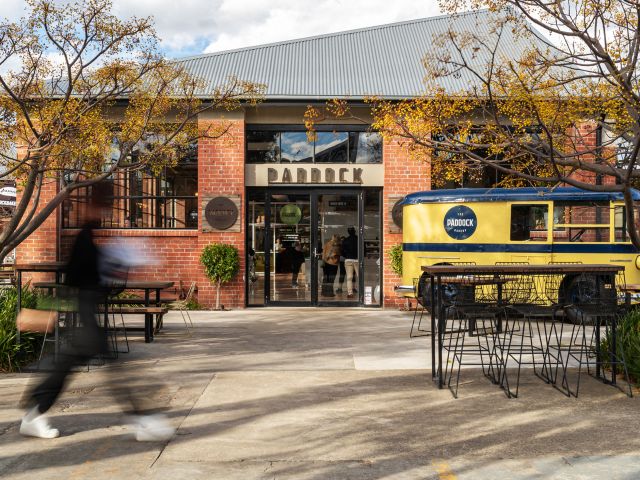
    Paddock Bakery andPatisserie
    Paddock Bakery and Patisserie is housed within the historic wool factory. (Image: Gallant Lee)

    At Paddock , one of the precinct’s newer tenants, weaving looms and dye vats have been replaced by a wood-fired brick oven and heavy-duty mixers. Open since April 2024, the bakery looks right at home here; the building’s industrial shell is softened by ivy climbing its steel frames, and sunlight streams through the tall windows. Outside, among the white cedar trees, families at picnic benches linger over dippy eggs and bagels, while white-collar workers pass in and out, single-origin coffee and crème brûlée doughnuts in hand. 

    Geelong: Australia’s only UNESCO City of Design 

    Paddock Bakery
    Paddock Bakery can be found at Federal Mills. (Image: Gallant Lee)

    “A lot of people are now seeing the merit of investing in Geelong,” says Paul Traynor, the head of Hamilton Hospitality Group, which redeveloped Federal Mills. A city once shunned as Sleepy Hollow, and spurned for its industrial, working-class roots and ‘rust belt’ image, Geelong has long since reclaimed its ‘Pivot City’ title, having reinvented itself as an affordable, lifestyle-driven satellite city, and a post-COVID migration hotspot.  

    And the numbers stand testament to the change. In March 2025, and for the first time in its history, Greater Geelong became Australia’s most popular regional town for internal migration, overtaking Queensland’s Sunshine Coast. Current forecasts suggest Geelong will continue to outpace many other Australian cities and towns, with jobs growing at double the rate of the population.

    Tourism is booming, too. The 2023-24 financial year was Geelong and The Bellarine region’s busiest on record, with 6.4 million visitors making it one of the fastest-growing destinations in the country. It’s not hard to see why: beyond the city’s prime positioning at the doorstep of the Great Ocean Road, Geelong’s tenacity and cultural ambition stands out.  

    As Australia’s only UNESCO City of Design, Geelong is swiftly shaking off its industrial past to become a model for urban renewal, innovation, sustainability and creative communities. The signs are everywhere, from the revitalisation of the city’s waterfront, and the landmark design of the Geelong Library and Heritage Centre and Geelong Arts Centre, to the growing network of local designers, architects and artists, and the burgeoning roster of festivals and events. That’s not even mentioning the adaptive reuse of storied old industrial buildings – from Federal Mills, to Little Creatures’ brewery ‘village’ housed within a 1920s textile mill – or the city’s flourishing food and wine scene.  

    The rise of a food and wine destination  

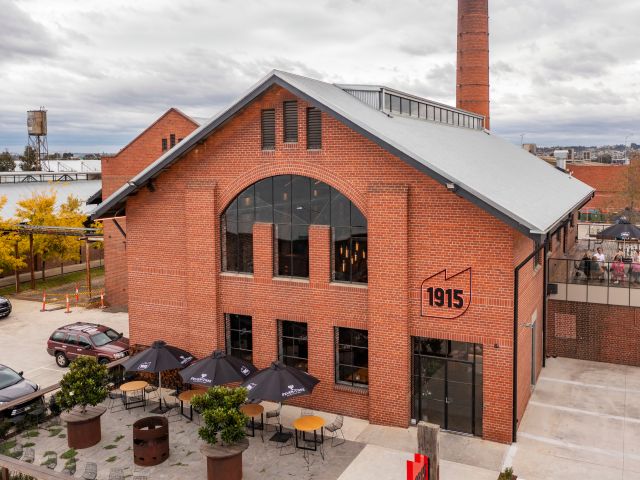
    boiler house
    Restaurant 1915 is housed within a restored former boiler house. (Image: Harry Pope/Two Palms)

    Traynor credits now-closed local restaurant Igni, which opened in 2016, as the turning point for Geelong’s hospo industry. “[Aaron Turner, Igni’s chef-patron] was probably the first guy, with all due respect, to raise the bar food-wise for Geelong,” he says. “People now treat it really seriously, and there’s clearly a market for it.” While Igni is gone, Turner now helms a string of other notable Geelong venues, including The Hot Chicken Project and Tacos y Liquor, all within the buzzy, street art-speckled laneways of the CBD’s Little Malop Street Precinct. Many others have also popped up in Igni’s wake, including Federal Mills’ own restaurant, 1915 Housed within the cavernous boiler house, 1915’s interior is dramatic: soaring, vaulted ceilings with timber beams, exposed brick, a huge arched window. The share plates echo the space’s bold character, playing with contrast and texture, with dishes such as a compressed watermelon tataki, the sweet, juicy squares tempered by salty strands of fried leeks, and charred, smoky snow peas dusted with saganaki on a nutty bed of romesco. 

    Woolstore
    The Woolstore is a new restaurant and bar housed within a century-old warehouse. (Image: Amy Carlon)

     The Woolstore , one of The Hamilton Group’s most recent hospo projects, opened in February. It occupies a century-old riverside warehouse and exudes a more sultry, fine dining ambience. Much like Federal Mills, the blueprint was to preserve the original brickwork, tallowwood flooring and nods to the building’s former life. That same careful consideration extends to the well-versed, affable waitstaff as well as the kitchen. Head chef Eli Grubb is turning out an eclectic mix of ambitious and indulgent mod Oz dishes that deliver: strikingly tender skewers of chicken tsukune, infused with hints of smoke from the parrilla grill, and glazed with a moreish, sweet gochujang ‘jam’; nduja arancini fragrant with hints of aniseed and the earthy lick of sunny saffron aioli; and golden squares of potato pavé, adorned with tiny turrets of crème fraîche, crisp-fried saltbush leaves, and Avruga caviar, to name but a few stand-out dishes.  

    Woolstore menu
    Woolstore’s menu is designed for sharing.

    Breathing new life into historic spaces  

    On the city’s fringe, hidden down a winding side road with little fanfare, lies a long-dormant site that’s being gently revived. Built from locally quarried bluestone and brick, and dating back to the 1870s, the complex of original tin-roofed mill buildings is lush with greenery and backs onto the Barwon River and Buckley Falls; the audible rush of water provides a soothing soundtrack. Fyansford Paper Mill is one of few complexes of its time to survive intact. It feels steeped in history and spellbindingly rustic.  

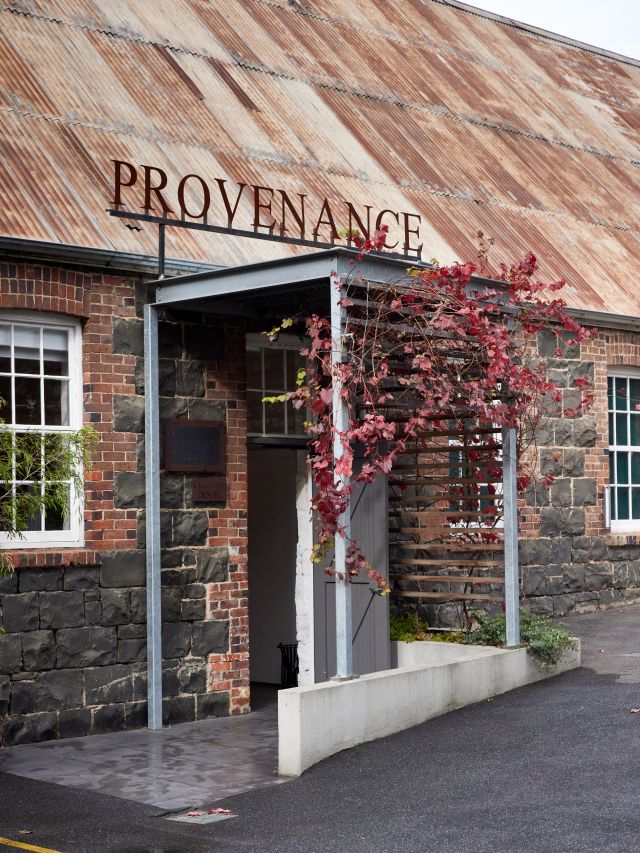
    “We were looking for an old industrial place that had some charm and romance to it,” explains Sam Vogel, the owner, director and winemaker at Provenance Wines which moved here in 2018. When he first viewed the building with his former co-owner, it was in such a state of disrepair that the tradie tenant occupying the space had built a shed within it to escape the leaking roof and freezing winter temperatures. “To say it was run down would be an understatement,” he notes. “There was ivy growing through the place; the windows were all smashed. It was a classic Grand Designs project.” 

    Provenance Wines
    Provenance Wines moved to Fyansford Paper Mill in 2018. (Image: Cameron Murray Photography)

    The team has since invested more than a million dollars into their new home. Where paper processing machinery once sat, wine barrels are now stacked. Vaulted cathedral ceilings are strung with festoon lights, and hidden in plain sight lies a shadowy mural by local street artist de rigueur Rone – one of only three permanent works by the artist.

    While the award-winning, cool-climate pinot noir, riesling and chardonnay naturally remain a key draw at Provenance, the winery’s restaurant is a destination in itself. Impressed already by whipsmart service, I devour one of the most cleverly curated and faultlessly executed degustations I’ve had in some time. It’s all prepared in a kitchen that is proudly zero-waste, and committed to providing seasonal, ethical and locally sourced meat and produce under head chef Nate McIver. Think free-range venison served rare with a syrupy red wine jus and a half-moon of neon-orange kosho, shokupan with a deeply savoury duck fat jus (a modern Japanese take on bread and drippings), and a golden potato cake adorned with a colourful confetti of dehydrated nasturtiums and tomato powder, and planted atop a sea urchin emulsion.  

    handcrafted pieces
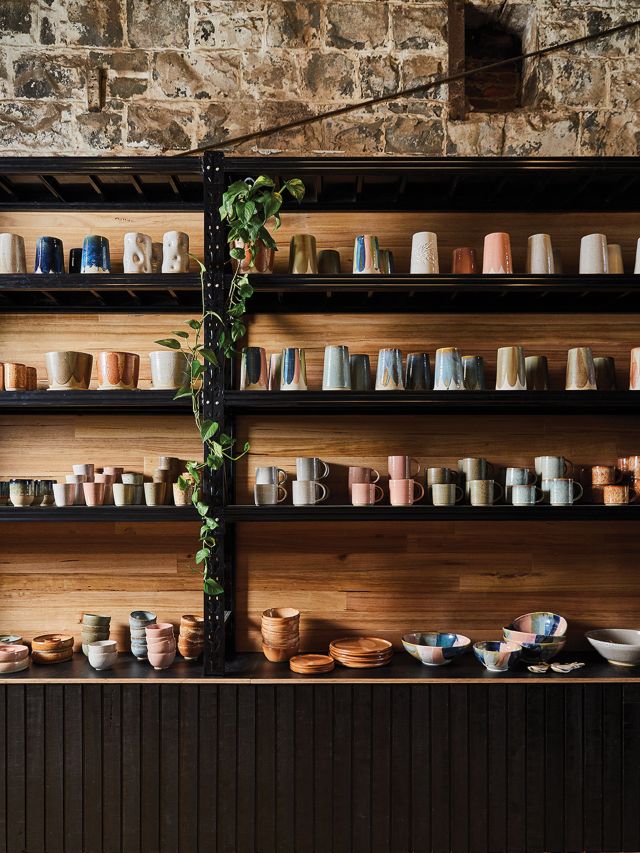
    Bell’s handcrafted functional pieces on display.

    The complex is home to a coterie of independent businesses, including a gallery, a jeweller, and its latest tenant, ceramicist Elizabeth Bell, drawn here by the building’s “soul”. “There’s so much potential for these buildings to have new life breathed into them,” says Bell, whose studio is housed within the old pump room. “Even people in Geelong don’t know we’re here,” she says. “It’s definitely a destination, but I like that. It has a really calming atmosphere.”  

    A Melbourne transplant, Bell now feels at home in Geelong, which offers something Melbourne didn’t. “If this business was in Melbourne I don’t think it would’ve been as successful,” she notes. “It’s very collaborative in Geelong, and I don’t think you get that as much in Melbourne; you’re a bit more in it for yourself. Here it’s about community over competition.”  

    Elizabeth Bell
    Ceramicist Elizabeth Bell has a store in Fyansford Paper Mill.