hero media

7 ways to switch off and reconnect with nature in Albury Wodonga

Credit: Destination NSW

Switch the hustle and bustle for a weekend of birdsong and greenery on the border.

Straddling the Murray River where New South Wales meets Victoria, Albury Wodonga is just hours by car or train (or even a quick flight) from many major cities, but it feels a million miles away from the everyday.

Here, you’ll find a blend of relaxed country lifestyle and modern city amenities, where a booming culinary scene and vibrant arts offerings meet a rich Indigenous history and stunning natural vistas. Spend time amongst river red gums, wildlife-filled wetlands and winding waterways.

Ready to roll on the river? Here’s where to begin.

1. Birdwatch in Wonga Wetlands
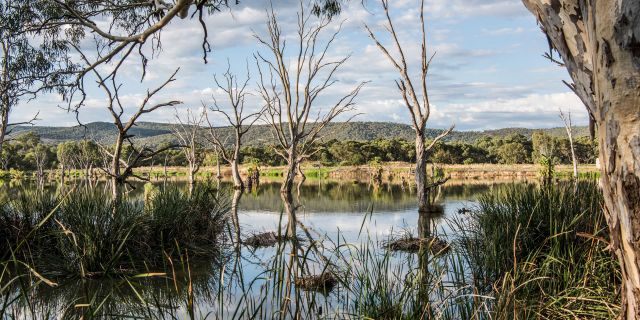
The scenic Wonga Wetlands along the Wagirra Trail and Yindyamarra Sculpture Walk, West Albury.
Walk along Wonga Wetlands, looking for local birdlife. (Credit: Destination NSW)

It might be close to Albury’s CBD, but Wonga Wetlands feels a watery world away. This former grazing land has been restored to 80 hectares of lagoons, billabongs and river red gums, and you can now wander three kilometres of walking trails as you spot cormorants, spoonbills, egrets and sacred kingfishers. More than 170 bird species call the wetlands home, thanks to the Murray’s cycle of flooding and drying, so pack a picnic, settle in at a bird hide, and pull out those binoculars.

2. Explore the Murray River
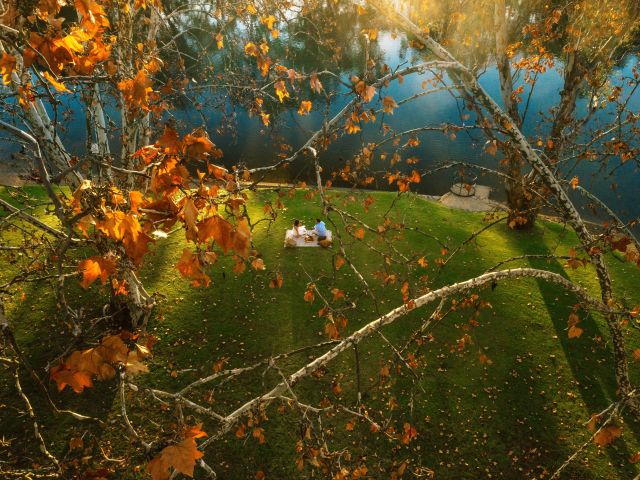
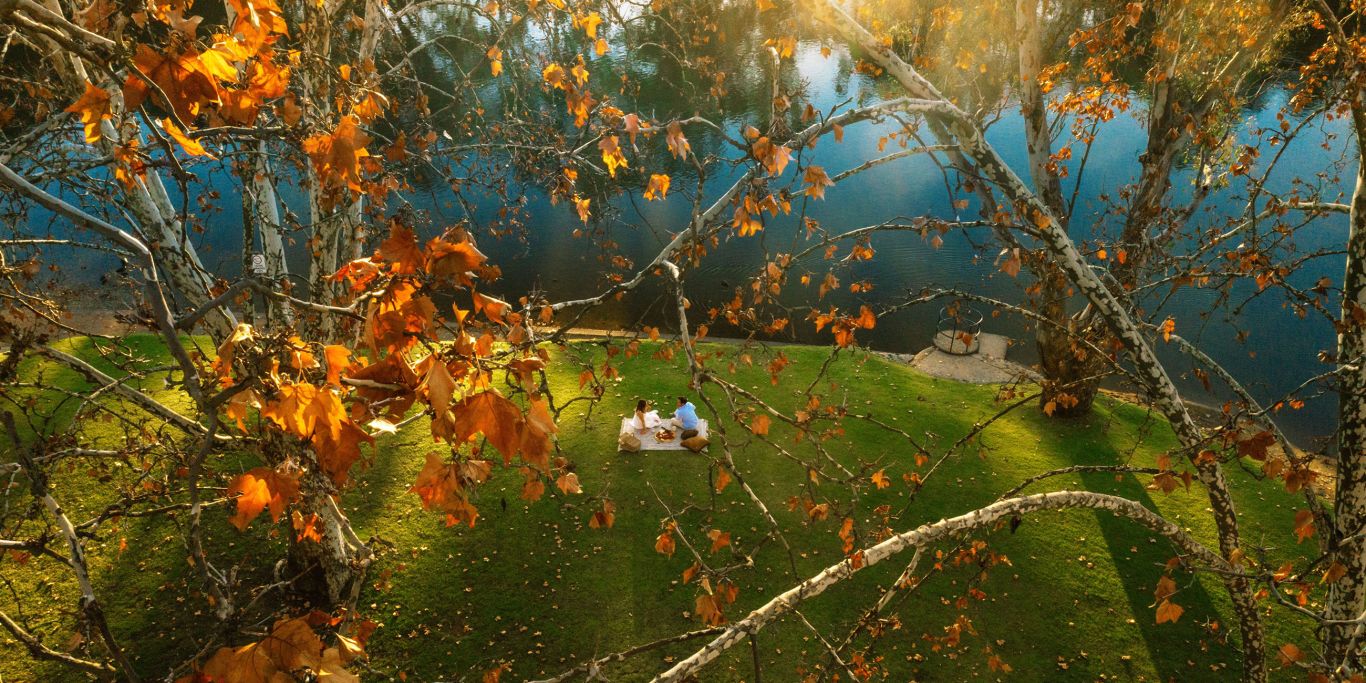
picnicers in Noreuil Park albury wodonga nature autumn
Take a picnic to enjoy in Noreuil Park. (Credit: Destination NSW)

The Murray River runs between Albury and Wodonga, where locals swap desks and deadlines for shaded riverbanks. Less than a kilometre from Albury’s CBD sits Noreuil Park, the city’s favourite stretch of riverfront. Cool off on the famous loop float, hire a kayak, launch a stand-up paddleboard or cast a line.

Afterwards, chuck a rug on the lawn under a plane tree, fire up one of the free barbecues and watch the water as you munch on some Murray cod.

Need tips, more detail or itinerary ideas tailored to you? Ask AT.

AI Prompt

3. Take a sculpture walk
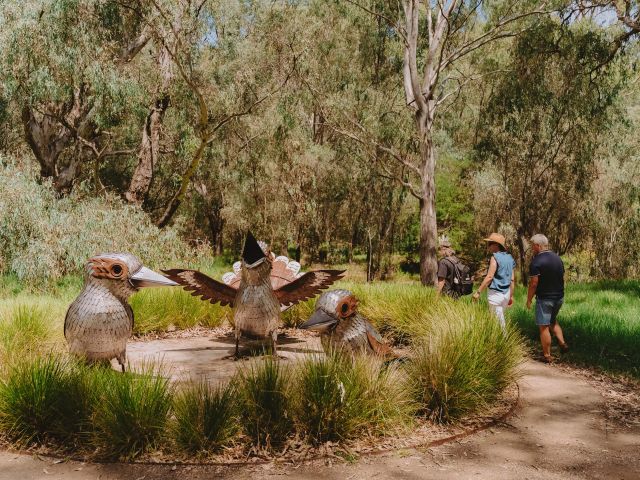
Albury Wodonga Yindyamarra Sculpture Walk
See the art along the Yindyamarra Sculpture Walk.

Albury Wodonga’s three sculpture trails showcase the Murray through First Nations tales on foot or by bike. Along the Yindyamarra Sculpture Walk, 15 contemporary Aboriginal artworks celebrate kinship and Country. The Crossing Place Trail passes the Wodonga Scar Tree, where local Indigenous people once harvested bark to craft canoes, and the Gateway Island trail tells you how the Murray sustained First Nations people for millennia.

4. Get moving on local tracks and trails
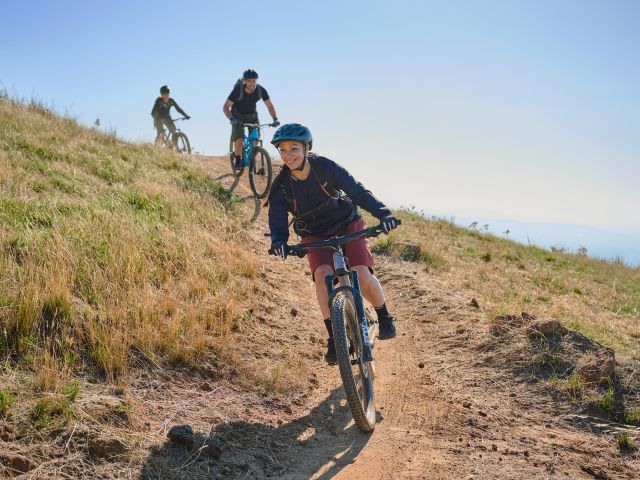
bike rider on albury wodonga nature trails
Take your bike to Hunchback Mountain Bike Park.

More than 100 kilometres of trails cross Albury Wodonga’s hills, reserves and riverbanks. Mountain bikers can tackle the championship-calibre descents of Nail Can Hill, weaving through eucalyptus forest where the rare crimson spider orchid blooms, or hone their skills at Hunchback Mountain Bike Park‘s 29 graded trails.

Keen to explore on foot? Huon Hill makes the sore legs worth it, with lookouts across Lake Hume and the Kiewa Valley, while McFarlanes Hill meanders through stringybark woodland and rocky outcrops.

For a slower pace, the 44-kilometre High Country Rail Trail hugs the shores of Lake Hume, crossing the red-pillared Sandy Creek Bridge before rolling into Tallangatta.

5. Check into restorative stays
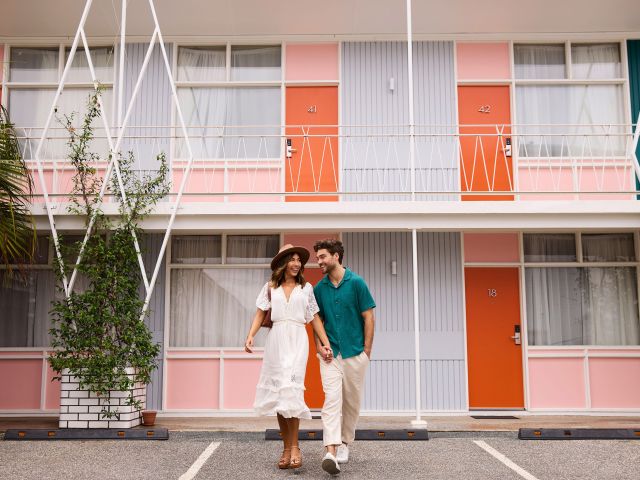
Couple standing outside the retro inspired Astor Hotel Motel in Albury
Check into one of Albury Wodonga’s over 60 accommodation options. (Credit: Destination NSW)

Some moments call for a boutique hotel. Others call for backing the caravan up beside the lake. Whether you’ve spent the day splashing in the Murray, furiously clocking kilometres on the bike trails or entertaining kids in playgrounds at the water’s edge, there’s somewhere to lay your head.

From motels shaded by river red gums to lakeside holiday parks and boutique hotels, Albury Wodonga’s 60-plus accommodation options mean you’re never far from a morning walk along the Murray or dinner on Dean Street. But be warned: book ahead. You might not be the only one craving a weekend by the Murray, especially in the school holidays.

Weekly travel news, experiences
insider tips, offers, and more.

6. Enjoy delicious dining options

yardbird restaurant
Enjoy incredible meals in Albury Wodonga.

Every paddle, bushwalk and bike trail deserves a proper meal afterwards. Once you’ve swapped out your damp swimmers or your dusty trainers and start to sniff out a feed, you’ll quickly discover you’re surrounded by one of Australia’s richest agricultural regions.

Unsurprisingly, Albury Wodonga’s dining scene is all about that Riverina produce. We’re talking Murray cod (of course) but also premium local beef from the valleys, olive oil from nearby groves, cool-climate wines and European-style cheeses.

The restaurants, wine bars and breweries around Dean Street and Junction Square are all within easy reach, serving everything from modern Australian and Mediterranean to Thai, Vietnamese, Italian and classic wood-fired steakhouse fare. Looking for a riverside brunch? A comforting bowl of dumplings on a winter evening? Or up the ante with the vibrant flavours of Europe? Whatever the craving, there’s a table waiting.

7. Get out on Lake Hume
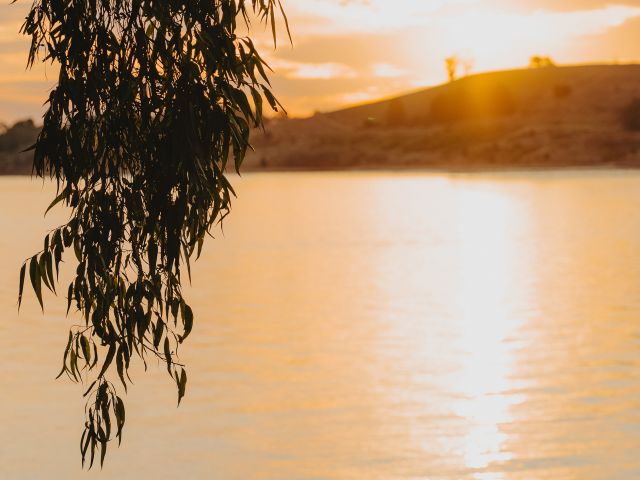
lake hume at sunset in albury wodonga nature
Be sure to stay for a Lake Hume sunset.

When you’re ready to dial up the solitude, trade the river for a veritable inland sea: Lake Hume. Just 15 minutes from Albury and Wodonga, it’s one of Australia’s largest water storage reservoirs. In other words, there’s plenty of space to swim, paddle and stake out a patch of shoreline all to yourself.

Take the long way through Riverina farmland, stopping at the dam wall to appreciate just how enormous Lake Hume is. Cast a line for Murray cod, rainbow trout, golden perch or redfin and unpack a bag of bakery treats beneath the trees before launching a kayak into the vastness.

Afterwards, stop by the Bonegilla Migrant Experience, where the remaining accommodation blocks tell the stories of more than 320,000 post-war migrants who passed through between 1947 and 1971. Give yourself time to walk through the preserved camp, stopping to digest the photographs, personal stories and artworks that reveal what it meant for residents to begin a new life at the edge of the world.

Even if you’re exhausted, stay until twilight. The sunset is about to put on a hell of a leaving show for you.

Start planning your escape into nature at visitalburywodonga.com.

Want to see more stories from Australian Traveller in your Google search results?

  1. Click here to set Australian Traveller as a preferred source.
  2. Tick the box next to "Australian Traveller". That's it.
Kate Bettes
Kate Bettes is a freelance travel writer. Whether having a picnic in Vietnamese jungle with new friends, or partying in the back of a limousine in Hollywood, Kate’s experiences have left her with the sneaking suspicion that the best travel memories happen when you least expect. It’s this feeling - and how to get it - that she loves to write about.
View profile and articles
hero media

Unforgettable First Peoples tours and experiences in Victoria

    Angela Saurine Angela Saurine
    From ancient aquaculture systems to sacred rock art shelters, Victoria’s First Peoples cultural experiences offer a powerful connection to one of the world’s oldest living cultures – where every site, story and smoking ceremony invites a deeper understanding of the land beneath your feet. 

    Victoria’s sweeping landscapes hold stories far older than any road map can trace – stories etched into stone, sung through generations and woven into every bend of river and rise of hill. From the lava flows of Budj Bim to the ancient middens of Moyjil/Point Ritchie and the volcanic crater of Tower Hill, the state is home to some of the most significant First Peoples cultural sites in Australia. These places, along with other immersive experiences, offer not only a window into a 60,000-year legacy, but a profound way of understanding Country itself. As more travellers seek connection over checklists, guided tours by Traditional Owners offer respectful, unforgettable insights into a living culture that continues to shape the land and the people who walk it. 

    Budj Bim cultural landscape  

    Budj Bim Cultural Landscape
    Budj Bim Cultural Landscape is on Gunditjmara Country. (Image: Visit Victoria)

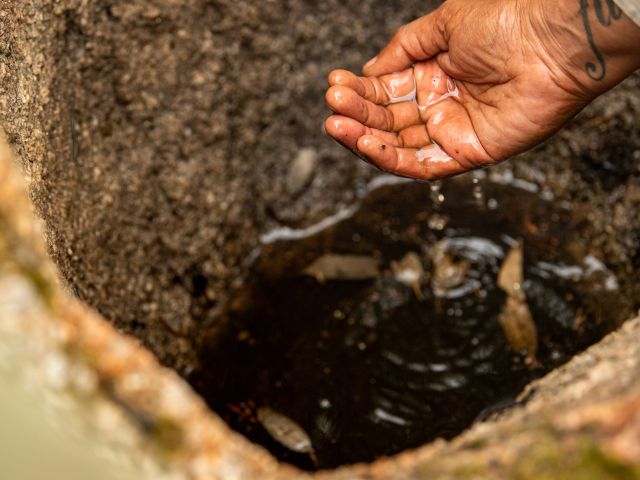
    Venture beyond the surf and sand of the Great Ocean Road to discover a deeper story etched into the volcanic landscape. At Budj Bim, ancient aquaculture channels built by the Gunditjmara people to trap, store and harvest kooyang (short-finned eel) reveal one of the world’s oldest living cultures. While you’re in the area, head over to the state-of-the-art Tae Rak Aquaculture Centre, where you can observe the eels in a special tank, wander the shores of Tae Rak (Lake Condah), and enjoy a bite at the Bush Tucker Cafe. Also nearby is Tower Hill, a dormant volcano reborn as a wildlife reserve, offering trails through bushland teeming with emus and koalas. 

    eel tank
    The kooyang (eel) tank at Tae Rak. (Image: Visit Victoria)

    Dumawul Kooyoora Walking Tour 

    Dumawul walkingtour
    Guests are guided through Kooyoora State Park on the Dumawul walking tour. (Image: Visit Victoria)

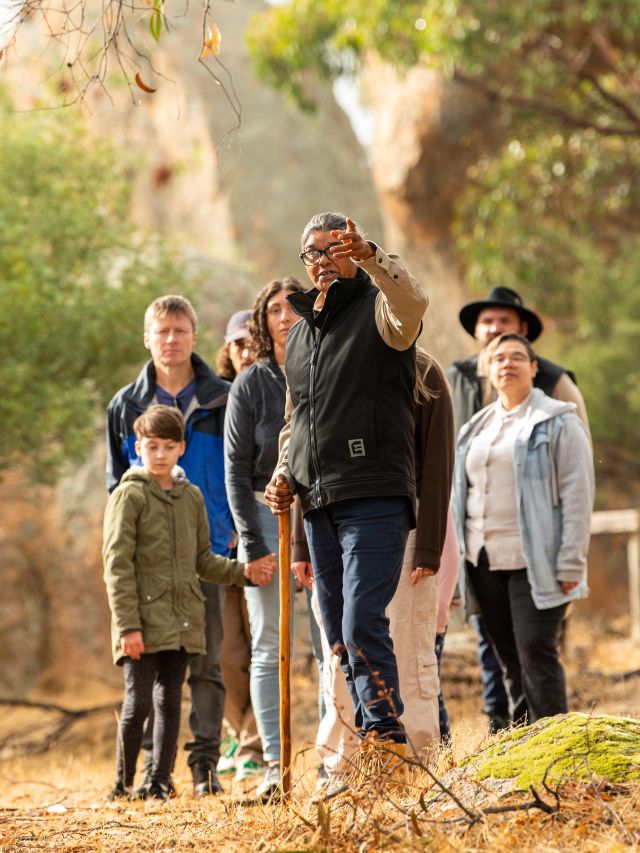
    Step into a timeless landscape with Dumawul’s guided tour through Kooyoora State Park, around an hour’s drive west of Bendigo in north-central Victoria. Led by Djaara guides, this immersive half-day journey breathes life into Country, weaving together stories, bush tucker and ancient rock art. Known to the Dja Dja Wurrung people as Guyura – the ‘mountain of light’ – this dramatic granite range is rich with cultural and spiritual significance.  The adventure begins with a meet-up at the Bridgewater Hotel on the banks of the Loddon River, before guests are welcomed onto Country with a traditional Smoking Ceremony – a powerful ritual that honours ancestors and cleanses those who walk the land. From there, it’s a gentle wander through rugged outcrops and open bushland, with sweeping vistas unfolding at every turn. Along the way, guides share their knowledge of how the Dja Dja Wurrung peoples have cared for and adapted with this land for generations, offering a rare and moving window into an ancient way of life that continues to thrive today.  

    Kooyoora walking tour
    Knowledge of the Dja Dja Wurrung is shared on the trail. (Image: Visit Victoria)

    Kingfisher Cruises  

    Kingfisher Cruises
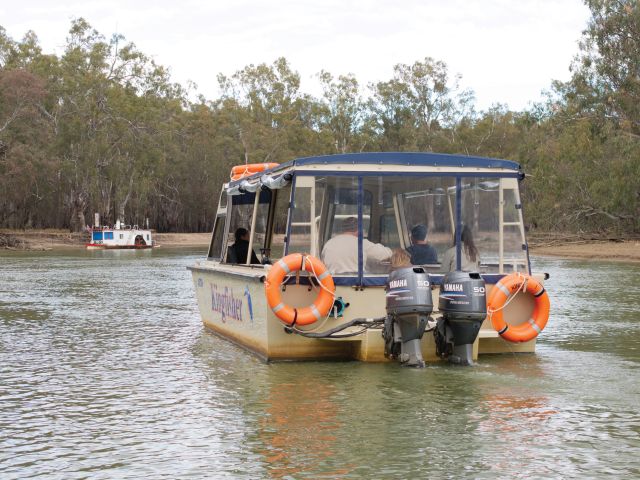
    Cruising the Murray with Kingfisher Cruises. (Image: Visit Victoria)

    Glide quietly through the Barmah-Millewa forest – the nation’s largest river red gum ecosystem – on a scenic journey along the Murray River and into the Barmah Lakes with Kingfisher Cruises. Led by passionate guides who share stories of the cultural significance of this ancient landscape, these cruises reveal the stories, totems and traditional knowledge of the Yorta Yorta people. As you navigate narrow waterways and spot native birds, you’ll gain a richer understanding of how First Peoples have lived in harmony with this floodplain for tens of thousands of years. It’s a gentle, immersive experience that leaves a lasting impression – one where every bend in the river carries echoes of culture, connection and Country.  

    wawa biik 

     Taungurung leaders
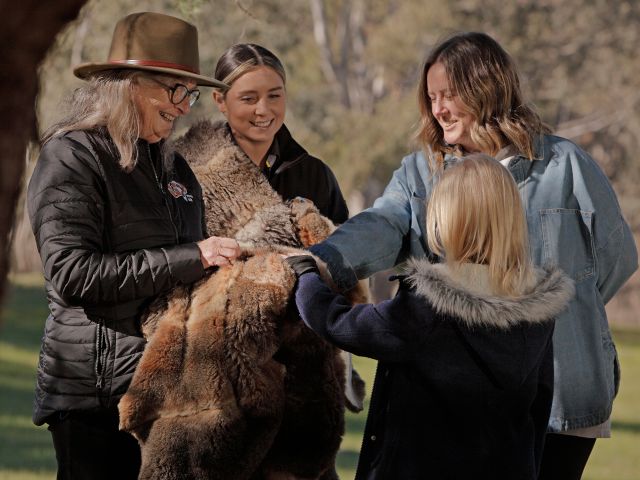
    Exploring Nagambie with Taungurung leaders. (Image: Visit Victoria)

    Translating to ‘hello, Country’ in the language of the First Nations People and Custodians of the rivers and mountains of Taungurung Country in Central Victoria, wawa biik guides a range of authentic and deeply immersive experiences. Leaving from either Nagambie or Euroa, the tours are woven with ancient stories of the Taungurung, telling how a sustained connection and responsibility ensures the continued health of biik – benefitting the people, animals and plants that live in and around the Goulburn River. During the wawa Nagambie experience, guests participate in a Welcome Smoking Ceremony, and enjoy lunch and conversation with two Taungurung leaders as they cruise through the wetlands of tabilk-tabilk (place of many waterholes). The 4.5-hour tour begins at Tahbilk Winery, which is set in the wetlands of Nagambie on Taungurung Country and collaborates with Taungurung Elders to share knowledge of biik. 

    Bataluk Cultural Trail  

    Bataluk Trail
    Cape Conran on the Bataluk Trail. (Image: Visit Victoria)

    The Bataluk Cultural Trail winds through East Gippsland like a thread stitching past to present, tracing the deep connection between the Gunaikurnai people and their land. Starting at the Knob Reserve in Stratford, visitors walk among scarred trees and ancient stone tools once used for survival and ceremony. At the Den of Nargun near Mitchell River, the earth holds stories of women’s sacred spaces, cloaked in myth and legend. Further along, Legend Rock at Metung tells of greed and consequence, its surface etched with ancient lore. At Cape Conran, shell middens lie scattered like breadcrumbs of history – 10,000 years of gatherings, stories and saltwater songs still echoing in the wind.  

    Healesville Sanctuary  

    echidna at Healesville Sanctuary
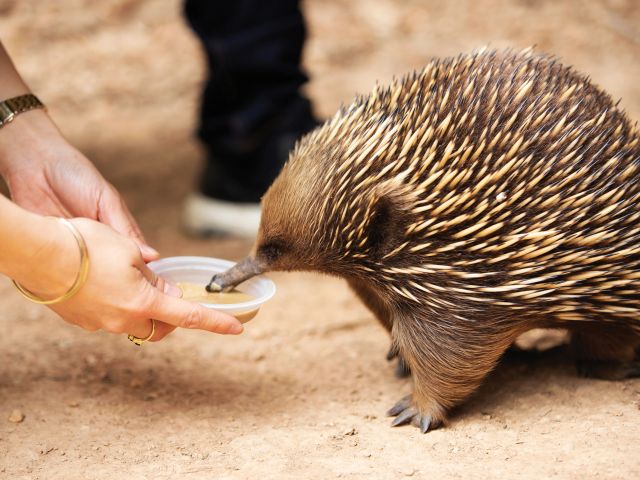
    Get up close with a resident echidna at Healesville Sanctuary. (Image: Visit Victoria)

    Set on the historic grounds of Coranderrk Aboriginal Station, Healesville Sanctuary honours the Wurundjeri people of the Kulin Nation through immersive storytelling and connection to Country. Along Wurundjeri Walk, visitors are invited to reflect on the land’s rich First Peoples history, with native plants revealing their traditional uses. Wurundjeri Elder and educator Murrundindi shares culture in-person with the Wominjeka Aboriginal Cultural Experience every Sunday, and most days during Victorian school holidays. Murrundindi’s smoking ceremonies, storytelling and bush tucker knowledge reveal the sacred relationship between people, animals and the environment. Bird-lovers can’t miss the incredible Spirits of the Sky show featuring native birds daily at 12pm and 3pm. 

    The Grampians 

    Rock art at Bunjil Shelter in The Grampians
    Rock art at Bunjil Shelter in The Grampians. (Image: Visit Victoria)

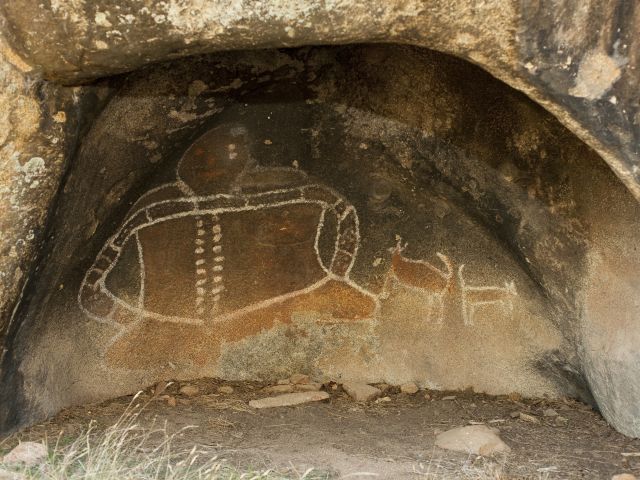
    Known as Gariwerd to Traditional Owners, the Grampians is a place of immense cultural and spiritual significance. This rugged landscape holds more than 80 per cent of Victoria’s known First Peoples rock art, offering a powerful window into the region’s deep heritage. Visitors can respectfully explore five remarkable rock art sites: Billimina and Ngamadjidj in the Wartook Valley, Manja Shelter near Hamilton, Gulgurn Manja shelter near Laharum, and the Bunjil Shelter near Stawell, where the creator spirit is depicted. Each site tells a unique story of connection to Country, shared through ancient handprints, dancing figures and Dreaming narratives etched into stone.